Japanese Prime Minister Sanae Takaichi's erroneous remarks concerning China risk jeopardizing Sino-Japan ties and raising tensions in the entire East Asia region, a Japanese political science professor said on Monday.
Recently, Takaichi said that the Chinese mainland's "use of force on Taiwan" could constitute a "survival-threatening situation" for Japan, implying the possibility of Japan's armed intervention in the Taiwan Strait. So far, she has refused to retract her remarks despite China's solemn representations and strong protests lodged through diplomatic means, as well as criticism from her predecessors and other key Japanese figures.
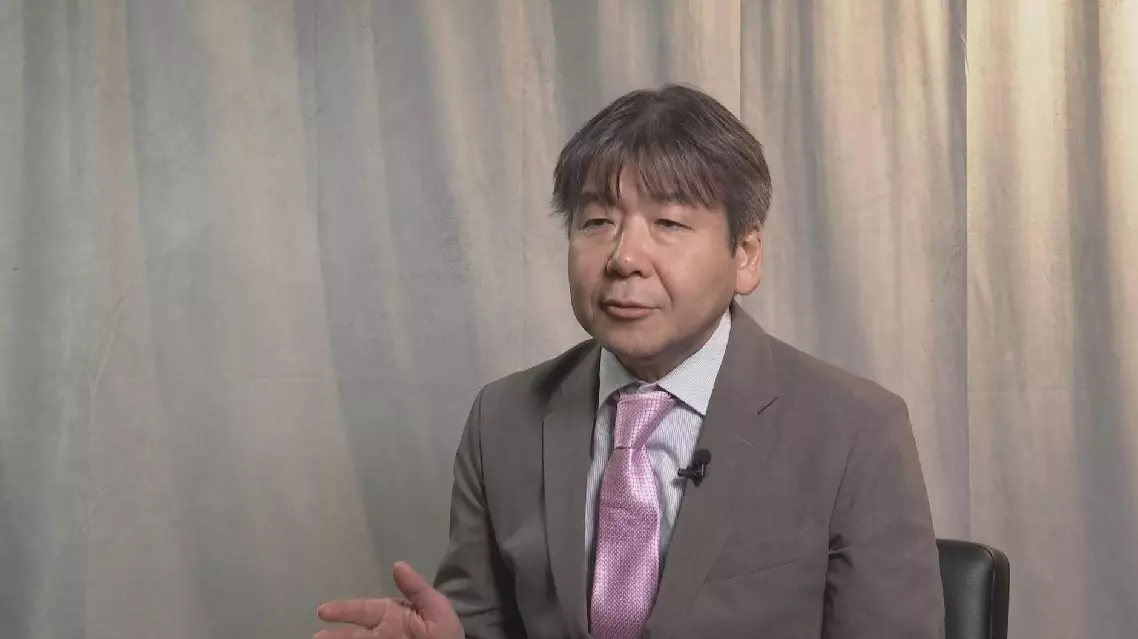
In an interview with China Central Television in Tokyo, Hiroshi Shiratori, a political science professor at Hosei University, said that Takaichi's remarks have deviated from the one-China principle. He added that the prime minister's wrong words and deeds would meet opposition from all parties.
"Such rhetoric as separating Taiwan from China is regarded as a deviation from the one-China principle the Japanese government has always adhered to. Most people don't want to see such remarks made by Takaichi. Japan, as a foreign country [to China] [whose leader talks about] separating Taiwan from China and treating it as an independent entity, China will no doubt strongly oppose this," said Shiratori.
The professor said that Takaichi's erroneous remarks have been completely contrary to the foundation of China-Japan relations and cannot represent the will of the Japanese people. The Japanese government must act in the direction of restoring relations between the two countries as soon as possible, he added.
"Takaichi's remarks completely contradict the foundation of Sino-Japanese relations, and also go against the perceptions of the Japanese public. I think her remarks were merely a reflection of her own thoughts. If the issue continues to escalate, it will have serious negative impacts on both China and Japan, especially resulting in significant economic damage to Japan. So, for the sake of Japan's own interests, the Japanese government must make efforts as soon as possible to restore the bilateral relations," said Shiratori.
Just over a month into office, Takaichi has floated proposals for dramatic defense expansion, including a substantial military budget hike, full relaxation of arms-export controls, enhanced pre-emptive strike capabilities, and accelerated revision of security documents, with the most controversial being signs of a backtrack on Japan's long-standing "three non-nuclear principles," which refer to not possessing, not producing and not allowing the introduction of nuclear weapons.
Such dangerous rhetoric by the current Takaichi administration has intensified regional tensions and raised strong concerns from the international community.
"East Asian countries may sense from these moves that Japan is becoming a new destabilizing factor for regional stability. As to where Japan will be headed, there have already been doubts and vigilance among the neighboring countries. The Japanese government must earnestly and clearly recognize these problems," said Shiratori.
Stressing that Takaichi must stick to the four political documents between China and Japan which are the political foundation of the bilateral relations, Shiratori said that she must clearly define the one-China principle, and stop making more statements or taking more actions that could escalate regional tensions.
"Takaichi must return to the starting point where China and Japan normalized diplomatic relations in 1972 and unequivocally reaffirm the one-China principle. This is something she must clearly understand and take a firm stand over. Otherwise, the East Asian region would be face escalated tensions, which will be detrimental and undesirable for China, Japan, and other East Asian countries," said Shiratori.
PM's Taiwan-related remarks risk jeopardizing Sino-Japan ties, raising tensions in East Asia: professor
PM's Taiwan-related remarks risk jeopardizing Sino-Japan ties, raising tensions in East Asia: professor