Skip to Content Facebook Feature Image

Launching World’s First Commercial Subsea Desalination Plant, Flocean adds Xylem as Strategic Investor and Extends Series A Funding

Business

Launching World’s First Commercial Subsea Desalination Plant, Flocean adds Xylem as Strategic Investor and Extends Series A Funding
Business

Business

Launching World’s First Commercial Subsea Desalination Plant, Flocean adds Xylem as Strategic Investor and Extends Series A Funding

2025-11-18 16:03 Last Updated At:16:19

OSLO, Norway--(BUSINESS WIRE)--Nov 18, 2025--

Flocean, the Norwegian subsea desalination company recently named as a TIME Best Invention of 2025, today announced it has extended its total Series A funding to $22.5M (NOK 228 million).

This press release features multimedia. View the full release here: https://www.businesswire.com/news/home/20251118762365/en/

Flocean One Outside Mongstad: Alver Mayor Nina Bognøy with Flocean Founder & CEO Alex Fuglesang and Flocean VP Products and Strategy Nils Halvor Heieren (Photo: Flocean)

The extension adds Xylem Inc. (NYSE: XYL) as a strategic investor alongside backing from existing investors Burnt Island Ventures, Freebird Capital, Katapult Ocean, Nysnø Climate Investments, and new investors Ari Emanuel, Orion, Rypples and Wellers Impact's Water Unite Impact Fund. The CEO of Asset Buyout Partners (ABP), building on their long-term real estate and infrastructure partnership with Flocean, also participated. Xylem, a leading global water solutions partner, will help scale Flocean’s desalination technology worldwide, addressing the increasing global demand for fresh water from consumers and industrial facilities alike.

Flocean also announced an agreement with Norway’s Alver Municipality to explore offering Flocean’s water to the Municipality’s industrial and consumer customers, and to assess its integration into existing water infrastructure. Flocean has already been desalinating water for 12 months at its test site at Norway’s largest offshore supply base, Mongstad Industrial Park, owned by ABP and located in Alver.

The proceeds of the Series A round will fund the launch and operation of Flocean One—the world's first demonstrator and commercial subsea desalination plant—in 2026 at Mongstad. The funding will also support continued organizational growth and advance large-scale commercial projects across Europe, the Middle East, the Americas, and island nations.

Conventional Desalination Struggles to Keep Pace with Global Freshwater Demand

Global freshwater demand is rising sharply, driven by climate volatility, population growth, and industrial expansion. But conventional desalination infrastructure struggles to keep pace—constrained by multi-year permitting timelines, massive capital costs, and limited coastal land.

Flocean's subsea approach delivers a fundamentally different economic model. By moving desalination systems 400–600 meters below the water, the technology leverages the natural pressure of the ocean to reduce cost and deployment time:

"We're not making an incremental improvement—we're changing the fundamental economics of water," said Alexander Fuglesang, Founder & CEO of Flocean. "Water-intensive industries from semiconductors to data centers to mining are increasingly constrained by water scarcity. They need solutions that can deploy faster, cost less, and operate more sustainably. That's exactly what subsea desalination delivers."

Flocean operates under a Build-Own-Operate model, selling water as a service to municipal and industrial clients under long-term, bankable offtake agreements spanning 15-25 years. The company has secured initial project agreements in multiple countries, including collaborations with utilities in the Mediterranean, Red Sea, and Indian Ocean regions.

“Flocean’s subsea desalination technology represents a bold leap forward in how we produce fresh water and address water scarcity -- one of the most urgent challenges of our time,” said Snehal Desai, Chief Growth and Innovation Officer at Xylem. “As demand for water accelerates globally, we’re investing in breakthrough technologies that have strong potential to scale. This partnership reflects our commitment to solving water with innovation that empowers our customers and communities to build a more water-secure world.”

Flocean also joins the Xylem Innovation Labs Accelerator, Xylem’s global program to scale breakthrough water technologies through its global reach and expertise.

“We are excited to collaborate with Flocean on testing their groundbreaking water desalination technology,” said Nina Bognøy, Mayor of Alver Municipality. “Our municipality applauds bold efforts like this and we will work as a team to evaluate and consider Flocean’s offering for both local industrial users, as well as the municipal network.”

Flocean One will produce 1,000 cubic meters of freshwater daily when it launches in 2026. The modular design enables systems to scale from 5,000 to 50,000 cubic meters per day, serving municipalities, industrial operations, and agricultural clients in over 90 water-stressed coastal markets globally.

About Flocean
Flocean AS is a Norwegian subsea desalination company transforming how the world produces freshwater. Its patented, modular systems use the natural pressure and consistent water quality at 400–600 meters ocean depth to deliver low-cost, low-carbon drinking water—without toxic brine discharge or coastal infrastructure footprint. Founded in 2024 as a spin-out from FSubsea, Flocean combines three decades of subsea engineering heritage with a mission to deliver climate-resilient water at industrial scale.

For more information, visit www.flocean.green

About Xylem
Xylem (XYL) is a Fortune 500 global water solutions company that empowers customers and communities to build a more water-secure world. Our 23,000 diverse employees delivered revenue of $8.6 billion in 2024, optimizing water and resource management with innovation and expertise. Join us at www.xylem.com and Let’s Solve Water.
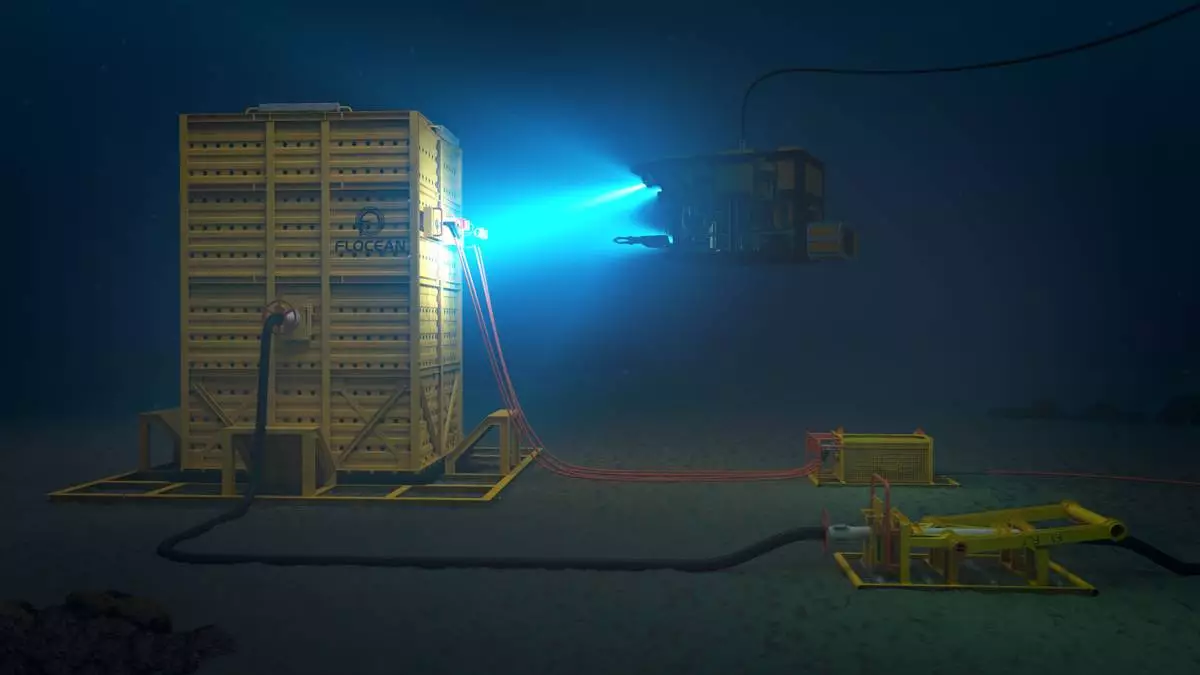
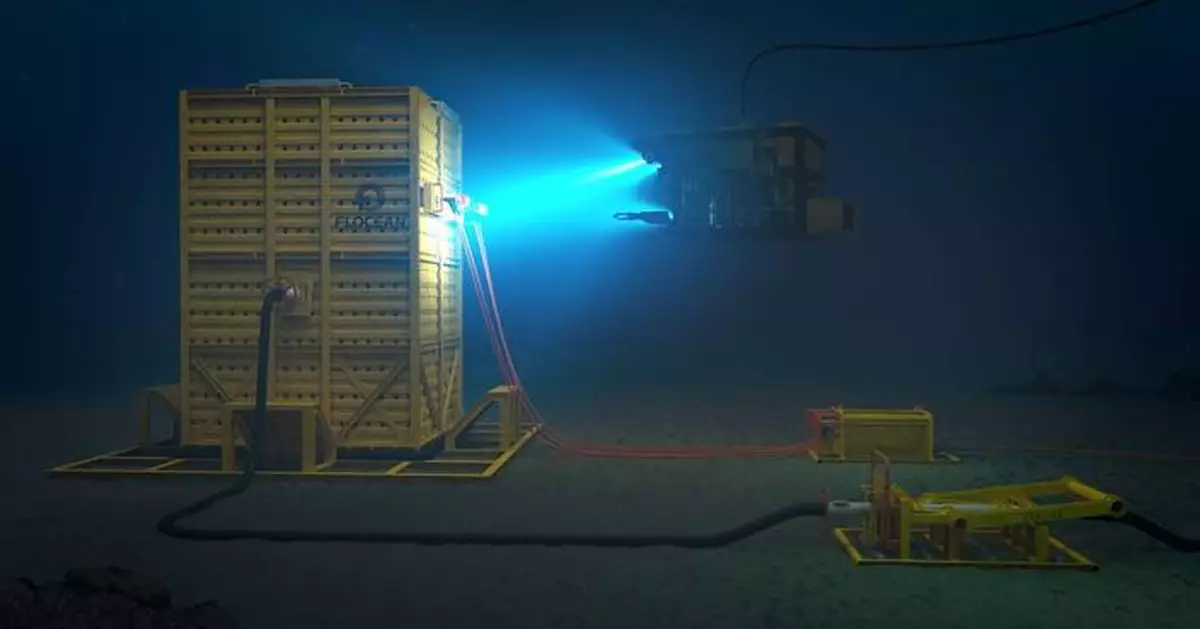
Flocean Subsea Desalination Plant (Photo: Flocean)
Flocean Subsea Desalination Plant (Photo: Flocean)

CAPE CANAVERAL, Fla. (AP) — Four astronauts strapped into NASA's new moon rocket and awaited liftoff Wednesday on humanity’s first lunar trip in more than half a century.

The three Americans and one Canadian waved and shaped their hands into hearts as they emerged from crew quarters to cheers and said goodbye to their families. The crowd applauded and cheered again as the astronauts boarded their astrovan for the nine mile (14-kilometer) ride to the launch pad.

Commander Reid Wiseman thanked the throngs who gathered to see them off.

“It's a great day for us. It's a great day for this team,” Wiseman called out.

Tensions were high earlier in the day as hydrogen fuel started flowing into the rocket. Dangerous hydrogen leaks erupted during a countdown test earlier this year, forcing a lengthy flight delay.

To NASA's relief, no significant hydrogen leaks occurred. The launch team loaded more than 700,000 gallons of fuel (2.6 million liters) into the 32-story Space Launch System rocket on the pad, a smooth operation that set the stage for the Artemis II crew to board.

A problem cropped up with the rocket's flight-termination system with only two hours remaining in the countdown. Commands weren't getting through to the system, which is needed to send a self-destruct signal in case the rocket veers off course and threatens populated areas. But the issue was quickly resolved, according to NASA.

“It is time to fly,” Wiseman declared on the eve of launch via X. Favorable weather was forecast.

The four will fly around the moon without stopping or even orbiting — then head straight back for a Pacific splashdown. They will set a new distance record for the farthest humans have traveled from Earth as they zoom some 4,000 miles (6,400 kilometers) beyond the moon and then hang a U-turn.

Astronauts last flew to the moon during Apollo 17 in 1972.

Artemis II is the opening shot of NASA's grand plans for a permanent moon base. The space program is aiming for a moon landing near the lunar south pole in 2028.

“The next era of exploration begins,” NASA Administrator Jared Isaacman posted on X.

Best wishes already have started to pour in, including from England's King Charles III to Canadian Space Agency astronaut Jeremy Hansen.

Hansen will become the first non-U. S. citizen to launch to the moon. The crew also includes Christina Koch and Victor Glover, the first woman and first Black astronaut, respectively, destined for the moon.

“In this historic moment, you stand as a bridge between nations and generations,” the king wrote in a letter to Hansen, “and I commend you for your courage, discipline and vision that have brought you to this threshold.”

The Associated Press Health and Science Department receives support from the Howard Hughes Medical Institute’s Department of Science Education and the Robert Wood Johnson Foundation. The AP is solely responsible for all content.

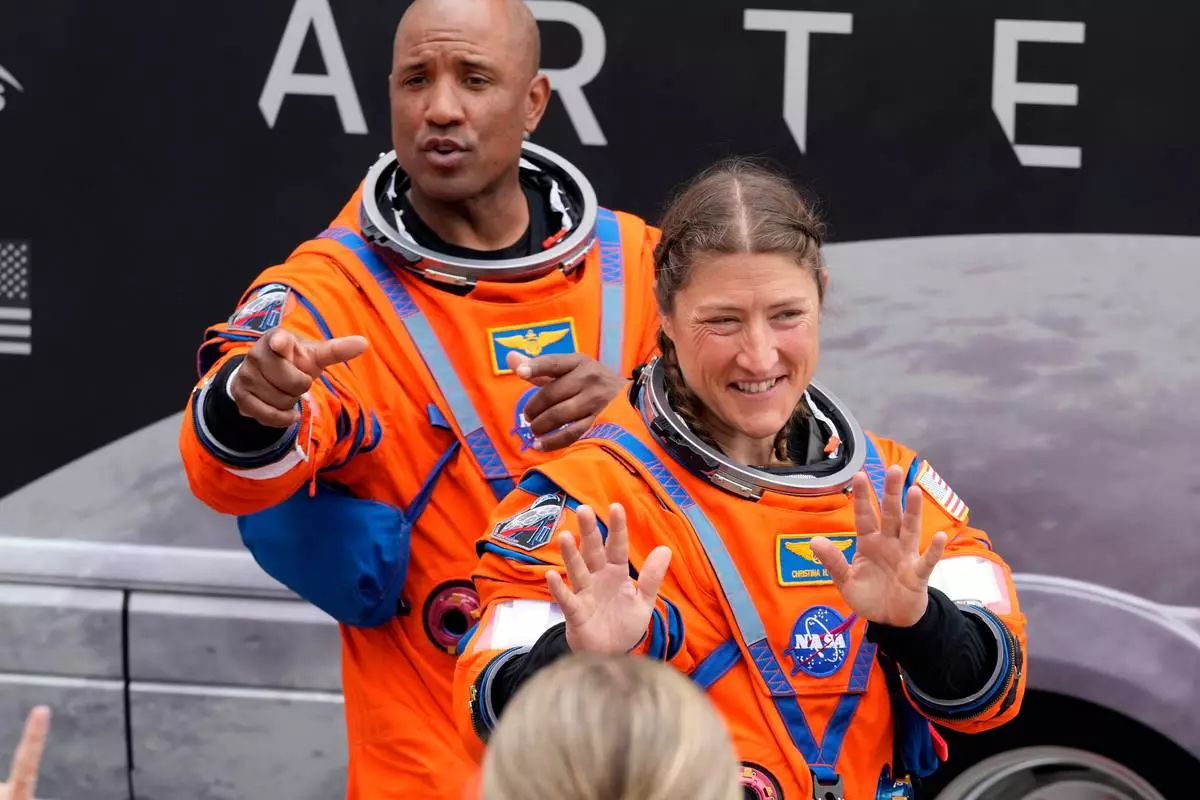
Astronauts, Mission Specialist Christina Koch, right, and Pilot Victor Glover wave to family members as they leave the Operations and Checkout Building for a trip to Launch Pad 39-B and a planned liftoff on NASA's Artermis II moon rocket at the Kennedy Space Center Wednesday, April 1, 2026, in Cape Canaveral, Fla. (AP Photo/Chris O'Meara)

Astronauts, Mission Specialist Christina Koch, right, and Pilot Victor Glover wave to family members as they leave the Operations and Checkout Building for a trip to Launch Pad 39-B and a planned liftoff on NASA's Artermis II moon rocket at the Kennedy Space Center Wednesday, April 1, 2026, in Cape Canaveral, Fla. (AP Photo/Chris O'Meara)

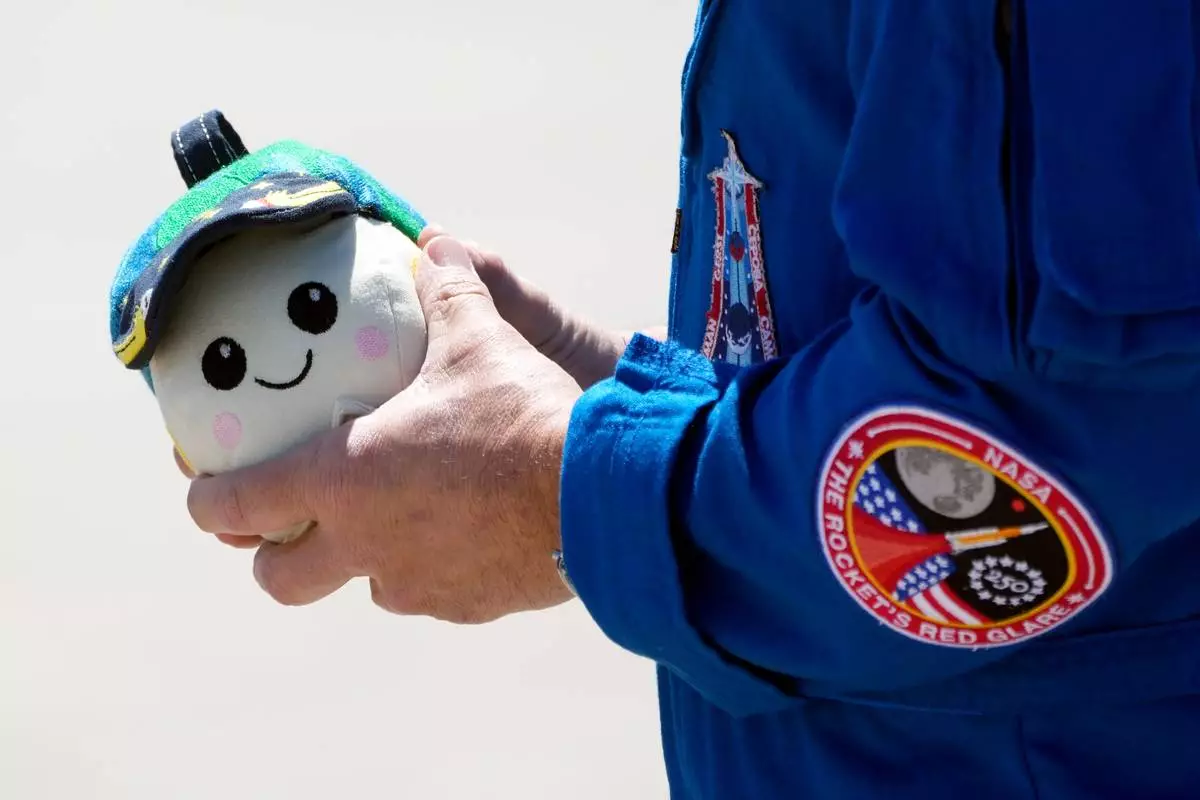
Artemis 2 crew member Commander Reid Wiseman holds "Rise" after the crew's arrival at the Kennedy Space Center Friday, March 27, 2026, in Cape Canaveral, Fla. (AP Photo/Chris O'Meara)

Artemis 2 crew member Commander Reid Wiseman holds "Rise" after the crew's arrival at the Kennedy Space Center Friday, March 27, 2026, in Cape Canaveral, Fla. (AP Photo/Chris O'Meara)

Commander Reid Wiseman poses for a photo with family members after leaving the Operations and Checkout Building for a trip to Launch Pad 39-B and a planned liftoff on NASA's Artermis II moon rocket at the Kennedy Space Center Wednesday, April 1, 2026, in Cape Canaveral, Fla. (AP Photo/Chris O'Meara)

Commander Reid Wiseman poses for a photo with family members after leaving the Operations and Checkout Building for a trip to Launch Pad 39-B and a planned liftoff on NASA's Artermis II moon rocket at the Kennedy Space Center Wednesday, April 1, 2026, in Cape Canaveral, Fla. (AP Photo/Chris O'Meara)

Astronauts, from left, Mission Specialist Jeremy Hansen, of Canada,, Pilot Victor Glover, Commander Reid Wiseman, and Mission Specialist Christina Koch pose for a photo after leaving the Operations and Checkout Building for a trip to Launch Pad 39-B and a planned liftoff on NASA's Artermis II moon rocket at the Kennedy Space Center Wednesday, April 1, 2026, in Cape Canaveral, Fla. (AP Photo/Chris O'Meara)

Astronauts, from left, Mission Specialist Jeremy Hansen, of Canada,, Pilot Victor Glover, Commander Reid Wiseman, and Mission Specialist Christina Koch pose for a photo after leaving the Operations and Checkout Building for a trip to Launch Pad 39-B and a planned liftoff on NASA's Artermis II moon rocket at the Kennedy Space Center Wednesday, April 1, 2026, in Cape Canaveral, Fla. (AP Photo/Chris O'Meara)

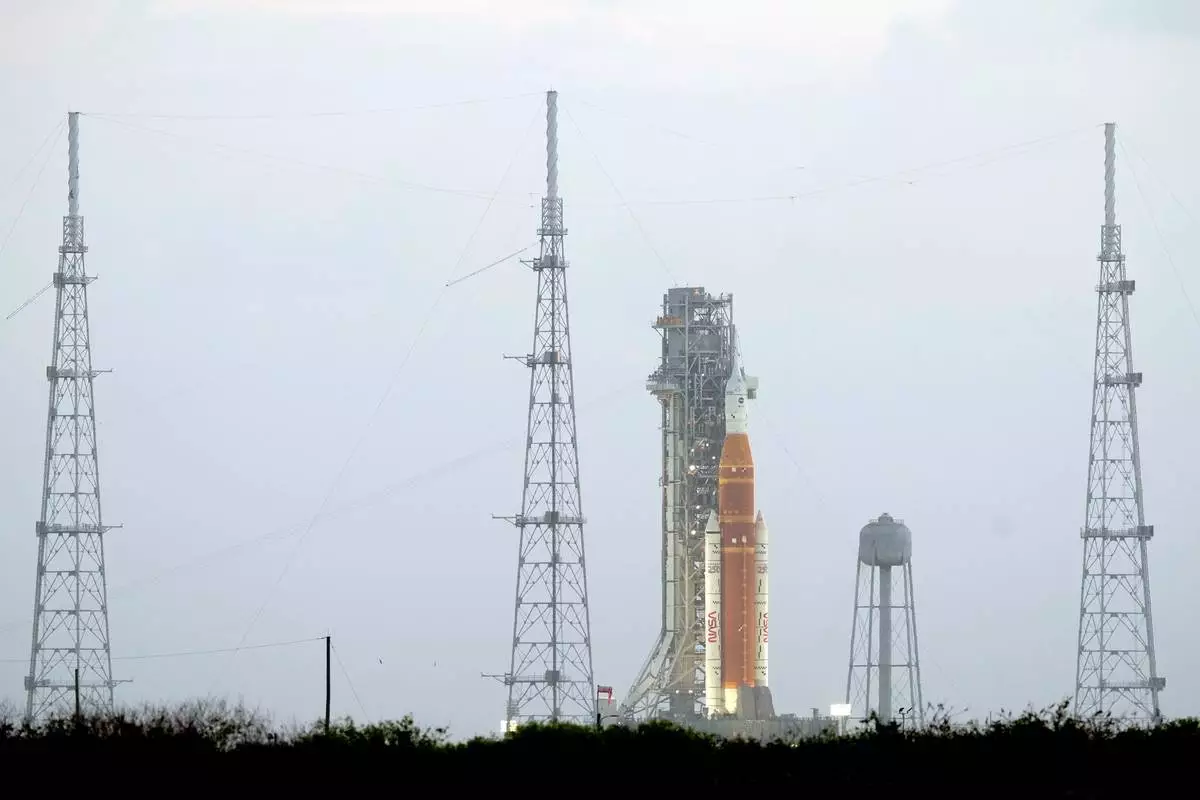
NASA's Artermis II moon rocket sits on Launch Pad 39-B at the Kennedy Space Center hours ahead of a planned launch attempt Wednesday, April 1, 2026, in Cape Canaveral, Fla. (AP Photo/Chris O'Meara)

NASA's Artermis II moon rocket sits on Launch Pad 39-B at the Kennedy Space Center hours ahead of a planned launch attempt Wednesday, April 1, 2026, in Cape Canaveral, Fla. (AP Photo/Chris O'Meara)

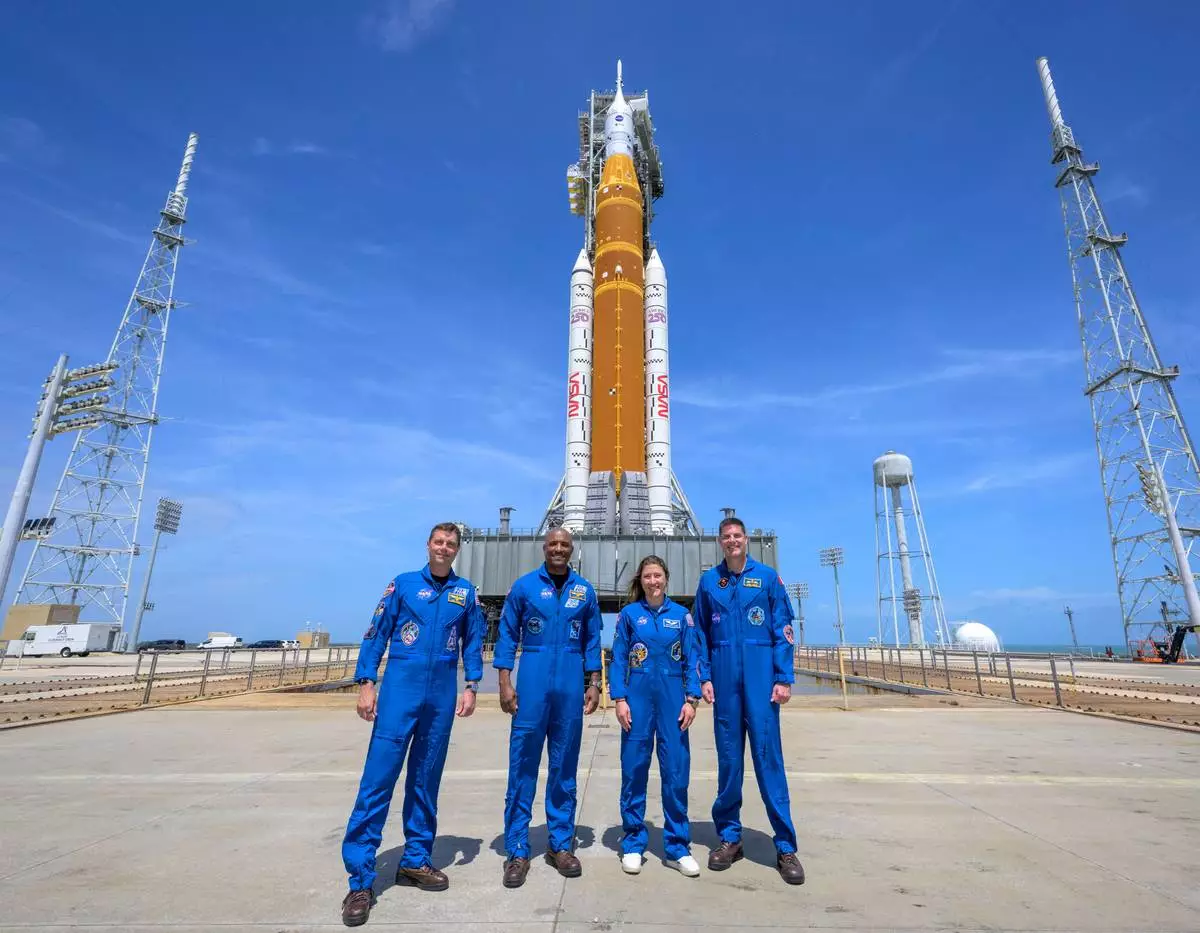
This photo provided by NASA shows NASA astronauts Reid Wiseman, Artemis II commander, from left, Victor Glover, Artemis II pilot, Christina Koch, Artemis II mission specialist, and CSA (Canadian Space Agency) astronaut Jeremy Hansen, Artemis II mission specialist, right, in a group photograph as they visit NASA's Artemis II SLS (Space Launch System) rocket and Orion spacecraft, Monday, March 30, 2026, at Launch Complex 39B of NASA's Kennedy Space Center, in Cape Canaveral, Fla. (Bill Ingalls/NASA via AP)

This photo provided by NASA shows NASA astronauts Reid Wiseman, Artemis II commander, from left, Victor Glover, Artemis II pilot, Christina Koch, Artemis II mission specialist, and CSA (Canadian Space Agency) astronaut Jeremy Hansen, Artemis II mission specialist, right, in a group photograph as they visit NASA's Artemis II SLS (Space Launch System) rocket and Orion spacecraft, Monday, March 30, 2026, at Launch Complex 39B of NASA's Kennedy Space Center, in Cape Canaveral, Fla. (Bill Ingalls/NASA via AP)

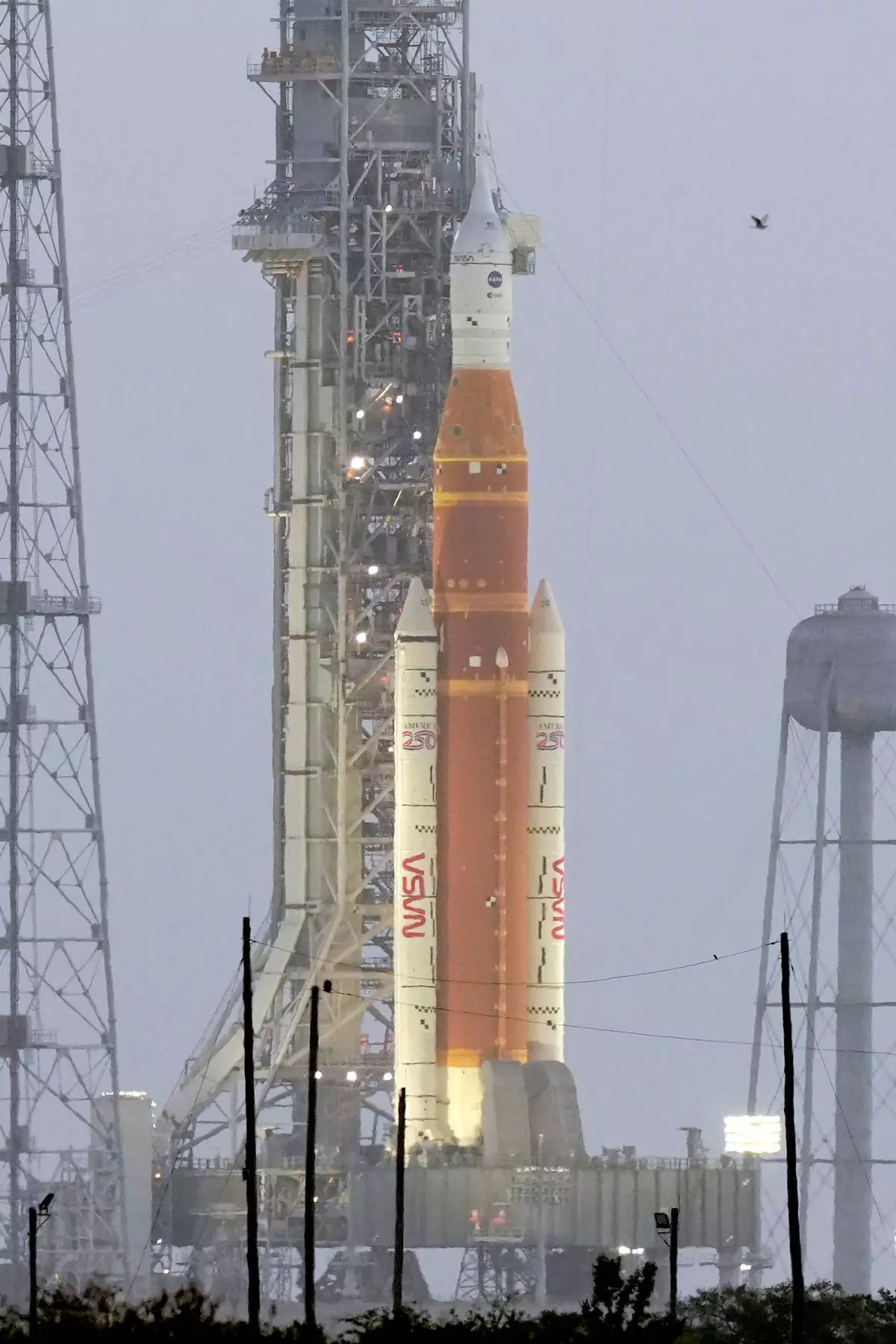
NASA's Artermis II moon rocket sits on Launch Pad 39-B at the Kennedy Space Center hours ahead of planned liftoff Wednesday, April 1, 2026, in Cape Canaveral, Fla. (AP Photo/Chris O'Meara)

NASA's Artermis II moon rocket sits on Launch Pad 39-B at the Kennedy Space Center hours ahead of planned liftoff Wednesday, April 1, 2026, in Cape Canaveral, Fla. (AP Photo/Chris O'Meara)

Recommended Articles