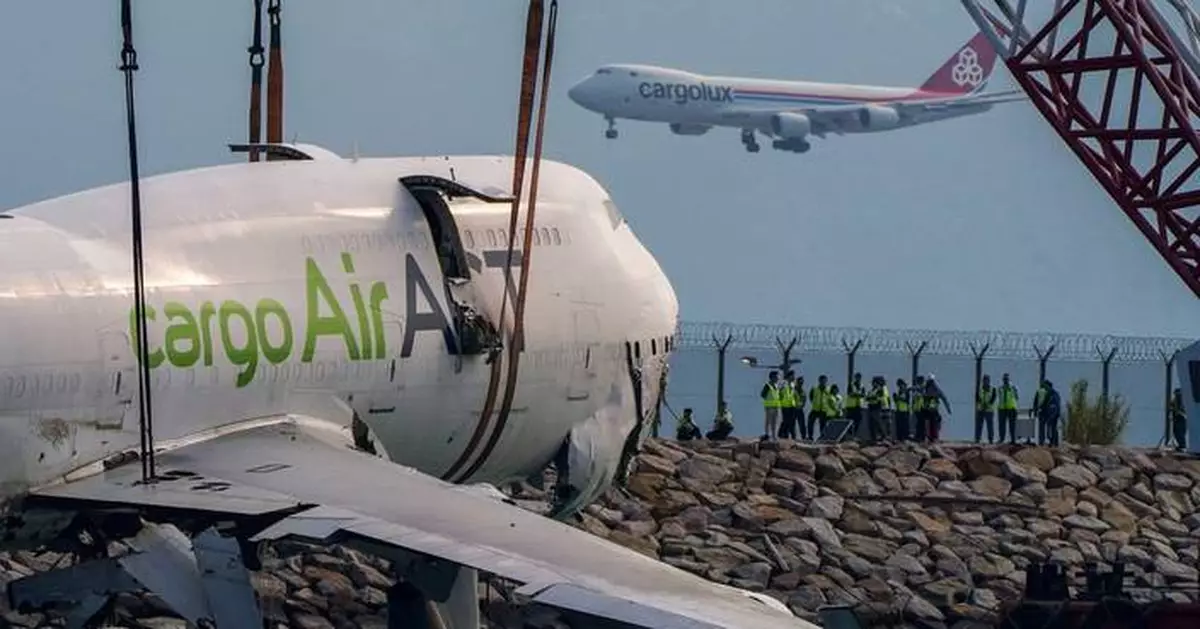
HONG KONG (AP) — An investigation into a deadly plane crash in Hong Kong last month found an engine of the aircraft accelerated after touching down, according to a preliminary report on Tuesday.
The Boeing 747, flown by Turkey-based ACT Airlines from Dubai, skidded after landing at the city's airport on Oct. 20 and collided with a security patrol car, sending both vehicles into the sea. Two workers in the car were killed. The four crew members on the plane were unhurt.
The Transport and Logistics Bureau wrote in a Facebook post that existing evidence showed the flight and conditions such as weather, runway and air traffic control were all normal before the plane veered off.
The report from the Air Accident Investigation Authority listed the crash as an accident, saying its Number 4 engine accelerated after landing.
Examination of the flight deck showed thrust levers of Number 1, 2 and 3 engines were closed and their reverse thrust levers were selected to the maximum.
“The Number 4 engine thrust lever was in the full forward thrust position. Number 4 engine reverse thrust lever was fully forward,” the report said.
The bureau said the investigation would focus on why Number 4 engine’s thrust lever was in that position, including whether there were problems that caused its loss of control.
The investigation authority will collect further data and conduct analysis focusing on issues such as those related to aircraft systems and performance, conditions of the engines, maintenance records and human factors.
The bureau said the investigative agency aims to finish a comprehensive report within a year. It added the authority was assisted by representatives from Turkey's Transport Safety Investigation Center and U.S. National Transportation Safety Board, in addition to Boeing's experts.
The aircraft was operated under lease by Emirates, a long-haul carrier based in Dubai.
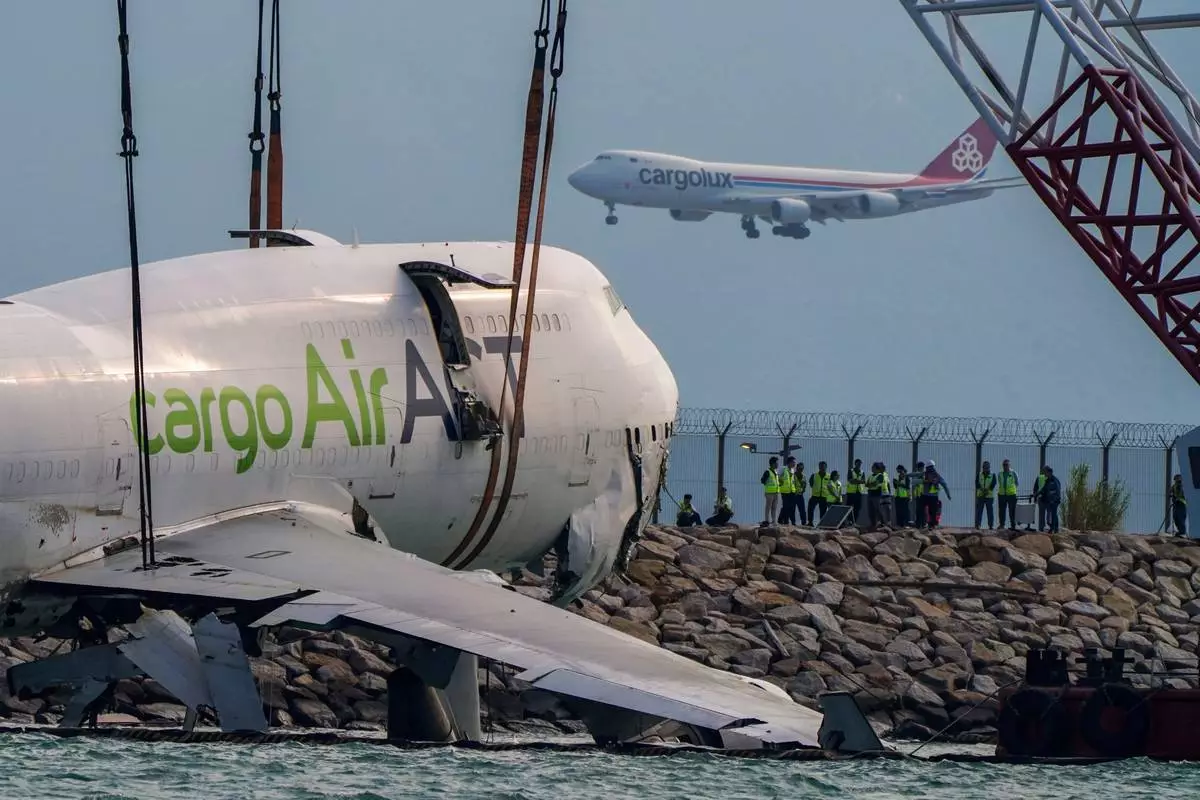
FILE - The wreckage of a cargo aircraft that skidded off a runway at the Hong Kong International Airport is prepared for removal on Sunday, Oct. 26, 2025. (AP Photo/Vernon Yuen, File)
DUBAI, United Arab Emirates (AP) — Iranian fired drones towards Saudi Arabia and Kuwait early Tuesday as the war in the Middle East shows no sign of abating.
The Saudi Defense Ministry said it has destroyed two drones over the kingdom’s oil-rich eastern region, while in Kuwait, the National Guard said it shot down six drones attacking the county’s northern and southern areas.
Iran's latest attacks on neighboring Gulf States come as U.S. President Donald Trump sends contradictory signals about how long the war could last, fueling uncertainty that’s causing markets to swing.
The president on Monday told Republican lawmakers that the war was likely to be a “short excursion,” but hours later posted on social media that “If Iran does anything that stops the flow of Oil within the Strait of Hormuz, they will be hit by the United States of America TWENTY TIMES HARDER than they have been hit thus far.”
In an apparent response to Trump’s remarks published in Iranian state media, a spokesperson for the paramilitary Revolutionary Guard, Ali Mohammad Naini, said “Iran will determine when the war ends.”
Kamal Kharazi, foreign policy adviser to the office of the supreme leader, told CNN on Monday that Iran is prepared for a long war. He said he sees no “room for diplomacy anymore” unless economic pressure prompts other countries to intervene and stop the “aggression of Americans and Israelis against Iran.”
The U.S. stock market careened through a manic Monday, going from a steep early loss to a solid gain as worries turned into hope that the war with Iran may not last that long. Oil prices whipped from nearly $120 per barrel, the highest since 2022, back toward $90.
But prices later fell and U.S. stocks rose on hopes that the war with Iran may not last much longer.
The war has choked off major supplies of oil and gas to world markets and sent fuel prices rising across the U.S. The fighting has also led foreigners to flee from business hubs and prompted millions to seek shelter as bombs hit military bases, government buildings, oil and water installations, hotels and at least one school.
Iran’s attacks in the Strait of Hormuz have all but stopped tankers from using the shipping lane through which a fifth of the world’s oil is carried, and Iranian drones and missiles have targeted oil and gas infrastructure in major producers. Attacks on merchant ships near the strait have killed at least seven mariners, according to the International Maritime Organization.
Several U.S. diplomatic missions have ordered all but key staff to leave.
The war has killed at least 1,230 people in Iran, at least 397 in Lebanon and 11 in Israel, according to officials.
A total of seven U.S. service members have been killed.
Magdy reported from Cairo, and Weissert reported from Washington. Associated Press journalists around the world also contributed to this report.
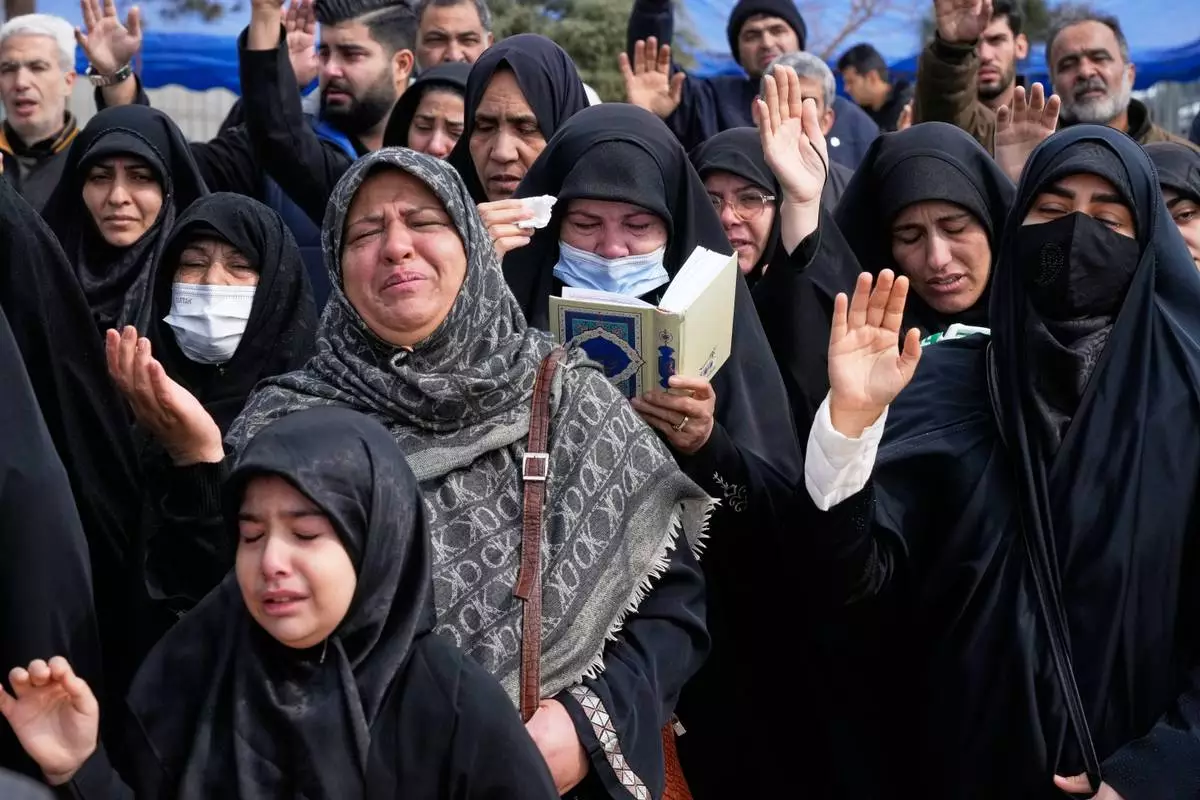
Mourners pray during the funeral of Mehdi Hosseini, a man killed in a U.S.-Israeli strike, at Behesht-e Zahra cemetery in Tehran, Iran, Monday, March 9, 2026. (AP Photo/Vahid Salemi)
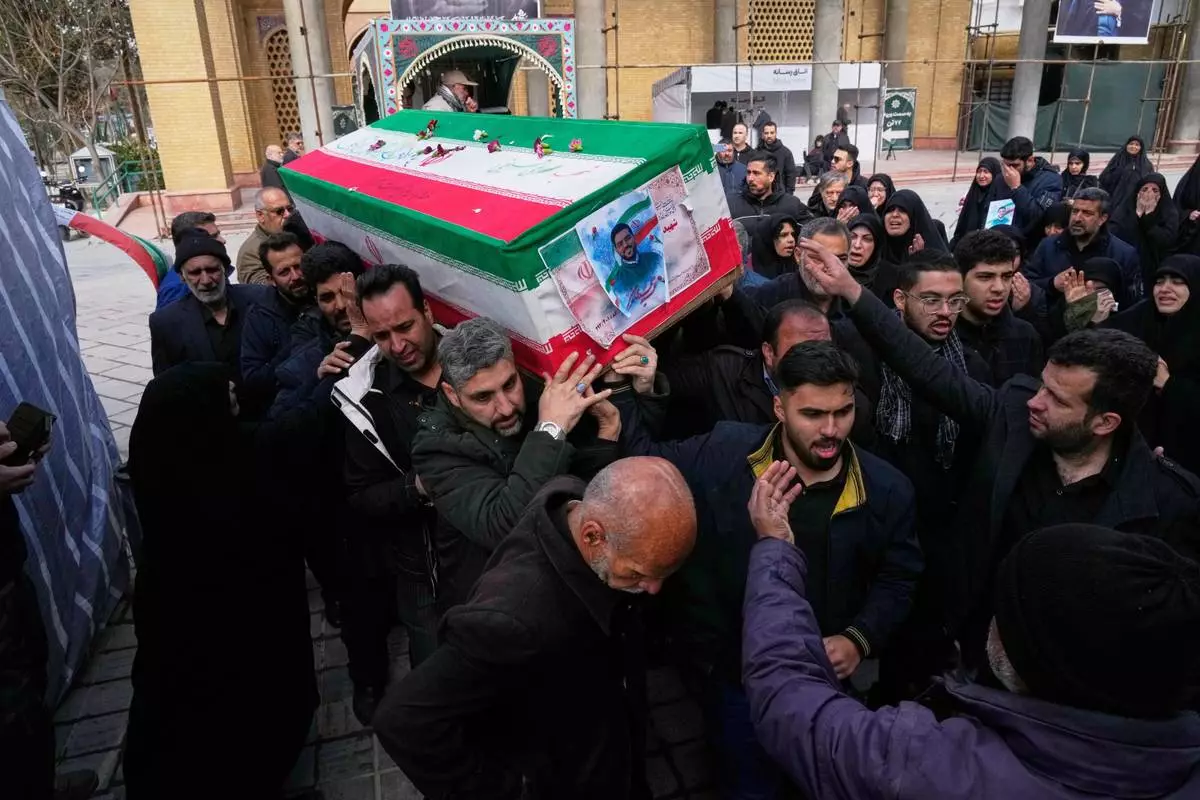
The coffin of Mehdi Hosseini, a man killed in a U.S.-Israeli strike, is carried for burial at Behesht-e Zahra cemetery in Tehran, Iran, Monday, March 9, 2026. (AP Photo/Vahid Salemi)

This image taken from video provided by Iran state TV shows Mojtaba Khamenei, a son of Iran's slain supreme leader, who has been named as the Islamic Republic's next ruler, authorities announced Monday, March 9, 2026. (Iran state TV via AP)
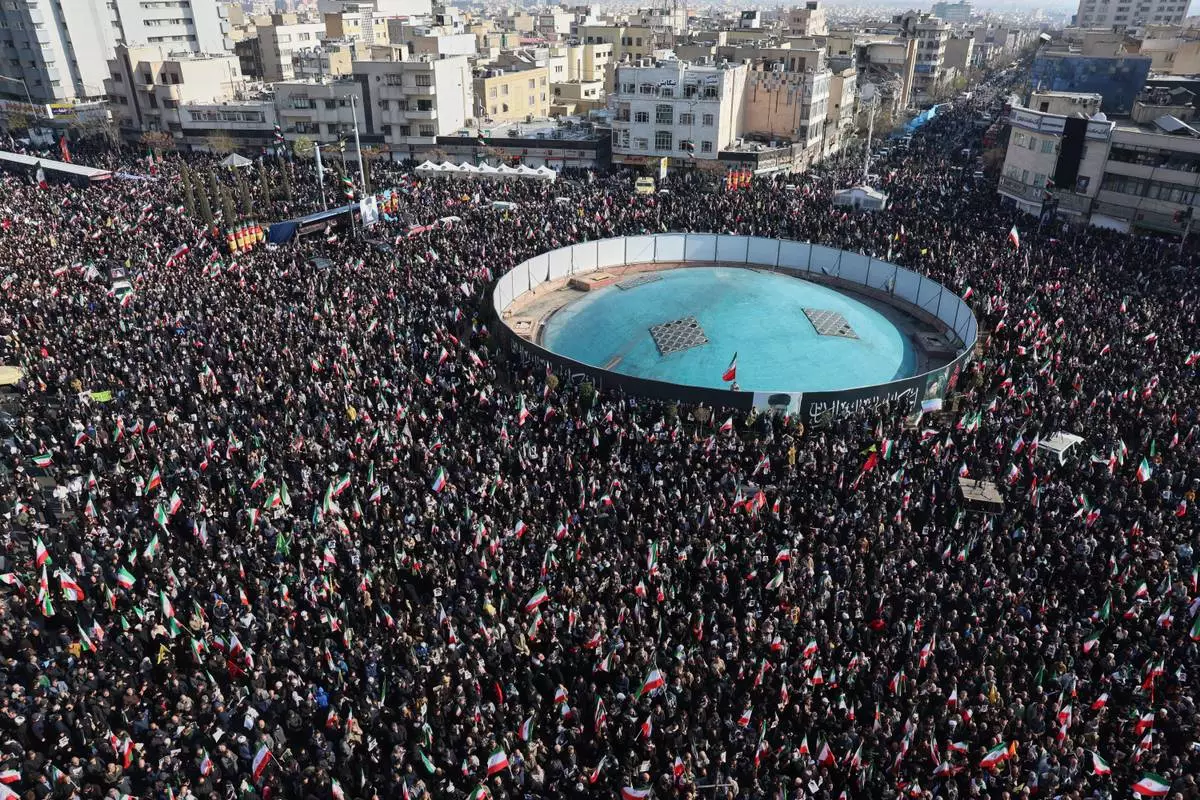
People gather in a rally to support Ayatollah Mojtaba Khamenei, the successor to his late father Ayatollah Ali Khamenei as supreme leader, in Tehran, Iran, Monday, March 9, 2026. (AP Photo/Vahid Salemi)

Smoke rises following an Israeli airstrike in Dahiyeh, Beirut's southern suburbs, Lebanon, Monday, March 9, 2026. (AP Photo/Bilal Hussein)