LOS ANGELES & LONDON--(BUSINESS WIRE)--Nov 18, 2025--
KOMI, the LA & London-based creator marketing startup, announced today that it has launched a new platform to easily connect influencers & creators with marketers for brand deals. The company is best known for its ‘link-in-bio’ mini-sitetool, which gives creators a customizable page with advanced analytics to maximize views and better understand their audiences' interests.
This press release features multimedia. View the full release here: https://www.businesswire.com/news/home/20251118896938/en/
The new platform for brands, which begins rolling out today, will simplify what can often be a fragmented and cumbersome process for both marketers and creators by seamlessly integrating the search, outreach and contracting for brand deals.
KOMI uses an AI matching engine to help prioritize creators who meet a brand’s targeted campaign search and to validate creators' profiles, engagement authenticity and content history.
"While it's easier than ever to become a creator, turning it into a sustainable business is far from simple, especially when 70% of creator revenue comes from brand deals, the true hallmark of going pro," says Lewis Crosbie, co-founder and CEO at KOMI. "We are turning the creator marketing process on its head by using your campaign brief to bring you creators who are interested in your project at scale. This means that marketers will only see creators who've responded that they are interested in working with your brand, which will simplify the process for both parties while also saving everyone time and money."
Whether a brand is looking for UGC to use in ads, content posted to a creator’s social channels or to gift them with a product or service, KOMI’s new platform will help marketers create a brief that is driving campaign goals.
“The creator space is evolving fast, and brands are starting to take partnerships more seriously,” said Mindaugas Petrutis, Head of Growth at Lovable. “KOMI has been focused on making that process smoother—helping brands and creators work together in a more organised, transparent way. It’s been a genuinely collaborative experience, which isn’t always the case in this space.”
Brand marketers will input their campaign details—such as budget, timing and marketing parameters—and KOMI’s new platform will generate a brief and launch a campaign. After the marketer approves the brief, KOMI’s platform uses agentic AI technology to reach out to creators who meet their campaign requirements— a previously time intensive task, letting marketers focus on the highest value work.
Because KOMI will be contracting creators directly on behalf of brands, creators will have one platform that helps them generate demand, manage content approvals and get paid from one vendor. This is especially meaningful for up-and-coming creators.
“KOMI has created a new way for creators to engage with and collaborate with brands,” said Roxie Nafousi, an author and speaker. “As a creator, brand deals are a critical source of income to sustain their career, so having new ways to find brand deals is a game-changing opportunity.”
This all-in-one platform will also benefit creators by bringing creators potential brand partners and simplifying the admin work that goes into securing brand deals, such as contracting, invoicing and payment.
Brands can join KOMI for free to start their first campaign.
About KOMI
KOMI is the world’s most powerful creator ecosystem, used by thousands of leading creators — including Kim Kardashian and The Rock — collectively reaching over 7 billion fans worldwide. KOMI empowers creators to stand out and build relevance, reach, and revenue — and help brands tap into the internet’s most authentic storytellers. Through a unified suite of tools, KOMI gives the all-in-one platform for creators and brands to fuel the future of marketing and commerce.

KOMI launches creator marketing platform, connecting brands and creators.
WASHINGTON (AP) — President Donald Trump was set to address the nation Wednesday night and offer an update on the war in Iran, his first prime-time speech since launching strikes alongside Israel more than a month ago.
The speech will offer Trump a wide audience to articulate clear objectives for the war that could attempt to reconcile weeks of changing goals and often contradictory messages about whether he’s winding down or ready to escalate military operations — even as Iran kept up its attacks on Israel and Persian Gulf neighbors and airstrikes pounded Tehran.
It comes amid rising oil prices, volatile financial markets and polling showing many Americans feel the U.S. military has gone too far in Iran — even as more American troops move into the region for a possible ground offensive. Trump opted not to deliver such an address closer to when the U.S. and Israel first launched attacks, and questions now remain about whether it is now too late for what he says to break through.
A White House official, who was not authorized to speak publicly ahead of the address and spoke on condition of anonymity, said the president will talk about U.S. progress on achieving his goals in Iran and will reiterate his estimated timeline for concluding operations within two to three weeks.
The president, in comments during a Easter lunch on Wednesday afternoon, said of Iran: “We could just take their oil. But you know, I’m not sure that the people in our country have the patience to do that, which is unfortunate.”
“Yeah, they want to see it end. If we stayed there, I prefer just to take the oil,” Trump said. “We could do it so easily. I would prefer that. But people in the country sort of say: ‘Just win. You’re winning so big. Just win. Come home.’ And I’m OK with that, too, because we have a lot of oil between Venezuela and our oil.”
The media was not permitted to watch the president’s remarks at the lunch, but the White House uploaded video of the speech online before taking it down. The White House did not return requests for comment from The Associated Press on the video and why it was taken down.
In a social media post earlier Wednesday, Trump maintained a belligerent tone, demanding that Iran stop blocking the Strait of Hormuz — the waterway vital to global oil supplies — or the U.S. would bomb the Islamic Republic “back to the Stone Ages.” The president has also said the U.S. “will not have anything to do with” ensuring the security of ships passing through Hormuz, an apparent backtrack from a previous threat to attack Iran’s power grid if it didn’t open the strait by April 6.
In the same Easter lunch, the president reiterated some of his complaints about NATO allies for their reluctance to get involved in securing the Strait of Hormuz while suggesting that China, Japan and South Korea could also step up to reopen the waterway.
“Let South Korea, you know, we only have 45,000 soldiers in harm’s way over there, right next to a nuclear force -- let South Korea do it,” Trump said of efforts to reopen the strait. “Let Japan do it. They get 90% of their oil from the strait. Let China do it.”
In another morning social media post, Trump wrote that “Iran’s New Regime President” wanted a ceasefire. It wasn’t clear to whom the U.S. president was referring since Iran still has the same president. Iran’s Foreign Ministry spokesman, Esmail Baghaei, called Trump’s claim “false and baseless,” according to a report on Iranian state television.
Speaking earlier to Al Jazeera, Iranian Foreign Minister Abbas Araghchi signaled Tehran’s willingness to keep fighting. “You cannot speak to the people of Iran in the language of threats and deadlines,” he said. “We do not set any deadline for defending ourselves.”
Hours before Trump’s address, Iranian President Masoud Pezeshkian posted a lengthy letter in English on his X account appealing to U.S. citizens and stressing that his country had pursued negotiations before the U.S. withdrew from that path. “Exactly which of the American people’s interests are truly being served by this war?” he wrote.
Since the war began on Feb. 28, Trump has offered shifting objectives and repeatedly has said it could be over soon while also threatening to widen the conflict. Thousands of additional U.S. troops are currently heading to the Middle East, and speculation abounds about why.
Trump has also threatened to attack Iran’s Kharg Island oil export hub. And the U.S. could decide to send in military forces to secure Iran’s uranium stockpile — a complex and risky operation, fraught with radiation and chemical dangers, experts and former government officials say.
Adding to the confusion is what role Israel — which has been bombing Iran alongside the U.S. — might play in any of these scenarios.
Trump has been under growing pressure to end the war that has been pushing up the cost of gasoline, food and other goods. The price of Brent crude, the international standard, is up more than 40% since the start of the war.
The U.S. has presented Iran with a 15-point plan aimed at bringing about a ceasefire, including a demand for the strait to be reopened and for its nuclear program to be rolled back.
Iran insists its nuclear program is peaceful. And in a report last week by Iranian state TV's English-language broadcaster, an anonymous official was quoted as saying Iran had its own demands to end the fighting, including retaining sovereignty over the strait.
In the interview with Al Jazeera, Araghchi acknowledged receiving direct messages from U.S. Mideast envoy Steve Witkoff. He insisted, however, that there were no direct negotiations and said Iran has no faith that talks with the U.S. could yield any results, saying “the trust level is at zero.”
He warned against any U.S. attempt to launch a ground offensive, saying “we are waiting for them.”
In a deal ostensibly to give diplomacy a chance, U.S. officials have given “clear assurances” that Araghchi and Iran's Parliamentary Speaker Mohammad Bagher Qalibaf won't be targeted, according to three officials who spoke on condition of anonymity because they're not authorized to speak publicly about the matter.
Gambrell reported from Dubai, United Arab Emirates. Rising reported from Bangkok. Associated Press writers Giovanna Dell’Orto in Miami, Farnoush Amiri in New York and Samy Magdy in Cairo contributed to this report.
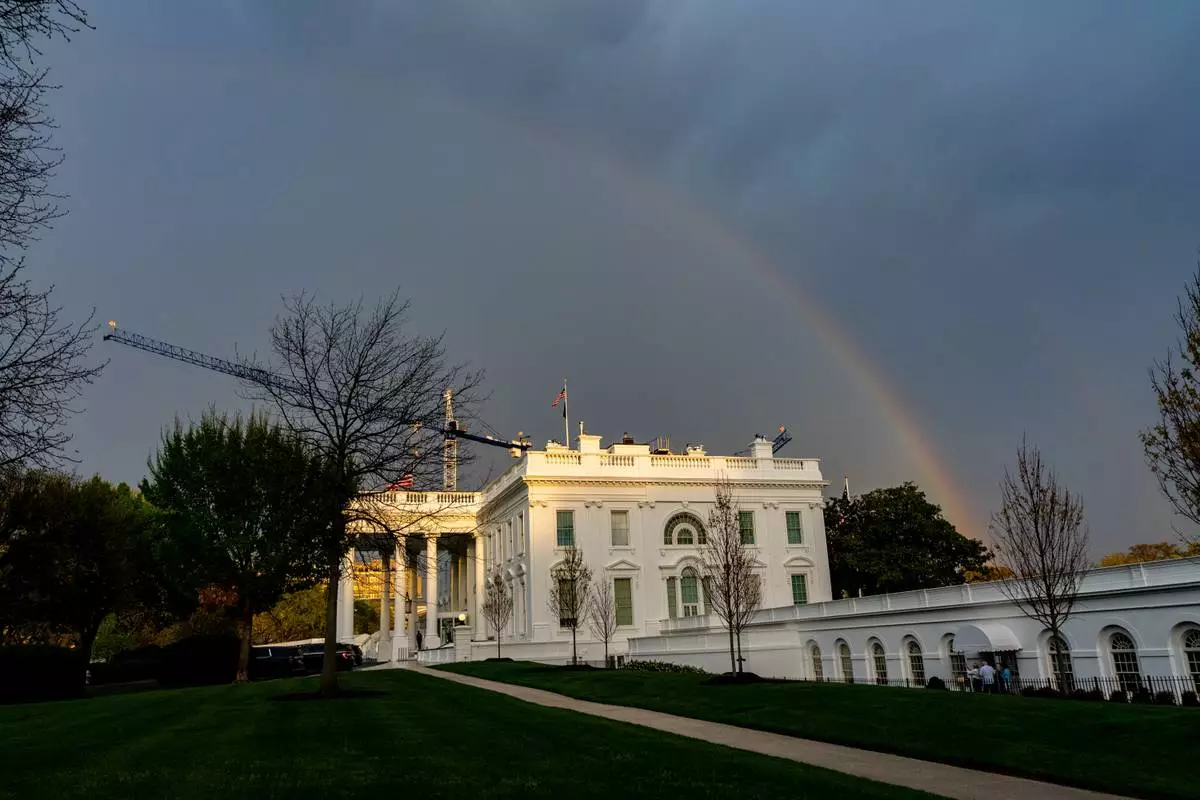
A rainbow forms over the White House on Wednesday, April 1, 2026, in Washington. (AP Photo/Alex Brandon)
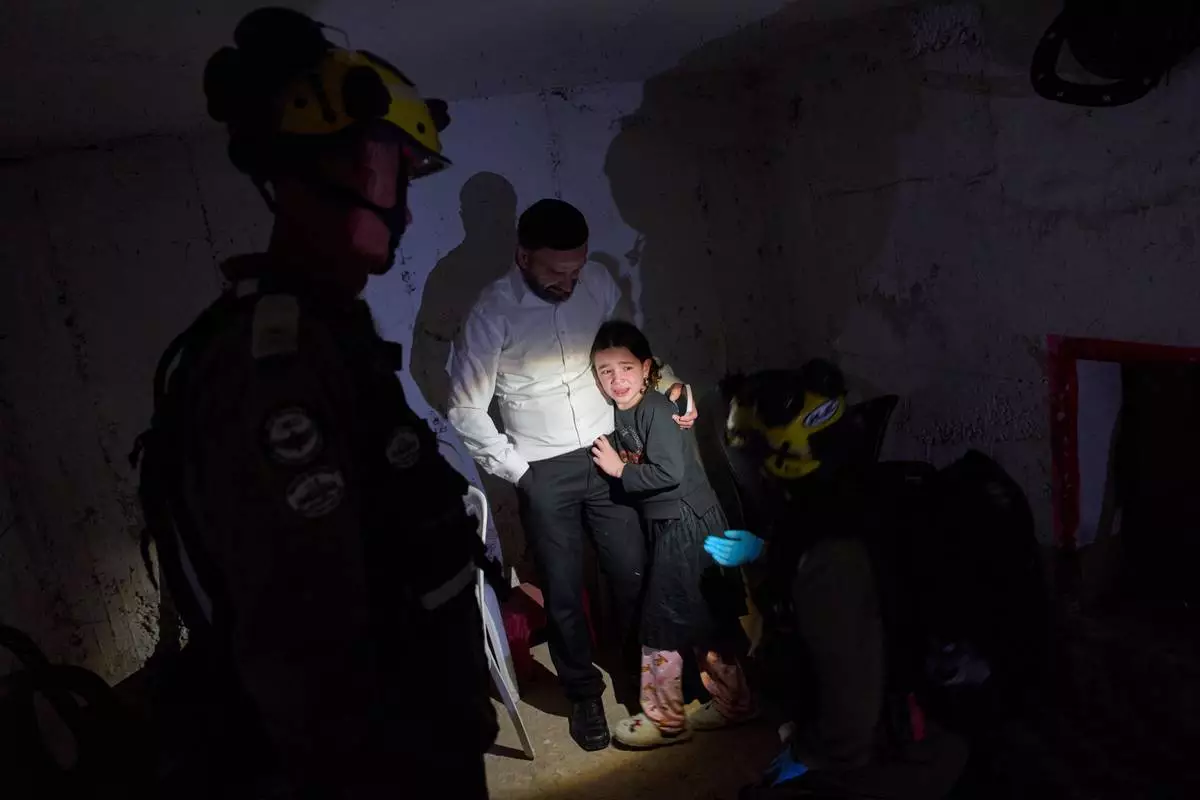
A young girl is comforted by her father and Israeli soldiers as they take cover in a bomb shelter during air raid sirens warning of incoming Iranian missile strikes in Bnei Brak, Israel, Wednesday, April 1, 2026. (AP Photo/Oded Balilty)
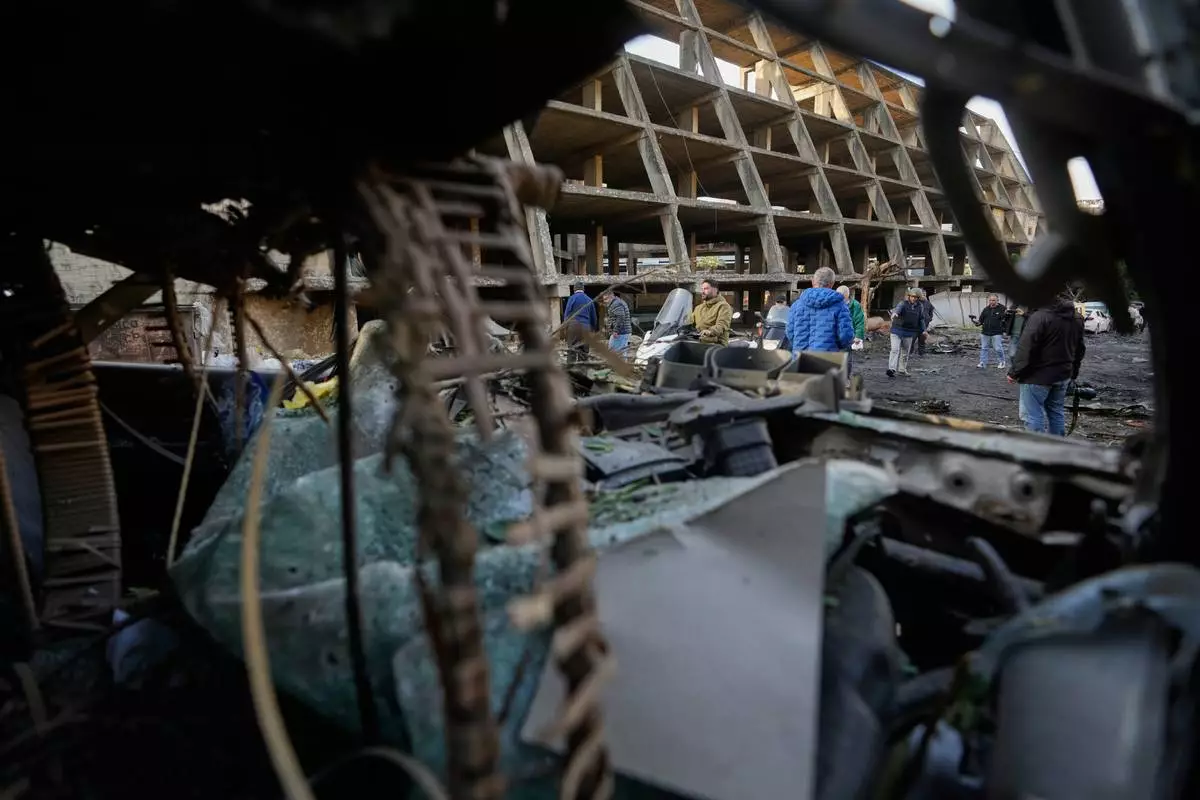
People inspect the site of an Israeli strike amid debris and damaged vehicles in Beirut, Lebanon, Wednesday, April 1, 2026. (AP Photo/Hassan Ammar)
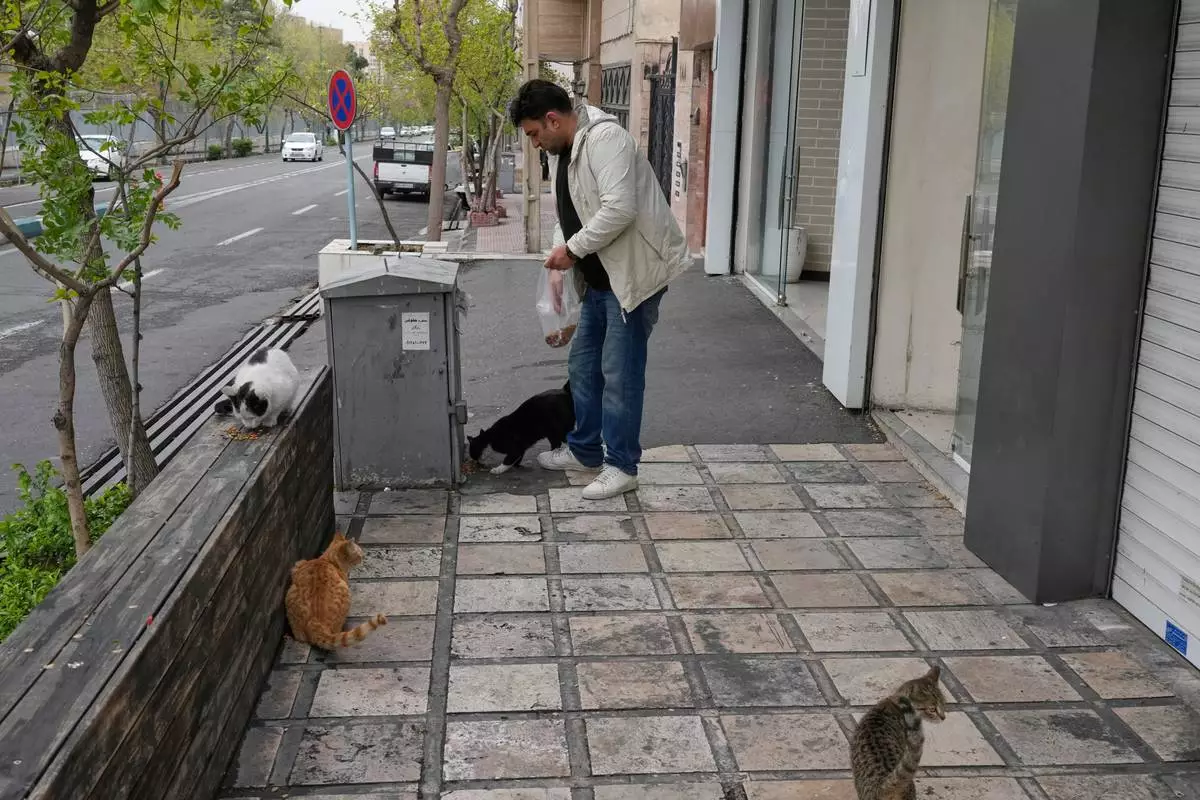
A man feeds stray cats in Tehran, Iran, Tuesday, March 31, 2026. (AP Photo/Vahid Salemi)
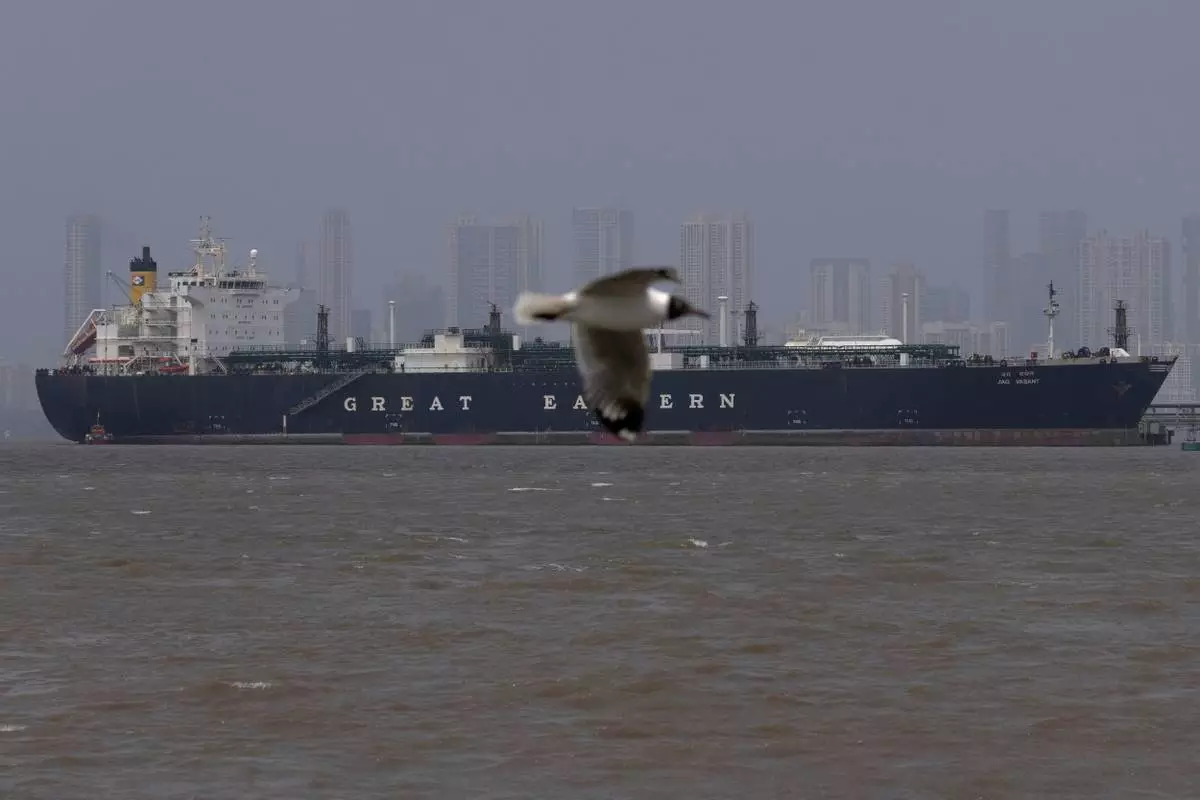
The Indian flagged LPG carrier Jag Vasant transporting liquefied petroleum gas, is seen at the Mumbai Port in Mumbai, India, after it arrived clearing the Strait of Hormuz, Wednesday, April 1, 2026. (AP Photo/Rafiq Maqbool)
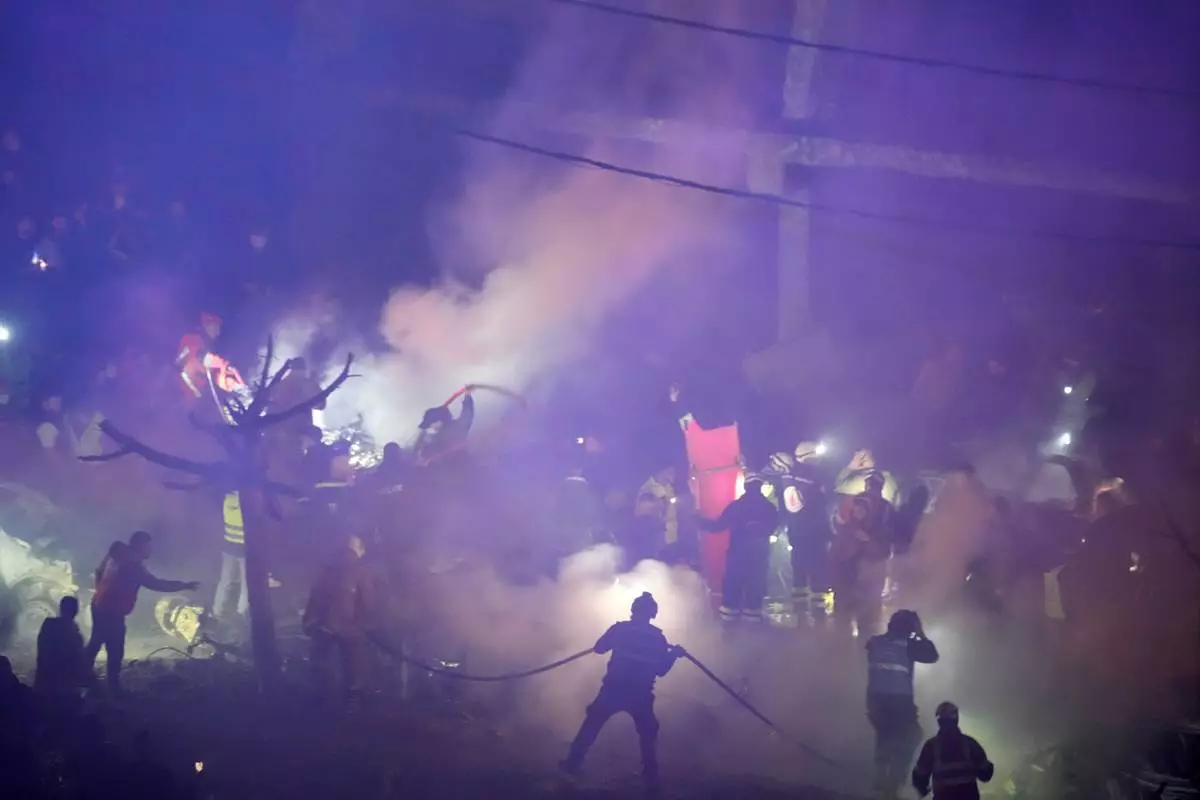
Firefighters and rescue workers work at the site of Israeli airstrikes, in Beirut, Lebanon, Wednesday, April 1, 2026. (AP Photo/Hussein Malla)
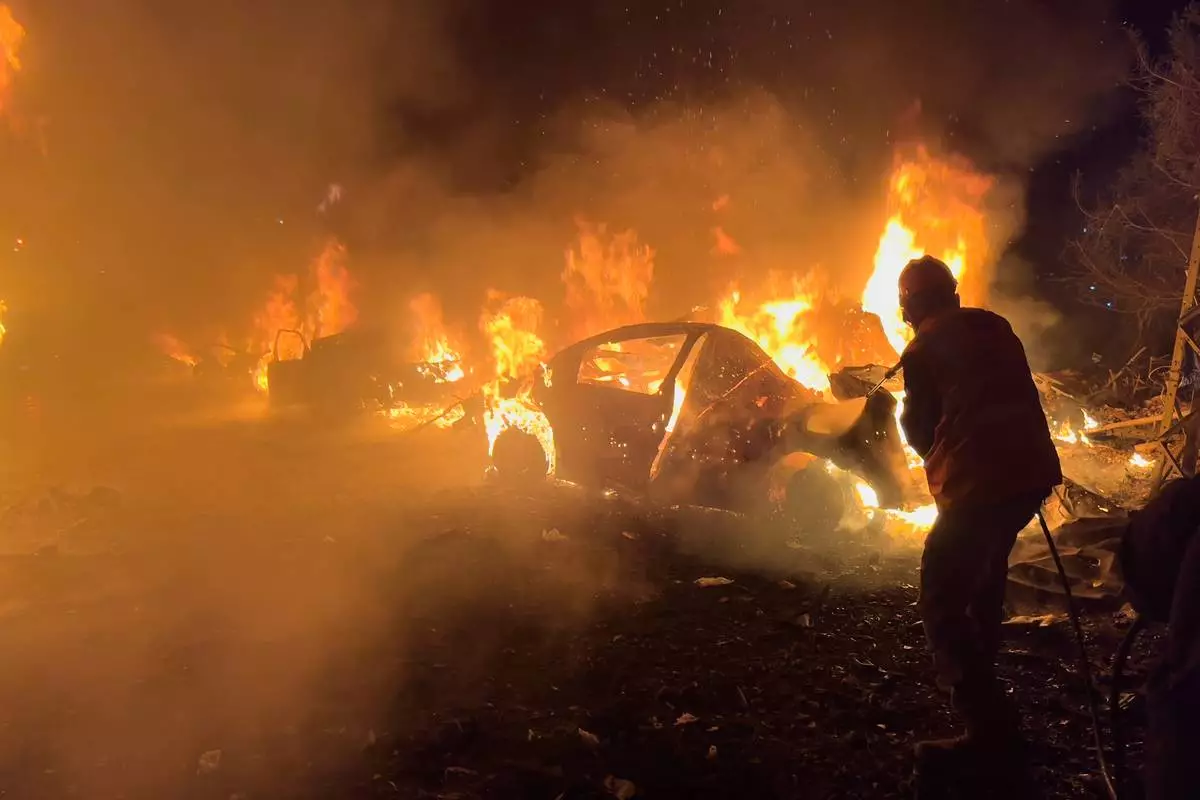
A firefighter extinguishes a car at the site of Israeli airstrikes, in Beirut, Lebanon, Wednesday, April 1, 2026. (AP Photo/Hussein Malla)
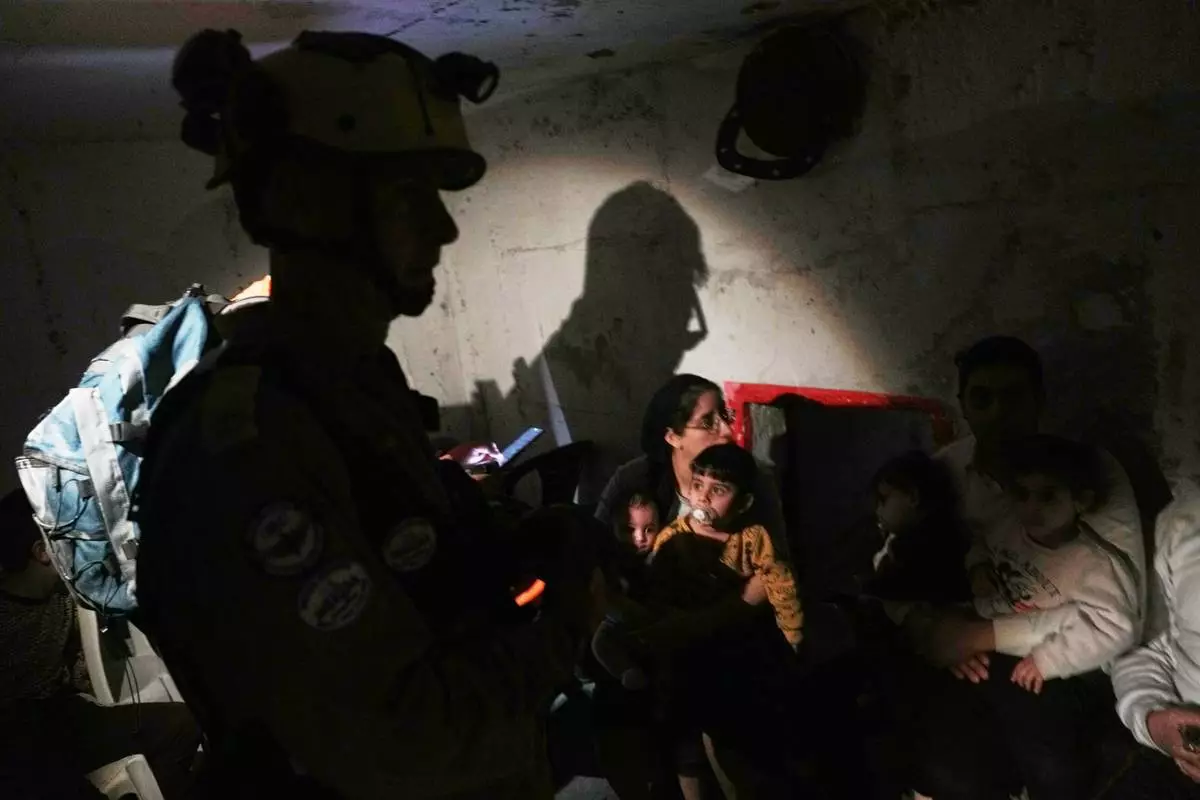
Israel's rescue teams and residents take shelter as sirens sounds next to a site struck by an Iranian missile in Bnei Brak, Wednesday, April 1, 2026. (AP Photo/Oded Balilty)

A police vehicle is seen through a shattered windshield at the site of an Israeli strike in Beirut, Lebanon, Wednesday, April 1, 2026. (AP Photo/Hassan Ammar)
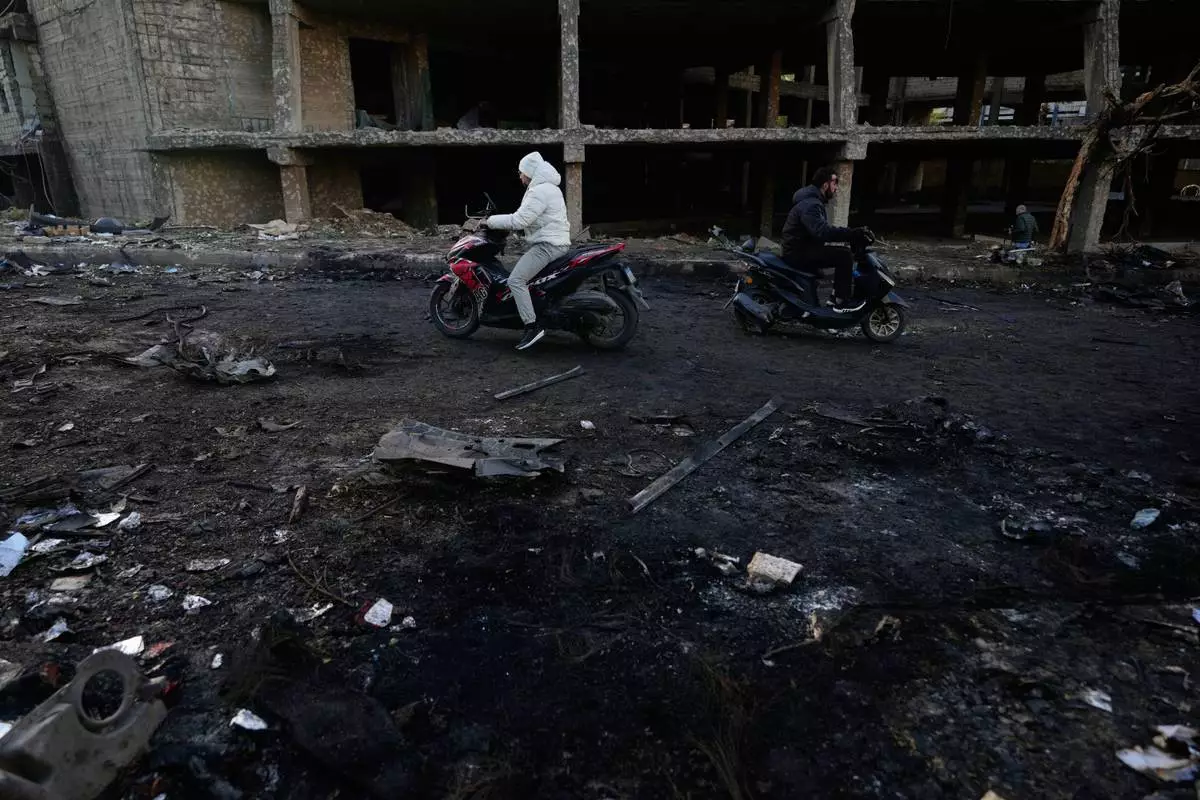
Two men ride scooters past charred debris at the site of an Israeli strike in Beirut, Lebanon, Wednesday, April 1, 2026. (AP Photo/Hassan Ammar)