Wang Huning, chairman of the National Committee of the Chinese People's Political Consultative Conference (CPPCC), met with a German Social Democratic Party (SPD) delegation led by Lars Klingbeil, co-chair of the SPD, in Beijing on Tuesday.
Wang, also a member of the Standing Committee of the Political Bureau of the Communist Party of China (CPC) Central Committee, said that President Xi Jinping and Chancellor Friedrich Merz reached important consensus on deepening China-Germany exchanges and cooperation during their phone conversation in May this year.
A healthy and stable China-Germany relationship serves the interests of both countries and meets the expectations of all sectors in China and Europe, said Wang.
China stands ready to work with Germany to advance their comprehensive strategic partnership to a higher level and promote the development of China-EU relations, Wang said, adding that the CPPCC National Committee is willing to make positive contributions to this end. Klingbeil, who is also German Vice Chancellor and Federal Minister of Finance, said China is an important partner for Germany and both countries bear significant responsibility for the future of the world.
Germany upholds the one-China policy and stands ready to work with China to implement the important consensus reached by the leaders of the two countries and promote practical cooperation across all fields, said Klingbeil.
The SPD is willing to strengthen strategic dialog with the CPC to enhance mutual understanding, he added.
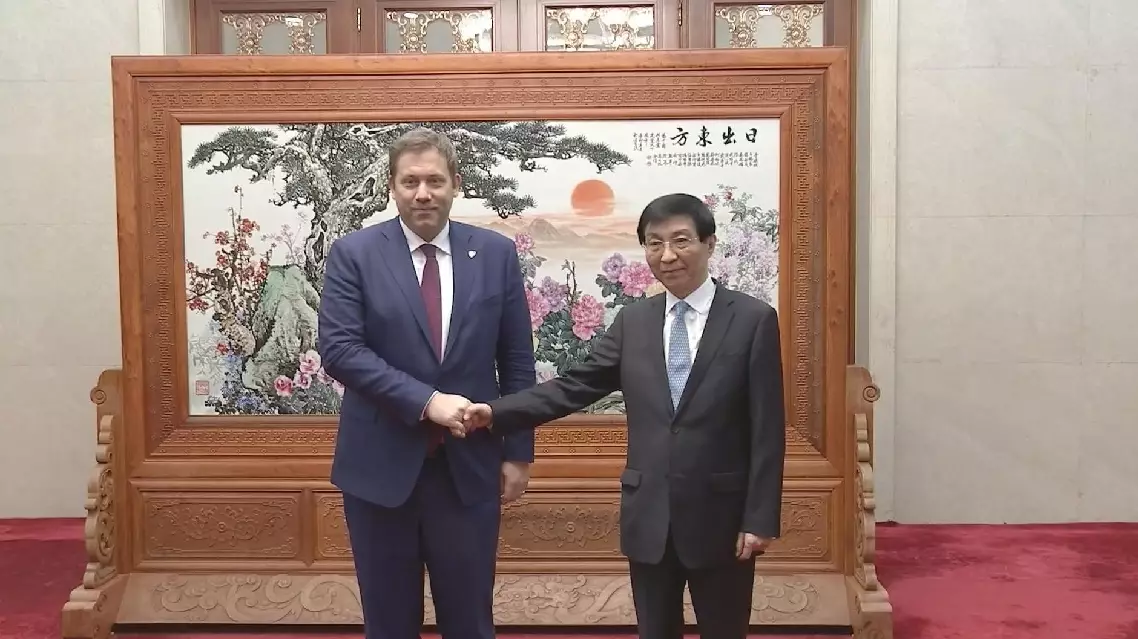
Top political advisor meets German Social Democratic Party delegation
The operational efficiency of Guangzhou Baiyun International Airport in south China's Guangdong Province has greatly improved following the launch of a new terminal and a new runway one month ago.
The airport officially put into operation its Terminal 3 and fifth runway on October 30, making it China's first civil airport to operate five commercial runways.
Terminal 3 features a range of self-service facilities, including check-in kiosks, automated baggage drop systems, and smart security screening equipment, which have greatly streamlined passenger processing.
Since its opening, five airlines have shifted their domestic operations to Terminal 3, which now handles an average of 158 flights and about 26,000 passengers daily.
"Compared with Terminal 1, both the number of staffed counters and self-service kiosks of Terminal 3 have increased significantly, greatly reducing the average check-in time for passengers. For domestic direct flights, the entire check-in process can be completed in a minimum of one minute," said Shi Mengyao, a staffer with the ground service department of the Guangdong branch of China Eastern Airlines.
Beyond efficiency improvements, the terminal also includes an observation deck that offers travelers panoramic views of the airfield.
"Since its opening, the observation deck attracts over 3,000 visitors per day on average, with total visits exceeding 100,000 to date," said Luo Li, deputy general manager of a terminal management company at Baiyun International Airport.
The airport's expansion also marks another step toward building a world-class airport cluster in the Guangdong-Hong Kong-Macao Greater Bay Area.
"The airport's expansion not only consolidates the Greater Bay Area as an aviation hub connecting China with the world, but also helps lower logistics costs within the area, promote the free flow and efficient allocation of economic resources, and enhances the area's capacity for global resource allocation," said Li Jing, chief planner with the Guangdong Provincial Department of Transport.
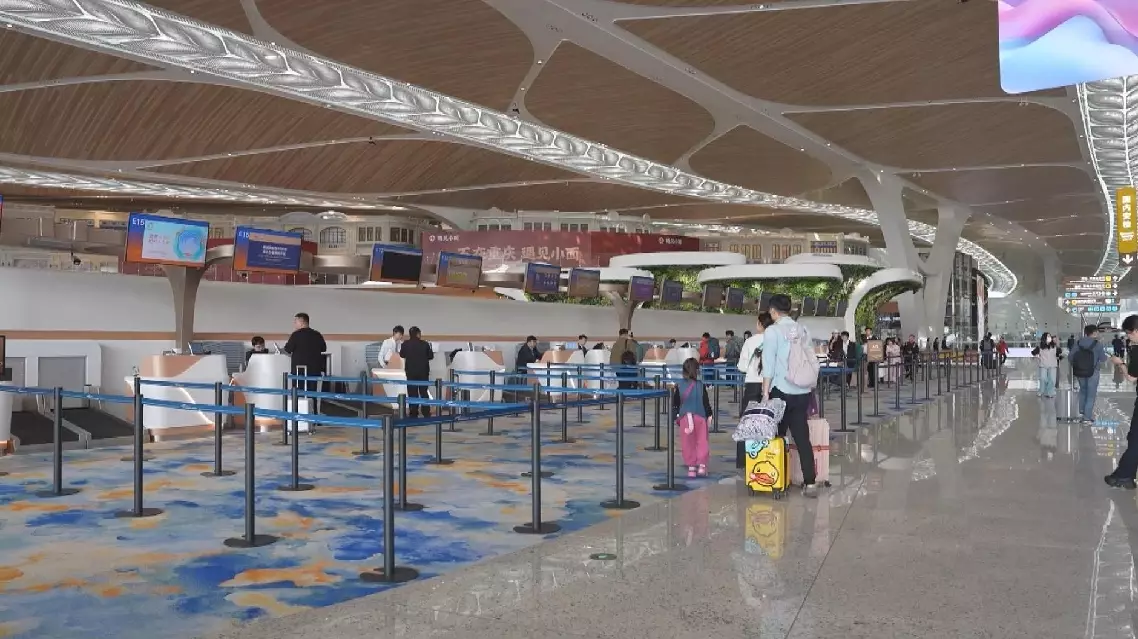
New terminal, runway boost operational efficiency of airport in Guangzhou