Skip to Content Facebook Feature Image

UN estimates over 2,000 Sudanese pregnant women have fled el-Fasher to escape conflict

News

UN estimates over 2,000 Sudanese pregnant women have fled el-Fasher to escape conflict
News

News

UN estimates over 2,000 Sudanese pregnant women have fled el-Fasher to escape conflict

2025-11-19 02:41 Last Updated At:12:04

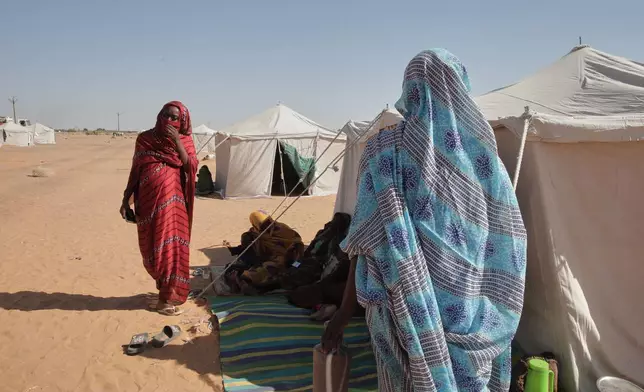
CAIRO (AP) — A few weeks before the fall of her hometown to Sudan’s paramilitary group, Nadra Mohamed Ahmed, seven months pregnant at the time, trekked for nearly 40 kilometers (25 miles) across unsafe roads, along with her two children, until she found safe transportation to a shelter across the country.

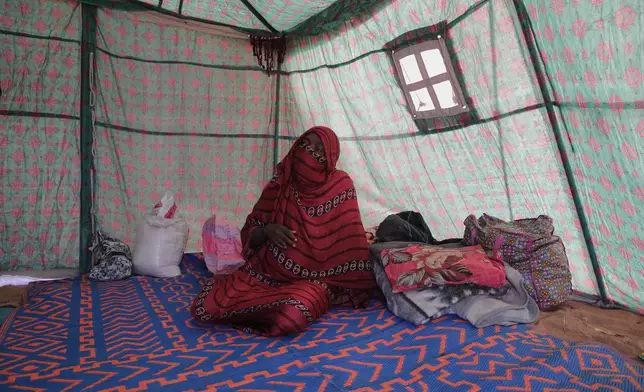
“By the time I arrived here, I had lost a lot of blood," said Ahmed from her tent at the overcrowded displacement camp in the town of al-Dabbah in northern Sudan. "I was admitted to the ICU, where I spent a few days and had a blood transfusion.”

More Images
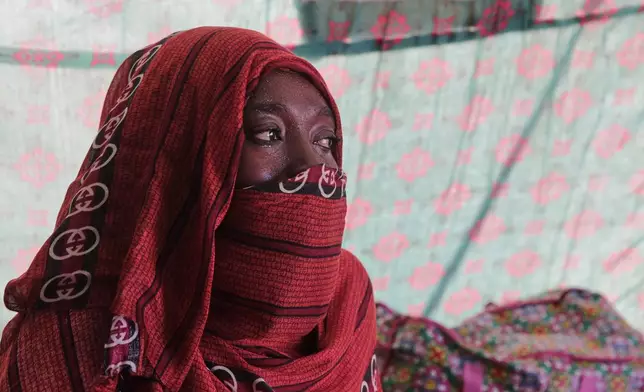
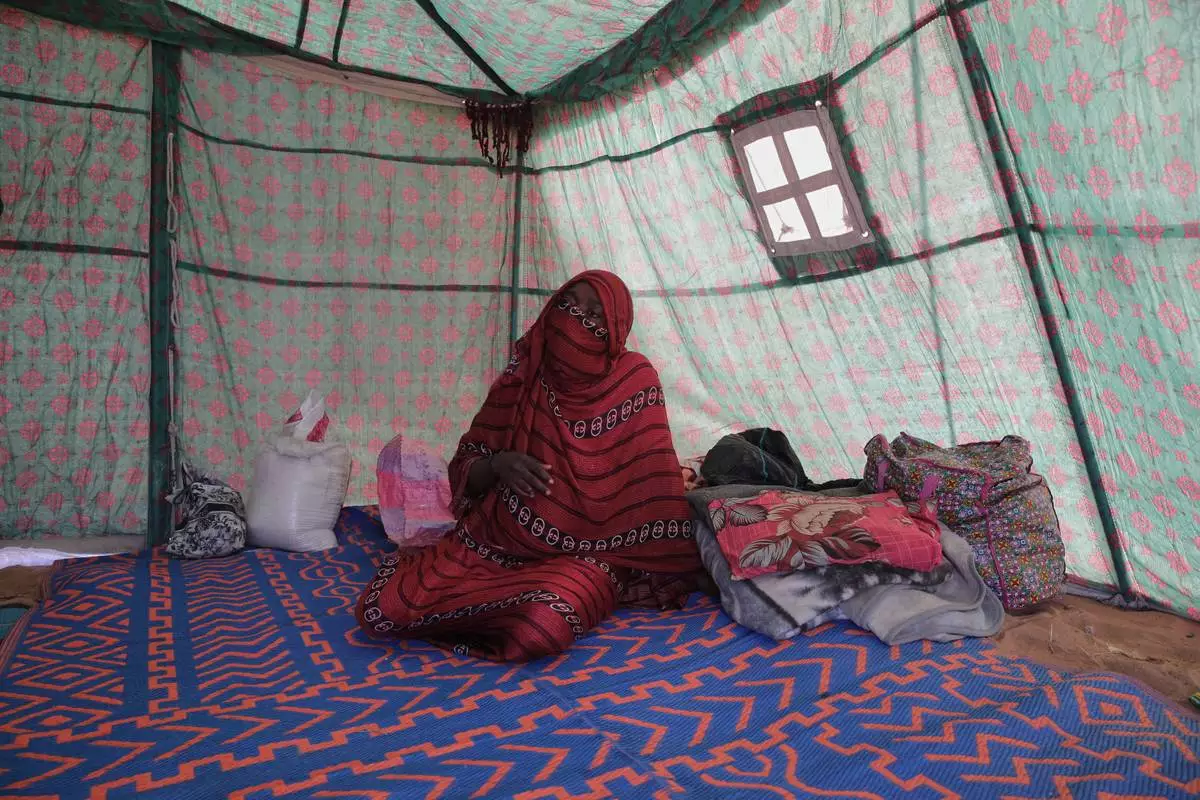
Nadra Mohamed Ahmed, 21, reacts during an interview with The Associated Press inside her tent at the newly established El-Afadh camp in Al Dabbah, Sudan's northern state, Monday, Nov. 17, 2025. (AP Photo/Marwan Ali)
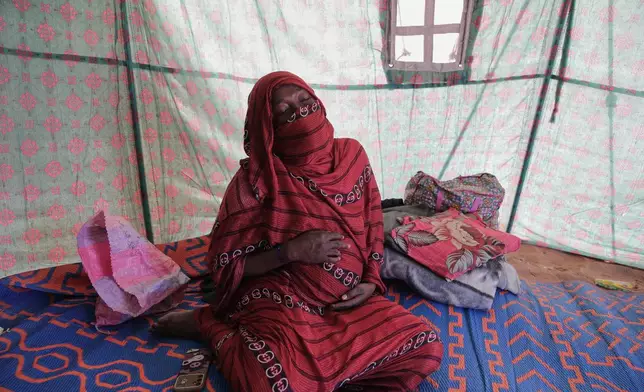
Nadra Mohamed Ahmed, 21, reacts during an interview with The Associated Press inside her tent at the newly established El-Afadh camp in Al Dabbah, Sudan's northern state, Monday, Nov. 17, 2025. (AP Photo/Marwan Ali)
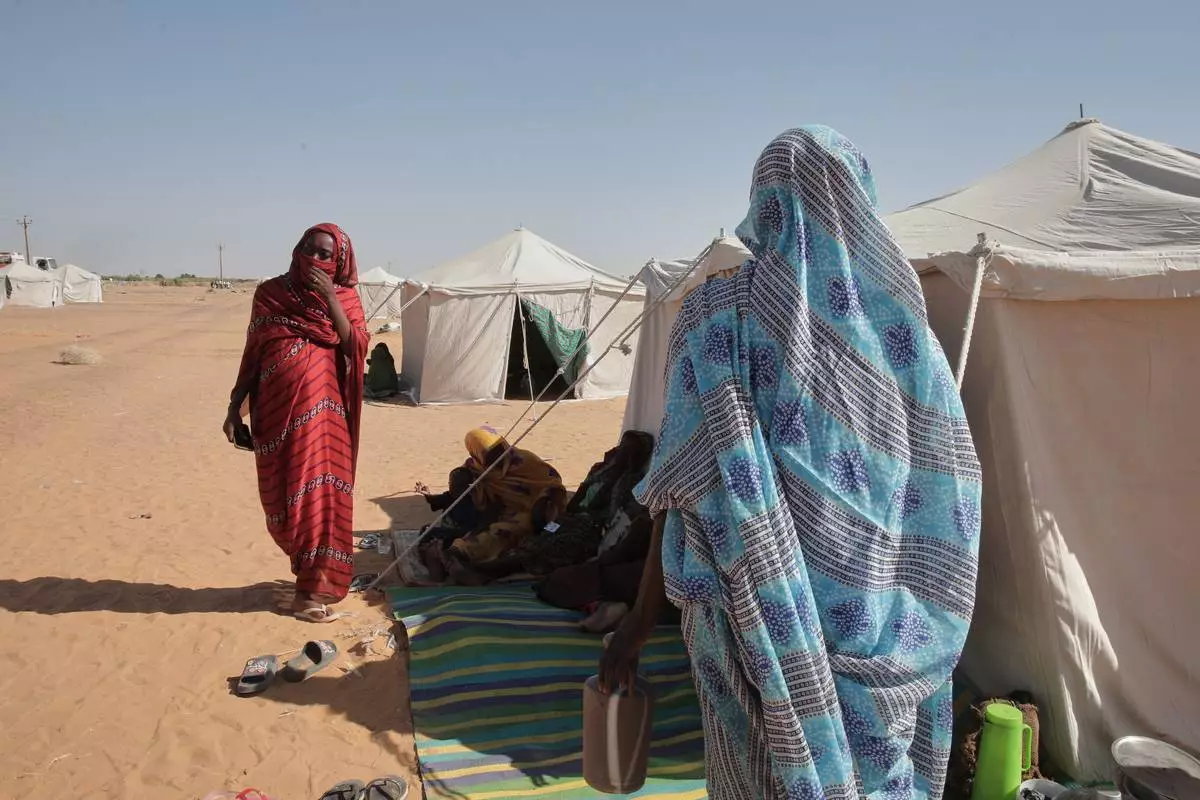
Nadra Mohamed Ahmed, left, stands outside her tent at the newly established El-Afadh camp in Al Dabbah, Sudan's northern state, Monday, Nov. 17, 2025. (AP Photo/Marwan Ali)
Nadra Mohamed Ahmed, left, stands outside her tent at the newly established El-Afadh camp in Al Dabbah, Sudan's northern state, Monday, Nov. 17, 2025. (AP Photo/Marwan Ali)

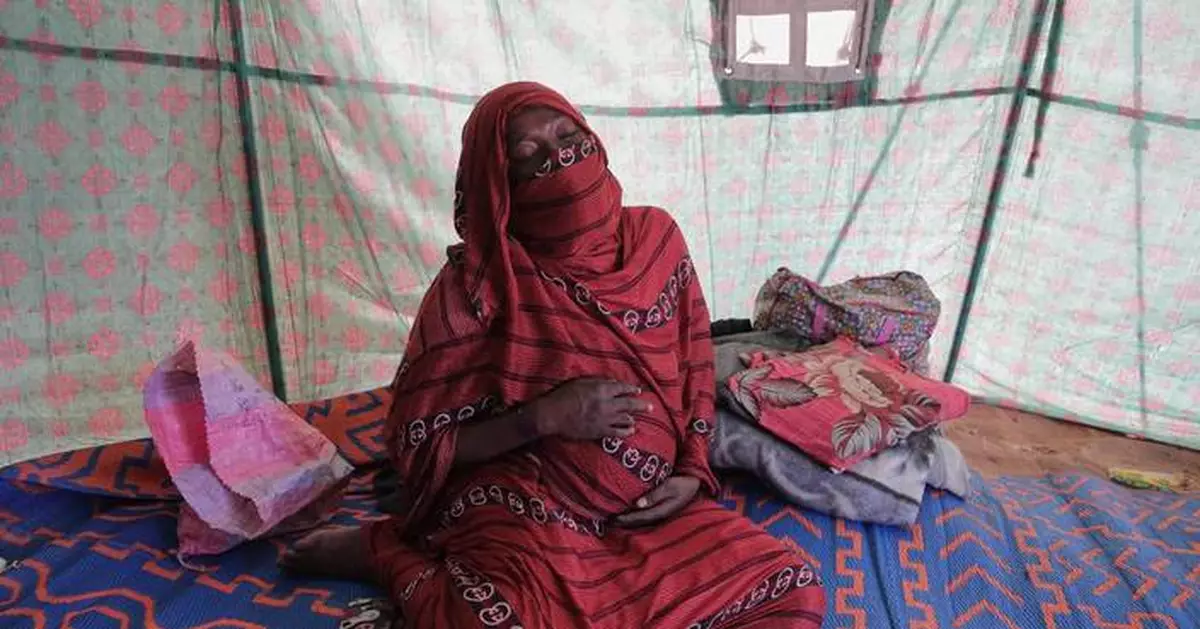
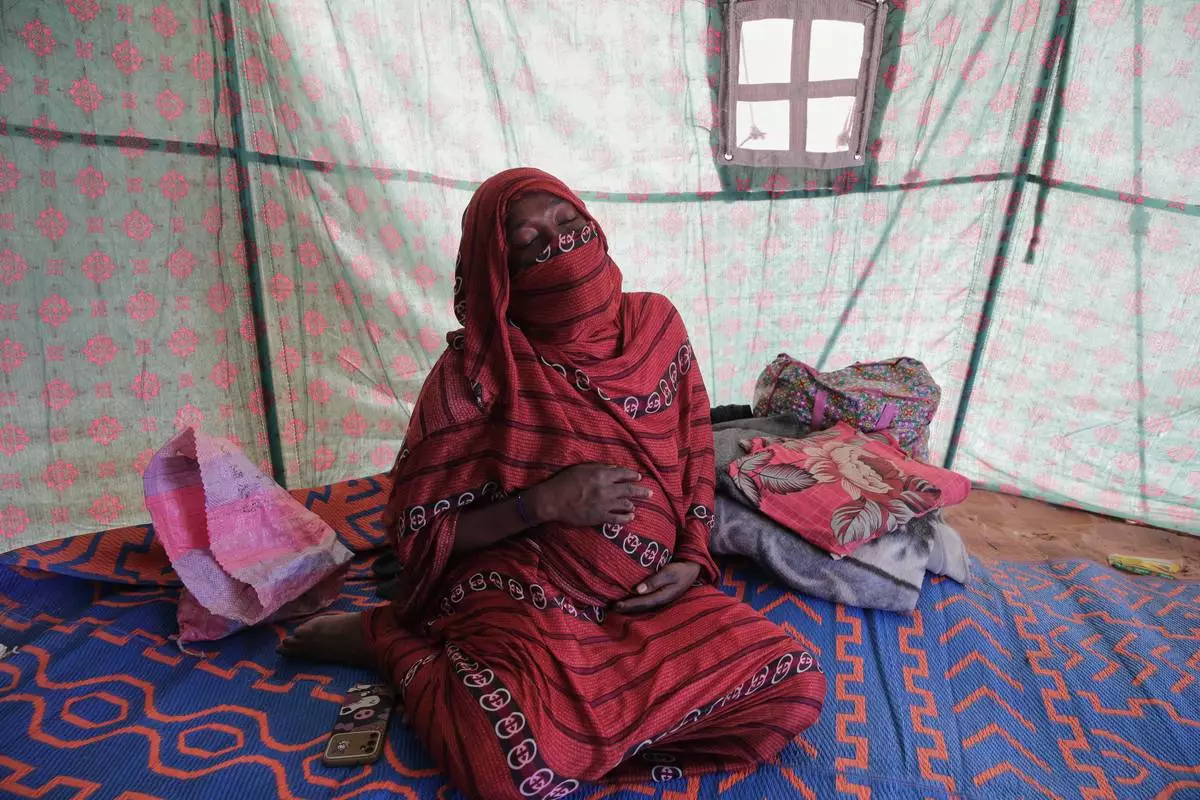
Nadra Mohamed Ahmed, 21, speaks during an interview with The Associated Press inside her tent at the newly established El-Afadh camp in Al Dabbah, Sudan's northern state, Monday, Nov. 17, 2025. (AP Photo/Marwan Ali)

Nadra Mohamed Ahmed, 21, speaks during an interview with The Associated Press inside her tent at the newly established El-Afadh camp in Al Dabbah, Sudan's northern state, Monday, Nov. 17, 2025. (AP Photo/Marwan Ali)

Nadra Mohamed Ahmed, 21, reacts during an interview with The Associated Press inside her tent at the newly established El-Afadh camp in Al Dabbah, Sudan's northern state, Monday, Nov. 17, 2025. (AP Photo/Marwan Ali)

Nadra Mohamed Ahmed, 21, reacts during an interview with The Associated Press inside her tent at the newly established El-Afadh camp in Al Dabbah, Sudan's northern state, Monday, Nov. 17, 2025. (AP Photo/Marwan Ali)

Ahmed arrived in the camp two months before el-Fasher in West Darfur was seized by the paramilitary Rapid Support Forces, or RSF, which have been battling Sudan’s army for more than two years.

The U.N. population agency estimates over 2,000 women have fled the city to escape the harrowing fighting.

More than 140 pregnant women arrived at al-Dabbah camps since el-Fasher's fall last month, said Tasneem Al-Amin from the Sudan Doctors Network, a group of medical professionals tracking the war. Many of these women arrive suffering severe complications, especially hemorrhaging, which sometimes culminate in a miscarriage, she told The Associated Press in a text message.

Carrying her 4-year-old daughter on her back and holding her 6-year-old son’s hand, Ahmed made part of her 14-day-long journey on foot without her husband, who had gone missing shortly before her escape. She rested in two nearby villages along the way until she could find transportation to al-Dabbah, a town about 1,300 kilometers (840 miles) northeast of el-Fasher.

“I was very exhausted on the journey. I was carrying a child on my back and another in my womb. We had nothing to eat or drink,” said Ahmed, who was dressed in a maroon toub, a traditional dress that drapes around the body and head, commonly worn by Sudanese women.

Ahmed is one of many Sudanese pregnant women who struggle to complete their terms and give birth to healthy babies, in a country where 80% of medical facilities have collapsed in war-torn regions, according to U.N. agencies.

Last week, Anna Mutavati, the U.N. women's regional director for East and Southern Africa, told reporters that Sudanese women are forced to give birth on the streets.

Earlier this year, Doctors Without Borders, known for its French acronym MSF, said Darfur pregnant women undertake “a harrowing journey” trekking on foot across unsafe roads to seek medical care at the few remaining health care facilities, which results in delivery complications, miscarriage or death.

“When in el-Fasher, I could not have access to any medical facilities. Not until I came here to al-Dabbah did I meet doctors,” Ahmed said.

Ahmed ran from el-Fasher shortly after an RSF projectile had hit her house and killed her sister.

“We could hardly collect my sister’s remains. We witnessed horrible scenes and that is why we decided to leave,” she said.

Last month, RSF forces rampaged through el-Fasher, following more than 500 days of siege. The paramilitary group had gone house to house, killing civilians and committing sexual assaults, according to relief agencies and witnesses.

The RSF also stormed the Saudi Maternity Hospital, the last functioning health facility in el-Fasher, reportedly killing 460 patients and their companions. The attack left more than 6,000 pregnant women with no access to life-saving maternal care, according to the U.N. The rampage has forced tens of thousands to flee their homes, embarking on a perilous journey, hoping to reach displacement camps.

Rasha Ahmed, who is eight months pregnant, recently arrived in Tawila, a town some 60 kilometers (35 miles) west of el-Fasher. She told the International Committee of the Red Cross that she had no one to provide for her and her children, as her husband had gone missing after a shell had hit their home in el-Fasher.

“I arrived heavily pregnant, and I don’t have anything to help me after giving birth, nothing for my postpartum period,” said Ahmed, whose right ear was partially chopped off in the shelling.

She added that the RSF confiscated people’s belongings and threw them on the street, forcing them to flee with nothing.

“They didn’t allow us to take anything — not even bed sheets or covers,” she added.

Ahmed is one of more than 100 pregnant women who have recently fled to Tawila, according to Sudan’s Doctors Network.

Sami Aswad, U.N. population fund humanitarian coordinator in Darfur and North Sudan, said it is difficult to determine the exact number of pregnant women fleeing from el-Fasher, given the fluidity of the situation. However, the fund has estimated that more than 2,300 pregnant women must have left the city since Oct. 27, based on humanitarian tools used to calculate country-specific data in times of crisis, he told the AP in a video call.

On the ground, the UNFPA has so far facilitated a total of 102 deliveries, including natural birth and C-sections in both Tawila and al-Dabbah in recent weeks, he said. However, the newborns have to endure the difficult conditions at the overcrowded camps, he said.

“It is hard to provide newborns with adequate shelter conditions, adequate clothing, good heating and baby formula, knowing that those babies are already born malnourished,” he said, alluding to the shortage of humanitarian supplies.

Pregnant and lactating women are also enduring malnutrition in a country where food insecurity rates remain on the rise.

The rate of global acute malnutrition among the 66 pregnant or lactating women who were examined upon their arrival in Tawila by MSF between Oct. 27 and Nov. 3 was 60%, according to Tim Shenk, a communications officer with the international medical aid group.

Across the East African country, nearly 74% of women don't meet the minimum dietary diversity, which limits their nutrient intake, and hence affects maternal health and child health. Women are reportedly foraging for wild leaves and berries to boil into soup, which exposes them to additional risks of violence, including abduction and sexual assaults, according to the U.N.

The war between the RSF and the military began in 2023, when tensions erupted between the two former allies that were meant to oversee a democratic transition after a 2019 uprising. The fighting has killed at least 40,000 people, according to the World Health Organization, and displaced 12 million. Aid groups say the true death toll could be many times higher.

Britain’s foreign secretary, Yvette Cooper, said Tuesday it was working with allies to press for a truce so life-saving supplies can be brought in. The U.K. government plans to introduce potential sanctions on those involved in rights abuses in Sudan without providing details, she said.
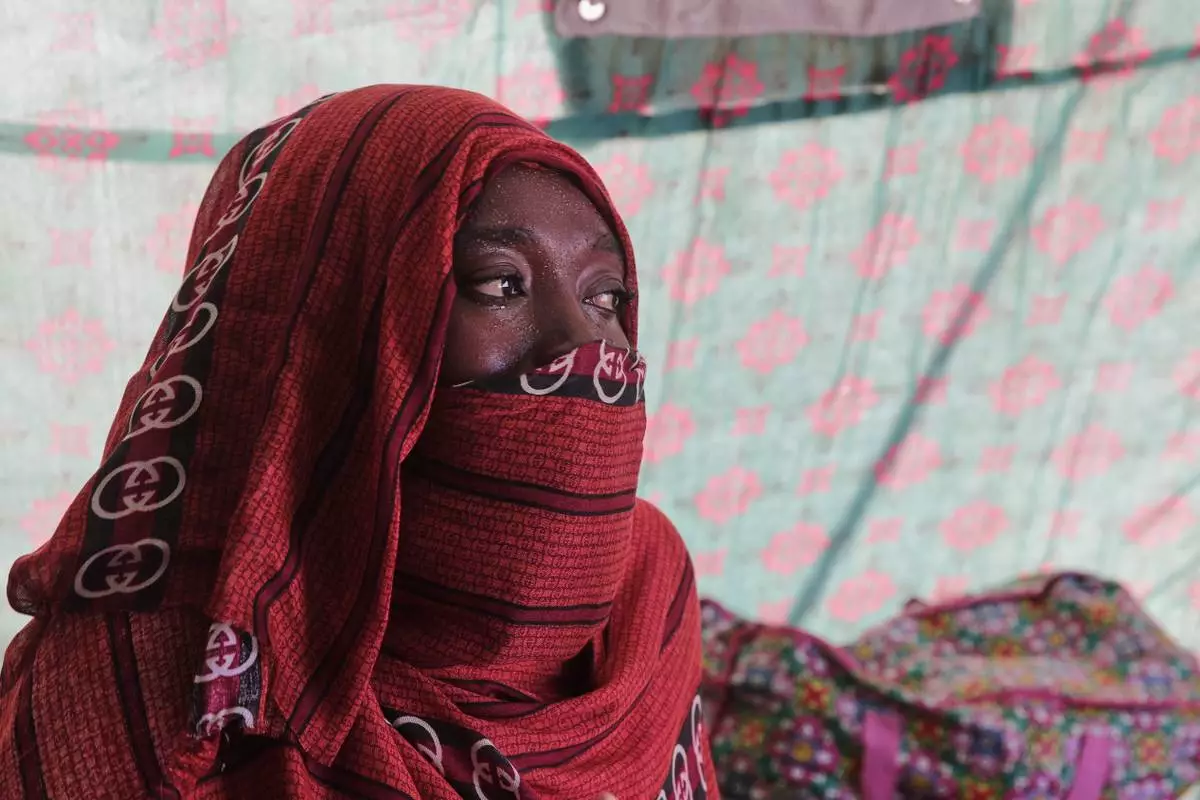
Nadra Mohamed Ahmed, 21, reacts during an interview with The Associated Press inside her tent at the newly established El-Afadh camp in Al Dabbah, Sudan's northern state, Monday, Nov. 17, 2025. (AP Photo/Marwan Ali)
Nadra Mohamed Ahmed, 21, reacts during an interview with The Associated Press inside her tent at the newly established El-Afadh camp in Al Dabbah, Sudan's northern state, Monday, Nov. 17, 2025. (AP Photo/Marwan Ali)
Nadra Mohamed Ahmed, left, stands outside her tent at the newly established El-Afadh camp in Al Dabbah, Sudan's northern state, Monday, Nov. 17, 2025. (AP Photo/Marwan Ali)
Nadra Mohamed Ahmed, left, stands outside her tent at the newly established El-Afadh camp in Al Dabbah, Sudan's northern state, Monday, Nov. 17, 2025. (AP Photo/Marwan Ali)

Nadra Mohamed Ahmed, 21, speaks during an interview with The Associated Press inside her tent at the newly established El-Afadh camp in Al Dabbah, Sudan's northern state, Monday, Nov. 17, 2025. (AP Photo/Marwan Ali)
Nadra Mohamed Ahmed, 21, speaks during an interview with The Associated Press inside her tent at the newly established El-Afadh camp in Al Dabbah, Sudan's northern state, Monday, Nov. 17, 2025. (AP Photo/Marwan Ali)

Nadra Mohamed Ahmed, 21, reacts during an interview with The Associated Press inside her tent at the newly established El-Afadh camp in Al Dabbah, Sudan's northern state, Monday, Nov. 17, 2025. (AP Photo/Marwan Ali)

Nadra Mohamed Ahmed, 21, reacts during an interview with The Associated Press inside her tent at the newly established El-Afadh camp in Al Dabbah, Sudan's northern state, Monday, Nov. 17, 2025. (AP Photo/Marwan Ali)
RHO, Italy (AP) — No ice is colder and harder than speedskating ice. The precision it takes has meant that Olympic speedskaters have never competed for gold on a temporary indoor rink – until the 2026 Milan Cortina Winter Games.

In the pursuit of maximum glide and minimum friction, Olympic officials brought on ice master Mark Messer, a veteran of six previous Olympic speedskating tracks and the ice technician in charge of the Olympic Oval in Calgary, Canada — one of the fastest tracks in the world with over 300 records.

Messer has been putting that experience to work one thin layer of ice at a time since the end of October at the new Speed Skating Stadium, built inside adjacent trade fair halls in the city of Rho just north of Milan.

“It’s one of the biggest challenges I’ve had in icemaking,’’ Messer said during an interview less than two weeks into the process.

If Goldilocks were a speedskater, hockey ice would be medium hard, for fast puck movement and sharp turns. Figure skating ice would be softer, allowing push off for jumps and so the ice doesn’t shatter on landing. Curling ice is the softest and warmest of all, for controlled sliding.

For speedskating ice to be just right, it must be hard, cold and clean. And very, very smooth.

“The blades are so sharp, that if there is some dirt, the blade will lose the edge,’’ Messer said, and the skater will lose speed.

Speedskater Enrico Fabris, who won two Olympic golds in Turin in 2006, has traded in his skates to be deputy sports manager at the speedskating venue in Rho. For him, perfect ice means the conditions are the same for all skaters — and then if it's fast ice, so much the better.

"It's more of a pleasure to skate on this ice,'' he said.

Messer’s first Olympics were in Calgary in 1988 — the first time speedskating was held indoors. “That gave us some advantages because we didn’t have to worry about the weather, wind blowing or rain,’’ he said. Now he is upping the challenge by becoming the first ice master to build a temporary rink for the Olympics.

Before Messer arrived in Italy, workers spent weeks setting up insulation to level the floor and then a network of pipes and rubber tubes that carry glycol — an antifreeze — that is brought down to minus 7 or minus 8 degrees Celsius (17.6 to 19.4 degrees Fahrenheit) to make the ice.

Water is run through a purification system — but it can’t be too pure, or the ice that forms will be too brittle. Just the right amount of impurities “holds the ice together,’’ Messer said.

The first layers of water are applied slowly, with a spray nozzle; after the ice reaches a few centimeters it is painted white — a full day’s work — and the stripes are added to make lanes.

“The first one takes about 45 minutes. And then as soon as it freezes, we go back and do it again, and again and again. So we do it hundreds of times,’’ Messer said.

As the ice gets thicker, and is more stable, workers apply subsequent layers of water with hoses. Messer attaches his hose to hockey sticks for easier spreading.

What must absolutely be avoided is dirt, dust or frost — all of which can cause friction for the skaters, slowing them down. The goal is that when the skaters push “they can go as far as possible with the least amount of effort,’’ Messer said.

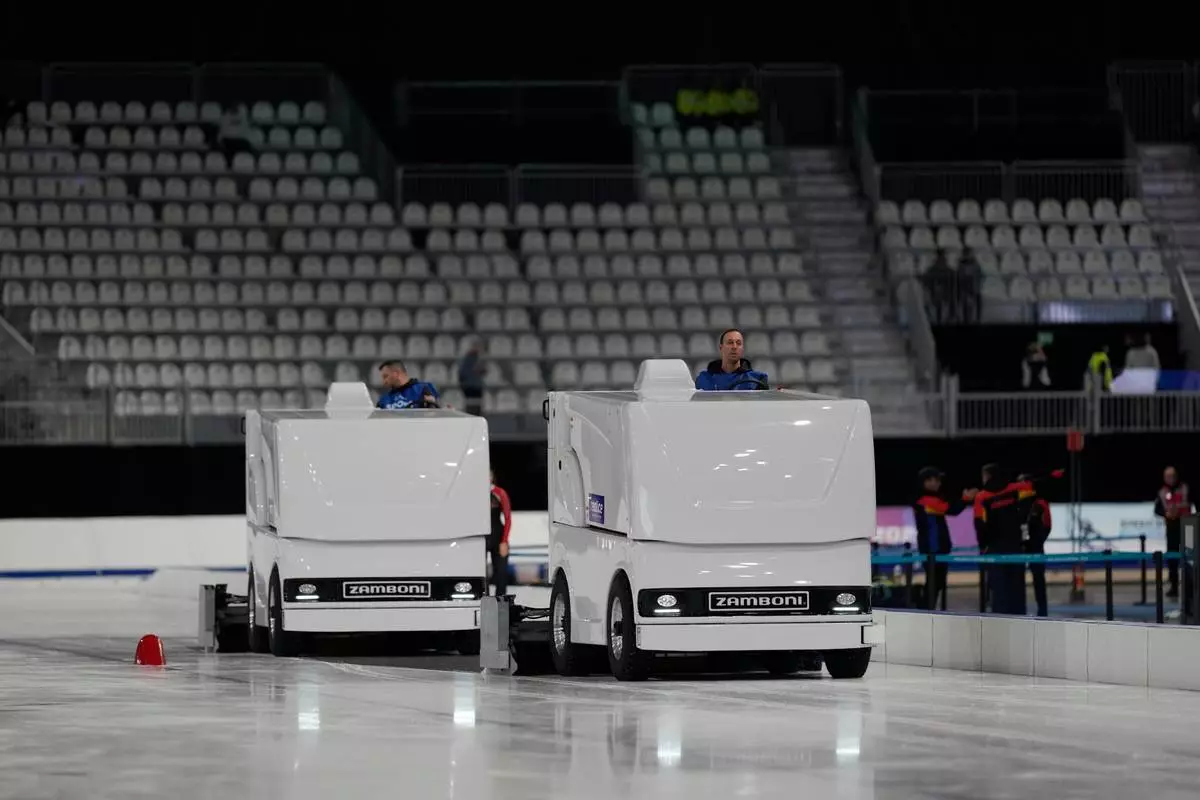
The Zamboni ice resurfacing machine plays a key role in keeping the track clean, cutting off a layer and spraying water to make a new surface.

One challenge is gauging how quickly the water from the resurfacing machine freezes in the temporary rink.

Another is getting the ice to the right thickness so that the Zamboni, weighing in at six tons, doesn’t shift the insulation, rubber tubing or ice itself.

“When you drive that out, if there’s anything moving it will move. We don’t want that,’’ Messer said.

The rink got its first big test on Nov. 29-30 during a Junior World Cup event. In a permanent rink, test events are usually held a year before the Olympics, leaving more time for adjustments. “We have a very small window to learn,’’ Messer acknowledged.

Dutch speedskater Kayo Vos, who won the men’s neo-senior 1,000 meters, said the ice was a little soft — but Messer didn’t seem too concerned.

“We went very modest to start, now we can start to change the temperatures and try to make it faster and still maintain it as a safe ice,’’ he said.

Fine-tuning the air temperature and humidity and ice temperature must be done methodically — taking into account that there will be 6,000 spectators in the venue for each event. The next real test will be on Jan. 31, when the Olympians take to the ice for their first training session.

“Eighty percent of the work is done but the hardest part is the last 20 percent, where we have to try to find the values and the way of running the equipment so all the skaters get the same conditions and all the skaters get the best conditions,’’ Messer said.

AP Winter Olympics: https://apnews.com/hub/milan-cortina-2026-winter-olympics

Serpentines are set on the ice of the stadium where speed skating discipline of the Milan Cortina 2026 Winter Olympics will take place, in Rho, outskirt of Milan, Tuesday, Nov. 11, 2025. (AP Photo/Luca Bruno)

Serpentines are set on the ice of the stadium where speed skating discipline of the Milan Cortina 2026 Winter Olympics will take place, in Rho, outskirt of Milan, Tuesday, Nov. 11, 2025. (AP Photo/Luca Bruno)

Ice Master Mark Messer poses in the stadium where speed skating discipline of the Milan Cortina 2026 Winter Olympics will take place, in Rho, outskirt of Milan, Tuesday, Nov. 11, 2025. (AP Photo/Luca Bruno)

Ice Master Mark Messer poses in the stadium where speed skating discipline of the Milan Cortina 2026 Winter Olympics will take place, in Rho, outskirt of Milan, Tuesday, Nov. 11, 2025. (AP Photo/Luca Bruno)

Workers clean the ice surface during a peed skating Junior World Cup and Olympic test event, in Rho, near Milan, Italy, Saturday, Nov. 29, 2025. (AP Photo/Luca Bruno)

Workers clean the ice surface during a peed skating Junior World Cup and Olympic test event, in Rho, near Milan, Italy, Saturday, Nov. 29, 2025. (AP Photo/Luca Bruno)

Ice Master Mark Messer poses in the stadium where speed skating discipline of the Milan Cortina 2026 Winter Olympics will take place, in Rho, outskirt of Milan, Tuesday, Nov. 11, 2025. (AP Photo/Luca Bruno)

Ice Master Mark Messer poses in the stadium where speed skating discipline of the Milan Cortina 2026 Winter Olympics will take place, in Rho, outskirt of Milan, Tuesday, Nov. 11, 2025. (AP Photo/Luca Bruno)

Ice Master Mark Messer poses in the stadium where speed skating discipline of the Milan Cortina 2026 Winter Olympics will take place, in Rho, outskirt of Milan, Tuesday, Nov. 11, 2025. (AP Photo/Luca Bruno)

Ice Master Mark Messer poses in the stadium where speed skating discipline of the Milan Cortina 2026 Winter Olympics will take place, in Rho, outskirt of Milan, Tuesday, Nov. 11, 2025. (AP Photo/Luca Bruno)

Recommended Articles