MEXICO CITY (AP) — Mexico's president on Tuesday ruled out allowing U.S. strikes against cartels on Mexican soil, a day after U.S. President Donald Trump said he was willing to do whatever it takes to stop drugs entering the U.S.
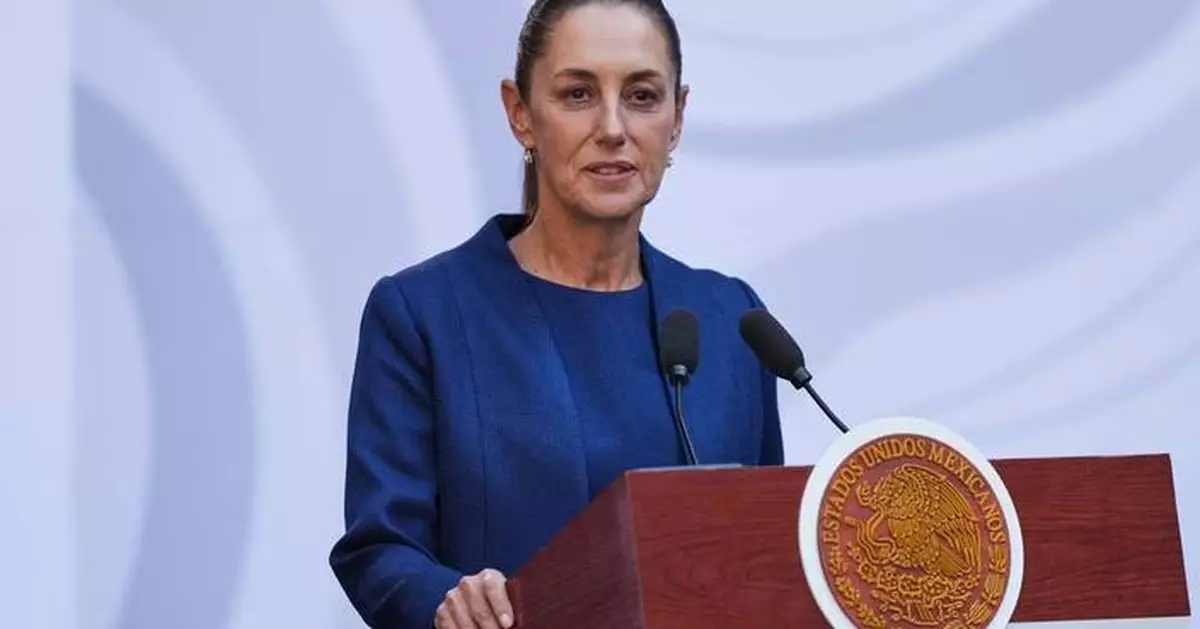
“It’s not going to happen,” President Claudia Sheinbaum said.
“He (Trump) has suggested it on various occasions or he has said, ‘we offer you a United States military intervention in Mexico, whatever you need to fight the criminal groups,’” she said. “But I have told him on every occasion that we can collaborate, that they can help us with information they have, but that we operate in our territory, that we do not accept any intervention by a foreign government.”
Sheinbaum said she had said this to Trump and to U.S. Secretary of State Marco Rubio on previous occasions and that they have understood.
“Would I want strikes in Mexico to stop drugs? OK with me, whatever we have to do to stop drugs,” Trump said Monday, adding that he’s “not happy with Mexico.”
The U.S. Embassy in Mexico shared a video on X later Monday that included previous comments from Rubio saying that the U.S. would not take unilateral action in Mexico.
Meanwhile, Mexican and U.S. diplomats were trying to sort out Tuesday what may have been an actual U.S. incursion.
On Monday, men arrived in a boat at a beach in northeast Mexico and installed some signs signaling land that the U.S. Department of Defense considered restricted.
Mexico’s Foreign Affairs Ministry said late Monday that the country’s navy had removed the signs, which appeared to be on Mexican territory. And on Tuesday, Sheinbaum said that the International Boundary and Water Commission, a binational agency that determines the border between the two countries, was getting involved.
The signs, driven into the sand near where the Rio Grande empties into the Gulf of Mexico, caused a stir when witnesses said men in a boat arrived at the local beach known as Playa Bagdad and erected them.
The signs read in English and Spanish, “Warning: Restricted Area” and went on to explain that it was Department of Defense property and had been declared restricted by “the commander.” It said there could be no unauthorized access, photography or drawings of the area.
The U.S. Embassy in Mexico shared a comment from the Pentagon Tuesday about the incident, confirming that contractors putting up signs to mark the “National Defense Area III” had placed signs at the mouth of the Rio Grande.
“Changes in water depth and topography altered the perception of the international boundary’s location," the statement said. "Government of Mexico personnel removed 6 signs based on their perception of the international boundary’s location.”
The Pentagon said the contractors would "coordinate with appropriate agencies to avoid confusion in the future.”
Mexico had contacted its consulate in Brownsville, Texas and then the U.S. Embassy in Mexico City. Eventually, it was determined that contractors working for some U.S. government entity had placed the signs, Sheinbaum said.
“But the river changes its course, it breaks loose and according to the treaty you have to clearly demarcate the national border,” Sheinbaum said during her daily press briefing.
The area is close to SpaceX Starbase, which sits adjacent to Boca Chica Beach on the Texas side of the Rio Grande.
The facility and launch site for the SpaceX rocket program is under contract with the Department of Defense and NASA, which hopes to send astronauts back to the moon and someday to Mars.
In June, Sheinbaum said the government was looking into contamination from the SpaceX facility after pieces of metal, plastic and rocket pieces were reportedly found on the Mexican side of the border following the explosion of a rocket during a test.
The area also carries the added sensitivity of Trump's order to rename the Gulf of Mexico as the Gulf of America, which Mexico has also rejected.
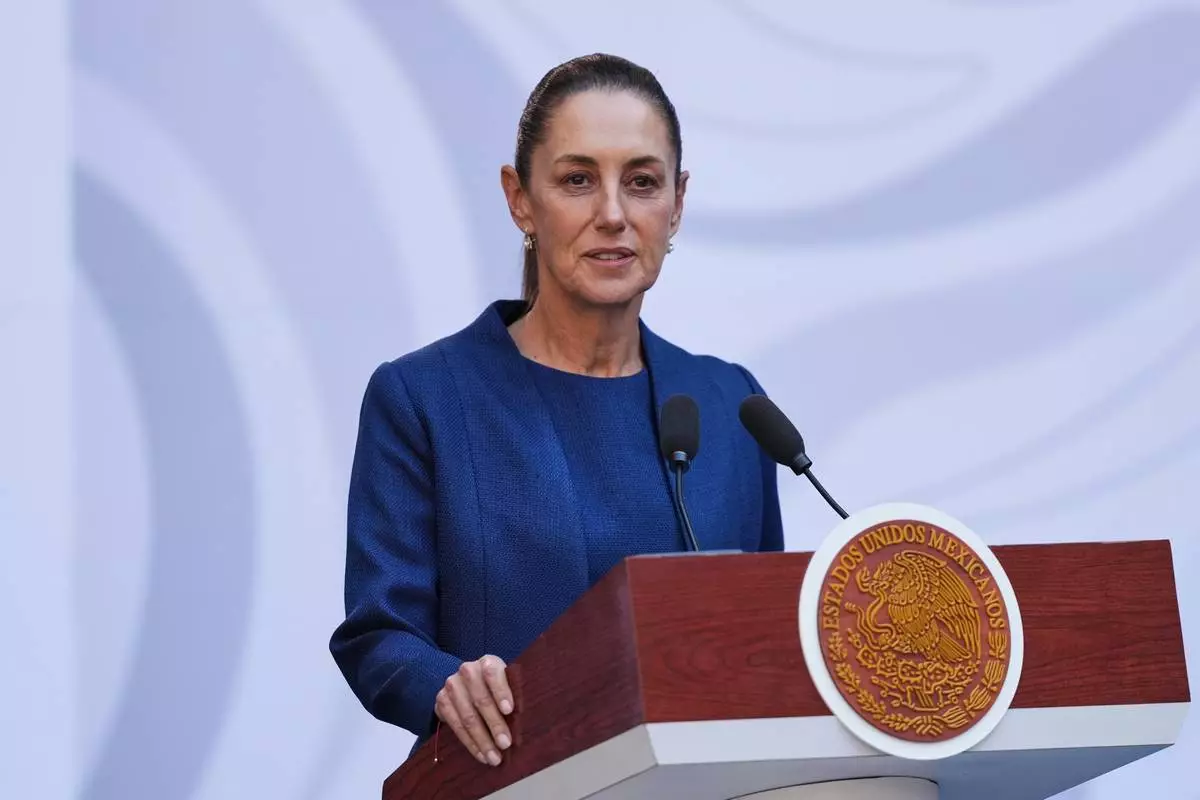
Mexican President Claudia Sheinbaum present a new security strategy against violence for Michoacan state, at the National Palace, in Mexico City, Sunday, Nov. 9, 2025. (AP Photo/Claudia Rosel)
BERLIN (AP) — Germany's defense minister on Saturday appeared to take in stride a Pentagon announcement that the United States plans to pull some 5,000 troops out of the country, President Donald Trump's latest attempt to reduce America's commitment to European security.
Boris Pistorius said the drawdown, which Trump has threatened for years, was expected, and he said European nations needed to take on more responsibility for their own defense. But he also emphasized that security cooperation benefited both sides of the trans-Atlantic partnership.
“The presence of American soldiers in Europe, and especially in Germany, is in our interest and in the interest of the U.S.,” Pistorius told the German news agency dpa.
The planned withdrawal faced bipartisan resistance in Washington, with swift criticism from Democrats and concern from Republicans that it would send the “wrong signal” to Russian President Vladimir Putin, whose full=scale invasion of Ukraine recently entered its fifth year.
Trump's decision comes as he seethes at European allies over their unwillingness to join his campaign with Israel against Iran. He has lashed out at leaders like German Chancellor Friedrich Merz, Spanish Prime Minister Pedro Sánchez and British Prime Minister Keir Starmer.
Merz last week criticized the war in Iran, saying the U.S. is being “humiliated” by the Iranian leadership and calling out Washington’s lack of strategy.
In another sign of friction, Trump accused the European Union of not complying with its U.S. trade deal and announced plans to increase tariffs next week on cars and trucks produced in the bloc to 25%, a move that would be particularly damaging to Germany, a major automobile manufacturer.
At least one EU lawmaker called the tariff hike “unacceptable” and accused Trump of breaking yet another U.S. commitment on trade.
A pullout of 5,000 soldiers from Germany would amount to about one-seventh of the 36,000 American service members stationed in the country. The Pentagon offered few details about which troops or operations would be affected.
The withdrawal is scheduled to take place over the next six to 12 months. Trump previously said he would pull 9,500 troops from Germany during his first term, but he didn’t start the process and Democratic President Joe Biden formally stopped the planned withdrawal soon after taking office in 2021.
More broadly, around 80,000-100,000 U.S. personnel are usually stationed in Europe — depending on operations, exercises and troop rotations. The U.S. increased its European deployment after Russia launched its full-scale war on Ukraine in February 2022. NATO allies like Germany have expected for over a year that these troops would be the first to leave.
Pistorius, in his comments to dpa, said, “We Europeans must take on more responsibility for our security,” while stressing recent efforts by Germany to boost its armed forces, accelerate procurement and develop infrastructure.
NATO spokesperson Allison Hart, in a post Saturday on X, said the trans-Atlantic alliance was “working with the U.S. to understand the details of their decision on force posture in Germany.”
“This adjustment underscores the need for Europe to continue to invest more in defense and take on a greater share of the responsibility for our shared security,” she added, noting “progress” toward a target among NATO allies to each invest 5% of their economic output to defense.
Pentagon spokesperson Sean Parnell said in a statement that the “decision follows a thorough review of the Department’s force posture in Europe and is in recognition of theater requirements and conditions on the ground.”
A U.S. defense official, speaking on condition of anonymity to discuss sensitive matters, said the branches of the U.S. military didn’t have prior knowledge of the decision to draw down the 5,000 troops and learned about it “in real time.”
Most U.S troops in Germany come from the Army and Air Force.
Germany hosts several American military facilities, including the headquarters of the U.S. European and Africa commands, Ramstein Air Base and a medical center in Landstuhl, where casualties from the wars in Afghanistan and Iraq were treated. U.S. nuclear missiles are also stationed in the country.
Withdrawal of 5,000 troops – the size of a brigade combat team – from Germany would likely have limited impact on combat power, but “in terms of messaging of U.S. commitment though, it’s very different,” another U.S. defense official said.
The only permanent brigade combat team in Germany is the 2nd Cavalry Regiment, alongside an aviation brigade and other assets, which is considered to have an important role in America's — and NATO's — ability to deter threats.
After swift pushback from Democrats on Friday, Republican leaders of both armed services committees in Congress said Saturday they were “very concerned” about the troop withdrawal.
Sen. Roger Wicker of Mississippi and Rep. Mike Rogers of Alabama said the decision risked “undermining deterrence and sending the wrong signal to Vladimir Putin.”
They also said the Pentagon had decided to cancel the planned deployment of the Army's Long-Range Fires Battalion. Parnell's statement made no mention of that.
Wicker and Rogers said any significant change to the U.S. force posture in Europe warrants review and coordination with Congress.
“We expect the Department to engage with its oversight committees in the days and weeks ahead on this decision and its implications for U.S. deterrence and trans-Atlantic security,” they said in a joint statement.
They also noted that Germany has heeded Trump’s call to shoulder more of the burden of defense spending in Europe, while giving U.S. forces access to its bases and airspace in the war against Iran.
Trump has mused for years about reducing the American military presence in Germany, and has railed against NATO for its refusal to assist Washington in the war, which began on Feb. 28 with U.S.-Israeli strikes on Iran.
American allies in NATO have braced for a U.S. troop withdrawal since Trump took office, with Washington warning that Europe would have to look after its own security, including that of Ukraine, in the future.
Burrows reported from London. Associated Press writers Ben Finley in Washington and Jamey Keaten in Lyon, France, contributed to this report.
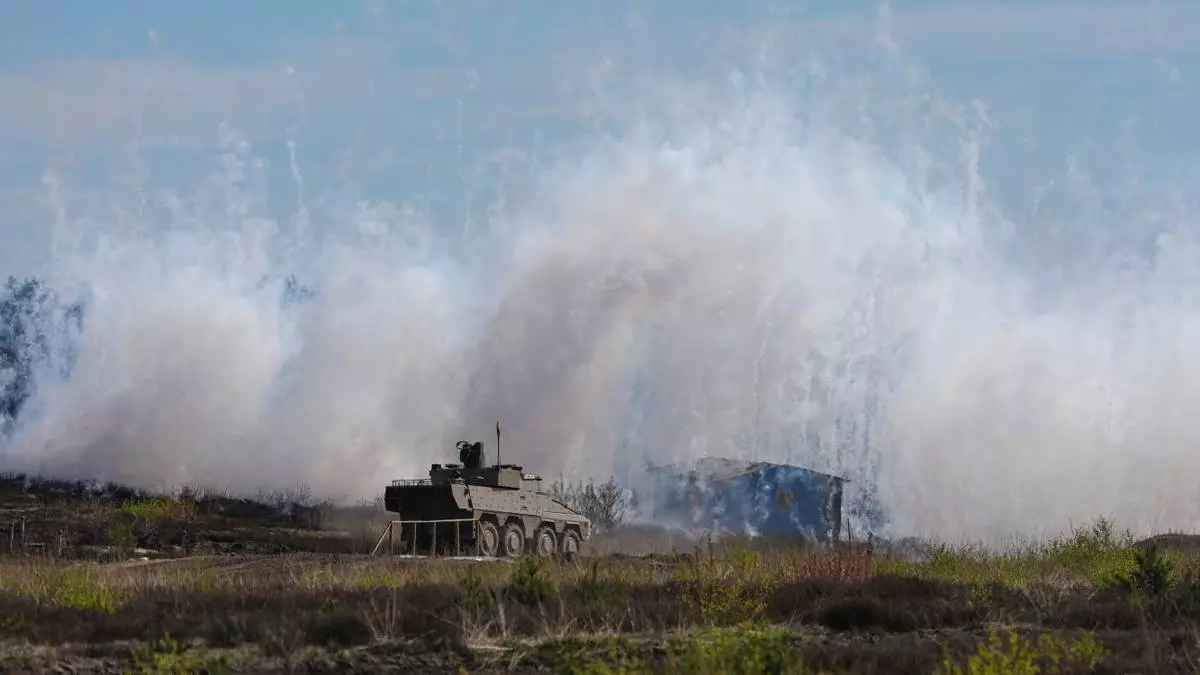
Bundeswehr troops demonstrate their capabilities during a visit of German Chancellor Friedrich Merz to the army at the Bundeswehr base in Munster, Germany, Thursday, April, 30, 2026. (AP Photo/Markus Schreiber)