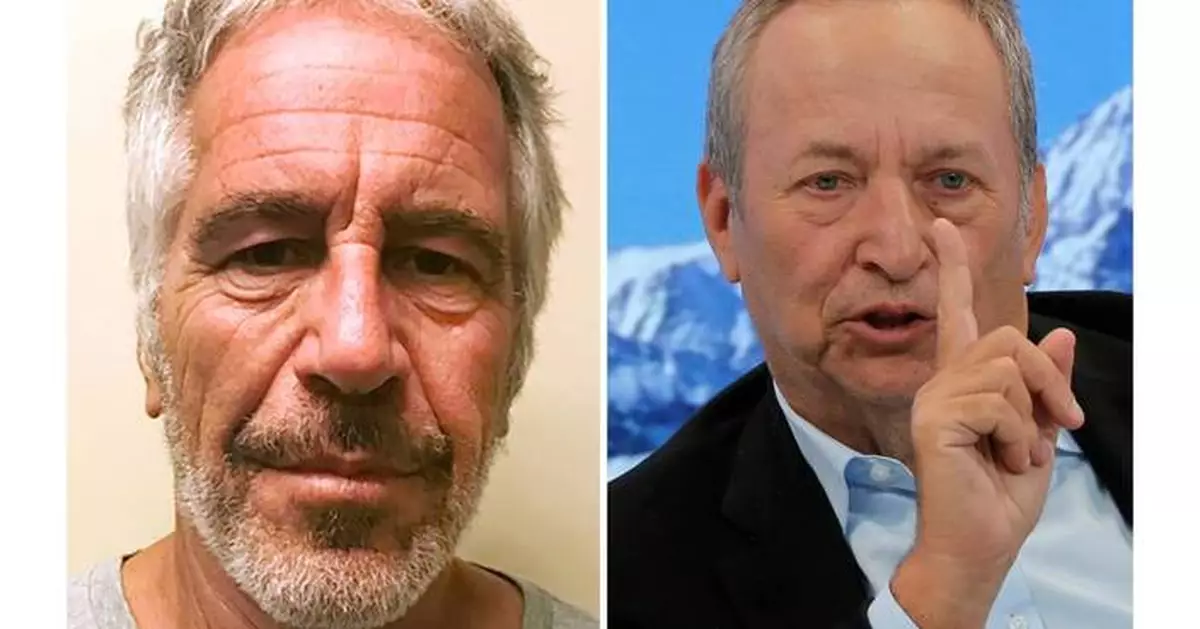
Former U.S. Treasury Secretary Larry Summers abruptly went on leave Wednesday from teaching at Harvard University, where he once served as president, over recently released emails showing he maintained a friendly relationship with Jeffrey Epstein, Summers' spokesperson said.
Summers had canceled his public commitments amid the fallout of the emails being made public and earlier Wednesday severed ties with OpenAI, the maker of ChatGPT. Harvard had reopened an investigation into connections between him and Epstein, but Summers had said he would continue teaching economics classes at the school.
That changed Wednesday evening with the news that he will step away from teaching classes as well as his position as director of the Mossavar-Rahmani Center for Business and Government with the Harvard Kennedy School.
“Mr. Summers has decided it’s in the best interest of the Center for him to go on leave from his role as Director as Harvard undertakes its review," Summers spokesperson Steven Goldberg said, adding that his co-teachers would finish the classes.
Summers has not been scheduled to teach next semester, according to Goldberg.
A Harvard spokesperson confirmed to The Associated Press that Summers had let the university know about his decision. Summers decision to go on leave was first reported by The Harvard Crimson.
Harvard did not mention Summers by name in its decision to restart an investigation, but the move follows the release of emails showing that he was friendly with Epstein long after the financier pleaded guilty to soliciting prostitution from an underage girl in 2008.
By Wednesday, the once highly regarded economics expert had been facing increased scrutiny over choosing to stay in the teaching role. Some students even filmed his appearance in shock as he appeared before a class of undergraduates on Tuesday while stressing he thought it was important to continue teaching.
Massachusetts Sen. Elizabeth Warren, a Democrat, said in a social media post on Wednesday night that Summers “cozied up to the rich and powerful — including a convicted sex offender. He cannot be trusted in positions of influence.”
The emails include messages in which Summers appeared to be getting advice from Epstein about pursuing a romantic relationship with someone who viewed him as an “economic mentor.”
“im a pretty good wing man , no?” Epstein wrote on Nov. 30, 2018.
The next day, Summers told Epstein he had texted the woman, telling her he “had something brief to say to her.”
“Am I thanking her or being sorry re my being married. I think the former,” he wrote.
Summers’ wife, Elisa New, also emailed Epstein multiple times, including a 2015 message in which she thanked him for arranging financial support for a poetry project she directs. The gift he arranged “changed everything for me,” she wrote.
"It really means a lot to me, all financial help aside, Jeffrey, that you are rooting for me and thinking about me,” she wrote.
New, an English professor emerita at Harvard, did not respond to an email seeking comment Wednesday.
An earlier review completed in 2020 found that Epstein visited Harvard’s campus more than 40 times after his 2008 sex-crimes conviction and was given his own office and unfettered access to a research center he helped establish. The professor who provided the office was later barred from starting new research or advising students for at least two years.
On Tuesday, Summers appeared before his class at Harvard, where he teaches “The Political Economy of Globalization” to undergraduates with Robert Lawrence, a professor with the Harvard Kennedy School.
“Some of you will have seen my statement of regret expressing my shame with respect to what I did in communication with Mr. Epstein and that I’ve said that I’m going to step back from public activities for a while. But I think it’s very important to fulfill my teaching obligations," he said.
Summers' remarks were captured on video by several students, but no one appeared to publicly respond to his comments.
Epstein, who authorities said died by suicide in 2019, was a convicted sex offender infamous for his connections to wealthy and powerful people, making him a fixture of outrage and conspiracy theories about wrongdoing among American elites.
Summers served as treasury secretary from 1999 to 2001 under President Bill Clinton. He was Harvard’s president for five years from 2001 to 2006. When asked about the emails last week, Summers issued a statement saying he has “great regrets in my life” and that his association with Epstein was a “major error in judgement.”
Other organizations that confirmed the end of their affiliations with Summers included the Center for American Progress, the Center for Global Development and the Budget Lab at Yale University. Bloomberg TV said Summers’ withdrawal from public commitments included his role as a paid contributor, and the New York Times said it will not renew his contract as a contributing opinion writer.
This story has been corrected to show that Summers is a former treasury secretary, not treasurer; to show that Summers' statement about stepping back from public commitments was issued late Monday, not Tuesday; and to show that the school is known as the Harvard Kennedy School, not Kennedy Harvard School.
Associated Press journalist Hallie Golden contributed to this report.
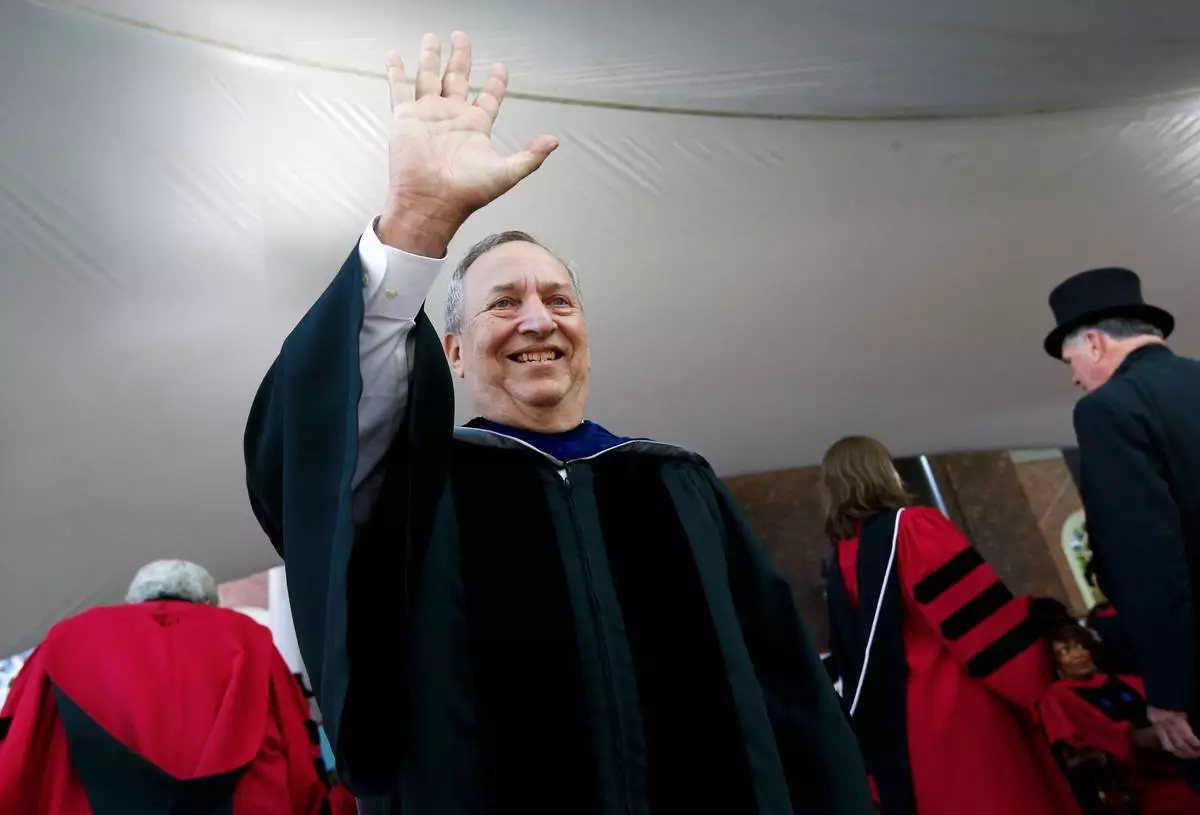
FILE -Former Harvard University president Larry Summers waves during Harvard commencement exercises, May 24, 2018, in Cambridge, Mass. (AP Photo/Michael Dwyer, File)
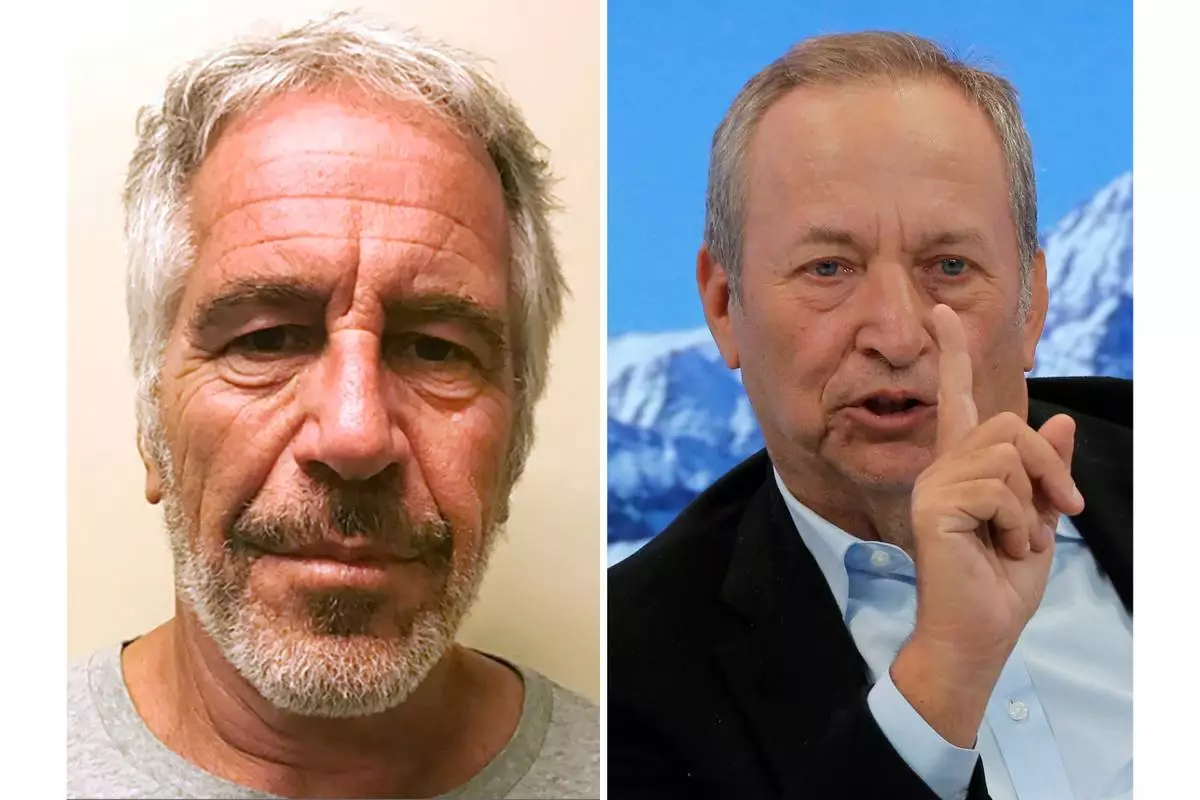
This combo shows Jeffrey Epstein, left, and U.S. economist Larry Summers. (New York State Sex Offender Registry via AP/Michel Euler)
U.S. President Donald Trump said the military could end its Iran offensive in two to three weeks and will shift responsibility for the Strait of Hormuz to countries that rely on it for oil and shipping as the White House announced a prime-time presidential address Wednesday evening on the war.
Trump expressed frustration Tuesday with allies who have been unwilling to do more to support the U.S. war effort, telling them to “go get your own oil.” Trump recently has vacillated between insisting there is progress in diplomatic talks with Iran and threatening to widen the war.
In an interview with pan-Arab broadcaster Al Jazeera, Iranian Foreign Minister Abbas Araghchi acknowledged receiving direct messages from U.S. Mideast envoy Steve Witkoff. He insisted, however, that there were no direct negotiations and said Iran has no faith that talks with the U.S. could yield any results, saying “the trust level is at zero.”
Trump said the U.S. “will not have anything to do with” what happens next in the vital waterway that has been closed by the Islamic Republic. Instead, he told reporters, the responsibility for keeping the strait open will rest with countries that rely on it. Gulf states rely on the waterway for both exports and imports, including food, and 20 percent of the world's oil supply flows through it.
U.S. gas prices jumped past an average of $4 a gallon for the first time since 2022 on Tuesday, as the Iran war continues to push fuel prices higher worldwide. Analysts say those high fuel costs will trickle into groceries as businesses’ transportation and packaging costs pile up.
Here is the latest:
Australia Prime Minister Anthony Albanese used a rare national address to urge Australians to use public transport due to fuel supply uncertainties created by the Iran war.
Albanese said in a statement broadcast Wednesday by major television and radio networks that “the months ahead may not be easy.”
“You should go about your business and your life as normal. Enjoy your Easter,” Albanese said.
“And over the coming weeks, if you can switch to catching the train or bus or tram to work, do so,” he added.
Australia slashed fuel taxes from Wednesday in a bid to curb price rises at the pump.
The government maintains that Australia has all the fuel it needs, but panic buying and distribution problems have created regional shortages.
Speaking to Al Jazeera, Iranian Foreign Minister Abbas Araghchi signaled Tehran’s willingness to keep fighting no matter what Trump may threaten.
Trump’s April 6 deadline for the Strait of Hormuz to open still stands, otherwise he threatened to hit power plants.
“You cannot speak to the people of Iran in the language of threats and deadlines,” Araghchi said.
Asked if the United States would launch a ground war in Iran, Araghchi dismissed the idea.
“I do not think they would dare to do such a thing,” he said. “Very heavy casualties would await them.”
Asked about attacks across the Gulf Arab states, Araghchi again insisted Iran isn’t targeting those states, despite repeated attacks on civilian infrastructure like airports, power plants and desalination facilities.
“In reality, they are using the people of the Persian Gulf as human shields,” Araghchi said.
Oil fell below $100 per barrel and Asian shares jumped Wednesday over renewed optimism about a de-escalation of the Iran war.
Brent crude, the international standard, was down 4.7% to $99.05 per barrel.
Benchmark U.S. crude dropped 4% to $97.33 a barrel.
South Korea’s Kospi recovered its losses from earlier this week, surging 8.4% to 5,478.70, while Tokyo’s Nikkei 225 rose 5.2% to 53,739.68.
Hong Kong’s Hang Seng was up 2.3% to 25,346.42, while the Shanghai Composite index was trading 1.5% higher at 3,948.55.
An airstrike in Iran’s capital, Tehran, on Wednesday morning appears to have struck inside of the former U.S. Embassy compound there.
The embassy has been controlled by Iran’s Revolutionary Guard since the 1979 hostage crisis.
Its all-volunteer Basij force operates the compound, running an anti-American museum inside the embassy and having different operations on its grounds in newer buildings.
Witnesses saw blown-out windows surrounding the massive compound on Tehran’s Taleghani Street. However, there was no missile strike visible around the compound, with witnesses saying they believe the strike happened inside the compound.
The 444-day hostage crisis saw American diplomats held until President Ronald Reagan took office from President Jimmy Carter in 1981.
An oil tanker contracted to Qatar was struck by an Iranian cruise missile on Wednesday while two others were intercepted, authorities said.
The missile slammed into the tanker off Qatar's coast that is contracted by state-owned QatarEnergy. The ministry said the tanker’s 21-member crew was evacuated, and no casualties were reported.
In a statement, the Defense Ministry said two other missiles were intercepted.
QatarEnergy said there was no environmental impact from the tanker attack.
The British military’s United Kingdom Maritime Trade Operations center said earlier that a projectile slammed into the side of the ship.
The Iranian-backed Houthis in Yemen said Wednesday they fired a barrage of ballistic missiles toward Israel.
Air raid sirens went off in southern Israel in the early morning, from Beersheba to the Mediterranean coast following the launch. There were no immediate reports of impacts.
Brig. Gen. Yahya Saree, a military spokesman for the Houthis, said in a prerecorded statement that they fired at “sensitive targets” in southern Israel.
The attack is the third since the Houthis joined the war on Friday when they fired their first missile towards Israel since the U.S. and Israel launched massive airstrikes on Iran on Feb. 28.
Their entry has raised concerns that they could resume attacks on vessels in the Red Sea further disrupting the global shipping industry and sending oil prices much higher
A drone attack has killed a citizen of Bangladesh in Fujairah, one of the UAE’s seven emirates, authorities said.
He was killed Wednesday when Emirati air defense systems intercepted a drone, and shrapnel landed in a farm, the Fujairah media office said.
The fatality has brought the death toll in the UAE to nine civilians and two soldiers. A Moroccan contractor with the UAE army was also killed in Bahrain.
Earlier Saudi Arabia said it had destroyed two Iranian drones.
Emergency personnel said an 11-year-old girl was severely wounded in central Israel in the latest missile attack from Iran.
Two more people suffered moderate injuries including a 13-year-old boy and a 36-year-old woman, according to Israel’s Magen David Adom rescue services.
Iran’s foreign minister has acknowledged receiving direct messages from U.S. Mideast envoy Steve Witkoff.
The comments by Abbas Araghchi came in an interview with pan-Arab broadcaster Al Jazeera aired late Tuesday. He insisted that the messages didn’t constitute negotiations.
U.S. President Donald Trump has repeatedly described Iran and America has having talks over the war, while Pakistan has been a key intermediary along with Egypt and Turkey during the conflict.
“I receive messages from Witkoff directly, as before, and this does not mean that we are in negotiations,” he said.
He added: “We do not have any faith that negotiations with the U.S. will yield any results. The trust level is at zero.”
Asked about a possible ground offensive by the U.S., Araghchi said “we are waiting for them.”
“We know very well how to defend ourselves,” Araghchi reportedly told the Qatar-based broadcaster. “In a ground war, we can do it even better. We are completely ready to confront any sort of ground attack. We hope they do not make such a mistake.”
Lebanon’s Health Ministry said in a preliminary count early Wednesday 21 people were also wounded in the strike in Jnah.
The strike came without warning, and Israel did not declare the target. When it does, it often says it is targeting operatives from the Hezbollah militant group.
Emergency workers rushed to the scene to search for victims.
Israel’s military warned the public Wednesday a missile was incoming from Yemen, yet another attack from the country’s Houthi rebels who have just entered the war on Iran’s side.
Air raid sirens went off in southern Israel, from Beersheba to the Mediterranean coast.
The warning, just around dawn, broke a long lull, more than 19 hours since the last time Israel’s military warned of an incoming missile launch from Iran, and more than six hours from the last alarms in the northern part of Israel, which in past days received near-constant fire from Hezbollah in Lebanon.
A drone attack by Iran and its allies hit a fuel tank at Kuwait International Airport, sparking a fire, authorities said.
The state-run KUNA news agency said the attack early Wednesday sparked a “large fire” at the airport.
It said there were no immediate injuries from the attack and firefighters were working to control the blaze.
Kuwait International Airport has been attacked before by Iran during the war. The KUNA report suggested the attack may have been launched by Iranian-supported militias in Iraq with Tehran’s support.
In another strike, Bahrain said early on Wednesday morning that it was working to extinguish a fire at a business facility that resulted from an Iranian attack.
Israel said early Wednesday it struck a plant supplying Iran’s theocracy with fentanyl, a powerful synthetic opioid, to allegedly use in a chemical weapons program. Iran acknowledged the strike on Tofigh Daru factory, but insisted it only supplied “hospital drugs” used in medical operations.
The strike happened Tuesday, both the Israelis and the Iranians said.
Iranian Foreign Minister Abbas Araghchi posted a picture of the factory in Tehran, writing on X: “The war criminals in Israel are now openly and unashamedly bombing pharmaceutical companies.”
Hospitals extensively use fentanyl to treat severe pain. But a small amount of the drug can be fatal.
Both Israel and the United States have warned in recent years Iran was experimenting with fentanyl in munitions. The U.S. previously pointed to Iranian academic research studying how Russia likely used a fentanyl derivative during the 2002 Moscow theater hostage seizure by Chechen militants.
Israel alleged Tofigh Daru supplied fentanyl to an advanced research institute in Tehran, known by its acronym SPND. The U.S alleges SPND has conducted research and testing that could be applicable to the development of nuclear explosive devices and other weapons.
The United Arab Emirates has barred Iranians from entering or transiting the country as the war rages, three major airlines said Wednesday.
Long-haul carriers Emirates and Etihad, as well as the lower-cost airline FlyDubai, made the announcements on their websites.
Entry rules can sometimes be opaque in the autocratic United Arab Emirates, a federation of seven sheikhdoms, the three airlines agreed on the order. It said holders of 10-year Golden Visa residency permits could still enter the country.
Authorities have offered no official comment. But Dubai has already shut down the city-state’s Iranian Hospital and Iranian Club, institutions that date back to the time of the shah.
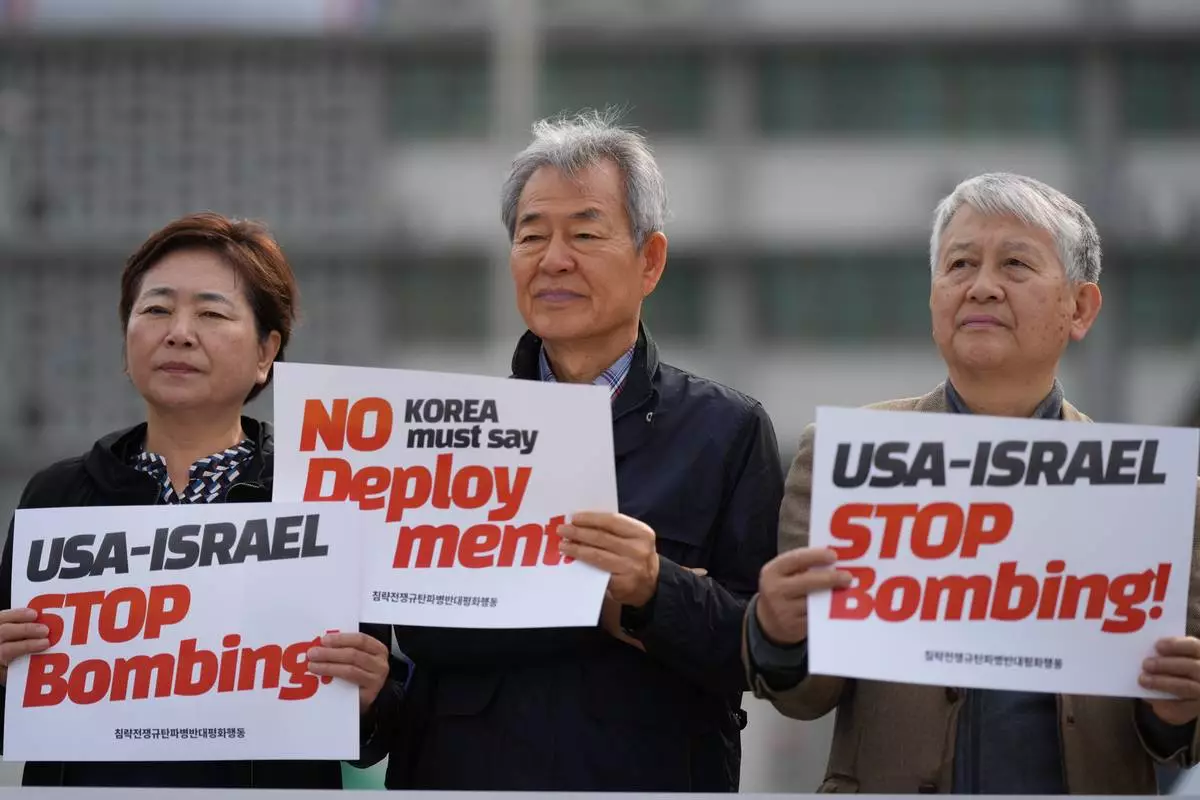
Members of civic groups hold signs against the U.S. and Israel attacks on Iran near the U.S. Embassy in Seoul, South Korea, Wednesday, April 1, 2026. (AP Photo/Lee Jin-man)
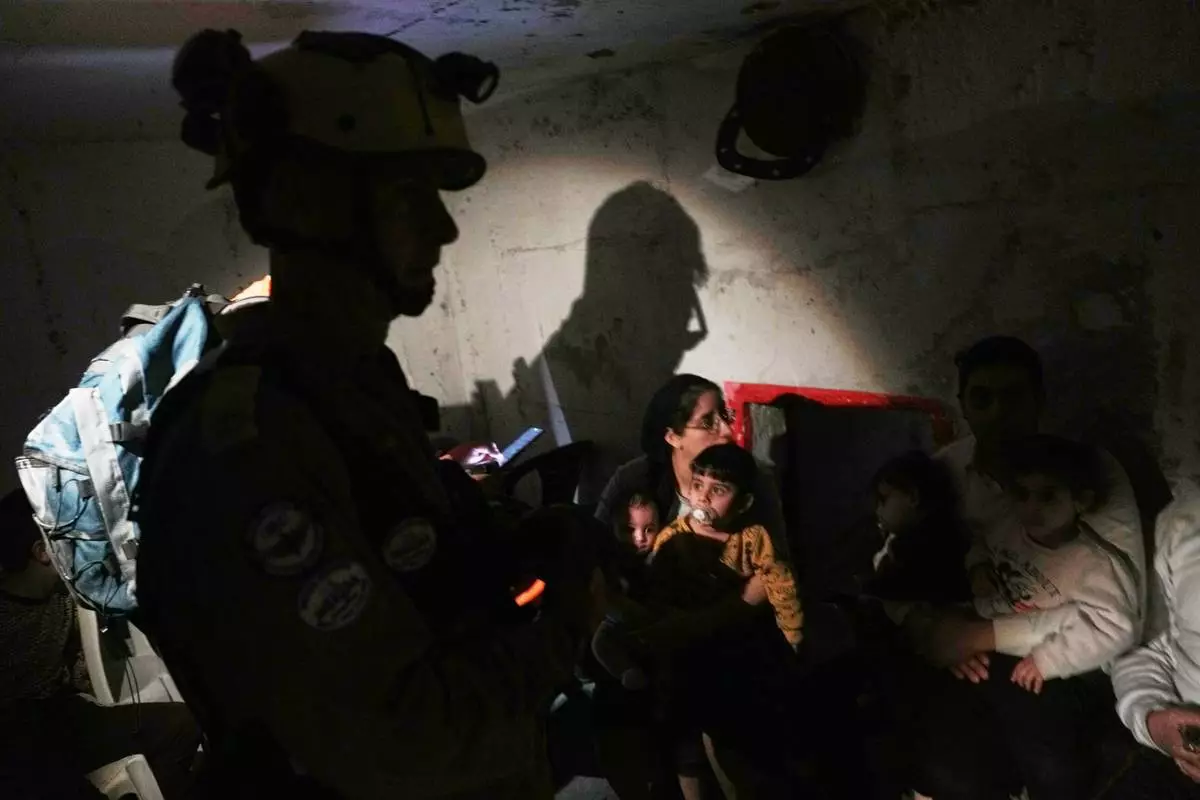
Israel's rescue teams and residents take shelter as sirens sounds next to a site struck by an Iranian missile in Bnei Brak, Wednesday, April 1, 2026. (AP Photo/Oded Balilty)
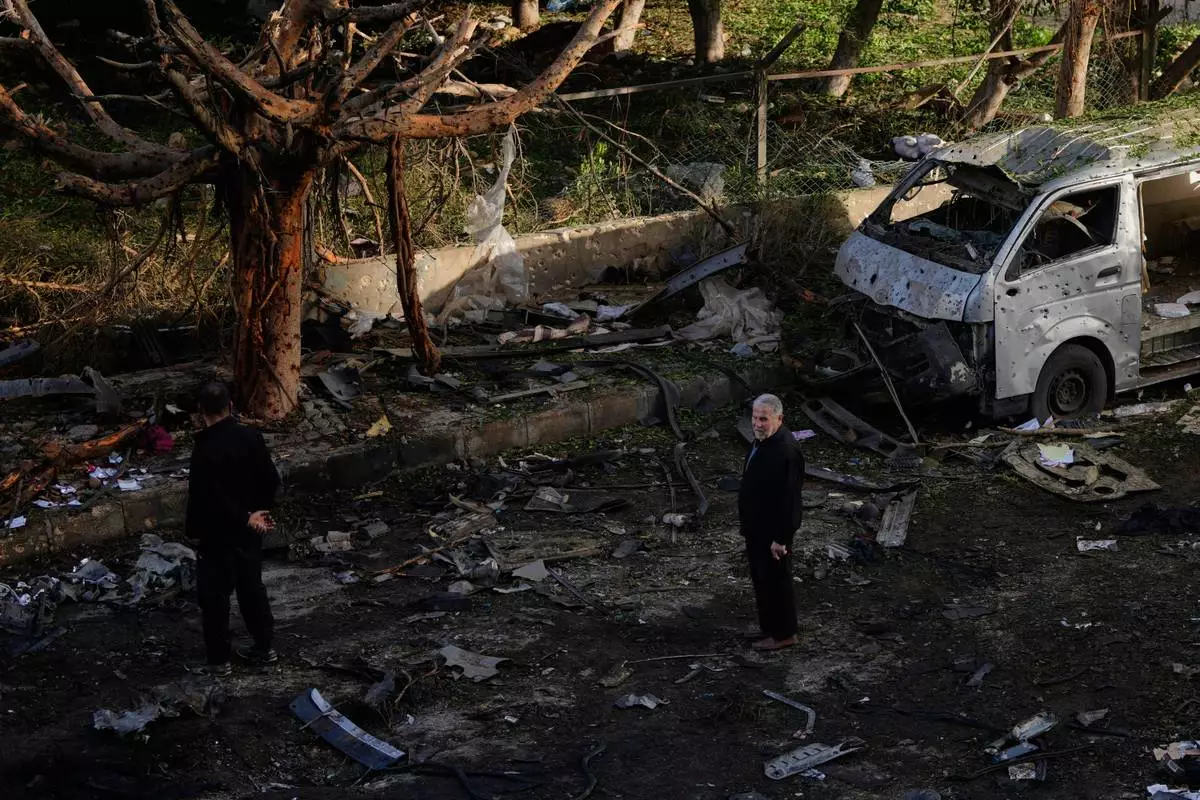
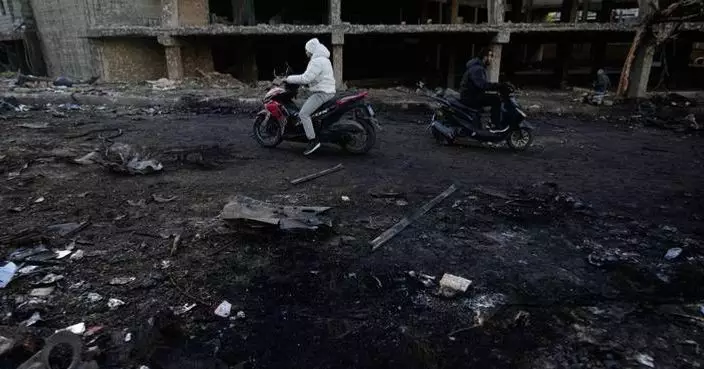
People stand near a damaged van beside scattered debris following an Israeli strike in Beirut, Lebanon, Wednesday, April 1, 2026. (AP Photo/Hassan Ammar)
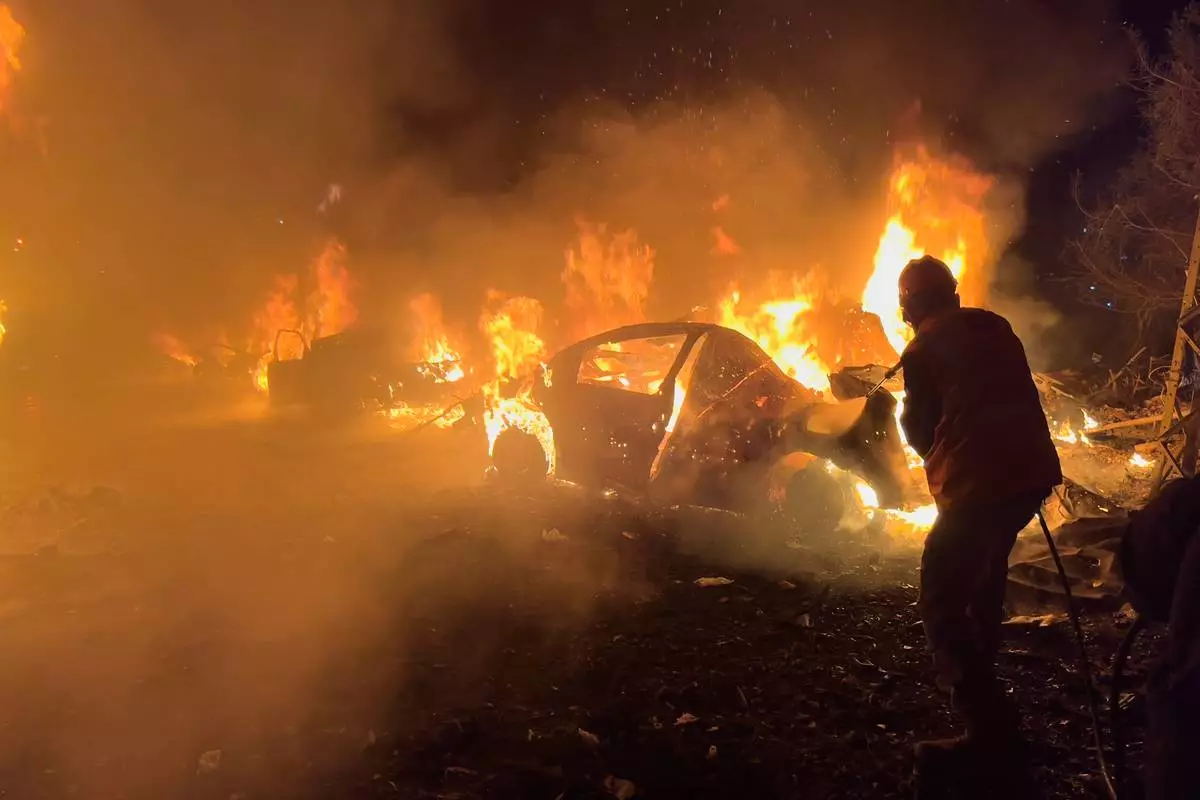
A firefighter extinguishes a car at the site of Israeli airstrikes, in Beirut, Lebanon, Wednesday, April 1, 2026. (AP Photo/Hussein Malla)
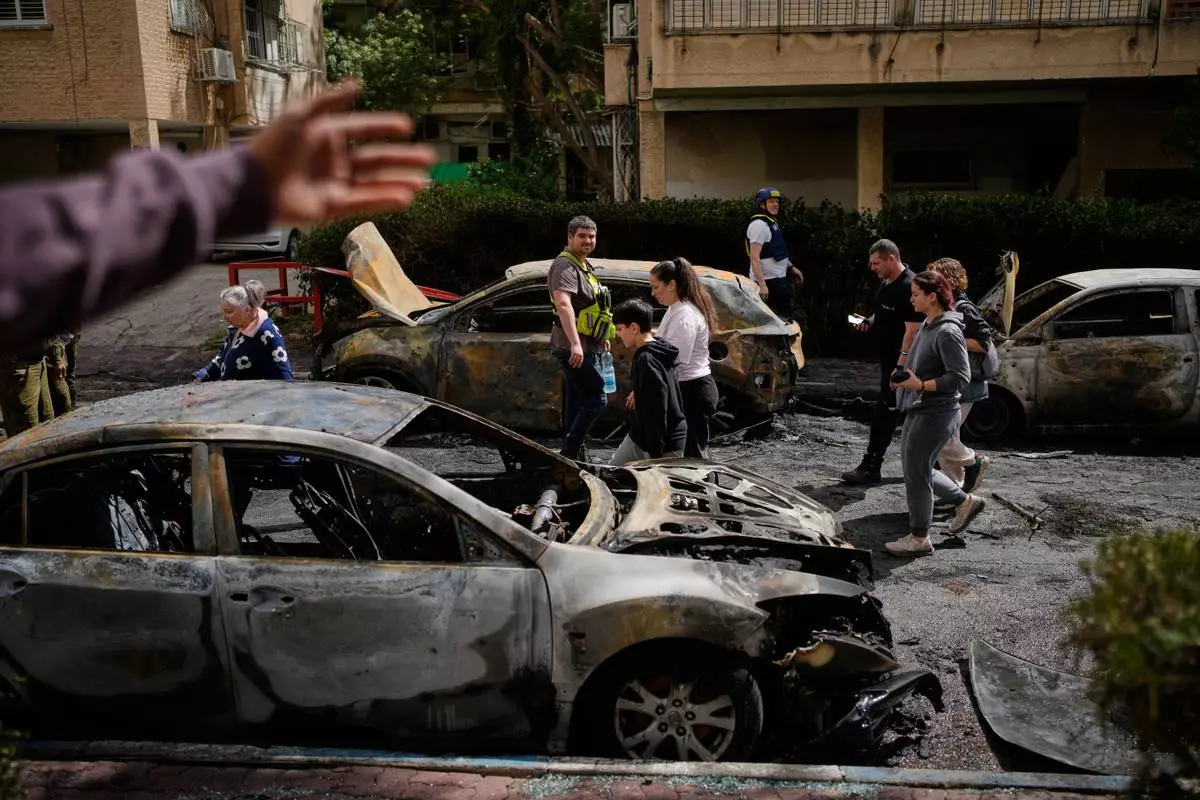
Residents and Israeli security forces inspect a site struck by an Iranian missile in Petah Tikva, Israel, Tuesday, March 31, 2026. (AP Photo/Ohad Zwigenberg)
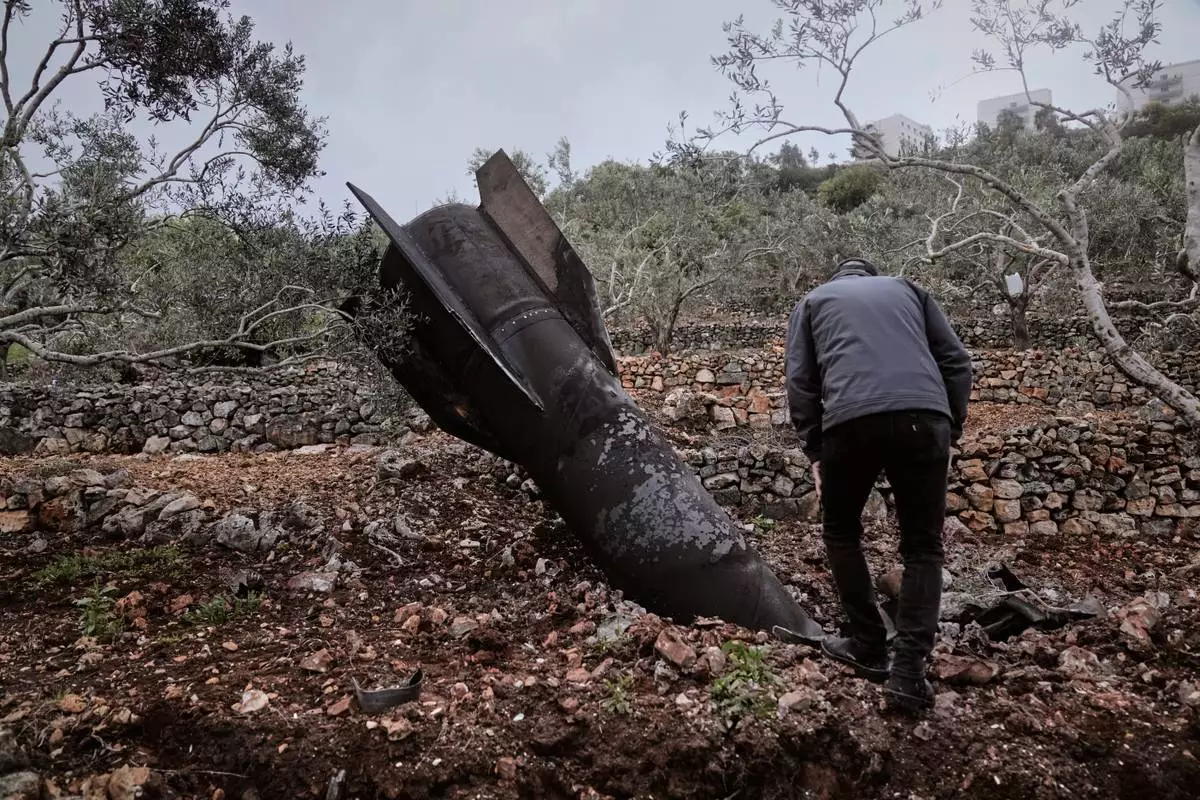
A man inspect the wreckage of an Iranian missile that landed near the West Bank village of Marda, Tuesday, March 31, 2026. (AP Photo/Majdi Mohammed)
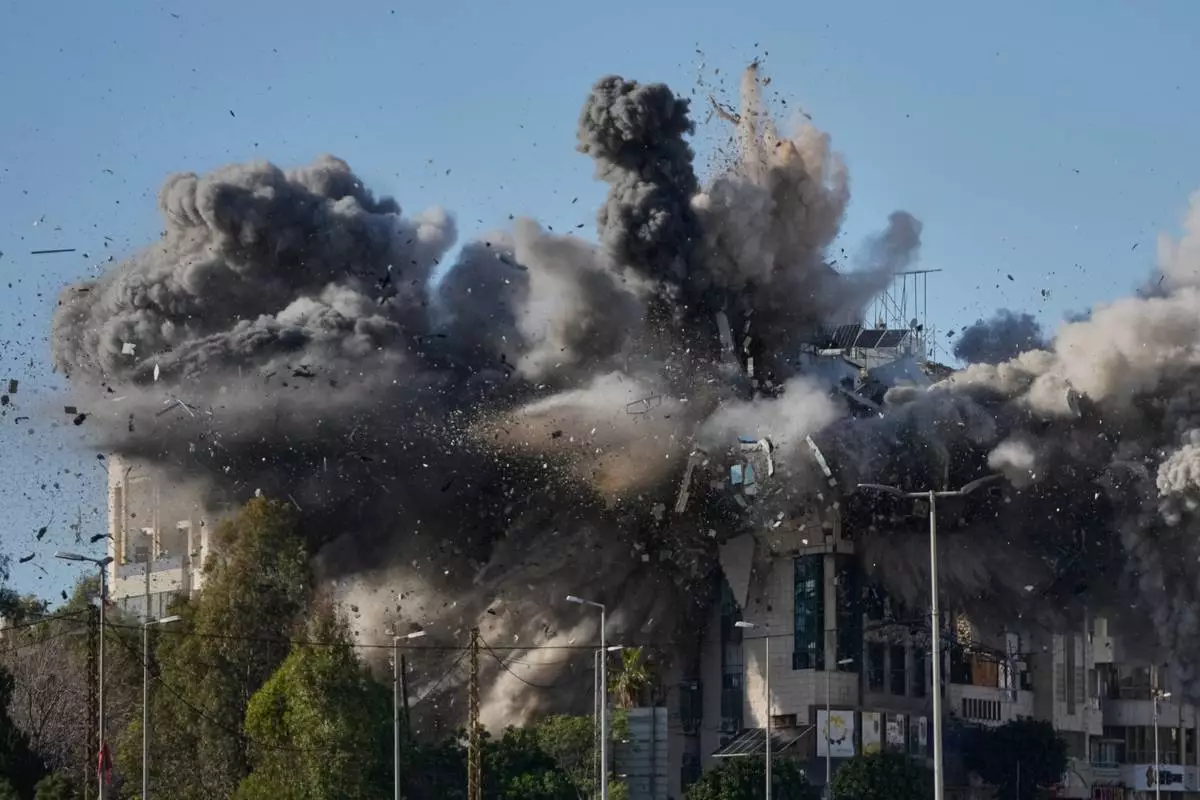
Smoke rises after an Israeli airstrike hits a building near the airport road in Beirut, Lebanon, Tuesday, March 31, 2026. (AP Photo/Hussein Malla)
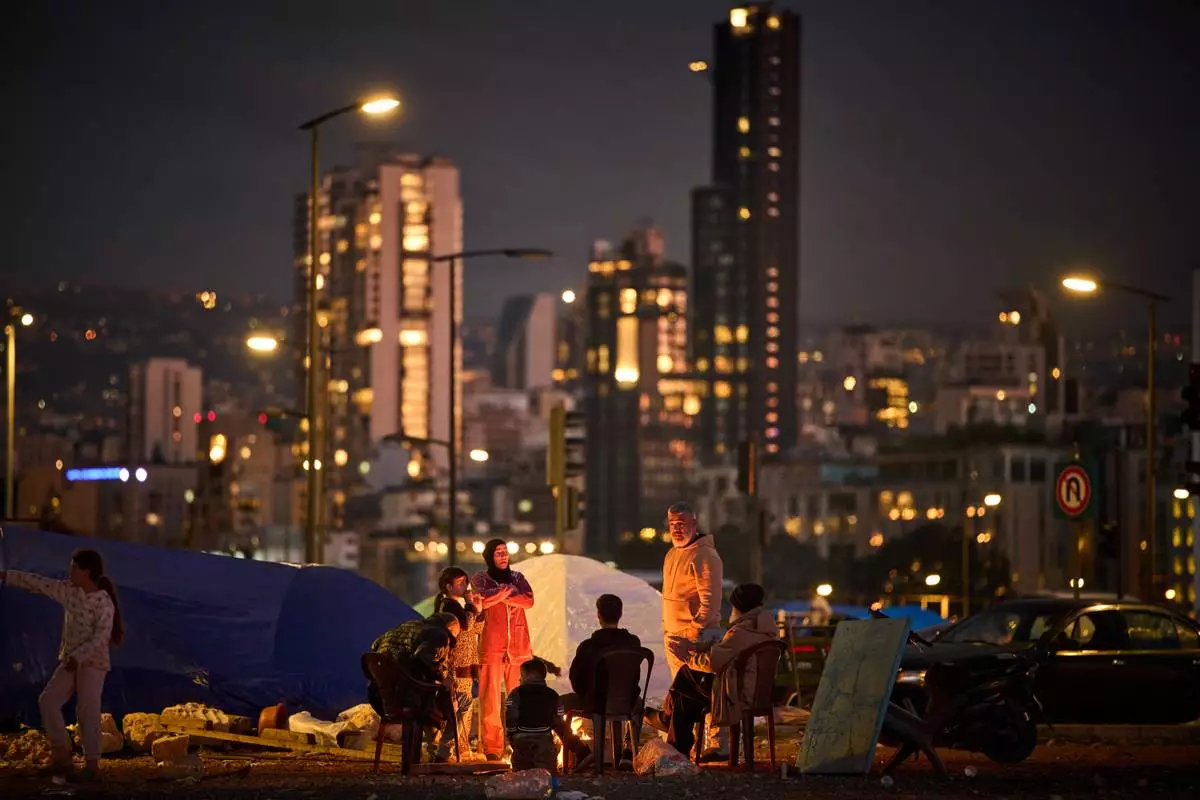
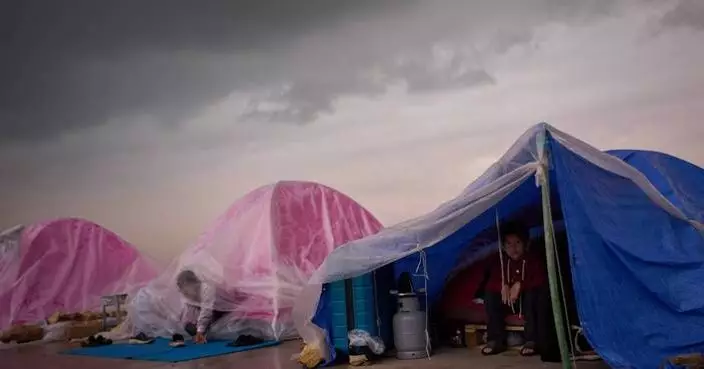
A family who fled Israeli shelling in southern Lebanon warm themselves by a bonfire next to tents used as shelters in Beirut, Lebanon, Tuesday, March 31, 2026. (AP Photo/Emilio Morenatti)