WASHINGTON (AP) — President Donald Trump is increasingly counting on the tech sector and the development of artificial intelligence to deliver on his economic agenda, a reality laid bare this week as he hosted Saudi Arabia's Crown Prince Mohammed bin Salman.
The crown prince has committed to invest $1 trillion with U.S. companies, a pledge that is largely about using Saudi Arabia's oil and natural gas reserves to pivot his nation into becoming an AI data hub.
“We will work closely with friends and partners like those in this room to build the largest, most powerful, most innovative AI ecosystem in the world,” Trump said at the U.S.-Saudi Investment Forum on Wednesday.
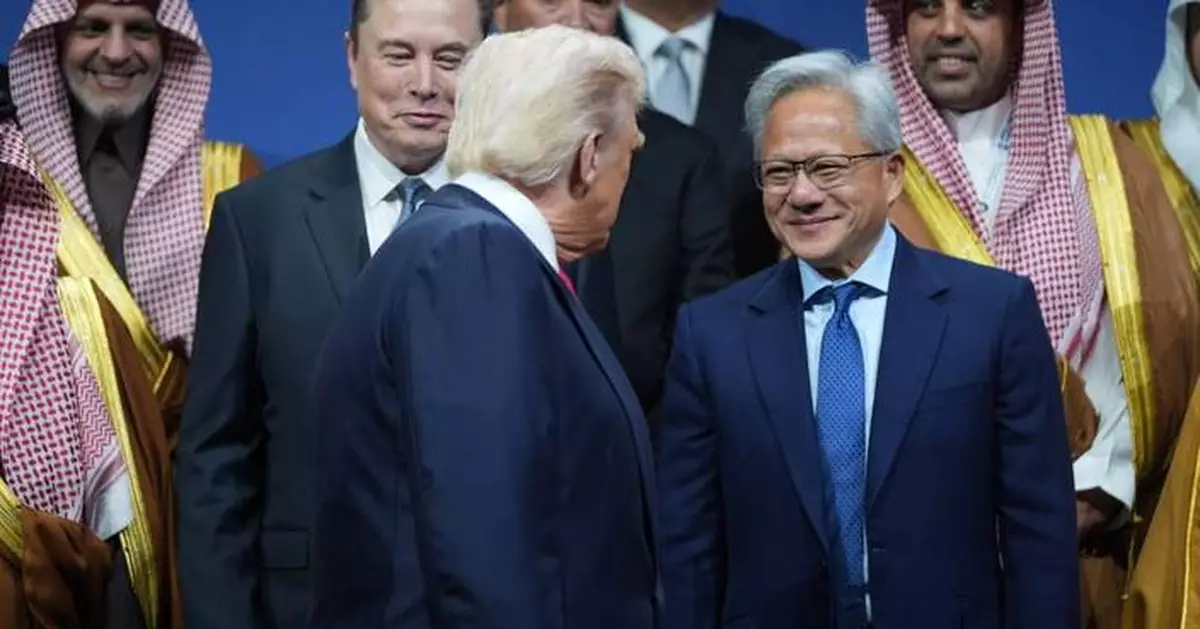
Sitting in the front row of the audience at the Kennedy Center were Nvidia co-founder Jensen Huang and tech billionaire Elon Musk.
Trump took credit for the new investments and stock market performance this year — both of which have been a function of the AI buildout. For all of Trump’s claims that his tariffs are generating new investments, much of that foreign capital is going to data centers for AI's computing demands or the power facilities needed to run those data centers.
The president called the stock market gains “amazing,” yet leading stock indices fell Tuesday over growing anxiety about whether AI companies are fueling a broader financial bubble.
There are also growing political risks for Trump if the AI buildout further pushes up utility prices for American consumers or if the jobs he promises in the sector fail to materialize.
The consultancy Oxford Economics released an analysis Tuesday that said AI investments offset the “extreme uncertainty" in the U.S. economy this year — uncertainty caused in part by Trump's tariff hikes that have elevated inflation and potentially contributed to a slowdown in hiring.
The firm noted that AI companies are starting to rely on debt to pay for the growth in the sector, which could suggest “a more vulnerable phase” next year for the boom.
The race for investments is evidenced in Saudi Arabia's own commitments, which rose from $600 billion during Trump's visit there in May to $1 trillion when Prince Mohammed came to the White House on Tuesday.
Trump said he’s already pushed Prince Mohammed to increase that figure, saying he lobbied the de facto ruler of Saudi Arabia backstage before their appearance at the Kennedy Center.
“While we were taking the picture, I said, ’Could you make it $1.5 trillion?’” Trump said. “So he’s got something to think about.”
When Blackstone Group CEO Stephen Schwarzman was asked at the forum what the most important growth stories were at the summit, the billionaire investor said, "AI and, you know, power."
“Those are the two things that we spend a lot of time on,” he said. “At Blackstone, my company, we’re the largest developer, the largest owner, of data centers in the world. And this is a really explosive area."
Tareq Amin, CEO of Humain, said his Saudi-backed AI company was launched when Trump visited the Middle Eastern nation in May. His company saw the opportunity to build data centers and AI infrastructure by leveraging Saudi Arabia’s energy production and U.S. technology.
“Yes, it is an ambitious, crazy thing,” Amin said with confidence.
Musk, whose xAI company has a chatbot called Grok, predicted that AI and robots would eventually allow work to become optional for human beings, that money would become “irrelevant” and poverty would cease to exist.
“AI and humanoid robots will actually eliminate poverty,” said Musk, the head of Tesla and SpaceX. He added that robots would “make everyone wealthy.”
Nvidia's Huang, appearing on stage with Musk, did not make as bold a prediction. He said: “Everybody’s jobs will be different. I think that that’s for sure.” Huang spoke ahead of the $4.5 trillion computer chip company announcing its quarterly earnings Wednesday. The company afterward reported strong earnings for its third quarter with net income climbing 65% from a year ago.
During Trump's remarks, the president asked Huang if any other country could compete with its Blackwell chip that is enabling much of the AI development.
“Not yet, sir,” said Huang from the front row.
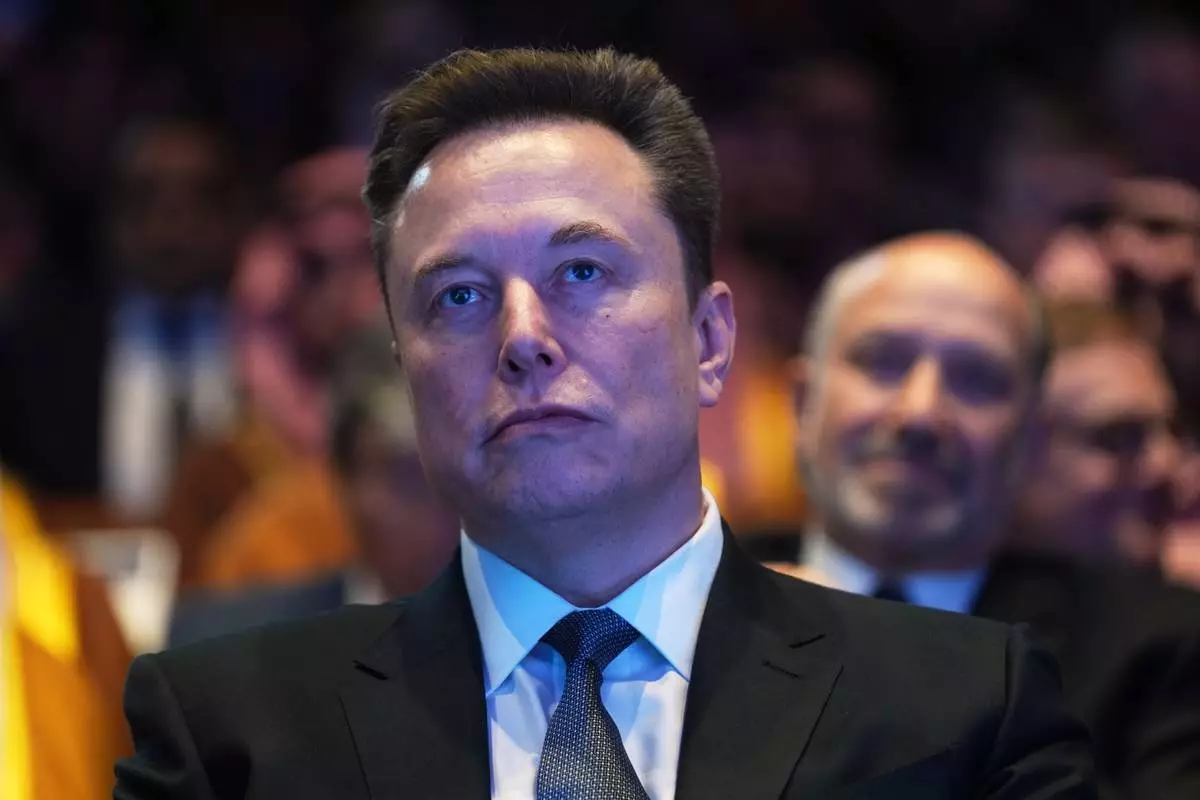
Elon Musk attends the Saudi Investment Forum at the Kennedy Center, Wednesday, Nov. 19, 2025, in Washington. (AP Photo/Evan Vucci)
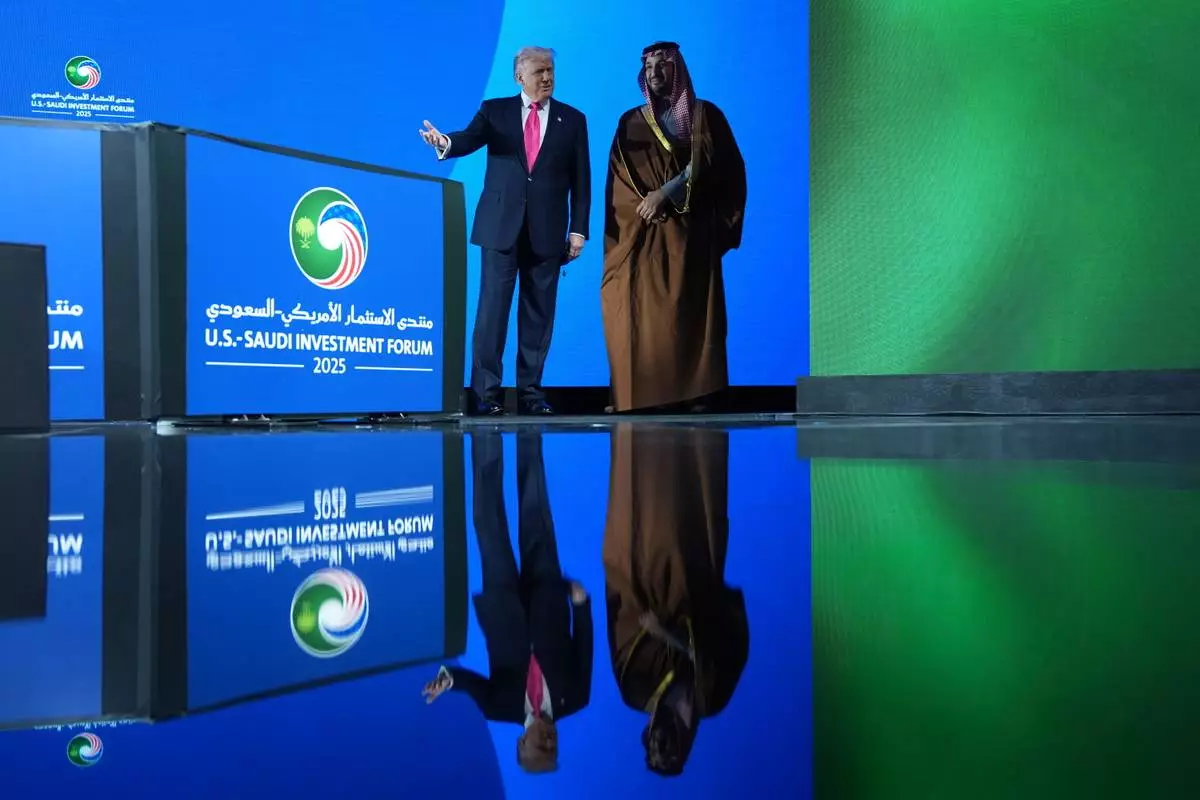
President Donald Trump walks on stage during the Saudi Investment Forum with Saudi Arabia's Crown Prince Mohammed bin Salman at the Kennedy Center, Wednesday, Nov. 19, 2025, in Washington. (AP Photo/Evan Vucci)
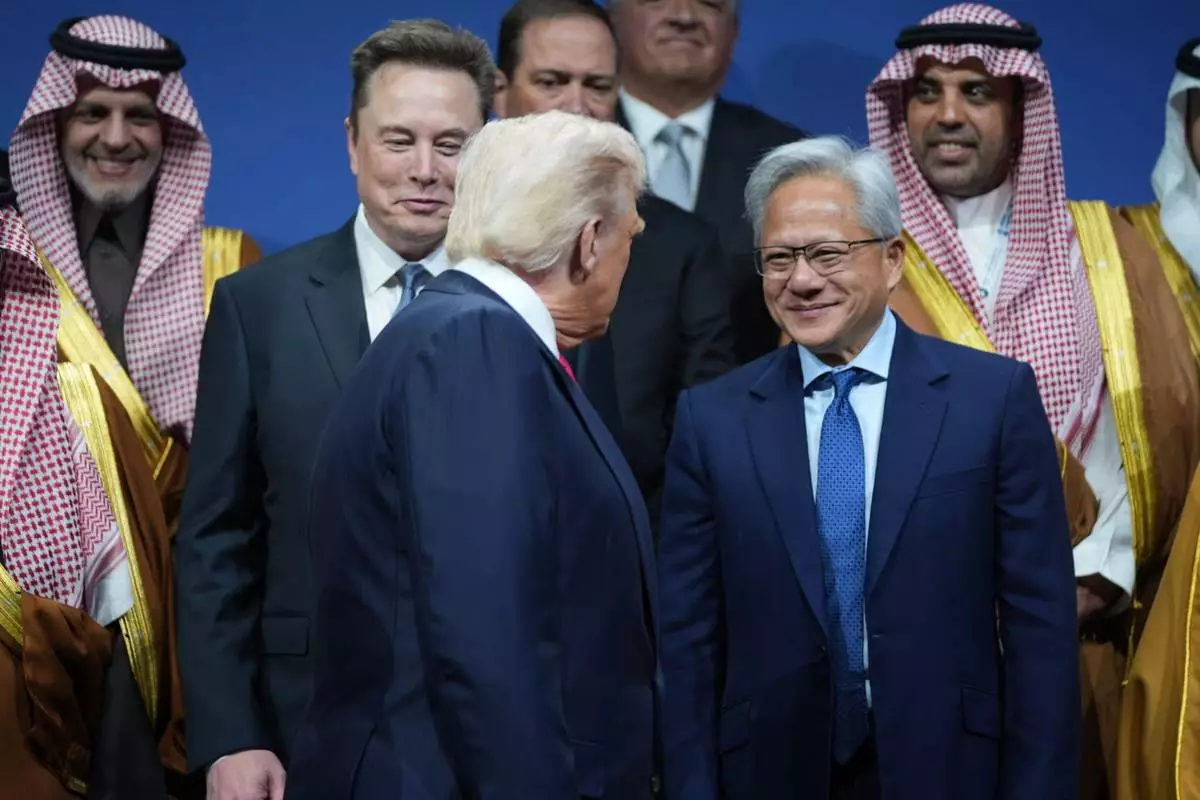
President Donald Trump speaks with Elon Musk and Nvidia CEO Jensen Huang, during the Saudi Investment Forum at the Kennedy Center, Wednesday, Nov. 19, 2025, in Washington. (AP Photo/Evan Vucci)
President Donald Trump's plan to take control of Venezuela's oil industry and ask American companies to revitalize it after capturing President Nicolás Maduro in a raid isn't likely to have a significant immediate impact on oil prices.
Venezuela's oil industry is in disrepair after years of neglect and international sanctions, so it could take years and major investments before production can increase dramatically. But some analysts are optimistic that Venezuela could double or triple its current output of about 1.1 million barrels of oil a day to return to historic levels fairly quickly.
“While many are reporting Venezuela’s oil infrastructure was unharmed by U.S. military actions, it has been decaying for many many years and will take time to rebuild,” said Patrick De Haan, who is the lead petroleum analyst at gasoline price tracker GasBuddy.
American oil companies will want a stable regime in the country before they are willing to invest heavily, and the political picture remained uncertain Saturday with Trump saying that the United States is in charge — while the current Venezuelan vice president argued, before Venezuela’s high court ordered her to assume the role of interim president, that Maduro should be restored to power.
“But if it seems like the U.S. is successful in running the country for the next 24 hours, I would say there would be a lot of optimism that U.S. energy companies could come in and revitalize the Venezuelan oil industry fairly quickly,” said Phil Flynn, a senior market analyst at the Price Futures Group.
And if Venezuela can grow into an oil production powerhouse, Flynn said “that could cement lower prices for the longer term” and put more pressure on Russia.
Speaking to reporters on Air Force One on Sunday, Trump said oil companies are “going to go in and rebuild this system.”
The price of U.S. crude oil was up less than a percentage point Sunday to $57.39 per barrel at 7:45 p.m EST. A major shift in oil prices wasn't expected because Venezuela is a member of OPEC, so its production is already accounted for there. And there is currently a surplus of oil on the global market.
Venezuela is known to have the world's largest proven crude oil reserves of approximately 303 billion barrels, according to the U.S. Energy Information Administration. That accounts for roughly 17% of all global oil reserves.
So international oil companies have reason to be interested in Venezuela. Exxon Mobil didn’t immediately respond to a request for comment Saturday. ConocoPhillips spokesperson Dennis Nuss said by email that the company “is monitoring developments in Venezuela and their potential implications for global energy supply and stability. It would be premature to speculate on any future business activities or investments.”
Chevron is the only one with significant operations in Venezuela, where it produces about 250,000 barrels a day. Chevron, which first invested in Venezuela in the 1920s, does business in the country through joint ventures with the state-owned company Petróleos de Venezuela S.A., commonly known as PDVSA.
“Chevron remains focused on the safety and wellbeing of our employees, as well as the integrity of our assets. We continue to operate in full compliance with all relevant laws and regulations,” Chevron spokesman Bill Turenne said.
But even with those massive reserves, Venezuela has been producing less than 1% of the world's crude oil supply. Corruption, mismanagement and U.S. economic sanctions saw production steadily decline from the 3.5 million barrels per day pumped in 1999 to today's levels.
The problem isn't finding the oil. It's a question of the political environment and whether companies can count on the government to live up to their contracts. Back in 2007, then President Hugo Chávez nationalized much of the oil production and forced major players like ExxonMobil and ConocoPhillips out.
“The issue is not just that the infrastructure is in bad shape, but it’s mostly about how do you get foreign companies to start pouring money in before they have a clear perspective on the political stability, the contract situation and the like,” said Francisco Monaldi, who is the director of the Latin American energy program at Rice University.
But the infrastructure does need significant investment.
“The estimate is that in order for Venezuela to increase from one million barrels per day — that is what it produces today — to four million barrels, it will take about a decade and about a hundred billion dollars of investment,” Monaldi said.
Venezuela produces the kind of heavy crude oil that's needed for diesel fuel, asphalt and other fuels for heavy equipment. Diesel is in short supply around the world because of the sanctions on oil from Venezuela and Russia and because America's lighter crude oil can't easily replace it.
Years ago, American refineries on the Gulf Coast were optimized to handle that kind of heavy crude at a time when U.S. oil production was falling and Venezuelan and Mexican crude was plentiful. So refineries would love to have more access to Venezuela's crude because it would help them operate more efficiently, and it tends to be a little cheaper.
Boosting Venezuelan production could also make it easier to put pressure on Russia because Europe and the rest of the world could get more of the diesel and heavy oil they need from Venezuela and stop buying from Russia.
“There’s been a big benefit for Russia to see Venezuela’s oil industry collapse. And the reason is because they were a competitor on the global stage for that oil market,” Flynn said.
But Matthew Waxman, a Columbia University law professor who was a national security official in the George W. Bush administration, said seizing control of Venezuela’s resources opens up additional legal issues.
“For example, a big issue will be who really owns Venezuela’s oil?” Waxman wrote in an email. “An occupying military power can’t enrich itself by taking another state’s resources, but the Trump administration will probably claim that the Venezuelan government never rightfully held them.”
But Waxman, who served in the State and Defense departments and on the National Security Council under Bush, noted that “we’ve seen the administration talk very dismissively about international law when it comes to Venezuela.”
Associated Press writers Matt O'Brien, Ben Finley, Darlene Superville and Rio Yamat contributed to this report.
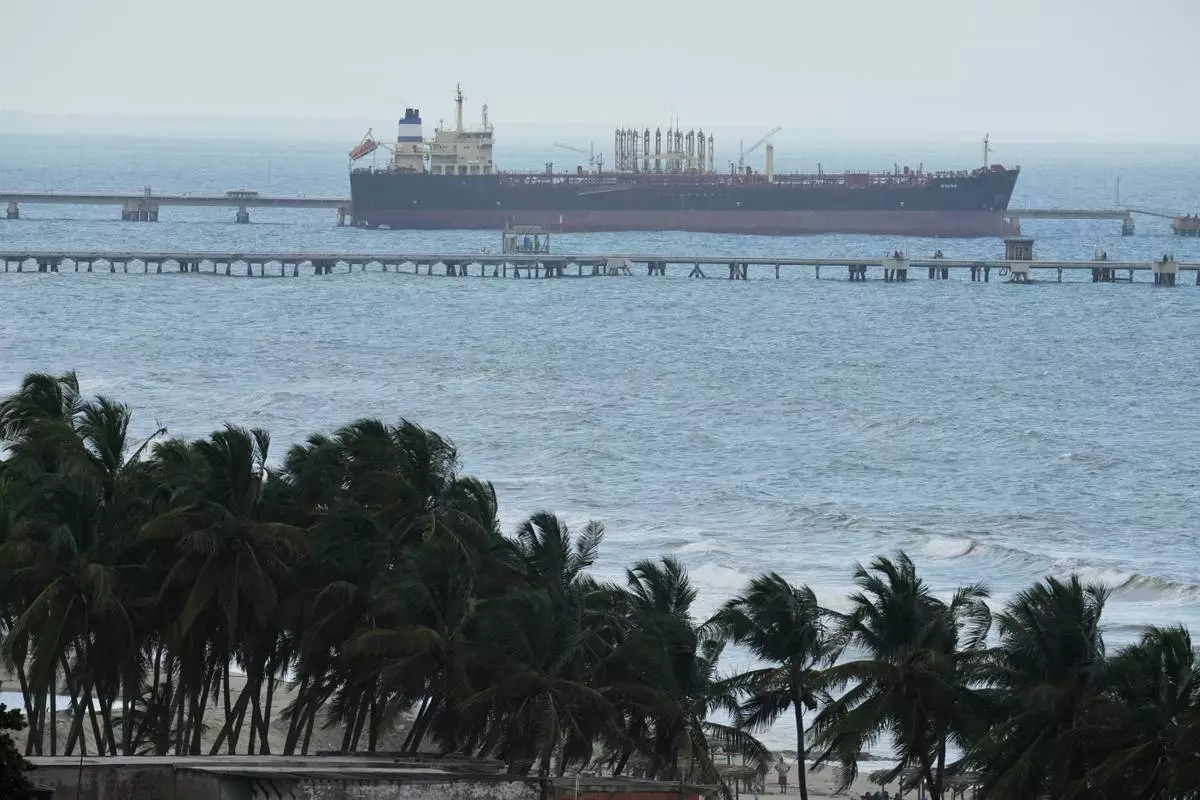
Evana, an oil tanker, is docked at El Palito port in Puerto Cabello, Venezuela, Sunday, Dec. 21, 2025. (AP Photo/Matias Delacroix)
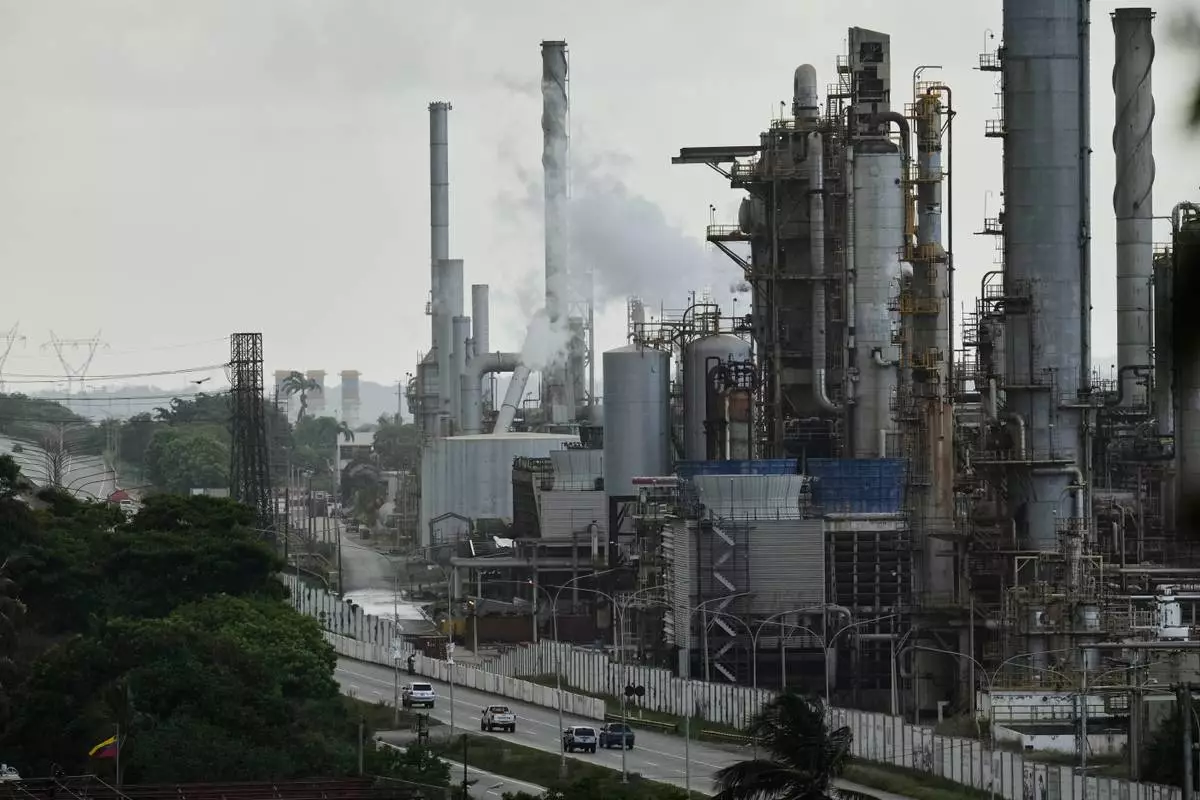
Vehicles drive past the El Palito refinery in Puerto Cabello, Venezuela, Sunday, Dec. 21, 2025. (AP Photo/Matias Delacroix)