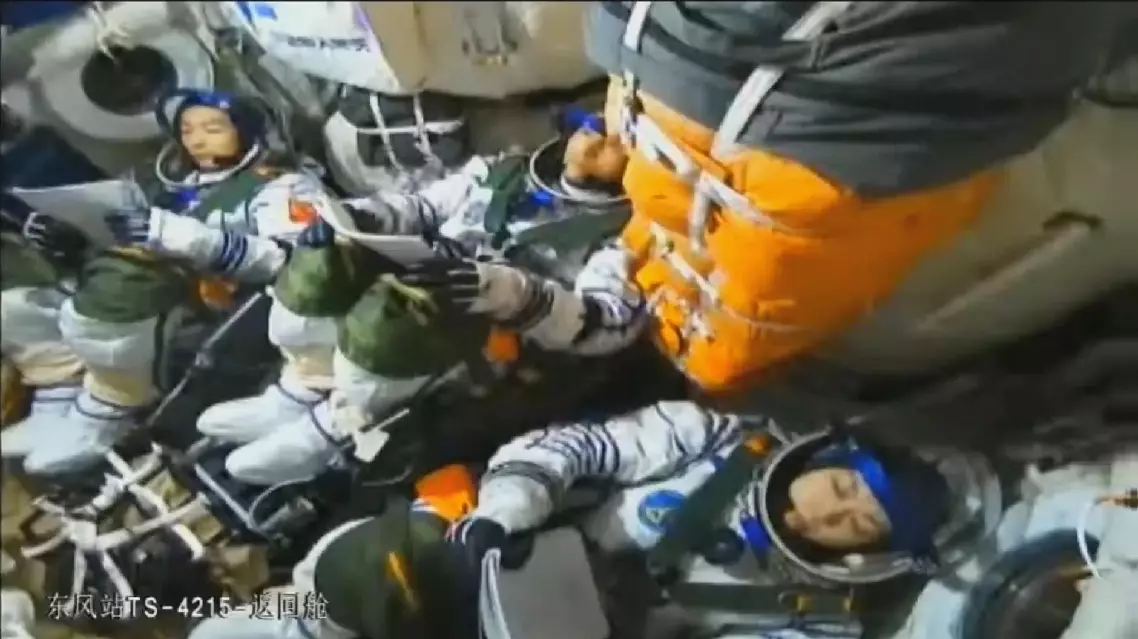
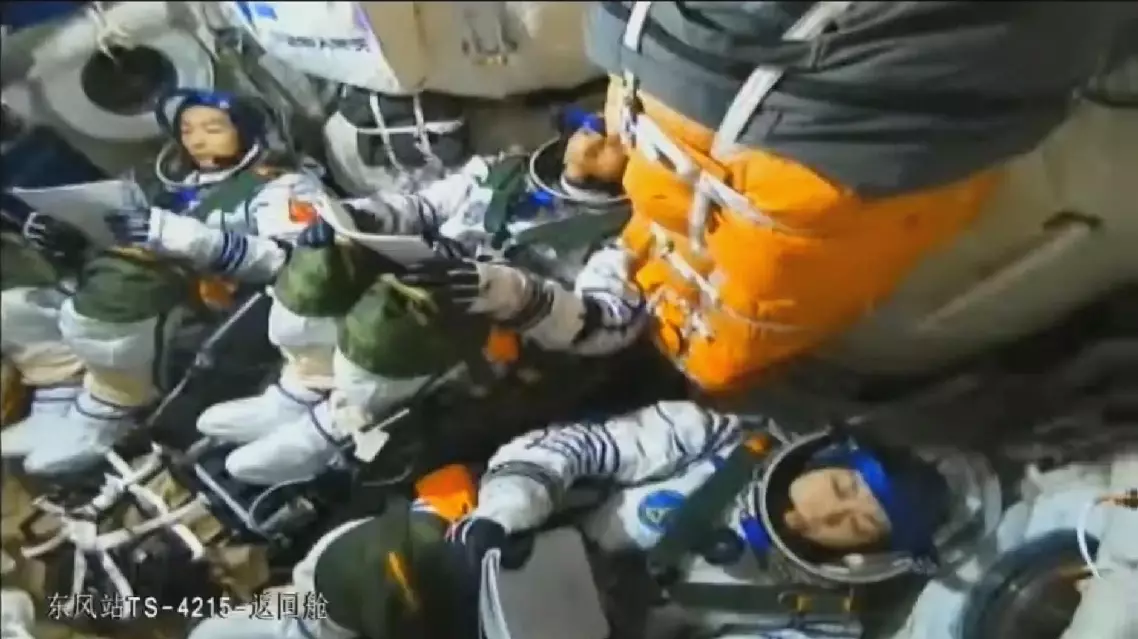
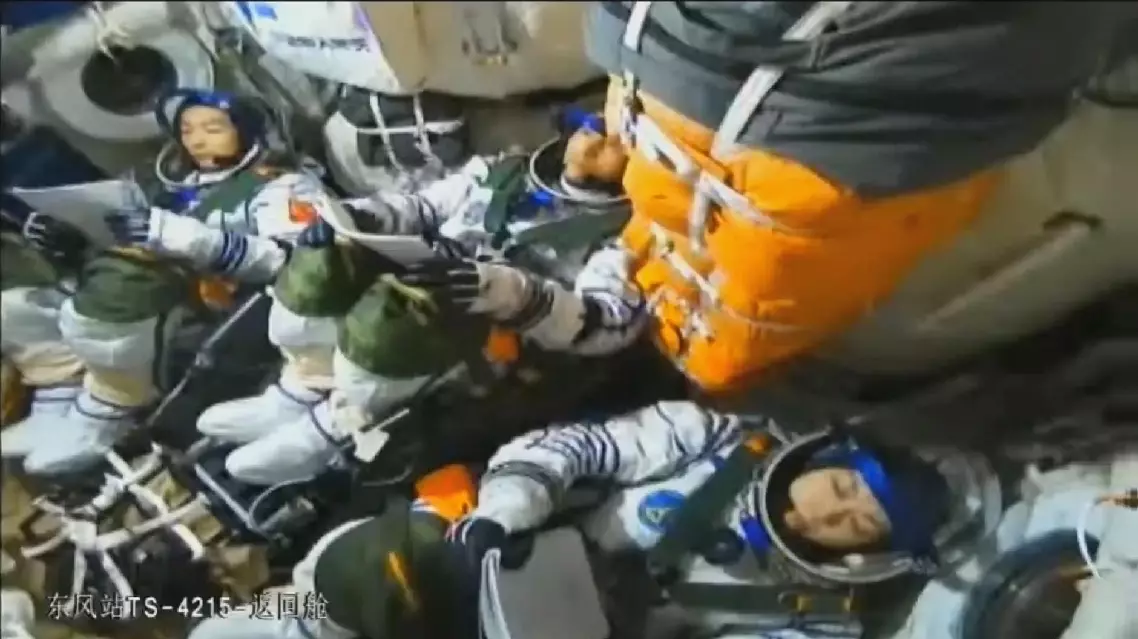
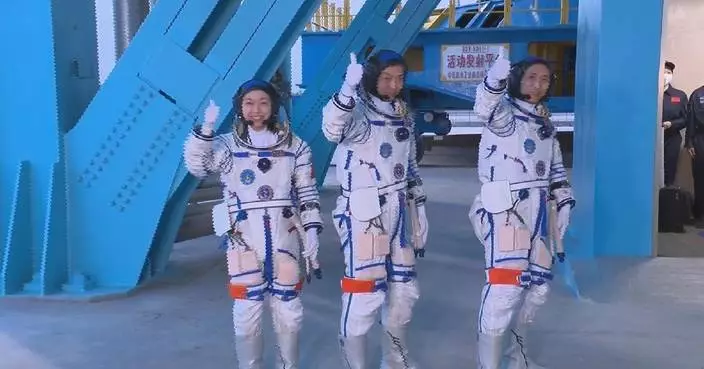
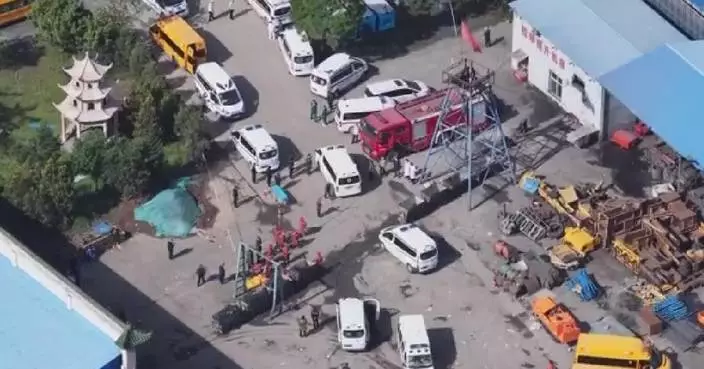
The ground search-and-rescue team of China's Shenzhou-20 crewed mission has recently revealed details of their intense training to ensure a safe return of the Shenzhou-20 crew who landed last week.
In the weeks leading up to landing, teams at the Dongfeng landing site in north China's Inner Mongolia Autonomous Region rehearsed under the difficult nighttime, cold weather and complex terrain conditions.
The intensified preparation followed a suspected micro-debris impact on the Shenzhou-20 spacecraft, which pushed the originally planned November 5 return to a later date.
Officials said the delay allowed every participating system — airborne, ground and communications — to "accurately align every step" and implement the principle of "life first, safety above all".
These drills were designed to test every aspect of recovery under the toughest imaginable scenarios, from rapid terrain navigation to helicopter precision maneuvers. Rescuers also trained for rare emergencies such as rappelling from aircraft and conducting water rescue, though operating in the Gobi Desert.
"At night, especially during the final 20 to 10 meters before landing, the dust stirred up by the descent and the beams from our landing and searchlights would form a curtain of light. During those roughly 20 seconds, we couldn't see anything outside at all. We had to open the rear cabin door, and the navigator and mechanic must lean out to visually confirm we land smoothly to bring our astronauts safely home," said Wang Wenjuan, a pilot from the air search and rescue team.
Search and rescue specialists emphasized that if a situation can be imagined, it must be trained for.
"There's nothing we won't prepare for if we can envision it. If a helicopter can't land, we will rappel. And why do we even have divers in the Gobi Desert? Because we have the Heihe River here, and reservoirs and small lakes as well. Our routine training has laid a very solid foundation. We have our own simulation training. Even if there's just a one-in-ten-thousand chance, we will train for it," said Feng Yi, a research team member.
Helicopters operated in good coordination covering a 25-kilometer range around the anticipated landing site.
"We deployed five helicopters in a square formation around the targeted landing site, each at different altitudes within a range of about 25 kilometers. As the return capsule neared touchdown, we began closing in," said Tang Zifeng, a pilot from the air search team.
On November 11, the teams executed a full-process rehearsal simulating the return procedure, further validating the readiness of every link in the chain.
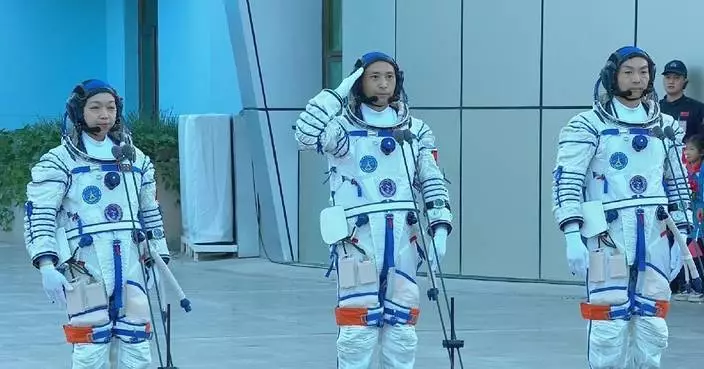
At 11:14 Beijing Time on November 14, astronauts Chen Dong, Chen Zhongrui and Wang Jie undocked from China's space station combination, and began a rapid return to Earth aboard the Shenzhou-21 spacecraft.
As the return capsule separated from the orbital module at 14:49, air and ground rescue teams sprang into position. Their helicopters launched minutes later, swiftly advancing to their patrol areas.
The main parachute deployed at 16:27, marking the final stage of descent. In well-integrated land–air coordination, teams rushed to the site once the capsule touched down.
In a final step, mission personnel retrieved four experimental mice used in life sciences research, which signaled the complete success of the Shenzhou-20 crew return operation.
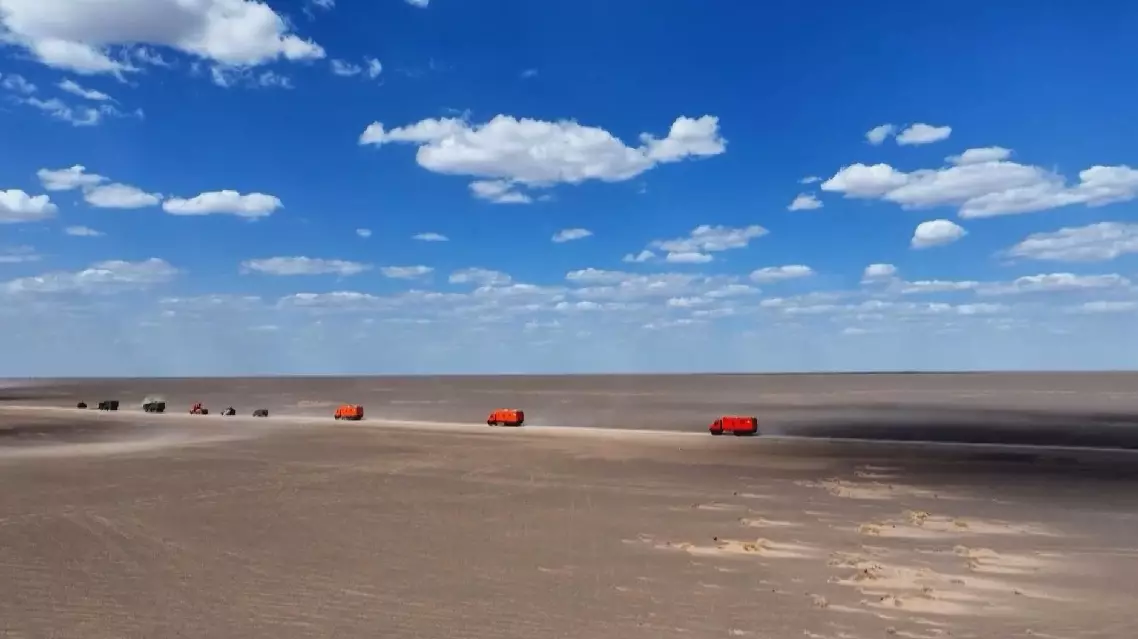
Ground search teams ensure safe return of Shenzhou-20 crew
Ground search teams ensure safe return of Shenzhou-20 crew