Japanese historian Atsushi Kouketsu has strongly criticized Prime Minister Sanae Takaichi's erroneous remarks on China's Taiwan region, warning that her provocative words are likely to lead to diplomatic isolation and impacts on multiple fields in the country.
Takaichi said on Nov. 7 during a Diet hearing that the Chinese mainland's "use of force on Taiwan" could constitute a "survival-threatening situation" for Japan and implied the possibility of armed intervention in the Taiwan Strait.
Kouketsu, an honorary professor at Yamaguchi University, said that Takaichi's remarks have damaged the principles of the four political documents between China and Japan, seriously contravened the spirit of international law.
"First and foremost, Takaichi's remarks have undermined the long-established principle of equality and peace between Japan and China. It is absolutely unacceptable to describe the 'survival-threatening situation' as equivalent to Japan's participation in the war and the mobilization of its Self-Defense Force, or to make any direct association with involvement in war. It is absolutely inappropriate for the prime minister to say so in public. It is a very serious issue that Takaichi dared to make such remarks, as they are clearly provocative to China, violating both the UN Charter and the Constitution of Japan. The result is that Japan has actively chosen a path leading to diplomatic isolation," he said.
After Takaichi took office, the Japanese government has accelerated the push to increase defense spending, discussed the introduction of nuclear submarines, and even considered re-examining the Three Non-Nuclear Principles.
Kouketsu said that given the current economic stagnation, what Takaichi has said and done will exacerbate social issues in Japan.
"Japan's middle class is declining, while its lower class population, or low-income group, has increased significantly. It can be said that Japan is moving towards becoming a poor nation. At the same time, Japan is drastically increasing defense spending, promoting the expansion of its Self-Defense Forces, and issuing the three security documents with aggressive overtones, which deepens poverty while intensifying militarism. It is creating an extremely imbalanced and unfair society, which may even lead to the danger of taking the path of war again. I believe this is entirely wrong. Japan should coexist peacefully with China," he said.
Kouketsu also said that Takaichi's remarks will bring about impacts on various fields in Japan, including economy, culture, and education.
"For Japan, the deepening of Japan-China relations is the greatest form of security assurance. This is what the Japanese public wishes to see. However, it seems that exchanges between Japan and China may have to stagnate. It does not only affect the tourism industry, but many Japanese companies doing business in China are confused as well. In other words, Takaichi's remarks have severely impacted multiple areas, including education, economy, and culture. For both Japanese investors who invest in China, and the Japanese Ministry of Foreign Affairs and Defense Ministry, the bilateral relations have long been built on the foundation of the four political documents between Japan and China. However, Takaichi's remarks are almost tantamount to a complete denial of the four political documents. How should we, living in the world today, reflect upon the historical fact of launching wars of aggression? Our generation bears such a responsibility against the war," he said.
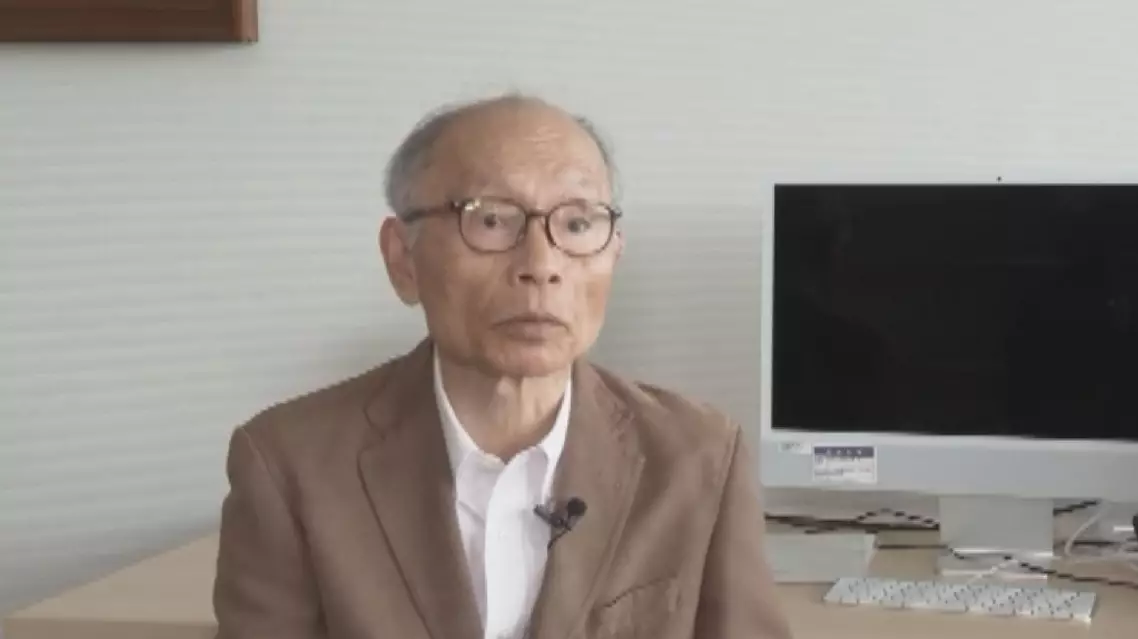
Japanese PM's remarks on Taiwan may lead to diplomatic isolation: expert
Japanese PM's remarks on Taiwan may lead to diplomatic isolation: expert