
MCLEAN, Va.--(BUSINESS WIRE)--Nov 20, 2025--
BigBear.ai (NYSE: BBAI), a leading provider of mission-ready AI for national security, announced a strategic Memorandum of Understanding (MOU) with Pahang Aerospace City Development Berhad (PAC), and its established partners Easy Lease, and Vigilix Technology Investment LLC, at the Dubai Air Show. The parties’ goal is to accelerate the development and integration of advanced technologies throughout the Pahang Aerospace City.
This press release features multimedia. View the full release here: https://www.businesswire.com/news/home/20251120782175/en/
Pahang Aerospace City is a national transit hub designed to support air, land, and sea modes of passenger travel for the Pahang State Government. The successful development of this project is expected to attract further significant domestic and foreign investment—strengthening Malaysia’s aerospace and support industries, while enabling the establishment of the region’s first international spaceport. BigBear.ai’s initiatives with partners will focus on AI-driven border operations to help advance regional and international security.
“BigBear.ai is honored to partner with PAC and our established regional partners in Easy Lease and Vigilix in building an AI-powered aerospace and security ecosystem that sets the benchmark for the region,” said Kevin McAleenan, CEO of BigBear.ai. “By integrating mission-ready AI, predictive analytics, and secure orchestration technologies, together we can help Malaysia build a first of its kind aviation, transit, and space ecosystem that strengthens both national economic growth and regional security. This collaboration represents an exciting step forward for innovation and for BigBear.ai’s engagement in Southeast Asia.”
Robert Wedertz, Senior Vice President of Growth, represented BigBear.ai at the signing ceremony in the UAE. The parties will collaborate on a broad set of initiatives intended to drive innovation, security, and operational efficiency across the Aerospace City ecosystem.
“The Pahang Aerospace City is shaping Malaysia’s next frontier — a city where aerospace, space, digital mobility, and predictive AI converge,” said Prof. Adjunct M. Nurazmi Abas, CEO of PAC. “This alliance creates a global innovation corridor connecting Pahang, the UAE, and the United States. We look forward to long-term collaboration with BigBear.ai, Easy Lease, and Vigilix to realize this ambitious vision,” he said.
Mohammed Bin Jumah, CEO, Vigilix: “This partnership accelerates the deployment of transformational technologies across Malaysia’s aerospace and smart city sectors.”
Saeed Al Qassimi, Vice Chairman, Easy Lease: “Our fleet optimization and smart mobility systems will support PAC as a next-generation international gateway.”
About BigBear.ai
BigBear.ai is a leading provider of mission-ready AI solutions and services for defense, national security, and critical infrastructure. Customers and partners rely on BigBear.ai’s artificial intelligence and predictive analytics capabilities in highly complex, distributed, mission-based operating environments. Headquartered in McLean, Virginia, BigBear.ai is a public company traded on the NYSE under the symbol BBAI. For more information, visit https://bigbear.ai and follow BigBear.ai on LinkedIn: @BigBear.ai and X: @BigBearai. To receive email communications from BigBear.ai, register here.
About Easy Lease
Founded in 2011, Easy Lease is listed on the ADX Second Market under the ticker "Easy Lease" and operates as a capital subsidiary of IHC. The company is a leading provider of integrated Mobility solutions, catering to diverse sectors, including e-commerce, delivery, logistics, couriers, and food service providers. Easy Lease's fleet is one of the largest in the UAE market, comprising over 40,000 fleet.
The company is committed to expanding its presence across the GCC and the broader MENA region, focusing on innovation and efficiency in all mobility services. Easy Lease offers a range of flexible vehicle leasing solutions tailored to meet the diverse transportation needs of businesses. This customer-centric approach, coupled with investment in top-notch technology, including cutting-edge artificial intelligence (AI), ensures that we remain at the forefront of the transportation services industry.
www.easylease.ae
About Pahang Aerospace City Development Berhad (PAC)
PAC is a Malaysian development entity focused on advancing aerospace, mobility, and high-technology infrastructure in alignment with the nation’s strategic economic vision.
About Vigilix Technology Investment LLC–SPC
Based in the UAE, Vigilix Technology Investment LLC is a leading technology investment and strategic advisory firm focused on accelerating innovation across the region’s digital economy. Vigilix specializes in identifying, nurturing, and scaling high-potential technology ventures that address the evolving needs of both public and private sectors.
With a commitment to driving digital transformation, Vigilix serves as a trusted partner for global technology leaders and local enterprises alike, providing strategic guidance, market entry support, and operational enablement. Vigilix’s expertise spans artificial intelligence, smart infrastructure, mobility, and emerging technologies, positioning it as a catalyst for sustainable growth and innovation in the Middle East.
Forward-Looking Statements
This press release contains “forward-looking statements.” Such statements include, but are not limited to, statements regarding the intended use of proceeds from the private placement and may be preceded by the words “intends,” “may,” “will,” “plans,” “expects,” “anticipates,” “projects,” “predicts,” “estimates,” “aims,” “believes,” “hopes,” “potential” or similar words. Forward-looking statements are not guarantees of future performance, are based on certain assumptions and are subject to various known and unknown risks and uncertainties, many of which are beyond the Company’s control, and cannot be predicted or quantified and consequently, actual results may differ materially from those expressed or implied by such forward-looking statements. These forward-looking statements are subject to a number of risks and uncertainties, including changes in domestic and foreign business, market, financial, political, and legal conditions; risks related to the uncertainty of the projected financial information (including on a segment reporting basis); risks related to delays caused by factors outside of our control, including changes in fiscal or contracting policies or decreases in available government funding; changes in government programs or applicable requirements; budgetary constraints, including automatic reductions as a result of “sequestration” or similar measures and constraints imposed by any lapses in appropriations for the federal government or certain of its departments and agencies; influence by, or competition from, third parties with respect to pending, new, or existing contracts with government customers; our ability to successfully compete for and receive task orders and generate revenue under Indefinite Delivery/Indefinite Quantity contracts; potential delays or changes in the government appropriations or procurement processes, including as a result of events such as war, incidents of terrorism, natural disasters, and public health concerns or epidemics; and increased or unexpected costs or unanticipated delays caused by other factors outside of our control, such as performance failures of our subcontractors; risks related to the rollout of the business and the timing of expected business milestones; the effects of competition on our future business; our ability to issue equity or equity-linked securities in the future, and those factors discussed in the Company’s reports and other documents filed with the SEC, including under the heading “Risk Factors.” More detailed information about the Company and the risk factors that may affect the realization of forward-looking statements is set forth in the Company’s filings with the SEC, including the Company’s Annual Report on Form 10-K and its Quarterly Reports on Form 10-Q. Investors and security holders are urged to read these documents free of charge on the SEC’s web site at http://www.sec.gov. The Company assumes no obligation to publicly update or revise its forward-looking statements as a result of new information, future events or otherwise, except as required by law.
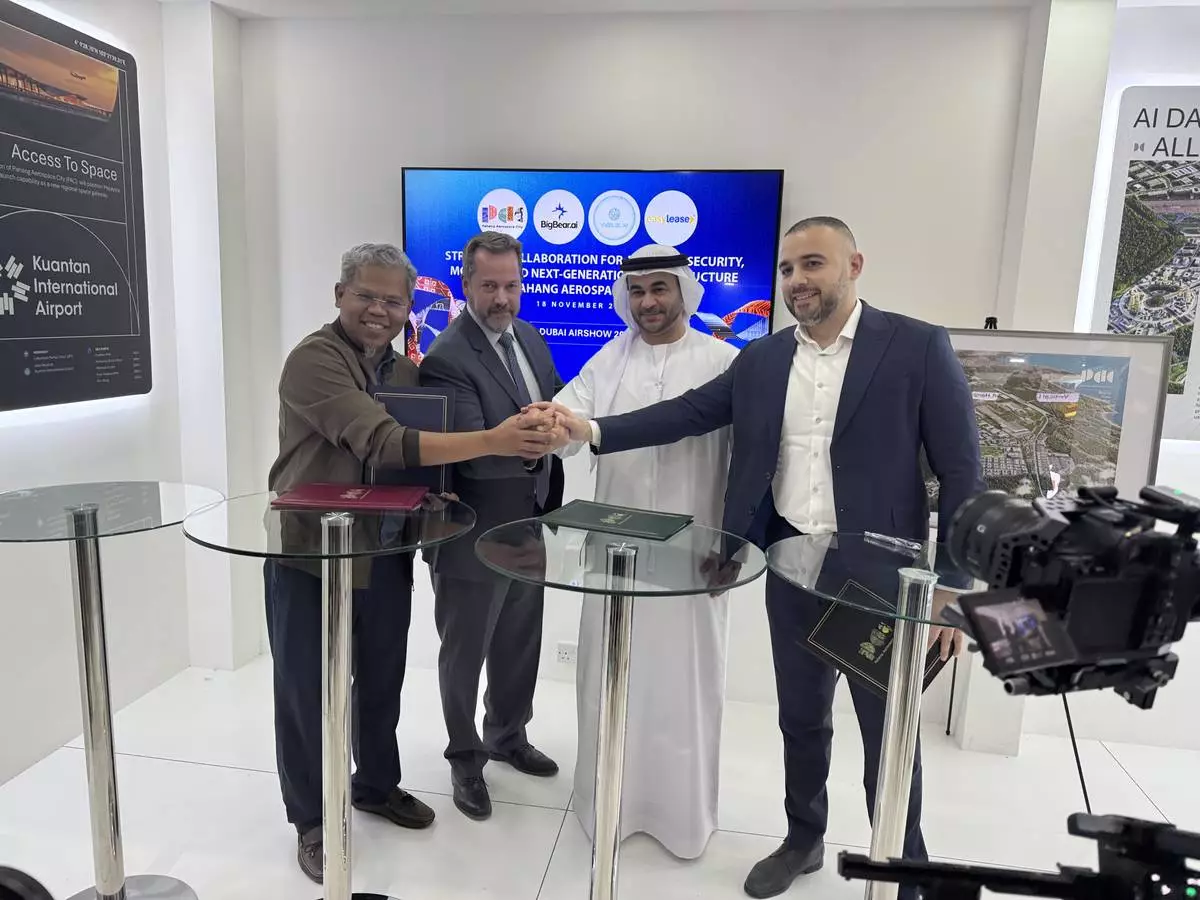
Signing ceremony representatives (left to right): Prof. Adjunct M. Nurazmi Abas, CEO, PAC; Robert Wedertz, SVP, BigBear.ai; Mohammed Bin Jumah, CEO, Vigilix; Saeed Al Qassimi, Vice Chairman, Easy Lease
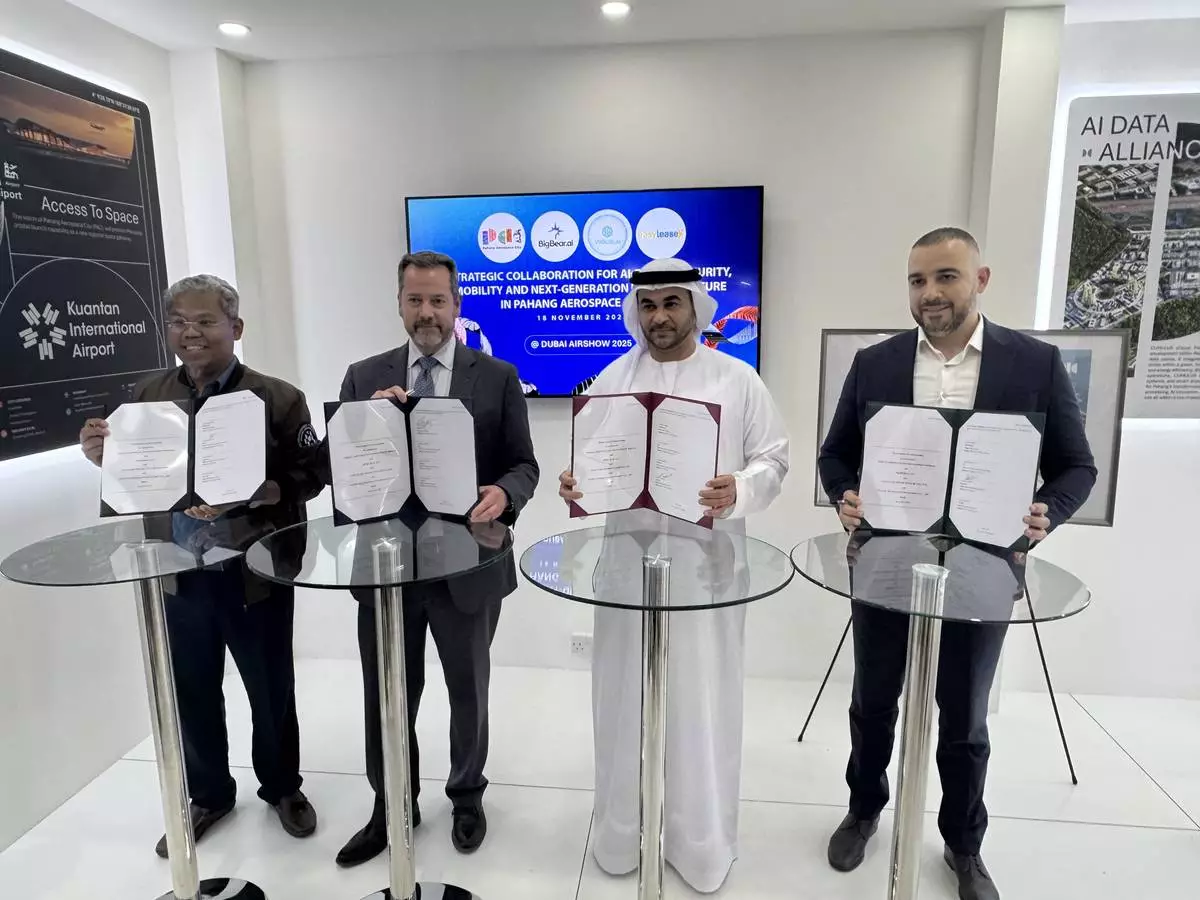
Signing ceremony representatives (left to right): Prof. Adjunct M. Nurazmi Abas, CEO, PAC; Robert Wedertz, SVP, BigBear.ai; Mohammed Bin Jumah, CEO, Vigilix; Saeed Al Qassimi, Vice Chairman, Easy Lease