ZURICH (AP) — Iraq is one game away from soccer’s 2026 World Cup in North America and its veteran coach senses a little pressure and a huge achievement ahead.
For Iraq fans, a 40-year wait through their nation’s troubled modern history to return to the World Cup can end in the last of an epic 21-game qualifying campaign. That is more games than any other team played getting to the tournament in the United States, Canada and Mexico.
Click to Gallery
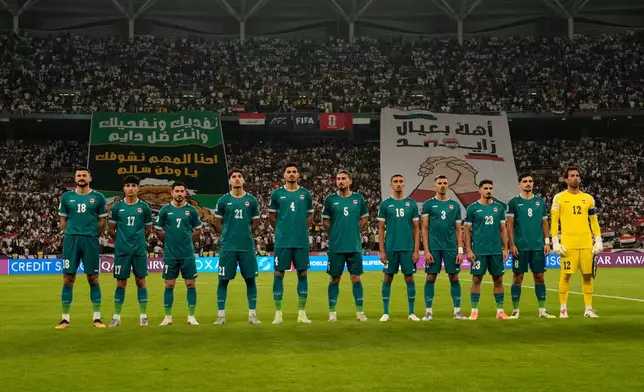
Iraq team players pose for a photo before the 2026 World Cup play off second leg match between Iraq and UAE in Basra, Iraq, Nov. 18, 2025. (AP Photo/Hadi Mizban)
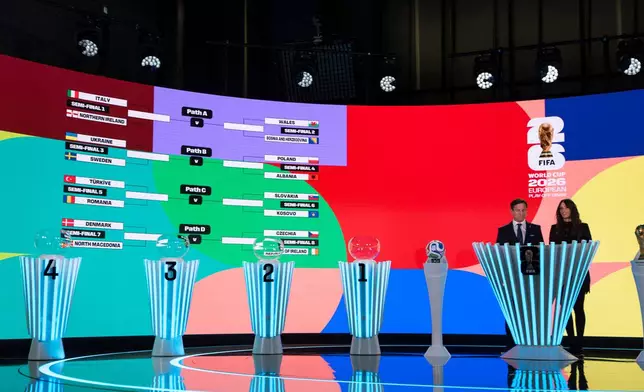
The UEFA Playoff tree is shown on a screen next to Manolo Zubiria, Chief Tournament Officer for the FIFA World Cup 2026, left, and host Melanie Winiger during the FIFA World Cup 2026 playoff draw in Zurich, Switzerland, Thursday, Nov. 20, 2025. (Claudio Thoma/Keystone via AP)
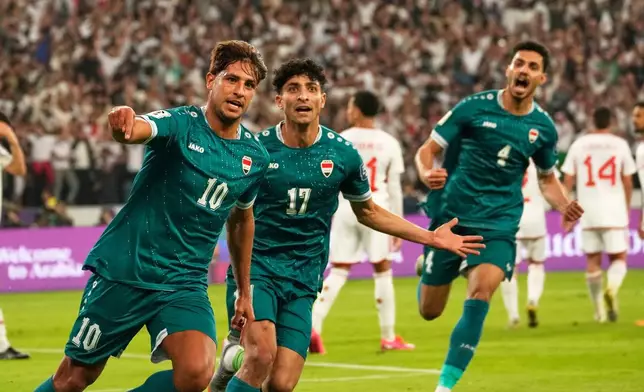
Iraqi's Mohanad Ali, left, celebrates with teammates after scoring his side's first goal during the 2026 World Cup play off second leg match between Iraq and UAE, in Basra, Iraq, Tuesday, Nov. 18, 2025. (AP Photo/Hadi Mizban)
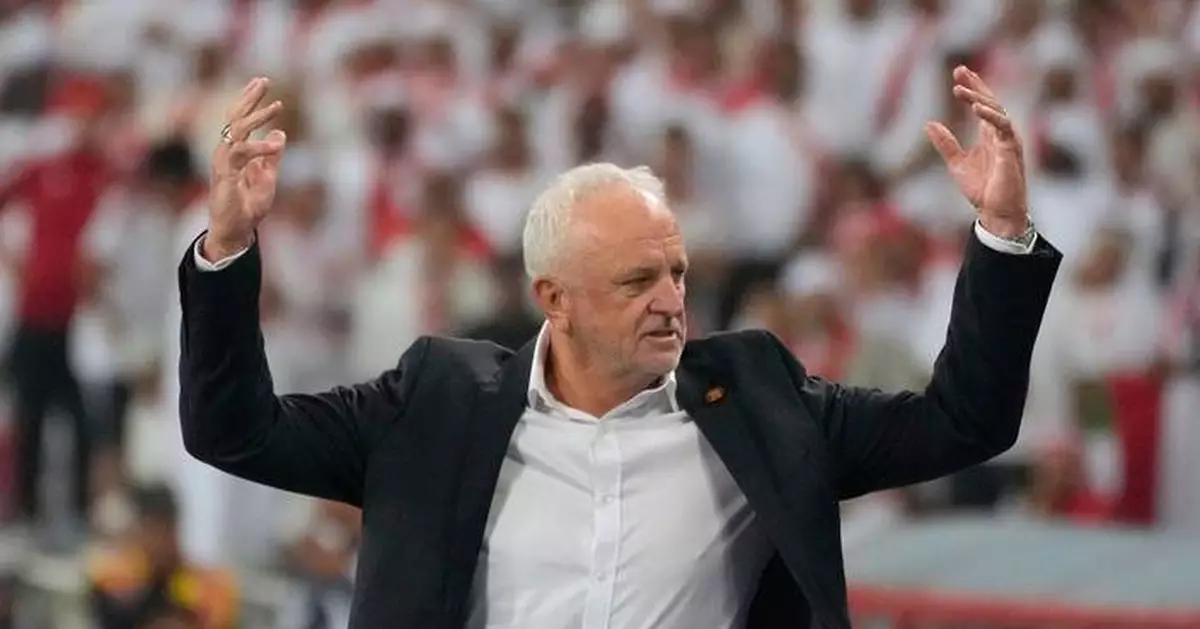
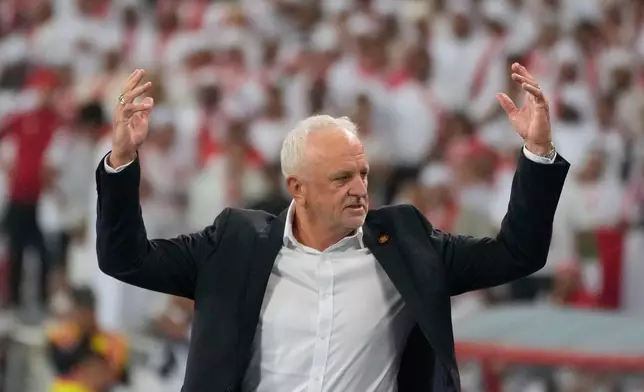
Iraqi's head coach Graham Arnold celebrates his team's win during the 2026 World Cup play off second leg soccer match between UAE and Iraq, in Basra, Iraq, Nov. 18, 2025. (AP Photo/Hadi Mizban)
Iraq just has to win an elimination playoff against Bolivia or Suriname scheduled in March. Bolivia and Suriname meet days earlier — also in Monterrey or Guadalajara.
“If ever a country is desperate to qualify, this is it,” Iraq coach Graham Arnold told The Associated Press in Zurich after FIFA made the playoff pairings draw Thursday.
“I’ve never seen anything like it the other night,” he said, about Iraq scoring a penalty kick in the 17th minute of stoppage time to eliminate the United Arab Emirates in an Asian playoff.
There were 62,000 to see Iraq win 2-1, and 3-2 on aggregate score, inside the stadium in Basra — a city often known for military conflict and turmoil since Iraq last played at the World Cup in 1986.
A video that circulated online showed Arnold behind the team dugout refusing to watch as Amir Al-Ammari prepared to score the decisive spot-kick.
Still, Arnold has seen it and done it before in World Cup qualification.
He guided his native Australia through a win-or-go-home game against Peru in Doha to reach the 2022 World Cup in Qatar. His bold coaching helped Australia win the penalty shootout by sending on substitute goalkeeper Andrew Redmayne, who made the decisive save.
“The funny thing is, I didn’t feel this much pressure,” Arnold said of coaching Australia in that playoff, compared to the tension “that I felt the other night.”
“Australia’s my country, and I love Australia so much, but I’ve been given a task that can change a country forever,” he said. “And I’m really enjoying the task.”
Arnold was appointed only in May, deep into a qualifying campaign that started in November 2023, for a job in a nation where soccer is the top sport.
“The people are beautiful people and they’re very passionate about anything that they do,” he said, describing the fans as “sensational.”
“The whole thing of Iraq is a misperception. You know, they had to go through a war, they’re still recovering from that war.”
Baghdad was subjected to “shock and awe” bombing by the United States military in 2003 to begin toppling the regime of Saddam Hussein. For much of the past two decades, FIFA judged Iraq not safe enough to host games in international competitions like the World Cup.
“The roads are busy, everything’s busy. But I’ve been there for five and a half months out of six, and I find it normal,” said Arnold, adding he is unbothered by the heat and dust storms.
Some in Arnold’s squad play for clubs in Europe, including Al-Ammari in Poland, former Manchester United prospect Zidane Iqbal in the Netherlands and German-born Merchas Doski in the Czech Republic. Most are still in Iraq.
“They have carried a lot of pressure and there’s a lot of expectations,” he acknowledged about the mental challenges. “I’ve banned them from social media for the last two camps, from the day they got in, to the day we left. And we haven’t lost a game.”
One more game remains in Mexico, the only country where Iraq played at a World Cup. In 1986, Iraq lost three tight games including to the host nation team.
Iraq wants to return.
“There’s 45 million that live in Iraq and there’s probably about another 10 million live somewhere else, because of the war,” Arnold said. “So there’s a lot of emotion around.”
AP soccer: https://apnews.com/hub/soccer
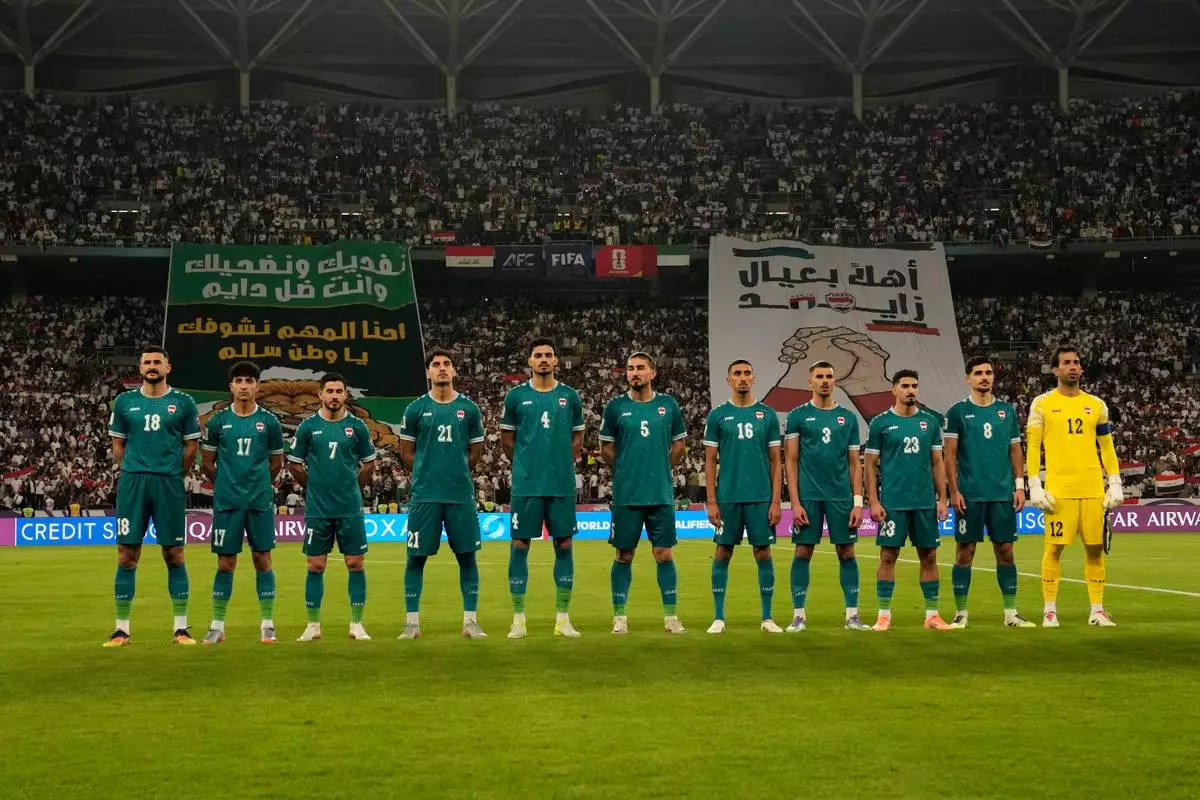
Iraq team players pose for a photo before the 2026 World Cup play off second leg match between Iraq and UAE in Basra, Iraq, Nov. 18, 2025. (AP Photo/Hadi Mizban)

The UEFA Playoff tree is shown on a screen next to Manolo Zubiria, Chief Tournament Officer for the FIFA World Cup 2026, left, and host Melanie Winiger during the FIFA World Cup 2026 playoff draw in Zurich, Switzerland, Thursday, Nov. 20, 2025. (Claudio Thoma/Keystone via AP)
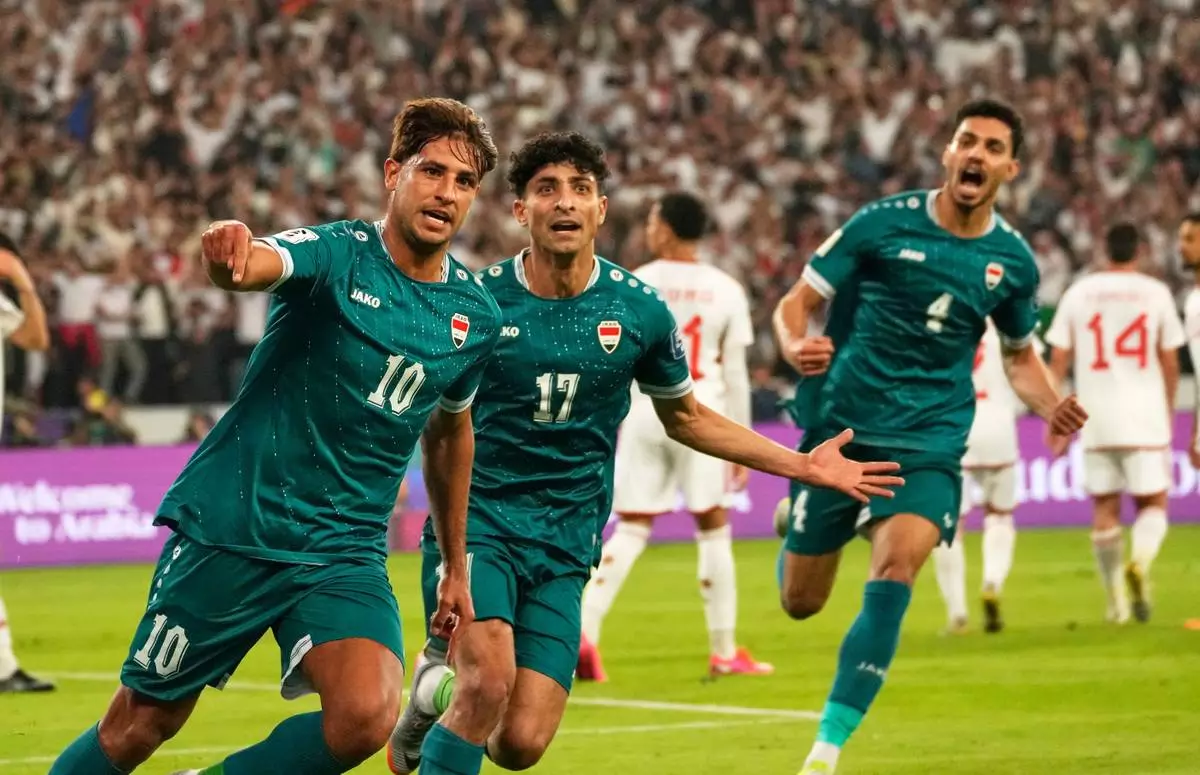
Iraqi's Mohanad Ali, left, celebrates with teammates after scoring his side's first goal during the 2026 World Cup play off second leg match between Iraq and UAE, in Basra, Iraq, Tuesday, Nov. 18, 2025. (AP Photo/Hadi Mizban)
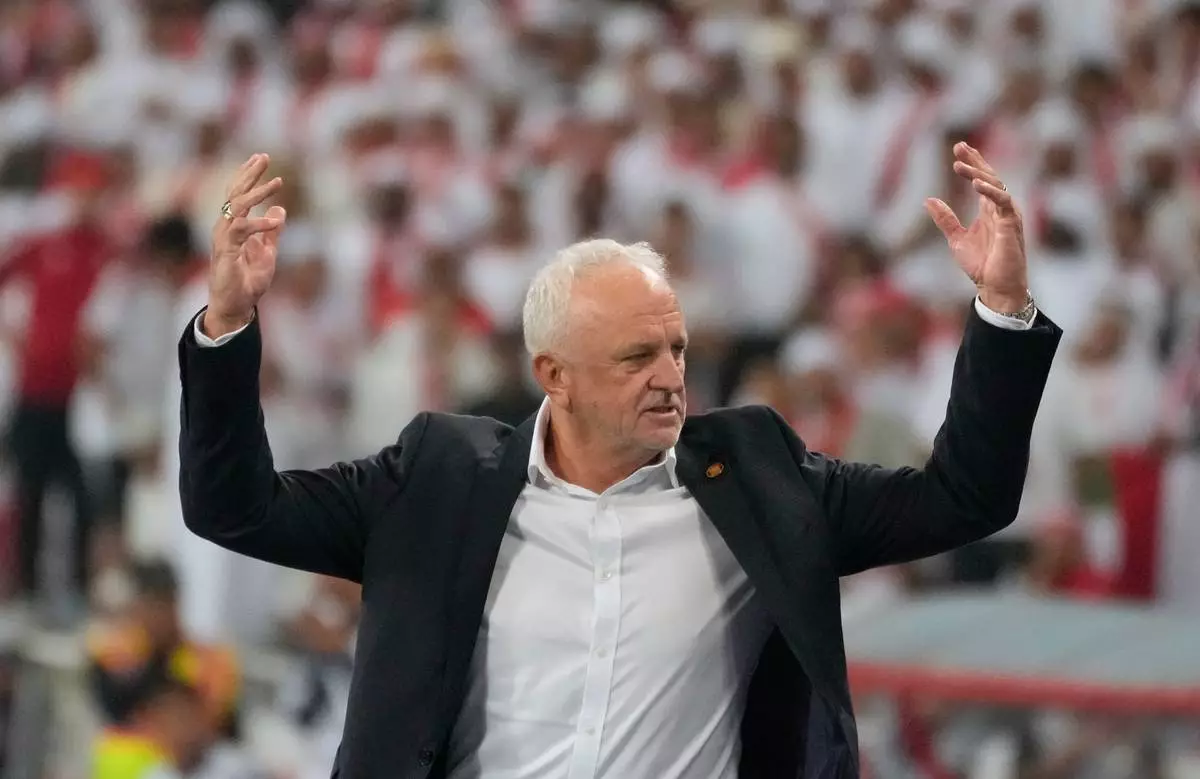
Iraqi's head coach Graham Arnold celebrates his team's win during the 2026 World Cup play off second leg soccer match between UAE and Iraq, in Basra, Iraq, Nov. 18, 2025. (AP Photo/Hadi Mizban)
DUBAI, United Arab Emirates (AP) — The U.S. launched strikes on Iran early Tuesday morning, hours after President Donald Trump said Washington is “reinstating” a blockade on Iran in the Strait of Hormuz. Trump separately suggested the United States will charge other ships for safe passage, upending hundreds of years of American policy supporting freedom of navigation across the globe.
Iran responded with attacks targeting Bahrain and two tankers associated with the United Arab Emirates traveling through the strait, killing one mariner and wounding eight others. The Emirates threatened to retaliate against Iran, potentially drawing the nation home to Abu Dhabi and Dubai back into fighting with Tehran.
The attacks come as Iran and the U.S. both vie for control of the strait through which a fifth of all crude oil and natural gas once passed in peacetime. The price of benchmark Brent crude oil rose 7.8% to $81.92 a barrel, still well below the nearly $120 reached at the height of the war but threatening to make costs everywhere higher.
U.S. Central Command announced on social media that the U.S. military had begun another round of strikes against Iran.
“These strikes will continue imposing a heavy cost on Iranian forces and degrade their ability to attack innocent civilians and commercial shipping in the Strait of Hormuz,” the U.S. military said.
Moments after the military announced the new strikes, Trump called it “another major attack.”
“We’re hitting them very hard. And it’ll continue, and we’ll see what happens,” he told reporters in the Oval Office. “We’re knocking out all of their offensive capability and we’re controlling the straits. We’re putting the blockade back.”
Trump also provided new details on his administration doing an about-face and suggesting it will charge tolls for ships going through the strait, after previously suggesting that it wouldn’t.
“We’re protecting a very rich portion of the world,” he said. “We’re spending money. And so, what we’ve done is, we are going to be reimbursed for protection.”
It's a change in U.S. policy that, until now, said the strait should remain open to all without tolls — as it was before the U.S. and Israel attacked Iran on Feb. 28. Any attempt by the U.S. or Iran to charge fees would violate global norms on freedom of navigation and raise tensions, likely causing further economic disruption far beyond the region.
The United Arab Emirates’ Defense Ministry said early Tuesday that Iran attacked two tankers in the Strait of Hormuz, killing one mariner and wounding eight others.
The Emirati Defense Ministry said Iran launched two cruise missiles at the tankers Mombasa and Al Bahiyah.
The attacks set both tankers ablaze, though the fires were extinguished.
Bahrain also came under renewed attack early Tuesday morning as Iran retaliated over the latest round of U.S. airstrikes. Bahrain sounded its missile alert siren, urging the public to seek shelter. There was no word on any damage or casualties from the attack.
The Emirati Defense Ministry said the attack on the tankers killed one Indian national and wounded six Indians and two Ukrainians.
“The UAE reserves its full right to respond to this escalation and to take all necessary measures to protect its territory, its citizens and residents,” the Defense Ministry added.
The Emirates used similar language before launching attacks against Iran during the war. Fighter jets could be heard overheard Tuesday morning in Dubai.
Earlier Monday, Trump told conservative radio host Hugh Hewitt that the agreement reached last month was “built to test” Iran, adding that “when you’re dealing with sleazebags (agreements) don’t mean much.”
“They didn’t honor the test,” the president said.
Iran asserts it has the right to manage traffic through the strait and potentially charge fees in accordance with the interim peace deal. The U.S. has disputed that.
The American military and the United Nations' International Maritime Organization have tried to establish a route through the strait along the coast of Oman that would be outside of Iranian control. Iran has attacked ships using that route, saying the U.S. is violating the interim peace deal. The U.S. has attacked Iran in response, drawing Iranian attacks on U.S.-allied Arab states.
Exchanges of fire in recent days had already cast further doubt on the interim peace deal. Washington had lifted a blockade it imposed in mid-April as part of that deal, which also called for the strait to be fully reopened.
“We are reinstating the THE IRANIAN BLOCKADE,” Trump said on social media. “All other countries will have fair and open use of the Strait.”
The president said the U.S. would be “reimbursed” by 20% of the value of cargo to help cover “any and all costs necessary to do the job of providing safety and security.”
The U.S. military said it will resume its blockade of Iranian ports at midnight local Wednesday in Dubai.
Boak, Weissert and Toropin reported from Washington. Associated Press writers Mae Anderson in New York, Christopher Weber in Los Angeles, Kareem Chehayeb in Beirut, Munir Ahmed in Islamabad and Stella Martany in Irbil, Iraq, contributed to this report.
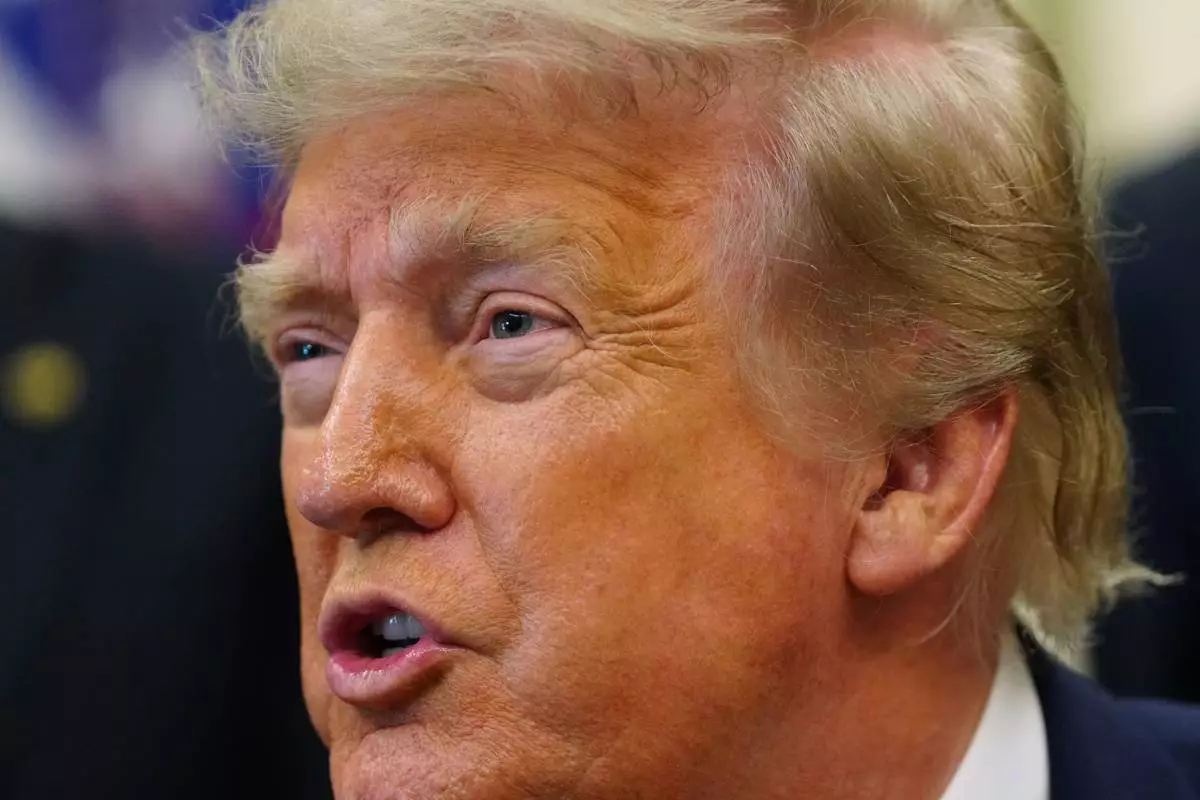
President Donald Trump speaks after signing executive orders modifying the Bears Ears National Monument and the Grand Staircase-Escalante National Monument in the Oval Office of the White House, Monday, July 13, 2026, in Washington. (AP Photo/Julia Demaree Nikhinson)
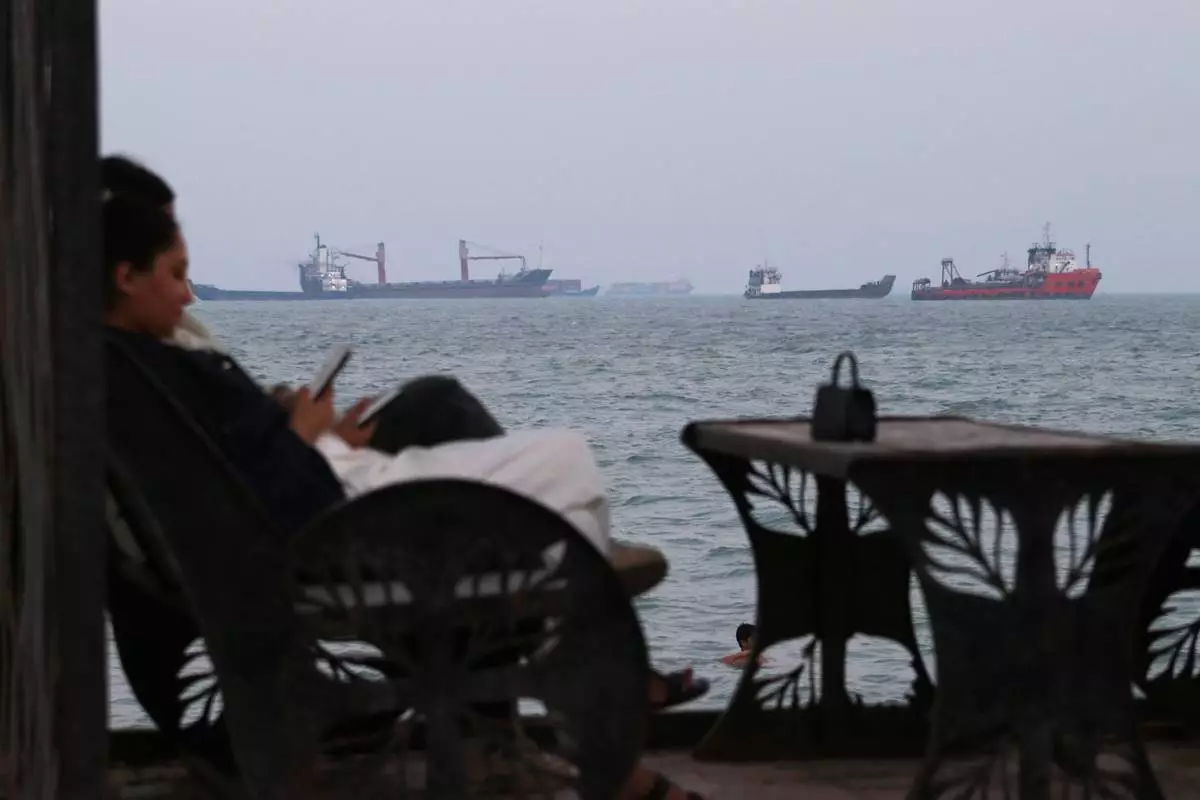
Residents check their cellphones as they sit at a cafe overlooking commercial vessels anchored in the Strait of Hormuz, off Bandar Abbas, Iran, Sunday, July 12, 2026. (Razieh Poudat/ISNA via AP)
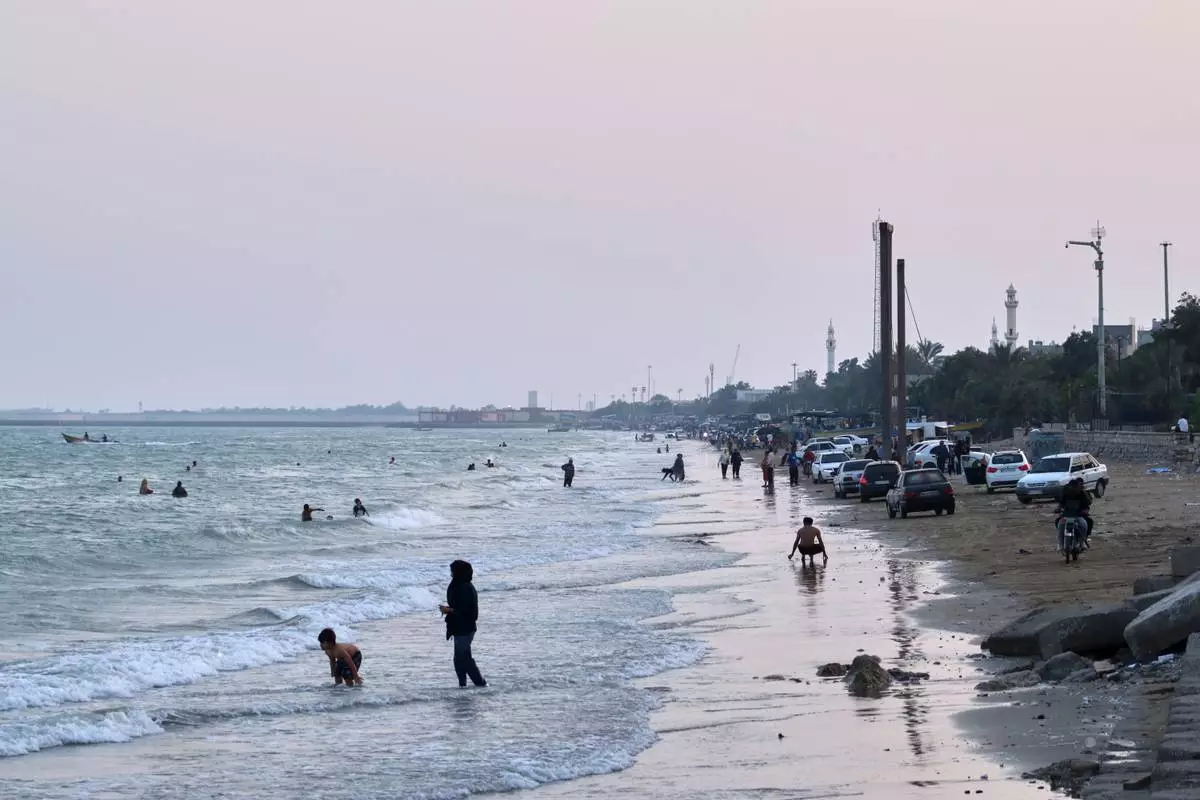
People swim and spend time along the shore of the Strait of Hormuz, off Bandar Abbas, Iran, Sunday, July 12, 2026. (Razieh Poudat/ISNA via AP)
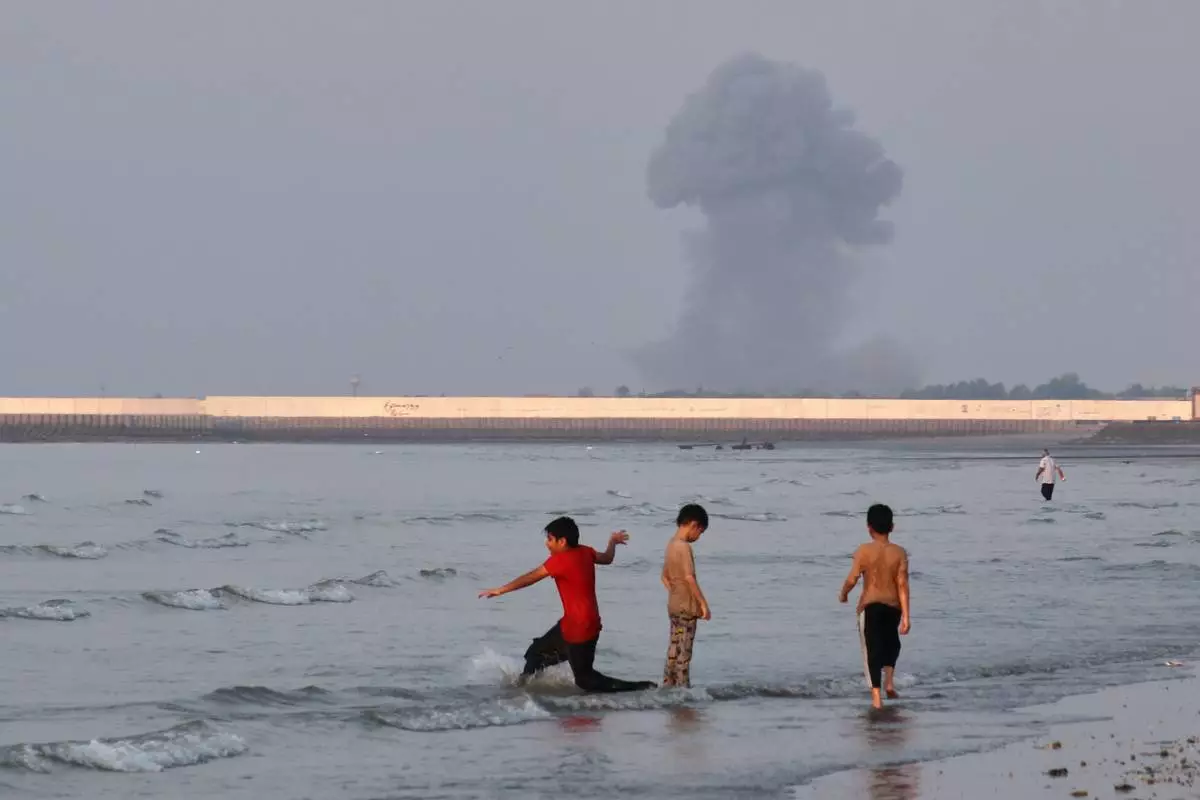
Three boys play in the shallow waters of the Strait of Hormuz, as a plume of smoke rises from an explosion in the background, off Bandar Abbas, Iran, Monday, July 13, 2026. (Razieh Poudat/ISNA via AP)
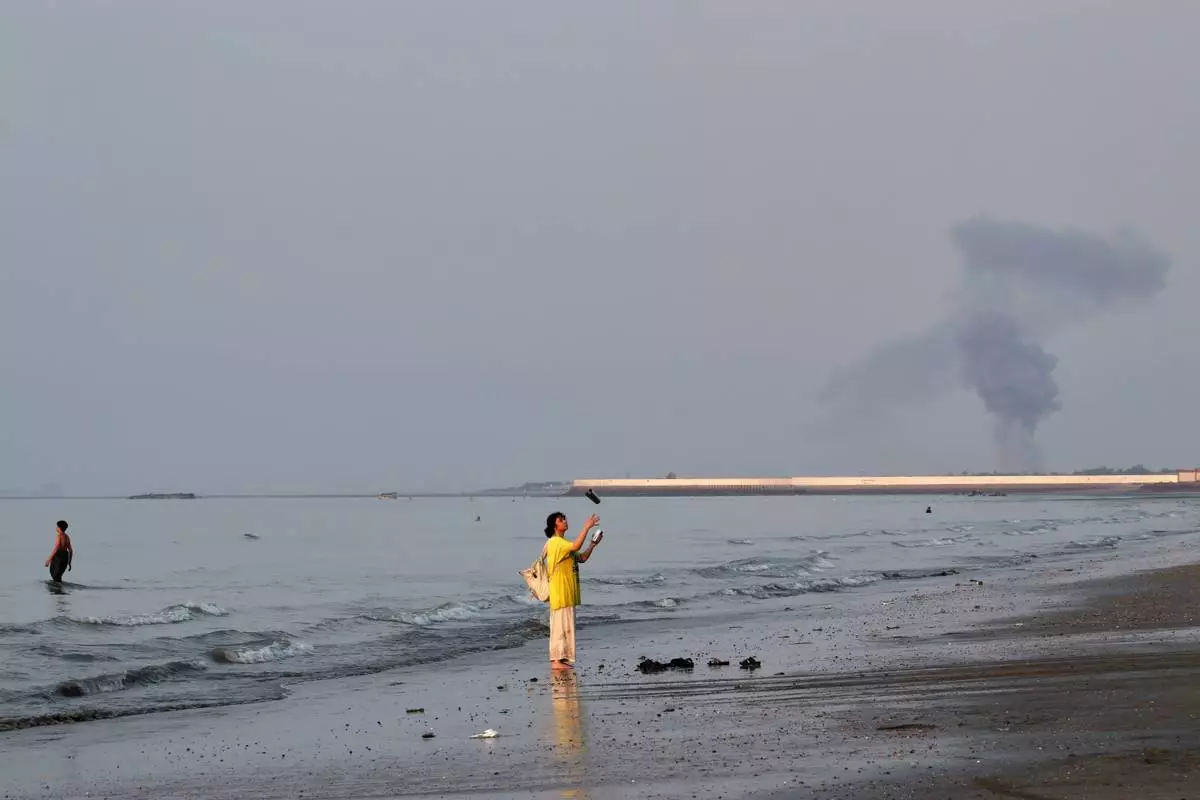
A woman stands at the water's edge along the Strait of Hormuz as a plume of smoke rises in the background following an explosion, off Bandar Abbas, Iran, Monday, July 13, 2026. (Razieh Poudat/ISNA via AP)
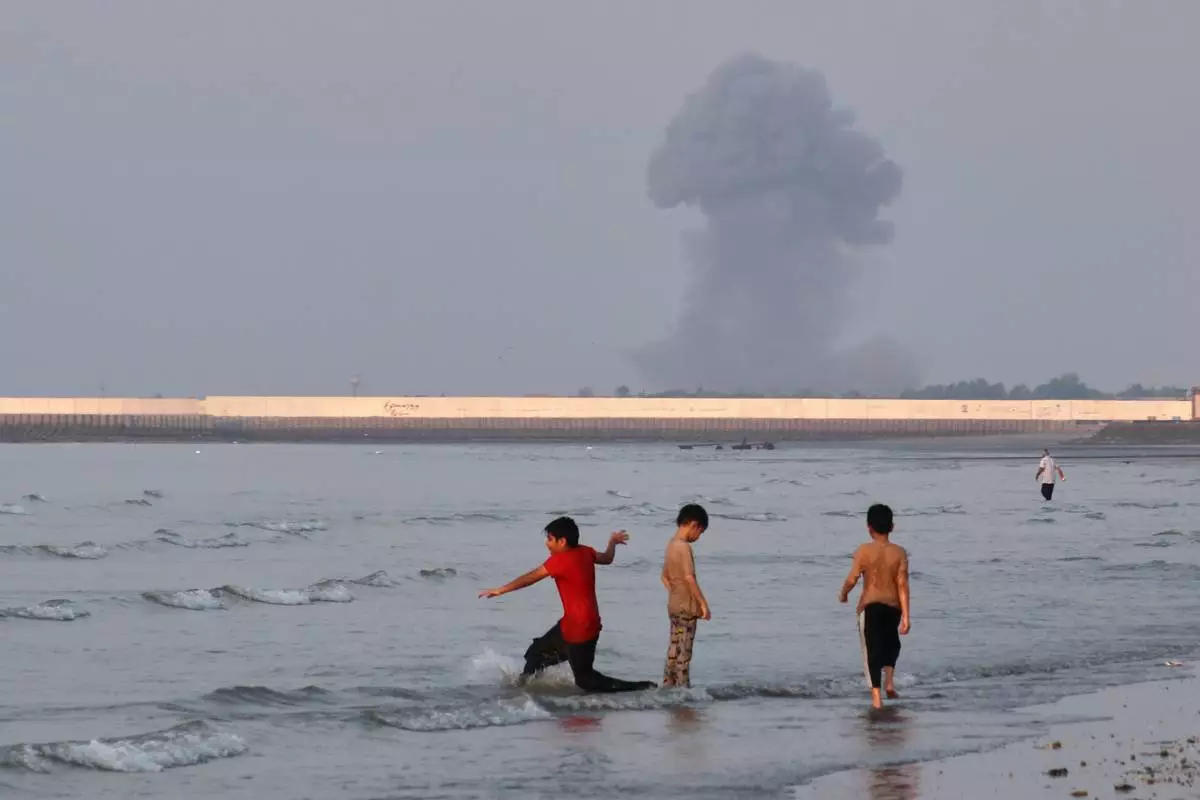
Three boys play in the shallow waters of the Strait of Hormuz, as a plume of smoke rises from an explosion in the background, off Bandar Abbas, Iran, Monday, July 13, 2026. (Razieh Poudat/ISNA via AP)
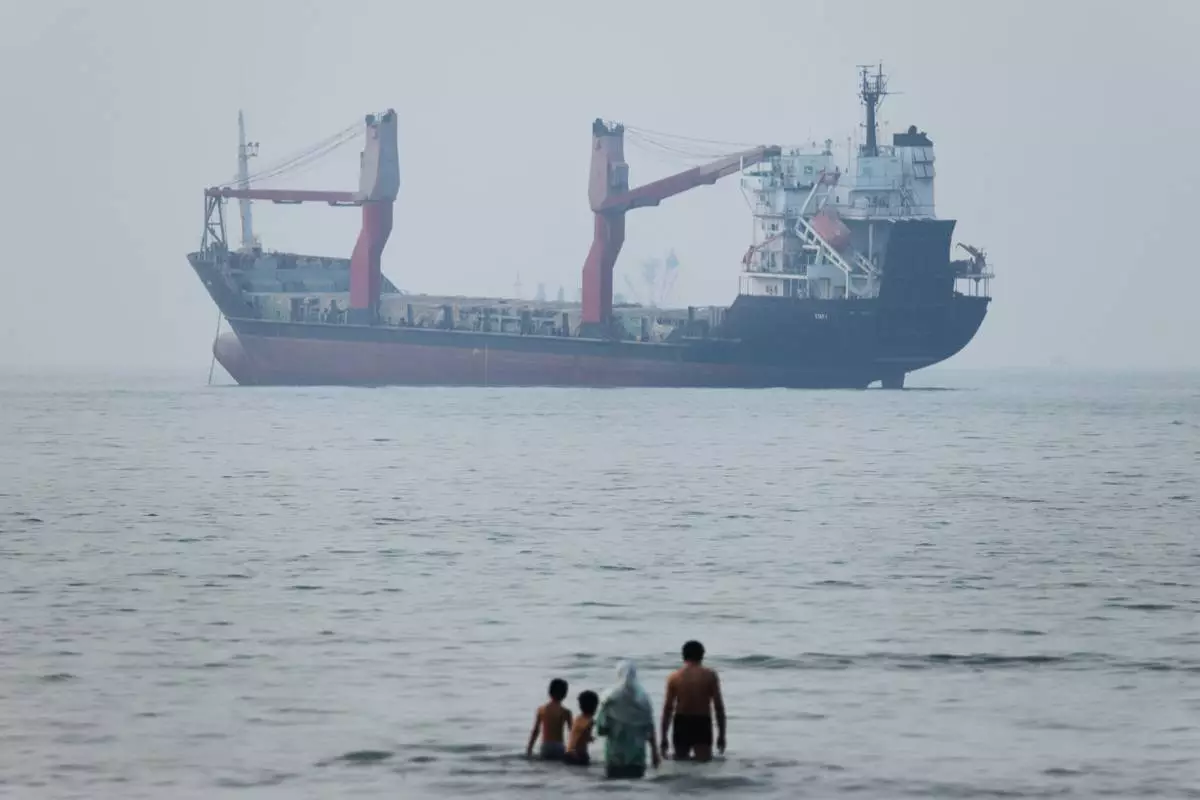
A group of people stands in shallow water as a cargo ship appears anchored in the Strait of Hormuz off Bandar Abbas, Iran, Tuesday, June 30, 2026. (Amirhosein Khorgooi/ISNA via AP)
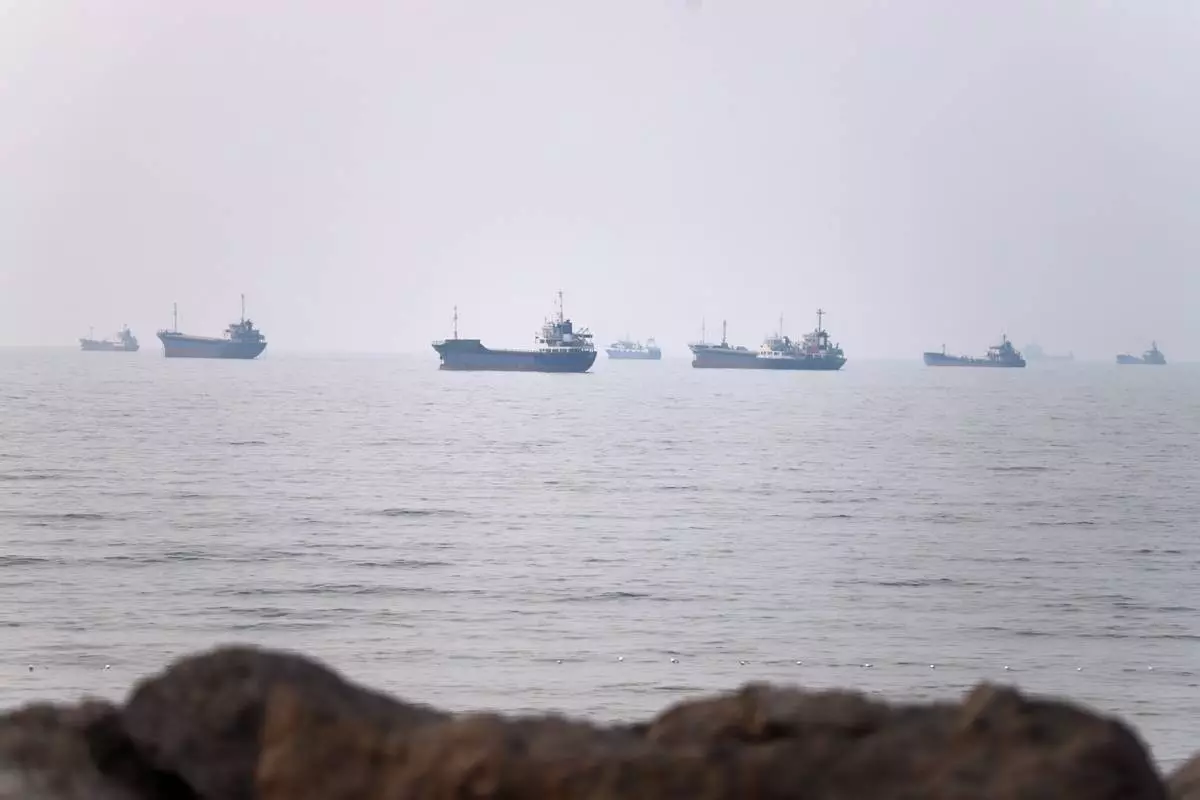
Commercial vessels are seen in the Strait of Hormuz off Bandar Abbas, Iran, Tuesday, June 30, 2026. (Amirhosein Khorgooi/ISNA via AP)