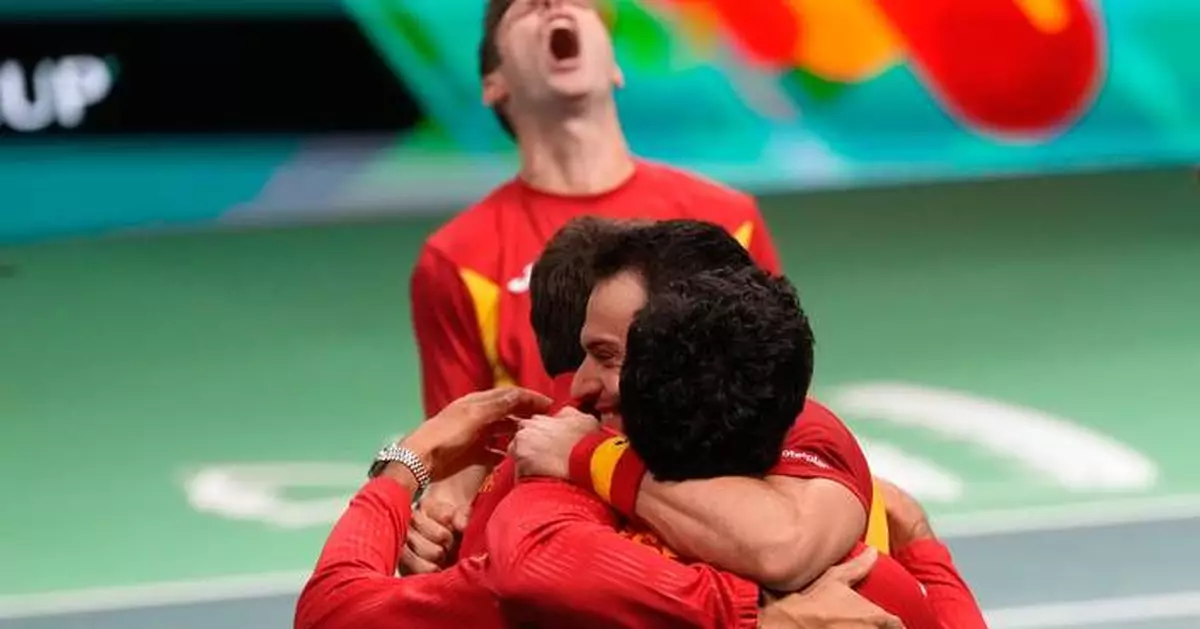
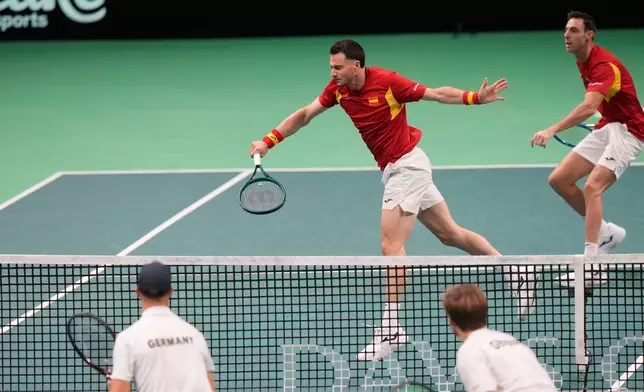
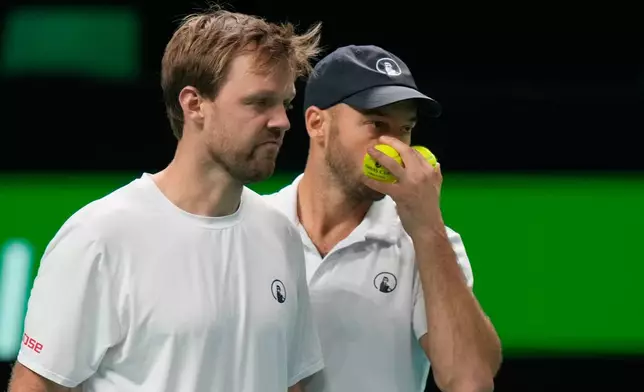
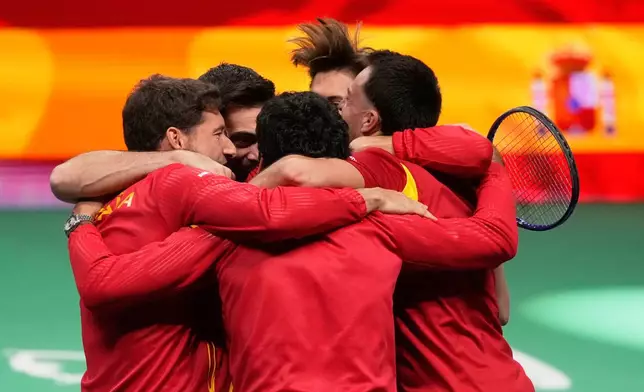
BOLOGNA, Italy (AP) — Spain reached the Davis Cup final thanks to doubles pair Marcel Granollers and Pedro Martínez, who defeated Germany’s Tim Pütz and Kevin Krawietz 6-2, 3-6, 6-3 Saturday for a 2-1 win in their semifinal.
Alexander Zverev had kept the Germans’ hopes alive with a 7-6 (2), 7-6 (5) win over Jaume Munar after Pablo Carreño Busta got Spain off to a winning start against Jan-Lennard Struff.
Click to Gallery
Spain's Pedro Martinez, top left, returns the ball with his teammate Marcel Granollers during a Davis Cup double semifinal tennis match against Germany's Kevin Krawietz and Tim Puetz, in Bologna, Italy, Saturday, Nov. 22, 2025. (AP Photo/Luca Bruno)
Germany's Kevin Krawietz, left, and Tim Puetz talk during a Davis Cup double semifinal tennis match against Spain's Marcel Granollers and Pedro Martinez, in Bologna, Italy, Saturday, Nov. 22, 2025. (AP Photo/Luca Bruno)
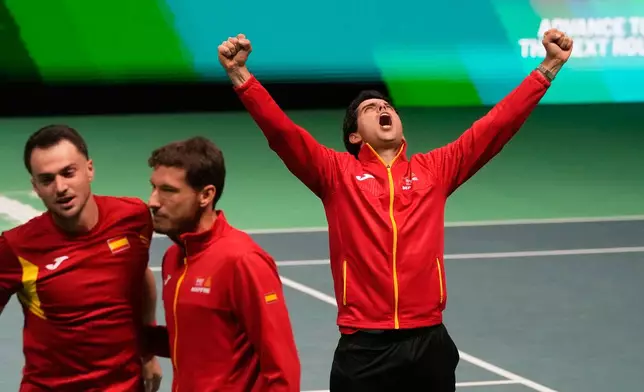
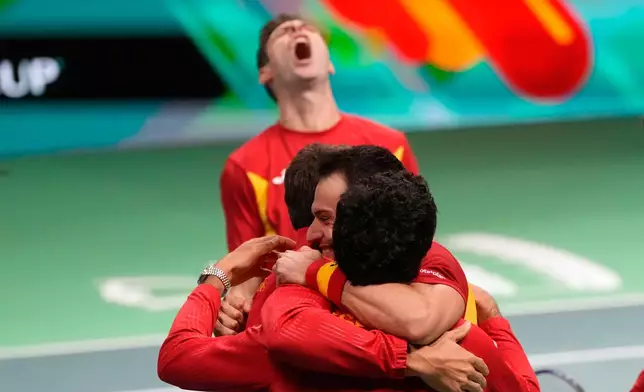
Spain's Marcel Granollers and Pedro Martinez celebrate with their teammates after winning against Germany's Kevin Krawietz and Tim Puetz during a Davis Cup double semifinal tennis match between Spain and Germany, in Bologna, Italy, Saturday, Nov. 22, 2025. (AP Photo/Luca Bruno)
Spain's Marcel Granollers and Pedro Martinez celebrate with their teammates after winning against Germany's Kevin Krawietz and Tim Puetz during a Davis Cup double semifinal tennis match between Spain and Germany, in Bologna, Italy, Saturday, Nov. 22, 2025. (AP Photo/Luca Bruno)
Spain's Marcel Granollers and Pedro Martinez celebrate with their teammates after winning against Germany's Kevin Krawietz and Tim Puetz during a Davis Cup double semifinal tennis match between Spain and Germany, in Bologna, Italy, Saturday, Nov. 22, 2025. (AP Photo/Luca Bruno)
Carreño Busta saved five consecutive set points in the tiebreaker before beating the German veteran 6-4, 7-6 (6).
But Granollers and Martínez shocked Pütz and Krawietz by dealing them just their second Davis Cup loss.
It sent the Spanish team, which was without injured No. 1 Carlos Alcaraz, back into the final for the first time in six years.
Spain will face two-time defending champion Italy, which defeated Belgium on Friday.
AP tennis: https://apnews.com/hub/tennis
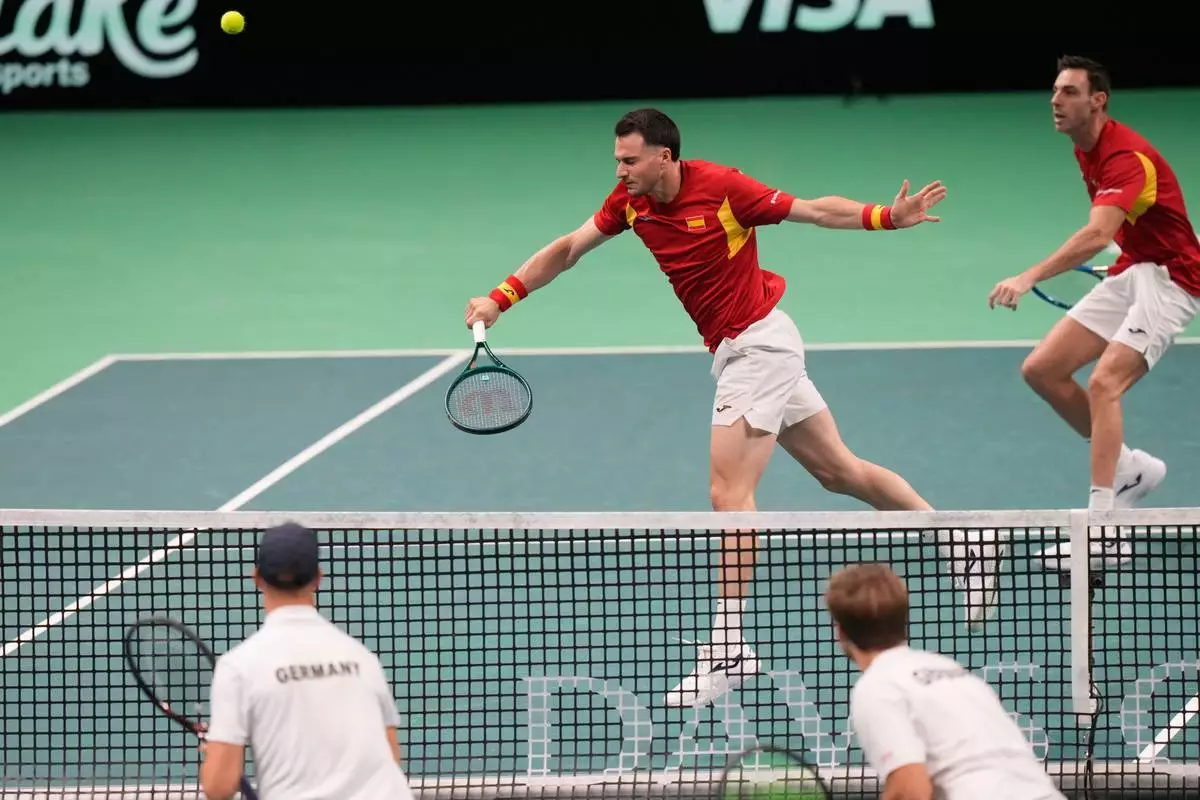
Spain's Pedro Martinez, top left, returns the ball with his teammate Marcel Granollers during a Davis Cup double semifinal tennis match against Germany's Kevin Krawietz and Tim Puetz, in Bologna, Italy, Saturday, Nov. 22, 2025. (AP Photo/Luca Bruno)
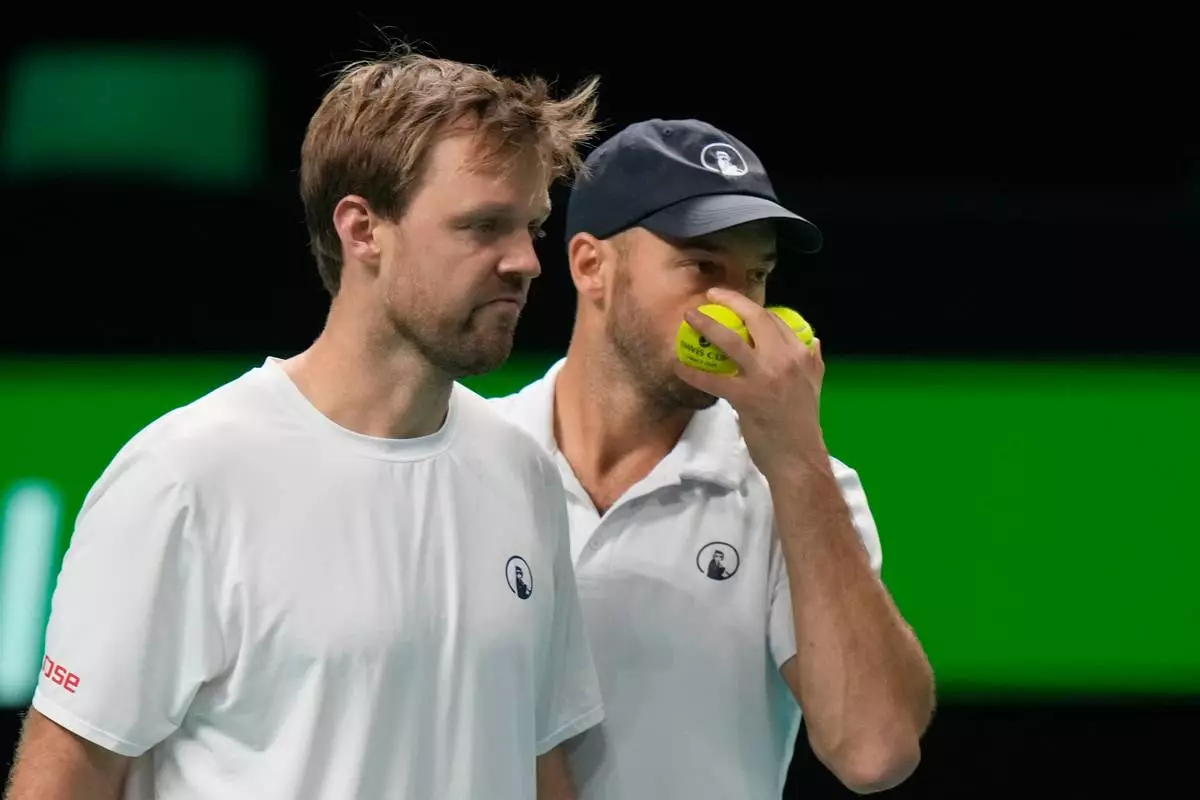
Germany's Kevin Krawietz, left, and Tim Puetz talk during a Davis Cup double semifinal tennis match against Spain's Marcel Granollers and Pedro Martinez, in Bologna, Italy, Saturday, Nov. 22, 2025. (AP Photo/Luca Bruno)
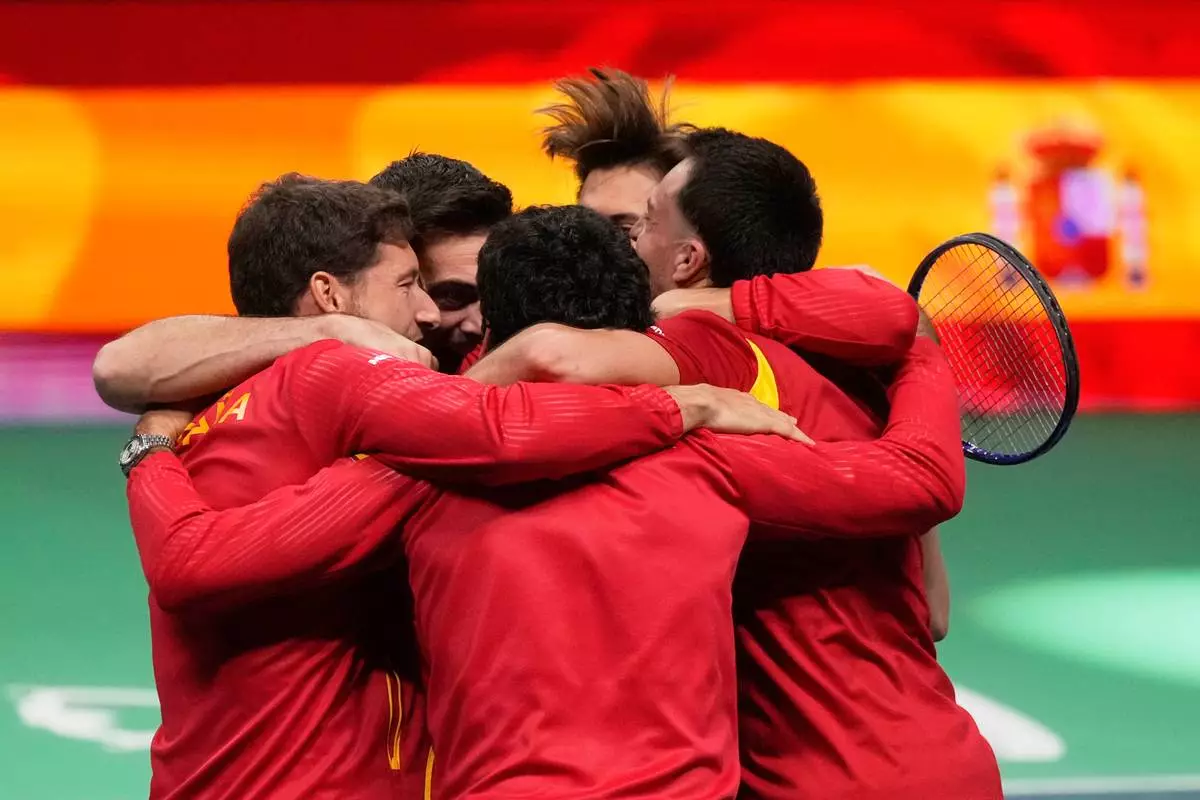
Spain's Marcel Granollers and Pedro Martinez celebrate with their teammates after winning against Germany's Kevin Krawietz and Tim Puetz during a Davis Cup double semifinal tennis match between Spain and Germany, in Bologna, Italy, Saturday, Nov. 22, 2025. (AP Photo/Luca Bruno)
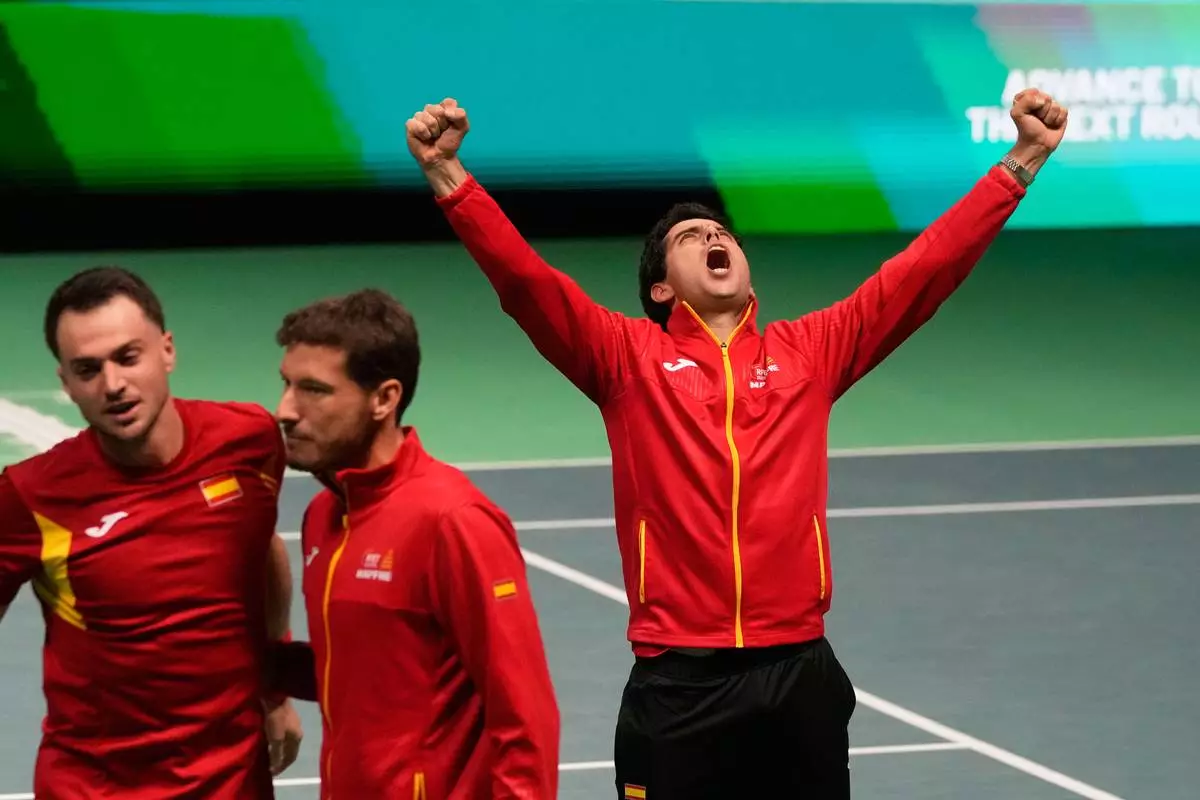
Spain's Marcel Granollers and Pedro Martinez celebrate with their teammates after winning against Germany's Kevin Krawietz and Tim Puetz during a Davis Cup double semifinal tennis match between Spain and Germany, in Bologna, Italy, Saturday, Nov. 22, 2025. (AP Photo/Luca Bruno)
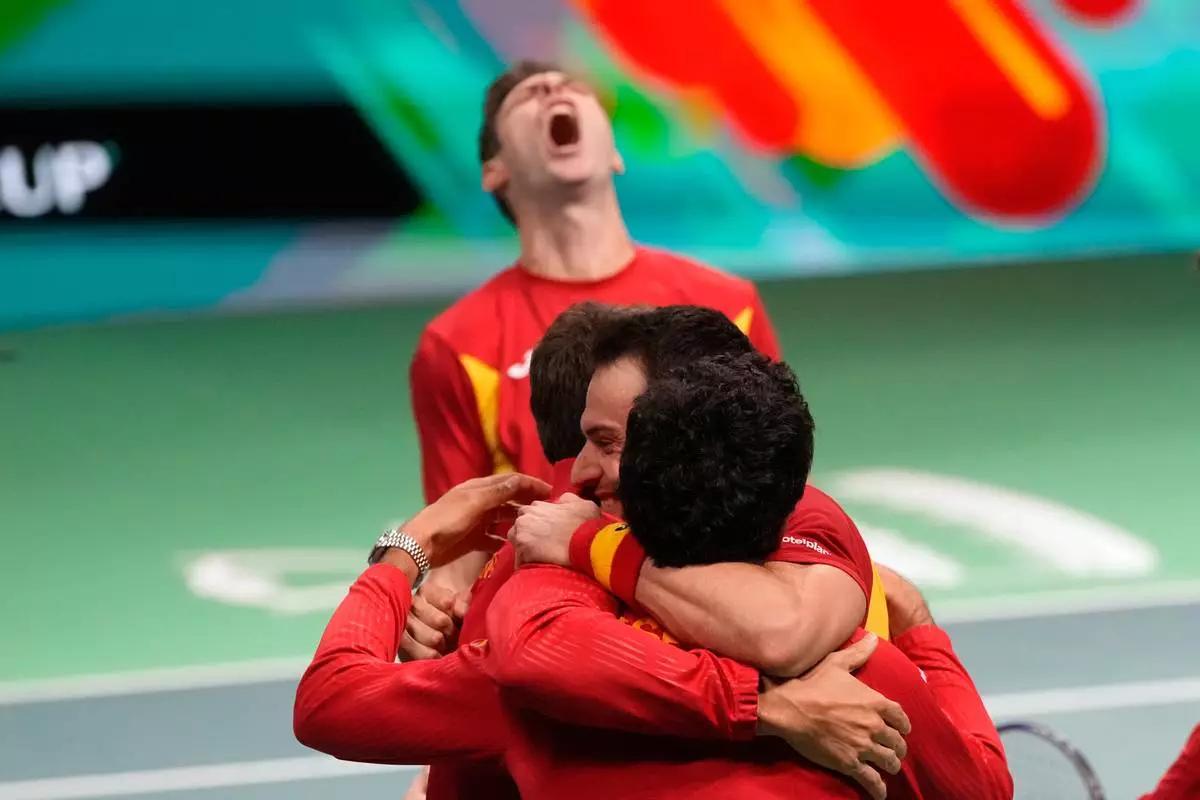
Spain's Marcel Granollers and Pedro Martinez celebrate with their teammates after winning against Germany's Kevin Krawietz and Tim Puetz during a Davis Cup double semifinal tennis match between Spain and Germany, in Bologna, Italy, Saturday, Nov. 22, 2025. (AP Photo/Luca Bruno)
NEW YORK (AP) — First-time Tony Award host Pink kicked off Sunday’s telecast by leading a crowded, exuberant version of “Lady Marmalade” and John Lithgow took home the first award for “Giant.” A blockbuster revival of “Death of a Salesman” was racking up awards even before the halfway mark.
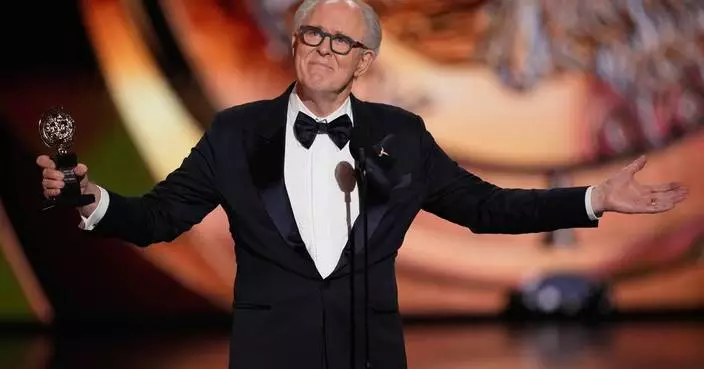
Lithgow won best lead actor in a play as children’s author Roald Dahl in Mark Rosenblatt’s production set in 1983, when the author is facing intense backlash to his antisemitic comments. The role earned Lithgow his first Olivier Award in London and now the Tony for lead actor in a play, his third.
The win puts Lithgow in an exclusive group of actors who have won in three separate acting categories. He previously won featured actor in a play for “The Changing Room” and lead actor in a musical for “Sweet Smell of Success.”
“Two Tony bookends with 53 years between them," he said. "In those years, I have worked with hundreds of just fantastic theater artists. I’ve had dozens and dozens of ecstatic moments on the stage, but I have to tell you right now, this moment has got to be one of the best.”
A revival of “Death of a Salesman” won at least five Tonys, nearing the record for most statuettes ever won by play revival, which is seven.
Laurie Metcalf won her third Tony for playing Willy Loman’s wife opposite Nathan Lane in “Arthur Miller’s Death of a Salesman,” which also won for lighting, scenic design and sound design. Joe Mantello won best director for a play.
Pink started the show spinning and then dangling uncomfortably from a harness over the stage, dressed like Peter Pan. Former host Neil Patrick Harris stepped in to suggest the first-time host just be herself. “You’re Pink, Pink. You can do anything,” he told her.
After lifting Harris off the stage with her legs, Pink relented to his suggestion of being “less Pan-ish” by taking off her harness, adding a top hat and leading an extended “Lady Marmalade” that included contributions from dozens of performers including Lea Michele and Megan Thee Stallion — plus some strange, new lyrics like “Gitchie, gitchie, Laurie Metcalf” — and ended with some 170 performers on stage and crowding the aisles.
In her opening remarks, Pink, who has not yet gotten a Broadway credit, called herself theater’s second-biggest fan after her teenage daughter, Willow. “I’m not here just to steal peoples’ wigs, although I will be doing that. I’m here to celebrate the hardest-working people in show business,” she said.
“Schmigadoon!” and “Death of a Salesman” each went into the main telecast with a lead of three Tonys after a pre-show on Pluto TV hosted by Laura Benanti and Tituss Burgess that announced the more technical awards. Qween Jean became the first openly trans Tony winner ever for making the costumes for “Cats: The Jellicle Ball.” Kai Harada, nominated twice for the sound design of a musical, didn’t initially know which one he had won for until told onstage — “Ragtime.”
Twenty-four Broadway shows are hoping to nab at least one win Sunday across the 26 Tony categories, which can mean the difference between keeping the doors open and pulling down the curtain.
There will be performances from the seven best new musical and best musical revival nominees: “The Lost Boys,” “Schmigadoon!,” “Titanique,” “Two Strangers (Carry a Cake Across New York),” “Cats: The Jellicle Ball,” “Ragtime” and “The Rocky Horror Show.”
Other performances include the original lead cast members of “The Book of Mormon” — Josh Gad, Andrew Rannells, Rory O’Malley and Nikki M. James — this year celebrating its 15th anniversary. Leslie Odom, Jr. will sing “Without You” from “Rent” during the In Memoriam section, in honor of that show’s 30th anniversary.
Another show celebrating a milestone, “Chicago” now at 30, will have a performance slot featuring Pink, as well as Queen Latifah, Jesse Tyler Ferguson, Alex Newell, Adrienne Warren, Julianne Hough, Whitney Leavitt and Dylan Mulvaney. Plus, “A Chorus Line,” which last year celebrated its 50th anniversary, will get a special tribute by Rachel Zegler.
The competition for best new musical is between four very different shows: “Two Strangers (Carry a Cake Across New York),” an opposites-attract rom-com; “The Lost Boys,” a stage adaptation of a 1987 teen movie vampire thriller; “Schmigadoon!,” which gently mocks Golden-Age Broadway shows; and “Titanique,” a camp musical comedy that reimagines the 1997 movie “Titanic.”
The two top best play nominees are “Giant,” exploring accusations of antisemitism against children's author Roald Dahl, and “Liberation,” about a consciousness-raising women’s group in the 1970s that explores inequality, gender roles and racism.
There are intriguing races in both the revival categories: A “Death of a Salesman” is competing for best play revival with a modern-set “Oedipus” led by Marc Strong and a sweet “Every Brilliant Thing” starring Daniel Radcliffe.
The best musical revival pits a new “Cats” reimagined as a “Pose”-like competition show, the sweeping American history show “Ragtime” and a rollicking, frisky “The Rocky Horror Show.”
For more coverage of the 2026 Tony Awards, visit https://apnews.com/hub/tony-awards.
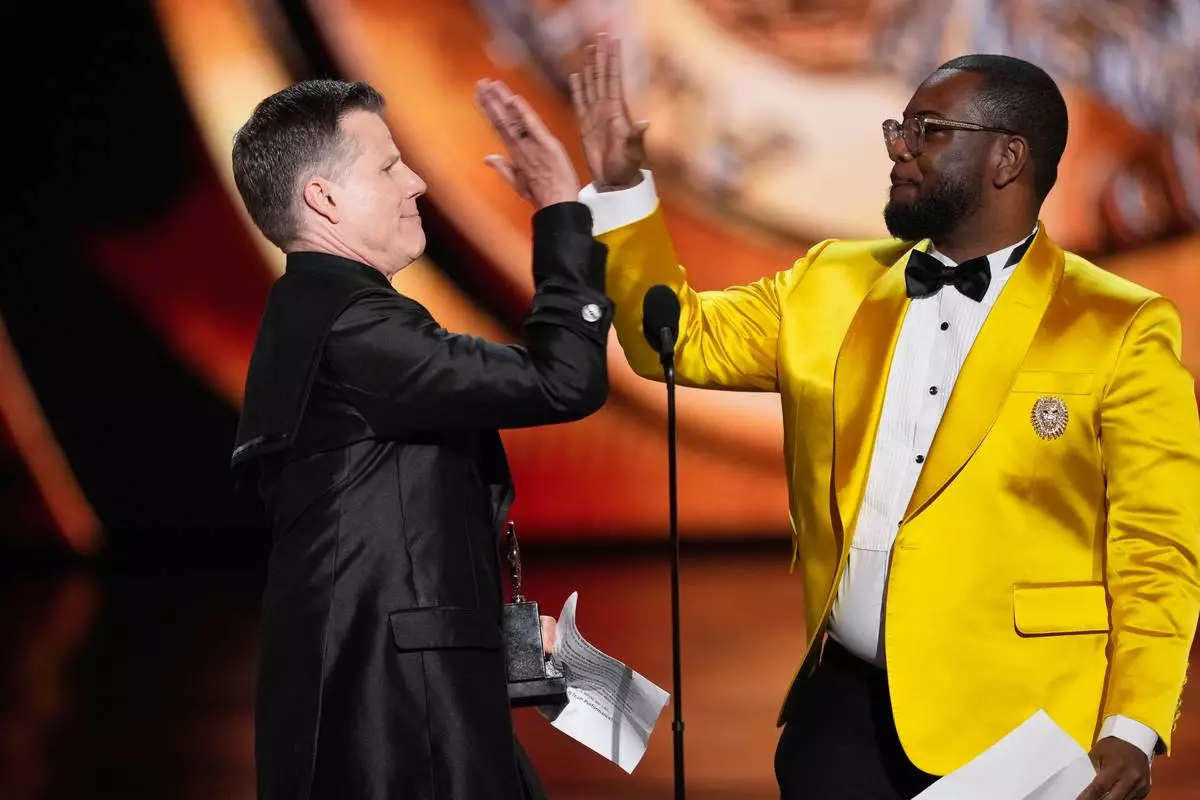
Bill Rauch, left, and Zhailon Levingston accept the award for best direction of a musical for "Cats: The Jellicle Ball" during the 79th Tony Awards on Sunday, June 7, 2026, at Radio City Music Hall in New York. (Photo by Charles Sykes/Invision/AP)
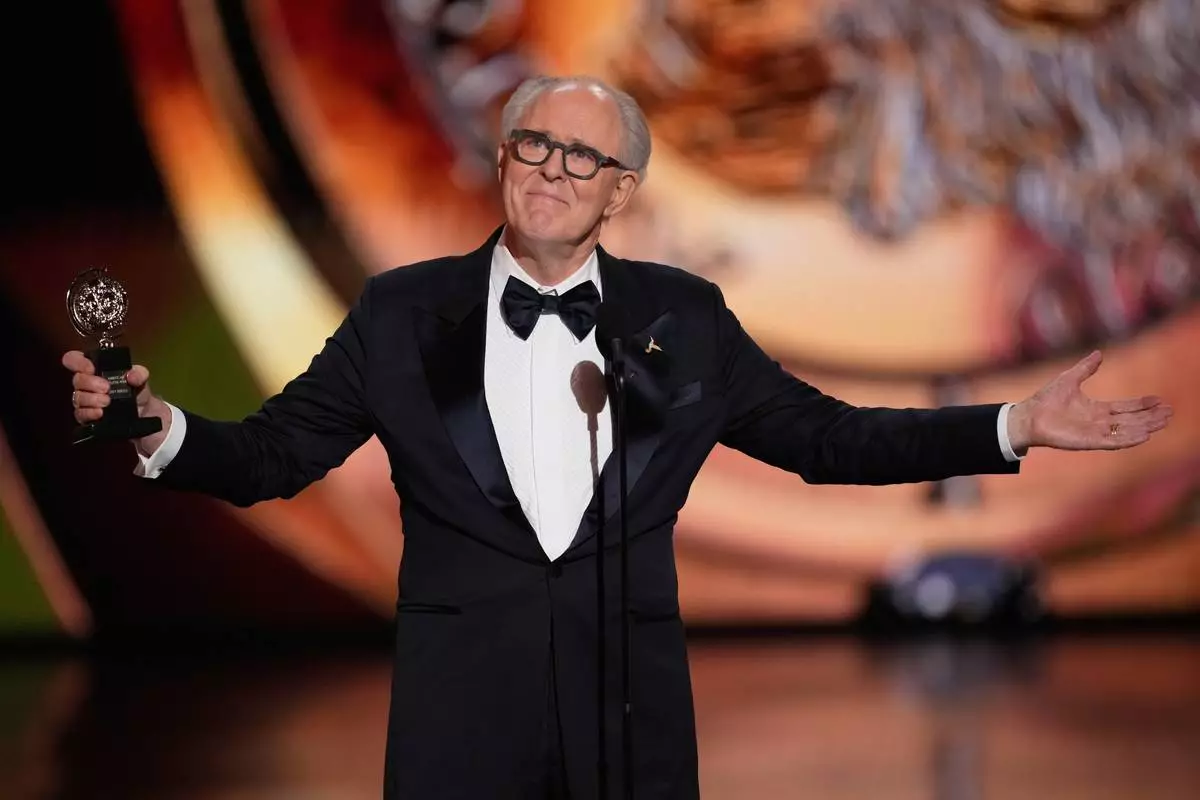
John Lithgow accepts the award for best performance by a leading actor in a play for "Giant" during the 79th Tony Awards on Sunday, June 7, 2026, at Radio City Music Hall in New York. (Photo by Charles Sykes/Invision/AP)
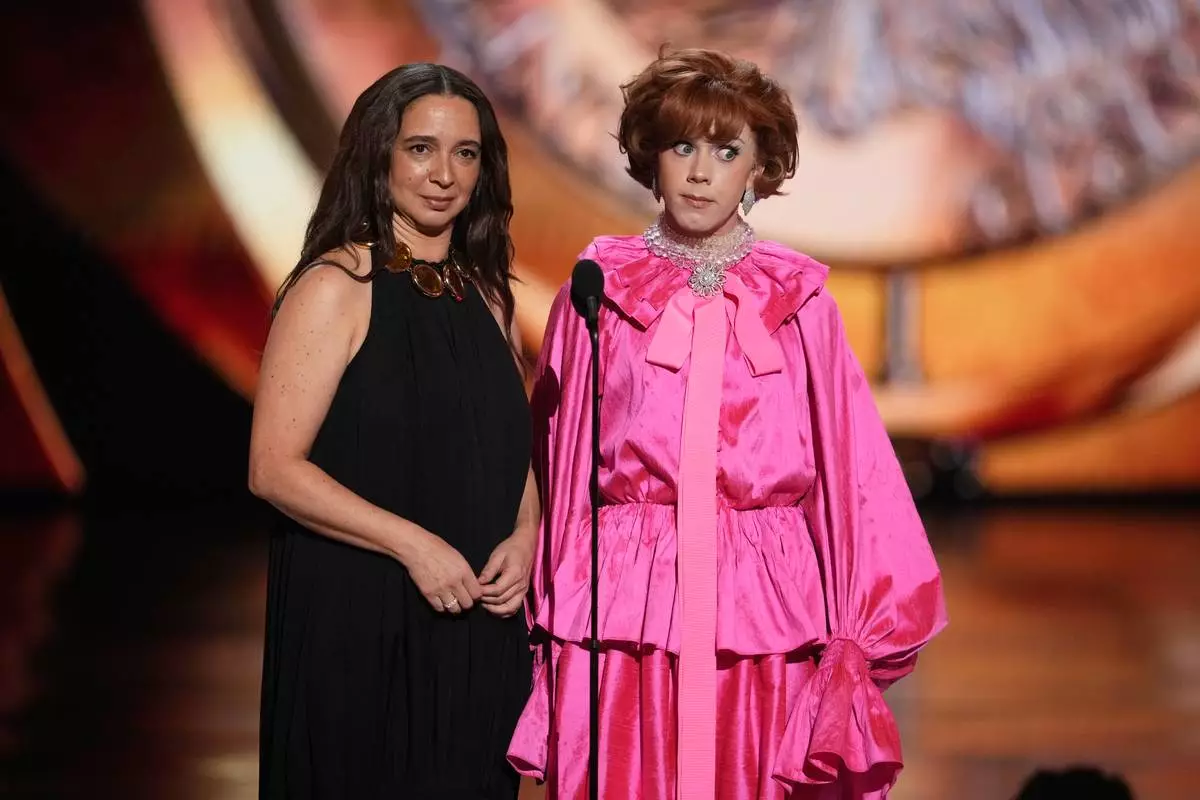
Maya Rudolph, left, and Cole Escola present the award for best performance by a leading actor in a play during the 79th Tony Awards on Sunday, June 7, 2026, at Radio City Music Hall in New York. (Photo by Charles Sykes/Invision/AP)
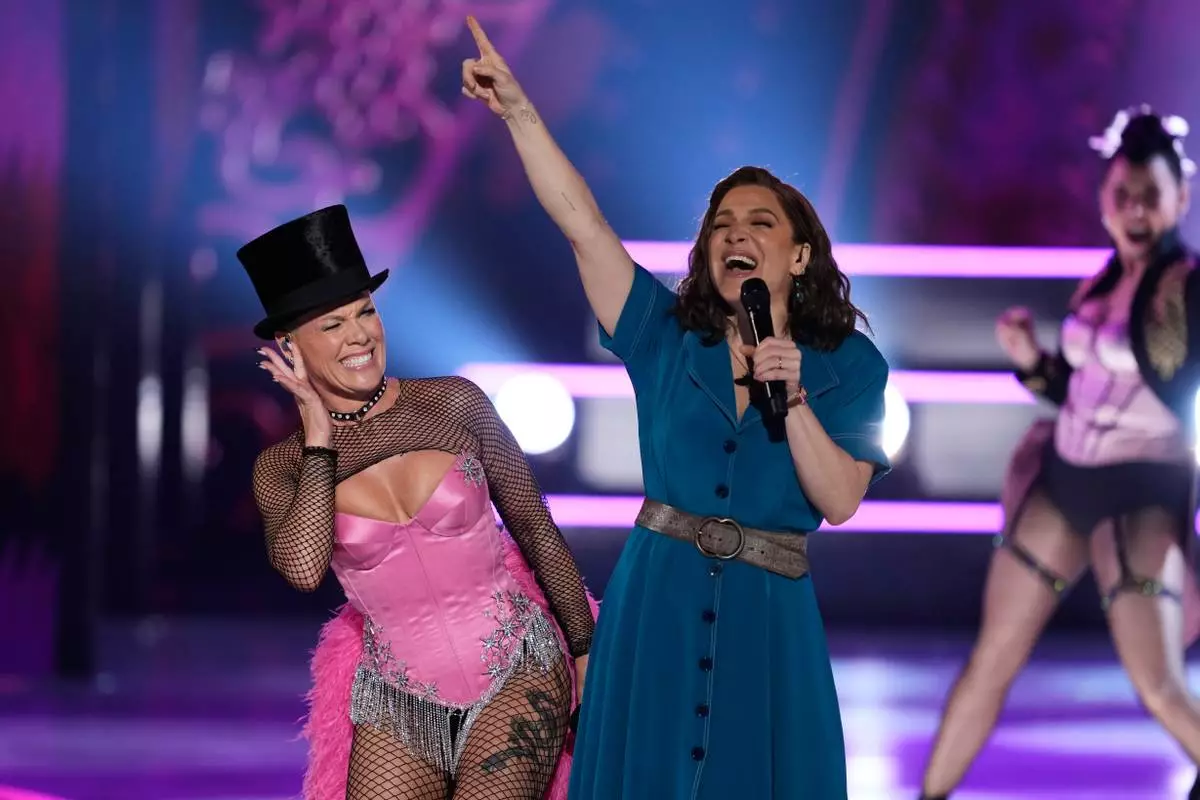
Host Pink, left, and Shoshana Bean perform during the 79th Tony Awards on Sunday, June 7, 2026, at Radio City Music Hall in New York. (Photo by Charles Sykes/Invision/AP)
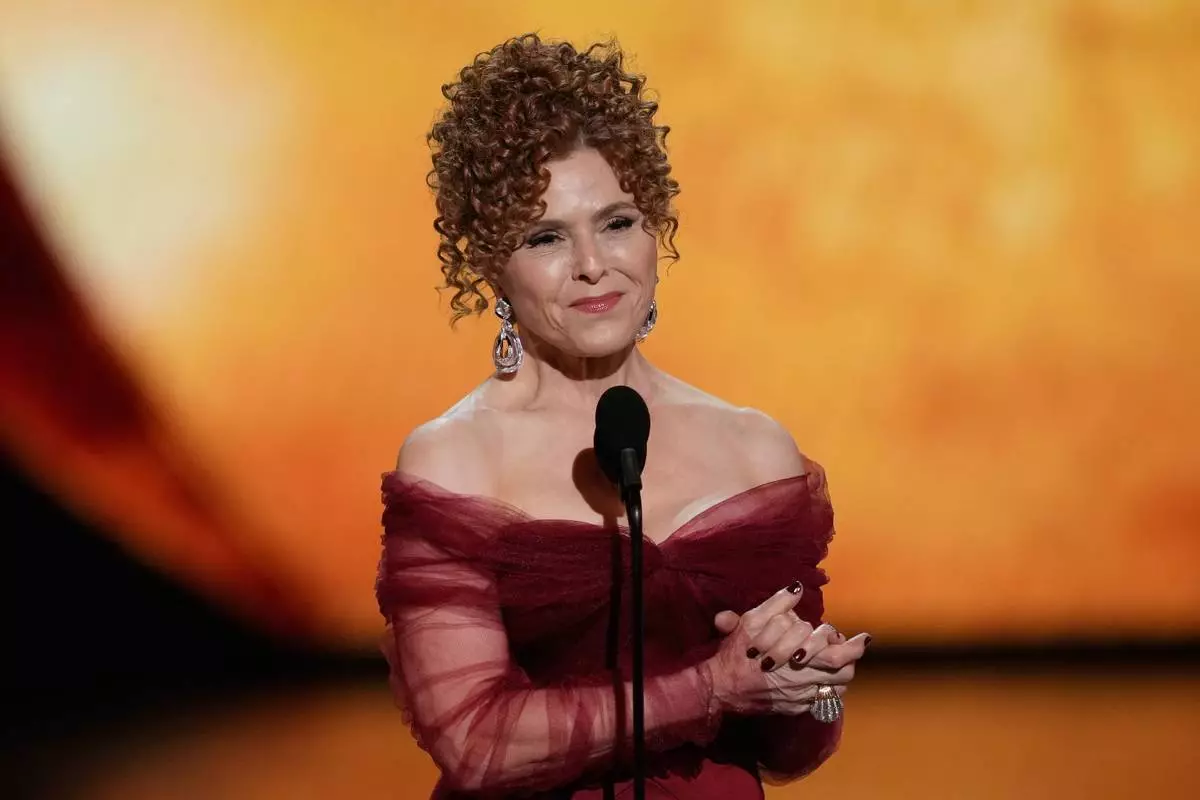
Bernadette Peters speaks during the 79th Tony Awards on Sunday, June 7, 2026, at Radio City Music Hall in New York. (Photo by Charles Sykes/Invision/AP)
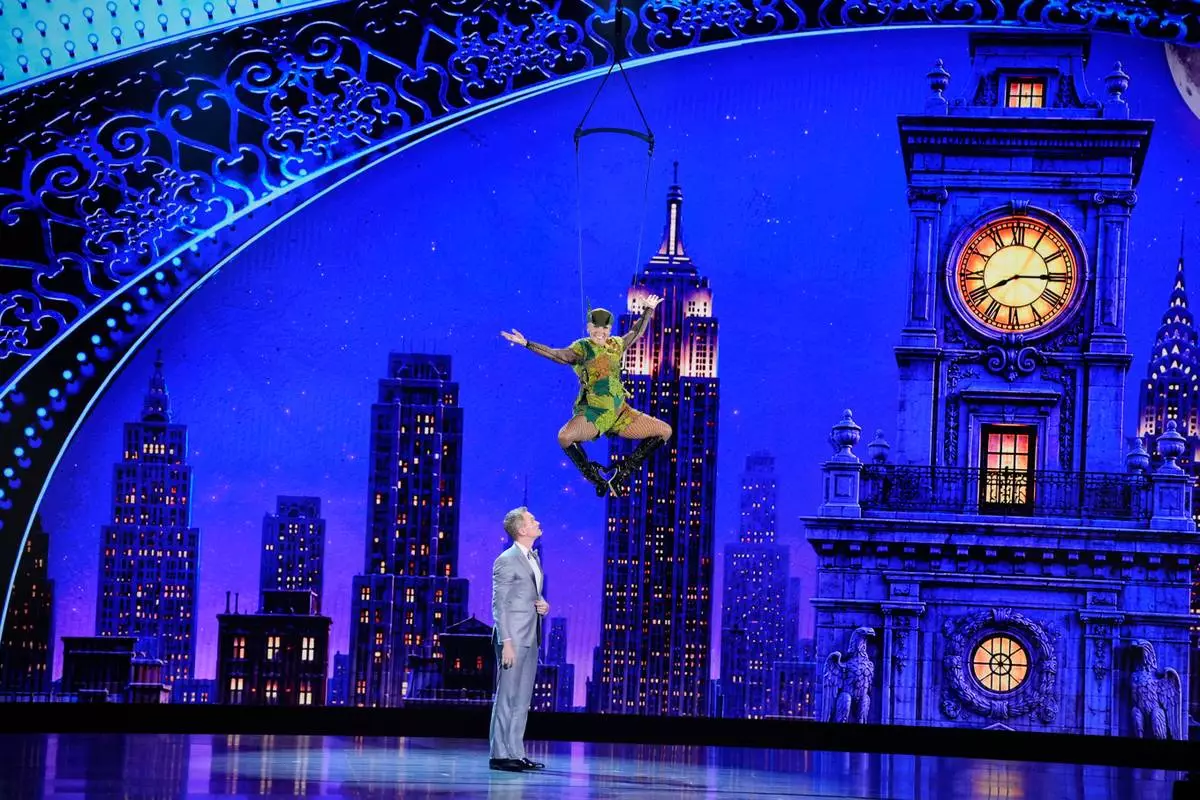
Neil Patrick Harris, left, and Host Pink perform during the 79th Tony Awards on Sunday, June 7, 2026, at Radio City Music Hall in New York. (Photo by Charles Sykes/Invision/AP)
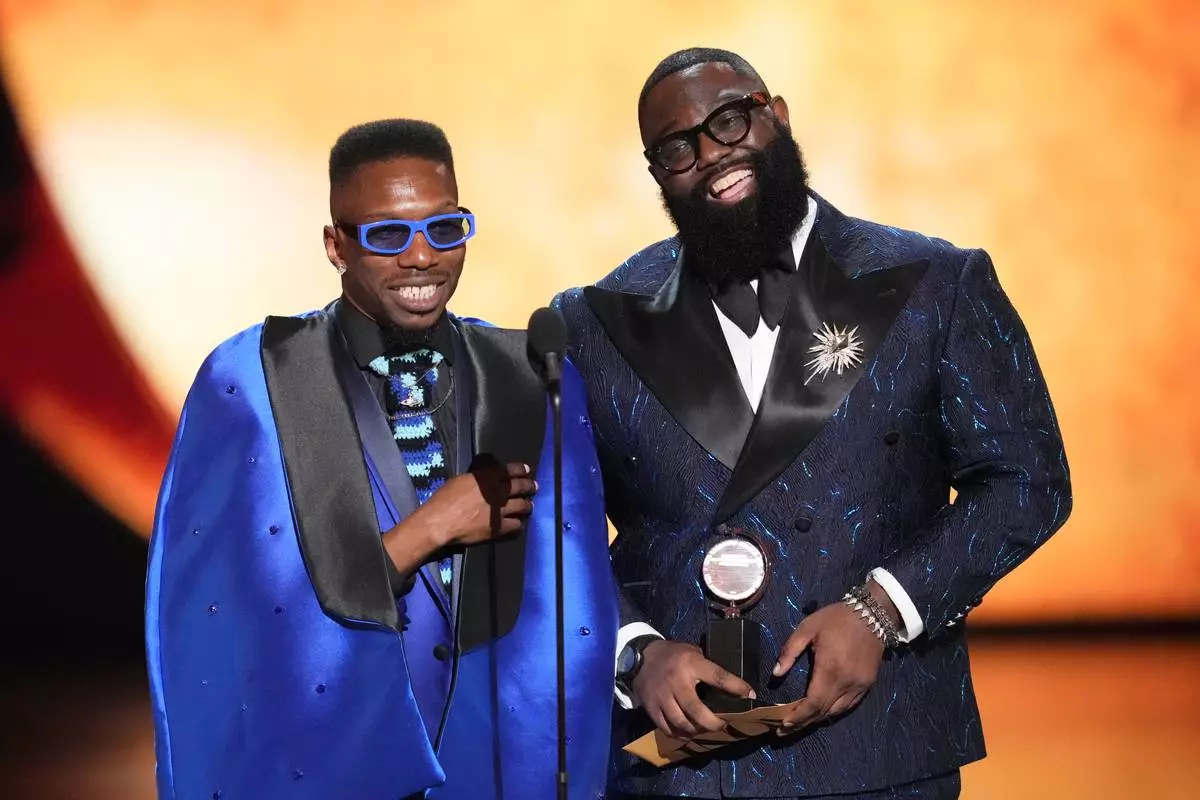
Omari Wiles, left, and Arturo Lyons accept the award for best choreography for "Cats: The Jellicle Ball" during the 79th Tony Awards on Sunday, June 7, 2026, at Radio City Music Hall in New York. (Photo by Charles Sykes/Invision/AP)

Host Tituss Burgess speaks during the 79th Tony Awards on Sunday, June 7, 2026, at Radio City Music Hall in New York. (Photo by Charles Sykes/Invision/AP)
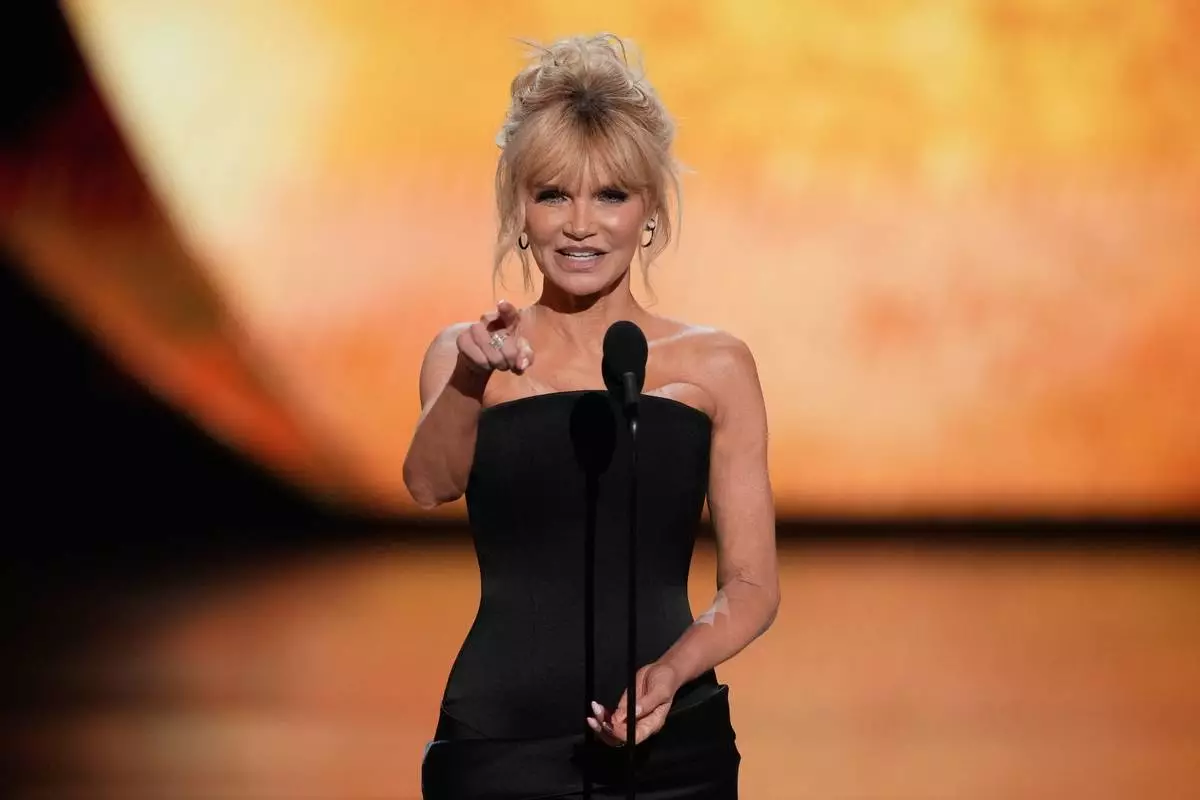
Kristin Chenoweth speaks during the 79th Tony Awards on Sunday, June 7, 2026, at Radio City Music Hall in New York. (Photo by Charles Sykes/Invision/AP)