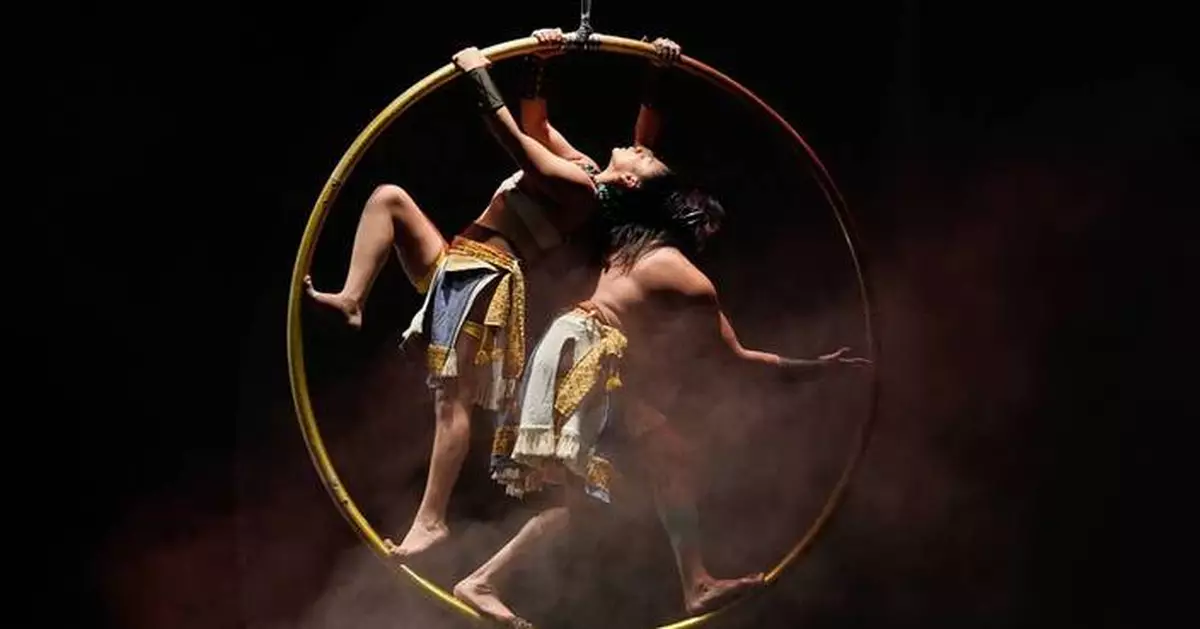
MEXICO CITY (AP) — Mexican artistic director Jorge Díaz used to have a unique selection of bedtime stories for his son.
Setting aside well-known books like “Pinocchio,” they read tales closer to home. Among their favorites was the Popol Vuh, a compendium of sacred Maya myths.
Click to Gallery
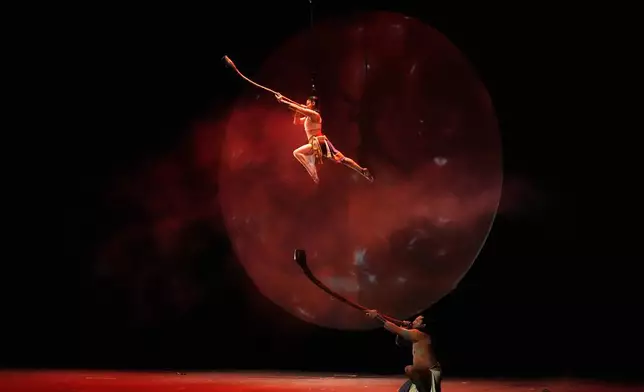
Acrobats from a Mexican theater company perform the show titled "Mortal Leap into Xibalba," which reinterprets a myth from a sacred Mayan book about creation and the journey to the underworld, in Mexico City, Saturday, Nov. 22, 2025. (AP Photo/Marco Ugarte)
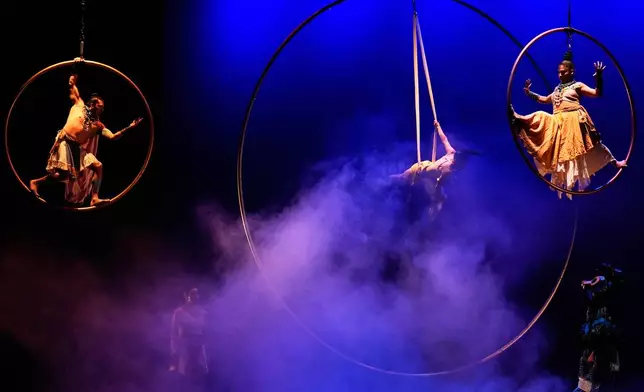
Acrobats from a Mexican theater company perform the show titled "Mortal Leap into Xibalba," which reinterprets a myth from a sacred Mayan book about creation and the journey to the underworld, in Mexico City, Saturday, Nov. 22, 2025. (AP Photo/Marco Ugarte)
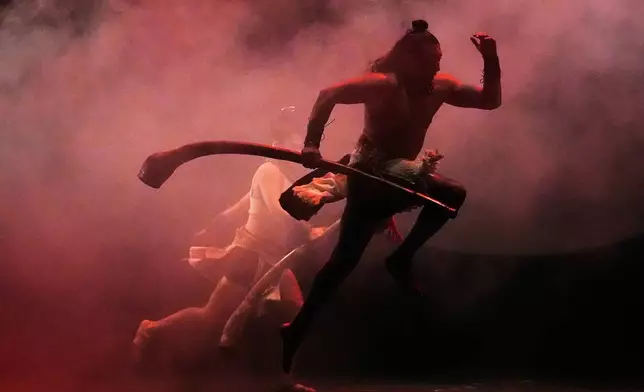
Acrobats from a Mexican theater company perform the show titled "Mortal Leap into Xibalba," which reinterprets a myth from a sacred Mayan book about creation and the journey to the underworld, in Mexico City, Saturday, Nov. 22, 2025. (AP Photo/Marco Ugarte)

An acrobat from a Mexican theater company performs the show titled "Mortal Leap into Xibalba," which reinterprets a myth from a sacred Mayan book about creation and the journey to the underworld, in Mexico City, Saturday, Nov. 22, 2025. (AP Photo/Marco Ugarte)
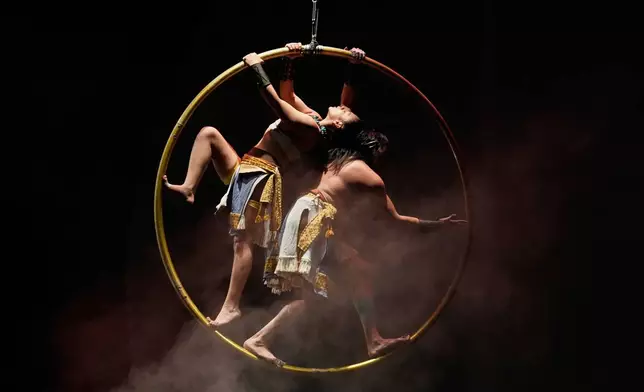
Acrobats from a Mexican theater company perform the show titled "Mortal Leap into Xibalba," which reinterprets a myth from a sacred Mayan book about creation and the journey to the underworld, in Mexico City, Saturday, Nov. 22, 2025. (AP Photo/Marco Ugarte)
“Recalling those stories is important,” said Díaz, whose grandmother told him legends from her Indigenous lineage as a child. “We have plenty of beautiful, pre-Hispanic tales. But we sometimes forget.”
The one he enjoyed with his son recounts the story of hero twins Ixbalanqué and Hunahpú.
In the Popol Vuh, the brothers embark on a perilous journey to the Maya underworld. There, they outwit death, confront its lords and ultimately rise transformed.
The myth inspired Díaz’s adaptation, “Mortal Leap into Xib’alb’a.” Blending circus arts with theater, the piece employs acrobatics and ritual to reimagine the ancestral story on stage.
“We sought to give the piece its own identity through circus, but I didn’t want the work to rely only on tricks or spectacle,” Díaz said. “The idea was for the techniques to blend with the story and the characters, creating atmospheres rather than just showcasing skills.”
The show has returned to the stage periodically since its debut in 2023. New performances were held in Mexico City in late November.
The troupe behind “Mortal Leap into Xib’alb’a” was founded 20 years ago by Díaz and fellow artist Jessica González. Initially a theater company, “Tránsito Cinco” evolved into a group devoted to circus arts.
“Fresh out of university, we searched for tools that would allow us to grow as actors,” said González, who also performs as a narrator in the Maya myth piece. “We wanted to find something that could connect theater with dance and the circus became a meeting place.”
Their current repertoire includes 16 productions. There’s not a shared theme among them. Yet Díaz and González aim to create pieces with a clear narrative thread.
“Our shows are built around a theme or storyline,” she said. “We believe that circus arts can also be a way to say something, whether it’s about social issues or any other subject.”
How they work hand in hand with artists is reflected in “Somnia,” a documentary about Tránsito Cinco’s history and vision.
“This is one of the most influential art forms I’ve ever witnessed,” said director Arely Cantellano during a recent showing of her film. “It opens those doors to many different arts and invites us all to take part.”
Aside from adapting the Maya myth and directing fellow artists, one of Díaz’s jobs in “Mortal Leap into Xib’alb’a” is rigging work. That is, as Yareli Reyes performs while being suspended from a rig by her hair, Díaz oversees her safety
Her performance is close to Díaz’s heart. She plays one of the Maya twins, a role the director once envisioned for himself.
His brother — also an actor — plays the main character in the Maya-inspired piece and Díaz dreamed of performing alongside him. “I love that fragment of the Popol Vuh,” he said. “It felt important to me to create it onstage together.”
He let go of the role so he could avoid overloading himself. But watching his beloved sacred story from a distance provides him with a fresh understanding of his art.
“Circus has the power to astonish and play with risk,” he said. “When I’m holding the performer who does hair suspension, there are moments when I see the light, the atmosphere, and it feels like a ritual.”
Several scenes feel full of energy to him. The way the music, the light and the artists’ bodies fuse into stagecraft creates an immersive environment for audiences, he said.
“It’s fantastic,” said marketing strategist Alba Vida about Tránsito Circo’s work after the recent showcase of their documentary. “I love circus arts because, within them, the frontier with entertainment shifts.”
Díaz’s son is now 14. However, the work inspired by their nights delving into the Maya underworld is still aimed at children and families.
For an hour, “Mortal Leap into Xib’alb’a” depicts the twins’ journey between the living realm and the underworld. The performance kicks off, portraying how the brothers are born after their mother becomes pregnant when the skull of their father spits into her hand, a symbolic transfer of life.
The twins are raised among humans. Yet as they learn to play a pre-Hispanic ritual sport that infuriated the Xib’alb’a lords, several fights take place and the pair eventually perishes — only to return transformed in the myth’s final cycle.
“Under the Mayan worldview, death is not an ending, but a chance to be reborn,” Díaz said. “So even as they throw themselves into the fire as a sacrifice, they become the Sun and Moon.”
Conveying how the ancient Maya perceive death as a possibility to reinvent oneself is as important to Díaz as taking care of every detail in his colleagues’ risky, brilliant acts.
“There are many elements from pre-Hispanic Indigenous traditions that can be brought into circus performance,” he said. “Ways to use them, reinterpret them and give them new meaning onstage.”
Associated Press religion coverage receives support through the AP’s collaboration with The Conversation US, with funding from Lilly Endowment Inc. The AP is solely responsible for this content.
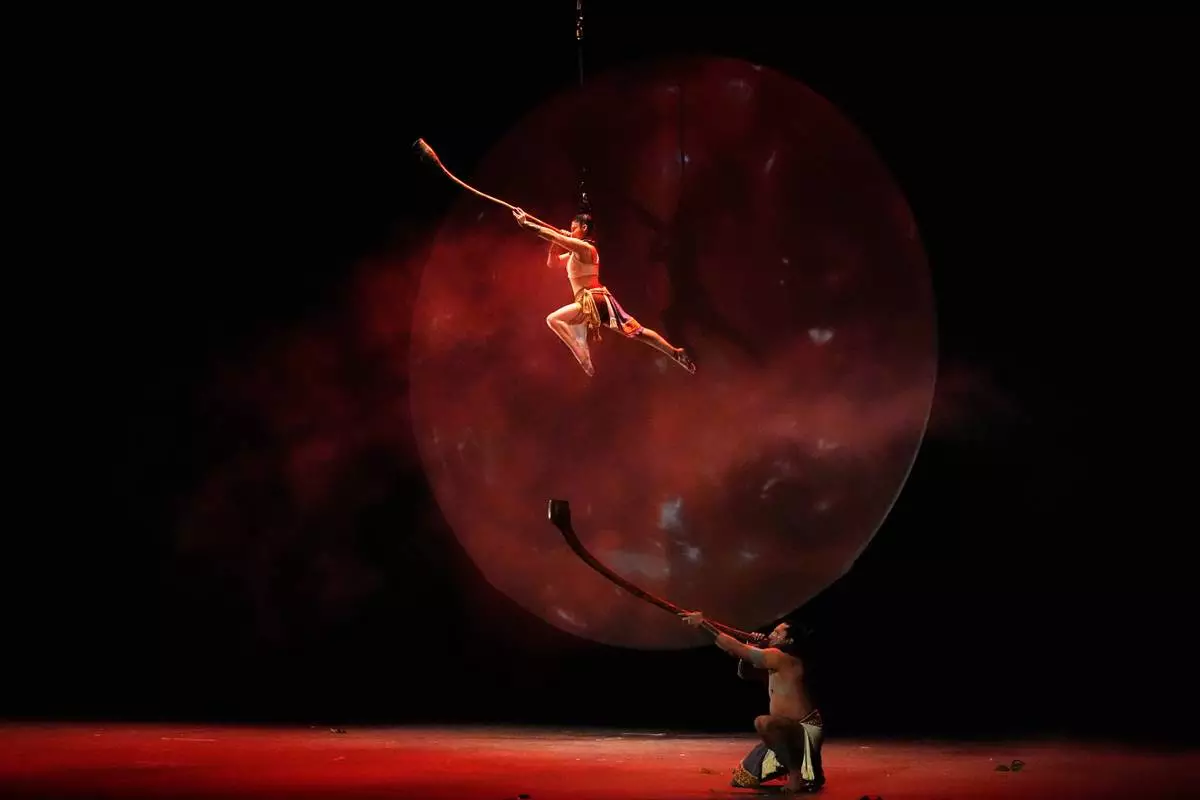
Acrobats from a Mexican theater company perform the show titled "Mortal Leap into Xibalba," which reinterprets a myth from a sacred Mayan book about creation and the journey to the underworld, in Mexico City, Saturday, Nov. 22, 2025. (AP Photo/Marco Ugarte)
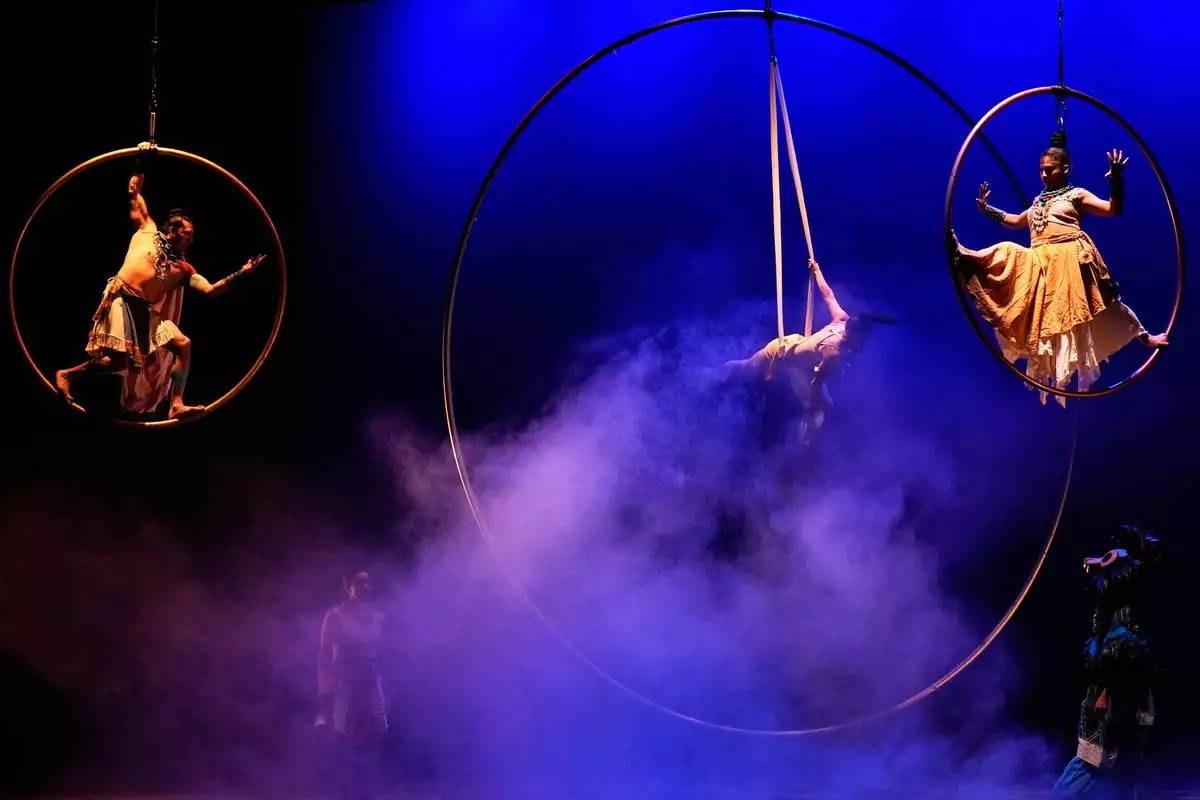
Acrobats from a Mexican theater company perform the show titled "Mortal Leap into Xibalba," which reinterprets a myth from a sacred Mayan book about creation and the journey to the underworld, in Mexico City, Saturday, Nov. 22, 2025. (AP Photo/Marco Ugarte)
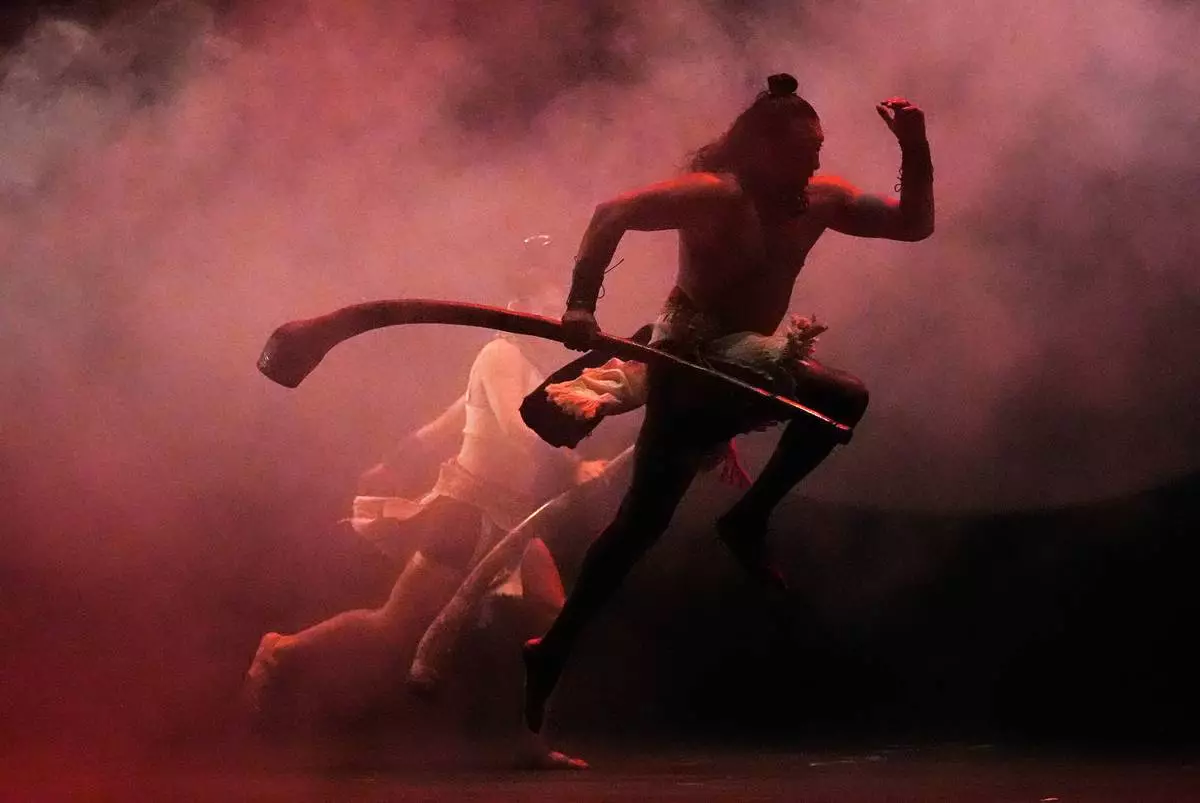
Acrobats from a Mexican theater company perform the show titled "Mortal Leap into Xibalba," which reinterprets a myth from a sacred Mayan book about creation and the journey to the underworld, in Mexico City, Saturday, Nov. 22, 2025. (AP Photo/Marco Ugarte)
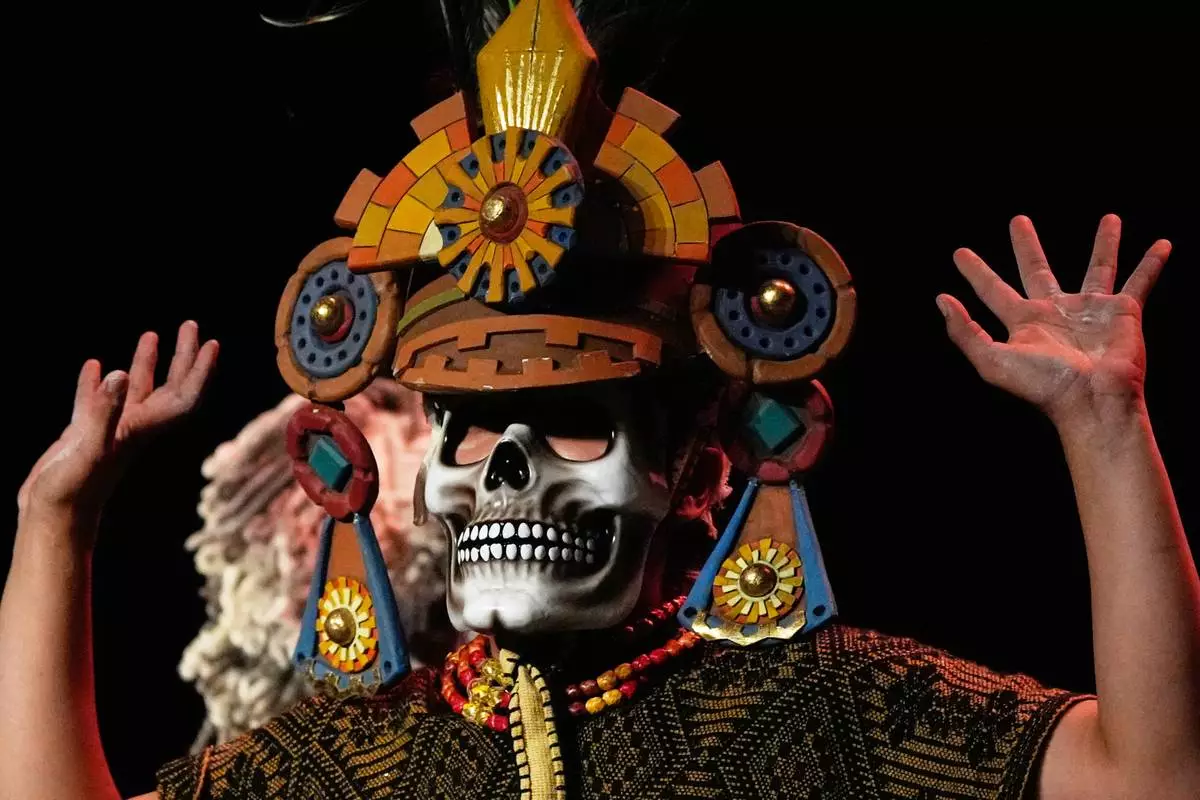
An acrobat from a Mexican theater company performs the show titled "Mortal Leap into Xibalba," which reinterprets a myth from a sacred Mayan book about creation and the journey to the underworld, in Mexico City, Saturday, Nov. 22, 2025. (AP Photo/Marco Ugarte)
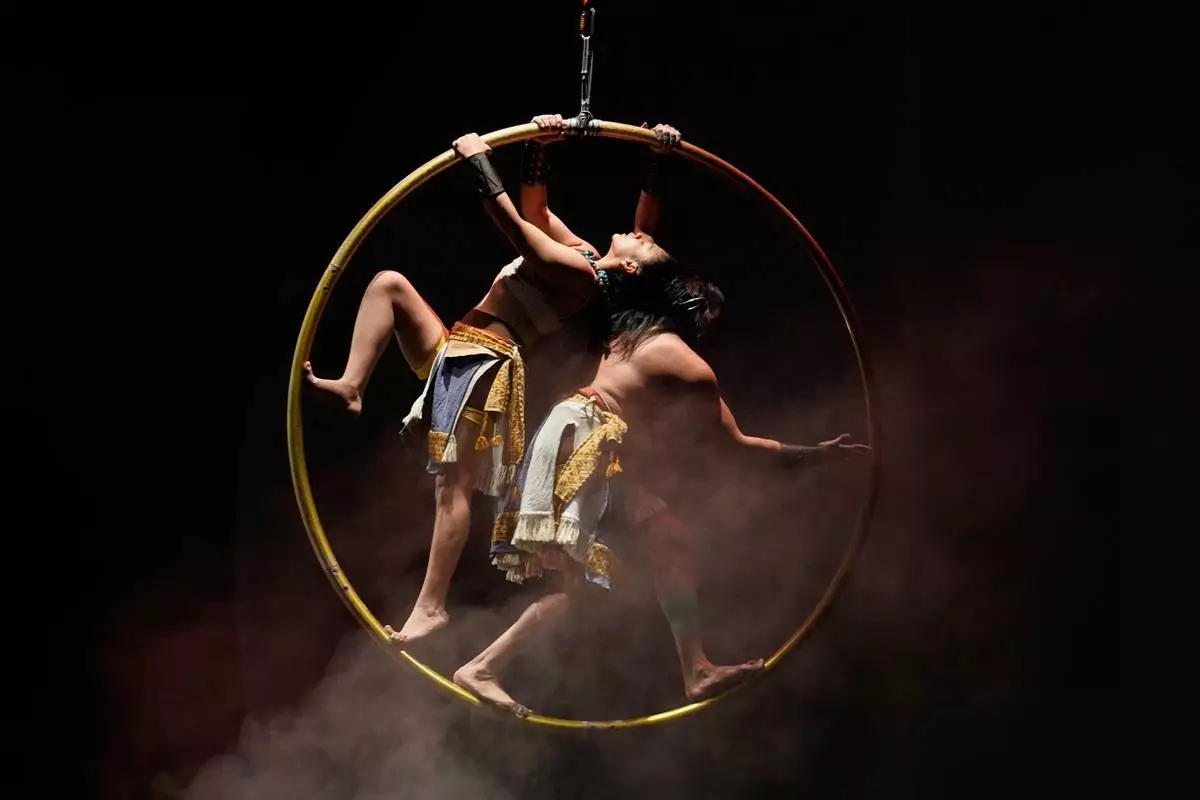
Acrobats from a Mexican theater company perform the show titled "Mortal Leap into Xibalba," which reinterprets a myth from a sacred Mayan book about creation and the journey to the underworld, in Mexico City, Saturday, Nov. 22, 2025. (AP Photo/Marco Ugarte)