BALTIMORE (AP) — With his New York Jets playing surprisingly well against the heavily favored Baltimore Ravens, first-year coach Aaron Glenn had no desire to play it safe on a fourth-down play in his own territory.
There might be a time in the future when a similar roll-the-dice decision pays off for the fiery coach. On Sunday, his gutsy third-quarter call misfired miserably.
Click to Gallery
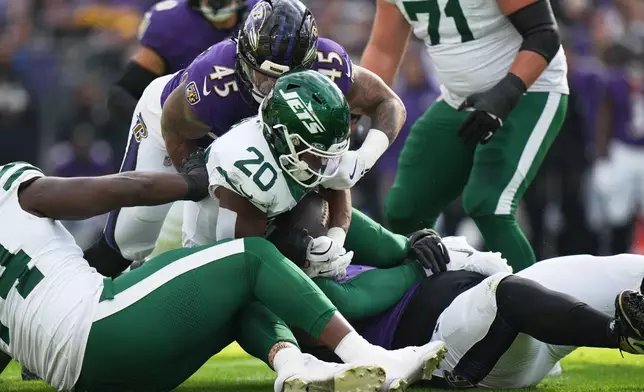
Baltimore Ravens linebacker Mike Green (45) tackles New York Jets running back Breece Hall (20) during the first half of an NFL football game, Sunday, Nov. 23, 2025, in Baltimore. (AP Photo/Stephanie Scarbrough)
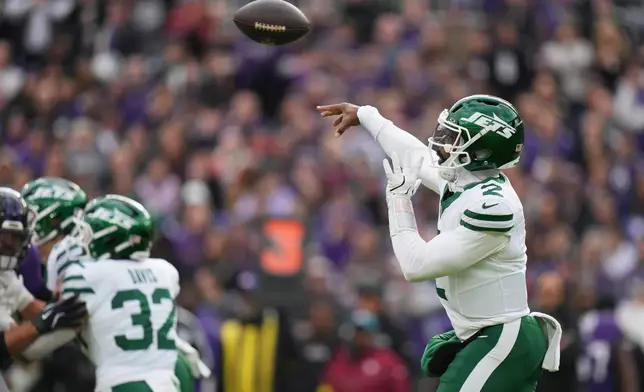
New York Jets quarterback Tyrod Taylor passes during the first half of an NFL football game against the Baltimore Ravens, Sunday, Nov. 23, 2025, in Baltimore. (AP Photo/Stephanie Scarbrough)
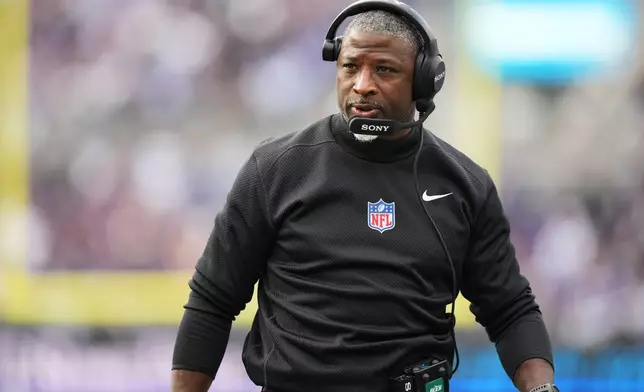
New York Jets head coach Aaron Glenn watches from the sideline during the first half of an NFL football game against the Baltimore Ravens, Sunday, Nov. 23, 2025, in Baltimore. (AP Photo/Stephanie Scarbrough)
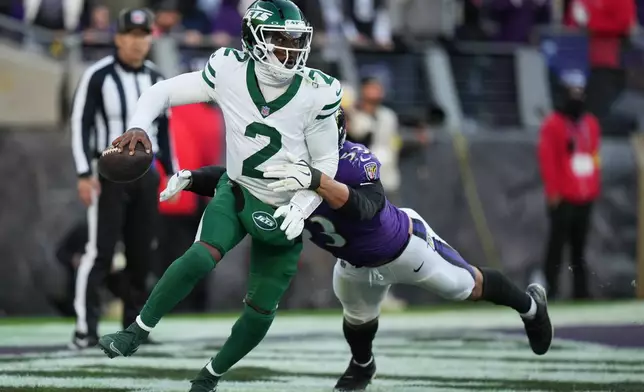
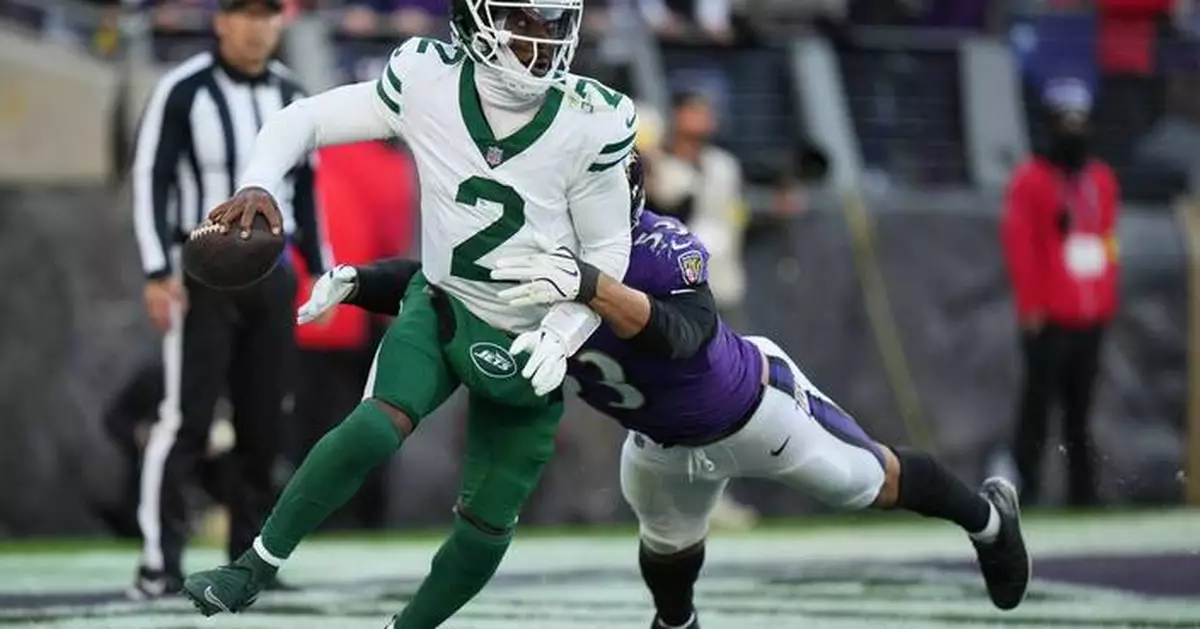
New York Jets quarterback Tyrod Taylor (2) is pressured by Baltimore Ravens linebacker Kyle Van Noy during the second half of an NFL football game, Sunday, Nov. 23, 2025, in Baltimore. (AP Photo/Stephanie Scarbrough)
Glenn kept his offense on the field with the Jets down 10-7 and facing a fourth-and-2 from their own 42. Tyrod Taylor fired an incomplete pass to a tightly covered John Metchie and the Ravens turned the failed gamble into the pivotal touchdown in a 23-10 victory Sunday.
Afterward, Glenn acknowledged that his decision to go for it was risky. But it's likely he would do it again if put in the same scenario.
“I thought our offense was doing a solid job. I thought Tyrod was doing a solid job,” he explained. “So I want to be aggressive. I want to go on that — and we didn’t make it.”
The Jets were 10 for 20 on fourth down coming into this game. They went 0 for 2 against the Ravens, missing in the third quarter and in the waning minutes.
Glenn knows the first botched try was far more important than the last.
“I trust our guys to go make those,” he said. “And that was a situation when I wanted our guys to not blink and get ready to go. And we didn’t make it.”
Maybe it was the wrong call. But when you're 2-8 and looking for a bright spot in a dismal season, perhaps you take a chance and hope for the best.
“Definitely disappointed that it didn’t work out. It’s a concept that we like, we just didn’t execute it,” Taylor said “They did a great job of taking away the inside route. We just didn’t execute and that was a key play in this game.”
The Jets (2-9) came in as 13 1/2-point underdogs, but they dominated the first half and took a 7-3 lead into the locker room after limiting a potent offense featuring Lamar Jackson and Derrick Henry to a mere 72 yards.
Baltimore scored a touchdown on its first possession of the third quarter, then scored again after the Jets went four-and-out during that key sequence that ended with Taylor's incomplete pass to Metchie.
New York was still in the game until Breece Hall lost a fumble at the Baltimore 3 with 6:51 remaining and the score 20-10.
“It definitely stings. I hate losing,” Taylor said. “We've just got to be efficient consistently, consistently going out there and doing the right things, I think we took a step in that direction today. We just didn’t finish it.”
The Jets are already assured of their 10th consecutive losing season. But Glenn is absolutely certain good times lie ahead.
“We don’t want to be 2 and 9, you know, but I do understand this: There are some things that we’re doing, some underlying things that we’re doing, some foundational things that we’re doing that I am excited about,” he said. “We just got to make sure now the record catches up with those things that we’re building.”
AP NFL: https://apnews.com/NFL
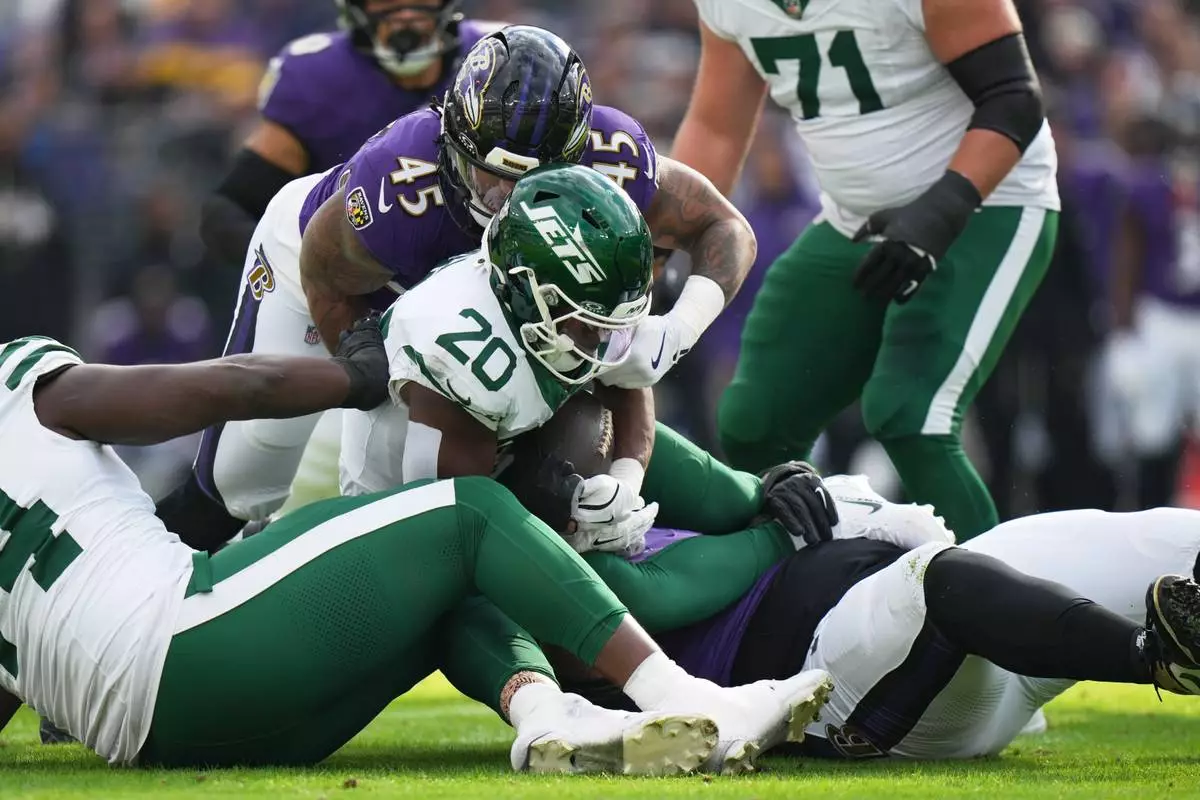
Baltimore Ravens linebacker Mike Green (45) tackles New York Jets running back Breece Hall (20) during the first half of an NFL football game, Sunday, Nov. 23, 2025, in Baltimore. (AP Photo/Stephanie Scarbrough)
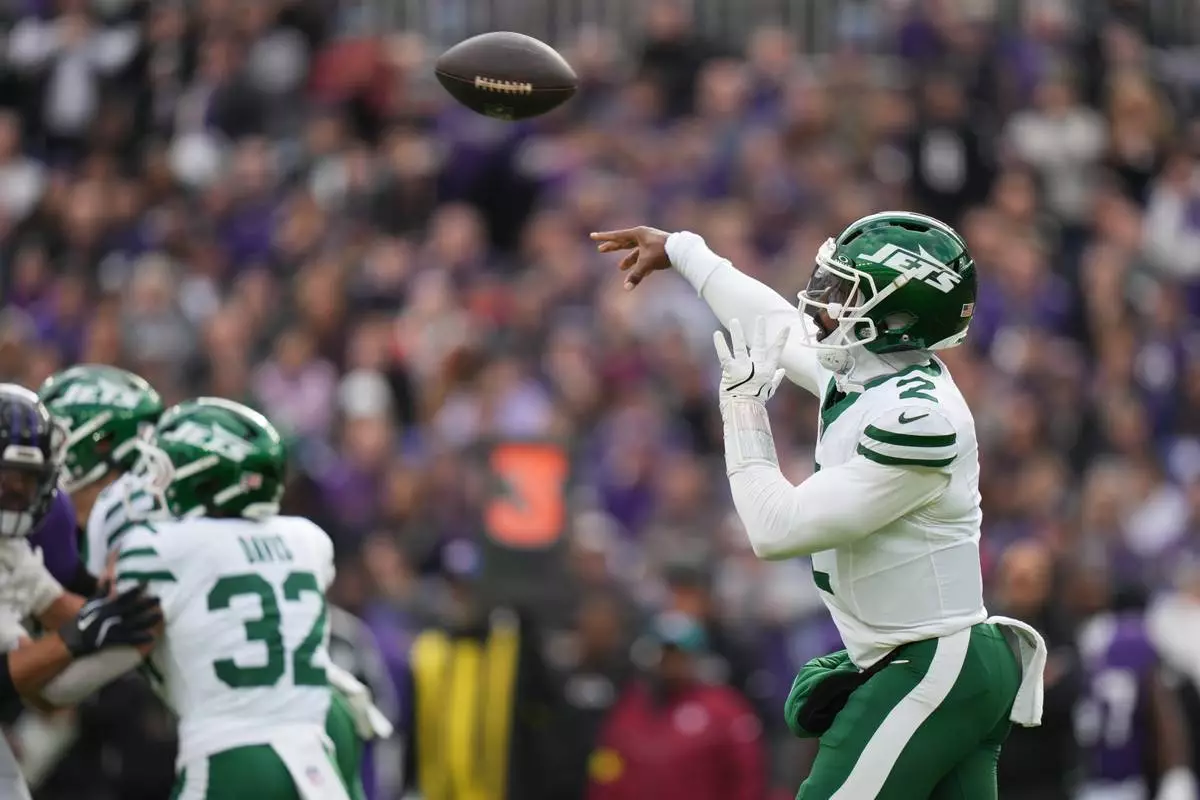
New York Jets quarterback Tyrod Taylor passes during the first half of an NFL football game against the Baltimore Ravens, Sunday, Nov. 23, 2025, in Baltimore. (AP Photo/Stephanie Scarbrough)
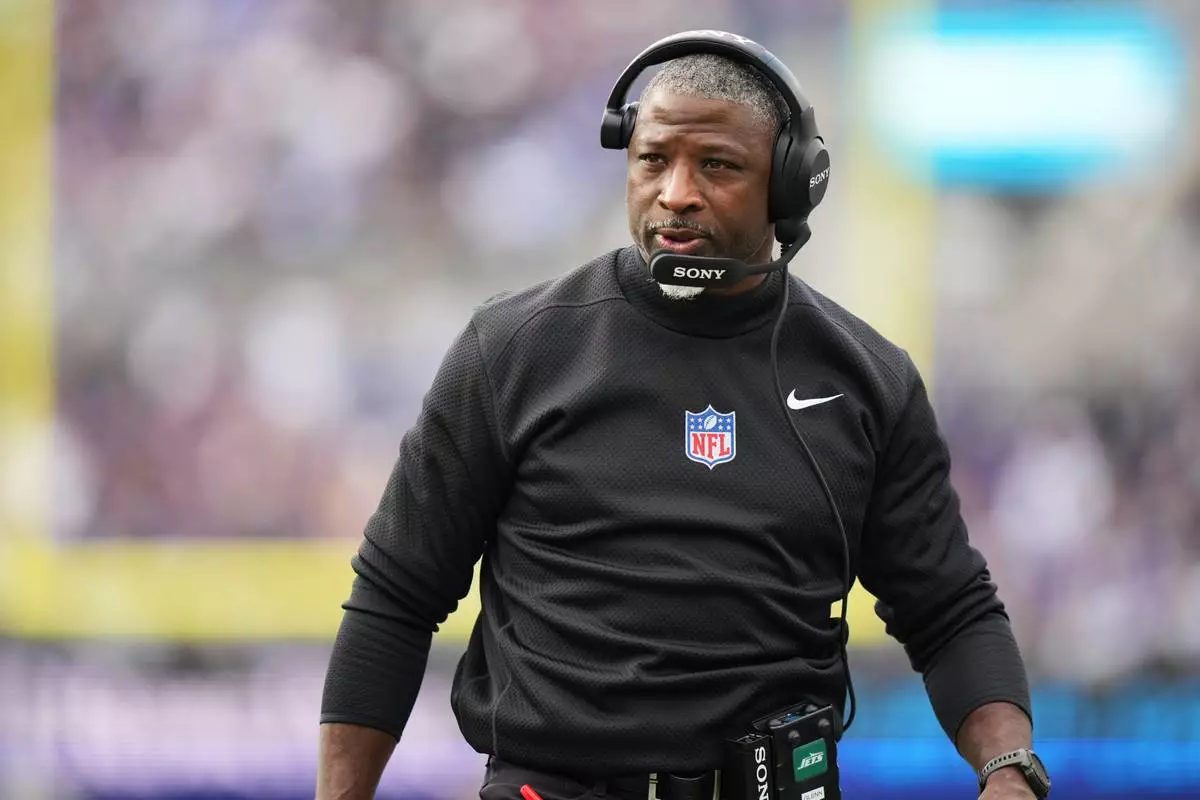
New York Jets head coach Aaron Glenn watches from the sideline during the first half of an NFL football game against the Baltimore Ravens, Sunday, Nov. 23, 2025, in Baltimore. (AP Photo/Stephanie Scarbrough)
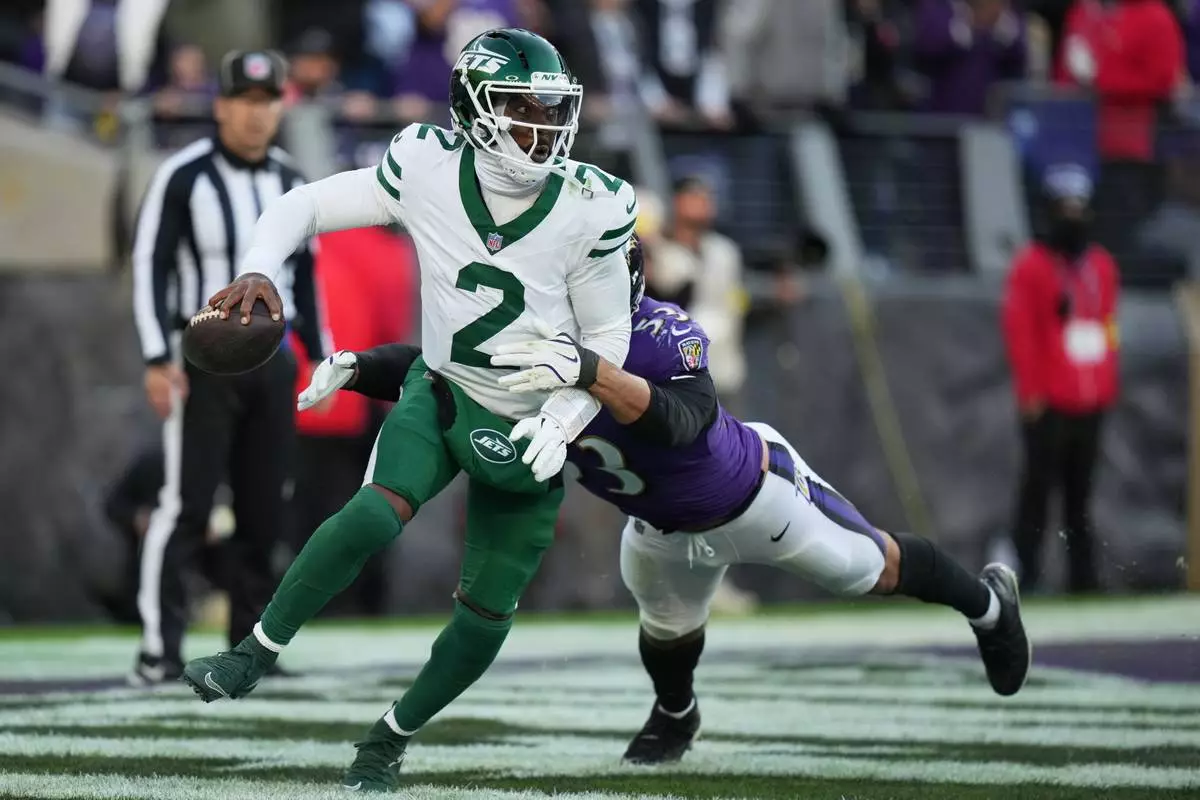
New York Jets quarterback Tyrod Taylor (2) is pressured by Baltimore Ravens linebacker Kyle Van Noy during the second half of an NFL football game, Sunday, Nov. 23, 2025, in Baltimore. (AP Photo/Stephanie Scarbrough)