New import and export controls on hydrofluorocarbons to take effect next month
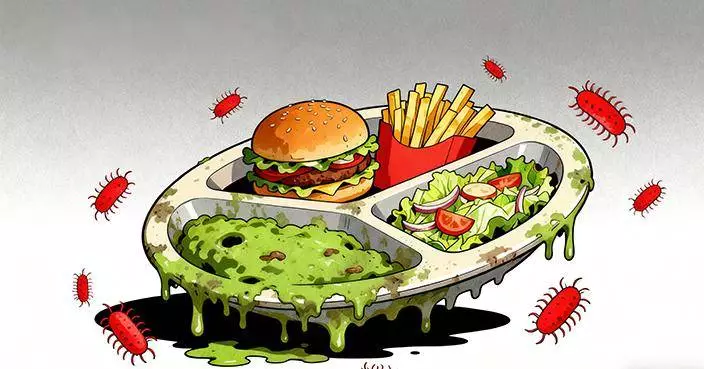
The import and export controls for hydrofluorocarbons (HFCs) under the newly amended Ozone Layer Protection Ordinance (Cap. 403) will take effect on December 1, 2025, applicable to 18 regulated HFCs (see annex).
The Government completed the amendments to the Ozone Layer Protection Ordinance in April this year to implement the Kigali Amendment to the Montreal Protocol on Substances that Deplete the Ozone Layer, which was adopted by the United Nations to strengthen the regulation of HFCs and establish corresponding phase-down targets and schedules, with a view to working together with the international community in addressing climate change.
An Environmental Protection Department (EPD) spokesman said, "Starting from December 1, 2025, any person intending to import regulated HFCs for local consumption must hold a valid import quota and apply for an import licence for each consignment."
The spokesman stated that Hong Kong will gradually tighten the import quota in accordance with the schedule for phasing down the import, export, and consumption of HFCs established under the Kigali Amendment, with the ultimate goal of reducing the consumption of HFCs by 85 per cent from the baseline level by 2036.
To help the trades understand the new control requirements, the EPD has earlier written to stakeholders, including importers, exporters, and distributors of HFCs and related products to detail the implementation specifics of the new controls. The EPD has also held workshops to provide briefings on the application procedures, and has conducted visits to users of HFCs, logistics companies, and relevant trade associations to provide guidance. Relevant information has been uploaded to the EPD's dedicated website (olpo.epd.gov.hk/en/info).
For any enquiries regarding the import and export control measures of HFCs, please contact the EPD at 3153 2384 or via email at olpoenq@epd.gov.hk.
Hong Kong-Shenzhen Joint Working Group on Environmental Protection holds meeting in Hong Kong
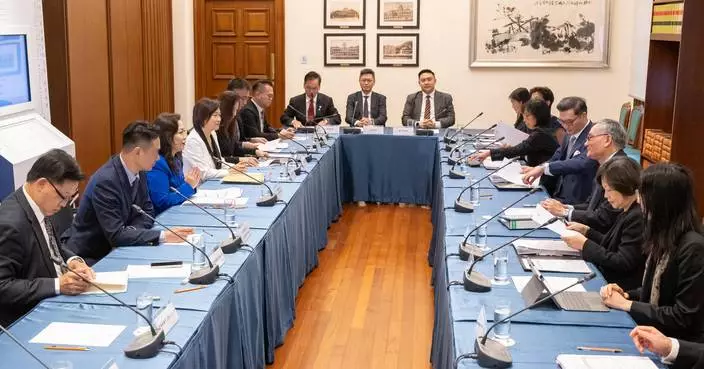
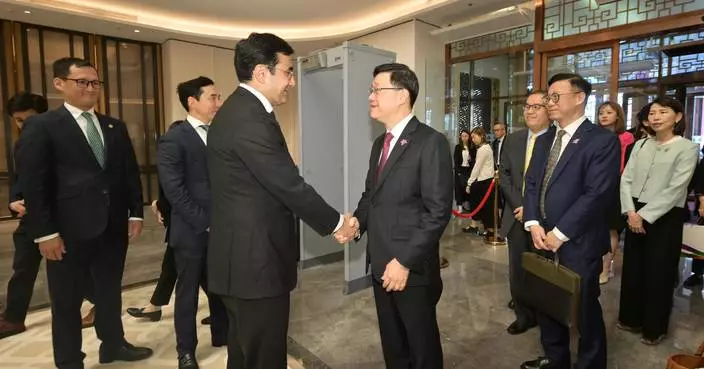
The Secretary for Environment and Ecology, Mr Tse Chin-wan, and Vice Mayor of the Shenzhen Municipal People's Government Ms Zhang Hua, leading the officials of the Hong Kong Special Administrative Region (HKSAR) Government and the delegation of the Shenzhen Municipal Government respectively, held the Hong Kong-Shenzhen Joint Working Group on Environmental Protection meeting in Hong Kong today (June 2).
The meeting reviewed and endorsed the Working Group's 2025 Work Report and noted the implementation progress of the Agreement on Further Deepening Hong Kong-Shenzhen Co-operation in Ecological and Environmental Protection (the Co-operation Agreement). Both sides also exchanged views in depth on the preparation of the five-year plan for ecological and environmental protection in Shenzhen and Hong Kong, regional environmental quality assurance during the Asia-Pacific Economic Co-operation (APEC) meetings, the joint development of the Shenzhen–Hong Kong ecological corridor, and cross-boundary biodiversity conservation. The two sides reported on their work progress and shared experiences on the above aspects.
The HKSAR Government is actively aligning with the National 15th Five-Year Plan and will complete the formulation of Hong Kong’s first five-year plan within this year. The HKSAR Government will continue to fully support the country in achieving its "dual carbon" goals, accelerate green transformation, and strive to reduce carbon emissions by half from the 2005 level by 2035, with a view to achieving carbon neutrality before 2050. At the meeting, the HKSAR Government reported progress in green transport, environmental quality and ecological conservation, including the promotion of a Shenzhen-Hong Kong cross-boundary electric cargo vehicle pilot scheme, preparations for nominating Port Shelter in Sai Kung for inclusion in the national "Beautiful Bays" list, and the deepening of co-operation on the Shenzhen Wutong Mountain–Hong Kong Robin's Nest ecological corridor. The Environment and Ecology Bureau (EEB) and the Environmental Protection Department (EPD) will organise a seminar on the Ecological and Environmental Code of the People's Republic of China in late June, inviting Mainland experts to attend. Representatives from relevant Shenzhen departments are also invited to attend the seminar as well as the Eco Expo to be held in Hong Kong in October during the meeting.
To ensure good environmental quality during the APEC Finance Ministers' Meeting to be held in Hong Kong in October this year and the APEC Economic Leaders' Meeting to be held in Shenzhen in November, Hong Kong and Shenzhen will continue to strengthen regional joint prevention and control efforts, including air quality assurance, water quality monitoring and emergency response capability.
Both sides are also actively advancing the development of the Shenzhen Wutong Mountain–Hong Kong Robin's Nest ecological corridor. In 2025, the two sides jointly completed a biodiversity survey of the ecological corridor area, strengthened ecological data sharing and connectivity, and will further enhance conservation effectiveness in the future to promote ecological integration between Shenzhen and Hong Kong.
Mr Tse thanked the various departments of the Shenzhen Municipal Government for their full support. He expressed the hope that both sides would continue to work hard under the framework of the Joint Working Group, anchor on the ten major co-operation tasks set out in the Co-operation Agreement signed in 2024, and ensure all tasks are advanced with high quality and full coverage, so as to jointly build a Beautiful China and work towards carbon neutrality.
The Permanent Secretary for Environment and Ecology (Environment), Mr Eddie Cheung; the Director of Environmental Protection, Dr Samuel Chui; and representatives from the EEB, the EPD and the Agriculture, Fisheries and Conservation Department also attended the meeting.
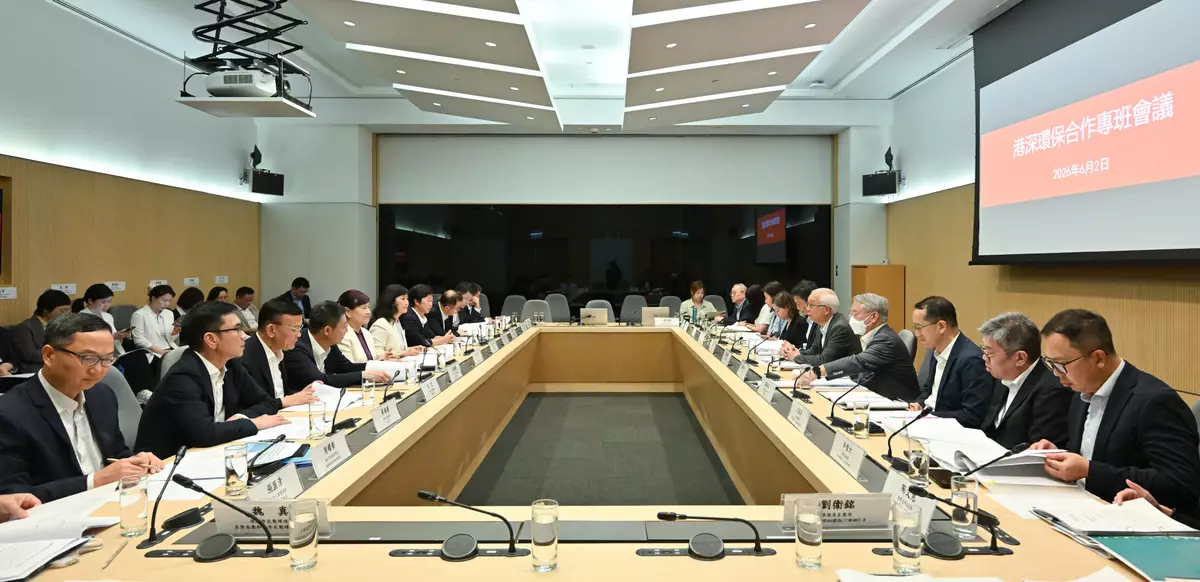
Hong Kong-Shenzhen Joint Working Group on Environmental Protection holds meeting in Hong Kong Source: HKSAR Government Press Releases
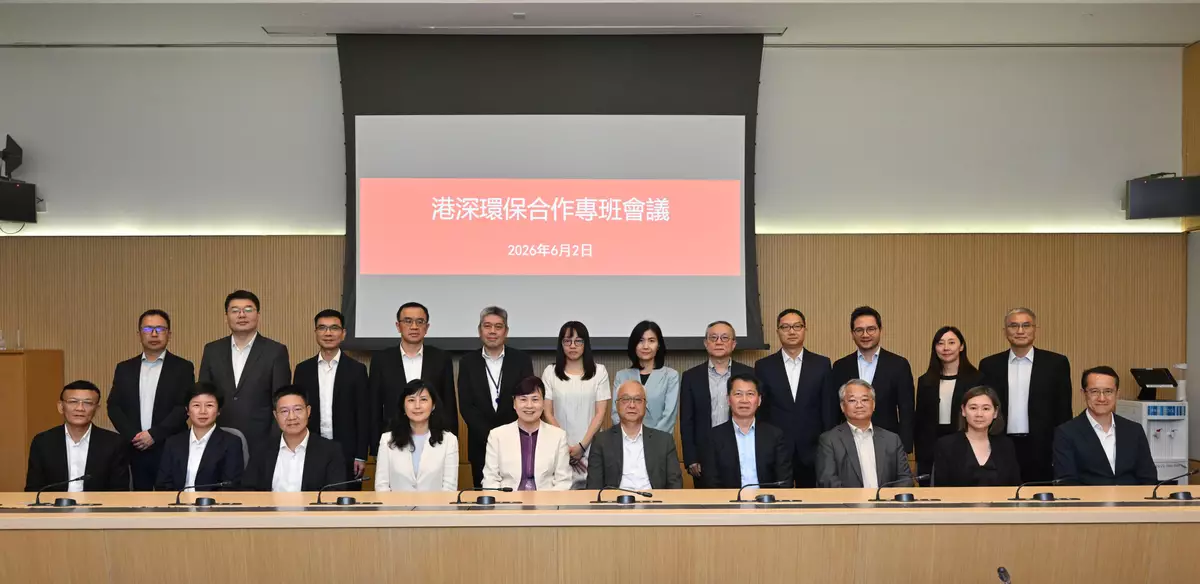
Hong Kong-Shenzhen Joint Working Group on Environmental Protection holds meeting in Hong Kong Source: HKSAR Government Press Releases