Skip to Content Facebook Feature Image

World's first AI agent system for scientific research launched in Beijing

China

China

China

World's first AI agent system for scientific research launched in Beijing

2025-11-24 14:32 Last Updated At:15:07

The world's first AI agent system for scientific research, OmniScientist, was launched on Sunday at the first International Conference on AI Scientists (ICAIS 2025) in Beijing.

OmniScientist, which supports comprehensive scientific talent cultivation, was officially released by Zhongguancun Academy (ZGCA) and Zhongguancun Institute of Artificial Intelligence (ZGCI) during the conference.

Focusing on AI-driven scientific innovation, ICAIS 2025 brought together multidisciplinary experts from China and abroad to explore AI's crucial role in future technological development.

Centering on the core theme of "AI Scientists," this year's conference examined AI's evolution from research assistant to intelligent scientific "partner."

"Now we are trying to work on smart materials, dynamic materials with properties which are close to those of the biological systems, like materials which can self-heal, self-repair. You scratch your car and it will repair by itself," said Konstantin Novoselov, Nobel Laureate in Physics in 2010, a ICAIS 2025 participant.

These complex systems are challenging to design using traditional methods, but machine learning can be very helpful, he added.

OmniScientist aims to become an "indispensable co-creation partner" for young scientists throughout their development. It establishes an intelligent support framework covering the entire research workflow, deeply integrated from literature review and idea generation to experimental design and paper writing. The system features digital twin agents of globally renowned scientists, teachers, and researchers who can accompany young researchers, provide inspiration and advice, and grow alongside students.

"AI can search all online literature and help students summarize the information, while also refining their viewpoints. They might discover their ideas are actually outdated, something they weren't aware of [until using AI]. This will significantly enhance students' research literacy. By developing such an AI research assistance system, we can accelerate students' learning cycle, enrich their store of knowledge, and help them identify new research directions for solving future problems," said Liu Tieyan, president of ZGCA.

The conference, hosted by ZGCA, ZGCI, Tsinghua University, Westlake University and the University of Chicago, will run through Tuesday.  
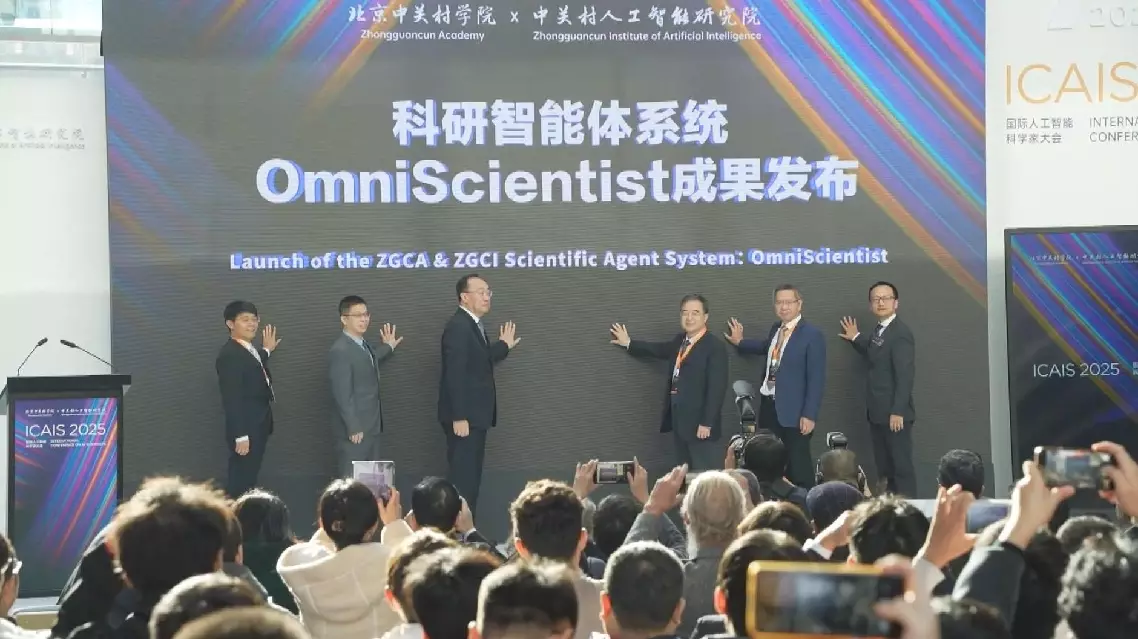
World's first AI agent system for scientific research launched in Beijing
World's first AI agent system for scientific research launched in Beijing

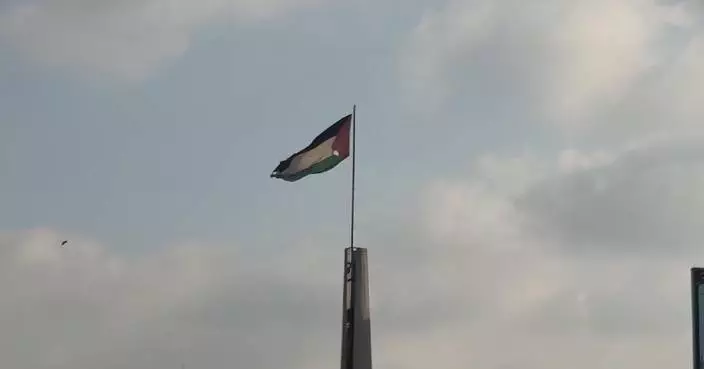
The Houthis in Yemen are ready to coordinate countermeasures with Iran in response to a U.S. blockade on the Strait of Hormuz, a top adviser said on Tuesday, warning that the Bab al-Mandab Strait could also be blocked if red lines are crossed.

The United States imposed a blockade on the Strait of Hormuz to prevent ships from accessing Iranian ports, which took effect after the Iran-U.S. peace talks, held in Pakistan's capital Islamabad late last week, failed to yield a deal to end the war that the Unite States and Israel launched against Iran on Feb. 28. A two-week ceasefire is set to expire next week.

In an interview with China Global Television Network (CGTN) in Sanaa on Tuesday, Mohammed Taher Anam, an advisor to Yemen's Houthi Supreme Political Council, said these unilateral American actions must be rejected and confronted, so that the United States does not later impose blockades on other countries.

"We reject this blockade and call for confronting it through various means. We are also waiting for Iranian measures and are ready to take similar steps in our region," said Anam.

He said that the Bab al-Mandab Strait and nearby areas can be blocked at any time if red lines are crossed. They are coordinating with their Iranian allies and closely monitoring developments he said, and, at the right moment, they are ready to expand the confrontation against the U.S. and its allies.

The Bab el-Mandeb Strait, a strategic chokepoint linking the Suez Canal and the Red Sea with the Gulf of Aden, serves as a vital corridor for global trade, particularly oil and gas shipments between Europe and Asia.

"We remain ready to take any measures. We are coordinating with our allies in Iran and with friendly countries around the world if needed. One possible step is imposing a blockade against the American blockade. The Americans think they can impose a blockade on the Strait of Hormuz, but this is very difficult. We know Iranian missiles can reach up to 1,000 kilometers to target American ships, keeping them far from the Strait of Hormuz. If the U.S. continues on this path, we in Yemen can take similar steps to Iran, and the Americans will suffer greatly," said Mohammed.

The Houthi group, which has controlled Yemen's capital Sanaa and most northern provinces since late 2014, has voiced full solidarity with Iran since the U.S.-Israeli strikes against the Islamic Republic started.

Houthi official warns of possible key Red Sea strait closure as U.S. continues Hormuz blockade

Houthi official warns of possible key Red Sea strait closure as U.S. continues Hormuz blockade

Recommended Articles