Skip to Content Facebook Feature Image

Your Thanksgiving leftovers are harming the planet. There are ways to shop and cook smarter

TECH

Your Thanksgiving leftovers are harming the planet. There are ways to shop and cook smarter
TECH

TECH

Your Thanksgiving leftovers are harming the planet. There are ways to shop and cook smarter

2025-11-24 22:45 Last Updated At:11-25 12:35

A major highlight of Thanksgiving is the menu, but the big meal can come with a lot of wasted food. Experts say a pinch of extra planning can ensure more gets eaten.

Roughly 320 million pounds (145 million kilograms) of food will be wasted at Thanksgiving this year, according to ReFED, a nonprofit that tracks food waste. ReFED says that's largely because people prepare more food than is needed for the meal and then don't finish the leftovers.

“That is essentially like five meals each for all of the food insecure people in the U.S.,” said Yvette Cabrera, food waste director at Natural Resources Defense Council.

It's also a problem because most of that waste ends up in landfills, where it releases the potent planet-warming gas methane, according to the Environmental Protection Agency. But a lot of those emissions are avoidable.

Here are some tips for a climate-smarter Thanksgiving meal without ditching tradition.

Chef and cookbook author Joel Gamoran, who focuses on cooking with food scraps, says the key to cutting Thanksgiving waste starts before you even turn on the oven.

He recommends a quarter pound of cooked turkey per person and about a fistful — or half a cup — of each side dish per person. Cabrera said the most wasted foods are typically turkey and dairy products such as milk or cream bought for recipes.

When you're buying a whole bird, you should factor in the weight of the bones and giblets. The Natural Resources Defense council's food estimation tool recommends 0.75 pounds (0.34 kilograms) per person.

Cabrera also recommends buying food in the grocery store that’s close to its expiration date, or produce that's misshapen or unattractive, because those are more likely to go unsold and be discarded.

Lots of food gets wasted because home cooks don't think to use it.

“It’s OK to make the whole bird,” Gamoran said. “But have a plan for how you’re going to take advantage of that later on. What are you going to do with the carcass, all that extra meat?”

He likes to make turkey stock with the carcass by covering it in a pot with cold water, bringing it to a boil and then simmering it for two hours. You can fold that stock into mashed potatoes, use it to thicken soup, or freeze it for months.

Gamoran’s favorite trick for the rest of the scraps is to use them like ingredients, not trash.

“Carrot tops are like an herb,” he said. “You can treat it like basil or parsley and make a really beautiful pesto out of it, and then put them in ice cube trays to freeze them. Those go really nice in stir fries and salads and soups.”

He’ll also roast butternut squash shells, cover them with vinegar and strain them out after a day for a rich umami vinegar that can be used in cooking.

Potato skins can be tossed in oil and paprika, air fried and turned into potato chips or croutons.

Onion peels can be dried in the oven at 200 degrees Fahrenheit (94 degrees Celsius) for 20 minutes, then ground in the food processor for homemade onion powder. This method also works with garlic skins.

For many, leftovers are one of the perks of hosting Thanksgiving. They can also be given a second life.

Gamoran says mashed potatoes can be transformed into breakfast foods like waffles and pancakes, or you can make potato bread by adding flour and yeast.

If you get sick of sliced turkey, Gamoran recommends using the leftover meat for meatballs or patties by chopping it in a food processor, adding an egg and then baking it.

If you want to get really creative, pumpkin pie can be made into a savory curry by adding sauteed onions and spices. And cranberry sauce can be added to smoothies, or even ketchup and mustard for a tangy twist.

If it sounds overwhelming to launch into new recipes just after the holiday, Cabrera recommends freezing leftovers. She said it's important to create space in the freezer before Thanksgiving starts.

Home-cooked food doesn't come with easy expiration dates. Cabrera said that's what your senses are for.

“Smell it, look at it, inspect it, maybe taste a little bit to make sure it’s good to eat,” she said.

There are some scraps, such as eggshells, that just don't have much culinary value. And if, despite all your best efforts, the green bean casserole in the back of the fridge goes bad, there's still one final move to keep it out of the landfill: composting.

"Having a plan for what you’re going to do with anything that’s not able to be eaten is going to be really critical to reducing those kind of end-of-life emissions on food that you couldn’t eat," she said.

The Associated Press’ climate and environmental coverage receives financial support from multiple private foundations. AP is solely responsible for all content. Find AP’s standards for working with philanthropies, a list of supporters and funded coverage areas at AP.org.
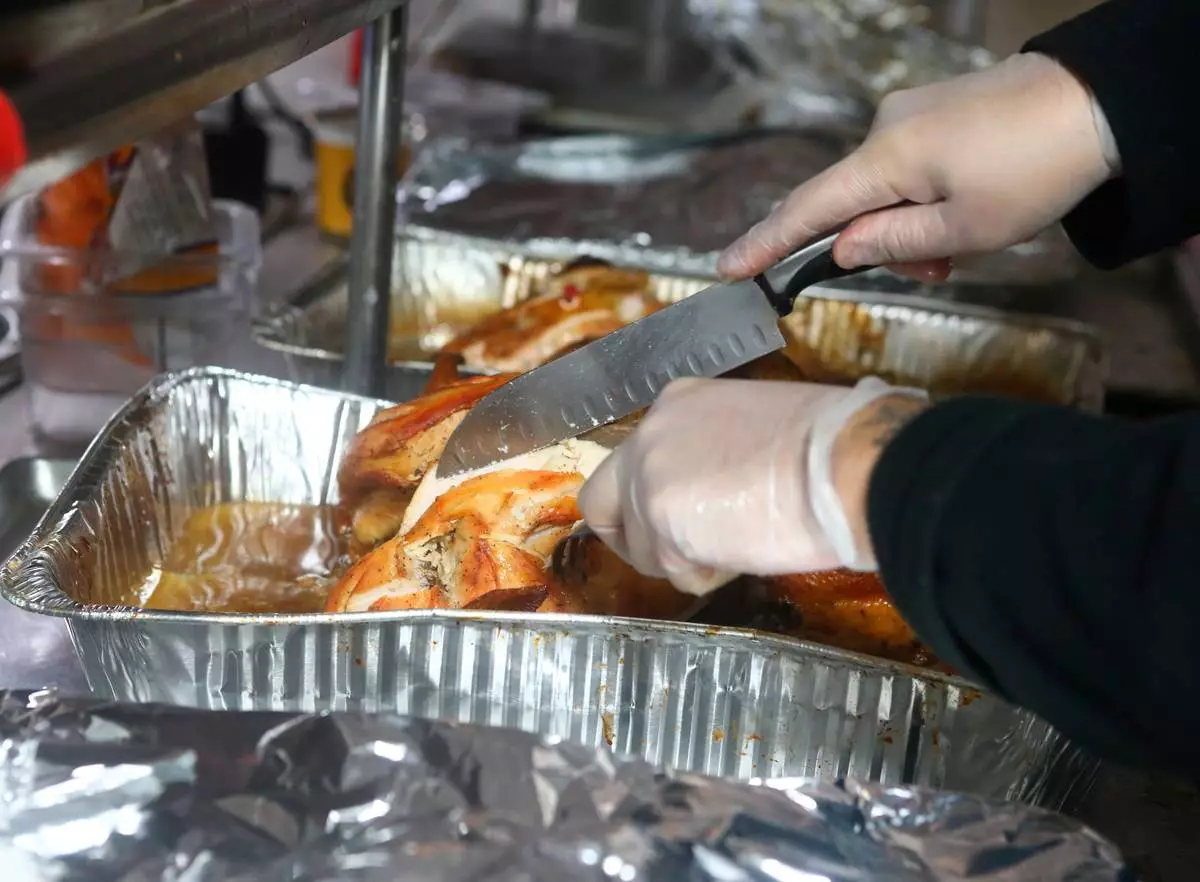
FILE - Jose Fetterolf carves a turkey for Thanksgiving in Hazle Township Pa., Nov. 23, 2022. (John Haeger/Standard-Speaker via AP, File)
FILE - Jose Fetterolf carves a turkey for Thanksgiving in Hazle Township Pa., Nov. 23, 2022. (John Haeger/Standard-Speaker via AP, File)

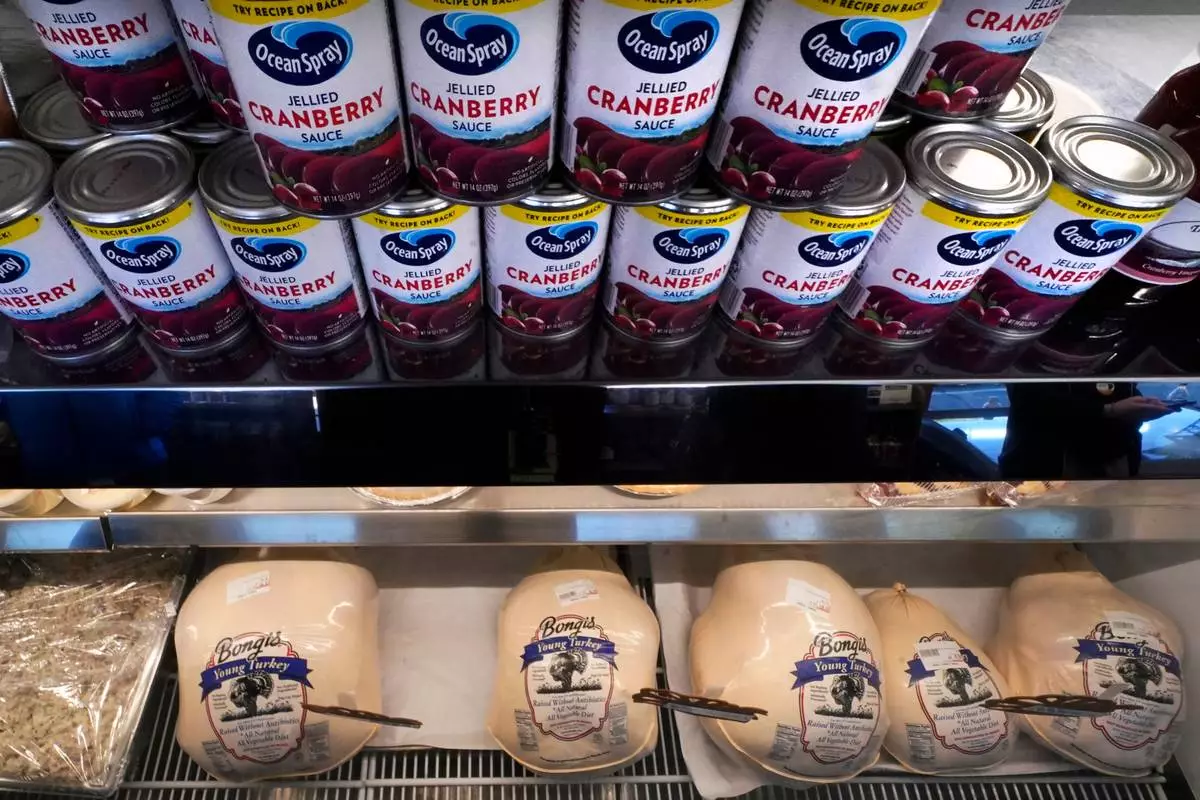
FILE - Cans of cranberry sauce line a turkey display case at Bongi's Turkey Roost in advance of the Thanksgiving holiday, Nov. 22, 2022, in Duxbury, Mass. (AP Photo/Charles Krupa, File)
FILE - Cans of cranberry sauce line a turkey display case at Bongi's Turkey Roost in advance of the Thanksgiving holiday, Nov. 22, 2022, in Duxbury, Mass. (AP Photo/Charles Krupa, File)
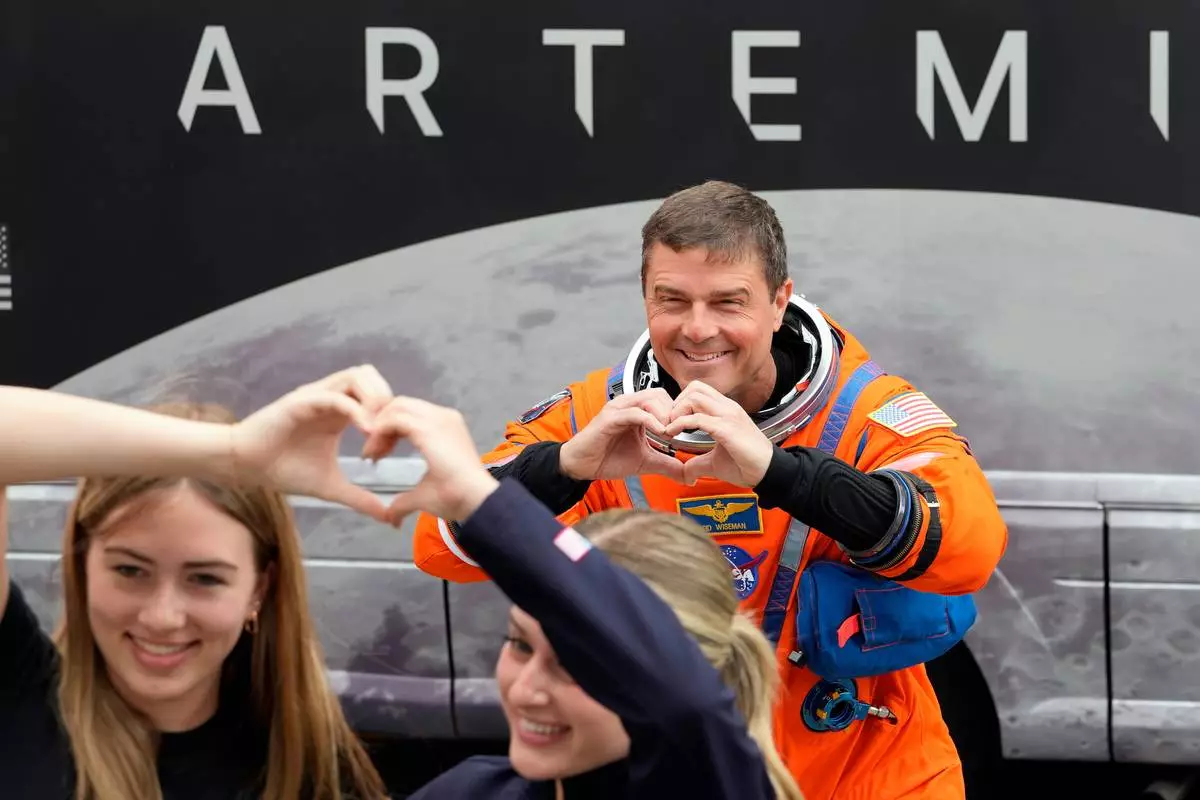
CAPE CANAVERAL, Fla. (AP) — Four astronauts strapped into NASA's new moon rocket and awaited liftoff Wednesday on humanity’s first lunar trip in more than half a century.

The three Americans and one Canadian waved and shaped their hands into hearts as they emerged from crew quarters to cheers and said goodbye to their families. The crowd applauded and cheered again as the astronauts boarded their astrovan for the nine mile (14-kilometer) ride to the launch pad.

Commander Reid Wiseman thanked the throngs who gathered to see them off.

“It's a great day for us. It's a great day for this team,” Wiseman called out.

Tensions were high earlier in the day as hydrogen fuel started flowing into the rocket. Dangerous hydrogen leaks erupted during a countdown test earlier this year, forcing a lengthy flight delay.

To NASA's relief, no significant hydrogen leaks occurred. The launch team loaded more than 700,000 gallons of fuel (2.6 million liters) into the 32-story Space Launch System rocket on the pad, a smooth operation that set the stage for the Artemis II crew to board.

A problem cropped up with the rocket's flight-termination system with only two hours remaining in the countdown. Commands weren't getting through to the system, which is needed to send a self-destruct signal in case the rocket veers off course and threatens populated areas. But the issue was quickly resolved, according to NASA.

“It is time to fly,” Wiseman declared on the eve of launch via X. Favorable weather was forecast.

The four will fly around the moon without stopping or even orbiting — then head straight back for a Pacific splashdown. They will set a new distance record for the farthest humans have traveled from Earth as they zoom some 4,000 miles (6,400 kilometers) beyond the moon and then hang a U-turn.

Astronauts last flew to the moon during Apollo 17 in 1972.

Artemis II is the opening shot of NASA's grand plans for a permanent moon base. The space program is aiming for a moon landing near the lunar south pole in 2028.

“The next era of exploration begins,” NASA Administrator Jared Isaacman posted on X.

Best wishes already have started to pour in, including from England's King Charles III to Canadian Space Agency astronaut Jeremy Hansen.

Hansen will become the first non-U. S. citizen to launch to the moon. The crew also includes Christina Koch and Victor Glover, the first woman and first Black astronaut, respectively, destined for the moon.

“In this historic moment, you stand as a bridge between nations and generations,” the king wrote in a letter to Hansen, “and I commend you for your courage, discipline and vision that have brought you to this threshold.”

The Associated Press Health and Science Department receives support from the Howard Hughes Medical Institute’s Department of Science Education and the Robert Wood Johnson Foundation. The AP is solely responsible for all content.

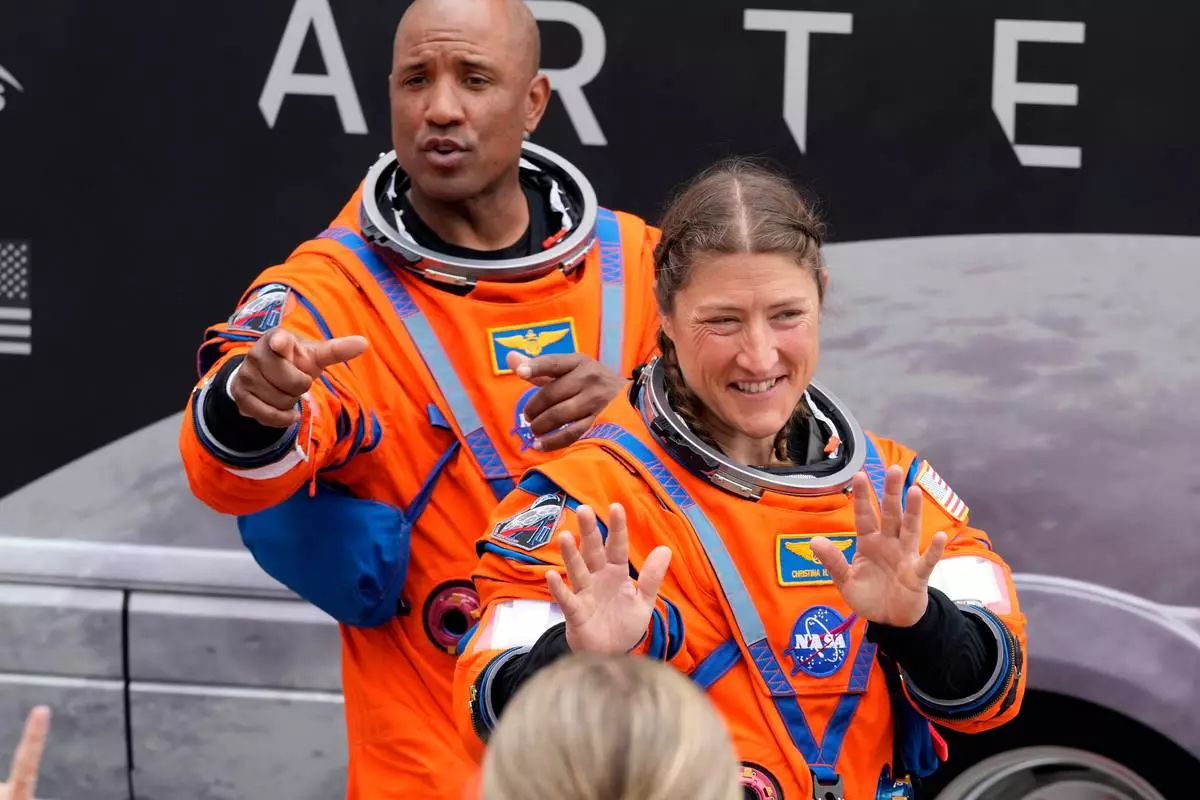
Astronauts, Mission Specialist Christina Koch, right, and Pilot Victor Glover wave to family members as they leave the Operations and Checkout Building for a trip to Launch Pad 39-B and a planned liftoff on NASA's Artermis II moon rocket at the Kennedy Space Center Wednesday, April 1, 2026, in Cape Canaveral, Fla. (AP Photo/Chris O'Meara)

Astronauts, Mission Specialist Christina Koch, right, and Pilot Victor Glover wave to family members as they leave the Operations and Checkout Building for a trip to Launch Pad 39-B and a planned liftoff on NASA's Artermis II moon rocket at the Kennedy Space Center Wednesday, April 1, 2026, in Cape Canaveral, Fla. (AP Photo/Chris O'Meara)

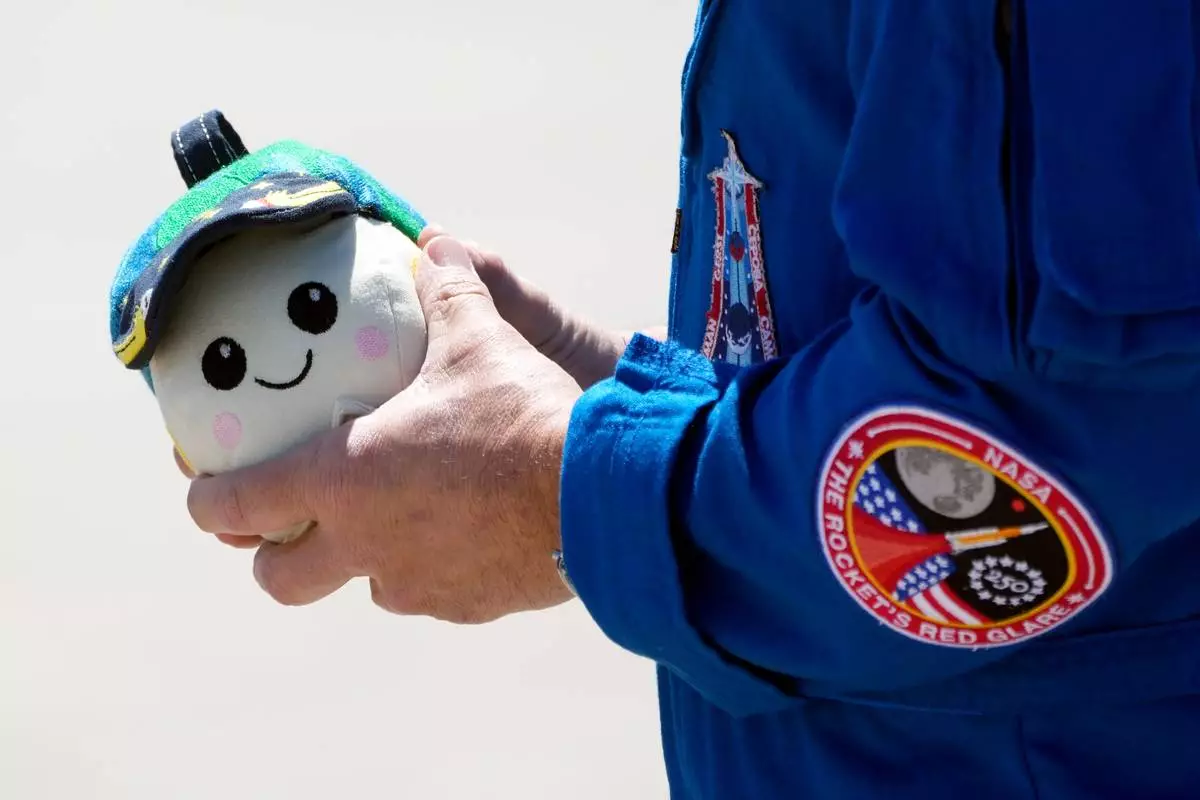
Artemis 2 crew member Commander Reid Wiseman holds "Rise" after the crew's arrival at the Kennedy Space Center Friday, March 27, 2026, in Cape Canaveral, Fla. (AP Photo/Chris O'Meara)

Artemis 2 crew member Commander Reid Wiseman holds "Rise" after the crew's arrival at the Kennedy Space Center Friday, March 27, 2026, in Cape Canaveral, Fla. (AP Photo/Chris O'Meara)

Commander Reid Wiseman poses for a photo with family members after leaving the Operations and Checkout Building for a trip to Launch Pad 39-B and a planned liftoff on NASA's Artermis II moon rocket at the Kennedy Space Center Wednesday, April 1, 2026, in Cape Canaveral, Fla. (AP Photo/Chris O'Meara)

Commander Reid Wiseman poses for a photo with family members after leaving the Operations and Checkout Building for a trip to Launch Pad 39-B and a planned liftoff on NASA's Artermis II moon rocket at the Kennedy Space Center Wednesday, April 1, 2026, in Cape Canaveral, Fla. (AP Photo/Chris O'Meara)

Astronauts, from left, Mission Specialist Jeremy Hansen, of Canada,, Pilot Victor Glover, Commander Reid Wiseman, and Mission Specialist Christina Koch pose for a photo after leaving the Operations and Checkout Building for a trip to Launch Pad 39-B and a planned liftoff on NASA's Artermis II moon rocket at the Kennedy Space Center Wednesday, April 1, 2026, in Cape Canaveral, Fla. (AP Photo/Chris O'Meara)

Astronauts, from left, Mission Specialist Jeremy Hansen, of Canada,, Pilot Victor Glover, Commander Reid Wiseman, and Mission Specialist Christina Koch pose for a photo after leaving the Operations and Checkout Building for a trip to Launch Pad 39-B and a planned liftoff on NASA's Artermis II moon rocket at the Kennedy Space Center Wednesday, April 1, 2026, in Cape Canaveral, Fla. (AP Photo/Chris O'Meara)

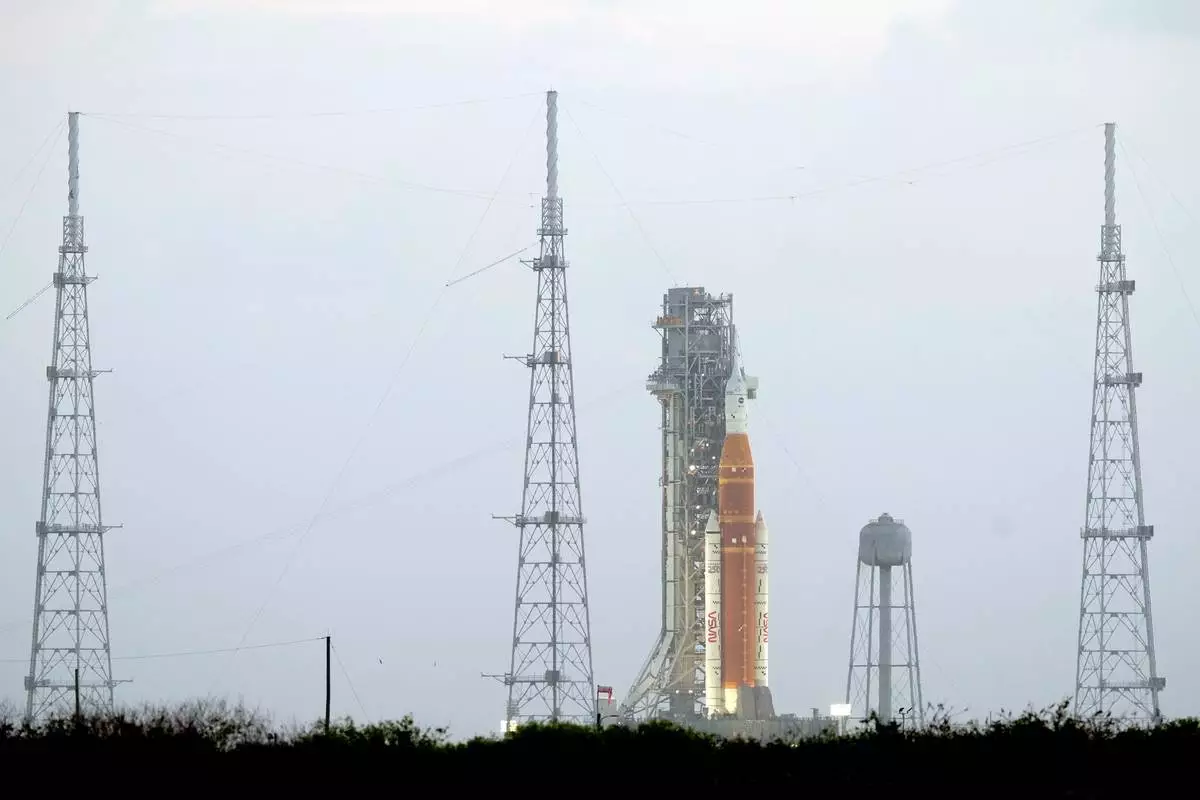
NASA's Artermis II moon rocket sits on Launch Pad 39-B at the Kennedy Space Center hours ahead of a planned launch attempt Wednesday, April 1, 2026, in Cape Canaveral, Fla. (AP Photo/Chris O'Meara)

NASA's Artermis II moon rocket sits on Launch Pad 39-B at the Kennedy Space Center hours ahead of a planned launch attempt Wednesday, April 1, 2026, in Cape Canaveral, Fla. (AP Photo/Chris O'Meara)

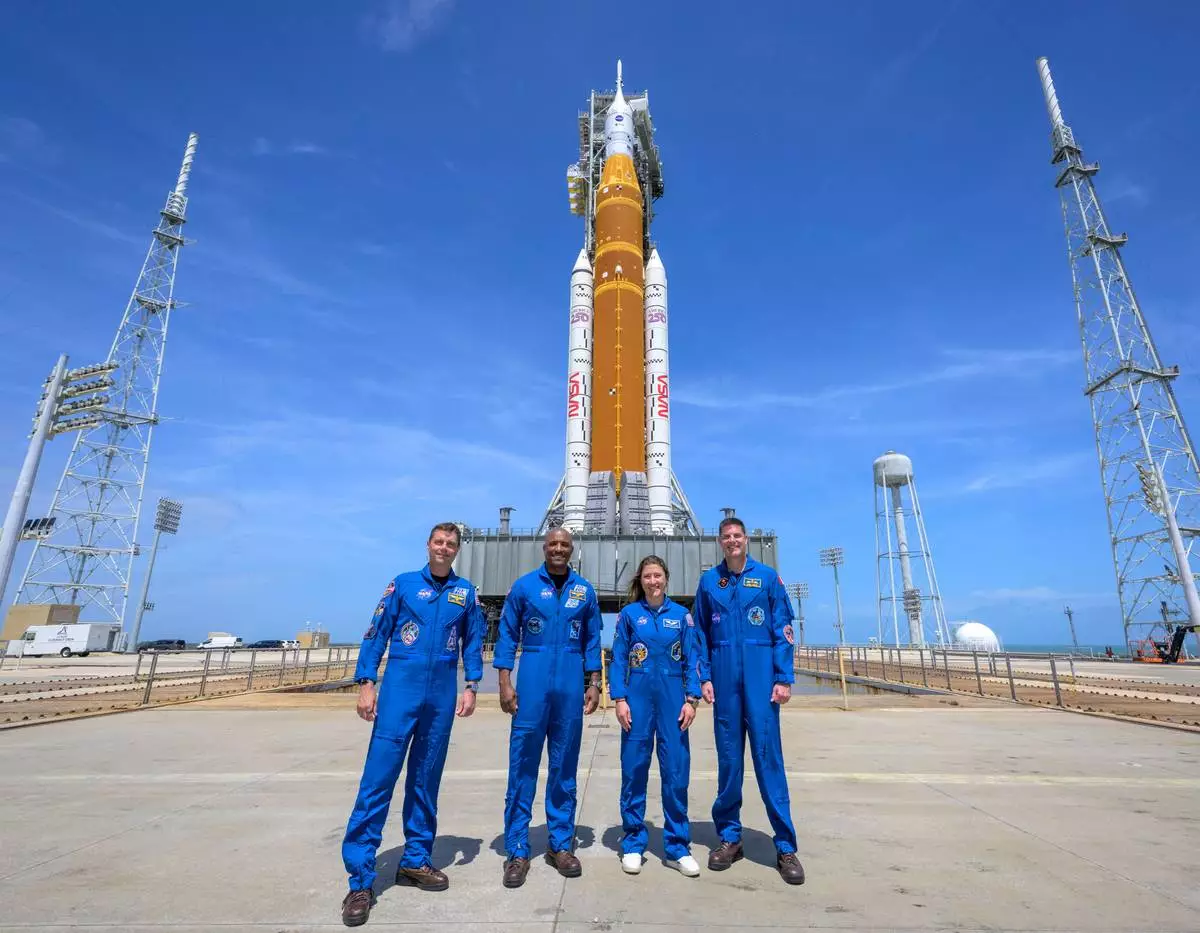
This photo provided by NASA shows NASA astronauts Reid Wiseman, Artemis II commander, from left, Victor Glover, Artemis II pilot, Christina Koch, Artemis II mission specialist, and CSA (Canadian Space Agency) astronaut Jeremy Hansen, Artemis II mission specialist, right, in a group photograph as they visit NASA's Artemis II SLS (Space Launch System) rocket and Orion spacecraft, Monday, March 30, 2026, at Launch Complex 39B of NASA's Kennedy Space Center, in Cape Canaveral, Fla. (Bill Ingalls/NASA via AP)

This photo provided by NASA shows NASA astronauts Reid Wiseman, Artemis II commander, from left, Victor Glover, Artemis II pilot, Christina Koch, Artemis II mission specialist, and CSA (Canadian Space Agency) astronaut Jeremy Hansen, Artemis II mission specialist, right, in a group photograph as they visit NASA's Artemis II SLS (Space Launch System) rocket and Orion spacecraft, Monday, March 30, 2026, at Launch Complex 39B of NASA's Kennedy Space Center, in Cape Canaveral, Fla. (Bill Ingalls/NASA via AP)

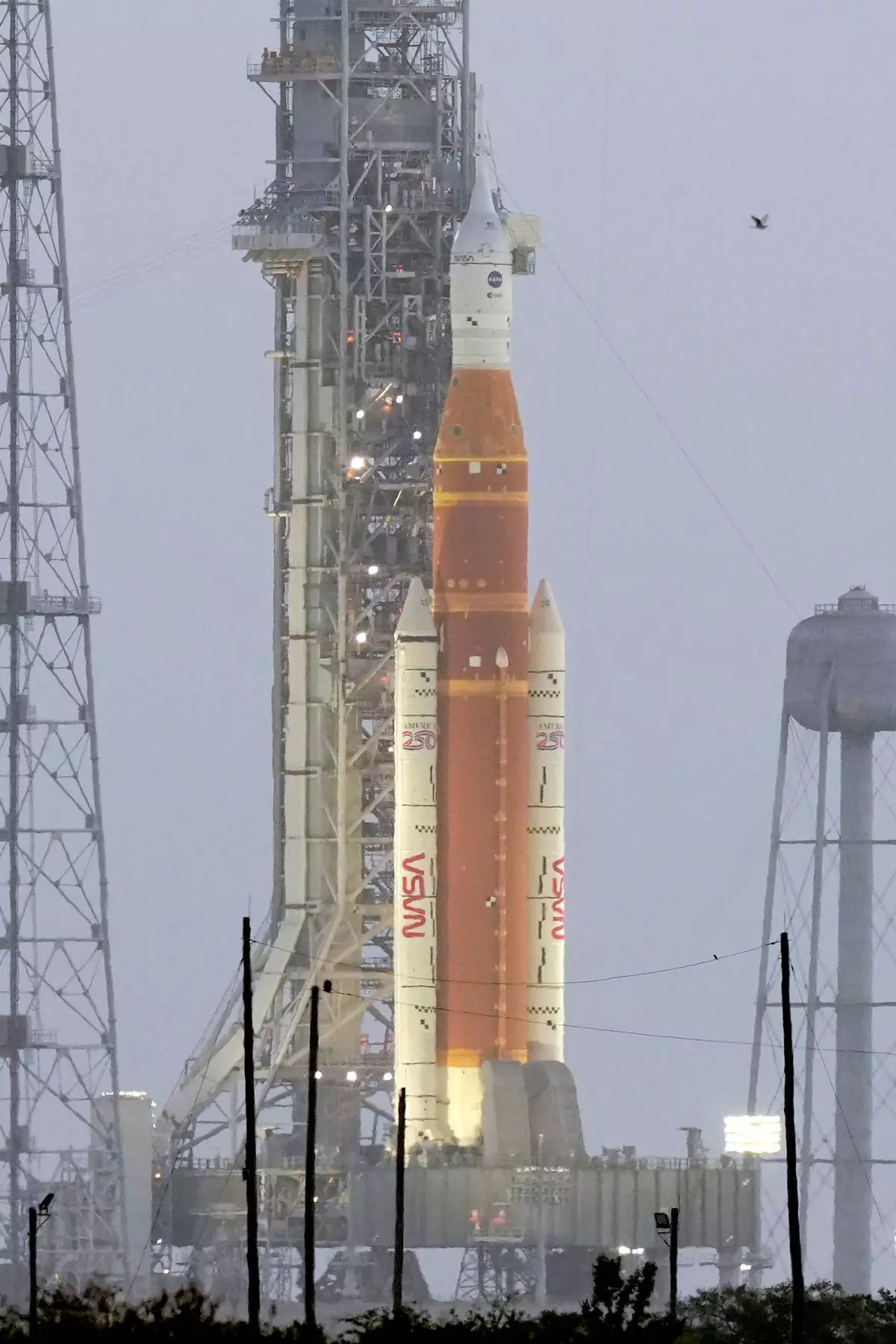
NASA's Artermis II moon rocket sits on Launch Pad 39-B at the Kennedy Space Center hours ahead of planned liftoff Wednesday, April 1, 2026, in Cape Canaveral, Fla. (AP Photo/Chris O'Meara)

NASA's Artermis II moon rocket sits on Launch Pad 39-B at the Kennedy Space Center hours ahead of planned liftoff Wednesday, April 1, 2026, in Cape Canaveral, Fla. (AP Photo/Chris O'Meara)

Recommended Articles