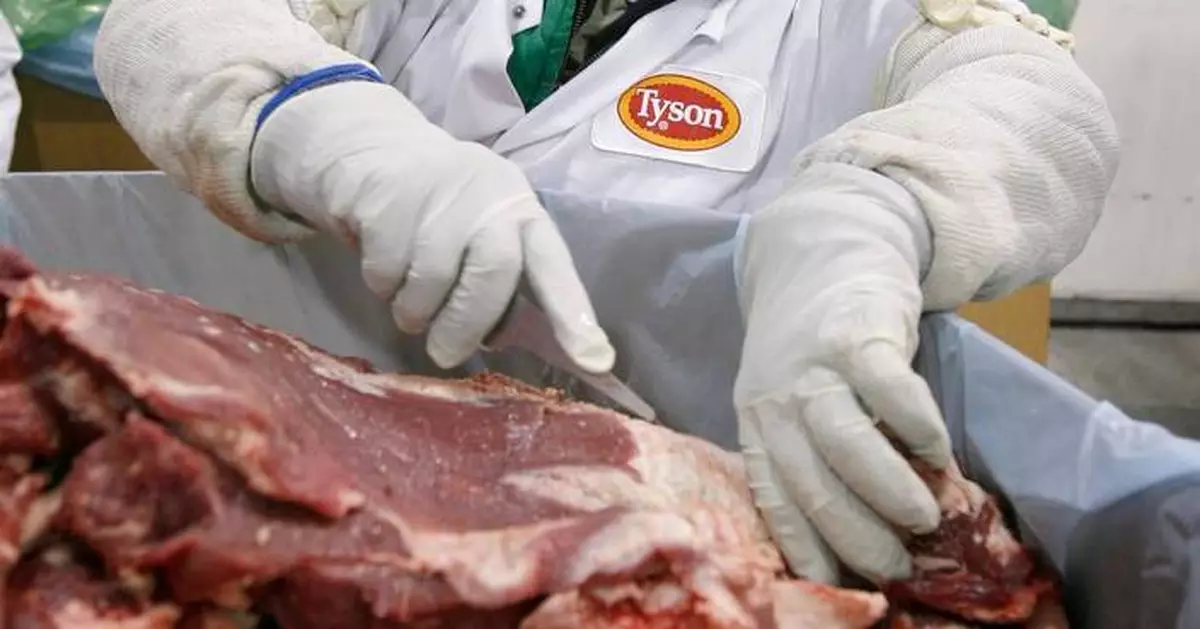
OMAHA, Neb. (AP) — Tyson Foods' decision to close a beef plant that employs nearly one third of residents of Lexington, Nebraska, could devastate the small city and undermine the profits of ranchers nationwide.
Closing a single slaughterhouse might not seem significant, but the Lexington plant employs roughly 3,200 people in the city of 11,000 and has the capacity to slaughter some 5,000 head of cattle a day. Tyson also plans to cut one of the two shifts at a plant in Amarillo, Texas, and eliminate 1,700 jobs there. Together those two moves will reduce beef processing capacity nationwide by 7-9%.
Click to Gallery
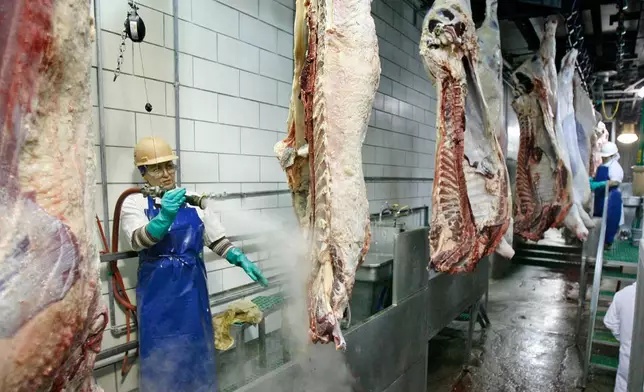
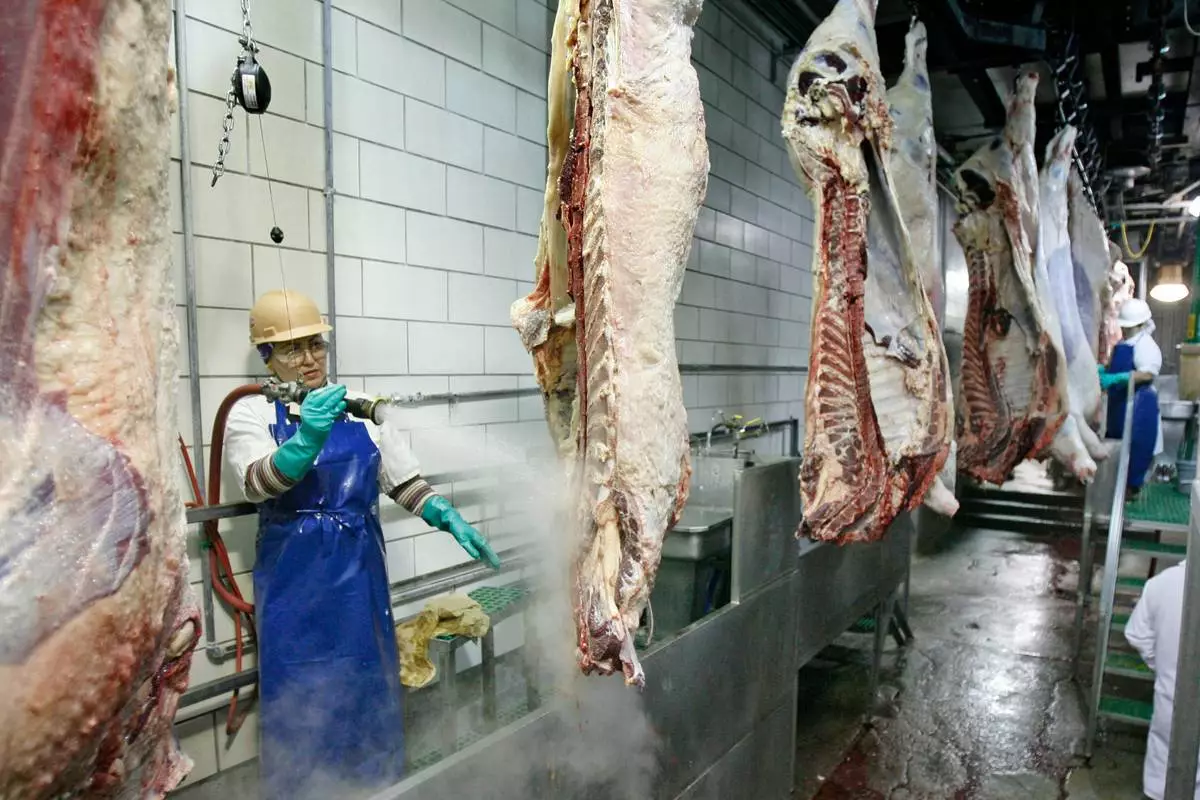
Vanessa Rodriguez washes the necks of the carcasses with 180 degree water before they go into thermal heat treatment during a tour of the Tyson meat packing plant in Lexington, Neb., Wednesday, Nov. 14, 2007. (Kent Sievers/Omaha World-Herald via AP)
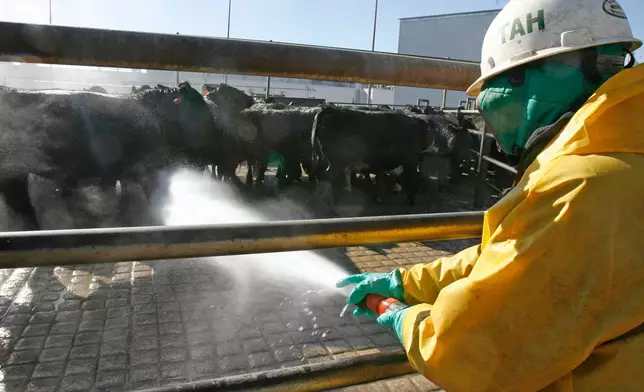
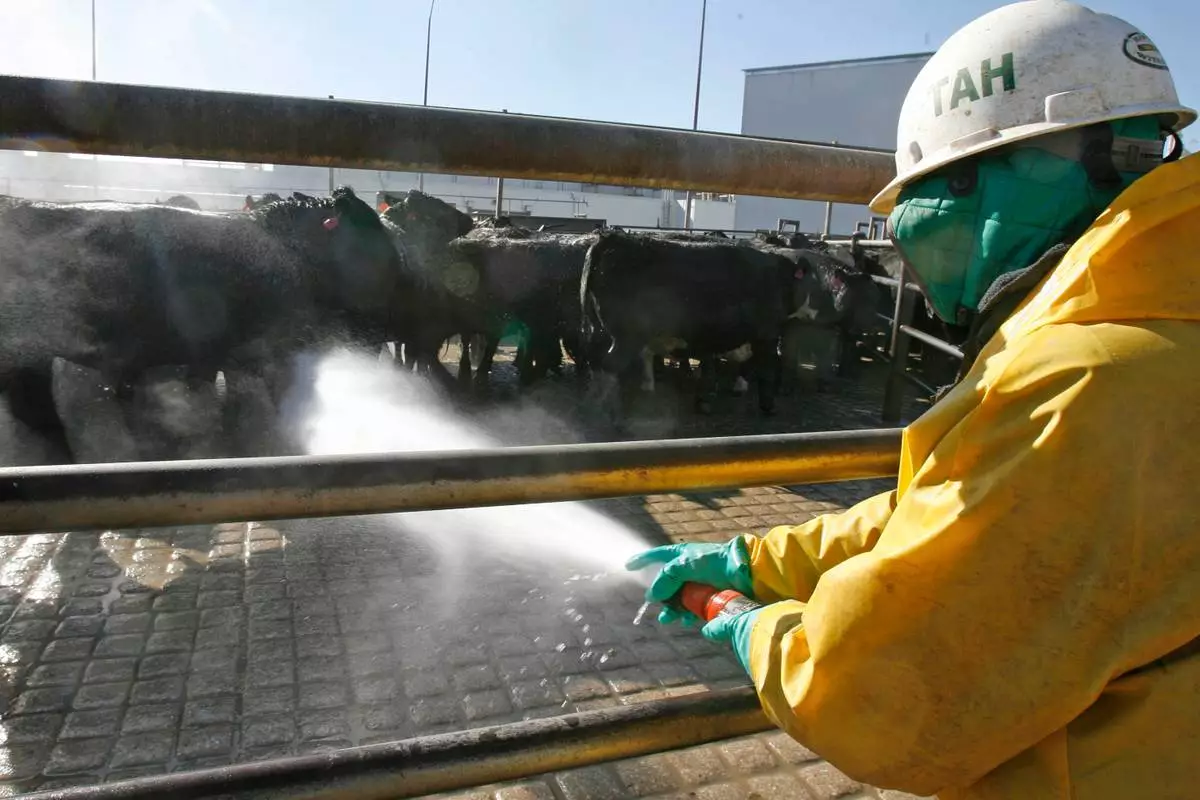
A worker uses a high-pressure jet of water in the second part of the exterior washing process at the Tyson meat packing plant in Lexington, Neb., Wednesday, Nov. 14, 2007. (Kent Sievers/Omaha World-Herald via AP)
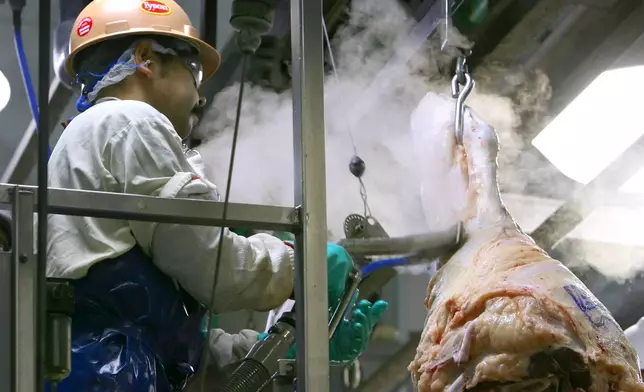
A worker on the line uses a steam vacuum on any incision areas on the carcass during a tour of the Tyson meat packing plant in Lexington, Neb., Wednesday, Nov. 14, 2007. (Kent Sievers/Omaha World-Herald via AP)
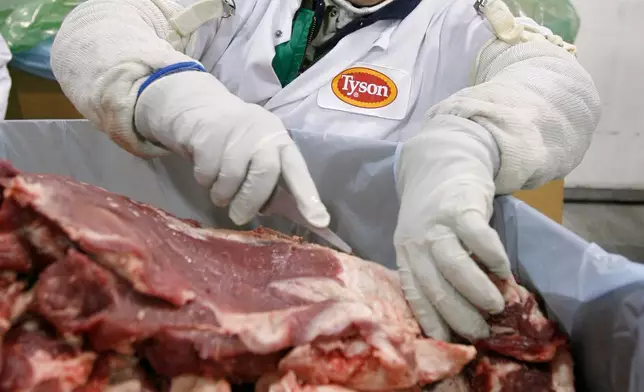
Laurie Nierman trims sample strips that will be tested for E. coli from batches of the plant's trimmings at the Tyson meat packing plant in Lexington, Neb., Wednesday, Nov. 14, 2007. (Kent Sievers/Omaha World-Herald via AP)
Consumers may not see prices change much at the grocery store over the next six months because all the cattle that are now being prepared for slaughter will still be processed, potentially just at a different plant. But in the long run, beef prices may continue to climb even higher than the current record highs — caused by a variety of factors from drought to tariffs — unless American ranchers decide to raise more cattle, which they have little incentive to do.
An increase in beef imports from Brazil, like President Donald Trump encouraged last week by slashing tariffs on the South American country, may help insulate consumers while ranchers and feedlots struggle with high costs and falling prices.
Here's what we know about the impact of the plant closure and the changing tariffs:
Clay Patton, vice president of the Lexington-area Chamber of Commerce said Monday that Tyson’s announcement Friday felt like a “gut punch” to the community in the Platte River Valley that serves as a key link in the agricultural production chain.
When it opened in 1990, the Lexington plant that Tyson later acquired revitalized and remade the formerly dwindling town by attracting thousands of immigrants to work there and nearly doubling the population.
When the plant closes in January, the ripple effects will be felt throughout the community, undermining many first-generation business owners and the investment in new housing, Patton said. Tyson said it will offer Lexington workers the chance to move to take open jobs at one of its other plants if they are willing to uproot their families for jobs hundreds of miles away.
“I’m hopeful that we can come through this and we’ll actually become better on the other side of it,” Patton said.
Elmer Armijo was struck by how established the community was when he moved to Lexington last summer to lead First United Methodist Church. He described solid job security, good schools and health care systems and urban development — all in doubt now.
“People are completely worried,” Armijo said. “The economy in Lexington is based in Tyson.”
Many local churches, Armijo’s included, are already offering counseling, food pantries and gas vouchers for community members.
The prospect of losing a major buyer for cattle and increasing imports from Brazil, which already accounted for 24% of the beef brought into the country this year, only adds to doubts about how profitable the U.S. cattle business might be over the next several years, making it less likely that American ranchers will commit to raising more animals.
“There’s a just a lack of confidence in the industry right now. And producers are unwilling to make the investment to rebuild,” said Bill Bullard, president of Ranchers-Cattlemen Action Legal Fund United Stockgrowers of America.
Boosting imports from Brazil has the potential to affect the market — much more than Trump's suggestion to increase imports from Argentina — since the country sends more beef to America than any other. But for steak lovers, the sky-high price of the cut isn’t likely to be affected regardless, as most imports are lean trimmings that get mixed into ground beef.
Kansas State University agricultural economist Glynn Tonsor said it's hard to predict whether imports will continue to account for roughly 20% of the U.S. beef supply next year. He pointed out that Trump's tariffs have changed several times since they were announced in the spring and could quickly change again.
The only constant in the equation has been that consumers have continued to buy beef even as prices soar. Tonsor said on average Americans will consume 59 pounds (27 kilograms) of beef per person this year.
There has long been excess capacity in the meat business nationwide, meaning the nation’s slaughterhouses could handle many more cattle than they are processing. That has only been made worse in recent years as the government has encouraged more smaller companies to open slaughterhouses to compete with Tyson and the other giants that dominate the beef business.
Tyson expects to lose more than $600 million on beef production this year after already reporting $720 million of red ink in beef over the past two years.
Tonsor said it was inevitable that at least one beef plant would close. Afterward, Tyson's remaining plants will be able to operate more efficiently at closer to full capacity.
Ernie Goss, an economist at Creighton University in Omaha, said the Lexington plant likely wasn’t measuring up in the industry increasingly reliant on technological advancements that enhance productivity.
“It’s very difficult to renovate or make the old plant fit the new world,” said Goss, who completed an impact study for a new Sustainable Beef plant. The Lexington facility “just wasn’t competitive right now in today’s environment in terms of output per worker.”
Associated Press writer Hannah Fingerhut contributed to this report from Des Moines, Iowa.
Vanessa Rodriguez washes the necks of the carcasses with 180 degree water before they go into thermal heat treatment during a tour of the Tyson meat packing plant in Lexington, Neb., Wednesday, Nov. 14, 2007. (Kent Sievers/Omaha World-Herald via AP)
A worker uses a high-pressure jet of water in the second part of the exterior washing process at the Tyson meat packing plant in Lexington, Neb., Wednesday, Nov. 14, 2007. (Kent Sievers/Omaha World-Herald via AP)
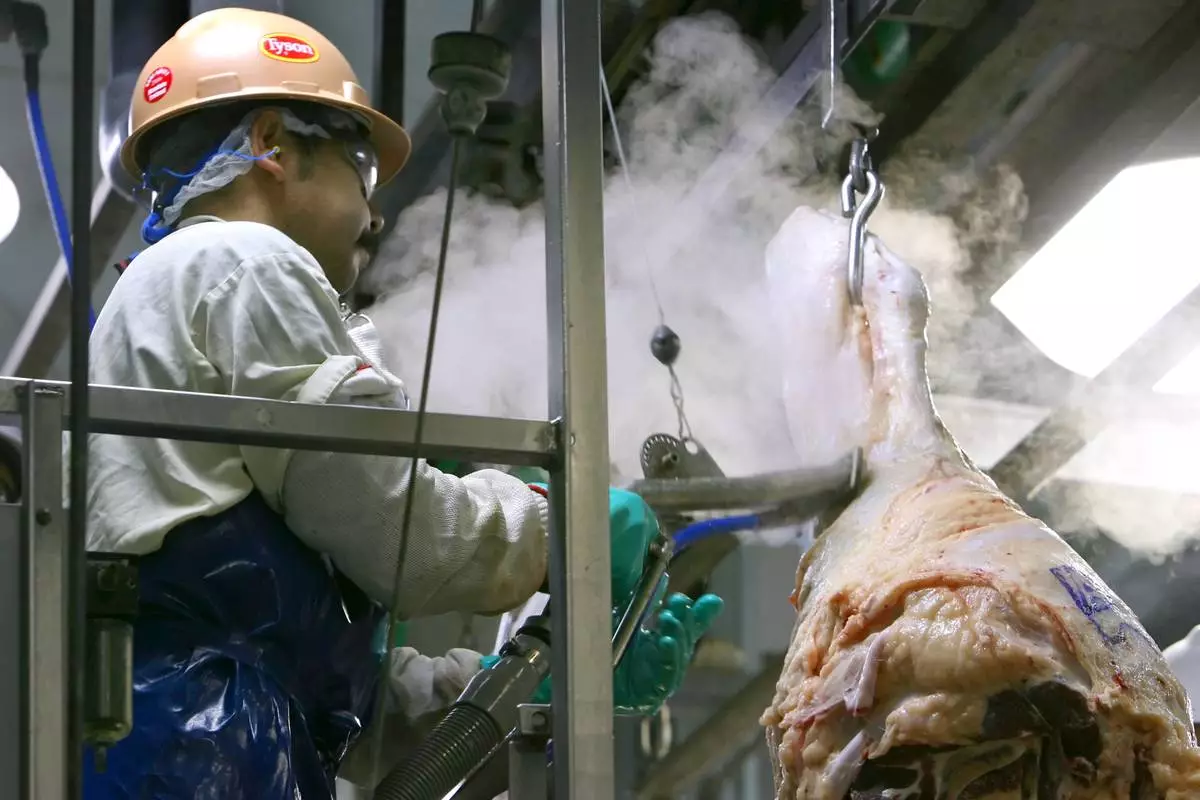
A worker on the line uses a steam vacuum on any incision areas on the carcass during a tour of the Tyson meat packing plant in Lexington, Neb., Wednesday, Nov. 14, 2007. (Kent Sievers/Omaha World-Herald via AP)
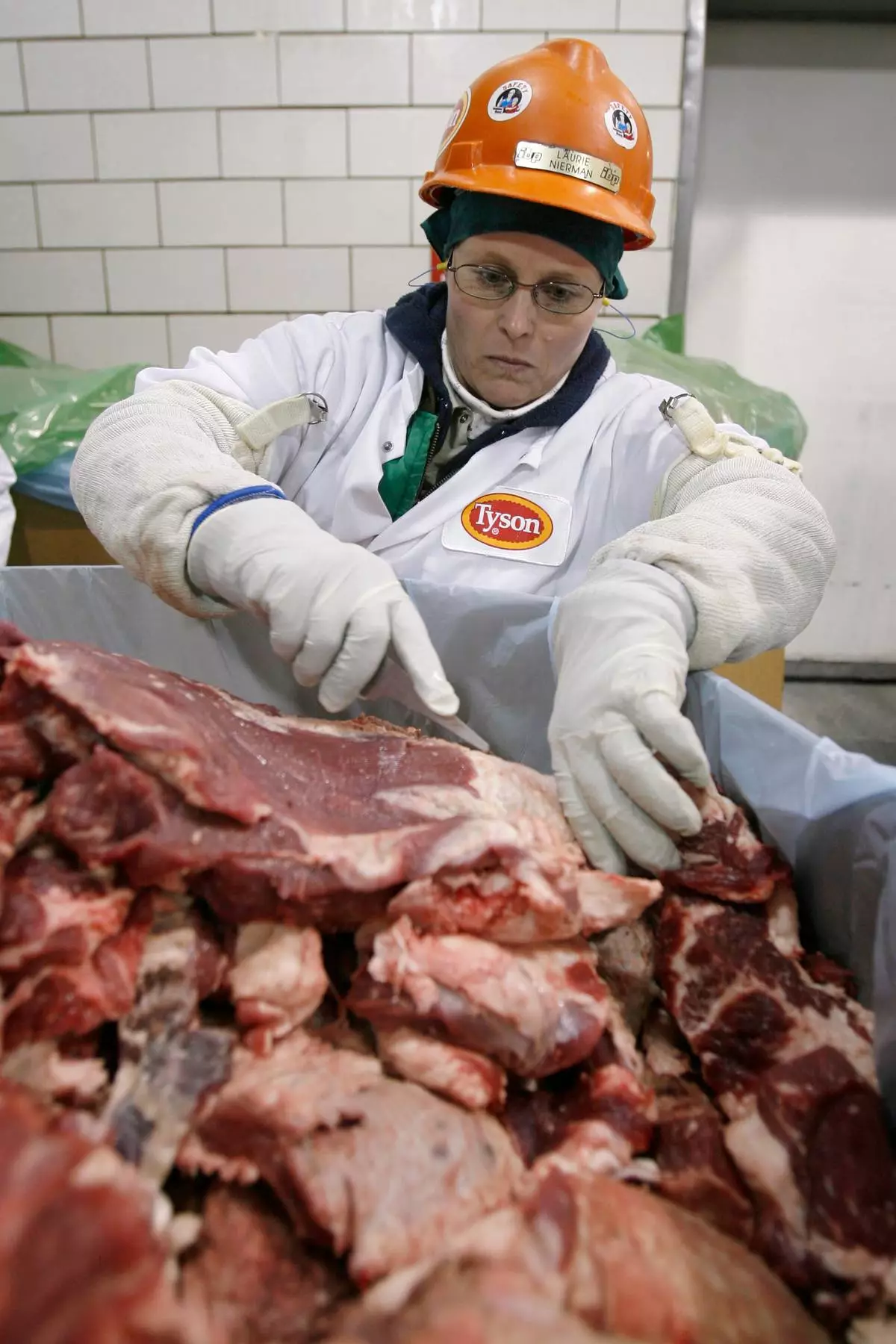
Laurie Nierman trims sample strips that will be tested for E. coli from batches of the plant's trimmings at the Tyson meat packing plant in Lexington, Neb., Wednesday, Nov. 14, 2007. (Kent Sievers/Omaha World-Herald via AP)