LONDON (AP) — After being elected in a landslide last year, Britain’s Labour Party government delivered a budget it billed as a one-off dose of tax hikes to fix the public finances, get debt down, ease the cost of living and spur economic growth.
A year on, inflation remains stubbornly high, government borrowing is up and the economy is turgid. The annual budget, due on Wednesday, is expected to bring more tax hikes in pursuit of the same elusive economic boom.
Click to Gallery
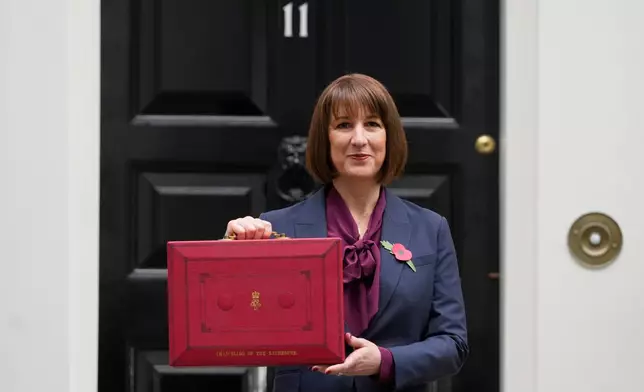
FILE - Britain's Chancellor of the Exchequer, Rachel Reeves, holds up the traditional red ministerial box containing her budget speech, as she poses for the media outside No 11 Downing Street, before departing to the House of Commons to deliver the budget in London, Wednesday, Oct. 30, 2024. (AP Photo/Kirsty Wigglesworth, File)
FILE - Britain's Chancellor of the Exchequer, Rachel Reeves, holds up the traditional red ministerial box containing her budget speech, as she poses for the media outside No 11 Downing Street, before departing to the House of Commons to deliver the budget in London, Wednesday, Oct. 30, 2024. (AP Photo/Kirsty Wigglesworth, File)
Britain's Prime Minister Keir Starmer helps to serve lunch during a visit to Welland Academy, Peterborough, England, Monday Nov. 24, 2025, and talk about the importance of free school meals and tackling the cost of living. (Joe Giddens/Pool via AP)
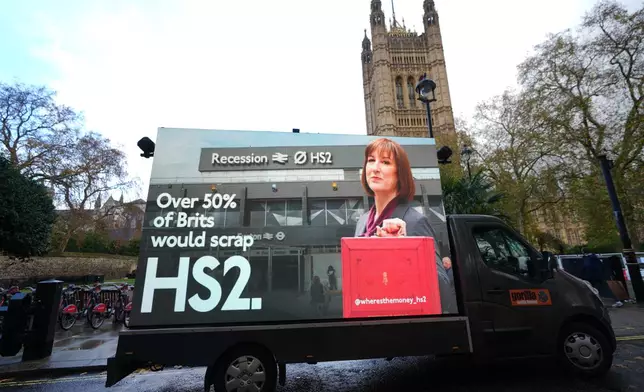
A van displays an electronic screen showing Britain's Chancellor Rachel Reeves ahead of Wednesday's Autumn Budget, in London, Monday, Nov. 24, 2025. (AP Photo/Kirsty Wigglesworth)
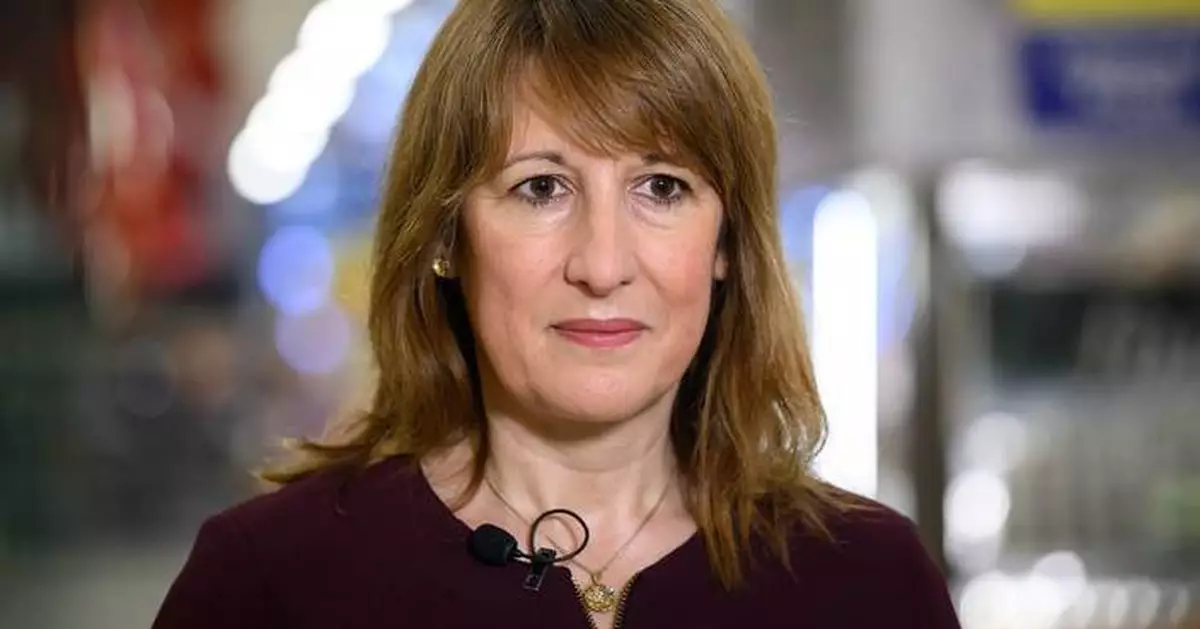
British Chancellor of the Exchequer Rachel Reeves speaks to the media during a visit to a branch of the Tesco supermarket chain in London, Wednesday Nov. 19, 2025 in. (Leon Neal/Pool Photo via AP)
Rain Newton-Smith, head of business group the Confederation of British Industry, said Monday that “it feels less like we’re on the move, and more like we’re stuck in ‘Groundhog Day.’”
It’s not just businesses who are concerned. Alarmed by the government’s consistently dire poll ratings, some Labour lawmakers are mulling the once-unthinkable idea of ousting Prime Minister Keir Starmer, who led them to victory less than 18 months ago.
Luke Tryl, director of pollster More in Common, said voters "don’t understand why there has not been positive change.
“This could be a last-chance saloon moment for the government."
The government says Treasury chief Rachel Reeves will make “tough but right decisions” in her budget to ease the cost of living, safeguard public services and keep debt under control.
She has limited room for maneuver. Britain's economy, the world's sixth-largest, has underperformed its long-run average since the global financial crisis of 2008-2009, and the center-left Labour government elected in July 2024 has struggled to deliver promised economic growth.
Like other Western economies, Britain’s public finances have been squeezed by the costs of the COVID-19 pandemic, the Russia-Ukraine war and U.S. President Donald Trump’s global tariffs. The U.K. bears the extra burden of Brexit, which has knocked billions off the economy since the country left the European Union in 2020.
The government currently spends more than 100 billion pounds ($130 billion) a year servicing the U.K.’s debt, which stands at around 95% of annual national income.
Adding to pressure is the fact that Labour governments historically have had to work harder than Conservative administrations to convince businesses and the financial markets that they are economically sound.
Reeves is mindful of how financial markets can react when the government’s numbers don’t add up. The short-lived premiership of Liz Truss ended in October 2022 after her package of unfunded tax cuts roiled financial markets, drove down the value of the pound and sent borrowing costs soaring.
Luke Hickmore, an investment director at Aberdeen Investments, said the bond market is the “ultimate reality check” for budget policy.
“If investors lose faith, the cost of borrowing rises sharply, and political leaders have little choice but to change course,” he said.
The government has ruled out public spending cuts of the kind seen during 14 years of Conservative government, and its attempts to cut Britain’s huge welfare bill have been stymied by Labour lawmakers.
That leaves tax increases as the government’s main revenue-raising option.
“We’re very much not in the position that Rachel Reeves hoped to be in,” said Jill Rutter, a senior fellow at the Institute for Government think tank.
Instead of an economy that has “sparked into life,” enabling higher spending and lower taxes, Rutter said Reeves must decide whether “to fill a big fiscal black hole with tax increases or spending cuts.”
The budget comes after weeks of messy mixed messaging that saw Reeves signal she would raise income tax rates – breaking a key election promise – before hastily reversing course.
In a Nov. 4 speech, Reeves laid the groundwork for income tax hikes by arguing that the economy is sicker and the global outlook worse than the government knew when it took office.
After an outcry among Labour lawmakers, and a better-than-expected update on the public finances, the government signaled it preferred a smorgasbord of smaller revenue-raising measures such as a “mansion tax” on expensive homes and a pay-per-mile tax for electric vehicle drivers.
The government will try to ease the sting with sweeteners including an above-inflation boost to pension payments for millions of retirees and a freeze on train fares.
Critics say more taxes on employees and businesses, following tax hikes on businesses in last year’s budget, will push the economy further into a low-growth doom loop.
Patrick Diamond, professor in public policy at Queen Mary University of London, said satisfying both markets and voters is difficult.
“You can give markets confidence, but that probably means raising taxes, which is very unpopular with voters,” he said. “On the other hand, you can give voters confidence by trying to minimize the impact of tax rises, but that makes markets nervous because they feel that the government doesn’t have a clear fiscal plan.”
The budget comes as Starmer is facing mounting concern from Labour lawmakers over his dire poll ratings. Opinion polls consistently put Labour well behind the hard-right Reform UK party led by Nigel Farage.
The prime minister’s office sparked a flurry of speculation earlier this month by preemptively telling news outlets that Starmer would fight any challenge to his leadership. What looked like an attempt to strengthen Starmer’s authority backfired. The reports set off jitters verging on panic among Labour lawmakers, who fear the party is heading for a big defeat at the next election.
That election does not have to be held until 2029, and the government continues to hope that its economic measures will spur higher growth and ease financial pressures.
But analysts say a misfiring budget could be another nail in the coffin of Starmer’s government.
“Both Starmer and Reeves are really unpopular,” Rutter said. “They may be hanging on for now, but I don’t think people will be giving you great odds that they’ll necessarily last the course of the Parliament,” which runs until the next election.
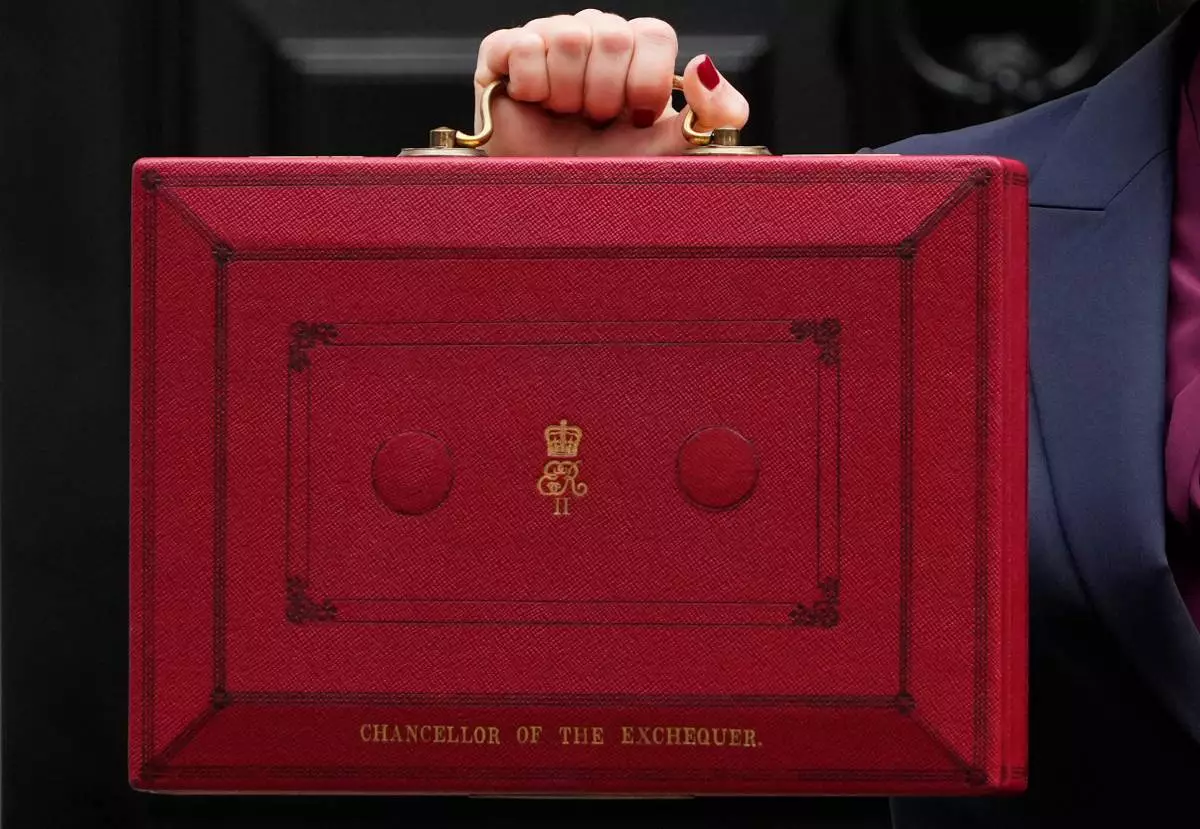
FILE - Britain's Chancellor of the Exchequer, Rachel Reeves, holds up the traditional red ministerial box containing her budget speech, as she poses for the media outside No 11 Downing Street, before departing to the House of Commons to deliver the budget in London, Wednesday, Oct. 30, 2024. (AP Photo/Kirsty Wigglesworth, File)
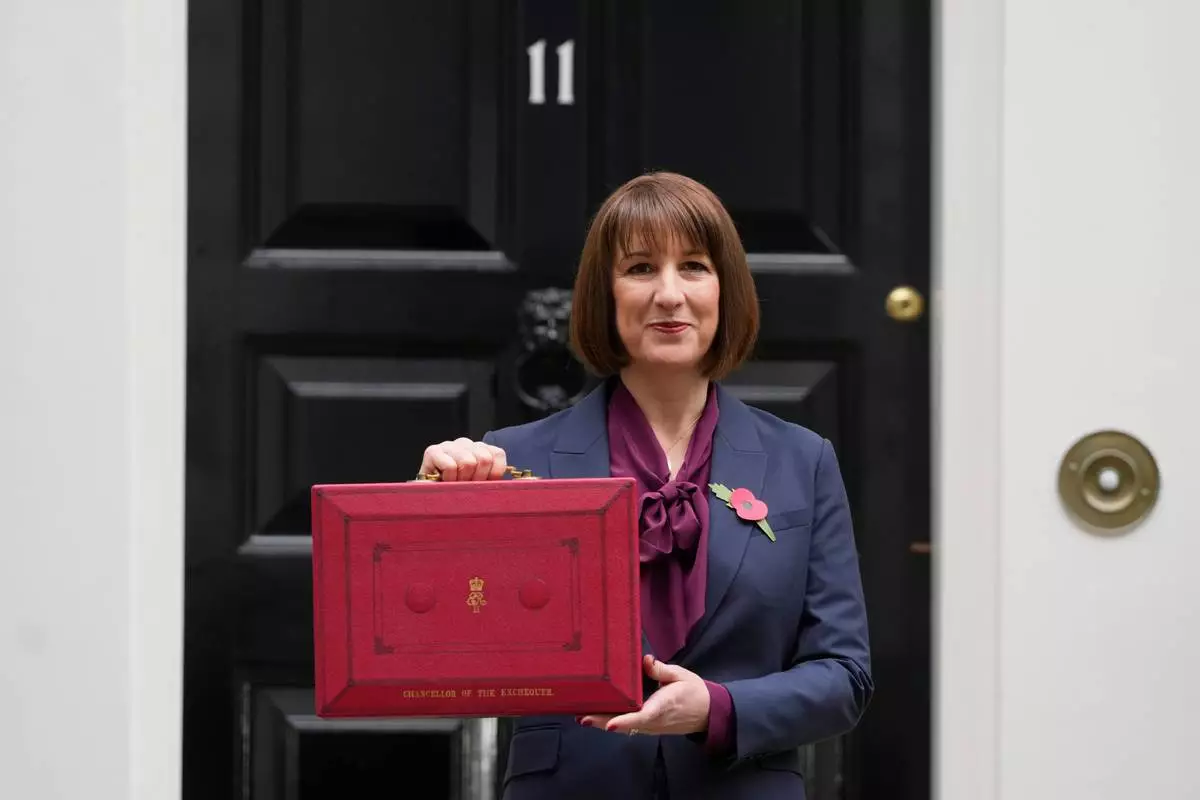
FILE - Britain's Chancellor of the Exchequer, Rachel Reeves, holds up the traditional red ministerial box containing her budget speech, as she poses for the media outside No 11 Downing Street, before departing to the House of Commons to deliver the budget in London, Wednesday, Oct. 30, 2024. (AP Photo/Kirsty Wigglesworth, File)

Britain's Prime Minister Keir Starmer helps to serve lunch during a visit to Welland Academy, Peterborough, England, Monday Nov. 24, 2025, and talk about the importance of free school meals and tackling the cost of living. (Joe Giddens/Pool via AP)
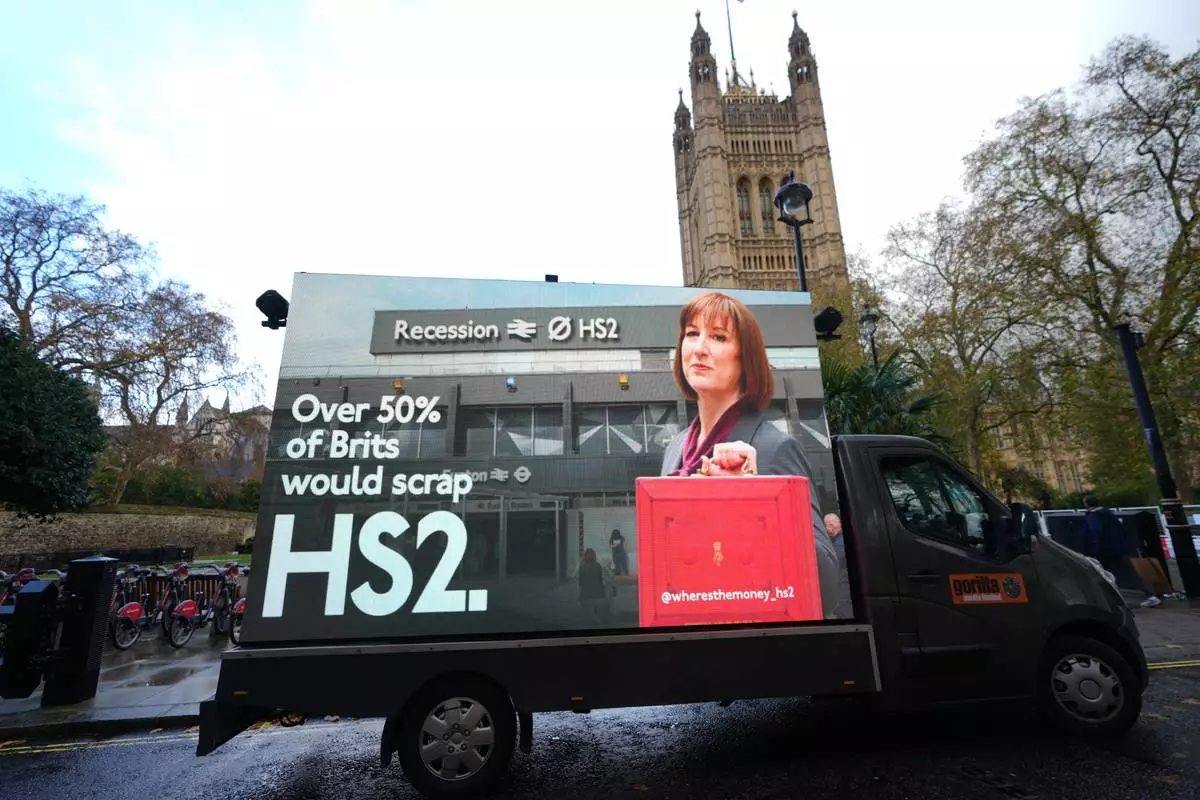
A van displays an electronic screen showing Britain's Chancellor Rachel Reeves ahead of Wednesday's Autumn Budget, in London, Monday, Nov. 24, 2025. (AP Photo/Kirsty Wigglesworth)

British Chancellor of the Exchequer Rachel Reeves speaks to the media during a visit to a branch of the Tesco supermarket chain in London, Wednesday Nov. 19, 2025 in. (Leon Neal/Pool Photo via AP)
CAPE CANAVERAL, Fla. (AP) — Four astronauts embarked on a high-stakes flight around the moon Wednesday, humanity’s first lunar voyage in more than half a century and the thrilling leadoff in NASA’s push toward a landing in two years.
Carrying three Americans and one Canadian, the 32-story rocket rose from NASA’s Kennedy Space Center where tens of thousands gathered to witness the dawn of this new era. Crowds also jammed the surrounding roads and beaches, reminiscent of the Apollo moonshots in the 1960s and ’70s. It is NASA’s biggest step yet toward establishing a permanent lunar presence.
“On this historic mission, you take with you the heart of this Artemis team, the daring spirit of the American people and our partners across the globe, and the hopes and dreams of a new generation,” said Charlie Blackwell-Thompson, the launch director. “Good luck, Godspeed Artemis II. Let’s go.”
Artemis II set sail from the same Florida launch site that sent Apollo’s explorers to the moon so long ago. The handful still alive cheered this next generation’s grand adventure as the Space Launch System rocket thundered into the early evening sky, a nearly full moon beckoning some 248,000 miles (400,000 kilometers) away.
Five minutes into the flight, Commander Reid Wiseman saw the team’s target: “We have a beautiful moonrise, we’re headed right at it,” he said from the capsule. On board with him are pilot Victor Glover, Christina Koch and Canada's Jeremy Hansen. It was the most diverse lunar crew ever with the first woman, person of color and non-U. S. citizen riding in NASA’s new Orion capsule.
Tensions were high earlier in the day as hydrogen fuel started flowing into the rocket. Dangerous hydrogen leaks erupted during a countdown test earlier this year, forcing a lengthy flight delay.
To NASA’s relief, no significant hydrogen leaks occurred. The launch team loaded more than 700,000 gallons of fuel (2.6 million liters) into the 32-story Space Launch System rocket on the pad, a smooth operation that set the stage for the Artemis II crew to board.
NASA also had to deal with some issues beforehand but was able to resolve them and allow the launch to proceed without delay, one of them related to commands not getting through to the rocket’s flight-termination system, which is needed to send a self-destruct signal in case the rocket veers off course and threatens populated areas.
That issue was quickly resolved, according to NASA. It also had to troubleshoot one of the batteries in the capsule’s launch-abort system. Launch controllers scrambled to understand why the battery’s temperature was out of limit. Ultimately, it didn't prevent the launch from taking place.
The astronauts will stick close to home for the first 25 hours of their 10-day test flight, checking out the capsule in orbit around Earth before firing the main engine that will propel them to the moon.
They won’t pause for a stopover or orbit the moon like Apollo 8’s first lunar visitors did so famously on Christmas Eve 1968, reading from Genesis. But they stand to become the most distant humans ever when their capsule zooms past the moon and continues another 4,000 miles (6,400 kilometers) beyond, before making a U-turn and tearing straight home to a splashdown in the Pacific.
Once settled in a high orbit around Earth, the astronauts planned to assume manual control and practice steering their capsule around the rocket’s detached upper stage, venturing within 33 feet (10 meters). NASA wants to know how Orion handles in case the self-flying feature fails and the pilots need to take control.
Four days later during the lunar flyby, the moon will appear to be the size of a basketball held at arm’s length. The astronauts will take turns peering through Orion’s windows with cameras. If the lighting is right, they should see features never before viewed through human eyes. They’ll also catch snippets of a total solar eclipse, donning eclipse glasses as the moon briefly blocks the sun from their perspective and the corona is revealed.
All of NASA’s moon plans — a surge in launches over the next several years leading to a sustainable moon base for astronauts assisted by robotic rovers and drones — hinge on Artemis II going well.
It’s been more than three years since Artemis I, the only other time NASA’s SLS rocket and Orion capsule have soared. With no one aboard, the Artemis I capsule lacked life-support equipment and other crew essentials like a water dispenser and toilet.
These systems are now making their space debut on Artemis II, ratcheting up the risk. That’s why NASA is waiting a full day before committing Wiseman and his crew to a four-day trip to the moon and four-day journey back.
“There’s always been a lot riding on this mission,” NASA’s Lori Glaze said ahead of launch. But the teams are even more “energized” now that the space agency is finally accelerating the lunar launch pace and laser-focusing on surface operations — seismic changes announced recently by new administrator Jared Isaacman.
With half the world’s population not yet born when NASA’s 12 moonwalkers left their boot prints in the gray lunar dust, Artemis offers a fresh beginning, NASA’s science mission chief Nicky Fox said earlier this week.
“There are a lot of people who don’t remember Apollo. There are generations who weren’t alive when Apollo launched. This is their Apollo,” said Fox, who was 4 when Apollo 17 closed out the era.
NASA is in it for the long haul this time. Unlike Apollo, which focused on fast flags and footprints in a breakneck race against the Soviet Union, Artemis is striving for a sustainable moon base elaborate enough to satisfy even the most hard-core science fiction fans. But make no mistake: Isaacman and the Trump Administration want the next boot prints to be made by Americans, not the Chinese.
Until Isaacman’s program makeover, Artemis III was crawling toward a moon landing no sooner than 2029. The billionaire spacewalker slid in a new Artemis III for 2027 so astronauts could practice docking their Orion capsule with a lunar lander in orbit around Earth. Astronauts’ momentous landing near the moon’s south pole shifted to Artemis IV in 2028 — two years before an anticipated Chinese crew’s arrival.
Like Apollo 13 — astronauts’ only moon landing miss — Artemis II will use a free-return, lunar flyby trajectory to get home with gravity’s tug and a minimum of gas. The gravity of both the moon and Earth will provide much if not most of the oomph to keep Orion on its out-and-back, figure-eight loop.
The danger is right up there for Artemis II. NASA has refused to release its risk assessment for the mission. Managers contend it’s better than 50-50 — the usual odds for a new rocket — but how much more is murky.
The SLS rocket leaked flammable hydrogen fuel during ground tests, a recurring problem that engineers still do not completely understand. The hydrogen leaks and unrelated helium blockages stalled the flight for two months, coming on top of years of vexing delays and cost overruns. Both problems also thwarted Artemis I, whose capsule returned with excessive heat shield damage. To NASA’s relief, Wednesday’s countdown was leak-free but a few issues cropped up in the final hours.
Beating the Soviet Union to the moon made the huge risks acceptable for Apollo, said Charlie Duke, one of only four surviving moonwalkers.
“I’m cheering you on,” Duke said in a note to Wiseman and his crew before their flight.
During a weekend news conference, Koch stressed how humanity’s path to Mars goes through the moon, the proving ground for points beyond.
“It is our strong hope that this mission is the start of an era where everyone, every person on Earth, can look at the moon and think of it as also a destination,” she said.
Added Glover: “It’s the story of humanity. Not Black history, not women’s history, but that it becomes human history.”
The Associated Press Health and Science Department receives support from the Howard Hughes Medical Institute’s Department of Science Education and the Robert Wood Johnson Foundation. The AP is solely responsible for all content.
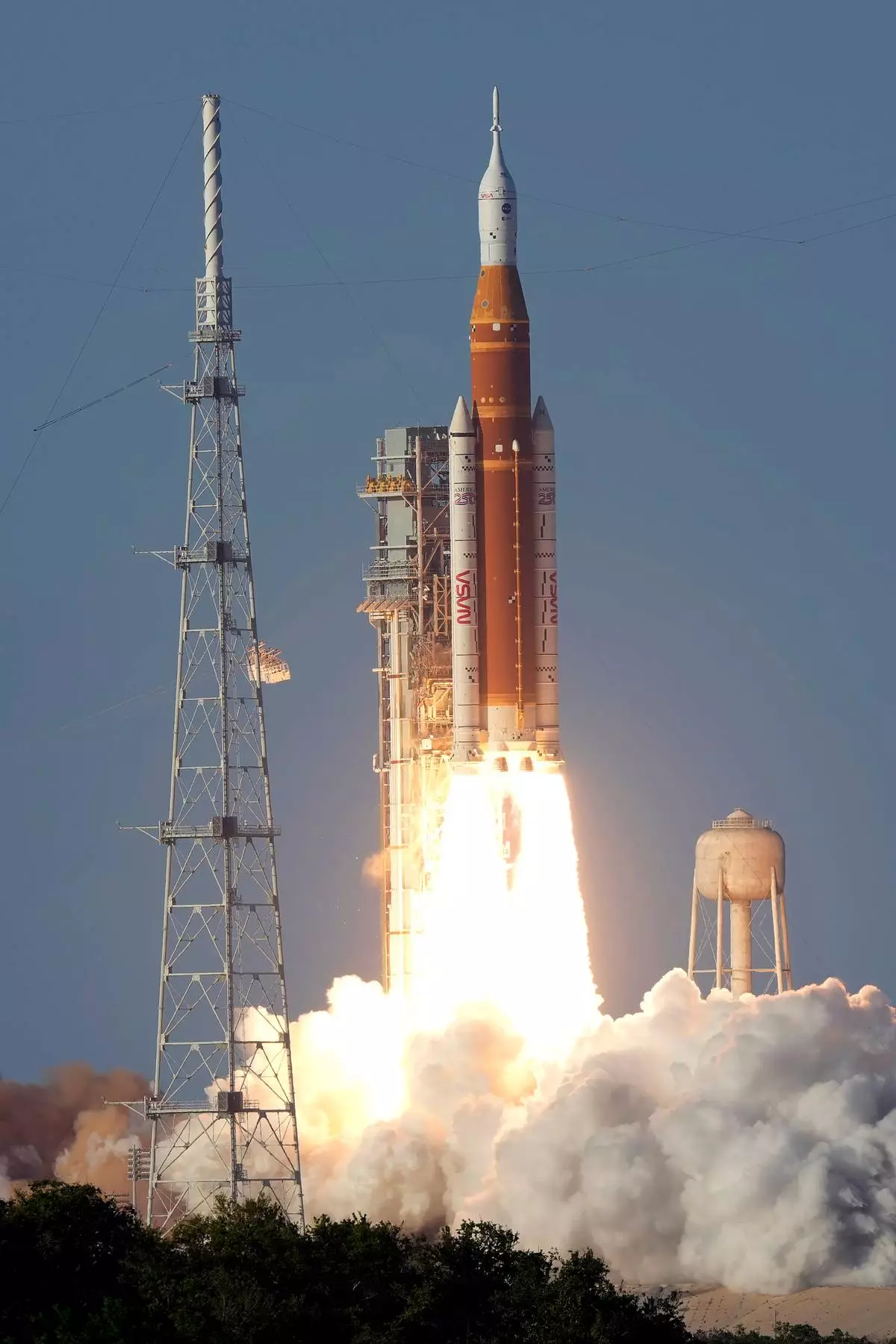
NASA's Artemis II moon rocket lifts off from the Kennedy Space Center's Launch Pad 39-B Wednesday, April 1, 2026, in Cape Canaveral, Fla. (AP Photo/Chris O'Meara)
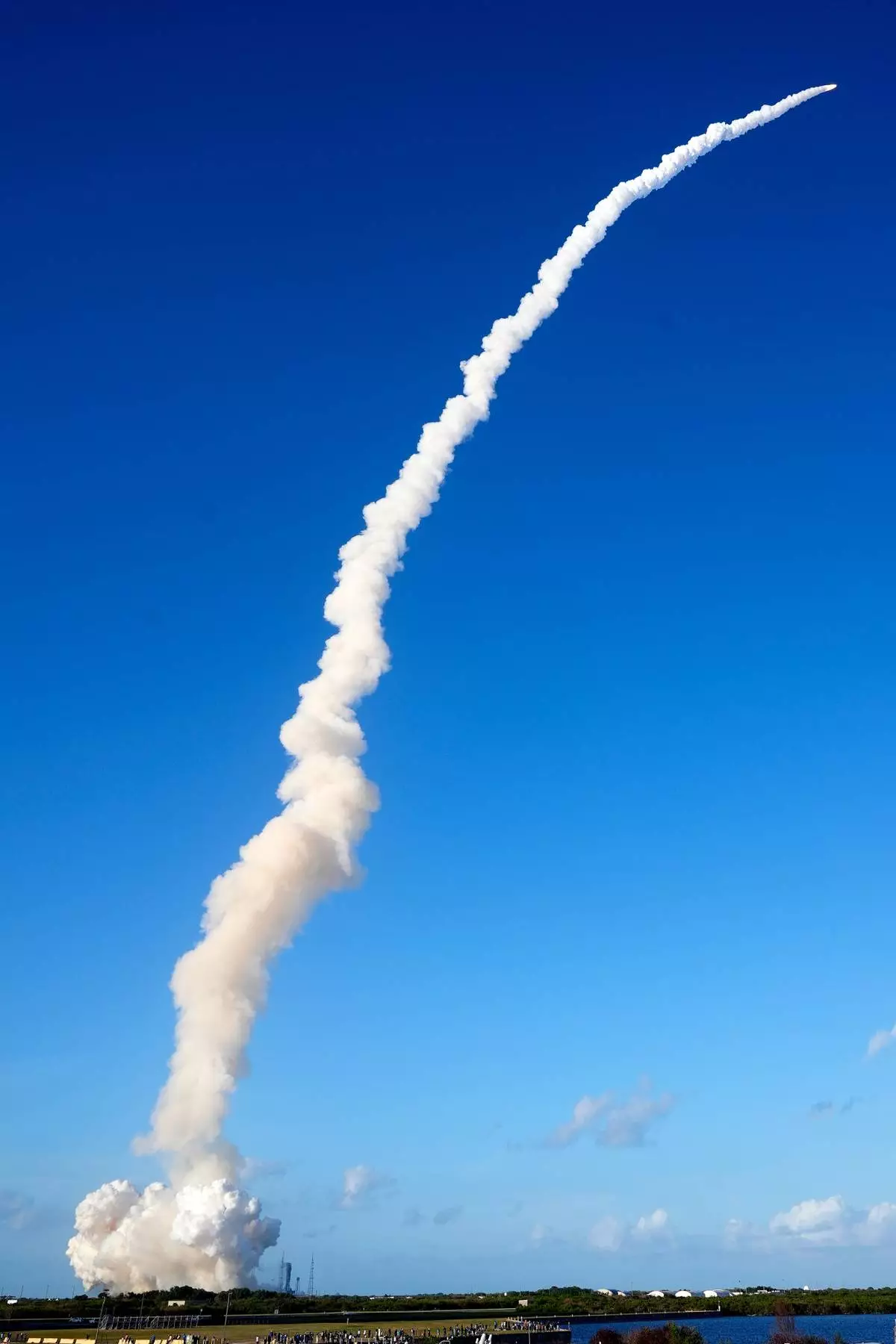
NASA's Artemis II moon rocket lifts off from the Kennedy Space Center's Launch Pad 39-B Wednesday, April 1, 2026, in Cape Canaveral, Fla. (AP Photo/Chris O'Meara)
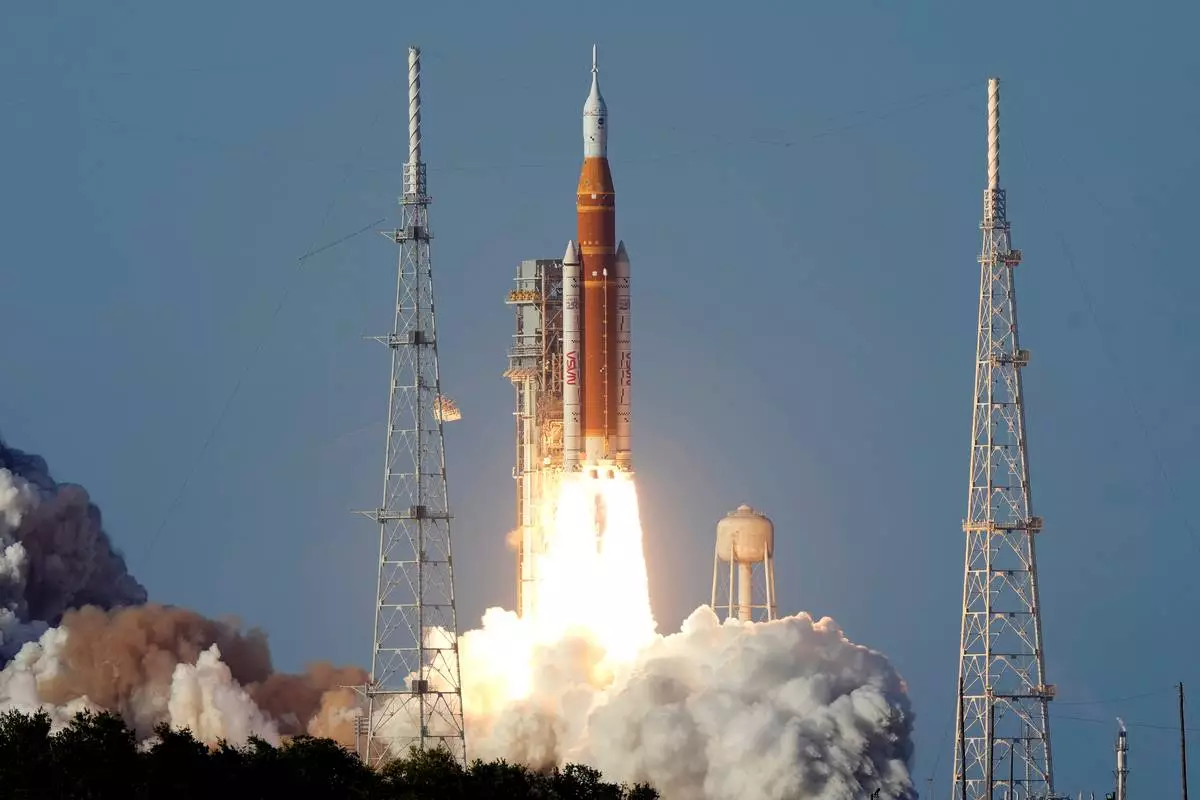
NASA's Artemis II moon rocket lifts off from the Kennedy Space Center's Launch Pad 39-B Wednesday, April 1, 2026, in Cape Canaveral, Fla. (AP Photo/Chris O'Meara)
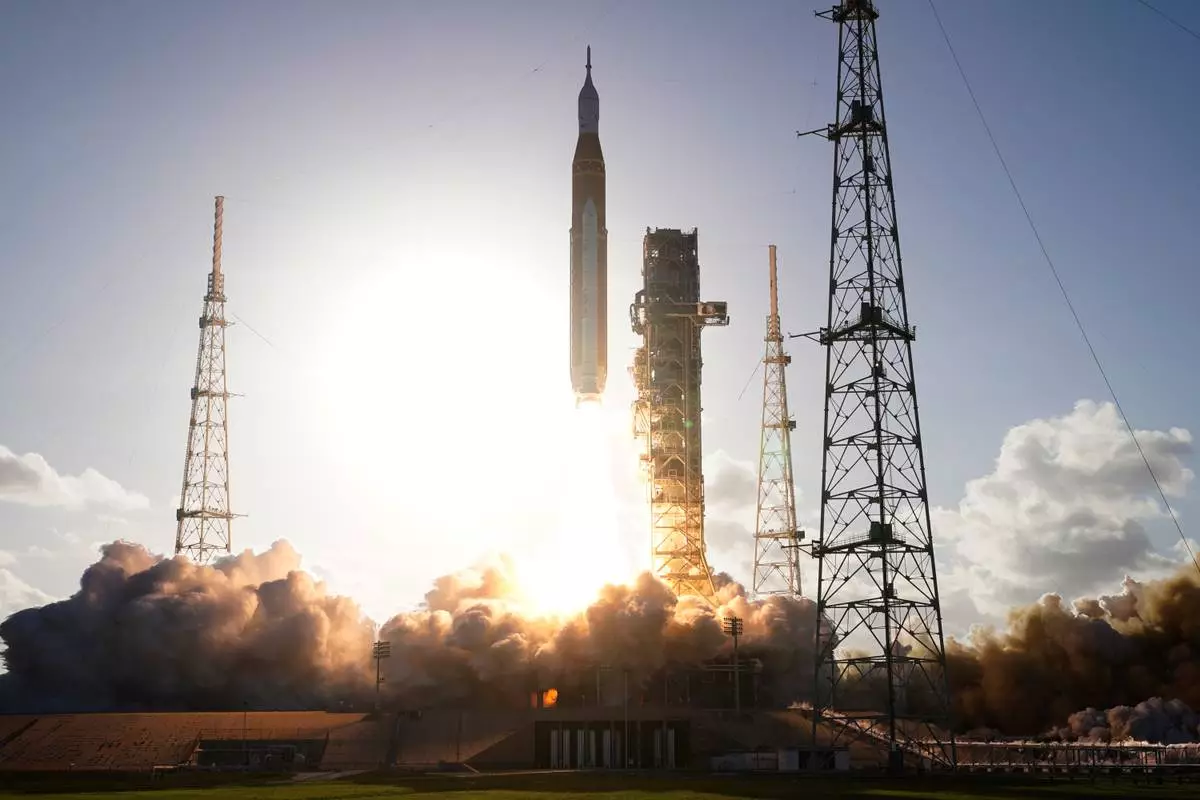
The NASA Artemis II SLS (Space Launch System) rocket with the Orion spacecraft launches at the Kennedy Space Center, Wednesday, April 1, 2026, in Cape Canaveral, Fla. (AP Photo/John Raoux)
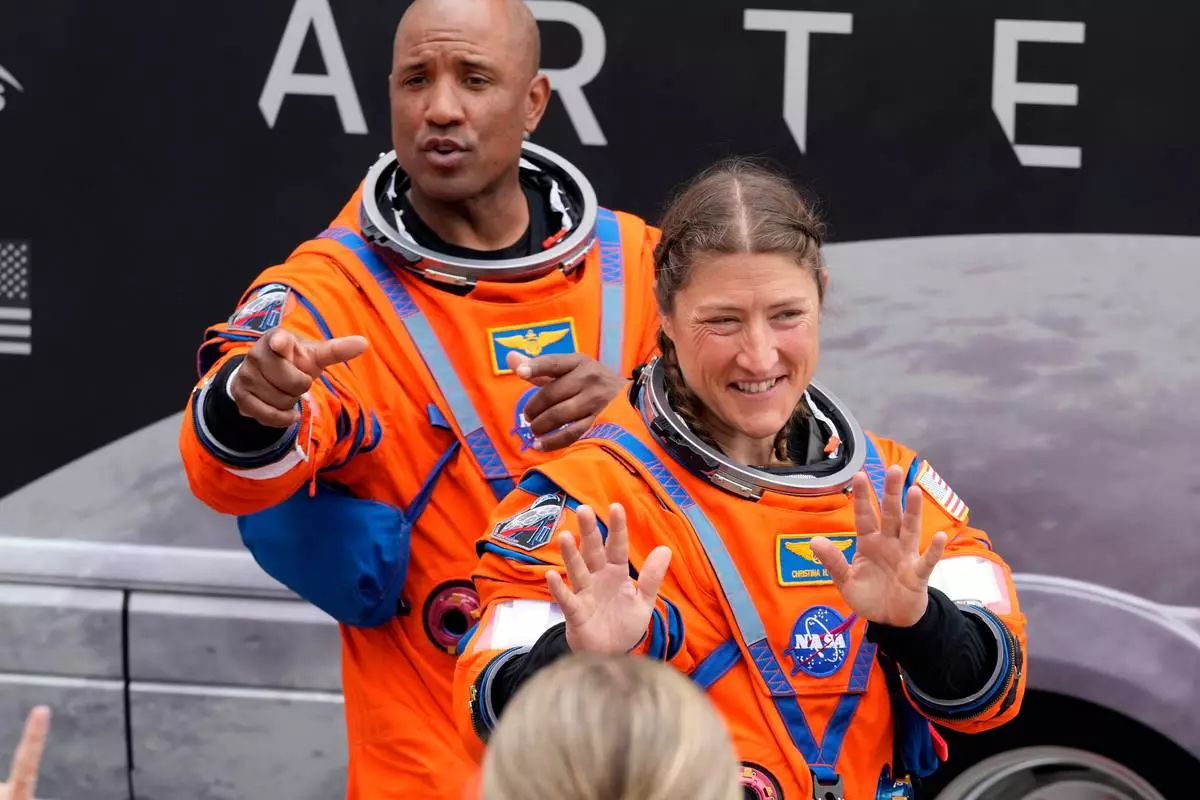
Astronauts, Mission Specialist Christina Koch, right, and Pilot Victor Glover wave to family members as they leave the Operations and Checkout Building for a trip to Launch Pad 39-B and a planned liftoff on NASA's Artermis II moon rocket at the Kennedy Space Center Wednesday, April 1, 2026, in Cape Canaveral, Fla. (AP Photo/Chris O'Meara)
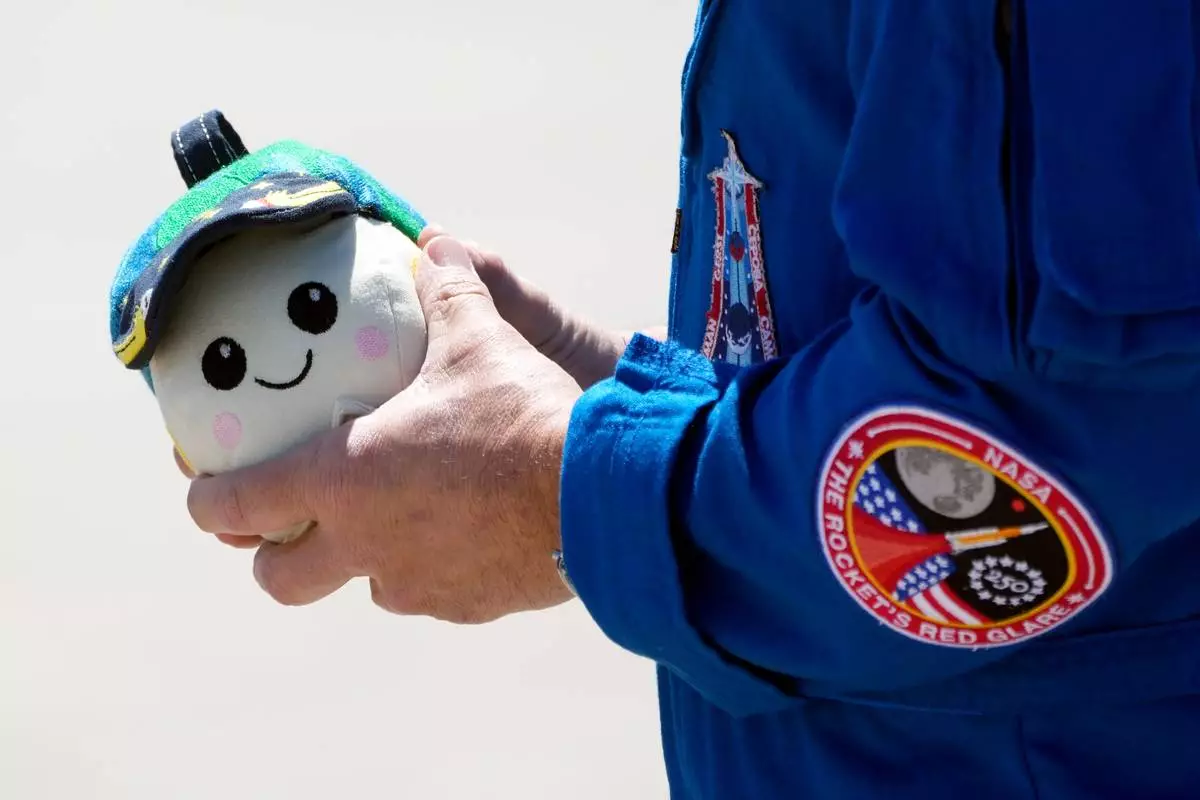
Artemis 2 crew member Commander Reid Wiseman holds "Rise" after the crew's arrival at the Kennedy Space Center Friday, March 27, 2026, in Cape Canaveral, Fla. (AP Photo/Chris O'Meara)

Commander Reid Wiseman poses for a photo with family members after leaving the Operations and Checkout Building for a trip to Launch Pad 39-B and a planned liftoff on NASA's Artermis II moon rocket at the Kennedy Space Center Wednesday, April 1, 2026, in Cape Canaveral, Fla. (AP Photo/Chris O'Meara)

Astronauts, from left, Mission Specialist Jeremy Hansen, of Canada,, Pilot Victor Glover, Commander Reid Wiseman, and Mission Specialist Christina Koch pose for a photo after leaving the Operations and Checkout Building for a trip to Launch Pad 39-B and a planned liftoff on NASA's Artermis II moon rocket at the Kennedy Space Center Wednesday, April 1, 2026, in Cape Canaveral, Fla. (AP Photo/Chris O'Meara)
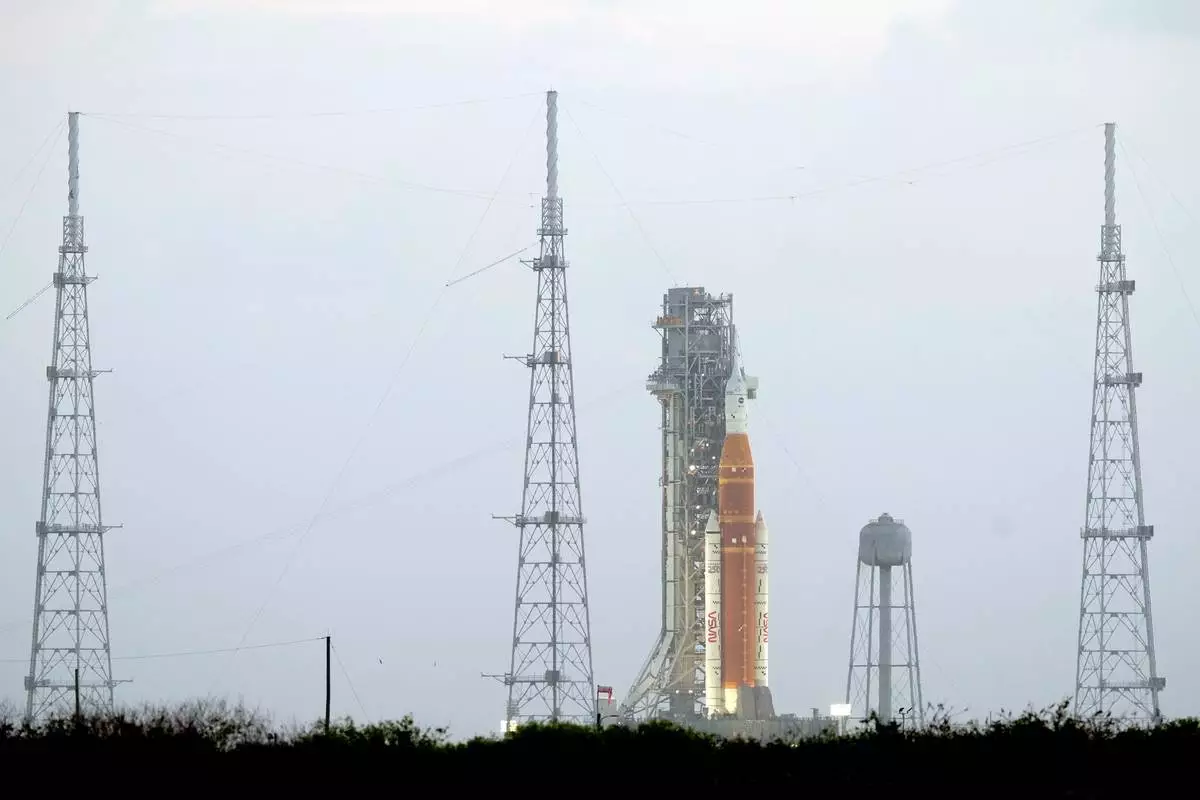
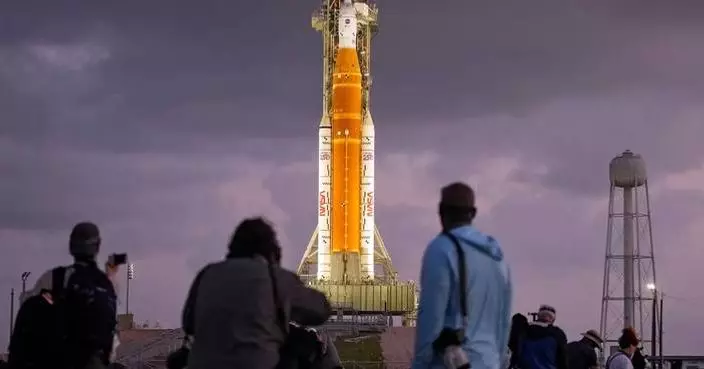
NASA's Artermis II moon rocket sits on Launch Pad 39-B at the Kennedy Space Center hours ahead of a planned launch attempt Wednesday, April 1, 2026, in Cape Canaveral, Fla. (AP Photo/Chris O'Meara)
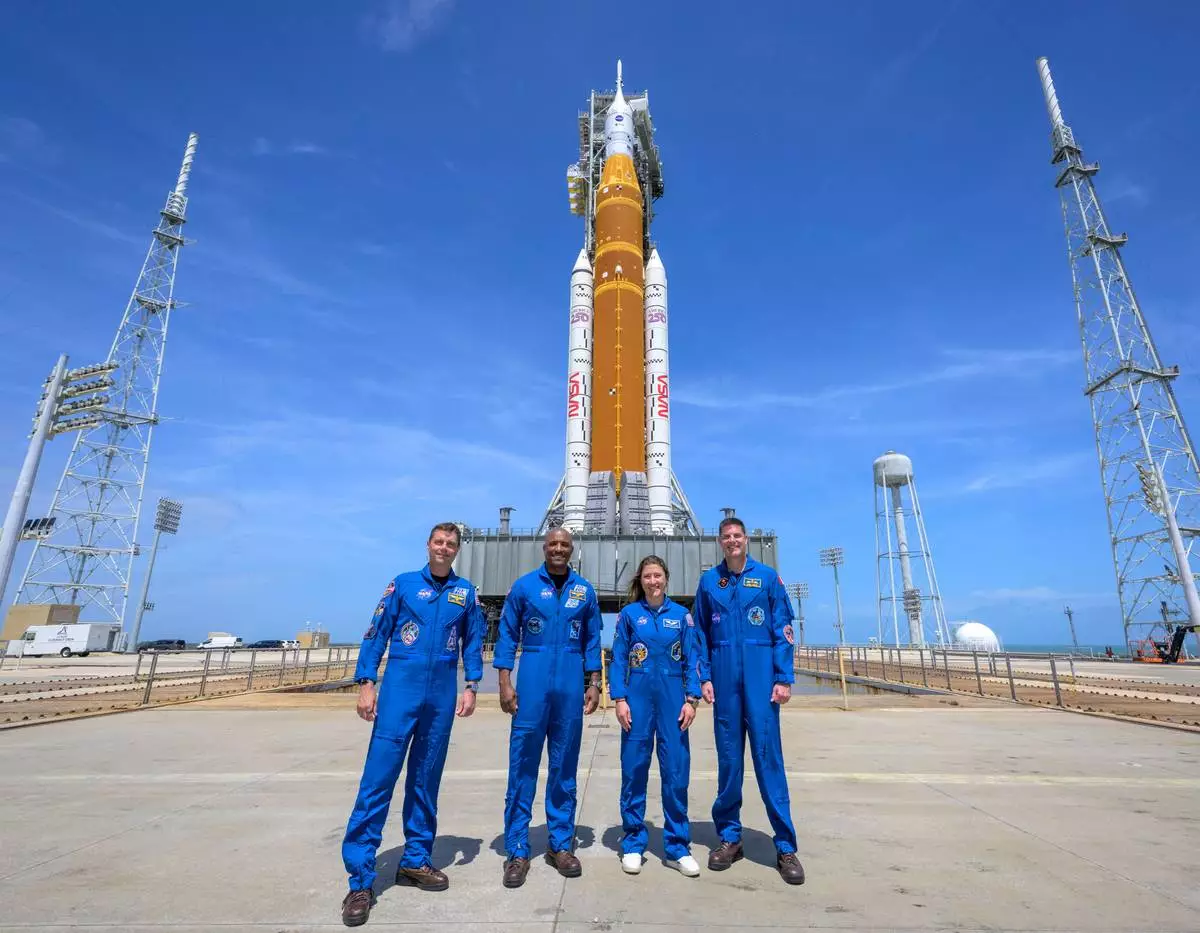
This photo provided by NASA shows NASA astronauts Reid Wiseman, Artemis II commander, from left, Victor Glover, Artemis II pilot, Christina Koch, Artemis II mission specialist, and CSA (Canadian Space Agency) astronaut Jeremy Hansen, Artemis II mission specialist, right, in a group photograph as they visit NASA's Artemis II SLS (Space Launch System) rocket and Orion spacecraft, Monday, March 30, 2026, at Launch Complex 39B of NASA's Kennedy Space Center, in Cape Canaveral, Fla. (Bill Ingalls/NASA via AP)
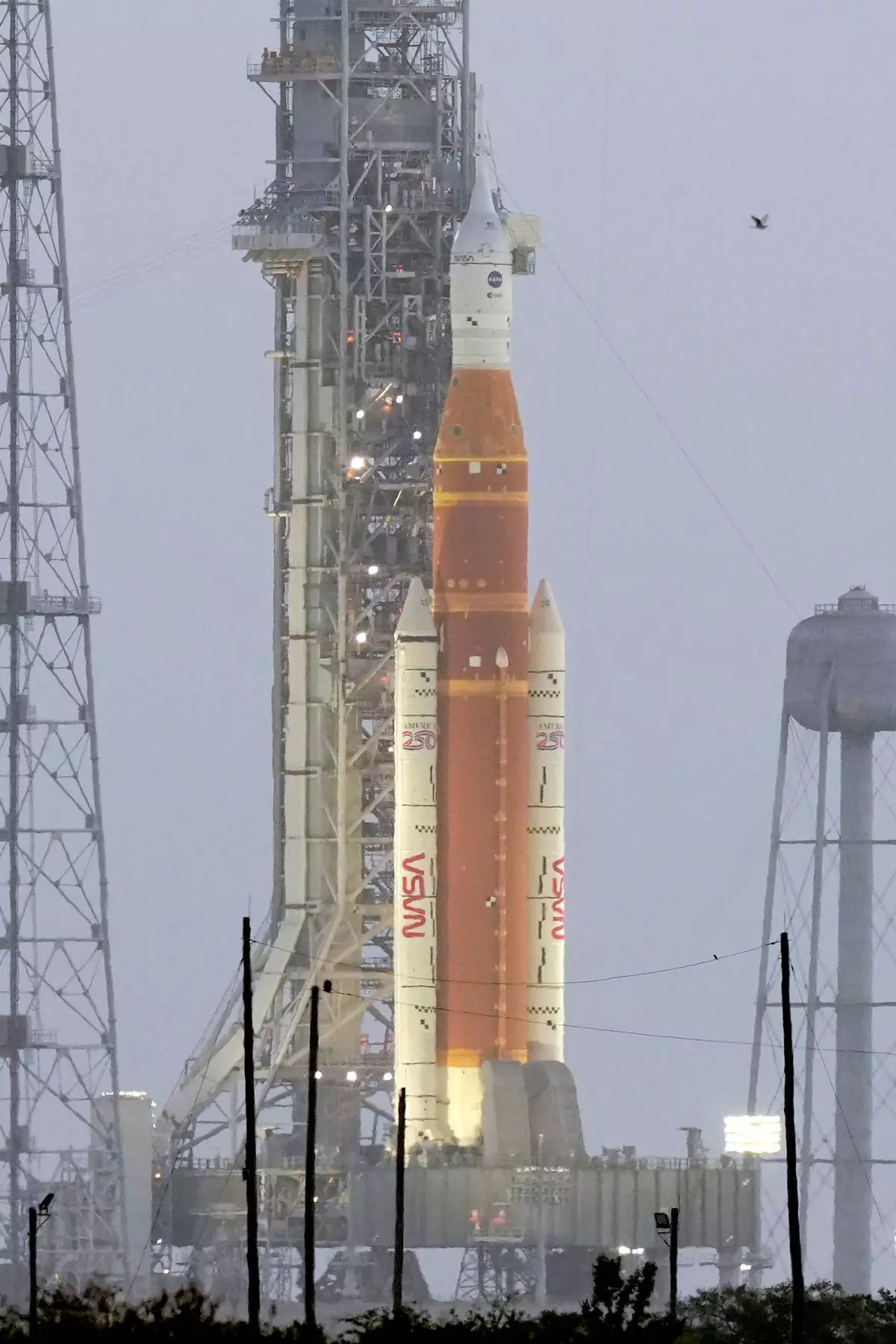
NASA's Artermis II moon rocket sits on Launch Pad 39-B at the Kennedy Space Center hours ahead of planned liftoff Wednesday, April 1, 2026, in Cape Canaveral, Fla. (AP Photo/Chris O'Meara)