Skip to Content Facebook Feature Image

AST SpaceMobile Expands Manufacturing Footprint in Both Texas and Florida, Accelerates Next-Generation BlueBird Production

Business

AST SpaceMobile Expands Manufacturing Footprint in Both Texas and Florida, Accelerates Next-Generation BlueBird Production
Business

Business

AST SpaceMobile Expands Manufacturing Footprint in Both Texas and Florida, Accelerates Next-Generation BlueBird Production

2025-11-25 21:01 Last Updated At:11-26 15:53

MIDLAND, Texas--(BUSINESS WIRE)--Nov 25, 2025--

AST SpaceMobile, Inc. (“AST SpaceMobile”) (NASDAQ: ASTS), the company building the first and only space-based cellular broadband network accessible directly by everyday smartphones, designed for both commercial and government applications, today announced the addition of two new manufacturing sites in Texas and Florida, as it continues to expand its operations. The company now employs more than 1,800 professionals, the majority based at its West Texas headquarters.

This press release features multimedia. View the full release here: https://www.businesswire.com/news/home/20251125348790/en/

This growth underscores AST SpaceMobile’s long-standing commitment to advancing American space innovation and leadership while expanding U.S. jobs. Texas, the company’s primary manufacturing hub, is now home to five facilities, including a new site in Midland, where AST SpaceMobile builds its highly sophisticated BlueBird satellites from raw materials to finished spacecraft, supported by 3,800 U.S. patents and patent-pending claims. Complementing this Texas footprint is the company’s Maryland location, as well as a newly added facility in Homestead, Florida, which increases production capacity and extends AST SpaceMobile’s presence into another business-friendly state.

The company is 95% vertically integrated, with all major manufacturing processes kept under U.S. control . AST SpaceMobile continues to make significant investment in expanding U.S. facilities, advancing manufacturing and working capabilities, a foundation that enables continued growth and leadership in space-based cellular broadband connectivity.

“Our roots are firmly in Texas, and always will be,” said Abel Avellan, Founder, Chairman and CEO of AST SpaceMobile. “As we accelerate production of our next-generation BlueBird satellites, the expansion allows us to increase capacity, strengthen our supply chain, and bring even more high-technology manufacturing work back to the United States. This is about building more satellites, faster - and doing it right here at home so we can deliver on our mission to close the connectivity gaps and deliver cellular broadband where it is needed the most.”

AST SpaceMobile’s next-generation BlueBird satellites feature the most advanced cellular broadband communications technologies for low Earth orbit, including the largest phased-array antennas ever built - at 2,400 square feet, custom power systems, and the proprietary AST5000 ASIC, designed to deliver up to 10 times the bandwidth capacity of the BlueBird satellites in orbit today, enabling peak data transmission speeds up to 120 Mbps, supporting voice, broadband data, and video applications. Producing these spacecrafts at scale requires deep vertical integration, specialized tooling, secure U.S.-based manufacturing lines, and the ingenuity of the company’s world-class engineers whose expertise makes this level of technological achievement possible.

AST SpaceMobile continues to work alongside its U.S. strategic partners, including AT&T, Verizon, American Tower, and Google, to deploy a global satellite network capable of delivering cellular broadband connectivity directly to everyday smartphones.

About AST SpaceMobile

AST SpaceMobile is building the first and only global cellular broadband network in space to operate directly with standard, unmodified mobile devices based on our extensive IP and patent portfolio and designed for both commercial and government applications. Our engineers and space scientists are on a mission to eliminate the connectivity gaps faced by today’s five billion mobile subscribers and finally bring broadband to the billions who remain unconnected. For more information, follow AST SpaceMobile on YouTube, X (Formerly Twitter), LinkedIn and Facebook. Watch this video for an overview of the SpaceMobile mission.

Forward-Looking Statements

This communication contains “forward-looking statements” that are not historical facts, and involve risks and uncertainties that could cause actual results of AST SpaceMobile to differ materially from those expected and projected. These forward-looking statements can be identified by the use of forward-looking terminology, including the words “believes,” “estimates,” “anticipates,” “expects,” “intends,” “plans,” “may,” “will,” “would,” “potential,” “projects,” “predicts,” “continue,” or “should,” or, in each case, their negative or other variations or comparable terminology. These forward-looking statements involve significant risks and uncertainties that could cause the actual results to differ materially from the expected results. Most of these factors are outside AST SpaceMobile’s control and are difficult to predict.

Factors that could cause such differences include, but are not limited to: (i) expectations regarding AST SpaceMobile’s strategies and future financial performance, including AST’s future business plans or objectives, expected functionality of the SpaceMobile Service, anticipated timing of the launch of the Block 2 BlueBird satellites, anticipated demand and acceptance of mobile satellite services, prospective performance and commercial opportunities and competitors, the timing of obtaining regulatory approvals, ability to finance its research and development activities, commercial partnership acquisition and retention, products and services, pricing, marketing plans, operating expenses, market trends, revenues, liquidity, cash flows and uses of cash, capital expenditures, and AST SpaceMobile’s ability to invest in growth initiatives; (ii) the negotiation of definitive agreements with mobile network operators relating to the SpaceMobile Service that would supersede preliminary agreements and memoranda of understanding and the ability to enter into commercial agreements with other parties or government entities; (iii) the ability of AST SpaceMobile to grow and manage growth profitably and retain its key employees and AST SpaceMobile’s responses to actions of its competitors and its ability to effectively compete; (iv) changes in applicable laws or regulations; (v) the possibility that AST SpaceMobile may be adversely affected by other economic, business, and/or competitive factors; (vi) the outcome of any legal proceedings that may be instituted against AST SpaceMobile; and (vii) other risks and uncertainties indicated in the Company’s filings with the Securities and Exchange Commission (SEC), including those in the Risk Factors section of AST SpaceMobile’s Form 10-K filed with the SEC on March 3, 2025 and Form 10-Q filed with the SEC on May 12, 2025 and November 10, 2025.

AST SpaceMobile cautions that the foregoing list of factors is not exclusive. AST SpaceMobile cautions readers not to place undue reliance upon any forward-looking statements, which speak only as of the date made. For information identifying important factors that could cause actual results to differ materially from those anticipated in the forward-looking statements, please refer to the Risk Factors in AST SpaceMobile’s Form 10-K filed with the SEC on March 3, 2025 and Form 10-Q filed with the SEC on May 12, 2025 and November 10, 2025. AST SpaceMobile’s securities filings can be accessed on the EDGAR section of the SEC’s website at www.sec.gov. Except as expressly required by applicable securities law, AST SpaceMobile disclaims any intention or obligation to update or revise any forward-looking statements whether as a result of new information, future events or otherwise.

AST SpaceMobile expands manufacturing footprint to 500,000 square feet
AST SpaceMobile expands manufacturing footprint to 500,000 square feet

CAPE CANAVERAL, Fla. (AP) — Four astronauts strapped into NASA's new moon rocket and awaited liftoff Wednesday on humanity’s first lunar trip in more than half a century.

The three Americans and one Canadian waved and shaped their hands into hearts as they emerged from crew quarters to cheers and said goodbye to their families. The crowd applauded and cheered again as the astronauts boarded their astrovan for the nine mile (14-kilometer) ride to the launch pad.

Commander Reid Wiseman thanked the throngs who gathered to see them off.

“It's a great day for us. It's a great day for this team,” Wiseman called out.

Tensions were high earlier in the day as hydrogen fuel started flowing into the rocket. Dangerous hydrogen leaks erupted during a countdown test earlier this year, forcing a lengthy flight delay.

To NASA's relief, no significant hydrogen leaks occurred. The launch team loaded more than 700,000 gallons of fuel (2.6 million liters) into the 32-story Space Launch System rocket on the pad, a smooth operation that set the stage for the Artemis II crew to board.

A problem cropped up with the rocket's flight-termination system with only two hours remaining in the countdown. Commands weren't getting through to the system, which is needed to send a self-destruct signal in case the rocket veers off course and threatens populated areas. But the issue was quickly resolved, according to NASA.

“It is time to fly,” Wiseman declared on the eve of launch via X. Favorable weather was forecast.

The four will fly around the moon without stopping or even orbiting — then head straight back for a Pacific splashdown. They will set a new distance record for the farthest humans have traveled from Earth as they zoom some 4,000 miles (6,400 kilometers) beyond the moon and then hang a U-turn.

Astronauts last flew to the moon during Apollo 17 in 1972.

Artemis II is the opening shot of NASA's grand plans for a permanent moon base. The space program is aiming for a moon landing near the lunar south pole in 2028.

“The next era of exploration begins,” NASA Administrator Jared Isaacman posted on X.

Best wishes already have started to pour in, including from England's King Charles III to Canadian Space Agency astronaut Jeremy Hansen.

Hansen will become the first non-U. S. citizen to launch to the moon. The crew also includes Christina Koch and Victor Glover, the first woman and first Black astronaut, respectively, destined for the moon.

“In this historic moment, you stand as a bridge between nations and generations,” the king wrote in a letter to Hansen, “and I commend you for your courage, discipline and vision that have brought you to this threshold.”

The Associated Press Health and Science Department receives support from the Howard Hughes Medical Institute’s Department of Science Education and the Robert Wood Johnson Foundation. The AP is solely responsible for all content.

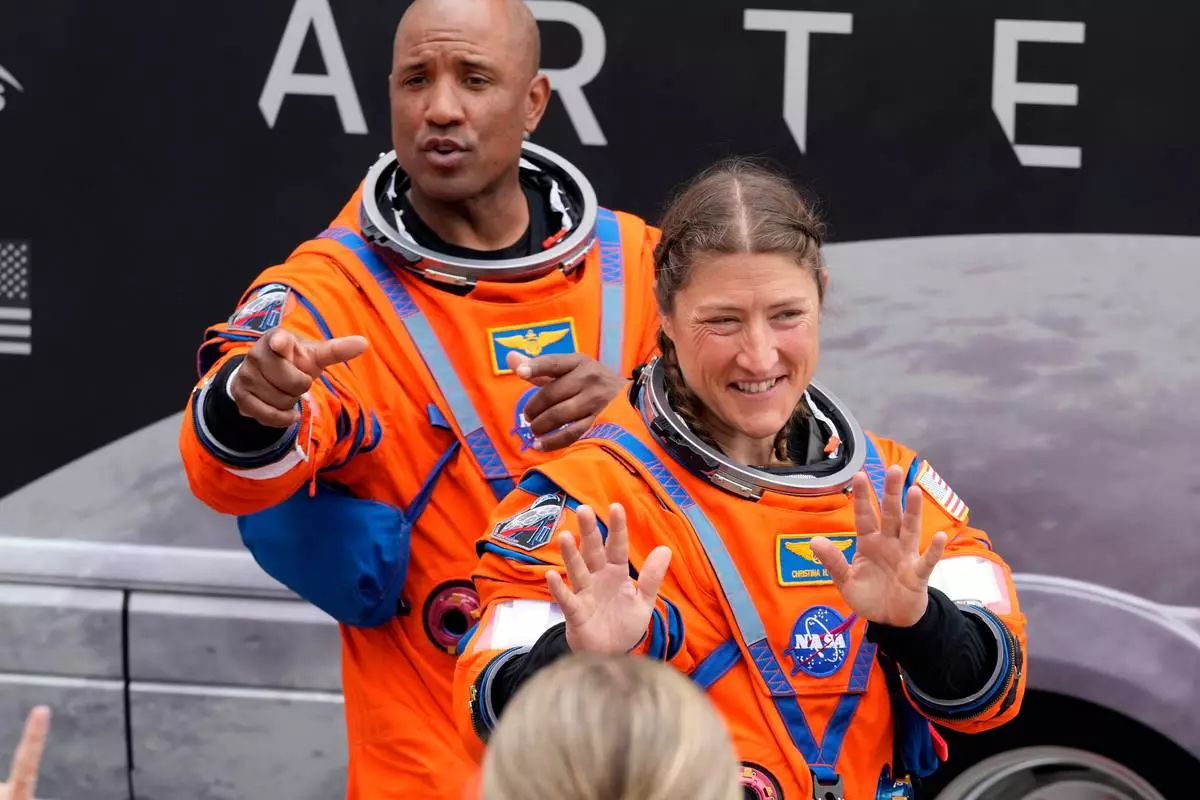
Astronauts, Mission Specialist Christina Koch, right, and Pilot Victor Glover wave to family members as they leave the Operations and Checkout Building for a trip to Launch Pad 39-B and a planned liftoff on NASA's Artermis II moon rocket at the Kennedy Space Center Wednesday, April 1, 2026, in Cape Canaveral, Fla. (AP Photo/Chris O'Meara)

Astronauts, Mission Specialist Christina Koch, right, and Pilot Victor Glover wave to family members as they leave the Operations and Checkout Building for a trip to Launch Pad 39-B and a planned liftoff on NASA's Artermis II moon rocket at the Kennedy Space Center Wednesday, April 1, 2026, in Cape Canaveral, Fla. (AP Photo/Chris O'Meara)

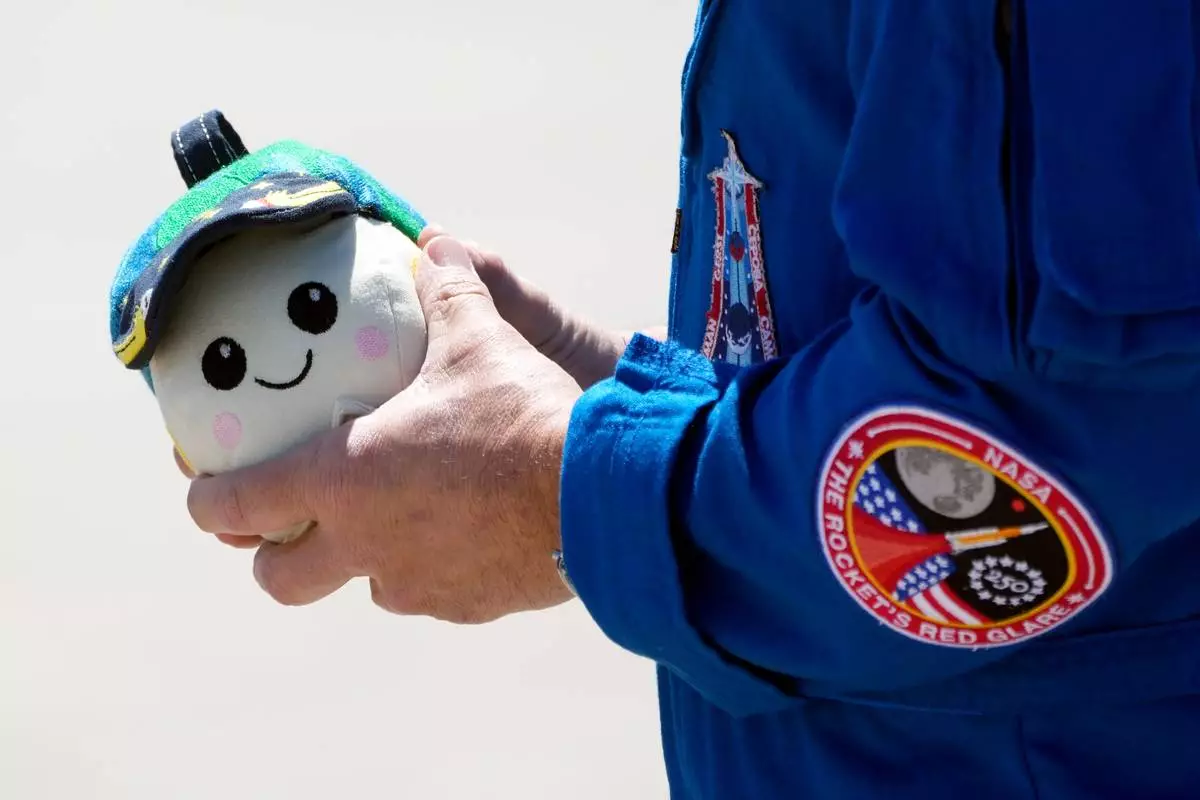
Artemis 2 crew member Commander Reid Wiseman holds "Rise" after the crew's arrival at the Kennedy Space Center Friday, March 27, 2026, in Cape Canaveral, Fla. (AP Photo/Chris O'Meara)

Artemis 2 crew member Commander Reid Wiseman holds "Rise" after the crew's arrival at the Kennedy Space Center Friday, March 27, 2026, in Cape Canaveral, Fla. (AP Photo/Chris O'Meara)

Commander Reid Wiseman poses for a photo with family members after leaving the Operations and Checkout Building for a trip to Launch Pad 39-B and a planned liftoff on NASA's Artermis II moon rocket at the Kennedy Space Center Wednesday, April 1, 2026, in Cape Canaveral, Fla. (AP Photo/Chris O'Meara)

Commander Reid Wiseman poses for a photo with family members after leaving the Operations and Checkout Building for a trip to Launch Pad 39-B and a planned liftoff on NASA's Artermis II moon rocket at the Kennedy Space Center Wednesday, April 1, 2026, in Cape Canaveral, Fla. (AP Photo/Chris O'Meara)

Astronauts, from left, Mission Specialist Jeremy Hansen, of Canada,, Pilot Victor Glover, Commander Reid Wiseman, and Mission Specialist Christina Koch pose for a photo after leaving the Operations and Checkout Building for a trip to Launch Pad 39-B and a planned liftoff on NASA's Artermis II moon rocket at the Kennedy Space Center Wednesday, April 1, 2026, in Cape Canaveral, Fla. (AP Photo/Chris O'Meara)

Astronauts, from left, Mission Specialist Jeremy Hansen, of Canada,, Pilot Victor Glover, Commander Reid Wiseman, and Mission Specialist Christina Koch pose for a photo after leaving the Operations and Checkout Building for a trip to Launch Pad 39-B and a planned liftoff on NASA's Artermis II moon rocket at the Kennedy Space Center Wednesday, April 1, 2026, in Cape Canaveral, Fla. (AP Photo/Chris O'Meara)

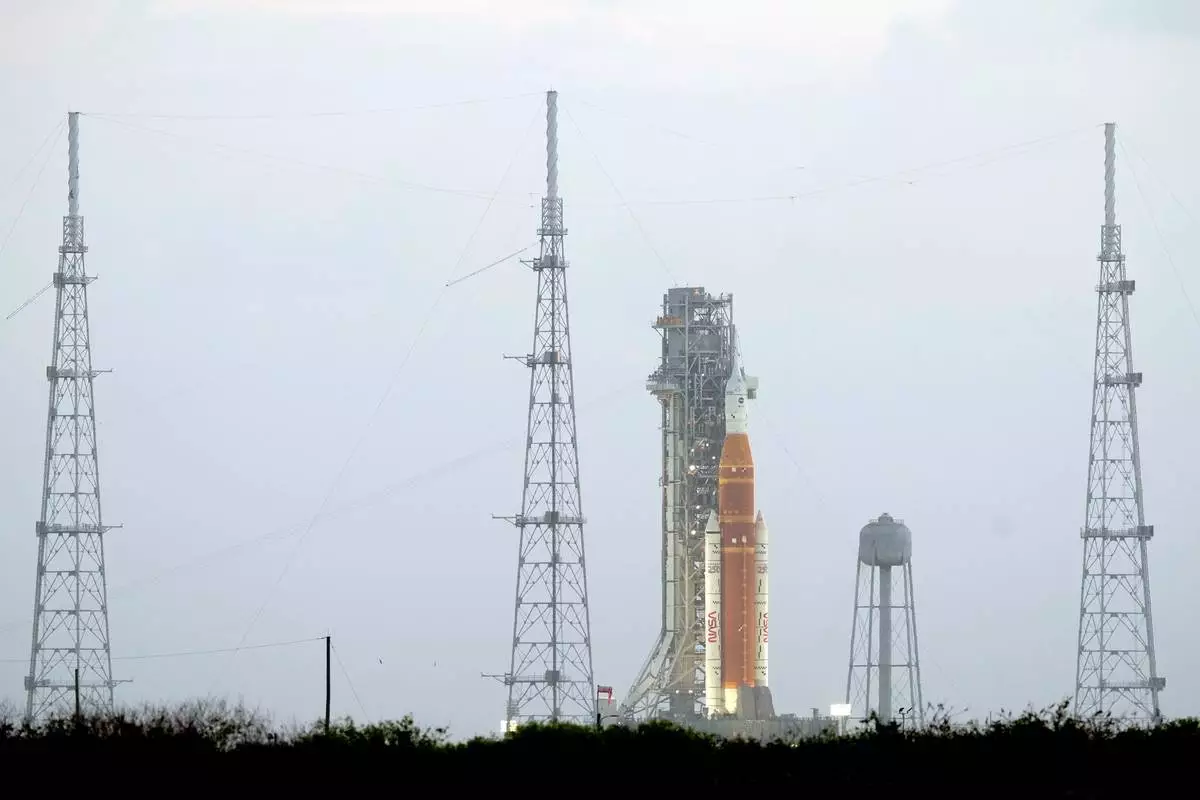
NASA's Artermis II moon rocket sits on Launch Pad 39-B at the Kennedy Space Center hours ahead of a planned launch attempt Wednesday, April 1, 2026, in Cape Canaveral, Fla. (AP Photo/Chris O'Meara)

NASA's Artermis II moon rocket sits on Launch Pad 39-B at the Kennedy Space Center hours ahead of a planned launch attempt Wednesday, April 1, 2026, in Cape Canaveral, Fla. (AP Photo/Chris O'Meara)

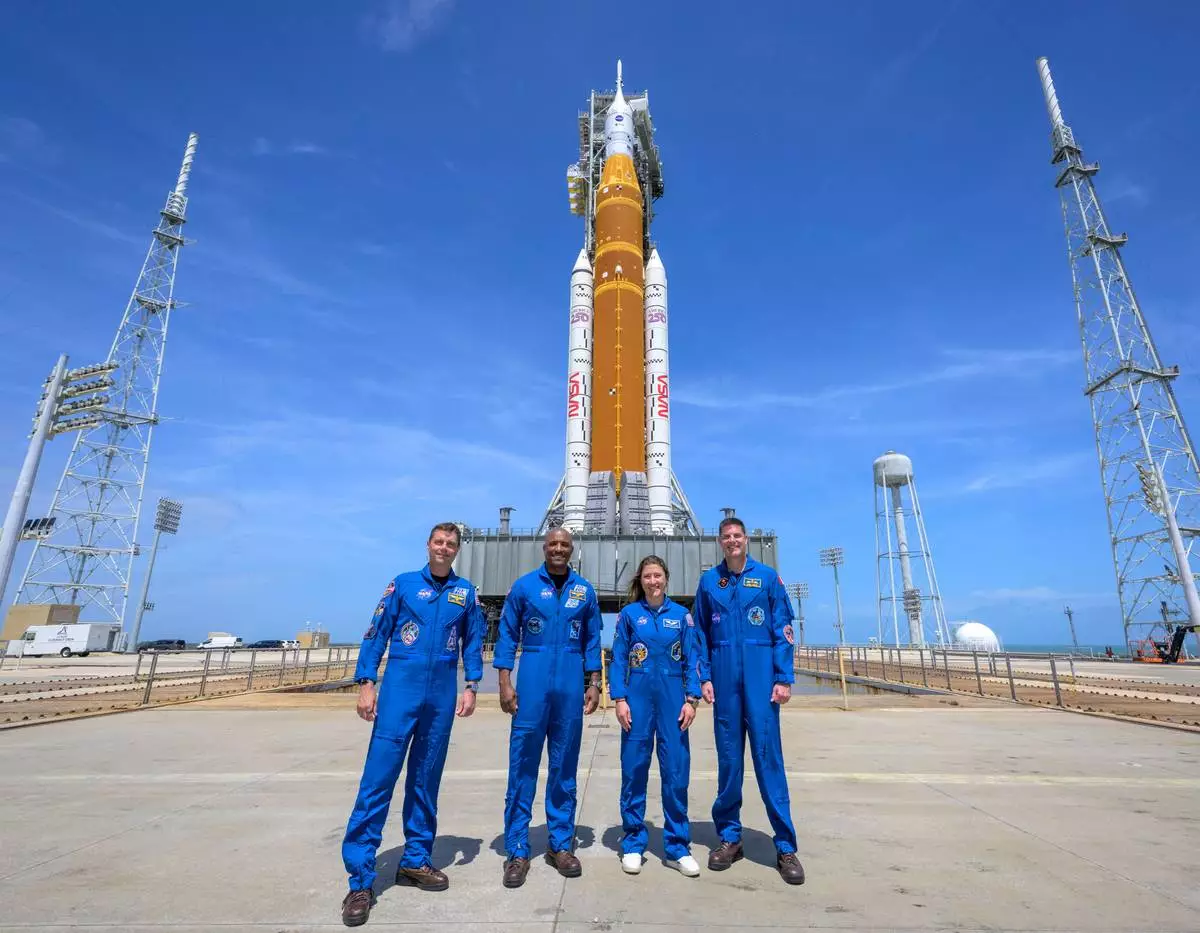
This photo provided by NASA shows NASA astronauts Reid Wiseman, Artemis II commander, from left, Victor Glover, Artemis II pilot, Christina Koch, Artemis II mission specialist, and CSA (Canadian Space Agency) astronaut Jeremy Hansen, Artemis II mission specialist, right, in a group photograph as they visit NASA's Artemis II SLS (Space Launch System) rocket and Orion spacecraft, Monday, March 30, 2026, at Launch Complex 39B of NASA's Kennedy Space Center, in Cape Canaveral, Fla. (Bill Ingalls/NASA via AP)

This photo provided by NASA shows NASA astronauts Reid Wiseman, Artemis II commander, from left, Victor Glover, Artemis II pilot, Christina Koch, Artemis II mission specialist, and CSA (Canadian Space Agency) astronaut Jeremy Hansen, Artemis II mission specialist, right, in a group photograph as they visit NASA's Artemis II SLS (Space Launch System) rocket and Orion spacecraft, Monday, March 30, 2026, at Launch Complex 39B of NASA's Kennedy Space Center, in Cape Canaveral, Fla. (Bill Ingalls/NASA via AP)

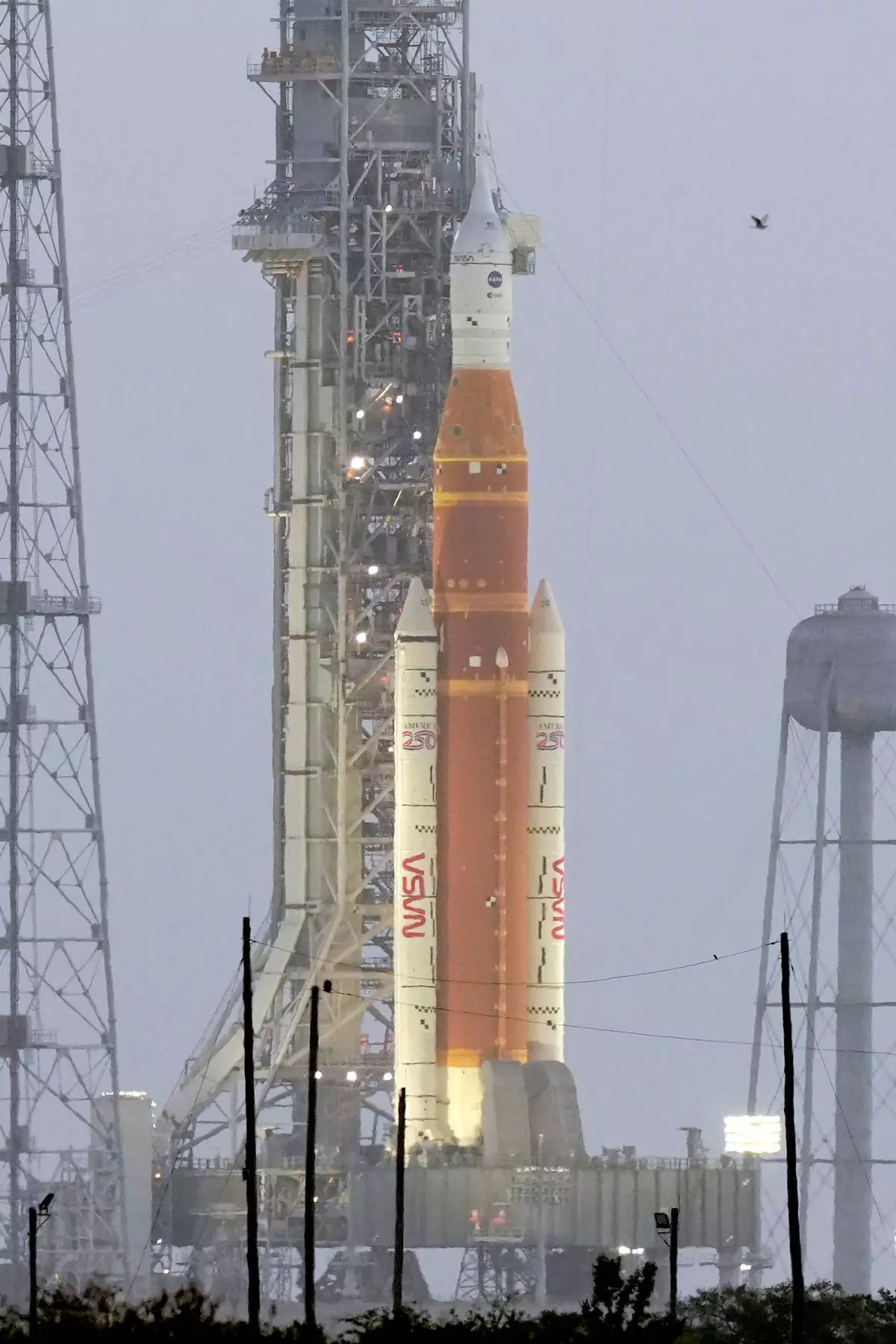
NASA's Artermis II moon rocket sits on Launch Pad 39-B at the Kennedy Space Center hours ahead of planned liftoff Wednesday, April 1, 2026, in Cape Canaveral, Fla. (AP Photo/Chris O'Meara)

NASA's Artermis II moon rocket sits on Launch Pad 39-B at the Kennedy Space Center hours ahead of planned liftoff Wednesday, April 1, 2026, in Cape Canaveral, Fla. (AP Photo/Chris O'Meara)

Recommended Articles