Skip to Content Facebook Feature Image

BlackSky Quickly Delivers First Very High-Resolution Images from Third Gen-3 Satellite Less Than 24 Hours Following Launch

Business

BlackSky Quickly Delivers First Very High-Resolution Images from Third Gen-3 Satellite Less Than 24 Hours Following Launch
Business

Business

BlackSky Quickly Delivers First Very High-Resolution Images from Third Gen-3 Satellite Less Than 24 Hours Following Launch

2025-11-25 21:32 Last Updated At:11-26 15:55

HERNDON, Va.--(BUSINESS WIRE)--Nov 25, 2025--

BlackSky Technology Inc. (NYSE: BKSY ) delivered the first very high-resolution images from the company’s third Gen-3 satellite less than 24 hours following the satellite’s successful launch in November. The company’s advanced, low-latency commercial architecture is delivering decision-quality data at real-time, mission-relevant speed and meeting growing global demand for flexible, secure tactical ISR capabilities.

This press release features multimedia. View the full release here: https://www.businesswire.com/news/home/20251125640794/en/

“BlackSky’s third Gen-3 unit has delivered incredible initial image quality at unprecedented speed -- less than one day from launch,” said Brian O’Toole, BlackSky CEO. “Customers no longer have to wait months typically associated with traditional commissioning timelines. BlackSky’s rapid commissioning process places tasking capacity into customers’ hands quickly and increases the overall operational life of each satellite as they come online sooner.”

With remarkable clarity, the new Gen-3 satellite has delivered imagery detailing vehicles, maritime vessels, and aircraft of various sizes, as well as individual people and their shadows. The new Gen-3 satellite has already demonstrated fully automated tasking to delivery capability. Image quality is expected to increase as final calibrations become complete, and the satellite enters its final operational altitude.

“As BlackSky continues to expand our Gen-3 constellation, this successful mission signifies the value of strategic investments in advancing commercial space-based intelligence capabilities. Our purpose-built software and hardware architecture is uniquely suited to provide secure and flexible commercial services that complement national assets with mission-relevant tactical ISR capability at disruptive speed, scale and economics,” said O’Toole.

BlackSky’s Gen-3 constellation continues to evolve through a regular interval of launches that expand capacity, reduce latency, add flexibility and increase customer applications for automated real-time and predictive battlefield monitoring. BlackSky is leveraging its full technology stack of vertically integrated satellite manufacturing, software and AI solutions to meet global customer demand for guaranteed access to data, when and where customers need it, through novel delivery models like capacity sharing, Assured subscription access or full sovereign systems.

About BlackSky

BlackSky is a real-time, space-based intelligence company that delivers on-demand, high frequency imagery, analytics, and high-frequency monitoring of the most critical and strategic locations, economic assets, and events in the world. BlackSky owns and operates one of the industry’s most advanced, purpose-built commercial, real-time intelligence systems that combines the power of the BlackSky Spectra ® tasking and analytics software platform and our proprietary low earth orbit satellite constellation.

With BlackSky, customers can see, understand and anticipate changes for a decisive strategic advantage at the tactical edge, and act not just fast, but first. BlackSky is trusted by some of the most demanding U.S. and international government agencies, commercial businesses, and organizations around the world. BlackSky is headquartered in Herndon, VA, and is publicly traded on the New York Stock Exchange as BKSY. To learn more, visit www.blacksky.com and follow us on X.

Forward-Looking Statements

Certain statements in this press release may contain forward-looking statements within the meaning of the federal securities laws with respect to BlackSky. These forward-looking statements generally are identified by the words “believe,” “project,” “expect,” “anticipate,” “estimate,” “intend,” “strategy,” “future,” “opportunity,” “plan,” “may,” “should,” “will,” “would,” “will be,” “will continue,” “will likely result,” and similar expressions. Forward-looking statements are predictions, projections, and other statements about future events that are based on current expectations and assumptions and, as a result, are subject to risks and uncertainties. Many factors could cause actual future events to differ materially from the forward-looking statements in this document. If any of these risks materialize or underlying assumptions prove incorrect, actual results could differ materially from the results implied by these forward-looking statements. In addition, forward-looking statements reflect our expectations, plans, or forecasts of future events and views as of the date of this communication. We anticipate that subsequent events and developments will cause their assessments to change. Accordingly, forward-looking statements should not be relied upon as representing our views as of any subsequent date, and we do not undertake any obligation to update forward-looking statements to reflect events or circumstances after the date they were made, whether as a result of new information, future events or otherwise, except as may be required under applicable securities laws. Additional risks and uncertainties are identified and discussed in BlackSky’s disclosure materials filed from time to time with the SEC which are available at the SEC’s website at http://www.sec.gov or on BlackSky’s Investor Relations website at https://ir.blacksky.com.
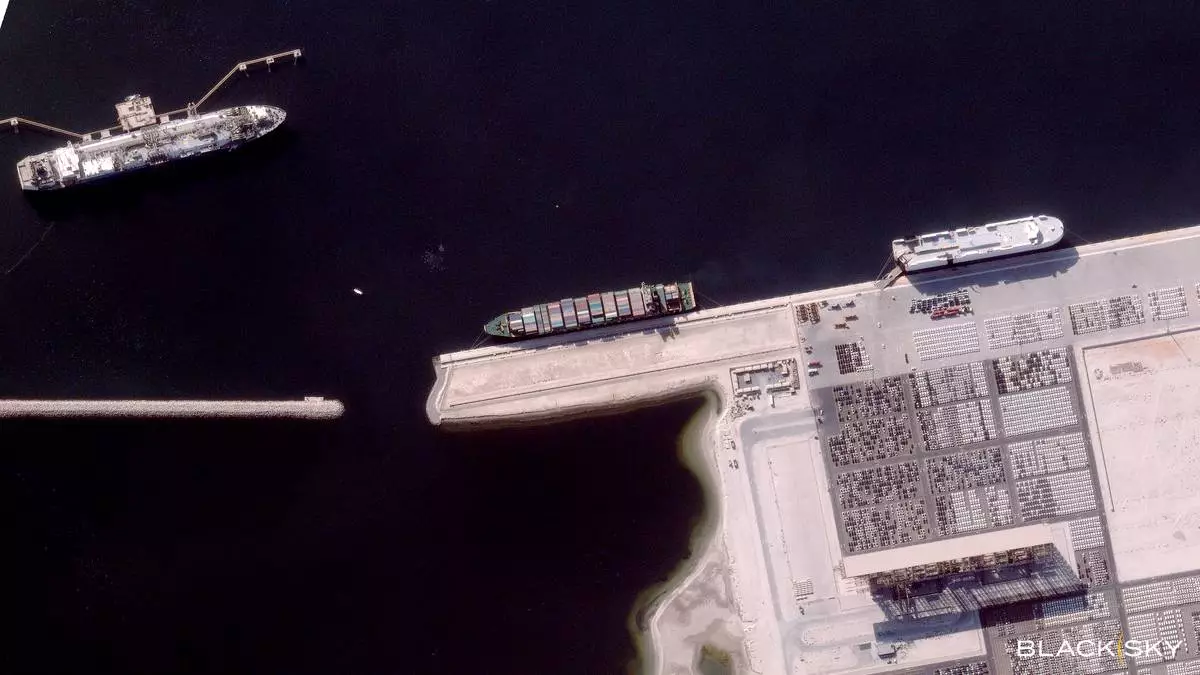
BlackSky delivered the first very high-resolution images from the company’s third Gen-3 satellite less than 24 hours following the satellite’s successful launch. This Gen-3, unit three, very high-resolution image captured over the Port of Jebel Ali in Dubai, United Arab Emirates, displays active offloading operations at the roll-on/roll-off “RoRo” terminal as stevedores maneuver vehicles down a ramp and into the collection area where thousands of vehicles await transport to their final destination. The BlackSky image was collected at 10:08 a.m. on November 22, 2025.
BlackSky delivered the first very high-resolution images from the company’s third Gen-3 satellite less than 24 hours following the satellite’s successful launch. This Gen-3, unit three, very high-resolution image captured over the Port of Jebel Ali in Dubai, United Arab Emirates, displays active offloading operations at the roll-on/roll-off “RoRo” terminal as stevedores maneuver vehicles down a ramp and into the collection area where thousands of vehicles await transport to their final destination. The BlackSky image was collected at 10:08 a.m. on November 22, 2025.

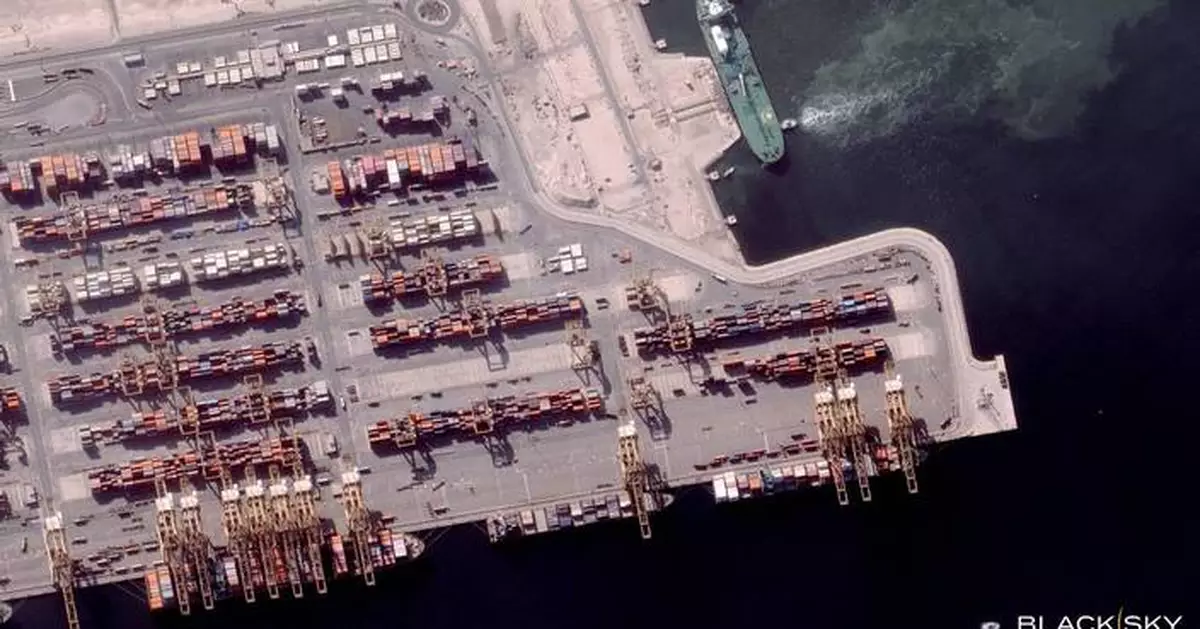
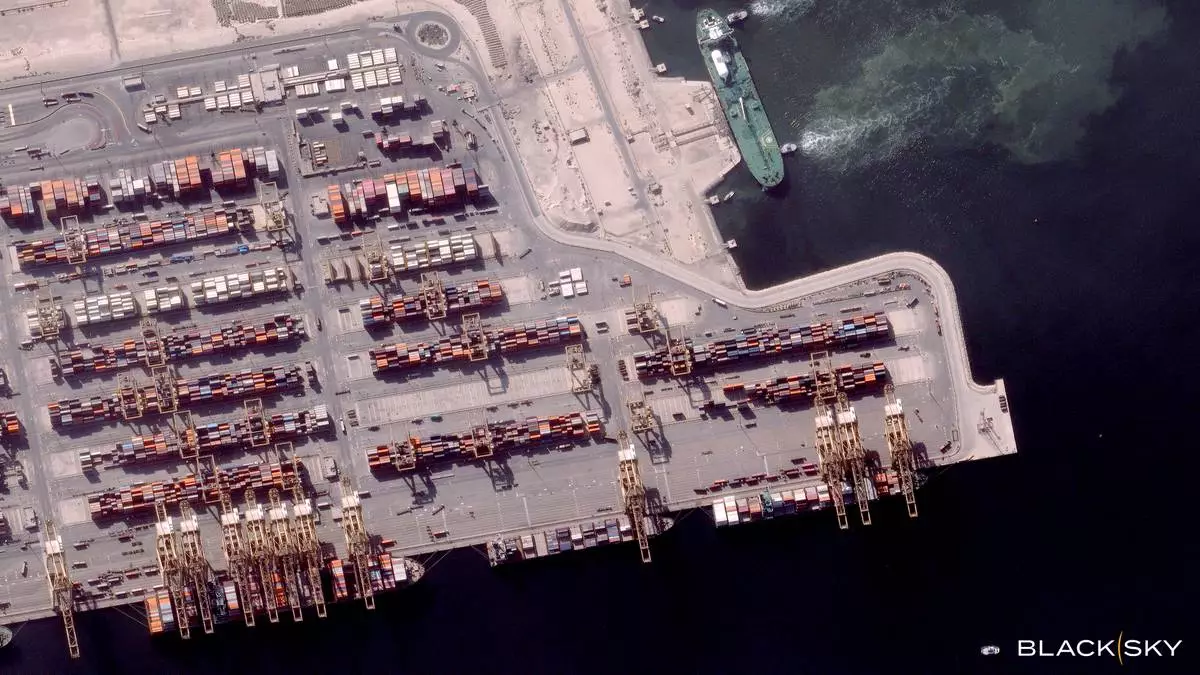
BlackSky delivered the first very high-resolution images from the company’s third Gen-3 satellite less than 24 hours following the satellite’s successful launch. This Gen-3, unit three, very high-resolution image captured over the Port of Jebel Ali in Dubai, United Arab Emirates, shows a diversity of port activities including drayage operations – the movement of intermodal cargo containers from boxships via massive ship-to-shore cranes into stacks and then onto tractor trailers - and tugboats actively assisting an oil tanker in docking operations as visible wake trails churn in the deepwater port. The BlackSky image was collected at 10:08 a.m. on November 22, 2025.


BlackSky delivered the first very high-resolution images from the company’s third Gen-3 satellite less than 24 hours following the satellite’s successful launch. This Gen-3, unit three, very high-resolution image captured over the Port of Jebel Ali in Dubai, United Arab Emirates, shows a diversity of port activities including drayage operations – the movement of intermodal cargo containers from boxships via massive ship-to-shore cranes into stacks and then onto tractor trailers - and tugboats actively assisting an oil tanker in docking operations as visible wake trails churn in the deepwater port. The BlackSky image was collected at 10:08 a.m. on November 22, 2025.

DUBAI, United Arab Emirates (AP) — Iran responded to U.S. President Donald Trump’s address to Americans on the war with new missile attacks targeting Israel and the Gulf Arab states Thursday, underlining Tehran’s insistence that it rejected Washington’s outreach for a ceasefire while maintaining its grip on the Strait of Hormuz.

Britain planned to hold a call Thursday with nearly three dozen countries about how to reopen the strait, through which 20% of all oil and natural gas traded passes in peacetime. The 35 countries, including all G7 industrialized democracies except the U.S., as well as the United Arab Emirates and Bahrain, signed a declaration last month demanding Iran stop blocking the strait. The call will discuss “diplomatic and political measures” that could restore shipping once the fighting is over.

Washington has insisted that Iran allow ships to freely transit the strait, but Trump this week has said it is not up to the U.S. to force it, and in his address encouraged countries that receive oil through Hormuz to “build some delayed courage” and go “take it.”

In his address, Trump said the U.S. would hit Iran “extremely hard over the next two to three weeks,” while also insisting American “core strategic objectives are nearing completion.”

Iran's military said defiantly on Thursday that its armament facilities are hidden and will never be reached by Israeli or American attacks.

“The centers you think you have targeted are insignificant,” said Lt. Col. Ebrahim Zolfaghari, a spokesman for the Iranian military’s Khatam Al-Anbiya Central Headquarters.

Just before Trump began his nearly 20-minute address on Wednesday, explosions were heard in Dubai as air defenses worked to intercept an Iranian missile barrage. Less than a half hour after the president was done, Israel said its military was working to intercept incoming missiles.

Sirens sounded in Bahrain, home to the U.S. Navy's 5th Fleet, immediately after the speech.

Following a joint statement in March condemning Iranian attacks on unarmed commercial vessels that called upon Iran to “cease immediately its threats, laying of mines, drone and missile attacks and other attempts to block the strait,” the 35 signatories were to hold a virtual meeting Thursday hosted by British Foreign Secretary Yvette Cooper.

Though the oil and gas that typically transits the Strait of Hormuz primarily is sold to Asian nations, Japan and South Korea were the only two countries from the region that were joining.

“Trump’s message was that the United States can sustain its own economic and energy ecosystem, while countries dependent on regional exports will either have to buy from the United States or manage the Strait themselves,” the New York-based Soufan Center think tank wrote after the address.

“While Trump explicitly thanked U.S. allies in the Persian Gulf for their cooperation and allyship, an expedited U.S. withdrawal without securing the strait will leave many of these countries, whose economies are dependent on energy exports, in the lurch.”

No country appears willing to try and open the strait by force while the war is raging. British Prime Minister Keir Starmer said the group “will assess all viable diplomatic and political measures we can take to restore freedom of navigation, guarantee the safety of trapped ships and seafarers and to resume the movement of vital commodities.”

Bahrain, which now holds the presidency of the United Nations Security Council, has been working to get the world body to address the crisis as well.

Though Iran has allowed a trickle of ships through the strait, it remains largely closed. Iran has also been repeatedly attacking Gulf Arab energy infrastructure, sending oil prices skyrocketing and giving rise to broader economic problems worldwide.

Following Trump's speech, Brent crude, the international standard, rose again and was at $108 in early spot trading, up nearly 50% from Feb. 28 when Israel and the U.S. started the war with their attacks on Iran.

The rising energy prices and stock market jitters have been putting increasing domestic pressure on Trump, who used his address to offer a defense of the war while also suggesting it was close to winding down.

He acknowledged American service members who had been killed and said: “We are going to finish the job, and we’re going to finish it very fast. We’re getting very close.”

The U.S. has presented Iran with a 15-point plan for a ceasefire, but Trump didn’t say anything about the diplomatic efforts or bring up his April 6 deadline for Iran to reopen the Strait of Hormuz or face severe retaliation from the U.S.

More than 1,900 people have been killed in Iran during the war, while 19 have been reported dead in Israel. More than two dozen people have died in Gulf states and the occupied West Bank, while 13 U.S. service members have been killed.

More than 1,200 people have been killed in Lebanon and more than 1 million displaced, according to authorities. Ten Israeli soldiers have also died there.

Weissert reported from Washington and Rising reported from Bangkok.

The Indian flagged LPG carrier Jag Vasant transporting liquefied petroleum gas, is seen at the Mumbai Port in Mumbai, India, after it arrived clearing the Strait of Hormuz, Wednesday, April 1, 2026. (AP Photo/Rafiq Maqbool)

The Indian flagged LPG carrier Jag Vasant transporting liquefied petroleum gas, is seen at the Mumbai Port in Mumbai, India, after it arrived clearing the Strait of Hormuz, Wednesday, April 1, 2026. (AP Photo/Rafiq Maqbool)

President Donald Trump speaks about the Iran war from the Cross Hall of the White House on Wednesday, April 1, 2026, in Washington. (AP Photo/Alex Brandon, Pool)

President Donald Trump speaks about the Iran war from the Cross Hall of the White House on Wednesday, April 1, 2026, in Washington. (AP Photo/Alex Brandon, Pool)

President Donald Trump walks from the Blue Room to speak about the Iran war from the Cross Hall of the White House on Wednesday, April 1, 2026, in Washington. (AP Photo/Alex Brandon, Pool)

President Donald Trump walks from the Blue Room to speak about the Iran war from the Cross Hall of the White House on Wednesday, April 1, 2026, in Washington. (AP Photo/Alex Brandon, Pool)

President Donald Trump speaks about the Iran war from the Cross Hall of the White House on Wednesday, April 1, 2026, in Washington. (AP Photo/Alex Brandon, Pool)

President Donald Trump speaks about the Iran war from the Cross Hall of the White House on Wednesday, April 1, 2026, in Washington. (AP Photo/Alex Brandon, Pool)

President Donald Trump speaks about the Iran war from the Cross Hall of the White House on Wednesday, April 1, 2026, in Washington. (AP Photo/Alex Brandon, Pool)

President Donald Trump speaks about the Iran war from the Cross Hall of the White House on Wednesday, April 1, 2026, in Washington. (AP Photo/Alex Brandon, Pool)

Recommended Articles