The pollution from food is sneaky. Because the apple sitting on your kitchen counter isn't really causing any harm.
But chances are good that you didn't pick it from a tree in your backyard. It required land and water to grow, machines to harvest and process, packaging to ship, trucks to transport and often refrigerators to store. Much of that process releases planet-warming greenhouse gases into the atmosphere.
That's why the global food system makes up roughly a third of worldwide, human-caused greenhouse gas emissions, according to the EDGAR FOOD pollution database.
Meanwhile, roughly a third of the U.S. food supply is lost or wasted without being eaten, according to the U.S. Department of Agriculture. It might never get harvested, it might spoil in transit or the grocery store might reject it for being the wrong size or color. That's a big reason why some consumers are looking for less-wasteful alternatives ranging from farmers markets to delivery services for produce that didn't meet supermarket size or appearance standards.
“There’s a whole breadth of opportunities to purchase food,” said Julia Van Soelen Kim, food systems adviser with the University of California Cooperative Extension.
And during the week of Thanksgiving, this decision is especially high stakes because lots of grocery shoppers are buying for extra guests, and more food can mean a bigger climate impact.
Here are tips for reducing impact by shopping beyond the grocery store.
Jane Kolodinsky, professor emerita at the University of Vermont and director of research at Arrowleaf Consulting, has bought her produce directly from a local farmer for 30 years.
It’s called Community Supported Agriculture, or CSA. At the beginning of every harvest season, Kolodinsky pays that farm a fee. Then, once per week, she picks up a box of produce at the farm. Some CSA programs pick the produce, while others let you customize. Some deliver. An online database shows which farms participate in CSA programs.
Since the food is grown nearby, there is less processing and packaging. “There's a smaller carbon footprint for purchasing locally compared to global or national food distribution channels,” said Van Soelen Kim. “When they’re local, they’re traveling less distance, so less gas, less fuel.”
Local farmers are also likely to grow whatever works best for the area's climate and season. “When things are in season, they need less storage time, so less electricity for cold storage,” said Van Soelen Kim, who added that can also mean a smaller food bill.
It’s not pollution-free, because the crops still require land and water, and the food does travel some distance. But CSAs avoid many steps in the modern food supply chain.
That model is challenging for consumers who want to maintain the same shopping list year-round. Shopping in-season requires more flexibility. “I would encourage consumers to think, ’OK, year-round we want some hand fruit that’s firm,'” she said. “So maybe it’s apples, and then it’s pears, and then its gonna move to kiwis, and then is gonna move to pluots.”
And in colder regions, she said there is still local produce. It's just more likely to be dried, frozen or canned.
Kolodinsky said the oldest alternative food system is the farmers market, where vendors gather and sell directly to consumers. Growers also sell at farm stands that aren’t tied to a centralized, scheduled event.
Farmers markets allow consumers more flexibility to pick the produce than a typical CSA. They also offer seasonal produce and less packaging and processing than a grocery store. Many also accept payment associated with government food assistance programs.
Plus, these models cut down on waste because customers are more tolerant of produce that's not a uniform size and shape, said Timothy Woods, a University of Kentucky agribusiness professor.
“It doesn’t matter to me if one cucumber’s a couple inches longer than the other one,” he said. “Less waste means more efficient utilization of all the resources that farmers are putting out to produce that crop in the first place."
Farmers who sell to grocery stores typically have to meet high standards, Woods said. For example, there could be onions that never got big enough or the carrot that grew two roots — vegetables that are just as safe and tasty to eat. There's also surplus harvest.
“They will intentionally not pick certain melons that are undersized out in the field. And so you’ll have gleaning programs that will be people that are saying, ‘Those are perfectly good cantaloupe that are out there. We’ll send a team out there to pick those,’” said Woods.
He said services delivering food that doesn’t meet supermarket size or appearance requirements, such as Misfit Markets or Imperfect Produce, have become more popular in recent years.
Van Soelen Kim said there isn't a lot of data yet on whether these services have a significantly lower climate impact. They reduce food waste, but the food might come from far away.
Misfits Market refreshes its online selection weekly. Customers then fill a box of often discounted groceries that might have misprinted labels or are undersized or blemished. They are delivered via a company truck or third-party courier such as FedEx. The company's founder and CEO, Abhi Ramesh, said it minimizes emissions by having set delivery days instead of offering on-demand delivery.
“By doing that, we batch all of our deliveries together. So it is one van to your ZIP code on that day. One truck that goes from our warehouse on that date,” he said.
Ramesh said sometimes a farmer's market or CSA is even better at offering nearby seasonal food than his company. But for a lot of the country, those services go away when the harvest season ends. “And so your local grocery store, believe it or not, is still transporting that from California. But the difference is we’re able to go and transport the food waste piece, which reduces a ton of emissions.”
Woods' advice for using services like Misfits Market is the same as other channels: Eat seasonally, eat locally and look for minimal packaging.
The Associated Press’ climate and environmental coverage receives financial support from multiple private foundations. AP is solely responsible for all content. Find AP’s standards for working with philanthropies, a list of supporters and funded coverage areas at AP.org.
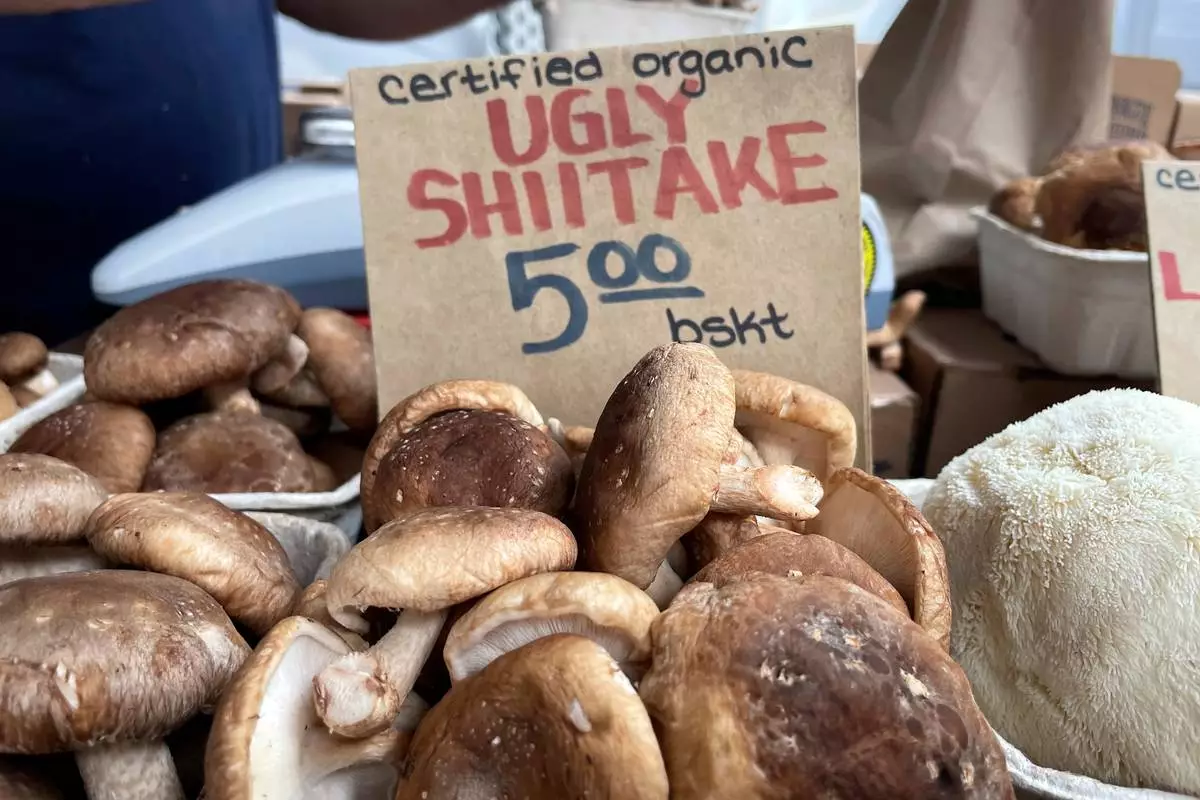
FILE - Shiitake mushrooms are displayed at the stand of a farmer who sells "ugly" produce at a discount at a farmers' market in San Francisco, June 7, 2023. (AP Photo/Haven Daley, File)
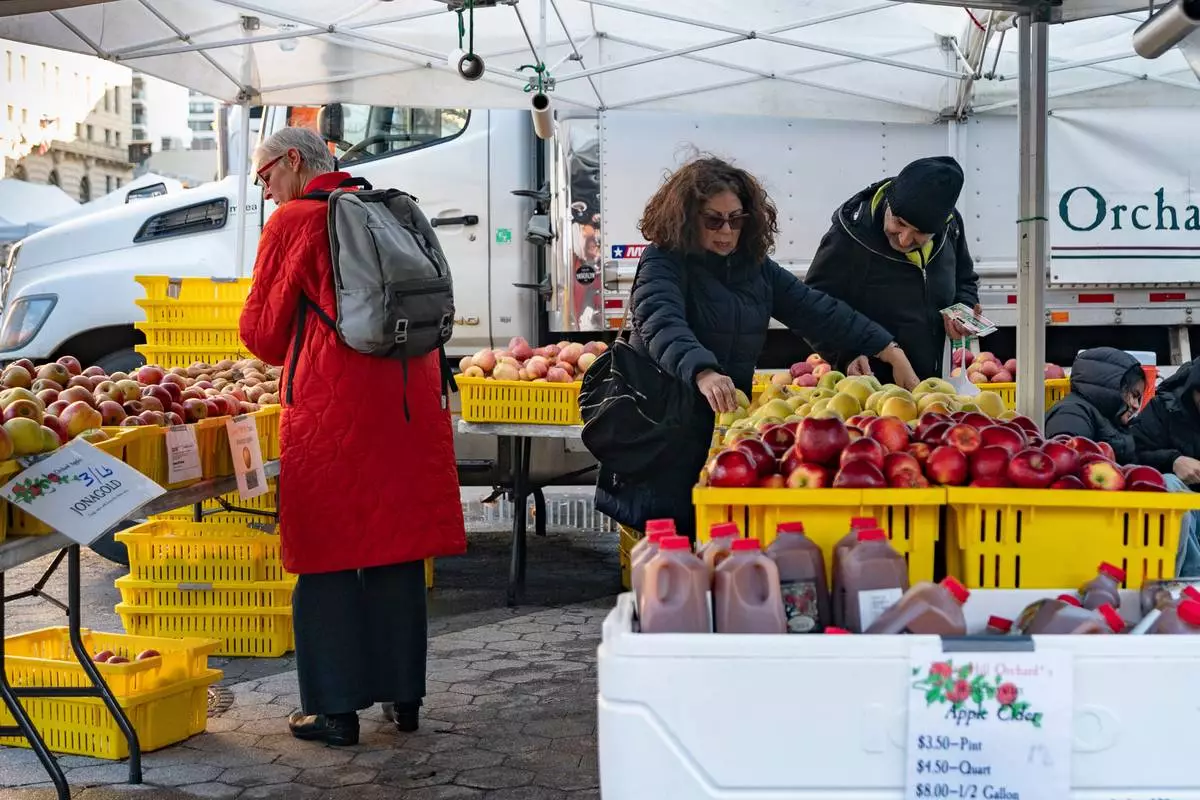
FILE - Customers browse farmer's market displays in Union Square, Jan. 13, 2024, in New York. (AP Photo/Peter K. Afriyie, File)
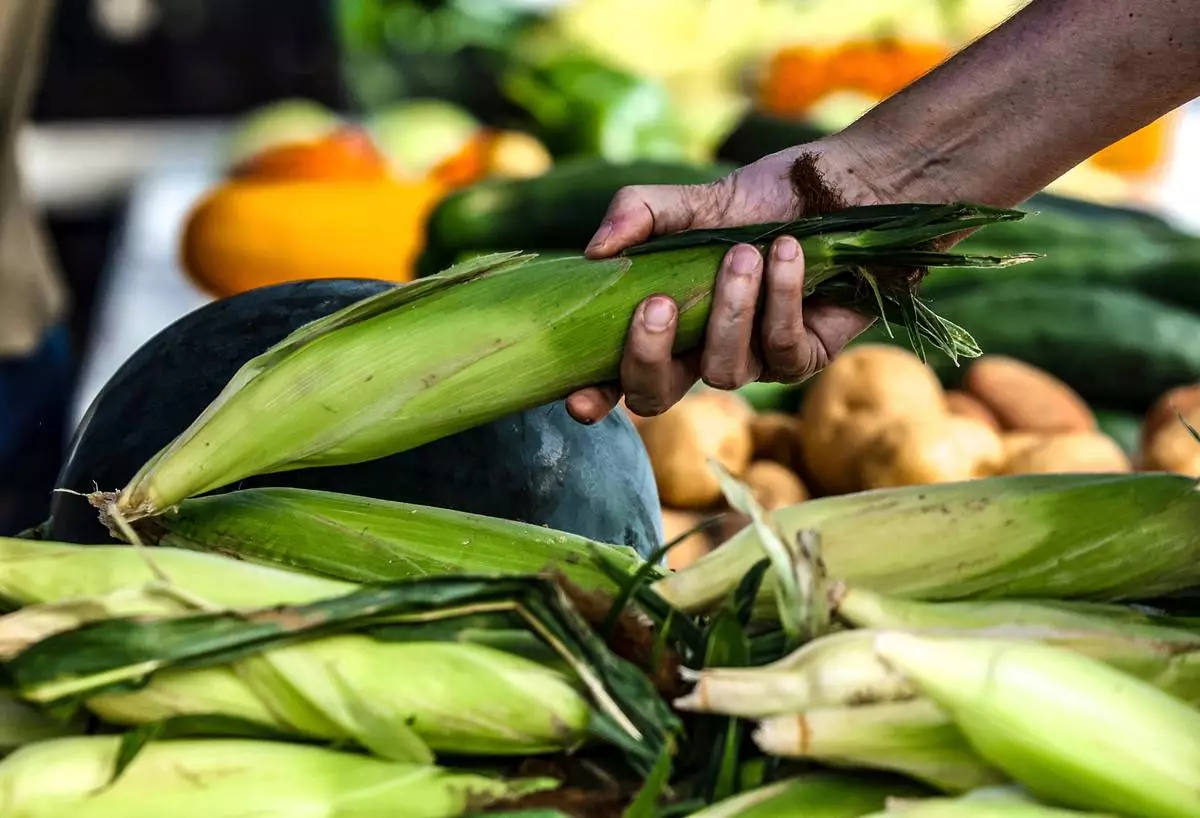
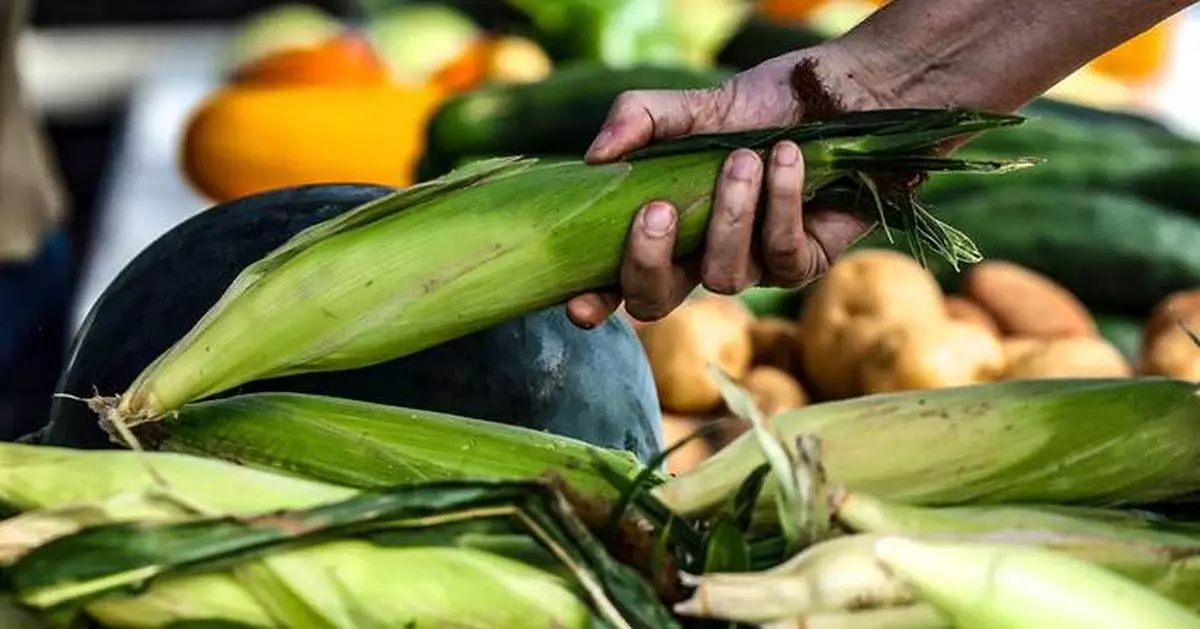
FILE - A shopper picks through corn while browsing the vendor booths set up at the Owensboro Regional Farmers' Market in Owensboro, Ky., Aug. 31, 2024. (Greg Eans/The Messenger-Inquirer via AP, File)