MEDAN, Indonesia (AP) — Rescuers recovered more bodies in the search for dozens of people buried under landslides or swept away after torrential rains unleashed flash floods and triggered landslides on Indonesia’s Sumatra island, increasing the death toll to 23 and leaving more than two dozen people missing, officials said Wednesday.
Rescue teams were struggling to reach affected areas in 11 cities and districts of North Sumatra province after the monsoon rains over the past week caused rivers to burst their banks, tearing through hilly villages as mud, rocks and trees tumbled down, leaving destruction in their wake, as mudslides that covered much of the area, blackouts and lack of telecommunications were hampering the search efforts, the National Search and Rescue Agency said in a statement.
Rescue workers by Wednesday had recovered at least eight bodies and three injured people in the worst-hit city of Sibolga and were searching for at least 21 villagers who were reported missing, the statement said. In the neighboring district of Central Tapanuli, landslides hit several homes, killing at least a family of four, and floods submerged nearly 2,000 houses and buildings, forcing about 1,900 displaced people to seek emergency shelters.
Rescuers retrieved seven more bodies in South Tapanuli district, raising the death toll to eight, and workers dug through tons of mud and rubble to search for three people remain buried after floods and landslides also uprooted trees, prompting more than 2,800 residents to flee to temporary shelters and injuring 58 others, National Disaster Mitigation Agency spokesperson Abdul Muhari said.
He said that landslides also hit 50 houses in North Tapanuli district and destroyed at least two main bridges in the region. Floods had cut off a bridge in Mandailing Natal and submerged hundreds of houses in the hilly district and its neighboring Padang Sidempuan city, where a resident was reported missing after being swept away by flooding.
North Sumatra provincial police spokesman Ferry Walintukan said that at least one resident died when mud and debris struck a main road on a tiny Nias island and at least two people were found dead after a landslide hit Pakpak Bharat district.
Images showed water cascading down rooftops as panicked residents scrambled for safety. In some areas, flash floods rose rapidly, transforming streets into raging torrents carrying tree trunks and debris.
Sibolga police chief Eddy Inganta said that emergency shelters have been set up and authorities urged residents in high-risk zones to evacuate immediately, warning that continued rainfall could trigger more landslides after six landslides in the hilly city flattened 17 houses and a cafe.
“Bad weather, power blackouts and mudslides hampered the rescue operation,” Inganta said, adding that access remains limited as rescuers battle harsh conditions.
Tuesday’s disasters occurred on the same day that the National Disaster Mitigation Agency declared the official end of relief efforts in two areas of Indonesia’s main island of Java after 10 days of operations. More than 1,000 rescue workers had been deployed to search for people buried under landslides triggered by torrential rains that left 38 people dead in Central Java's districts of Cilacap and Banjarnegara.
At least two people in Cilacap and 11 in Banjarnegara were still unaccounted for when the operations ended, as unstable ground, bad weather and the depth and extent of the landfill material pose a high safety risk to rescue teams and residents, the agency said.
Floods were also reported in many other provinces in the vast archipelago nation that is home to more than 280 million people, including in Aceh and West Sumatra, where hundreds of houses were flooded, many up to roofs and, main roads were blocked, the agency said.
Heavy seasonal rain from about October to March frequently causes flooding and landslides in Indonesia, an archipelago of 17,000 islands where millions of people live in mountainous areas or near fertile floodplains.
Niniek Karmini contributed to this report from Jakarta, Indonesia.
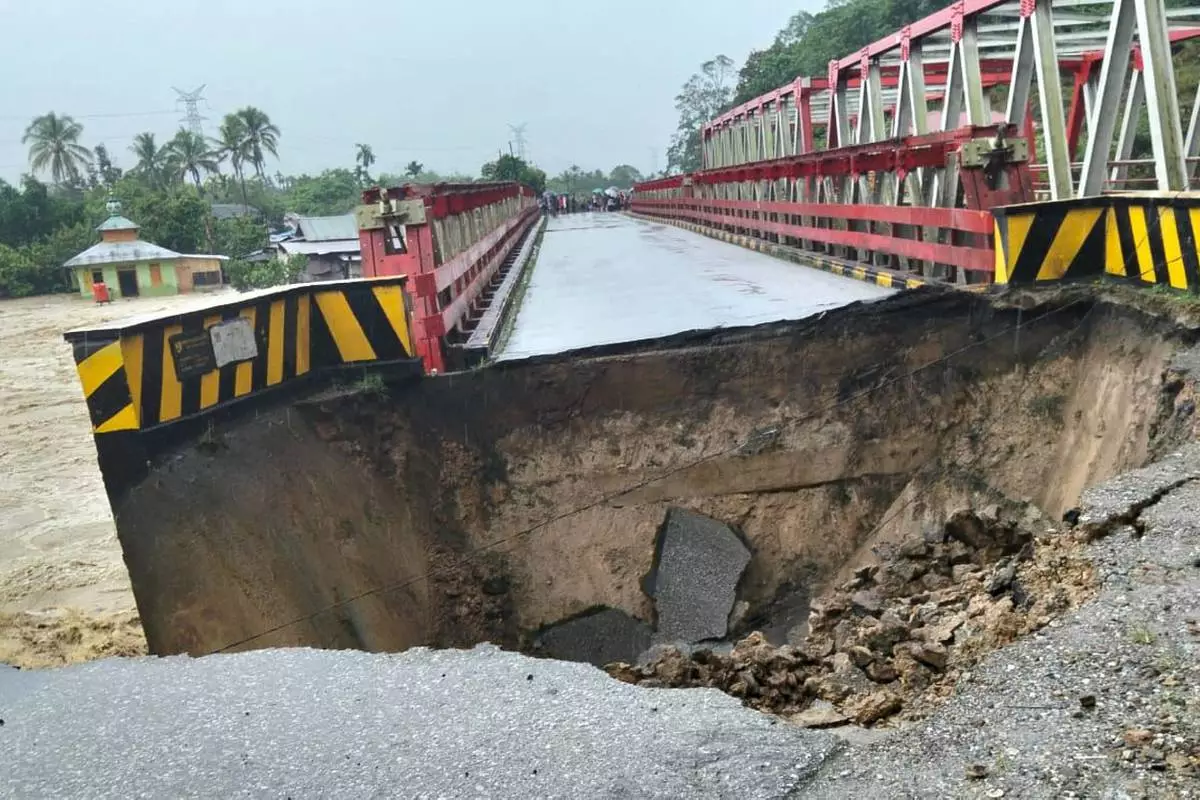
This photo released by National Agency for Disaster Countermeasure (BNPB) shows a bridge destroyed by a flash flood at North Tapanuli, North Sumatra Province, Indonesia Tuesday, Nov. 25, 2025. (BNPB via AP)
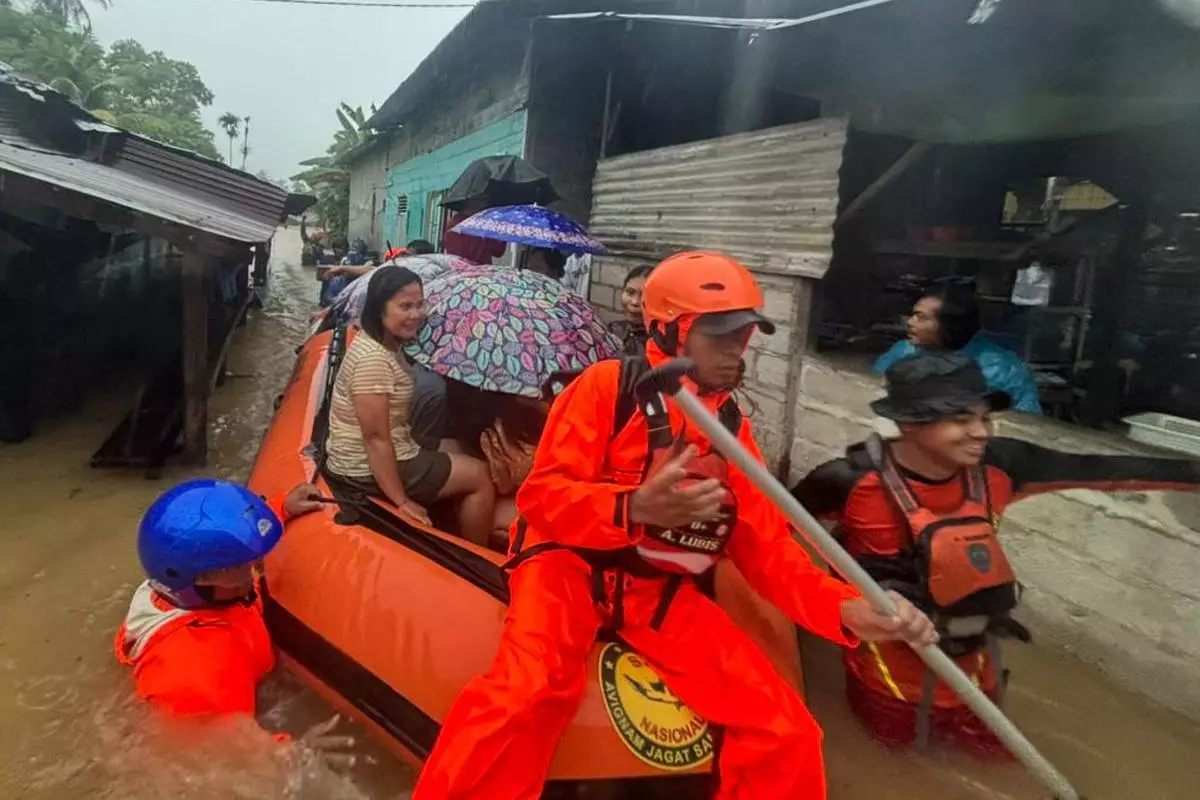
In this photo released by the Indonesian National Search and Rescue Agency (BASARNAS), rescuers on a rubber boat evacuate residents from their flooded home in North Sumatra province, Indonesia Tuesday, Nov. 25, 2025. (BASARNAS via AP)