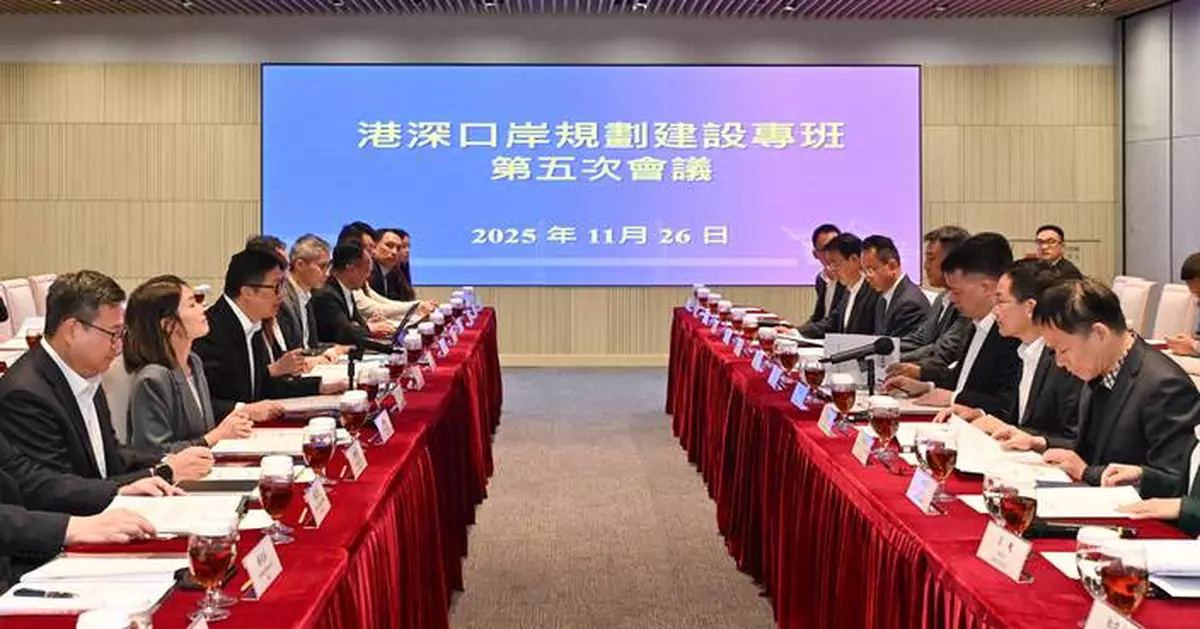
Task force meeting on collaboration for planning and development of Hong Kong-Shenzhen control points held in Hong Kong
The Secretary for Security, Mr Tang Ping-keung, and Vice Mayor of the Shenzhen Municipal People's Government Mr Luo Huanghao co-chaired a meeting of the task force on the collaboration for the planning and development of Hong Kong-Shenzhen control points in Hong Kong today (November 26) to continue taking forward relevant work in the planning and development of boundary control points (BCPs).
Mr Tang welcomed the arrival in Hong Kong of the Shenzhen Municipal People's Government leaders, as well as representatives of the Office of Port of Entry and Exit of the Shenzhen Municipal People's Government and other relevant units to participate in the task force meeting. Noting that the flow of people between Hong Kong and Shenzhen continues to increase, Mr Tang said that the governments of the two sides attach great importance to the planning, development and management of BCPs, maintaining close collaboration and continuously optimising boundary-crossing services. Both parties strive to enhance the capacity and operational efficiency of BCPs, injecting new momentum to enhance the convenience of people's livelihood and the integrated development of industries.
During the meeting, the two delegations discussed the planning and development of land BCPs, including reporting progress and exchanging views on the redevelopment projects of Huanggang and Sha Tau Kok BCPs. Concluding the meeting, Mr Tang said that the task force serves as a co-operative platform for developing convenient and efficient BCPs. He said he hopes that both sides would continue to collaborate on innovation to promote smart clearance and the upgrade of infrastructure, with a view to facilitating the smooth flow of people and goods and jointly promoting the development of the Guangdong-Hong Kong-Macao Greater Bay Area.
Other Hong Kong Special Administrative Region Government officials attending the meeting included representatives from the Hong Kong Customs and Excise Department, the Immigration Department, the Architectural Services Department, and the Department of Health.
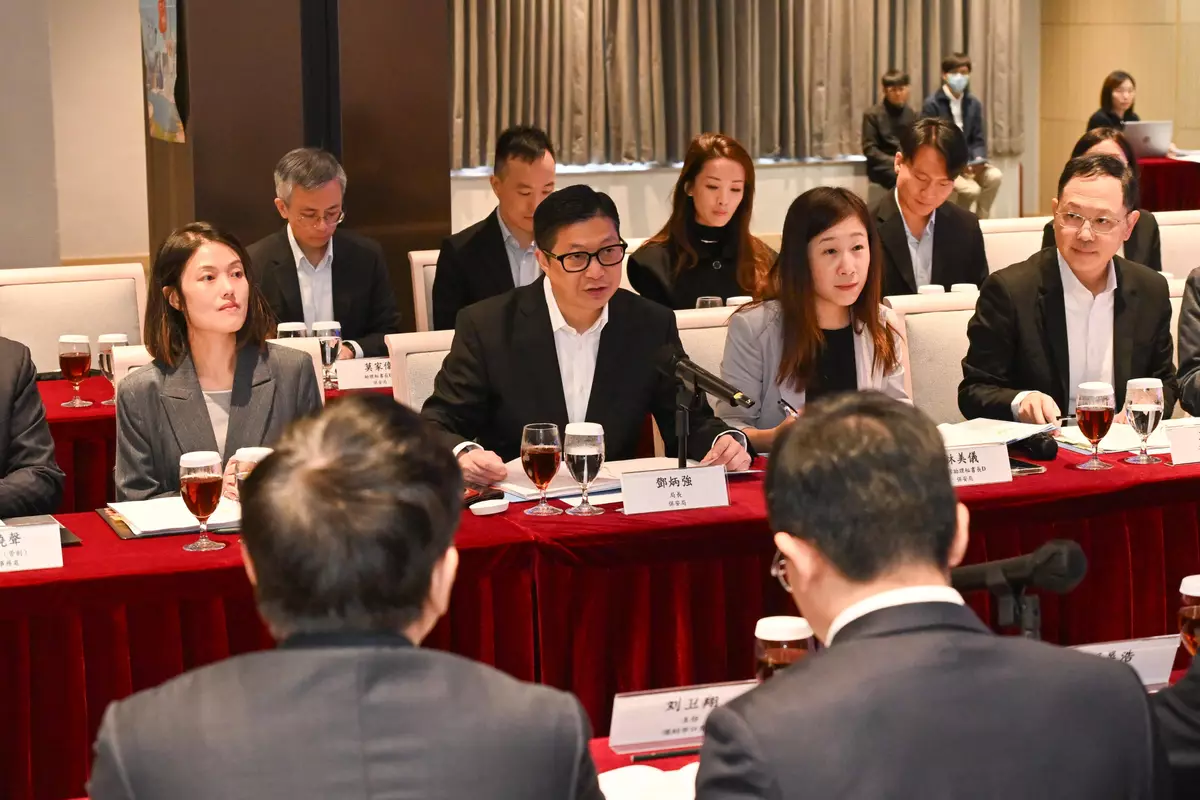
Task force meeting on collaboration for planning and development of Hong Kong-Shenzhen control points held in Hong Kong Source: HKSAR Government Press Releases
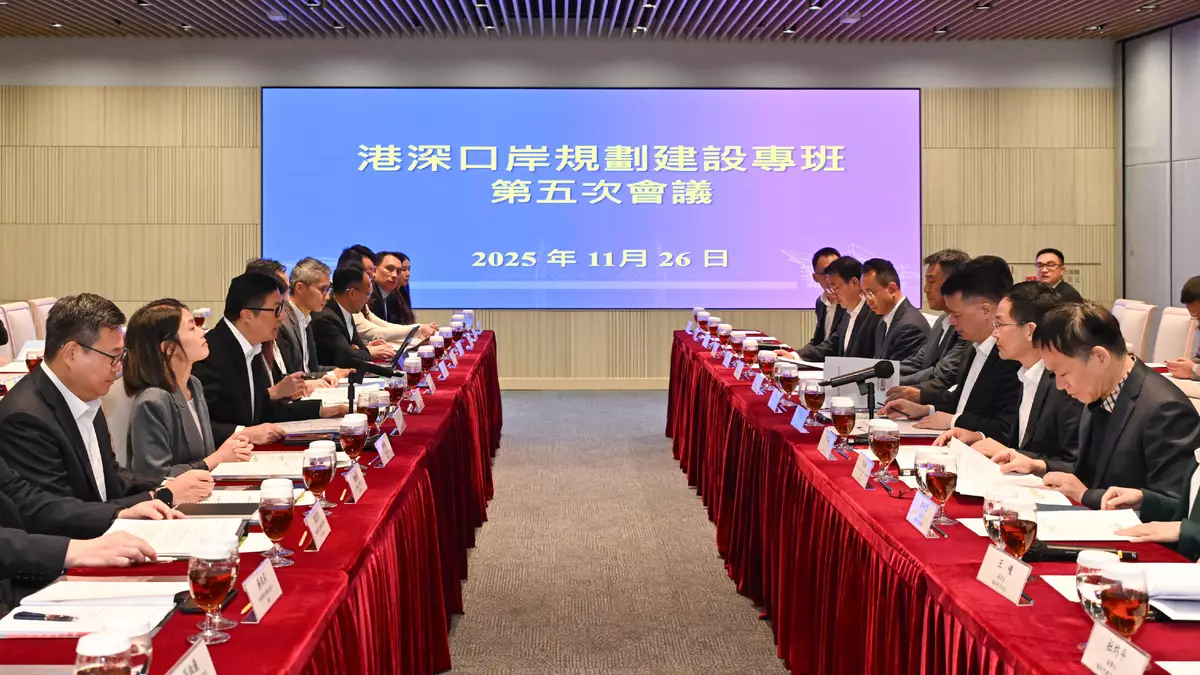
Task force meeting on collaboration for planning and development of Hong Kong-Shenzhen control points held in Hong Kong Source: HKSAR Government Press Releases
LegCo Secretariat releases Research Brief on "The 2026-2027 Budget"
The following is issued on behalf of the Legislative Council Secretariat:
The Financial Secretary (FS) presented the fourth Budget of the current-term Government on February 25. The Legislative Council Secretariat (the Secretariat) today (April 2) released a Research Brief on "The 2026-2027 Budget".
Supported by strong stock-trading stamp duty income and bond issuance, total government revenue soared by 21.9per cent year-on-year to HK$688.8 billion in the 2025-2026 fiscal year (see Annex 1). With a HK$2.9 billion surplus for the Consolidated Account, Hong Kong recorded a fiscal surplus for the first time after three consecutive years of deficits. While this arrived three years earlier than the Government projected, when excluding net bond proceeds, the underlying deficit remained at HK$100.4 billion. This equates to 3per cent of Gross Domestic Product (GDP), which is still below the average (4.6 per cent) of the 37 advanced economies tracked by the International Monetary Fund.
The Research Brief examined the Government's near-term fiscal position and the reinforced fiscal consolidation programme already implemented, as well as analysing the fiscal space for expanded bond issuance. The Research Brief pointed out that total public expenditure grew 5.4per cent to HK$844.2 billion. This is estimated to rise a further 7.2per cent to HK$904.7 billion in this fiscal year. Driven mainly by an ageing population, health and social welfare remain the largest spending areas, with infrastructure replacing education as the third-largest (see Annex 2). Over the past five years, infrastructure expenditure has surged by over 40 per cent. As Northern Metropolis-related (NM) projects are rolled out progressively, capital works expenditure is expected to average around HK$120 billion per annum over the next five years.
As part of the fiscal consolidation programme in the 2026-2027 fiscal year (see Annex 3), FS proposed transferring HK$150 billion of the Exchange Fund's (EF) investment income to finance the development of NM and other infrastructure projects. This withdrawal, which is the first in 42 years, has drawn considerable debate. Some argue that it could undermine the EF's capacity in preserving Hong Kong's financial stability, and question whether such a drawdown might become a "regular practice". Others, however, regard this proposal as an "innovative" measure that is "safer" than expanding bond issuance.
Meanwhile, FS also proposed raising the bond issuance ceiling from HK$700 billion to HK$900 billion, with a greater share of longer-term bonds. The Research Brief noted that concerns over the trajectory of government debt persist, given mounting repayment pressure on the bonds issued in recent years. Net bond proceeds are projected to be compressed by 43.3 per cent between 2026-2027 and 2030-2031 fiscal years, and the gross government-debt-to-GDP ratio is expected to increase to 19.9 per cent. However, this ratio remains far below the average of advanced economies (see Annex 4), and interest expenses amount to just 1.2per cent of government revenue. As reflected in a range of key financial indicators, Hong Kong's fiscal position remains resilient by international standards and its creditworthiness continues to rank among the strongest of any major advanced economy.
The Research Brief also suggested that as the Government moderates expenditure growth to restore fiscal balance, the recovery of the private sector will be key to sustaining economic growth momentum. To actively support and proactively align with the National 15th Five-Year Plan, Hong Kong is formulating the first-ever Five-Year Plan, which could provide a framework for sequencing public investment commitments alongside the fiscal consolidation timetable.
On long-term fiscal health, the Research Brief pointed out that population ageing, low fertility and the impact that AI will bring to the labour market could further strain public finances. Despite the pro-natalist measures introduced by the Government, registered births fell to a record low in 2025. The Research Brief compared the pro-natalist policies in Hong Kong with those in selected advanced economies in Asia and Europe, noting that effective responses require early, sustained and comprehensive intervention, rather than relying primarily on financial incentives. International experience points to facilitating workforce transition as crucial to safeguarding the tax base. As profits tax and salaries tax account for a large share of the Government's recurrent revenue, the ability to steer workforce towards high complementarity with AI has direct implications for the tax base. The Research Brief observed that the upgrading of the Employees Retraining Board into Upskill Hong Kong with a mandate to provide skill-based training, specifically incorporating AI applications, is a timely policy response.
The Legislative Council (LegCo) will resume the Second Reading debate on the Appropriation Bill 2026 at its meeting of April 22 and Members will speak on the Bill.
The Research Brief is prepared by the Secretariat's Research Office of the Research and Information Division with a view to enhancing information support for Members. The Research Brief is now available on LegCo website: app7.legco.gov.hk/rpdb/en/uploads/2026/RB/RB01_2026_20260402_en.pdf.

Source: AI-found images