TOKYO (AP) — Ukrainian sumo wrestler Aonishiki is only 21 but has moved just one step from the top rank of Japan's national sport.
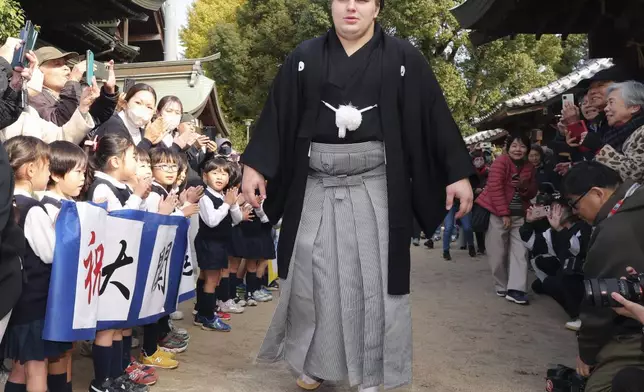
In an elaborate ceremony on Wednesday, he was promoted by the Japan Sumo Association to the rank of ozeki, the rung just below the top.
Click to Gallery
Ukrainian Aonishiki, left, receives a trophy after winning the Kyushu Grand Sumo Tournament in Fukuoka, western Japan, Sunday, Nov. 23, 2025. (Kyodo News via AP)
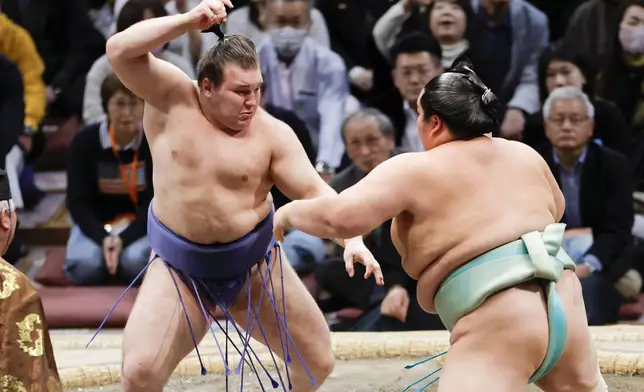
Ukrainian Aonishiki, left, fights with Kotozakura at the Kyushu Grand Sumo Tournament in Fukuoka, western Japan, Sunday, Nov. 23, 2025. (Kyodo News via AP)
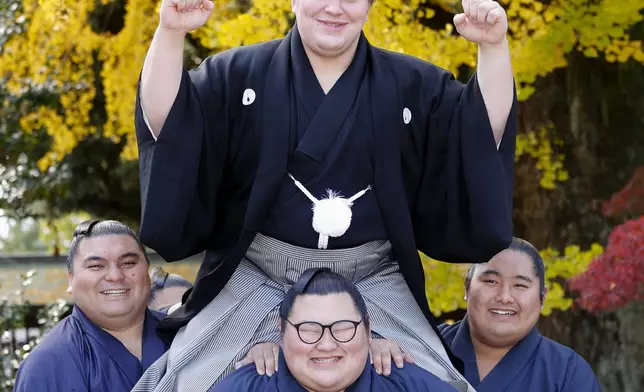
Ukrainian sumo wrestler Aonishiki, top, poses as he celebrates his promotion to the rank of ozeki in Kurume, Fukuoka prefecture, southern Japan Wednesday, Nov. 26, 2025. (Kyodo News via AP)
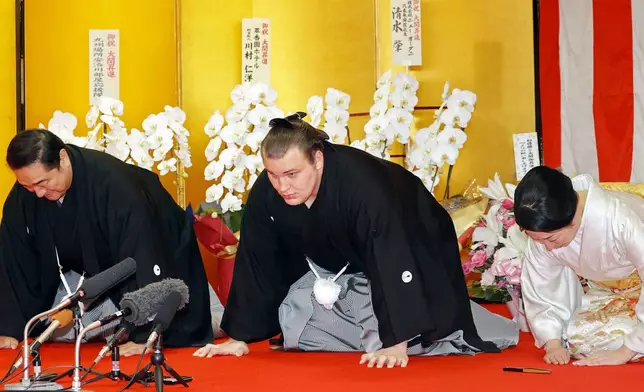
Ukrainian sumo wrestler Aonishiki, center, makes a speech as he is promoted to the rank of ozeki in Kurume, Fukuoka prefecture, southern Japan Wednesday, Nov. 26, 2025. (Kyodo News via AP)
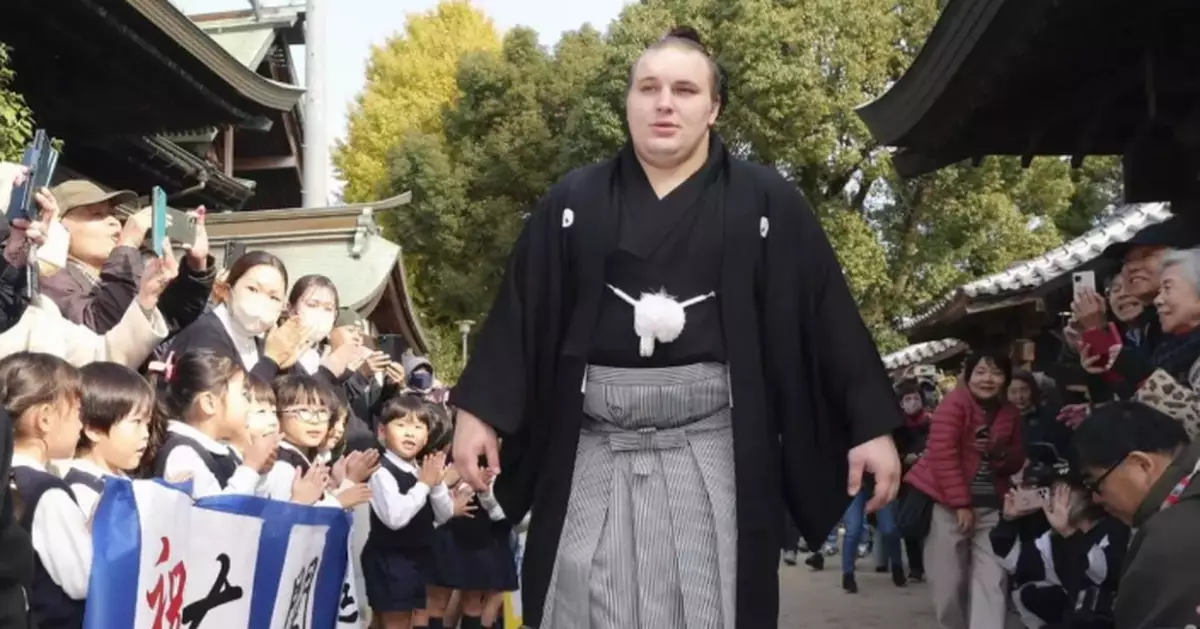
Ukrainian sumo wrestler Aonishiki, center, is celebrated by kindergarteners his promotion to the rank of ozeki in Kurume, Fukuoka prefecture, southern Japan Wednesday, Nov. 26, 2025. (Kyodo News via AP)
Only two now hold the top rank of yokozuna — grand champion in English: Japanese Onosato and Mongolia-born Hoshoryu.
"I’m happy but I feel more strongly about working harder from now on,” Aonishiki said Wednesday after the ceremony. “There is a higher rank, and that’s my next goal.”
Sumo's new rising star, who wrestles under the ring name of Aonishiki Arata, was born Danilo Yavhushyshyn in west central Ukraine and has identified his hometown as Vinnytsia.
He moved to Japan after Russia invaded Ukraine just over 3 1/2 years ago, the byproduct of a friendship he had made a few years earlier with a Japanese wrestler at a tournament.
Japanese media identifies him as being the quickest — he's wrestled only 14 tournaments — to reach the ozeki rank since 1958 when the present tournament scheduling system was installed.
The promotion was inevitable after he won a prestigious tournament on Sunday in western Japan. He defeated Hoshoryu in the deciding match.
He explained earlier that his parents fled to Germany after the invasion and said they are living safely. He said he called them after the big tournament on Sunday and praised them for allowing him to pursue his interests. He said his mother cried on the phone call. He was told his father did too, but tried to hide it.
“They never scolded me even when I didn’t do well in studies, as they believed in letting me do what I liked to do,” he said Wednesday.
Aonishiki is small by sumo standards. He weighs in the 125 to 135 kilogram range — (between 275 to 300 pounds). This is slight in sumo — in the range of an NFL lineman — since many wrestlers weigh at least 150-kilograms (330 pounds) and some much more.
Sumo experts in Japan say his success comes from keeping a low body position. He can bench press 210 kilograms (460 pounds) — about 50% more than his body weight.
“I need to be stronger all around,” he said Wednesday. “I have to be bigger, and I still need to learn a lot more about sumo.”
Non-Japanese sumo wrestlers have excelled in different periods in Japan. They have included Mongolians, Hawaiians and now Ukrainians. A second Ukrainian, Shishi Masaru, is also a highly-ranked wrestler in Japan.
Ukraine has a very strong tradition in Olympic wrestling. Its last gold-medal winner was Zhan Beleniuk in the Greco-Roman category at the Tokyo Games, which were delayed until 2021 by the pandemic.
Aonishiki has endeared himself to the Japanese public with his fluent command of their language. He said he arrived speaking no Japanese, but picked it up quickly living only with Japanese wrestlers in the sport's tightly controlled environment.
Mari Yamaguchi in Tokyo contributed.
AP Sports: https://apnews.com/hub/sports
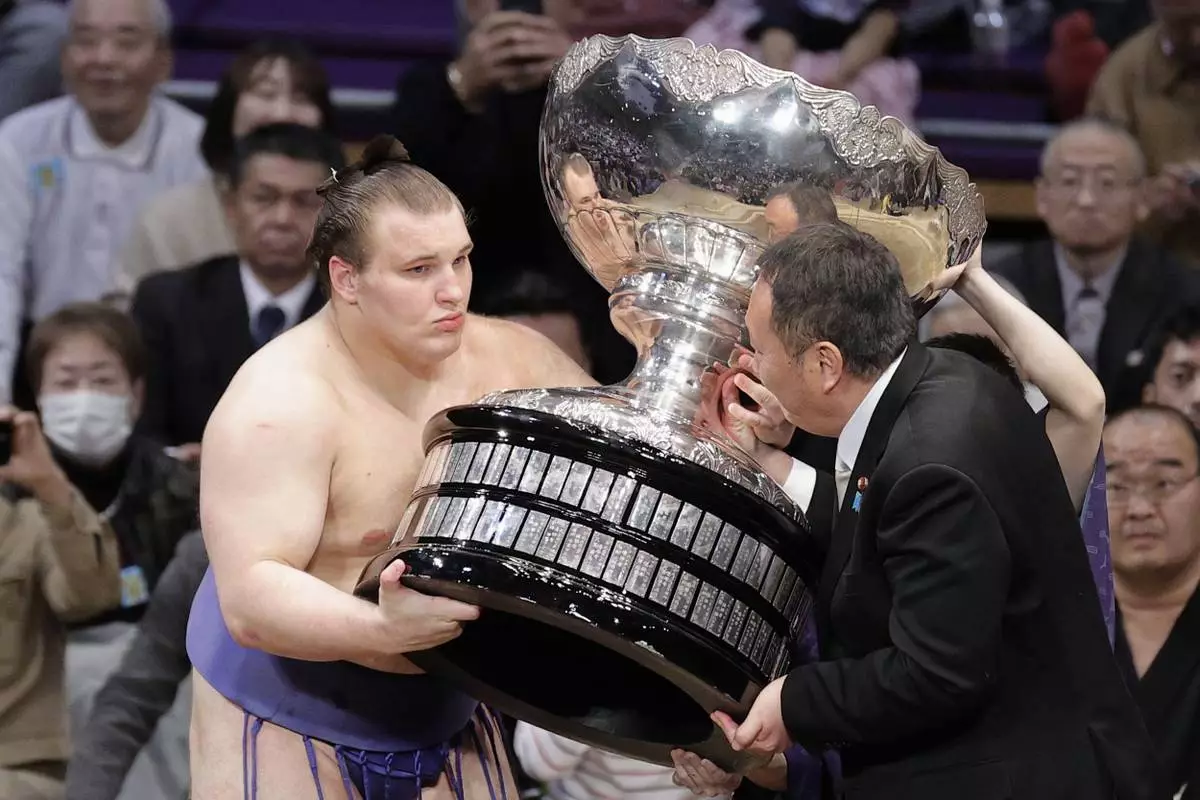
Ukrainian Aonishiki, left, receives a trophy after winning the Kyushu Grand Sumo Tournament in Fukuoka, western Japan, Sunday, Nov. 23, 2025. (Kyodo News via AP)
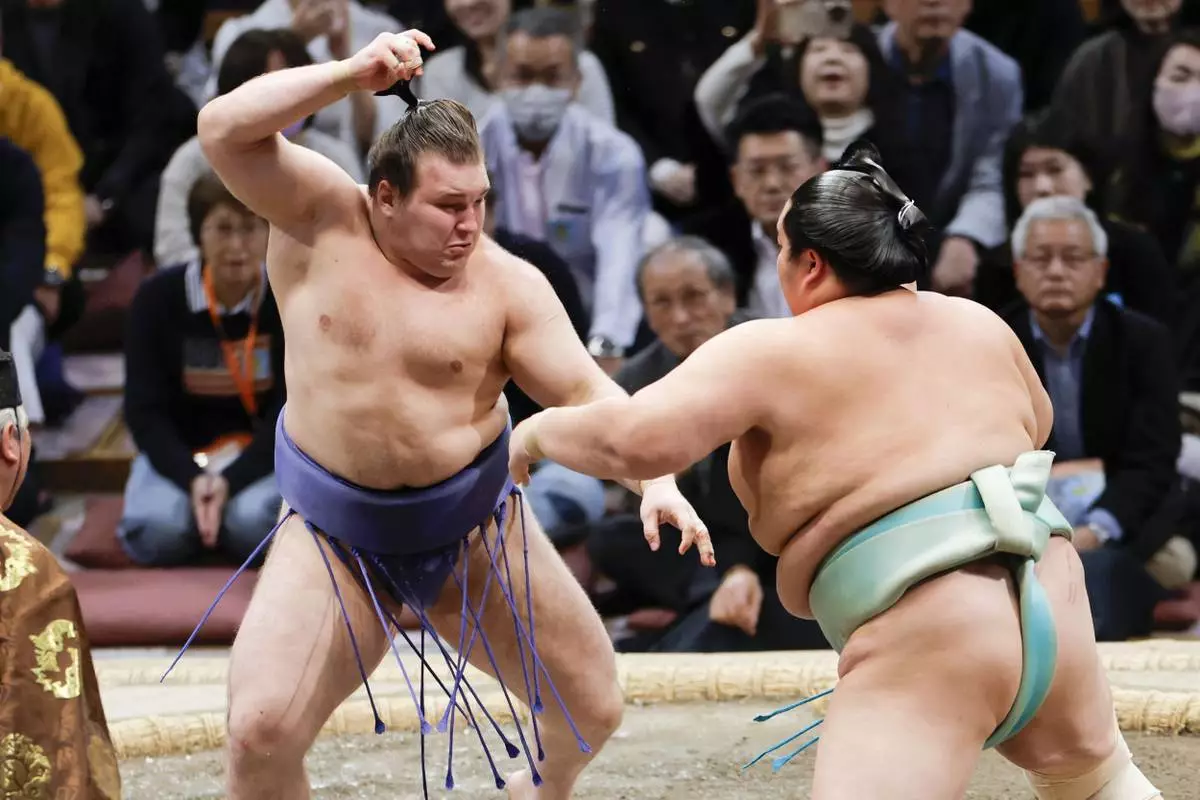
Ukrainian Aonishiki, left, fights with Kotozakura at the Kyushu Grand Sumo Tournament in Fukuoka, western Japan, Sunday, Nov. 23, 2025. (Kyodo News via AP)
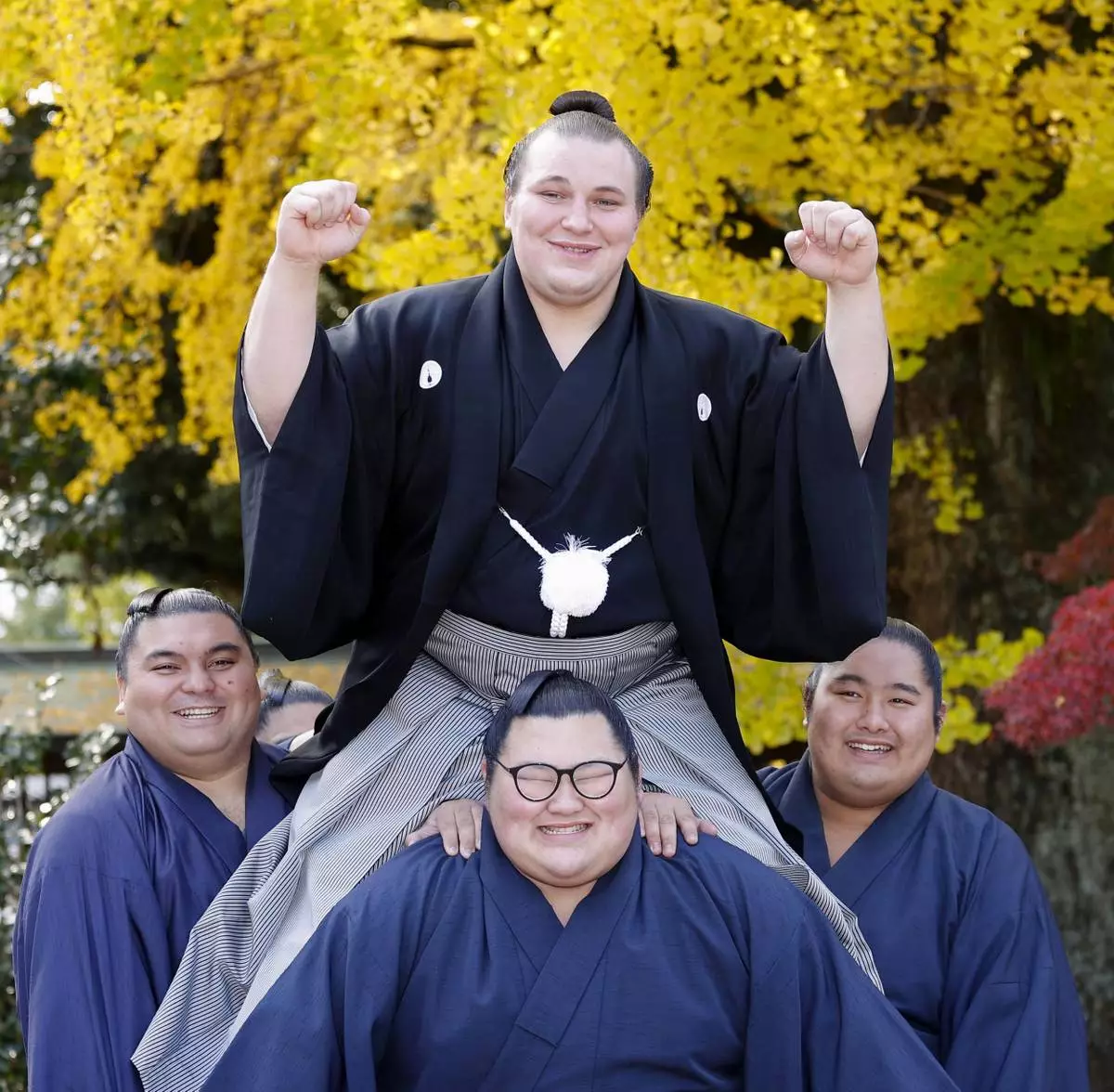
Ukrainian sumo wrestler Aonishiki, top, poses as he celebrates his promotion to the rank of ozeki in Kurume, Fukuoka prefecture, southern Japan Wednesday, Nov. 26, 2025. (Kyodo News via AP)
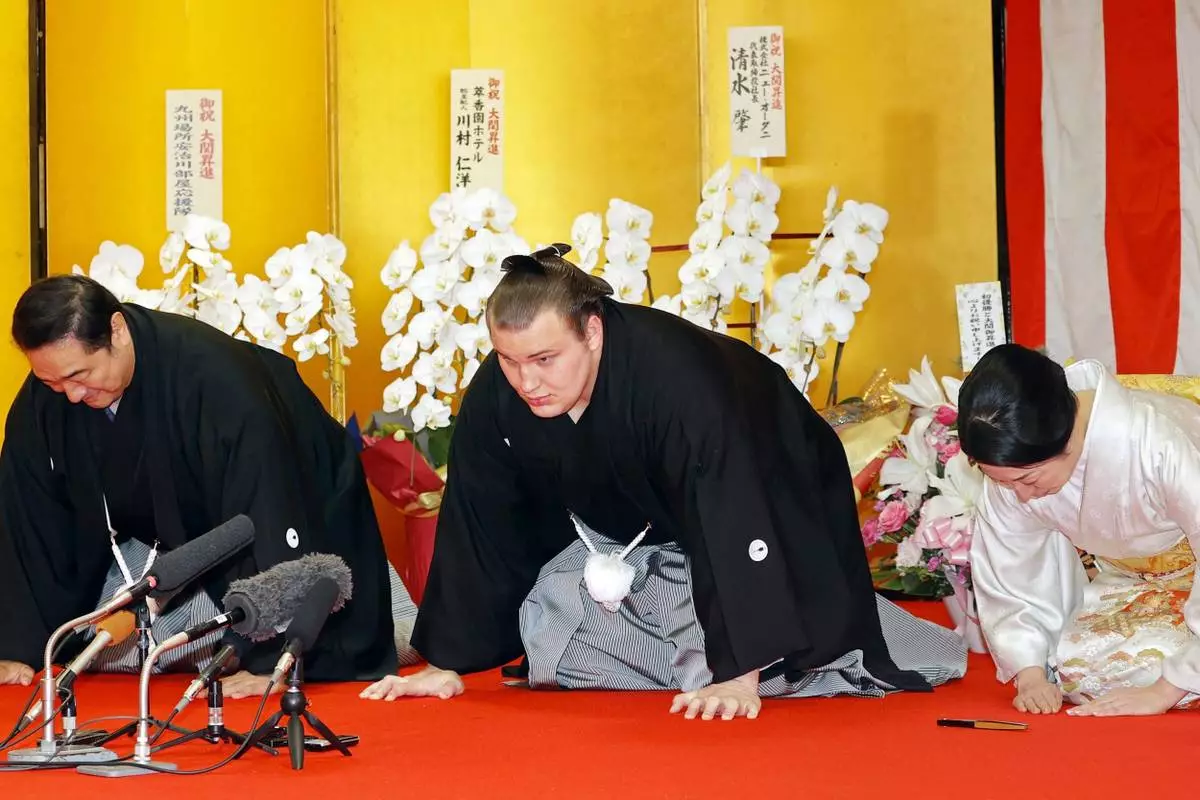
Ukrainian sumo wrestler Aonishiki, center, makes a speech as he is promoted to the rank of ozeki in Kurume, Fukuoka prefecture, southern Japan Wednesday, Nov. 26, 2025. (Kyodo News via AP)
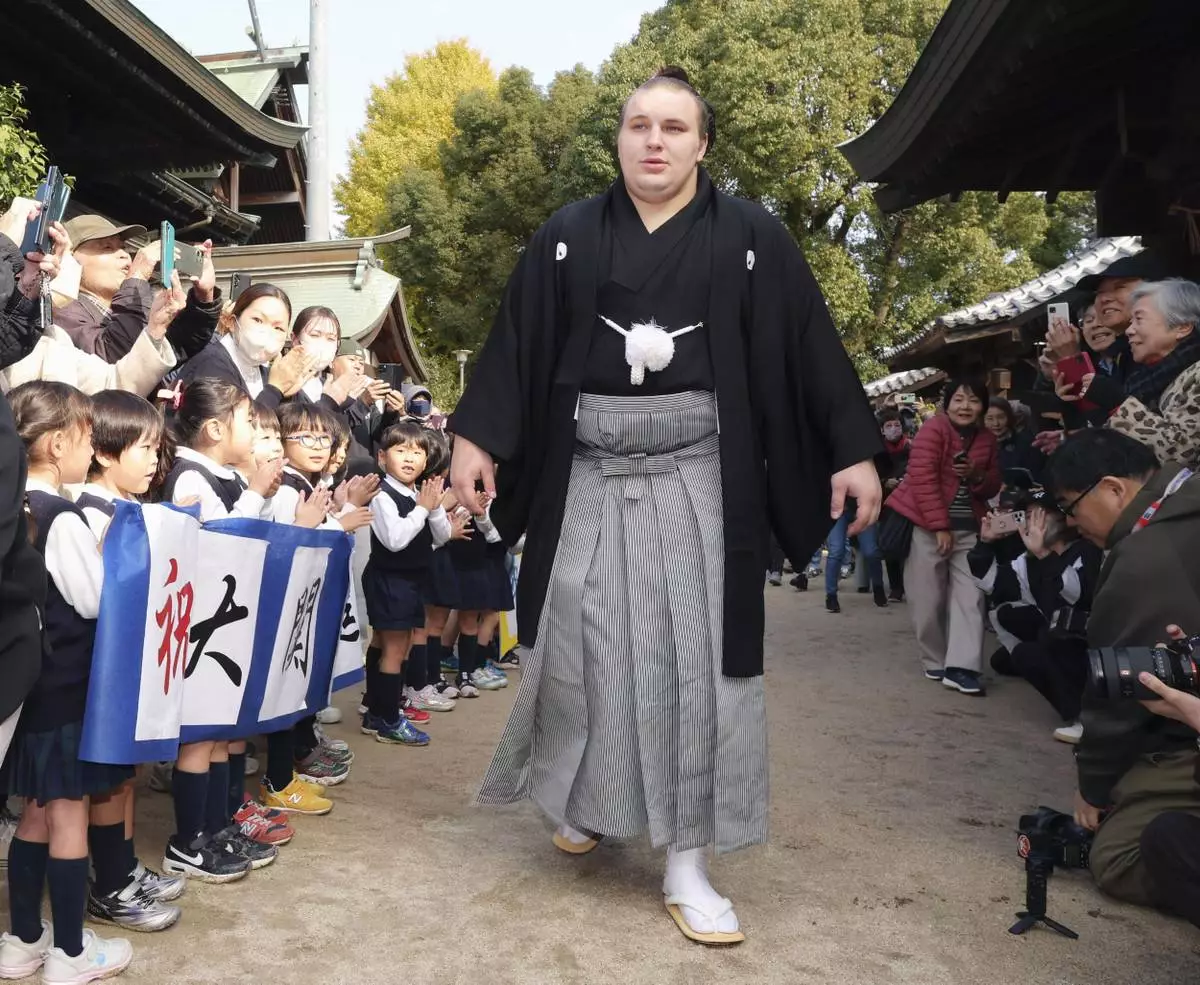
Ukrainian sumo wrestler Aonishiki, center, is celebrated by kindergarteners his promotion to the rank of ozeki in Kurume, Fukuoka prefecture, southern Japan Wednesday, Nov. 26, 2025. (Kyodo News via AP)
Nobody paying attention for the past 24 months would be surprised to see Indiana – yes, Indiana – leading the way into this year’s College Football Playoff.
But anyone paying attention over the last 24 hours knew the only sure thing beyond that was that the selection committee was destined to get destroyed when it released the pairings for this season's 12-team bracket on Sunday.
Most of that second-guessing and vitriol will be coming from Notre Dame, which was passed over for Alabama and Miami for two bubble spots in the bracket. The Fighting Irish dropped two notches in the CFP rankings over the last two weeks, down to No. 11, despite a 10-game winning streak, winning their finale by 29 points and sitting on the couch Saturday.
No. 9 Alabama didn't move at all in the CFP rankings after a 28-7 loss to No. 3 Georgia that looked worse than that. The committee didn't count that against the Tide in keeping with a hazy policy that refrains from penalizing teams for playing in their league title game.
No. 10 Miami didn't play either, but the Hurricanes' 27-24 win over Notre Dame in Week 1 played a role in their move once the teams were grouped right next to each other after BYU lost its game on Saturday.
Committee chairman Hunter Yurachek said he directed the committee to rewatch the Miami-Notre Dame game again.
“Once we moved Miami ahead of BYU, we had the side-by-side comparison that eveyrone had been hungy for,” Yurachek said.
The committee’s other key decision during deliberations that went until 2:30 a.m. Sunday then picked up again after a short rest, was choosing James Madison over Duke for the final spot. The selection left the Atlantic Coast Conference champion out of the mix, but didn’t fully exclude the ACC because Miami made it.
Yurachek insisted that including the ACC — one of the Power Four conferences — in the playoff in some form played no role in the deliberations.
The rest of the field includes No. 2 Ohio State, No. 3 Georgia and No. 4 Texas Tech, which joined Indiana in getting first-round byes. The Hoosiers moved to No. 1 with their 13-10 win over the Buckeyes on Saturday — their first Big Ten title since 1967 — and their 1-2 positioning sets up a possible rematch in the national title game Jan. 19.
Then it was No. 5 Oregon, followed by Ole Miss, Texas A&M, Oklahoma, Alabama, Miami, Tulane and James Madison.
The playoffs start Dec. 19 with No. 9 Alabama at No. 8 Oklahoma. On Dec. 20, it's No. 10 Miami at No. 7 Texas A&M, No. 11 Tulane at No. 6 Ole Miss and No. 12 James Madison at No. 5 Oregon.
The quarterfinals will feature Ohio State in the Cotton Bowl on New Year's Eve, then Texas Tech in the Orange Bowl, Indiana in the Rose Bowl and Georgia in the Sugar Bowl on Jan. 1.
This is a particularly costly and painful snub for the Fighting Irish. They lost their first two games of the season – one to Miami, the other to Texas A&M --by a combined four points.
They did not play a tough schedule the rest of the way; it was ranked 44th, compared to 6th for Alabama but 45th for Miami. But they won all those games easily.
It also hurts the pocketbook. Where conferences split $4 million for each team they place into the first round, Notre Dame – as an independent – would have banked the full amount for itself.
Yurachek said the committee had not previously considered Miami’s Aug. 31 win over Notre Dame because there were always other teams in the mix, namely Alabama and BYU. The only real explanation for passing over Notre Dame was that BYU lost badly to Texas Tech and dropped to No. 12.
Alabama (10-3) is in despite three losses. Those who believe the Tide deserve it will look at these factors:
—An eight-game winning streak after that 14-point, season-opening loss to Florida State) that included a 24-21 victory at Georgia and wins over the likes of Tennessee, Vanderbilt and Missouri.
--The “You can’t lose ground for playing in the title game” argument. Last year, Alabama had three losses and was passed over for SMU, which was coming off a loss in the ACC title game. Using the same logic, someone other than the Tide needed to go this time.
Get poll alerts and updates on the AP Top 25 throughout the season. Sign up here and here (AP News mobile app). AP college football: https://apnews.com/hub/ap-top-25-college-football-poll and https://apnews.com/hub/college-football

Georgia running back Chauncey Bowens (33) runs against Alabama during the second half of a Southeastern Conference championship NCAA college football game, Saturday, Dec. 6, 2025, in Atlanta. (AP Photo/Mike Stewart)
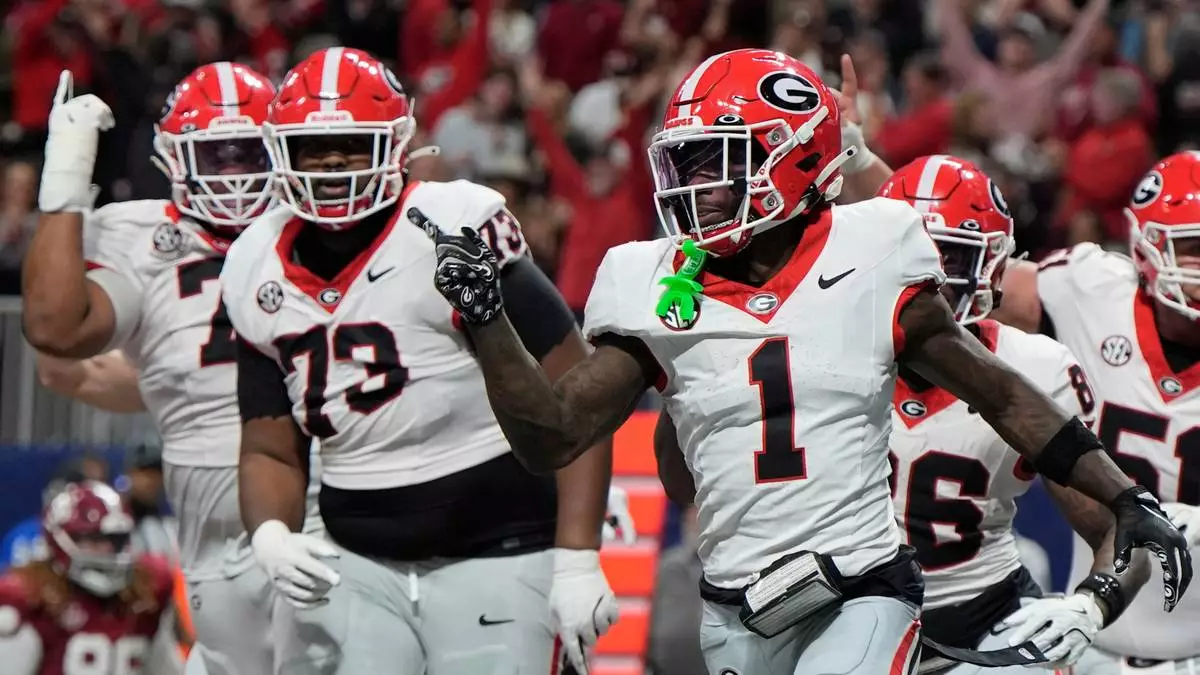
Georgia wide receiver Zachariah Branch (1) celebrates his touchdown against Alabama during the second half of a Southeastern Conference championship NCAA college football game, Saturday, Dec. 6, 2025, in Atlanta. (AP Photo/Mike Stewart)
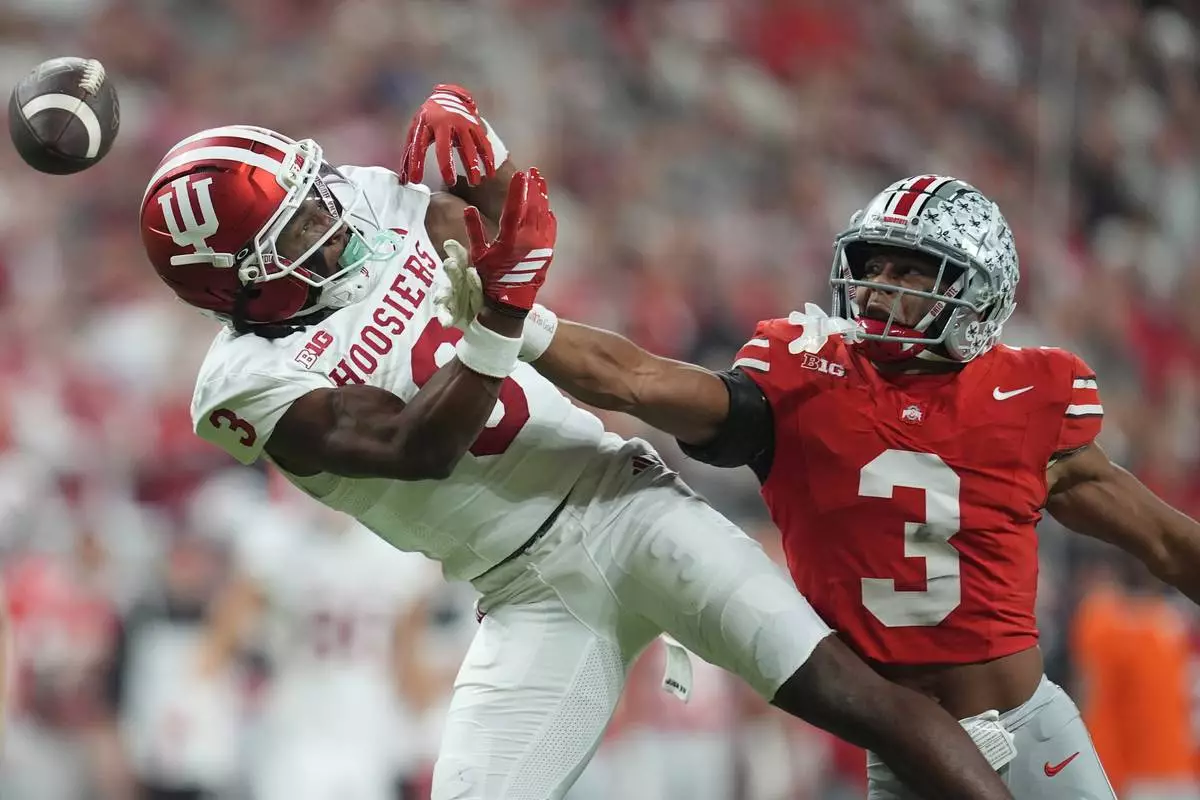
Ohio State's Lorenzo Styles Jr. breaks up a pass intended for Indiana's Omar Cooper Jr. during the first half of the Big Ten championship NCAA college football game in Indianapolis, Saturday, Dec. 6, 2025. (AP Photo/Michael Conroy)