Skip to Content Facebook Feature Image

How Jessie Buckley and Paul Mescal found the emotional power of 'Hamnet'

ENT

How Jessie Buckley and Paul Mescal found the emotional power of 'Hamnet'
ENT

ENT

How Jessie Buckley and Paul Mescal found the emotional power of 'Hamnet'

2025-11-26 22:37 Last Updated At:11-27 23:11

TORONTO (AP) — During the emotionally wrecking final scene of “Hamnet,” Jessie Buckley and Paul Mescal had an issue.

“There were moments where the camera was obstructing us,” Buckley recalls. “We were like: ‘No, we have to see each other.’”

“And then the minute we did see each other, it was like ‘Oh, no,’” Mescal says, laughing. “What a glorious thing.”

In “Hamnet,” Chloé Zhao’s adaptation of Maggie O’Farrell’s prizewinning 2020 novel, Mescal plays William Shakespeare and Buckley his wife, Agnes. It’s a fictional, speculative drama with basis in historical fact. One of the couple’s three children, Hamnet, died in 1596 at the age of 11. Within a handful of years, “Hamlet” would premiere at the Globe Theatre. The names, scholars have noted, were essentially interchangeable in 16th-century England.

Zhao’s film, which opens Wednesday in theaters, imagines the possible connection between the death of the Shakespeares’ son and the birth of the playwright’s greatest work. It’s a portrait of a marriage, in grief and literary greatness. In many ways, it’s also a movie about seeing and being seen. Both William and Agnes are drawn together as misunderstood near-outcasts. William is dismissed as “a pasty-faced scholar.” Agnes is branded a “forest witch.” Gaps of misperception and solitude are bridged by love in the film’s first half, and art in its overwhelming final act.

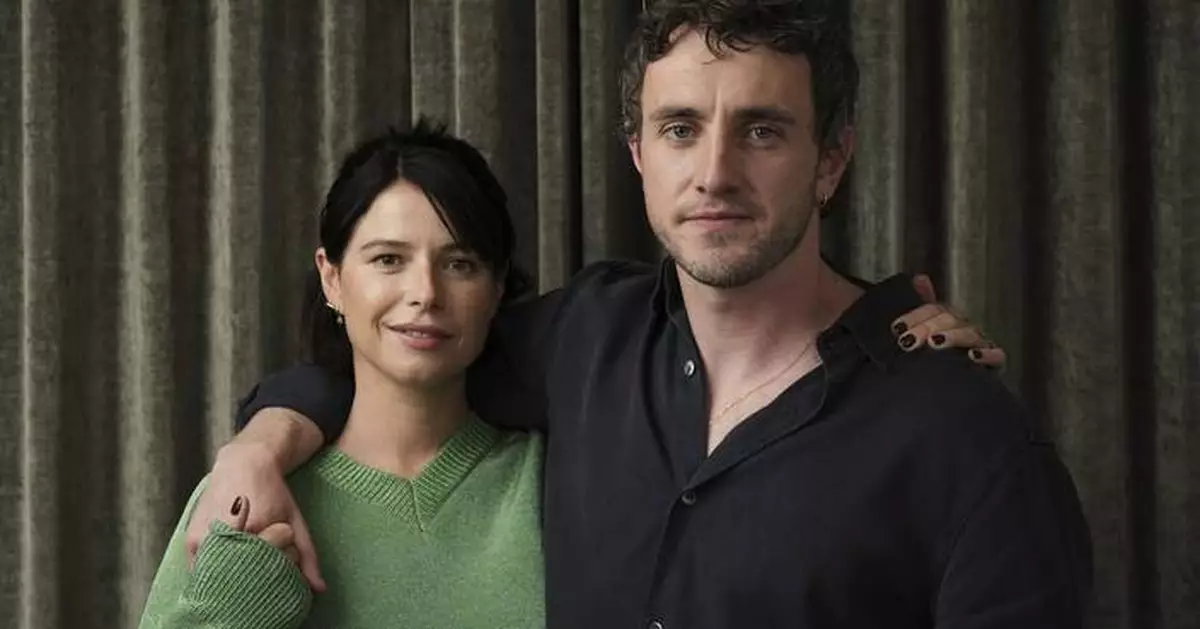
In both cases, Buckley’s and Mescal’s eyes tell much of the story. Their performances — raw, earthy, soulful — have been hailed as among the best of the year. Both are widely expected to land Oscar nominations. Though they acted in separate timelines in Maggie Gyllenhaal’s “The Lost Daughter” (2021), “Hamnet” is the first time on screen together for the two young, acclaimed Irish stars.

“We entered the film at the perfect juncture. I had huge respect for Jessie and loved spending time with her,” Mescal says. “But we were also at the point where we didn’t know each other all that well. So there was a kind of mystery.”

Before beginning production, Zhao staged a chemistry read for the two. It might go down as the most unnecessary chemistry read in Hollywood history. “We’d forget that we were saying lines,” says Mescal, sitting beside Buckley.

“There was such a kinetic energy already between us,” Buckley agrees. “It just felt so possible.”

Buckley and Mescal met this reporter earlier this fall just as “Hamnet” was making its prizewinning premiere at the Toronto International Film Festival. The film’s extreme emotionality was by then already earning an almost mythic reputation for turning moviegoers into puddles.

But Buckley, the 35-year-old star of “Wild Rose” and “Wicked Little Letters,” and the 29-year-old Mescal, who was soon to embark on playing Paul McCartney in Sam Mendes’ four-film series, entered jovial and wisecracking. Buckley, a new mother, made a remark about nursing before requesting it not be printed, and then reversing herself. “Ah, print it. What do I care!”

Once they settled in, though, both actors struggled to capture the enormity of their experience making “Hamnet.” If “Hamnet” has moved audiences, it has shaken its stars.

“We worked with Kim (Gillingham, a coach) for subconscious and dreams. She asks you these prompts as you start to work. One was: Why are you making it?” Mescal recalls, turning toward Buckley. “I don’t want to get into why I initially thought I was making it. But I remember sitting with you and looking up at the stars two weeks in. Something personal had been going on in my life before. I remember turning to you and going, ‘Oh, that thought was way too small.’”

Little is known about Shakespeare’s life and even less Agnes’. That meant the actors were using their own experiences as artists to try to better understand their characters. Each day of production, Zhao led the cast in a meditation of three deep breaths, a practice she’s continued at screenings.

“As actors, sometimes people just want you to wear a mask and put coats on, and I never find that satisfying,” Buckley says. “What Chloé wants you to do is move somewhere deeper within yourself to meet the person you’re going to come to understand. It’s not about masks. If anything, it’s about becoming more human and pulling off a layer of skin that you’ve maybe kept around yourself too tightly.”

Zhao, the Oscar-winning “Nomadland” director who last directed the Marvel movie “Eternals,” says she challenged Mescal and Buckley to play “extreme masculine and extreme feminine.” Since emerging with a pair of lyrical Lakota dramas, “Songs My Brothers Taught Me” and “The Rider,” Zhao has refined a rough-hewn naturalism that actors gravitate toward. To find a very different Shakespeare, she relied on those instincts.

“What we have to do as artists is try to find that commonality that transcends time and space and gender and religion,” says Zhao. “You say: What is the bone-deep humanity of that man that is also in Paul Mescal? That’s my job, to open that portal.”

“Hamnet” dares to suppose that all art, even something as epochal as “Hamlet,” comes from somewhere profoundly personal. Mescal’s Shakespeare, for instance, doesn’t go around eloquently spouting verses.

“How boring would that be!” says Mescal. “Anyone who writes like that isn’t walking around waxing lyrical. I think there’s a real engine underneath him. There’s someone who wanted to escape his life and love his life at the same time. He loved his life and loved his work. This constant conflict in him, charging around his life, restless-like.”

“That’s also you,” interjects Buckley.

“That was just the version of him that made the most sense to me,” Mescal responds. “I’m sure there will be someone at Oxford who’ll be like, ‘He would have spoken with a weird hybrid accent because of the time period.’ OK, whatever. I don’t care.”

“Hamnet” reaches a remarkable crescendo in a performance of “Hamlet” at the Globe that opens up deep wells of sorrow and oceans of empathy. It has already become one of the most talked-about finales of the year, and it’s when the movie’s belief in the transference of feeling becomes most palpable. Yet, cameras aside, it was a scene they struggled to find.

“To be completely honest, we had gone on this ginormous, epic journey of the heart. We got to the Globe. I had not a clue what to do. I was totally lost. I think Chloé was lost,” Buckley says. “The Globe flooded. There was a rainstorm for two days. You go on this huge journey and you’re like: Where does this end?”

But on the third day, something clicked for Buckley when composer Max Richter’s “On the Nature of Daylight” came on her playlist. She shared it with Zhao and something shifted.

“Sometimes as an actor, you feel like you have to do it yourself,” Buckley says. “She was like this lone wolf in the middle of this ocean of people. I realized on the third day how everyone around me was crucial. It became about surrendering to the community of feeling.”

Buckley and Mescal have already resolved to work together again.

“I feel like we’re going to meet each other at pinnacles of our lives and help each other unravel the next layer,” says Buckley.

“Hands down, it was one of the most important collaborations that I’ve ever had,” Mescal says. “It’d be insane for that to be the only time we did it.”

But it’s also possible that the final moments of “Hamnet” will forever stay with them. The scene’s power is owed, also, to the hundreds of extras who play a poignant role. Buckley's and Mescal’s eyes are locked on one another, but the play’s the thing — not just its transmutation of their private grief, but the play's resonance with all around them.

“Why we go to the cinema, why we go to the theater, why we tell stories is for these places to contain the parts of ourselves that are too hard to hold by ourselves,” says Buckley. “There’s this unspoken ocean between the person sitting next to you and the story, and the play is the vessel through which that transcends through.”

Buckley shakes her head. “It was incredible. Standing at the lip of the stage, I could just feel a tsunami of 300 people behind me opening up their hearts.”
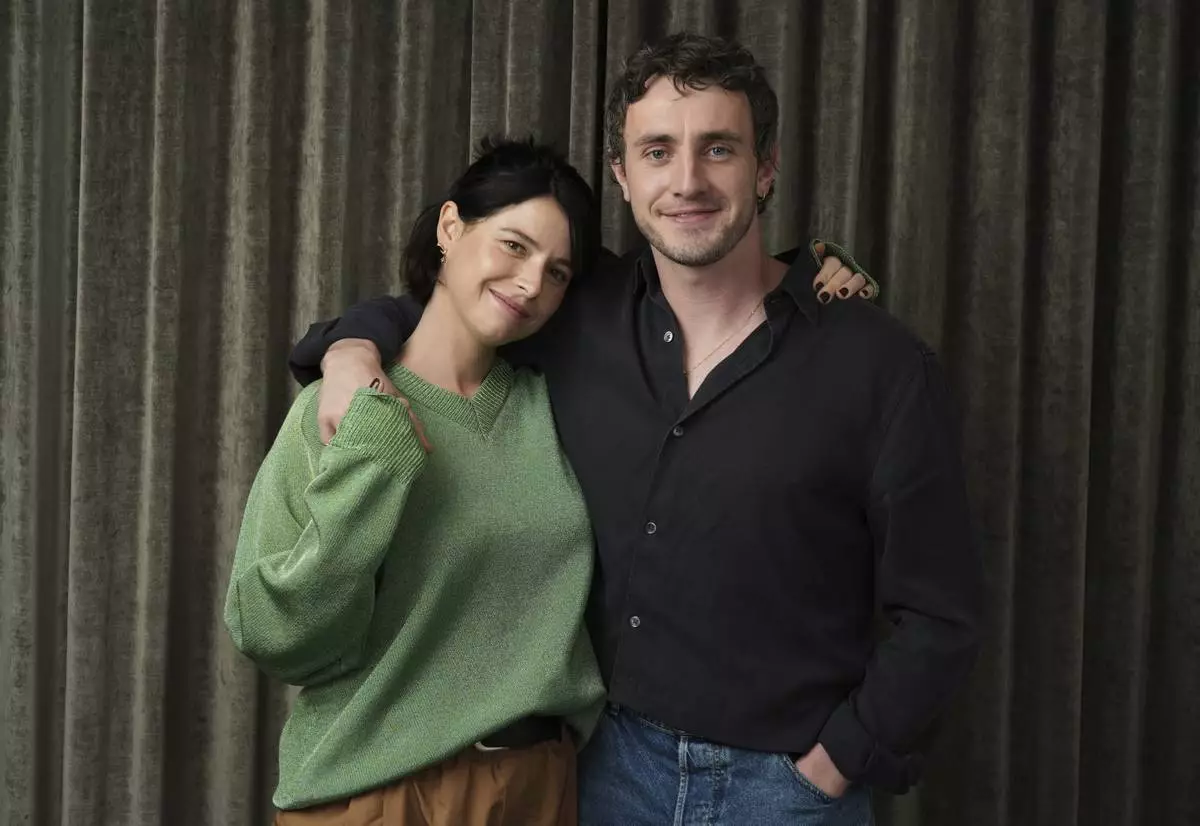
Jessie Buckley, left, and Paul Mescal, cast members in the film "Hamnet," pose for a portrait during the Toronto International Film Festival on Sept. 7, 2025. (AP Photo/Chris Pizzello)
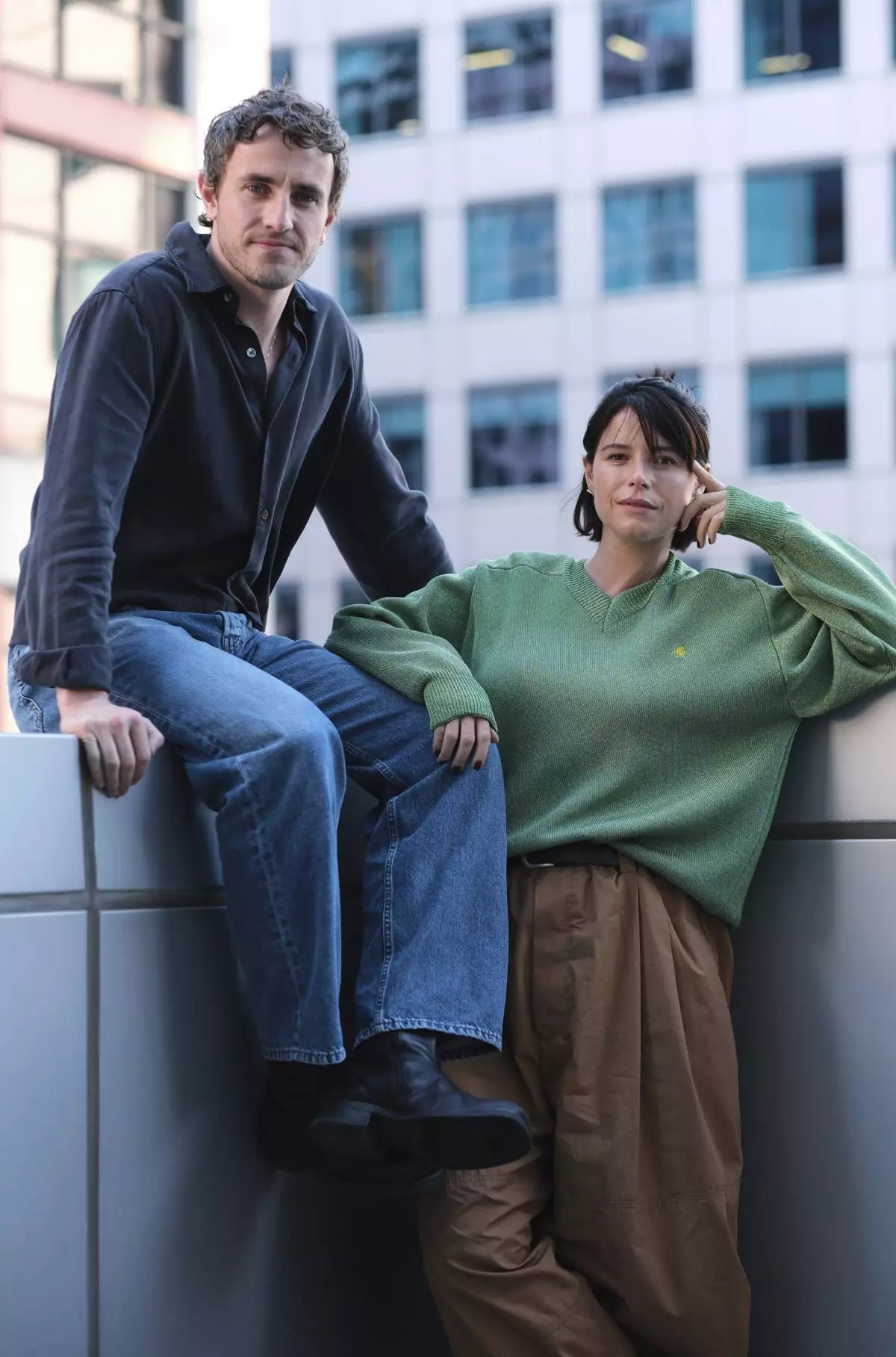
Jessie Buckley, left, and Paul Mescal, cast members in the film "Hamnet," pose for a portrait during the Toronto International Film Festival on Sept. 7, 2025. (AP Photo/Chris Pizzello)
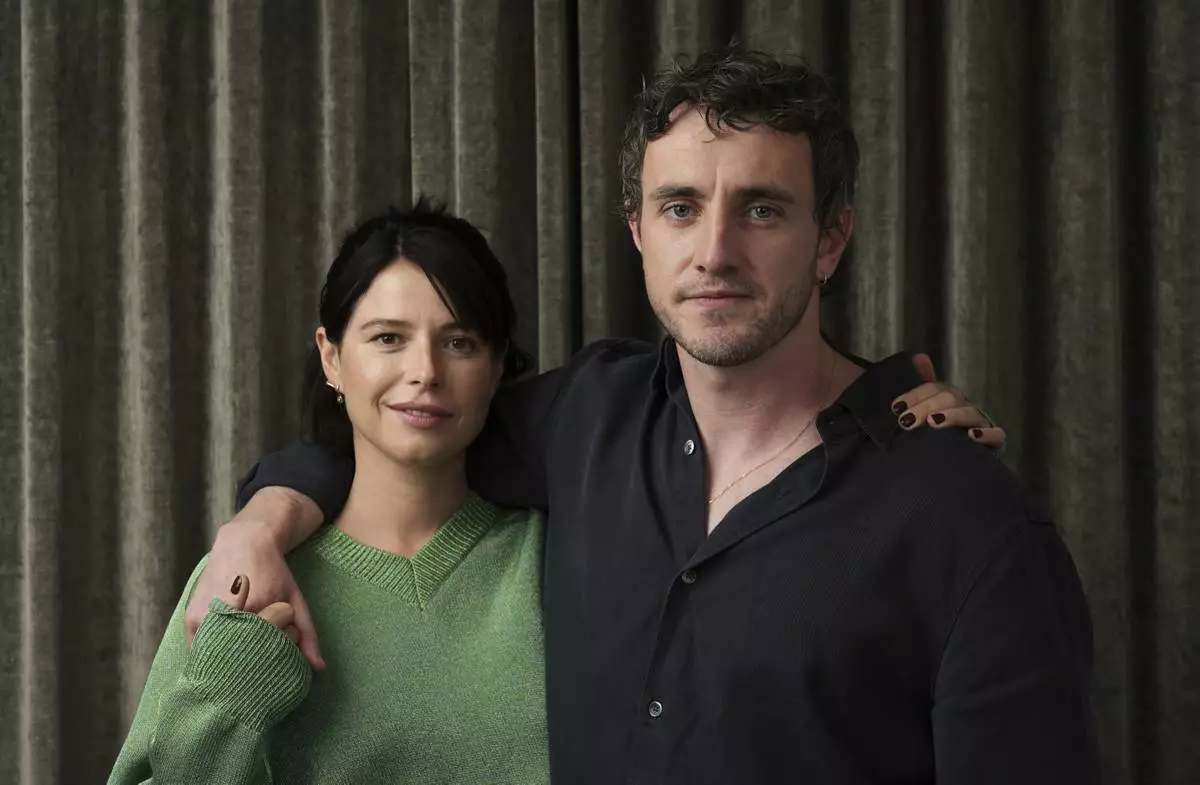
Jessie Buckley, right, and Paul Mescal, cast members in the film "Hamnet," pose for a portrait during the Toronto International Film Festival on Sept. 7, 2025. (AP Photo/Chris Pizzello)
Jessie Buckley, right, and Paul Mescal, cast members in the film "Hamnet," pose for a portrait during the Toronto International Film Festival on Sept. 7, 2025. (AP Photo/Chris Pizzello)
Jessie Buckley, left, and Paul Mescal, cast members in the film "Hamnet," pose for a portrait during the Toronto International Film Festival on Sept. 7, 2025. (AP Photo/Chris Pizzello)
Jessie Buckley, left, and Paul Mescal, cast members in the film "Hamnet," pose for a portrait during the Toronto International Film Festival on Sept. 7, 2025. (AP Photo/Chris Pizzello)
WASHINGTON (AP) — U.S. President Donald Trump has been fuming about NATO, musing about leaving the alliance, ratcheting up his criticism of European leaders and exposing a wider rift in the trans-Atlantic alliance — this time over the Iran war.

“NATO treated us very badly, and you have to remember it because they’ll be treating us badly again if we ever need them,” Trump said Wednesday at a private White House lunch for the upcoming Easter holiday that was posted online by a Business Insider reporter.

The president also suggested in an interview to The Telegraph newspaper in the U.K., published Wednesday, that he could potentially try to leave the alliance.

Yet in his televised Wednesday evening address to the American people about the Iran war, Trump chose not to mention NATO by name, suggesting only that countries that depend on oil flowing through the Strait of Hormuz “must grab it and cherish it” because the U.S. would not.

Trump's tension over NATO reflects the potentially dangerous consequences of breaking up the alliance, the limits on his own power to do so and the careful mending of the relationship performed by fellow world leaders. But one certainly is that Trump's displeasure with NATO appears to be a feature of his presidency, rather than an issue that can be easily settled.

Congress passed legislation in 2023 that would prevent any president from pulling out of NATO without its approval. The Trump administration, during his first term, had insisted the president had such authority on his own. It’s unclear whether Trump would challenge in any way the new law, which is the first of its kind and with the NATO provision specifically championed at the time by Trump's secretary of state, Marco Rubio, who was a Florida senator at the time.

There are efforts under way to reinforce America's relationship with NATO, with its secretary-general, Mark Rutte, scheduled to visit Washington next week. The visit by Rutte was confirmed by a White House official who was not authorized to comment on the yet to be formally announced visit and spoke on the condition of anonymity.

U.K. Prime Minister Keir Starmer said his government was “fully committed to NATO” and called it “the single most effective military alliance the world has ever seen.”

Before a Trump speech later Wednesday, U.S. Sen. Mitch McConnell, a Kentucky Republican, and Sen. Chris Coons, a Delaware Democrat, said in a joint statement that “NATO is the most successful military alliance in history” and stressed that the Senate “will continue to support the alliance for the peace and protection it provides" the United States, Europe and the world.

Many European leaders have felt political pressure over the war, which faces opposition in their countries and has sent petroleum prices soaring as Iran has effectively shut the Strait of Hormuz, the narrow waterway between Iran and Oman through which about one-fifth of the world’s oil passes.

The U.K. is working on plans that could help assuage Trump, and Starmer said military planners will work on a postwar security plan for the Strait.

On Thursday, British Foreign Secretary Yvette Cooper will host a virtual meeting of 35 countries that have signed up to help ensure security for shipping in the Strait — after the fighting ends.

Iulia-Sabina Joja, a senior fellow at the Middle East Institute, alluded to Trump's exhortation Tuesday for allies to “go get your own oil” in a social media post insisting it wasn't America's job to secure the Strait.

“The Europeans are not keen to go into an active warfare situation, to so-called ‘get’ their energy out of the Strait,” said Joba, a former deputy project manager at NATO Allied Command Transformation in Virginia.

As energy prices have spiked, Trump has called NATO allies “cowards” for not sending their military ships to the strait. It's an amplification of his message since his first term that European partners should assume greater responsibility for their own security.

Speaking Tuesday on Fox News, Rubio said, “I do think, unfortunately, we are going to have to reexamine whether or not this alliance that has served this country well for a while is still serving that purpose.”

Rubio raised questions with interviewer Sean Hannity about whether NATO has “become a one-way street where America is simply in a position to defend Europe — but when we need the help of our allies, they’re going to deny us basing rights and they’re going to deny us overflight.”

The fraying of NATO could weaken the alliance’s deterrence, particularly with Russia: It seeks to limit conflict by having Russian President Vladimir Putin believe that NATO would retaliate if he decides to one day expand Moscow's war in Ukraine.

NATO is built on Article 5 of its founding treaty, which pledges that an attack on any one member will be met with a response from them all.

As the Iran war has spread, missiles and drones have been fired toward NATO member Turkey and a British military base on Cyprus, fueling speculation about what might prompt NATO to trigger its collective security guarantee and come to their rescue.

The alliance hasn't intervened or signaled any plan to do so. Rutte — who has voiced support for Trump and Washington's role in the alliance — has been focusing mostly on the Russia-Ukraine war since Ukraine borders four NATO countries.

NATO operates uniquely by consensus. All 32 countries must agree for it to make decisions, so political priorities play a role. Even invoking Article 5 requires agreement among the allies. Turkey or the U.K. can't trigger it alone.

European leaders have called for the Middle East conflict to stop and want the U.S. and Iran to return to negotiations over Tehran's nuclear program, which Washington and Israel see as a threat.

The vocal opposition in Europe to Trump's war against Iran has started to turn into action.

Spain has closed its airspace to U.S. planes involved in the war.

Early last month, France agreed to let the U.S. Air Force use a base in southern France after receiving a “full guarantee” from the United States that planes not involved in carrying out strikes against Iran would land there.

The government of Italian Premier Giorgia Meloni, long seen as one of the European Union leaders with the best personal ties to Trump, denied permission for U.S. bombers to land at the Sigonella air base in Sicily for one mission related to the Middle East.

Franco Pavoncello, a professor of political science at Rome’s John Cabot University, said that decision might cost Meloni a lot of her political capital in Washington.

But he said, “The Italian government could not be seen by the European allies as too submissive to American interests, as it would have very negative repercussions both at home and in the EU.”

U.S. relations with Europe had already soured in recent months over Trump's call for Greenland — a semiautonomous territory of stalwart NATO ally Denmark — to become part of the United States, prompting many EU countries to rally behind Copenhagen.

Jill Lawless reported from London and Jamey Keaten from Geneva. Lorne Cook in Brussels, Giada Zampano in Rome, Sam McNeil in Dubai, United Arab Emirates, and Matthew Lee in Washington contributed to this report.

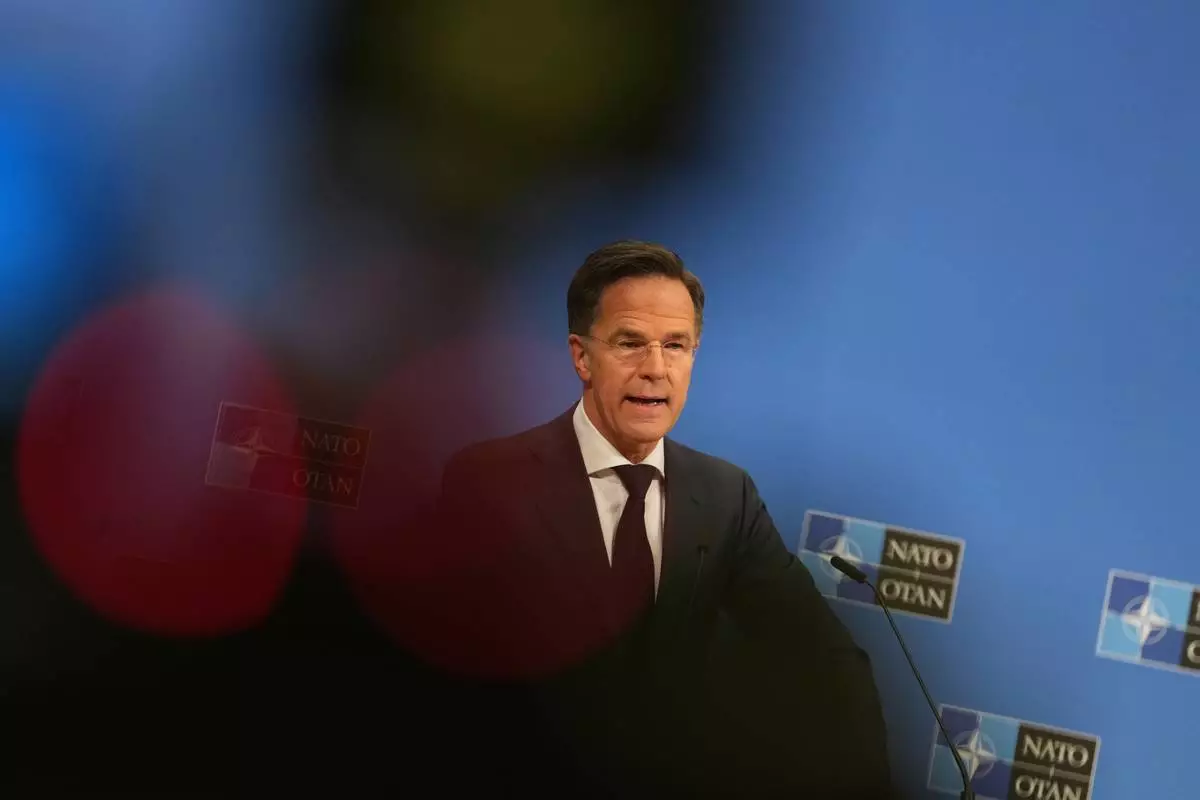
NATO Secretary General Mark Rutte speaks during the launch of the NATO Secretary General's Annual Report for 2025 at NATO headquarters in Brussels, Thursday, March 26, 2026. (AP Photo/Virginia Mayo)

NATO Secretary General Mark Rutte speaks during the launch of the NATO Secretary General's Annual Report for 2025 at NATO headquarters in Brussels, Thursday, March 26, 2026. (AP Photo/Virginia Mayo)

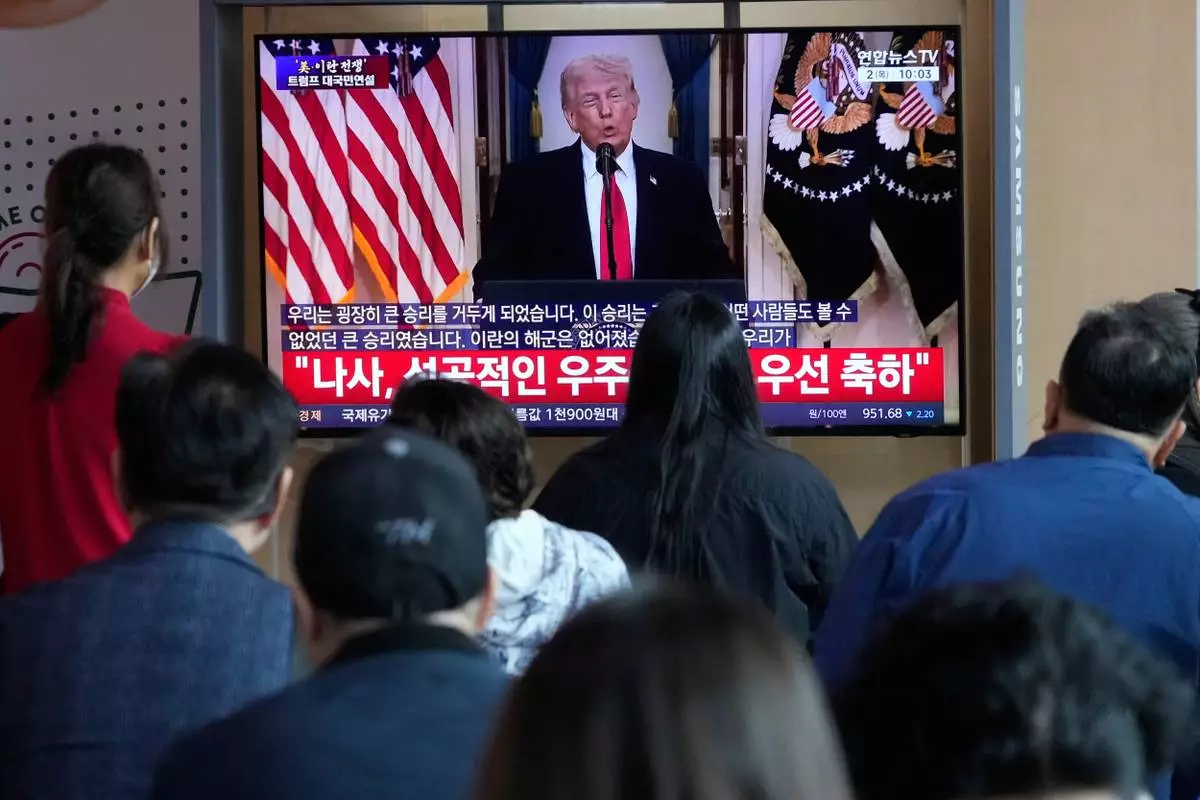
People watch a TV screen showing a live broadcast of U.S. President Donald Trump's speech at the Seoul Railway Station in Seoul, South Korea, Thursday, April 2, 2026. (AP Photo/Ahn Young-joon)

People watch a TV screen showing a live broadcast of U.S. President Donald Trump's speech at the Seoul Railway Station in Seoul, South Korea, Thursday, April 2, 2026. (AP Photo/Ahn Young-joon)

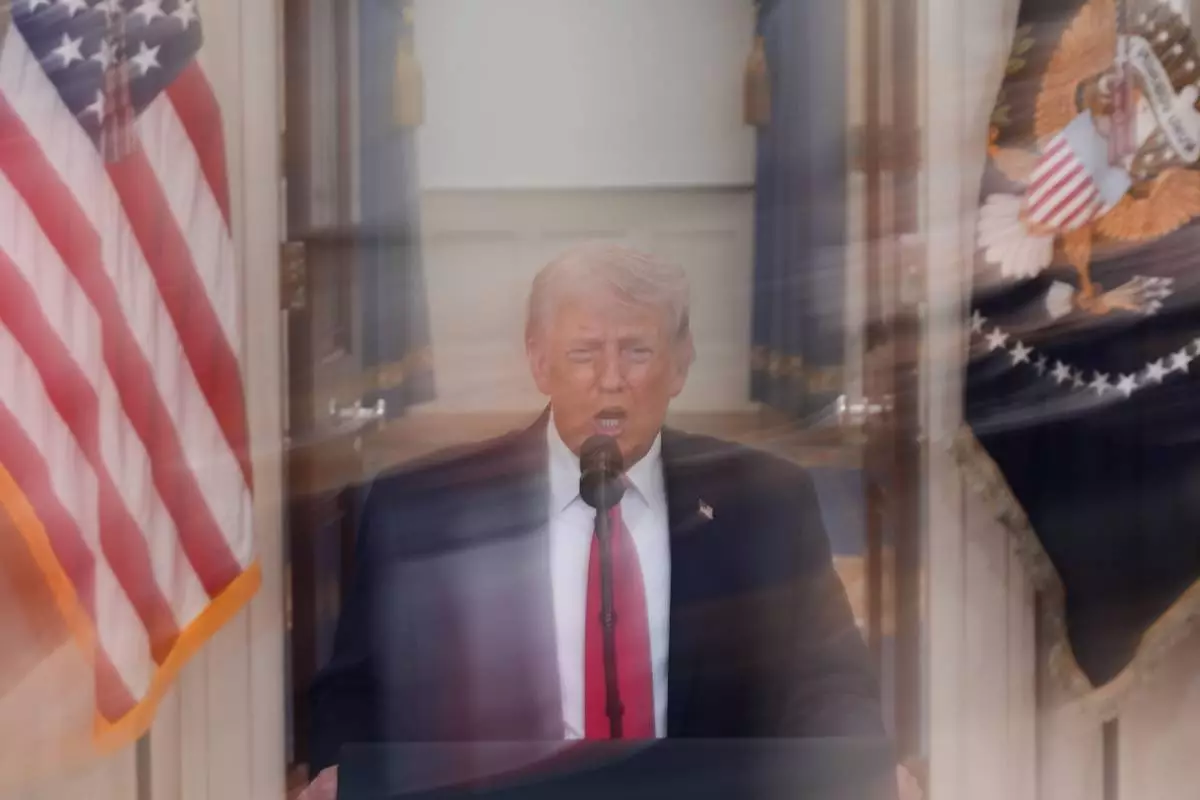
In this image made with a long exposure, President Donald Trump speaks about the Iran war from the Cross Hall of the White House on Wednesday, April 1, 2026, in Washington. (AP Photo/Alex Brandon, Pool)

In this image made with a long exposure, President Donald Trump speaks about the Iran war from the Cross Hall of the White House on Wednesday, April 1, 2026, in Washington. (AP Photo/Alex Brandon, Pool)

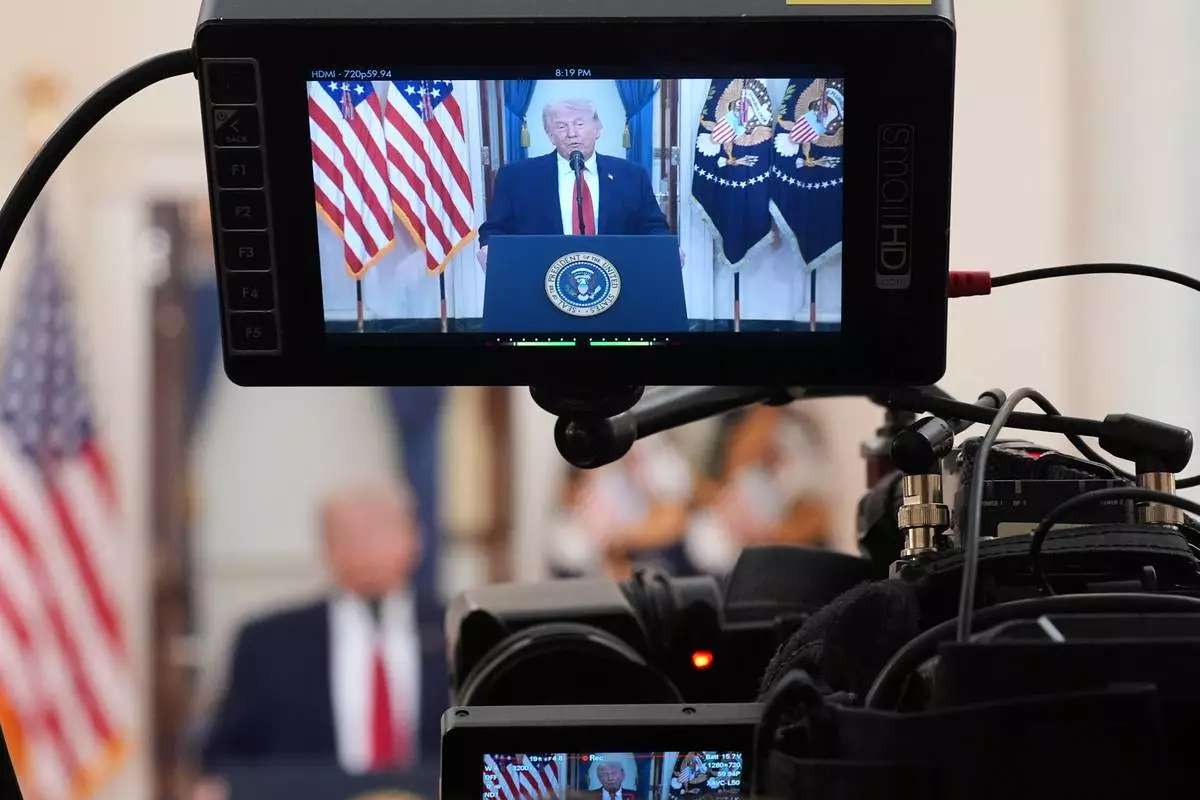
President Donald Trump speaks about the Iran war from the Cross Hall of the White House on Wednesday, April 1, 2026, in Washington. (AP Photo/Alex Brandon, Pool)

President Donald Trump speaks about the Iran war from the Cross Hall of the White House on Wednesday, April 1, 2026, in Washington. (AP Photo/Alex Brandon, Pool)

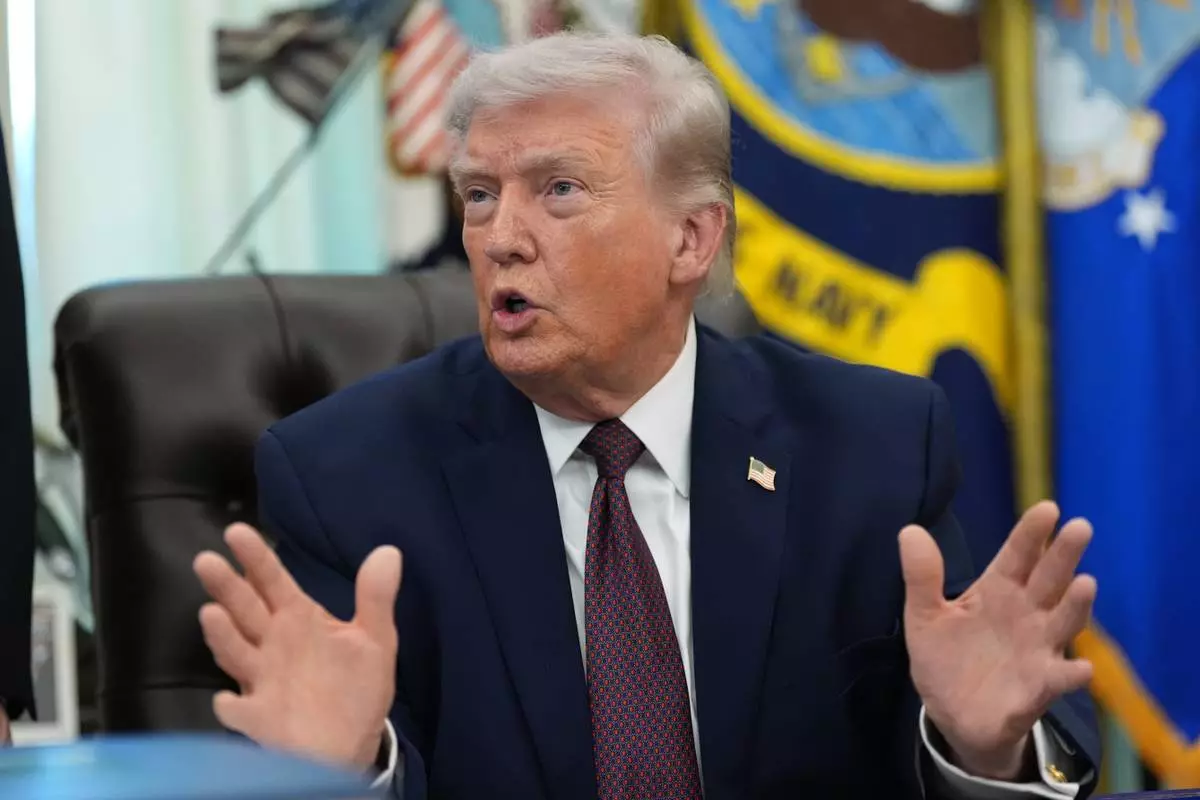
President Donald Trump answers questions from reporters after signing an executive order in the Oval Office of the White House Tuesday, March 31, 2026, in Washington. (AP Photo/Alex Brandon)

President Donald Trump answers questions from reporters after signing an executive order in the Oval Office of the White House Tuesday, March 31, 2026, in Washington. (AP Photo/Alex Brandon)

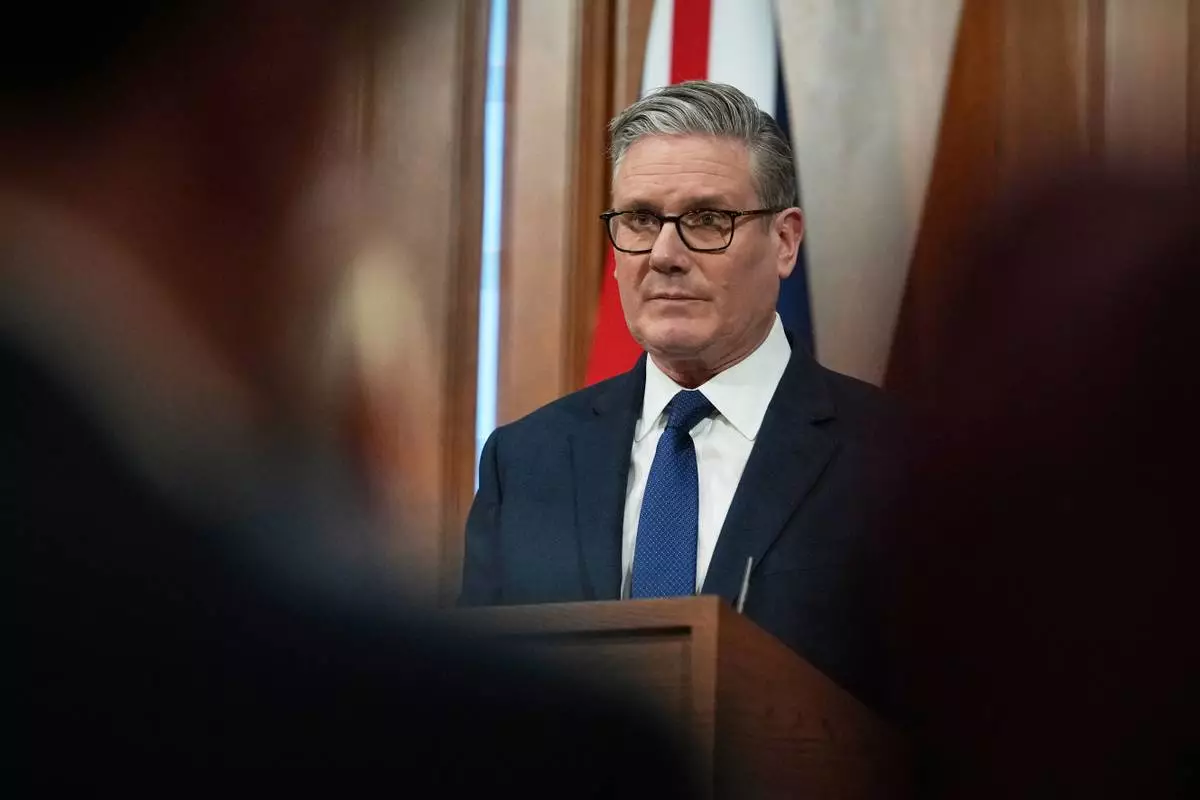
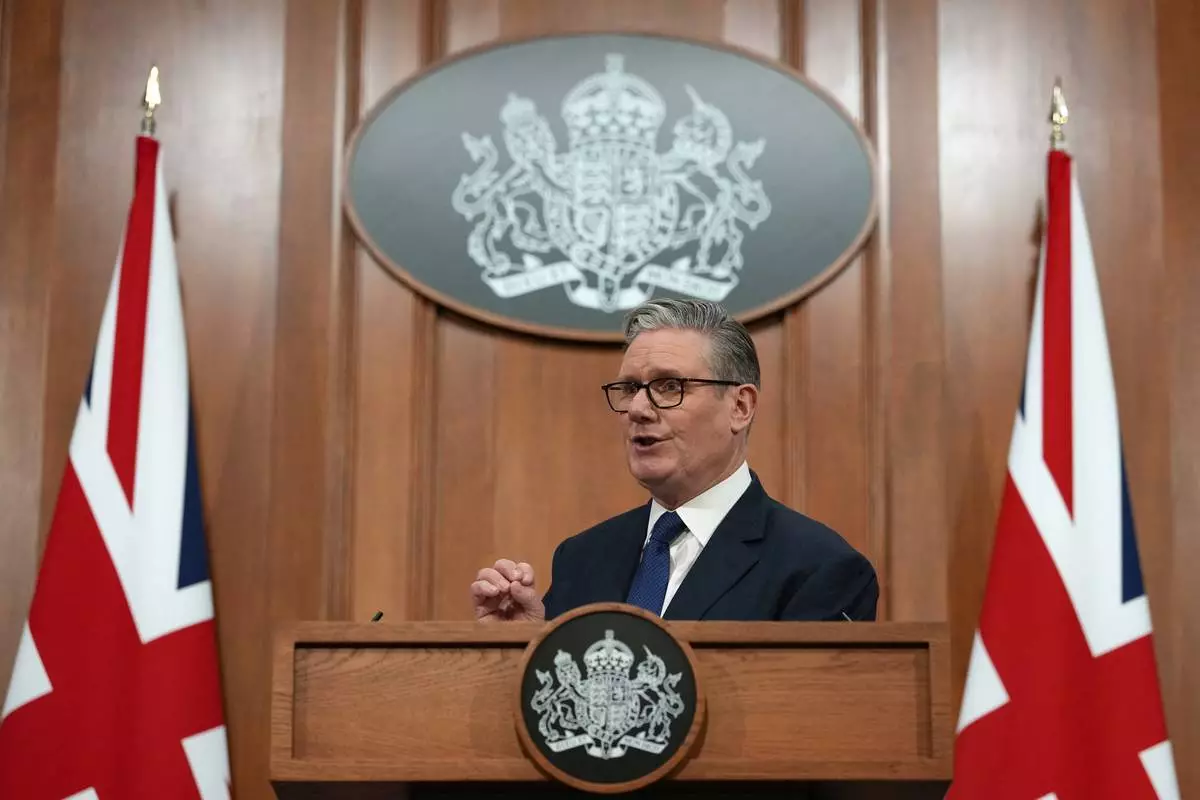
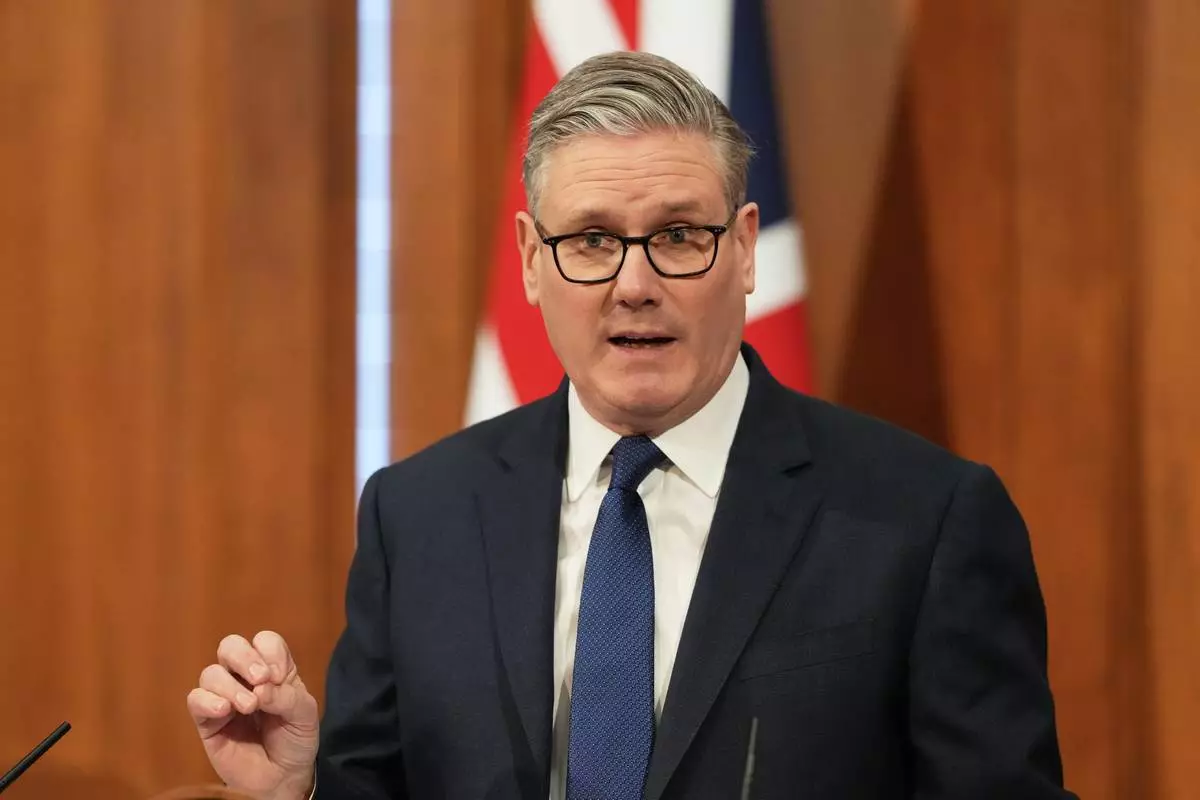
Britain's Prime Minister Keir Starmer speaks during a press conference at Downing Street in London, Wednesday, April 1, 2026. (AP Photo/Frank Augstein, Pool)

Britain's Prime Minister Keir Starmer speaks during a press conference at Downing Street in London, Wednesday, April 1, 2026. (AP Photo/Frank Augstein, Pool)

Britain's Prime Minister Keir Starmer speaks during a press conference at Downing Street in London, Wednesday, April 1, 2026. (AP Photo/Frank Augstein, Pool)

Britain's Prime Minister Keir Starmer speaks during a press conference at Downing Street in London, Wednesday, April 1, 2026. (AP Photo/Frank Augstein, Pool)

Britain's Prime Minister Keir Starmer speaks during a press conference at Downing Street in London, Wednesday, April 1, 2026. (AP Photo/Frank Augstein, Pool)

Britain's Prime Minister Keir Starmer speaks during a press conference at Downing Street in London, Wednesday, April 1, 2026. (AP Photo/Frank Augstein, Pool)

Recommended Articles