WEST PALM BEACH, Fla. (AP) — President Donald Trump said Wednesday that he is barring South Africa from participating in the Group of 20 summit next year at his Miami-area club and will stop all payments and subsidies to the country over its treatment of a U.S. government representative at this year’s global meeting.
Trump chose not to have an American government delegation attend last weekend's summit hosted by South Africa, saying he did so because its white Afrikaners were being violently persecuted. It is a claim that South Africa, which was mired for decades in racial apartheid, has rejected as baseless.
The Republican president, in a social media post, said South Africa had refused to hand over its G20 hosting responsibilities to a senior representative of the U.S. Embassy when the summit ended.
“Therefore, at my direction, South Africa will NOT be receiving an invitation to the 2026 G20, which will be hosted in the Great City of Miami, Florida next year,” Trump posted on Truth Social.
“South Africa has demonstrated to the World they are not a country worthy of Membership anywhere,” he said, “and we are going to stop all payments and subsidies to them, effective immediately.”
South Africa said it considered the U.S. decision to appoint a local embassy official for the G20 handover an insult. The ceremony instead happened at its Foreign Ministry building after the summit “as the United States was not present at the summit," a statement from South African President Cyril Ramaphosa's office said.
The statement said Ramaphosa “noted the regrettable statement by President Donald Trump on South Africa’s participation in the 2026 G20 meetings.”
It also pushed back against Trump's widely rejected claims that Afrikaner farmers are being killed and having their land taken away, saying that Trump “continues to apply punitive measures against South Africa based on misinformation and distortions about our country.”
In some ways, Trump views next year's G20 summit as personal, given that he announced it will be at his golf club in Doral, Florida.
This year's summit in Johannesburg, the first held in Africa, was boycotted by the United States, a G20 founding member and the world’s biggest economy. The meeting's declaration, giving more attention to issues that affect developing countries, went unsigned by Washington, and the Trump administration expressed its opposition to South Africa’s agenda, especially the parts that focus on climate change.
The U.S. has now taken over the rotating presidency of the G20, leaving the long-term impact of the South African declaration unclear.
Trump has claimed that white Afrikaner farmers in South Africa are being killed and that their land is being seized. The South African government and others, including some Afrikaners themselves, say Trump's claims are the result of misinformation.
South Africa has been a target for Trump since he returned to office at the start of the year, with his administration casting the country as anti-American because of its diplomatic ties with China, Russia and Iran.
Last month, the Trump administration announced it would restrict the number of refugees admitted annually to the U.S. to 7,500, with most of the spots reserved for white South Africans. Trump had suspended the refugee program on his first day in office in January. Since then only a trickle have entered the country, mostly white South Africans. In May, the administration welcomed a group of 59 white South Africans as refugees.
Afrikaners are South Africans who are descended mainly from Dutch but also French and German colonial settlers who first came to the country in the 17th century.
Afrikaners were at the heart of the apartheid system of white minority rule from 1948-1994, leading to decades of hostility between them and South Africa’s Black majority. But Afrikaners are not a homogenous group, and some fought against apartheid.
There are an estimated 2.7 million Afrikaners in South Africa’s population of 62 million.
AP writer Gerald Imray in Johannesburg contributed to this report.
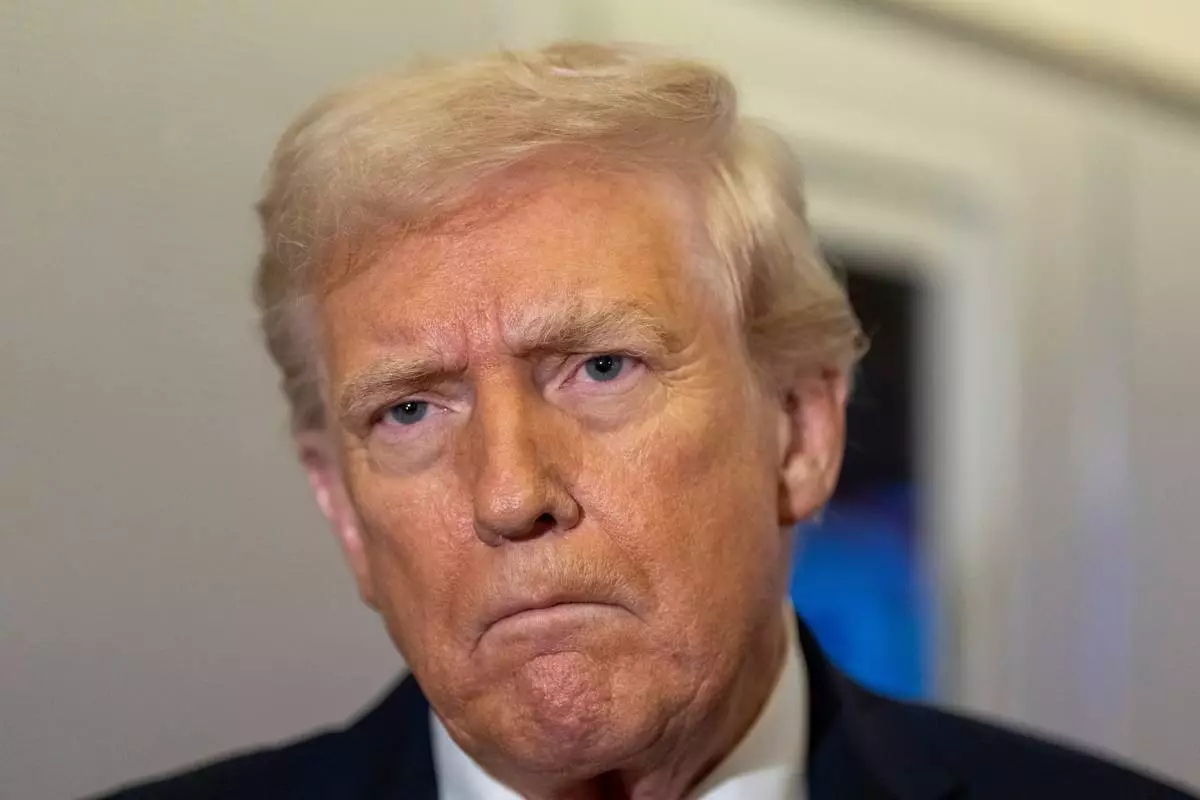
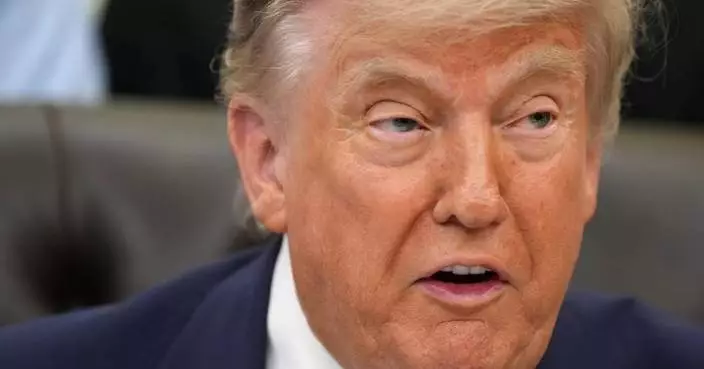
President Donald Trump pauses while speaking with reporters while in flight on Air Force One from Joint Base Andrews to his Mar-a-Lago estate in Palm Beach, Fla., Tuesday, Nov. 25, 2025. (AP Photo/Alex Brandon)
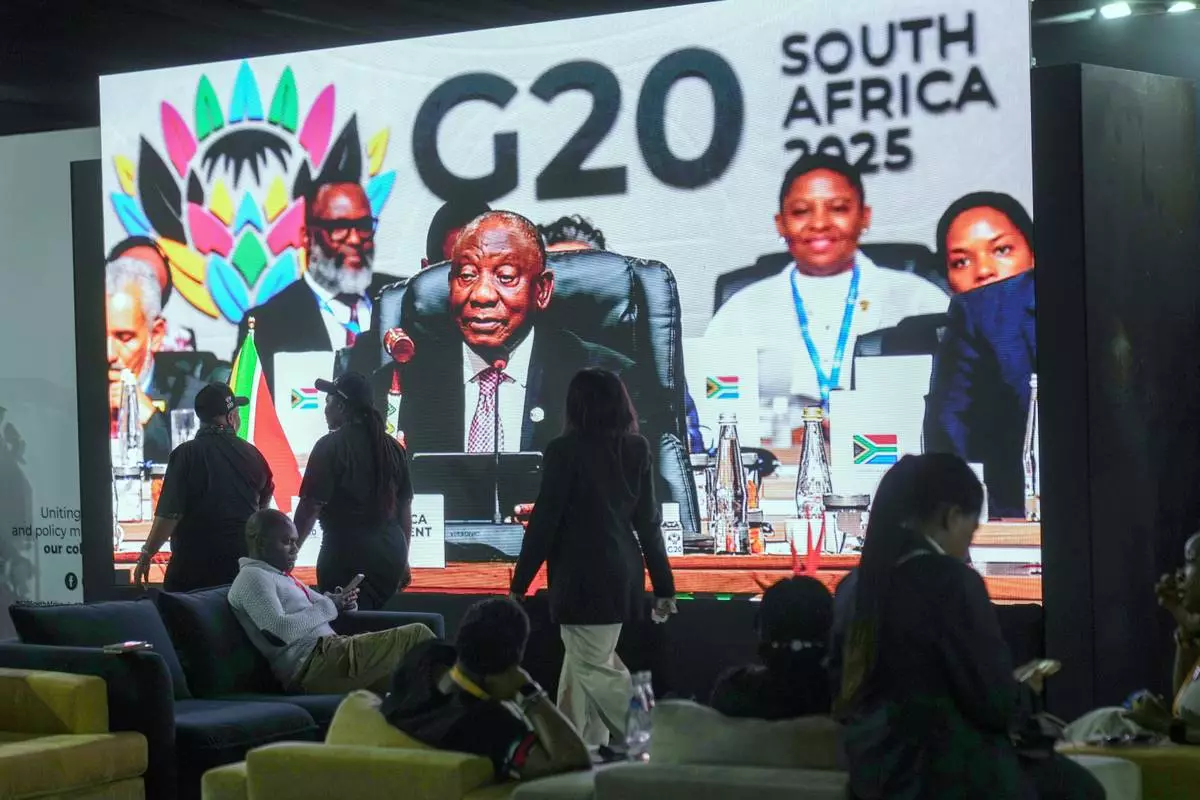
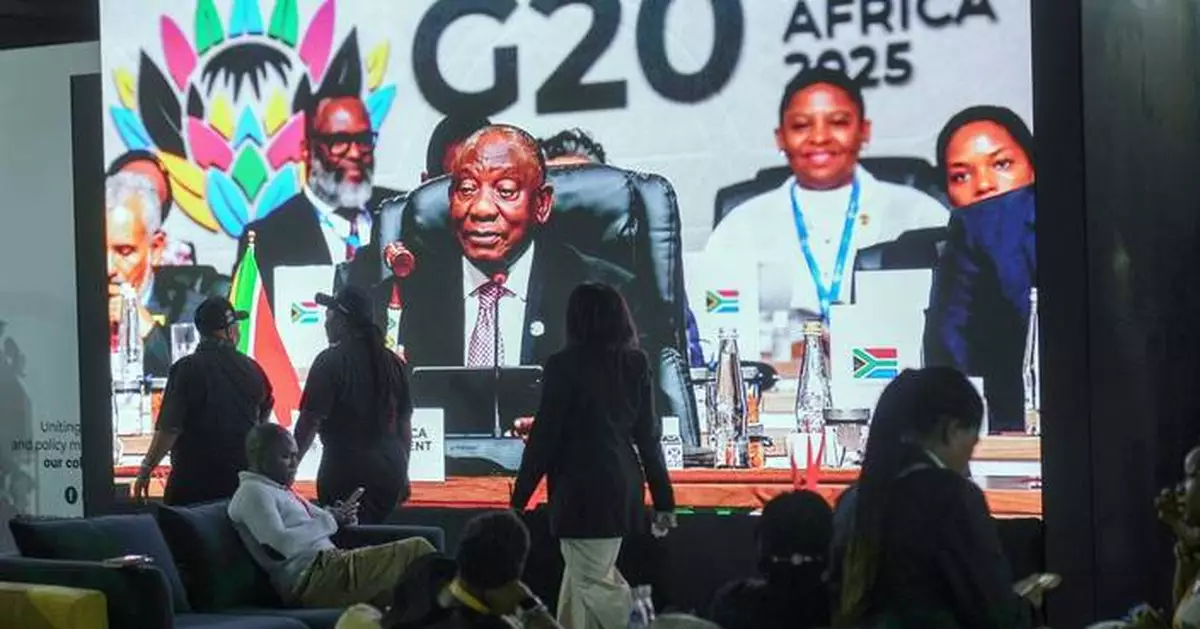
People walk by a large screen TV where South African President Cyril Ramaphosa holds a wooden gavel as he officially closes the G20 leaders' summit, in Johannesburg, South Africa, Sunday, Nov. 23, 2025. (AP Photo/Jerome Delay)
WASHINGTON (AP) — The Trump administration on Thursday loosened federal rules that require grocery stores and air-conditioning companies to reduce greenhouse gases used in cooling equipment, a step President Donald Trump said would help lower grocery costs.
Trump, at a White House ceremony, said the action by the Environmental Protection Agency would “substantially lower costs for consumers” by delaying costly restrictions that limit the type of refrigerants U.S. businesses and families can use.
The move to relax the Biden-era rules on harmful pollutants known as HFCs emitted by refrigerators and other appliances was the latest attempt by the Trump administration to try to address rising voter concerns over the cost of living ahead of pivotal elections in November.
It is not clear how much or how quickly the loosening of the refrigerant rule might impact grocery prices. Industry groups said the move could even raise prices because manufacturers have already redesigned products, retooled factories and trained workers to build and service next-generation refrigerant equipment.
Inflation in the United States increased to 3.8% annually in April, amid price spikes caused by the Iran war and President Donald Trump’s sweeping tariffs. Inflation is now outpacing wage gains as the war has kept oil and gasoline prices high.
The Biden-era regulation was “unnecessary and costly and actually makes the machinery worse,” Trump said at a ceremony joined by top executives from Kroger, Piggly Wiggly and other grocery chains. The EPA action will protect hundreds of thousands of jobs and save Americans more than $2 billion a year, he said.
The Air-Conditioning, Heating and Refrigeration Institute, which represents more than 330 HVAC manufacturers and commercial refrigeration companies, said the change in approach would “inject uncertainty across the market” and could even raise prices.
“This rule works against basic supply and demand,” said Stephen Yurek, the group’s president and CEO. “By extending the compliance deadline” for phasing out hydrofluorocarbons, or HFCs, the administration “is maintaining and even increasing demand in the market for existing refrigerants while supply continues to fall.”
Manufacturers have already retooled product lines and certified models based on the existing timeline, Yurek said. Nearly 90% of residential and light commercial air conditioning systems use substitute refrigerants, rather than HFCs, he said.
The administration's action on refrigerants represents a reversal after Trump signed a law in his first term that aimed to reduce harmful, planet-warming pollutants emitted by refrigerators and air conditioners. That bipartisan measure brought environmentalists and major business groups into rare alignment on the contentious issue of climate change and won praise across the political spectrum.
The 2020 law reflected a broad bipartisan consensus on the need to quickly phase out domestic use of HFCs, greenhouse gases that are thousands of times more potent than carbon dioxide and are considered a major driver of global warming.
The EPA action highlights the second Trump administration’s drive to roll back regulations perceived as climate friendly. The plan is among a series of sweeping environmental changes that EPA Administrator Lee Zeldin has said will put a “dagger through the heart of climate change religion.”
Environmentalists criticized the administration’s actions, saying the new rule would exacerbate climate pollution while disrupting a yearslong industry transition to new coolants as an alternative to HFCs.
The 2020 law signed by Trump, known as the American Innovation and Manufacturing Act, phased out HFCs as part of an international agreement on ozone pollution. The law accelerated an industry shift to alternative refrigerants that use less harmful chemicals and are widely available.
The U.S. Chamber of Commerce and the American Chemistry Council, the top lobbying group for the chemical industry, were among numerous business groups that supported the law and an international deal on pollutants, known as the Kigali Amendment, as victories for jobs and the environment. U.S. companies such as Chemours and Honeywell developed and produce the alternative refrigerants sold in the United States and around the world.
The 2023 rule now being relaxed imposed steep restrictions on HFCs starting in 2026. Zeldin said the rule from the Democratic Biden administration did not give companies enough time to comply and that the rapid switch to other refrigerants caused shortages and price increases last year. Some in the industry dispute this.
The Food Industry Association, which represents grocery stores and suppliers, applauded the Trump EPA proposal last year, saying the earlier rule “imposed significant and unrealistic compliance timelines.”
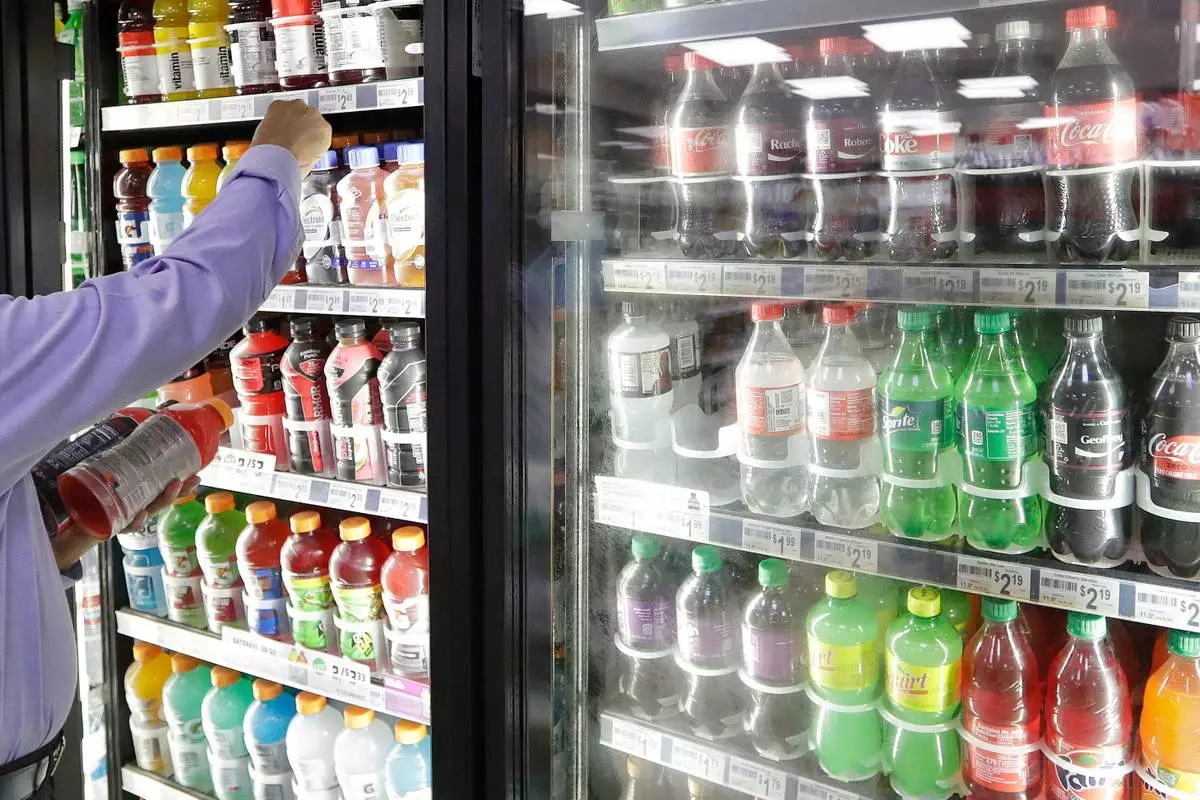
FILE - A shop owner reaches into a drink display refrigerator at his convenience store in Kent, Wash., Oct. 1, 2018. (AP Photo/Elaine Thompson, File)