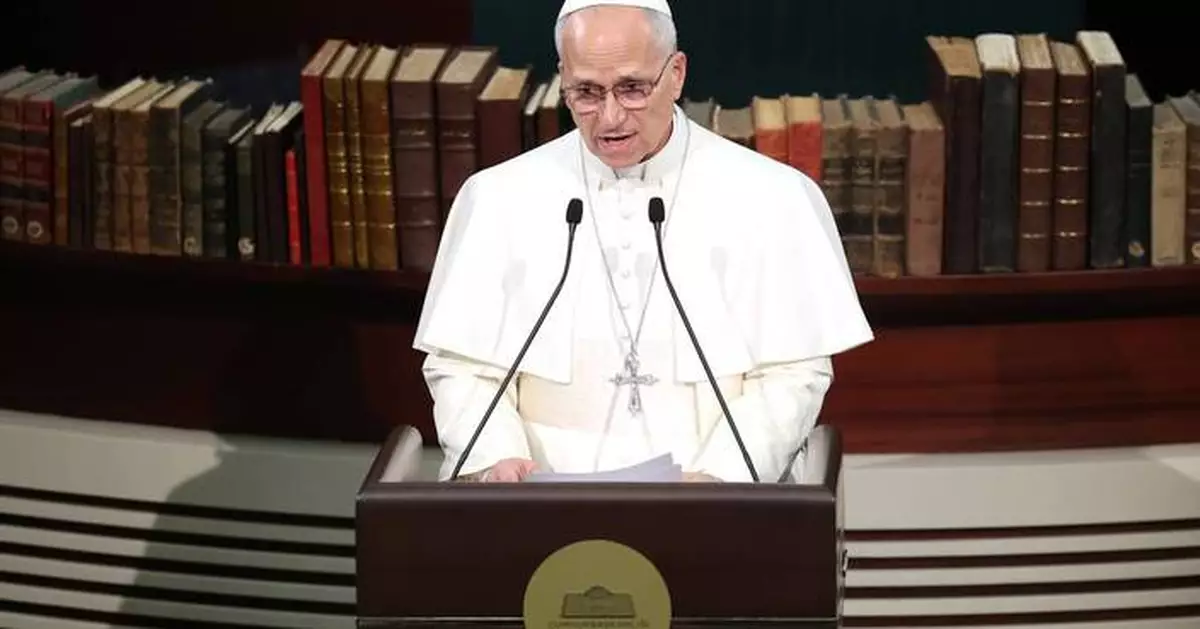
Pope Leo XIV marked a high point of his his first foreign trip to Turkey with a pilgrimage to the site where early Christian church leaders met 1,700 years ago under the auspices of the Roman Emperor Constantine to host the Council of Nicaea.
Leo on Friday prayed for Christian unity with Ecumenical Patriarch Bartholomew, spiritual leader of the world’s Orthodox Christians, at the site of the A.D. 325 gathering, now the town of Iznik.
Click to Gallery
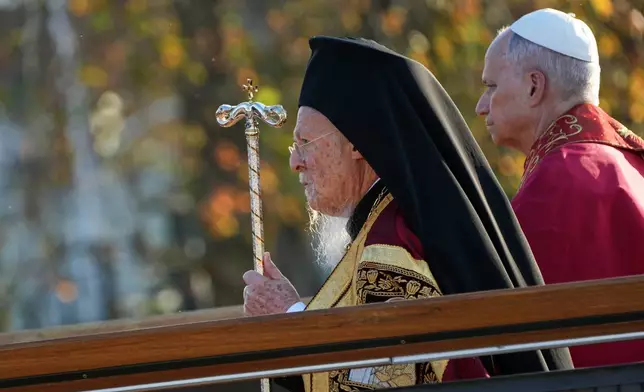
Pope Leo XIV and the Ecumenical Patriarch Bartholomew I, left, lead an Ecumenical prayer service near the archaeological excavations of the ancient Basilica of Saint Neophytos, in Iznik, Turkey, Friday, Nov. 28, 2025. (AP Photo/Domenico Stinellis)
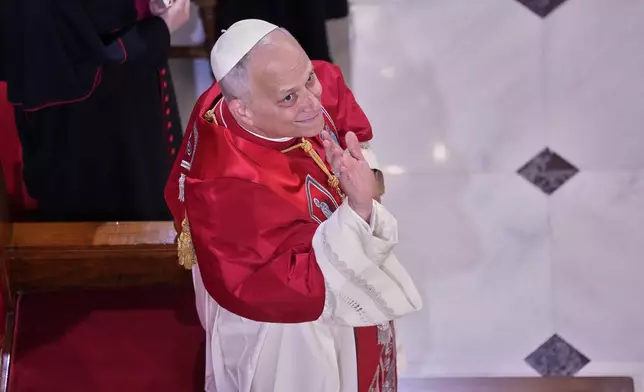
Pope Leo XIV meets the clergy at the Cathedral of the Holy Spirit, in Istanbul, Turkey, Friday, Nov. 28, 2025. (AP Photo/Domenico Stinellis)
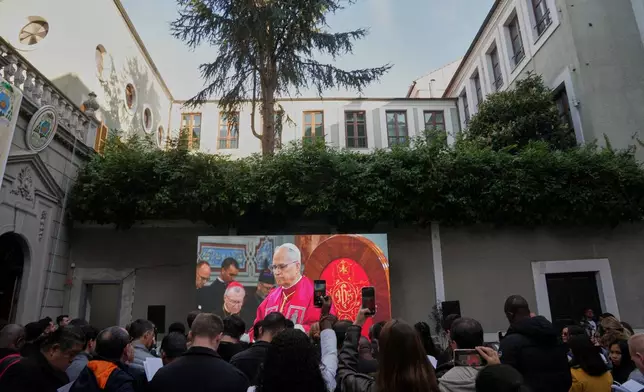
People watch Pope Leo XIV on a screen as he meets the clergy at the Cathedral of the Holy Spirit, in Istanbul, Turkey, Friday, Nov. 28, 2025. (AP Photo/Domenico Stinellis)
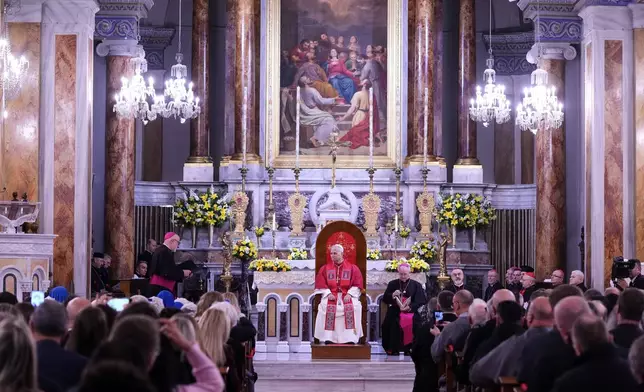
Pope Leo XIV listens as Archbishop Martin Kmetec of Izmir delivers his speech during a meeting with the clergy at the Cathedral of the Holy Spirit, in Istanbul, Turkey, Friday, Nov. 28, 2025. (AP Photo/Domenico Stinellis)
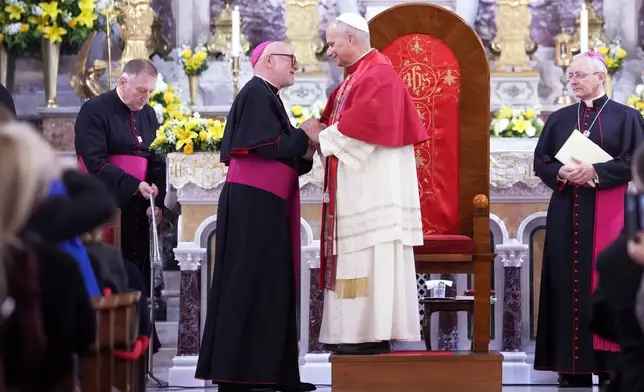
Pope Leo XIV talks with Archbishop Martin Kmetec of Izmir during a meeting with the clergy at the Cathedral of the Holy Spirit, in Istanbul, Turkey, Friday, Nov. 28, 2025. (AP Photo/Domenico Stinellis)
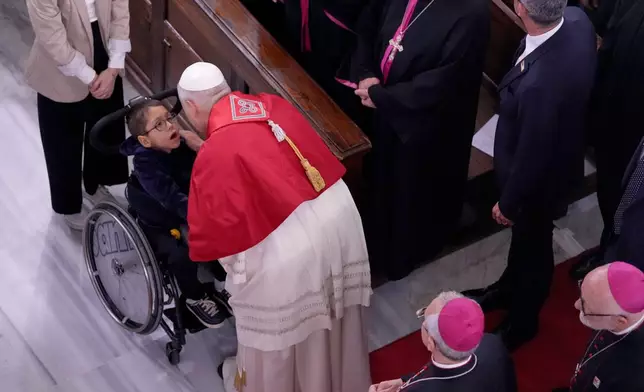
Pope Leo XIV greets a child as he meets the clergy at the Cathedral of the Holy Spirit, in Istanbul, Turkey, Friday, Nov. 28, 2025. (AP Photo/Domenico Stinellis)
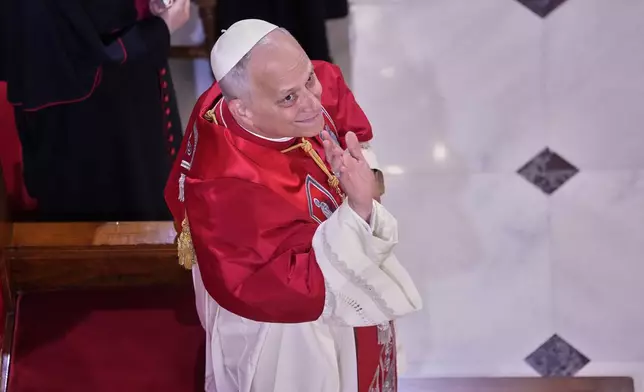
Pope Leo XIV meets the clergy at the Cathedral of the Holy Spirit, in Istanbul, Turkey, Friday, Nov. 28, 2025. (AP Photo/Domenico Stinellis)
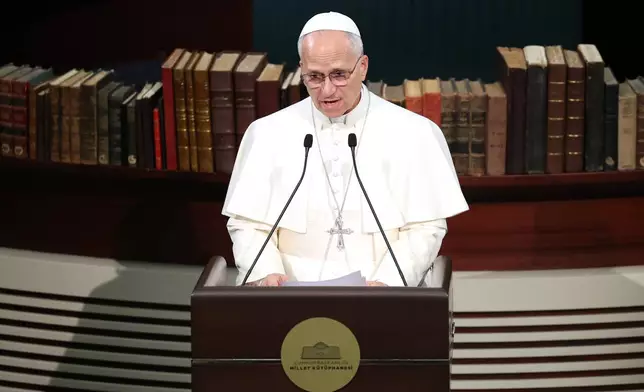
Pope Leo XIV delivers his speech as he meets with authorities, members of the civil society and diplomats in the Presidential Palace's national library, in Ankara, Turkey, Thursday, Nov. 27, 2025. (Yavuz Ozden/Dia Photo via AP)
The unprecedented gathering of at least 250 bishops from around the Roman Empire during the first council established the first version of the Nicene Creed, a statement of faith that millions of Christians still recite each Sunday. Eastern and Western churches were united until the Great Schism of 1054, a divide precipitated largely by disagreements over the primacy of the pope.
The American pope has emphasized a message of peace and a plea to help end wars in Ukraine and Gaza during his trip to Turkey and Lebanon, which lasts through Tuesday. On Thursday, he met in the capital Ankara with President Recep Tayyip Erdogan and encouraged Turkey to be a source of stability and dialogue in a world riven by conflict.
Leo then traveled to Istanbul to carry not only his message of unity among Christians at Iznik, located southeast of the city, but also to reinforce the church’s relations with Muslims.
Leo also is due to visit the Blue Mosque and preside over an interfaith meeting in Istanbul.
Here's the latest:
The prayer service to commemorate the 1,700th anniversary of the Council of Nicaea has ended, and Pope Leo XIV is heading back to Istanbul.
The brief service took place in Iznik, at the site of the A.D. 325 gathering of bishops that produced the Nicaean Creed, a profession of faith that is recited by millions of Christians today.
Leo’s participation in the service, hosted by Ecumenical Patriarch Bartholomew I, had been the main reason for his trip to Turkey.
The American pope has one more event on his busy schedule Friday, a private gathering with bishops back in Istanbul.
Pope Leo XIV is urging Christians to “overcome the scandal” of their divisions and reunite as he marked an important anniversary in the history of the Christian faith with Orthodox and other leaders.
Leo traveled to Iznik to commemorate the 1,700th anniversary of the Council of Nicaea. The unprecedented gathering of bishops led to a creed, or profession of faith, that is still recited by millions of Christians today.
Speaking on the shores of Lake Iznik over the ruins of what was the site of the council, Leo said the creed “is of fundamental importance in the journey that Christians are making towards full communion.”
“In this way, we are all invited to overcome the scandal of the divisions that unfortunately still exist and to nurture the desire for unity for which the Lord Jesus prayed and gave his life,” he said.
He said all Christians must strongly reject the use of religion to justify war, violence “or any form of fundamentalism or fanaticism. “Instead, the paths to follow are those of fraternal encounter, dialogue and cooperation,” he said.
Pope Leo XIV joined Orthodox patriarchs on Friday in commemorating an important moment in Christian history, gathering at the site in Turkey of an unprecedented A.D. 325 meeting of bishops to pray that Christians might once again be united.
Leo, Ecumenical Patriarch Bartholomew I and other Christian leaders met on the shores of Lake Iznik, the site of the Council of Nicaea that produced a creed, or statement of faith, that is still recited by millions of Christians today.
Leo flew by helicopter to Iznik from Istanbul to take part in an ecumenical prayer to commemorate the 1,700th anniversary of the Nicaea meeting, the highlight of his visit to Turkey. He arrived just after the Muslim call to prayer rang out from a nearby mosque.
Pope Leo XIV is on his way to commemorate an important moment in Christianity, heading to the site of a A.D. 325 gathering of bishops that produced a creed, or statement of faith, that is still recited by millions of people today.
Leo was flying by helicopter to Iznik, about 130 kilometers (80 miles) from Istanbul, to commemorate the 1700th anniversary of the Council of Nicaea. He is being joined by the spiritual leader of the world’s Orthodox Christians and other Christian patriarchs.
In Iznik, the Christian leaders will light candles and pray at the lakeside archaeological excavations of the ancient Basilica of Saint Neophytos in a service featuring alternating Catholic and Orthodox hymns.
Pope Leo XIV, the spiritual leader of the world’s Orthodox Christians and other Christian leaders are commemorating an important moment in the history of their shared faith that produced the Nicaean Creed, a statement of faith that is recited by millions of Christians today.
Roman Emperor Constantine had convened the gathering of at least 250 bishops from around the Roman Empire in 325, after he had consolidated control following years of civil war and political intrigues.
The council produced a creed, the original more abbreviated form of which was written in Greek. Over the centuries, it has been amended, changes that Leo referred to earlier Friday as a natural development of doctrine that didn’t alter the core profession of faith.
The version cited today by Catholics begins: “I believe in one God, the Father almighty …”
While there are still theological disputes, the creed is the most universally accepted faith statement in Christianity, a rare point of unity among Catholics, Orthodox and many Protestant churches.
In the runup to the anniversary, Leo penned a special apostolic letter emphasizing the creed’s place as the “common heritage of Christians,” written at a time in history when the “wounds inflicted by the persecutions of Christians were still fresh.”
Carmen Nolan traveled to Turkey from Ireland, after receiving an invitation to attend Pope Leo XIV’s visit to the Little Sisters of the Poor Nursing Home in Istanbul.
The 55-year-old said she would have loved to have met the late Pope Francis but feels honored to meet Leo instead. She says she sees him as a promising leader for the Church.
“I think he’s watching and waiting and seeing what’s going on,” she said. “He’s slowly but surely showing us he’s going to be a fantastic pope.”
Leo visited the nursing home earlier Friday. The home said: “He was so simple. We just felt he was at home. He felt very much at ease. Everybody got what they expected: a blessing, a kind word. It’s just enormous.”
Nolan added: “He is strengthening our faith. He has given us courage to continue on and to really be a family together, to give the example of peace and unity and respect for the old people, for the aged.”
Since the 16th century, Iznik has been renowned for its pottery, particularly the colorful tiles produced by artisans within the town’s ancient walls. Such tiles give Istanbul’s Sultan Ahmet Mosque, which Leo is due to visit Saturday, its alternative moniker, the Blue Mosque.
“For the pope, in other words, for the Christian world, Iznik is an important center,” Iznik potter Mesude Kunen said. “For his visit I am preparing a 3D plaque of Iznik that I sketched myself.”
The town of 45,000, which lies 90 kilometers (56 miles) southeast of Istanbul, has seen a boom in interest from visitors since the pope’s visit became known.
“We are truly excited,” realtor Samet Yakut said. “There has already been a tremendous acceleration in real estate sales in Iznik since before his arrival. We believe this acceleration is definitely due to his visit.”
For Leo and Bartholomew, however, the town also has a history less compatible with Catholic-Orthodox unity – the Byzantine Empire’s Orthodox rulers fled to Nicaea after Catholic crusaders brutally sacked and occupied Constantinople in the first half of the 13th century.
Iznik, the town at the center of Leo’s visit to Turkey, bears a central role in the history of Christianity as the place when the Council of Nicaea was held in A.D. 325.
The council resulted in the Nicene Creed, a statement of faith recited by millions of Christians to this day. Leo and Ecumenical Patriarch Bartholomew, spiritual leader of the world’s Orthodox Christians, will pray by the ruins of the Basilica of Saint Neophytos Friday to mark the council’s anniversary.
The stone foundations of the basilica, which were recently uncovered by the receding waters of Lake Iznik, are believed to be on the site of an earlier church that hosted the council 1,700 years ago.
“This is the base of the Catholic faith and I think it’s very important since this is the faith in God, which is the faith of Islam,” French tourist Gil de Guerry said, adding that the pope’s visit was a “great moment.”
Around 20 members of a small Islamic party staged a brief protest in Iznik ahead of the meeting between Pope Leo XIV and the Greek Orthodox Patriarch, marking the 1,700th anniversary of the Council of Nicaea. The demonstrators argued that the event posed a threat to Turkey’s sovereignty and national identity.
Under a heavy police presence, Mehmet Kaygusuz, a member of the New Welfare Party, read a statement denouncing what he said were efforts to establish a “Vatican-like Greek Orthodox state” in Turkey.
“We will not sacrifice our nation’s thousand‑year sovereignty over these lands to any political support or trap,” Kaygusuz said. Members of the party’s youth branch waved Turkish flags and party emblems.
The group dispersed peacefully shortly afterward.
Outside the Cathedral of the Holy Spirit, shortly after the pope’s departure, people who met him Friday were exhilarated.
Leny Jugueta, 50, from the Legion of Mary at Saint Anthony Church and Missionary Families of Christ in Istanbul, met the pope once before in the Vatican while on a pilgrimage.
“It was so overwhelming to meet him," Jugueta said. "We are so grateful and blessed that the pope is here.”
Ferit Ozaltun, 45, an Assyrian Catholic from the southeastern Turkish city of Mardin, said the visit “is a historic moment for us."
"It’s a feeling I cannot describe, to have this happening in our country,” he said.
Barbara Mukoki, 46, a diplomat at the Embassy of Zimbabwe in Ankara, said Leo's trip to Turkey “means a lot for Christianity and for spreading the gospel."
“With all the challenges the region is facing, his visit gives us hope,” Mukoki said.
A couple from Spain arrived in Iznik early Friday morning and drew a large cross in the sand on the shores of Lake Iznik, hoping Pope Leo XIV would spot it from his helicopter as he flew in for the commemoration marking 1,700 years since the first Council of Nicaea.
The symbolic act was short-lived, however, as security officials removed the couple and journalists from the area.
Irati Aguirre, 26, and Thomas Libeau, 32, traveled to Iznik to witness the pope’s historic visit to the town where he will join Greek Orthodox Patriarch Bartholomew I for prayers.
Iznik resident Suleyman Bulut, 35, acknowledged his town’s deep historical and spiritual significance for Christians and said he had no issue with them coming to honor their heritage.
“Muslims (too) should go and visit places that belong to us in the rest of the world, in Europe,” he said.
But Hasan Maral, a 41-year-old shopkeeper, said he felt uncomfortable with Leo's visit to the area Friday.
“The pope coming here feels contradictory to my faith,” he said.
Pope Leo XIV is encouraging Turkey’s Catholics to look to the future with hope despite their tiny numbers.
There are around 33,000 Catholics in Turkey, a nation of more than 85 million people, most of whom are Sunni Muslim. Many of the Catholics are foreigners, including migrants, according to Vatican statistics.
Leo sought to bolster them in his remarks at Istanbul’s Cathedral of the Holy Spirit, saying the “logic of littleness is the church’s true strength.”
“It does not lie in her resources or structures, nor do the fruits of her mission depend on numbers, economic power or social influence," he said.
Excitement filled the exterior and interior of Istanbul’s Cathedral of the Holy Spirit as Pope Leo XIV arrived Friday. Worshippers applauded and cheered while the pontiff made his way down the aisle
“I am so excited, to happy to see the pope. This is the first time like I can say to have this opportunity, in Turkey of course, so, no words. With all my heart I am so happy,” said Debora Martina Da Silva, a political science student from Guinea Bissau who is studying in Turkey.
Elias Bogane, a 53-year-old tourist from Luxembourg, said he felt “blessed” to be visiting Turkey at the same time as the pope.
“It’s the first time I come here. For me it was something so special,” Bogane said.
Mateusz Zajdecki, a 21-year-old from Szczecin, Poland, said he regarded the pope’s visit as a chance for unity, prayer and spiritual reflection.
“I think his is very much important, even nowadays to just reflect on our faith, reflect on our spirituality, and just maybe get some results form it," Zajdecki said.
Father Giuseppe Spoto from Matera, Italy, said the Christian community in Turkey is very small and can feel insignificant, but he believes the pope’s presence can encourage them to keep moving forward in their faith.
“Pope Leo can encourage Christianity and the small community that is here to go ahead, to walk in faith and to one day see the fruit that the lord can bring to this land,” he said.
Pope Leo XIV is to start the second day of his tour of Turkey and Lebanon meeting bishops and other church officials at the Cathedral of the Holy Spirit, a 19th-century Baroque church in Istanbul’s Sisli district.
He then is scheduled to visit a nearby nursing home run by the Little Sisters of the Poor, an order founded in France in the 1840s to care for poverty-stricken older people.
After his stops at the cathedral and nursing home, the pope is set to take a short helicopter ride to Iznik, a town south of Istanbul known in Roman times as Nicaea. It was here that the Council of Nicaea was held in A.D. 325 to produce the Nicene Creed, a statement of faith that millions of Christians still recite each Sunday.
Leo will pray with Ecumenical Patriarch Bartholomew, spiritual leader of the world’s Orthodox Christians, at the site of the gathering, which is today marked by the ruins of the Basilica of Saint Neophytos, built some 50 years after the council.
After returning to Istanbul, he will hold a private meeting with bishops at the Apostolic Delegation, which serves as the Vatican’s consulate in the city.
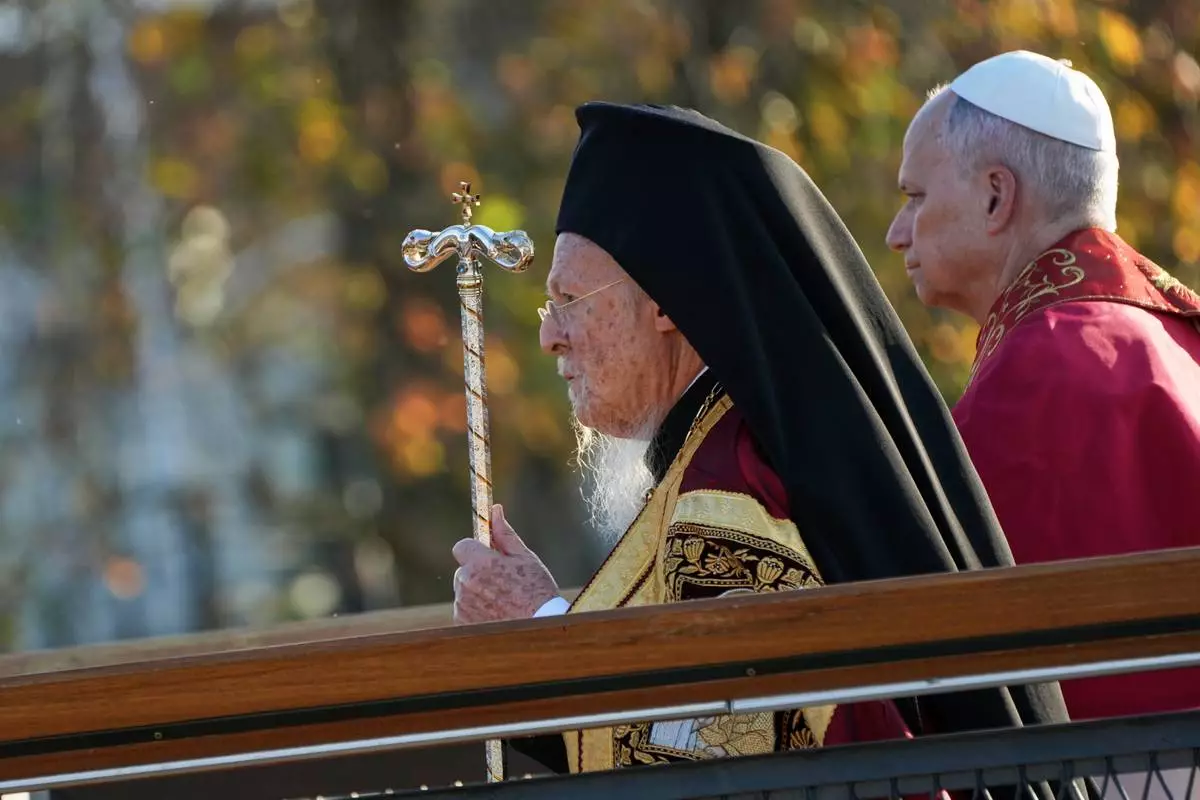
Pope Leo XIV and the Ecumenical Patriarch Bartholomew I, left, lead an Ecumenical prayer service near the archaeological excavations of the ancient Basilica of Saint Neophytos, in Iznik, Turkey, Friday, Nov. 28, 2025. (AP Photo/Domenico Stinellis)
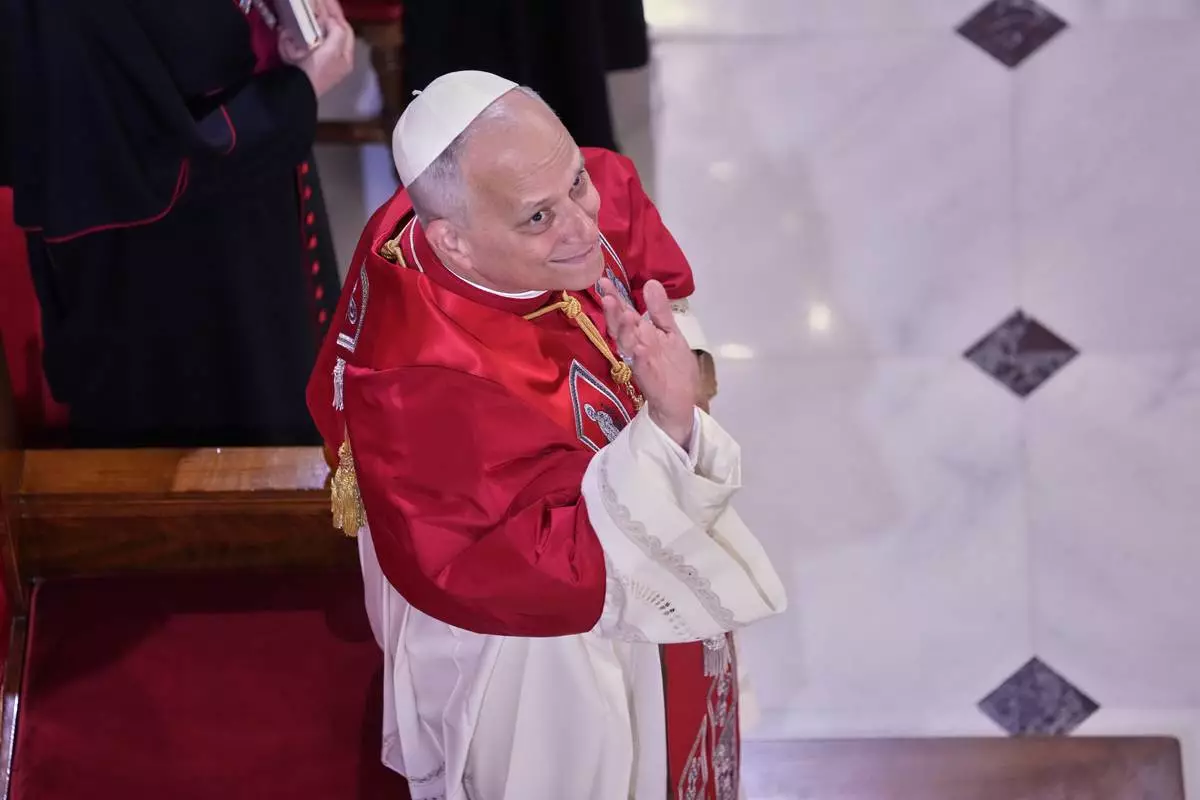
Pope Leo XIV meets the clergy at the Cathedral of the Holy Spirit, in Istanbul, Turkey, Friday, Nov. 28, 2025. (AP Photo/Domenico Stinellis)
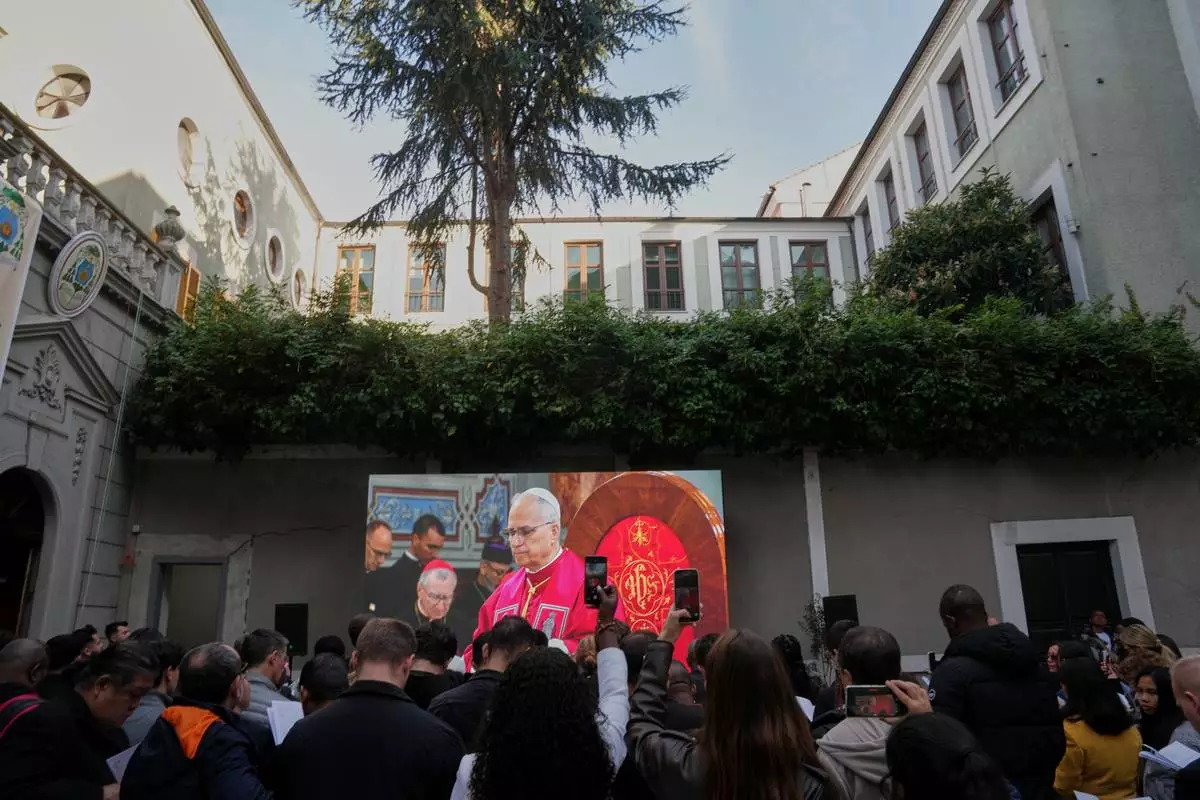
People watch Pope Leo XIV on a screen as he meets the clergy at the Cathedral of the Holy Spirit, in Istanbul, Turkey, Friday, Nov. 28, 2025. (AP Photo/Domenico Stinellis)
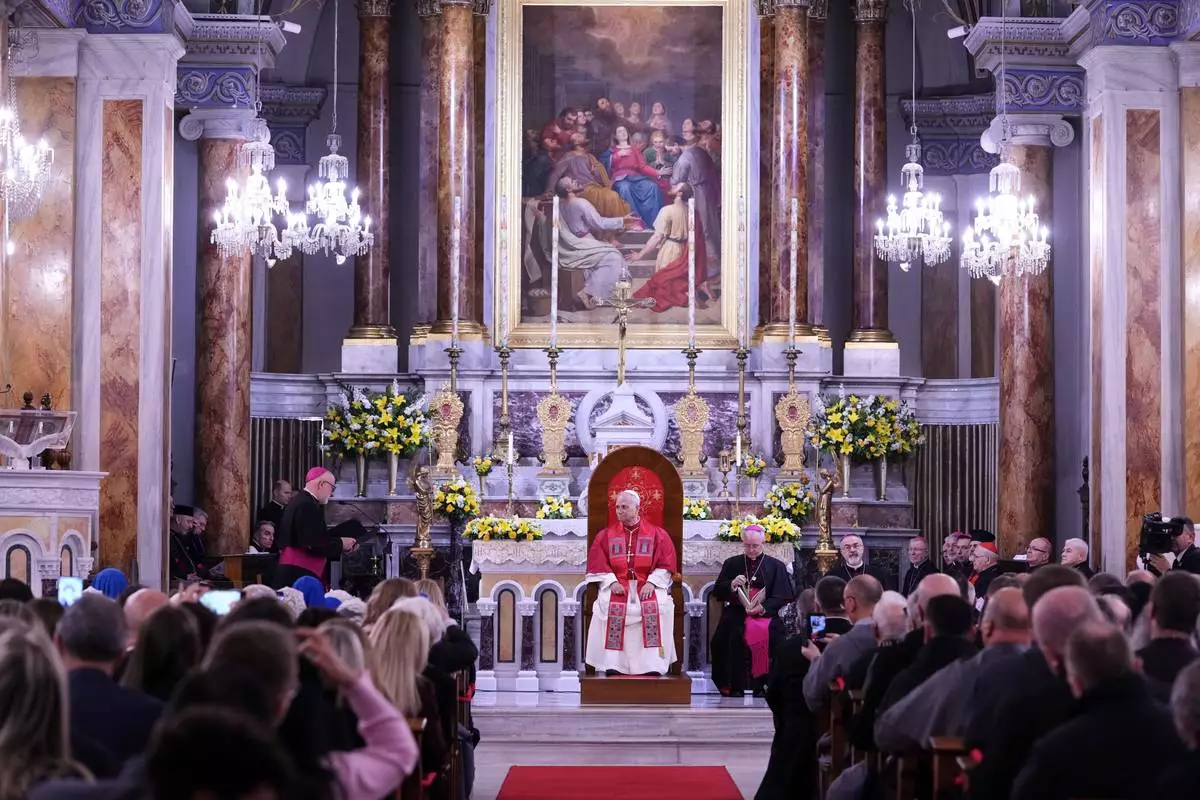
Pope Leo XIV listens as Archbishop Martin Kmetec of Izmir delivers his speech during a meeting with the clergy at the Cathedral of the Holy Spirit, in Istanbul, Turkey, Friday, Nov. 28, 2025. (AP Photo/Domenico Stinellis)
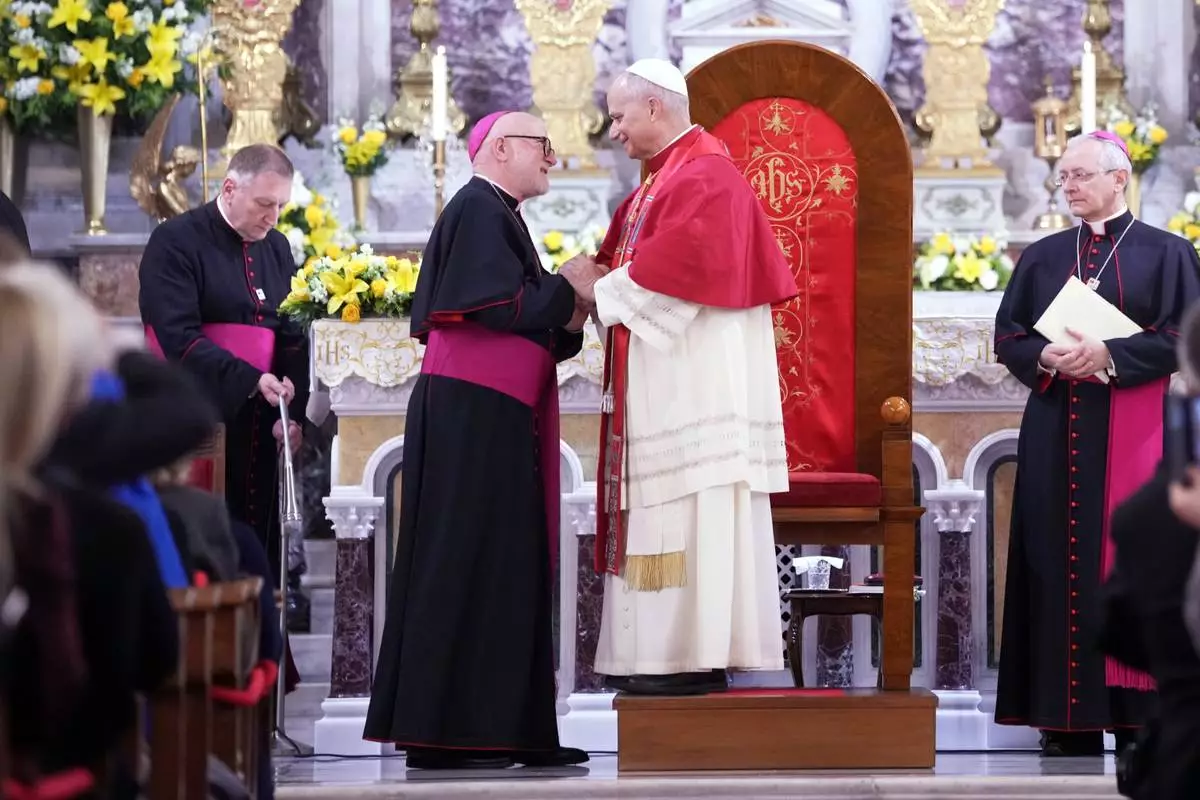
Pope Leo XIV talks with Archbishop Martin Kmetec of Izmir during a meeting with the clergy at the Cathedral of the Holy Spirit, in Istanbul, Turkey, Friday, Nov. 28, 2025. (AP Photo/Domenico Stinellis)
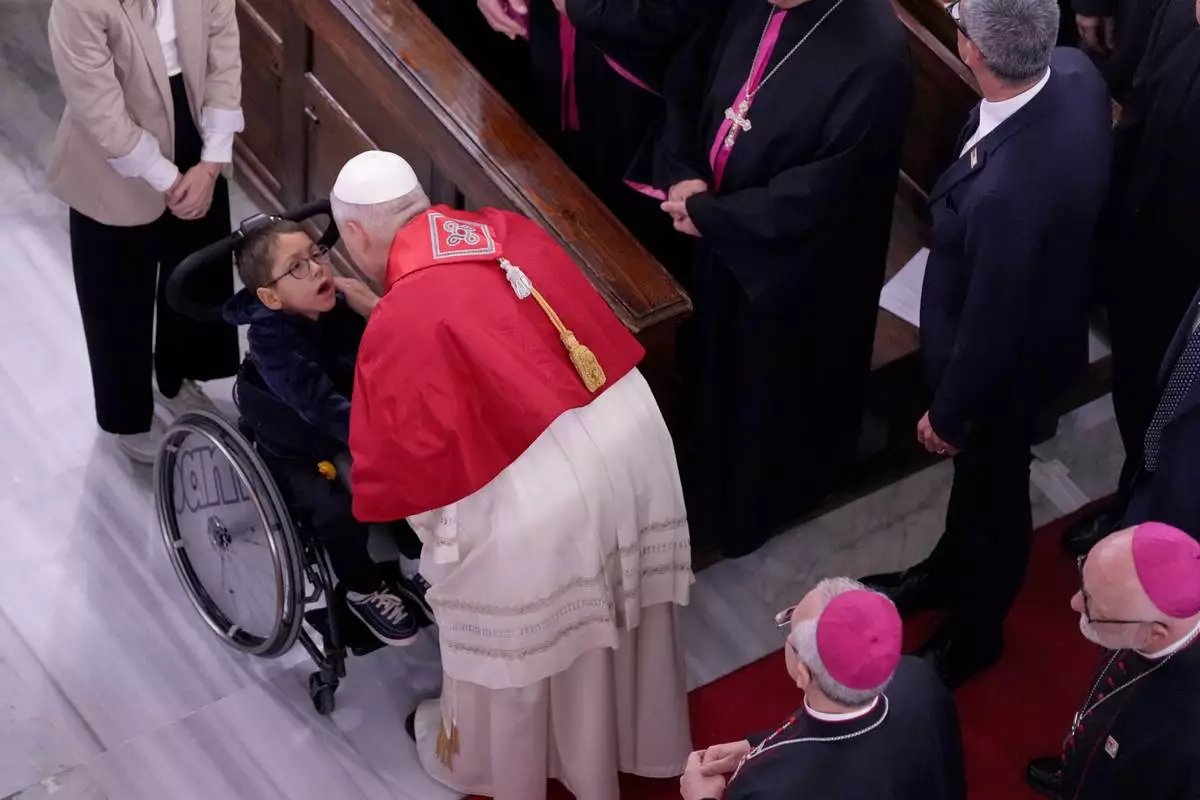
Pope Leo XIV greets a child as he meets the clergy at the Cathedral of the Holy Spirit, in Istanbul, Turkey, Friday, Nov. 28, 2025. (AP Photo/Domenico Stinellis)
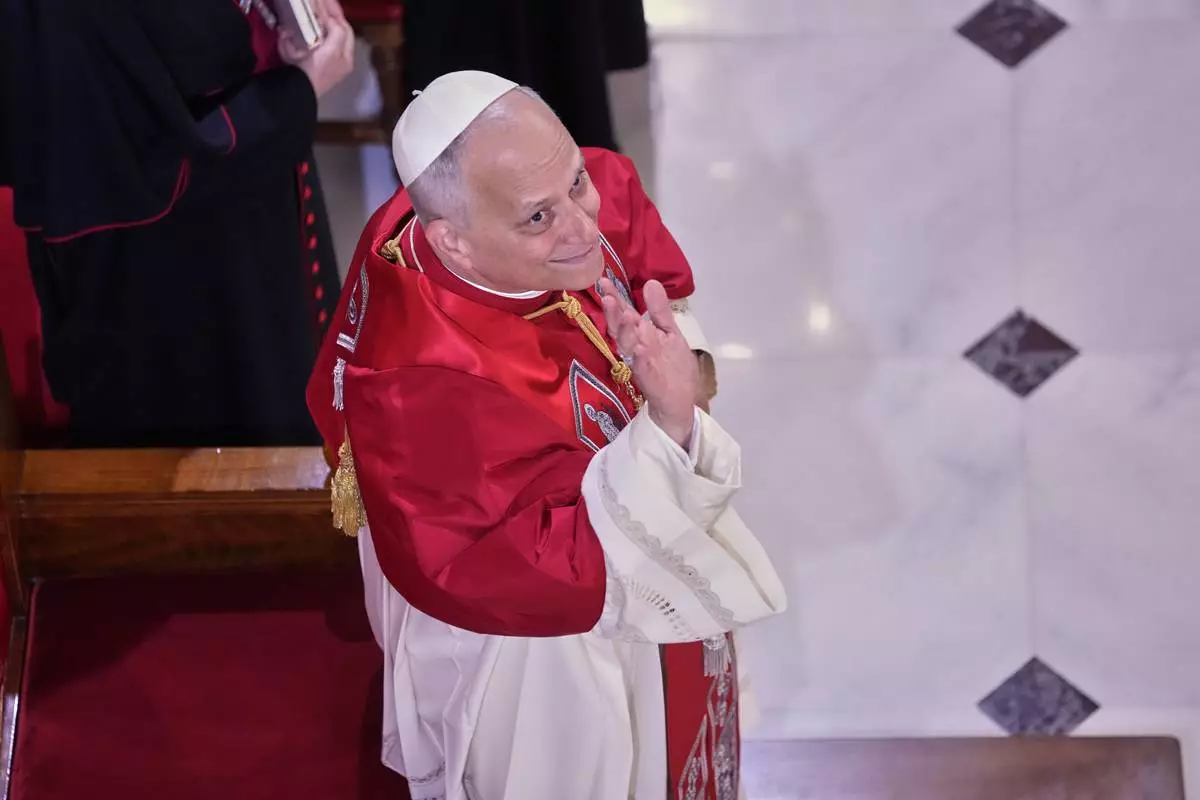
Pope Leo XIV meets the clergy at the Cathedral of the Holy Spirit, in Istanbul, Turkey, Friday, Nov. 28, 2025. (AP Photo/Domenico Stinellis)
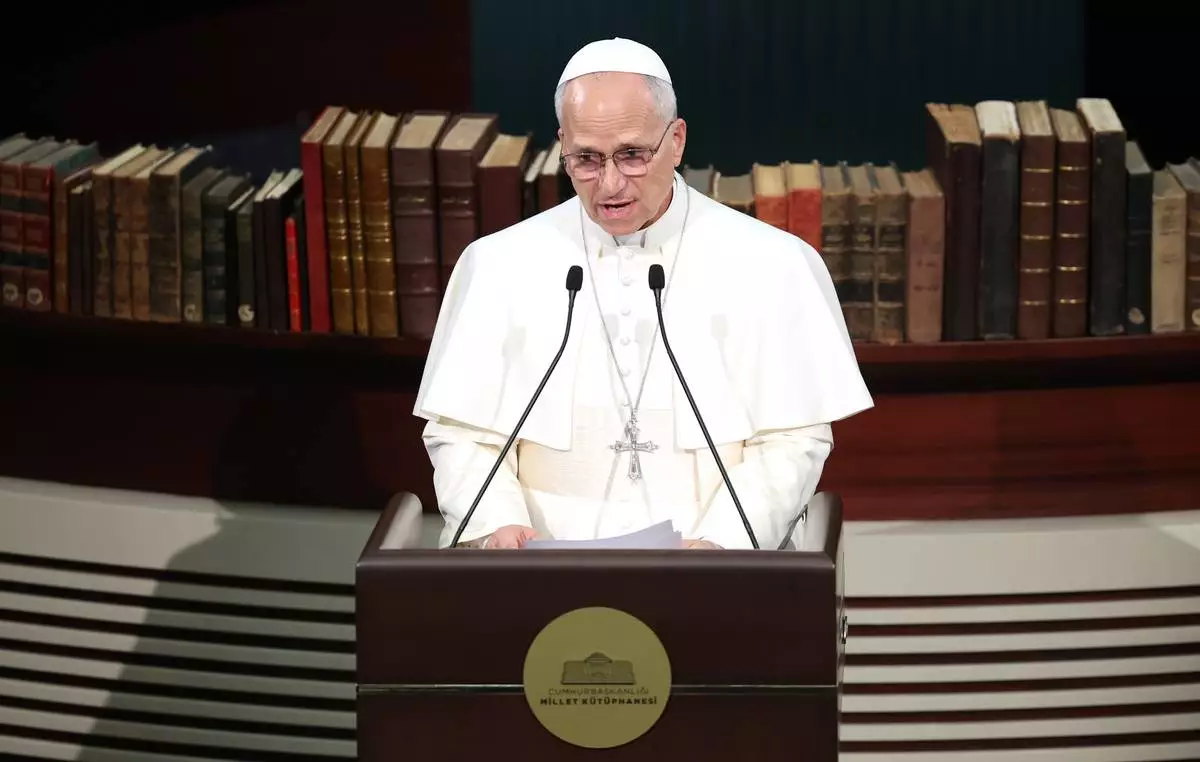
Pope Leo XIV delivers his speech as he meets with authorities, members of the civil society and diplomats in the Presidential Palace's national library, in Ankara, Turkey, Thursday, Nov. 27, 2025. (Yavuz Ozden/Dia Photo via AP)