Skip to Content Facebook Feature Image

This African nation built its development on diamonds. Now it's crashing down

News

This African nation built its development on diamonds. Now it's crashing down
News

News

This African nation built its development on diamonds. Now it's crashing down

2025-11-29 12:05 Last Updated At:12-01 17:20

GABORONE, Botswana (AP) — In a village outside Botswana ’s capital, Keorapetse Koko sat on an aging couch in her sparsely furnished home, stunned that a career — and an entire nation’s economy — built on diamonds had fallen so far, so fast.

For 17 years, she had earned a living cutting and polishing the gems that helped transform Botswana from one of the world’s poorest nations into one of Africa’s success stories. Diamonds were discovered in 1967, a year after independence, an abrupt change of fortune for the landlocked country.

More Images
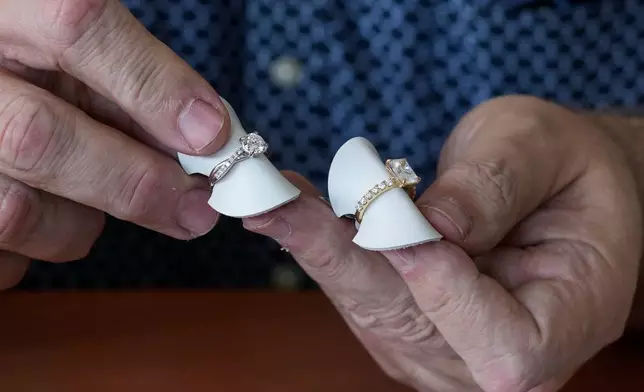
Ian Furman, a jewellery consultant, points out the difference between real, at right, and synthetic diamond used on engagement and wedding rings, in Johannesburg, South Africa, Thursday, Nov. 13, 2025. (AP Photo/Themba Hadebe)

Ian Furman, a jewellery consultant, points out the difference between real, at right, and synthetic diamond used on engagement and wedding rings, in Johannesburg, South Africa, Thursday, Nov. 13, 2025. (AP Photo/Themba Hadebe)

Dust rises from the processing plant at the Orapa open cast mine in Lethakane, Botswana, Sept. 14, 2025. (AP Photo/Sello Motseta)
Dust rises from the processing plant at the Orapa open cast mine in Lethakane, Botswana, Sept. 14, 2025. (AP Photo/Sello Motseta)

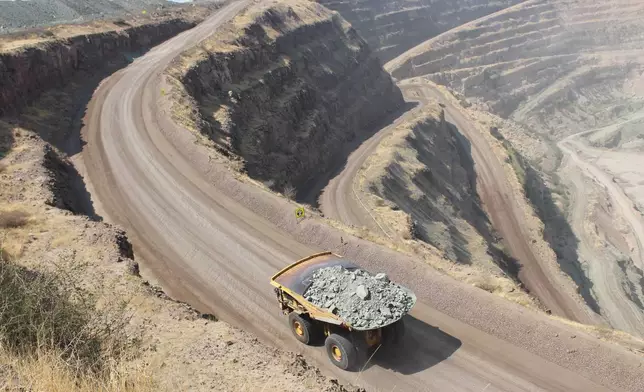
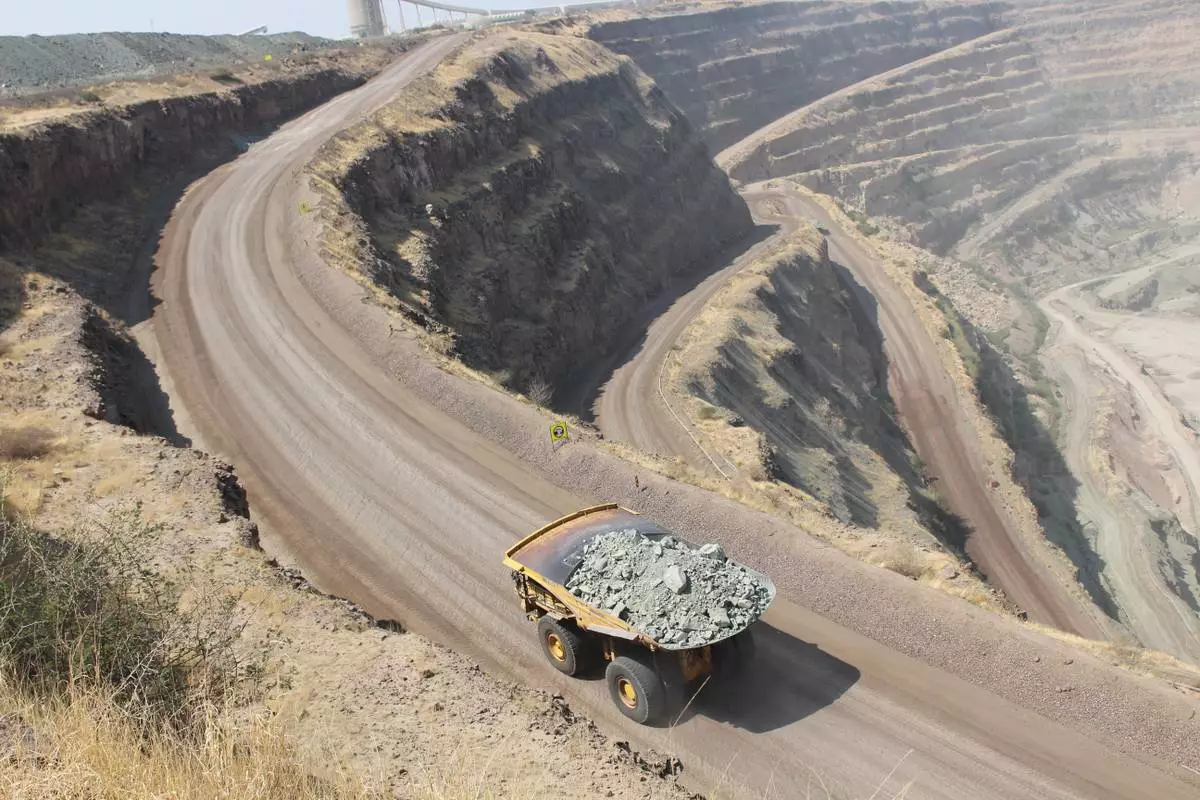
A truck carries rough stones from the Orapa open cast mine in Lethakane, Botswana, Sept. 14, 2025. (AP Photo/Sello Motseta)
A truck carries rough stones from the Orapa open cast mine in Lethakane, Botswana, Sept. 14, 2025. (AP Photo/Sello Motseta)

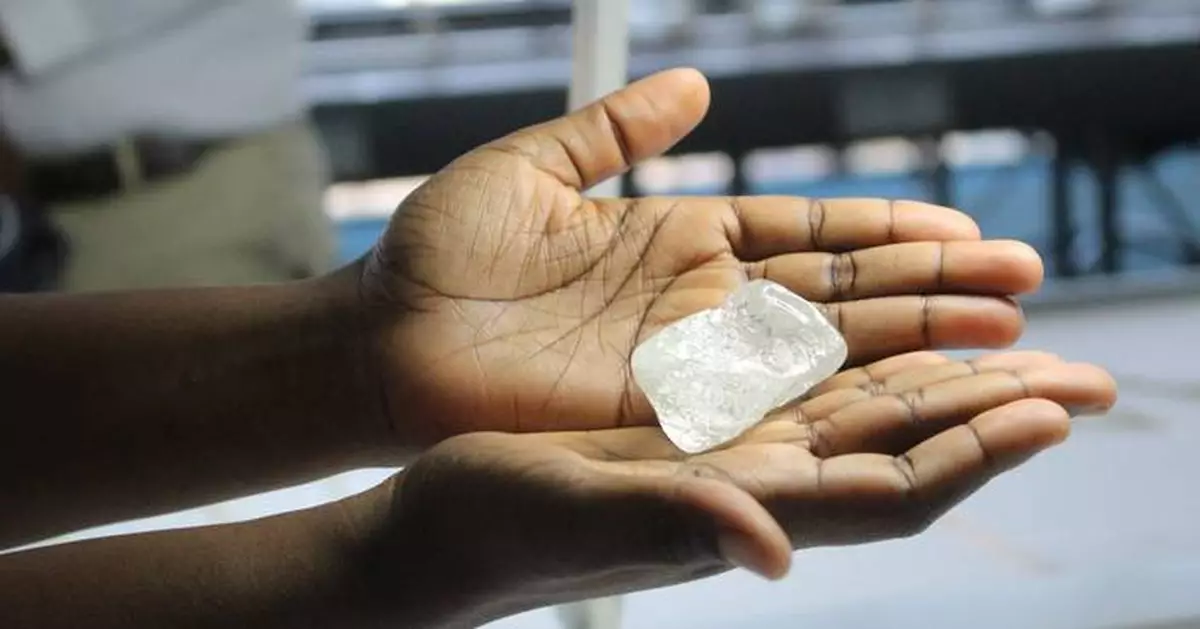
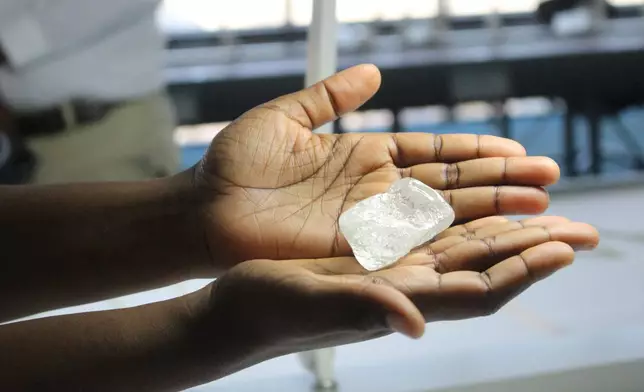
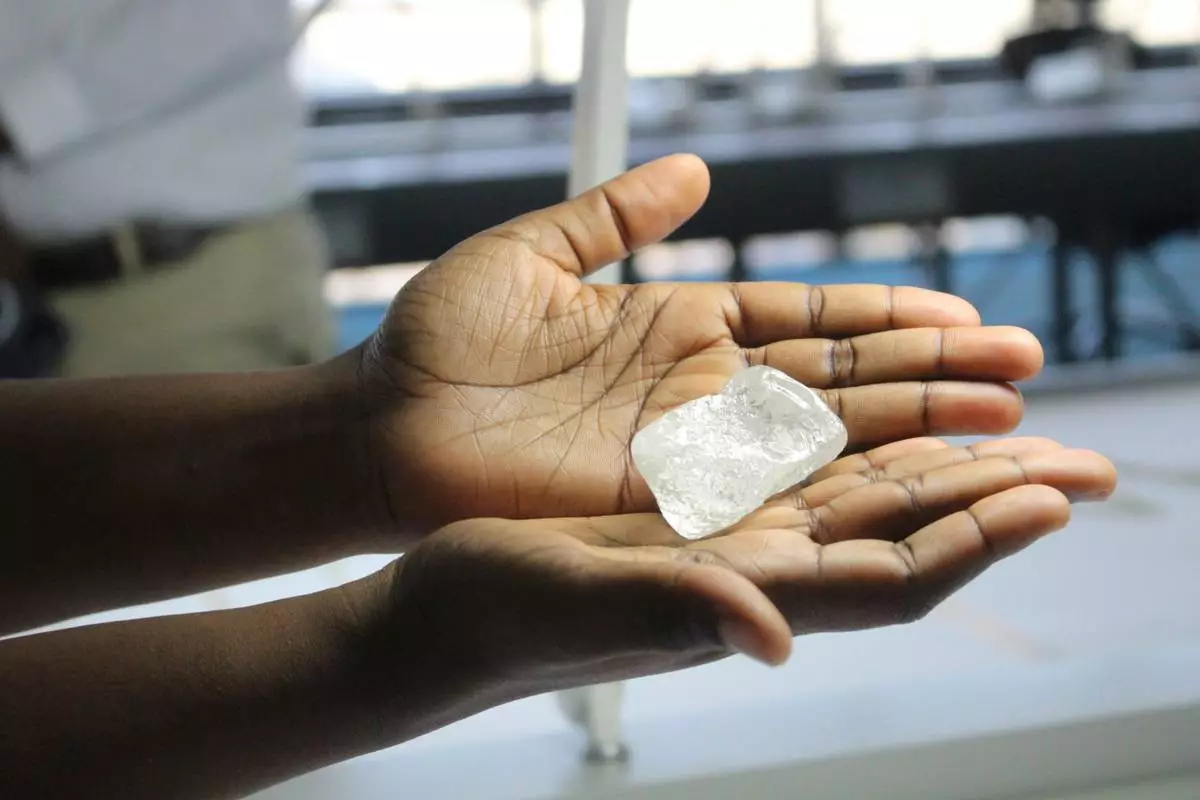
A raw diamond is displayed during a media tour of the Diamond Trading Company in Gaborone, Botswana, Sept. 16, 2025. (AP Photo/Sello Motseta)

A raw diamond is displayed during a media tour of the Diamond Trading Company in Gaborone, Botswana, Sept. 16, 2025. (AP Photo/Sello Motseta)

Botswana became the world’s top diamond producer by value, and second-largest by volume after Russia. Diamonds are woven into the national identity, with local Olympic champion runner Letsile Tebogo heading a De Beers campaign celebrating how the industry funds schools and stadiums.

The stones that Koko and thousands of others dug and polished over the decades have funded Botswana’s health, education, infrastructure and more. The country risked the “resource curse” of building its economy on a single natural asset — and unlike many African nations, it was a success.

But Koko lost her job a year ago, joining many others left adrift as Africa’s trade in natural diamonds buckles under growing pressure from cheaper lab-grown diamonds mass-produced mainly in China and India.

“I have debts and I don’t know how I am going to pay them,” said the mother of two, who had survived on about $300 a month and relied on her employer for medical insurance. It had been a decent situation for a semi-skilled worker in a country where the average monthly salary is about $500. “Every month they call me asking for money. But where do I get it?”

Botswana, which has unearthed some of the world’s biggest stones, has prided itself on prudently managing its natural wealth, avoiding the corruption and fighting that have plagued many African peers. Its marketing message has been simple: Its stones are conflict-free and help fund development.

“Diamonds built our country,” said Joseph Tsimako, president of the Botswana Mine Workers Union, which represents about 10,000 workers in the nation of 2.5 million people. “Now, as the world changes, we must find a way to make sure they don’t destroy the lives of the people who helped build it.”

He warned that new U.S. tariffs under the Trump administration could worsen Botswana’s downturn, triggering staffing freezes, unpaid leave and more layoffs. The U.S. has imposed a 15% tariff on diamonds that are mined, cut and polished there.

Diamond exports, roughly 80% of Botswana’s foreign earnings and a third of government revenue, have tumbled.

Debswana, the largest local diamond producer and a joint venture between the government and mining giant De Beers, saw revenues halve last year. It has paused operations at some mines as Botswana and Angola enter talks to take over controlling stakes in De Beers’ diamond mining unit.

In September, Botswana’s national statistics agency reported a 43% drop in diamond output in the second quarter, the steepest fall in the country’s modern mining history. The World Bank expects the economy to shrink 3% this year, the second consecutive contraction.

The global rise of synthetic diamonds has been swift. They have “given stiff competition, especially in lower-quality stones,” said Siddarth Gothi, chairman of the Botswana Diamond Manufacturers Association.

The gems emerged in the 1950s for industrial use. By the 1970s they had reached jewelry quality. Lab-grown stones now sell for up to 80% less than natural diamonds. Once making up just 1% of global sales in 2015, they have surged to nearly 20%.

Glitzy social media videos have fueled the appeal of synthetic gems made in weeks under intense heat and pressure and marketed as cheaper, conflict-free and eco-friendly alternatives to stones formed over billions of years.

Environmental groups have said natural diamond mining can drive deforestation, destroy habitats, degrade the soil and pollute the water. But environmental claims about the synthetic gems also face scrutiny, with critics noting that production remains energy-intensive, often powered by fossil fuels.

From “a marginal phenomenon,” an “unprecedented flood” of synthetics now threatens the natural diamond’s value and future, World Federation of Diamond Bourses president Yoram Dvash warned in July.

Lab-grown stones now account for most new U.S. engagement rings, he said. Natural diamond prices have fallen roughly 30% since 2022, leaving the industry at what Dvash called “a critical juncture.”

Hollywood stars, including Billie Eilish and Pamela Anderson, and Bollywood celebrities have boosted synthetic diamonds’ allure, along with Gen Z influencers.

“The new generation of youngsters getting engaged, they’ve got far more important things to spend their money on than a diamond,” said Ian Furman, founder of Naturally Diamonds, which sells natural and synthetic diamonds in neighboring South Africa. “So, it’s become so attractive to them to buy lab diamonds."

Furman said that for every 100 diamonds his company sells, around 95 are synthetic when just five or six years ago it was overwhelmingly natural diamonds.

The shift is felt beyond Botswana. Across southern Africa, falling production of natural diamonds and revenue have led to job cuts and financial strain.

To counter the trend, Botswana, Angola, Namibia, South Africa and Congo in June agreed to pool 1% of annual diamond revenues, translating into millions of dollars, into a global marketing push led by the Natural Diamond Council to promote natural stones. The nonprofit’s members include major mining companies such as De Beers Group and Rio Tinto, which have invested heavily in natural diamonds.

Last year, the council launched a “Real. Rare. Responsible” campaign starring actor Lily James in a bid to recast natural diamonds as unique and ethically sourced.

Kristina Buckley Kayel, the council’s managing director for North America, said restoring natural diamonds’ “desirability” is essential to protect producer economies, particularly in southern Africa.

With its diamond income no longer assured, Botswana’s government in September created a sovereign wealth fund focused on investment and diversification beyond mining, although details about its value and investors sketchy. Suddenly, the country’s elephant-heavy tourism industry and other mining options, including gold, silver and uranium, are more important than ever.

But for Koko, the laid-off diamond worker, the policy shift may have come too late.

“I was the breadwinner in a big family,” she said. “Now I don’t even know how to feed my own. Looking for another job is very difficult. The skills I learned are only relevant to the diamond industry.”

She never owned a diamond herself. Even the smallest would be a luxury beyond her means.

Mutsaka reported from Harare, Zimbabwe. Associated Press writer Mogomotsi Magome in Johannesburg, South Africa, contributed to this report.

For more on Africa and development: https://apnews.com/hub/africa-pulse

The Associated Press receives financial support for global health and development coverage in Africa from the Gates Foundation. The AP is solely responsible for all content. Find AP’s standards for working with philanthropies, a list of supporters and funded coverage areas at AP.org.
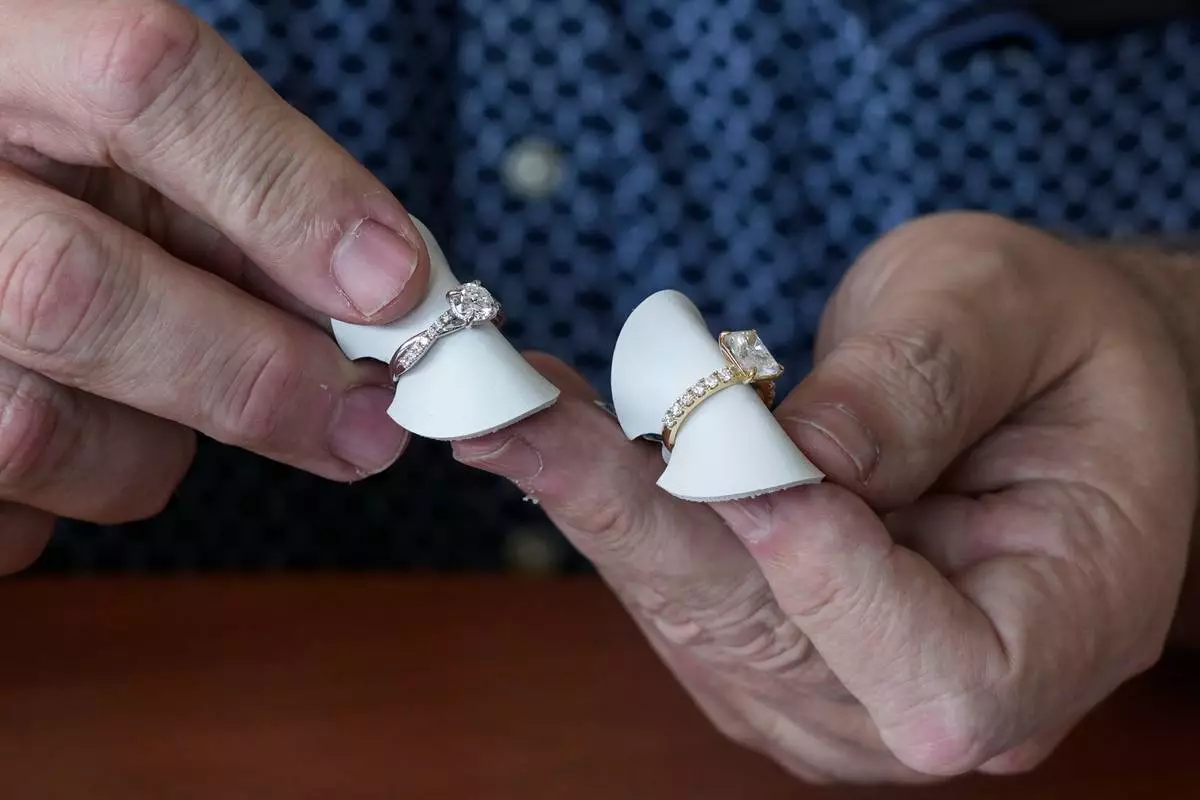
Ian Furman, a jewellery consultant, points out the difference between real, at right, and synthetic diamond used on engagement and wedding rings, in Johannesburg, South Africa, Thursday, Nov. 13, 2025. (AP Photo/Themba Hadebe)

Ian Furman, a jewellery consultant, points out the difference between real, at right, and synthetic diamond used on engagement and wedding rings, in Johannesburg, South Africa, Thursday, Nov. 13, 2025. (AP Photo/Themba Hadebe)

Dust rises from the processing plant at the Orapa open cast mine in Lethakane, Botswana, Sept. 14, 2025. (AP Photo/Sello Motseta)
Dust rises from the processing plant at the Orapa open cast mine in Lethakane, Botswana, Sept. 14, 2025. (AP Photo/Sello Motseta)

A truck carries rough stones from the Orapa open cast mine in Lethakane, Botswana, Sept. 14, 2025. (AP Photo/Sello Motseta)
A truck carries rough stones from the Orapa open cast mine in Lethakane, Botswana, Sept. 14, 2025. (AP Photo/Sello Motseta)

A raw diamond is displayed during a media tour of the Diamond Trading Company in Gaborone, Botswana, Sept. 16, 2025. (AP Photo/Sello Motseta)
A raw diamond is displayed during a media tour of the Diamond Trading Company in Gaborone, Botswana, Sept. 16, 2025. (AP Photo/Sello Motseta)

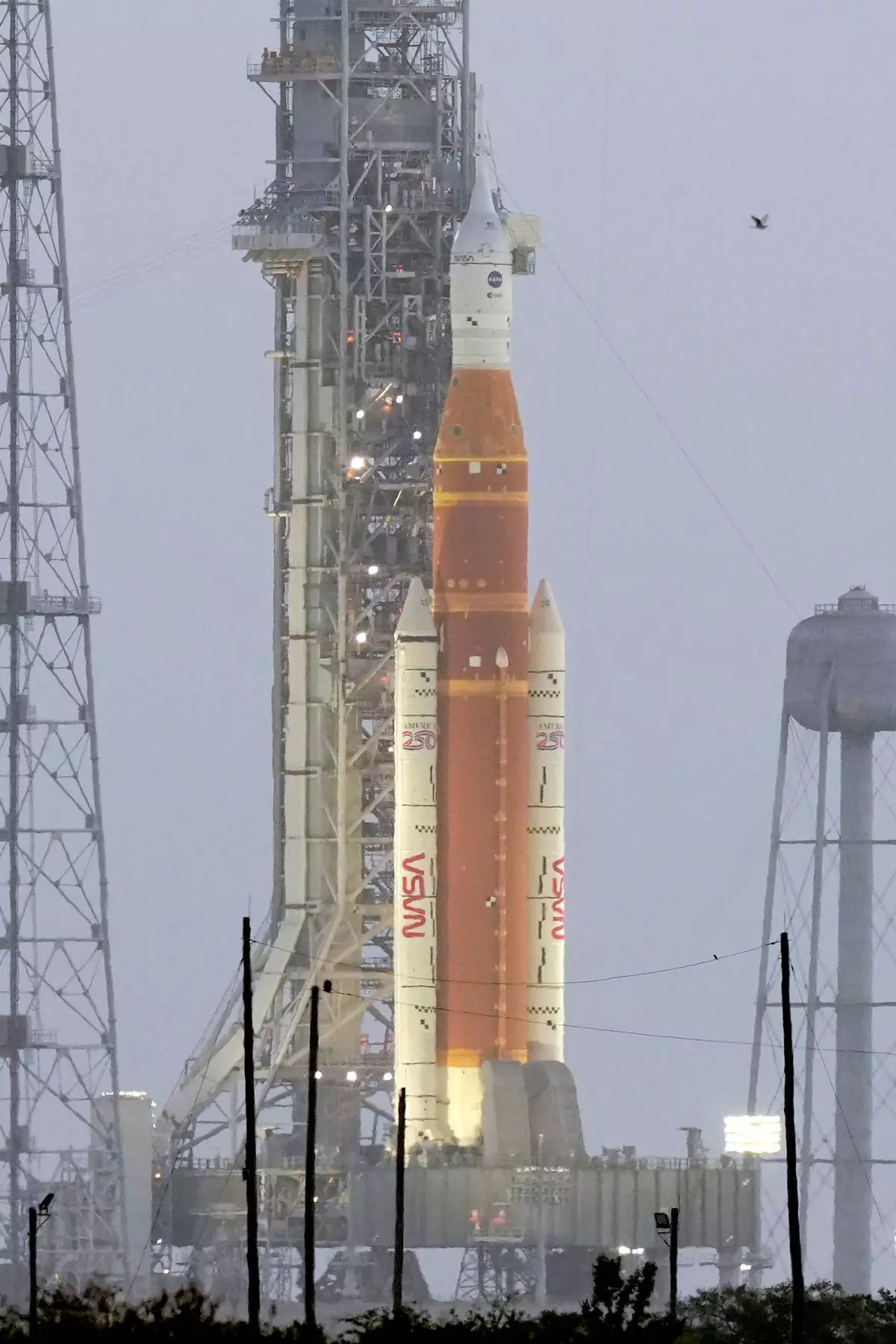
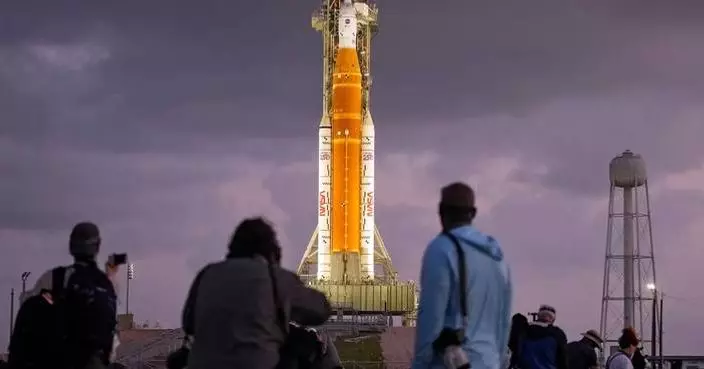
CAPE CANAVERAL, Fla. (AP) — Four astronauts strapped into NASA's new moon rocket and awaited liftoff Wednesday on humanity’s first lunar trip in more than half a century.

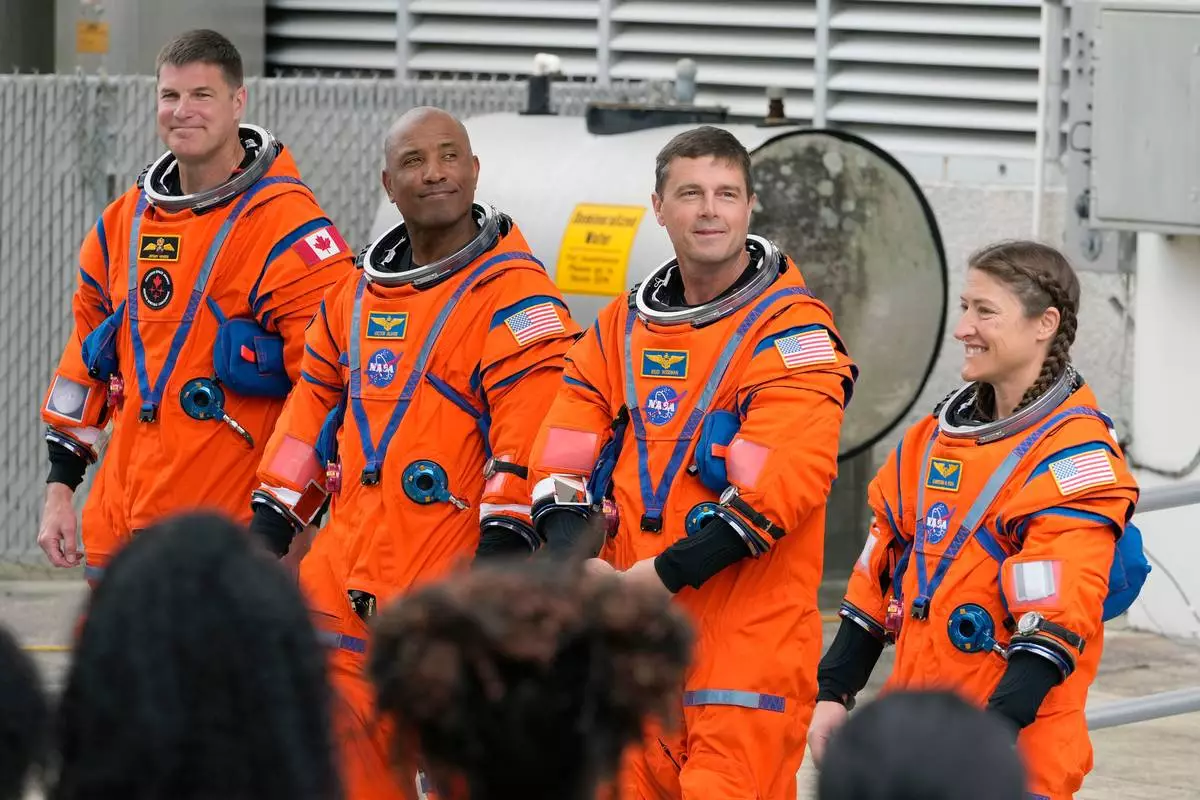
The three Americans and one Canadian waved and shaped their hands into hearts as they emerged from crew quarters to cheers and said goodbye to their families. The crowd applauded and cheered again as the astronauts boarded their astrovan for the nine mile (14-kilometer) ride to the launch pad.

Commander Reid Wiseman thanked the throngs who gathered to see them off.

“It's a great day for us. It's a great day for this team,” Wiseman called out.

Tensions were high earlier in the day as hydrogen fuel started flowing into the rocket. Dangerous hydrogen leaks erupted during a countdown test earlier this year, forcing a lengthy flight delay.

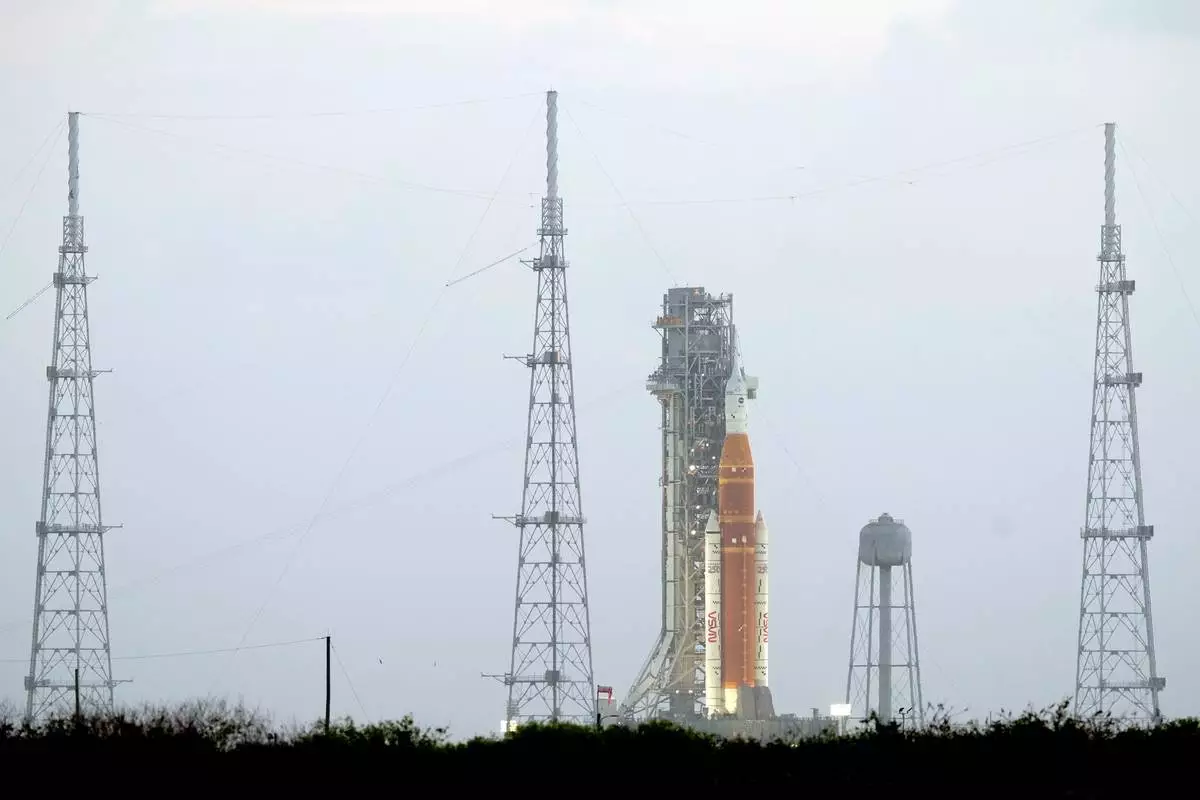
To NASA's relief, no significant hydrogen leaks occurred. The launch team loaded more than 700,000 gallons of fuel (2.6 million liters) into the 32-story Space Launch System rocket on the pad, a smooth operation that set the stage for the Artemis II crew to board.

A problem cropped up with the rocket's flight-termination system with only two hours remaining in the countdown. Commands weren't getting through to the system, which is needed to send a self-destruct signal in case the rocket veers off course and threatens populated areas. But the issue was quickly resolved, according to NASA.

“It is time to fly,” Wiseman declared on the eve of launch via X. Favorable weather was forecast.

The four will fly around the moon without stopping or even orbiting — then head straight back for a Pacific splashdown. They will set a new distance record for the farthest humans have traveled from Earth as they zoom some 4,000 miles (6,400 kilometers) beyond the moon and then hang a U-turn.

Astronauts last flew to the moon during Apollo 17 in 1972.

Artemis II is the opening shot of NASA's grand plans for a permanent moon base. The space program is aiming for a moon landing near the lunar south pole in 2028.

“The next era of exploration begins,” NASA Administrator Jared Isaacman posted on X.

Best wishes already have started to pour in, including from England's King Charles III to Canadian Space Agency astronaut Jeremy Hansen.

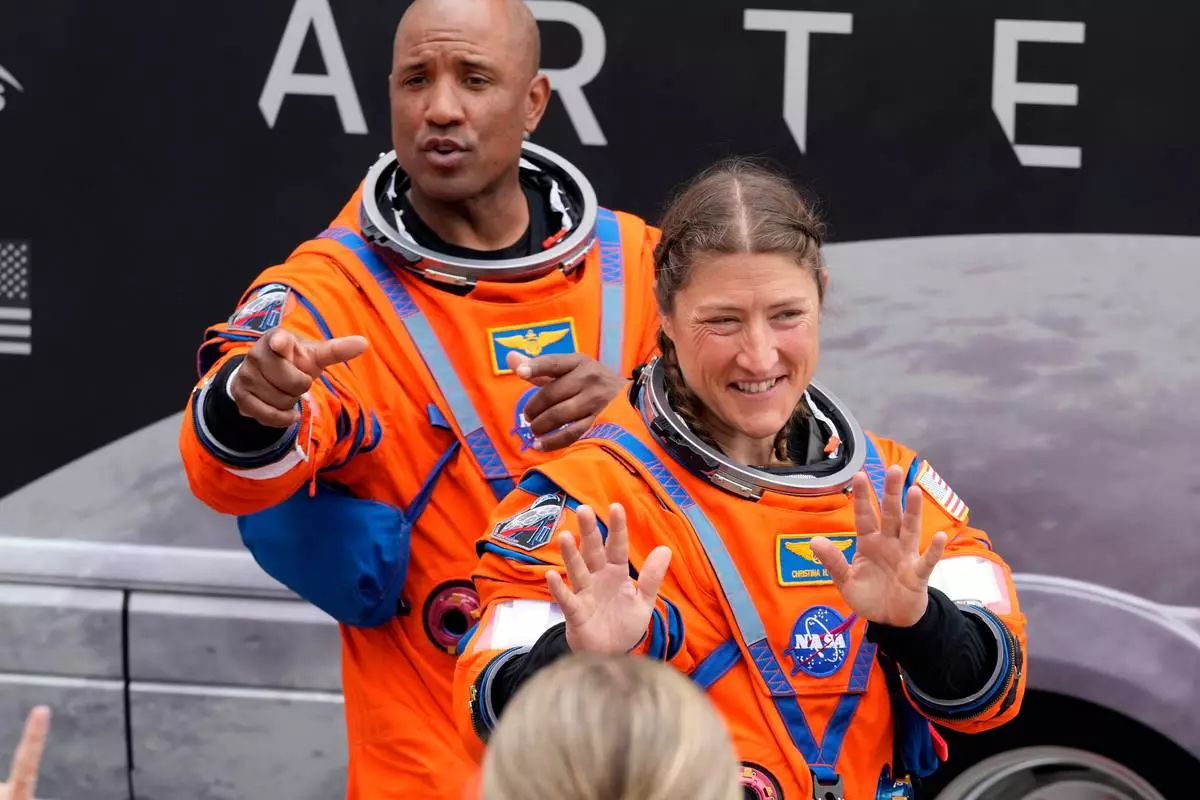
Hansen will become the first non-U. S. citizen to launch to the moon. The crew also includes Christina Koch and Victor Glover, the first woman and first Black astronaut, respectively, destined for the moon.

“In this historic moment, you stand as a bridge between nations and generations,” the king wrote in a letter to Hansen, “and I commend you for your courage, discipline and vision that have brought you to this threshold.”

The Associated Press Health and Science Department receives support from the Howard Hughes Medical Institute’s Department of Science Education and the Robert Wood Johnson Foundation. The AP is solely responsible for all content.

Astronauts, Mission Specialist Christina Koch, right, and Pilot Victor Glover wave to family members as they leave the Operations and Checkout Building for a trip to Launch Pad 39-B and a planned liftoff on NASA's Artermis II moon rocket at the Kennedy Space Center Wednesday, April 1, 2026, in Cape Canaveral, Fla. (AP Photo/Chris O'Meara)

Astronauts, Mission Specialist Christina Koch, right, and Pilot Victor Glover wave to family members as they leave the Operations and Checkout Building for a trip to Launch Pad 39-B and a planned liftoff on NASA's Artermis II moon rocket at the Kennedy Space Center Wednesday, April 1, 2026, in Cape Canaveral, Fla. (AP Photo/Chris O'Meara)

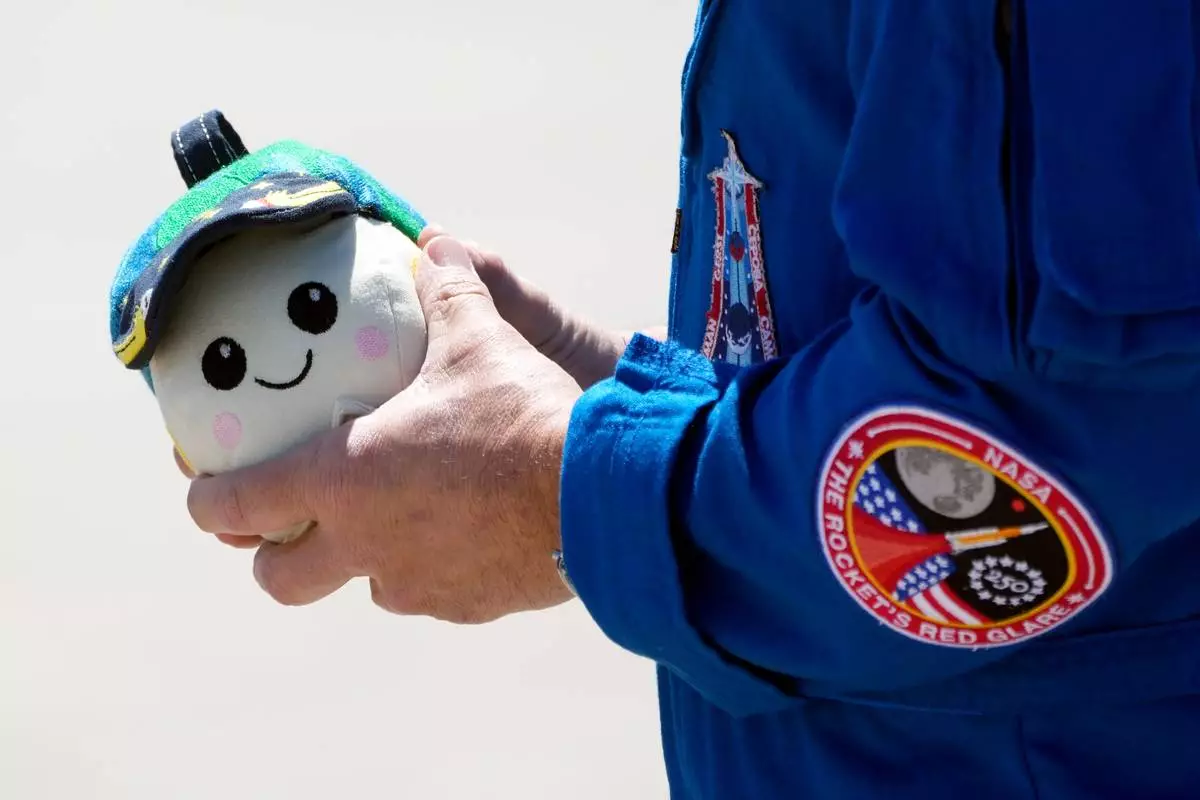
Artemis 2 crew member Commander Reid Wiseman holds "Rise" after the crew's arrival at the Kennedy Space Center Friday, March 27, 2026, in Cape Canaveral, Fla. (AP Photo/Chris O'Meara)

Artemis 2 crew member Commander Reid Wiseman holds "Rise" after the crew's arrival at the Kennedy Space Center Friday, March 27, 2026, in Cape Canaveral, Fla. (AP Photo/Chris O'Meara)

Commander Reid Wiseman poses for a photo with family members after leaving the Operations and Checkout Building for a trip to Launch Pad 39-B and a planned liftoff on NASA's Artermis II moon rocket at the Kennedy Space Center Wednesday, April 1, 2026, in Cape Canaveral, Fla. (AP Photo/Chris O'Meara)

Commander Reid Wiseman poses for a photo with family members after leaving the Operations and Checkout Building for a trip to Launch Pad 39-B and a planned liftoff on NASA's Artermis II moon rocket at the Kennedy Space Center Wednesday, April 1, 2026, in Cape Canaveral, Fla. (AP Photo/Chris O'Meara)

Astronauts, from left, Mission Specialist Jeremy Hansen, of Canada,, Pilot Victor Glover, Commander Reid Wiseman, and Mission Specialist Christina Koch pose for a photo after leaving the Operations and Checkout Building for a trip to Launch Pad 39-B and a planned liftoff on NASA's Artermis II moon rocket at the Kennedy Space Center Wednesday, April 1, 2026, in Cape Canaveral, Fla. (AP Photo/Chris O'Meara)

Astronauts, from left, Mission Specialist Jeremy Hansen, of Canada,, Pilot Victor Glover, Commander Reid Wiseman, and Mission Specialist Christina Koch pose for a photo after leaving the Operations and Checkout Building for a trip to Launch Pad 39-B and a planned liftoff on NASA's Artermis II moon rocket at the Kennedy Space Center Wednesday, April 1, 2026, in Cape Canaveral, Fla. (AP Photo/Chris O'Meara)

NASA's Artermis II moon rocket sits on Launch Pad 39-B at the Kennedy Space Center hours ahead of a planned launch attempt Wednesday, April 1, 2026, in Cape Canaveral, Fla. (AP Photo/Chris O'Meara)

NASA's Artermis II moon rocket sits on Launch Pad 39-B at the Kennedy Space Center hours ahead of a planned launch attempt Wednesday, April 1, 2026, in Cape Canaveral, Fla. (AP Photo/Chris O'Meara)

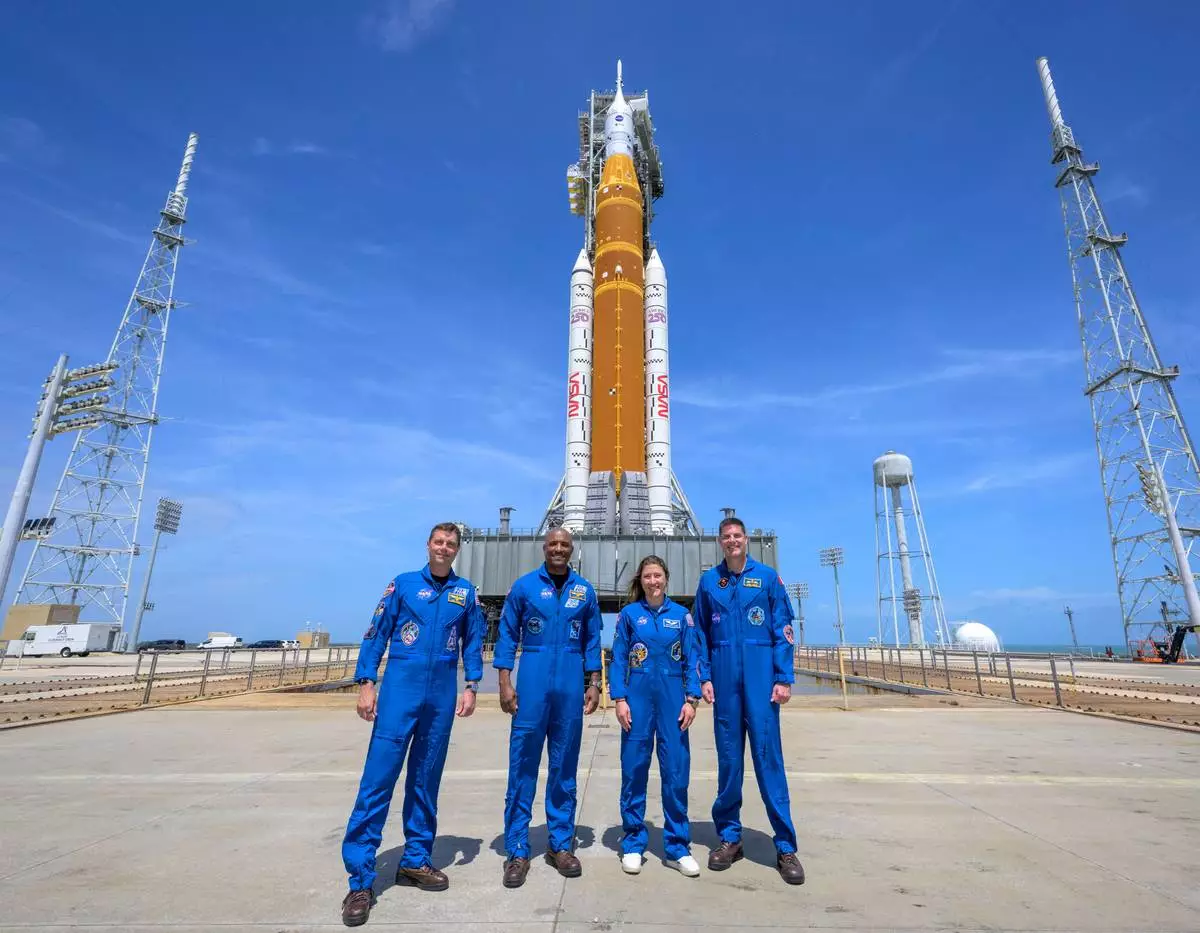
This photo provided by NASA shows NASA astronauts Reid Wiseman, Artemis II commander, from left, Victor Glover, Artemis II pilot, Christina Koch, Artemis II mission specialist, and CSA (Canadian Space Agency) astronaut Jeremy Hansen, Artemis II mission specialist, right, in a group photograph as they visit NASA's Artemis II SLS (Space Launch System) rocket and Orion spacecraft, Monday, March 30, 2026, at Launch Complex 39B of NASA's Kennedy Space Center, in Cape Canaveral, Fla. (Bill Ingalls/NASA via AP)

This photo provided by NASA shows NASA astronauts Reid Wiseman, Artemis II commander, from left, Victor Glover, Artemis II pilot, Christina Koch, Artemis II mission specialist, and CSA (Canadian Space Agency) astronaut Jeremy Hansen, Artemis II mission specialist, right, in a group photograph as they visit NASA's Artemis II SLS (Space Launch System) rocket and Orion spacecraft, Monday, March 30, 2026, at Launch Complex 39B of NASA's Kennedy Space Center, in Cape Canaveral, Fla. (Bill Ingalls/NASA via AP)

NASA's Artermis II moon rocket sits on Launch Pad 39-B at the Kennedy Space Center hours ahead of planned liftoff Wednesday, April 1, 2026, in Cape Canaveral, Fla. (AP Photo/Chris O'Meara)

NASA's Artermis II moon rocket sits on Launch Pad 39-B at the Kennedy Space Center hours ahead of planned liftoff Wednesday, April 1, 2026, in Cape Canaveral, Fla. (AP Photo/Chris O'Meara)

Recommended Articles