Skip to Content Facebook Feature Image

Tom Stoppard, sparkling playwright who won an Oscar for 'Shakespeare In Love,' dies at 88

ENT

Tom Stoppard, sparkling playwright who won an Oscar for 'Shakespeare In Love,' dies at 88
ENT

ENT

Tom Stoppard, sparkling playwright who won an Oscar for 'Shakespeare In Love,' dies at 88

2025-11-30 05:19 Last Updated At:12-01 15:58

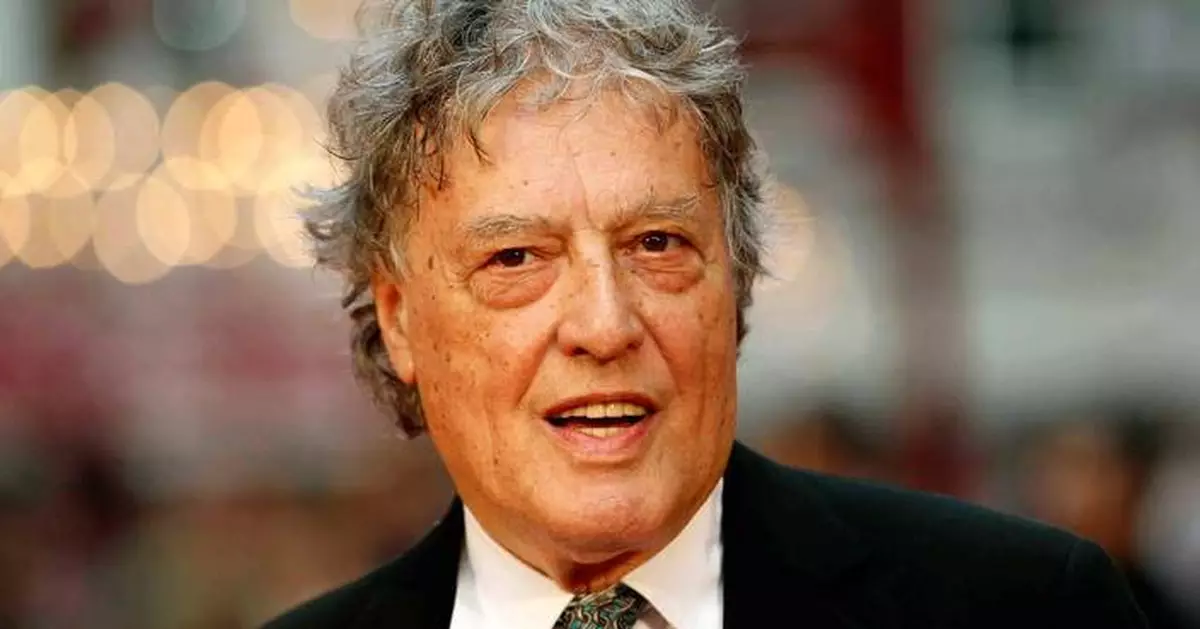
LONDON (AP) — British playwright Tom Stoppard, a playful, probing dramatist who won an Academy Award for the screenplay for 1998’s “Shakespeare In Love,” has died. He was 88.

In a statement Saturday, United Agents said the Czech-born Stoppard — often hailed as the greatest British playwright of his generation — died “peacefully” at his home in Dorset in southwest England, surrounded by his family.

“He will be remembered for his works, for their brilliance and humanity, and for his wit, his irreverence, his generosity of spirit and his profound love of the English language,” they said. “It was an honor to work with Tom and to know him.”

Rolling Stones front man Mick Jagger was among those paying tribute, calling Stoppard "a giant of the English theater, both highly intellectual and very funny in all his plays and scripts.

“He had a dazzling wit and loved classical and popular music alike which often featured in his huge body of work," said Jagger, who produced the 2001 film “Enigma,” with a screenplay by Stoppard. “He was amusing and quietly sardonic. A friend and companion and I will always miss him.”

King Charles III said Stoppard was “a dear friend who wore his genius lightly.”

Theaters in London’s West End will dim their lights for two minutes on Tuesday in tribute.

Over a six-decade career, Stoppard's brain-teasing plays for theater, radio and screen ranged from Shakespeare and science to philosophy and the historic tragedies of the 20th century.

Five of them won Tony Awards for best play: “Rosencrantz and Guildenstern Are Dead” in 1968; “Travesties” in 1976; “The Real Thing” in 1984; “The Coast of Utopia” in 2007; and “Leopoldstadt” in 2023.

Stoppard biographer Hermione Lee said the secret of his plays was their “mixture of language, knowledge and feeling. … It’s those three things in gear together which make him so remarkable.”

The writer was born Tomás Sträussler in 1937 to a Jewish family in Zlín in what was then Czechoslovakia, now the Czech Republic. His father was a doctor for the Bata shoe company, and when Nazi Germany invaded in 1939 the family fled to Singapore, where Bata had a factory.

In late 1941, as Japanese forces closed in on the city state, Tomas, his brother and their mother fled again, this time to India. His father stayed behind and later died when his ship was attacked as he tried to leave Singapore.

In 1946 his mother married an English officer, Kenneth Stoppard, and the family moved to threadbare postwar Britain. The 8-year-old Tom “put on Englishness like a coat,” he later said, growing up to be a quintessential Englishman who loved cricket and Shakespeare.

He did not go to university but began his career, aged 17, as a journalist on newspapers in Bristol, southwest England, and then as a theater critic for Scene magazine in London.

He wrote plays for radio and television including “A Walk on the Water,” televised in 1963, and made his stage breakthrough with “Rosencrantz and Guildenstern Are Dead,” which reimagined Shakespeare’s “Hamlet” from the viewpoint of two hapless minor characters. A mix of tragedy and absurdist humor, it premiered at the Edinburgh Fringe Festival in 1966 and was staged at Britain’s National Theatre, then run by Laurence Olivier, before moving to Broadway.

A stream of exuberant, innovative plays followed, including meta-whodunnit “The Real Inspector Hound” (first staged in 1968); “Jumpers” (1972), a blend of physical and philosophical gymnastics, and “Travesties” (1974), which set intellectuals including James Joyce and Vladimir Lenin colliding in Zurich during World War I.

Musical drama “Every Good Boy Deserves Favor” (1977) was a collaboration with composer Andre Previn about a Soviet dissident confined to a mental institution — part of Stoppard’s long involvement with groups advocating for human rights groups in the Soviet Union and Eastern Europe.

He often played with time and structure. “The Real Thing” (1982) was a poignant romantic comedy about love and deception that featured plays within a play, while “Arcadia” (1993) moved between the modern era and the early 19th century, where characters at an English country house debated poetry, gardening and chaos theory as fate had its way with them.

“The Invention of Love” (1997) explored classical literature and the mysteries of the human heart through the life of the English poet A.E. Housman.

Stoppard began the 21st century with “The Coast of Utopia” (2002), an epic trilogy about pre-revolutionary Russian intellectuals, and drew on his own background for “Rock ’n’ Roll” (2006), which contrasted the fates of the 1960s counterculture in Britain and in Communist Czechoslovakia.

“The Hard Problem” (2015) explored the mysteries of consciousness through the lenses of science and religion.

Stoppard was a strong champion of free speech who worked with organizations including PEN and Index on Censorship. He claimed not to have strong political views otherwise, writing in 1968: “I burn with no causes. I cannot say that I write with any social objective. One writes because one loves writing, really.”

Some critics found his plays more clever than emotionally engaging. But biographer Lee said his “very funny, witty plays” contained a “sense of underlying grief.”

“People in his plays … history comes at them,” Lee said at a British Library event in 2021. “They turn up, they don’t know why they’re there, they don’t know whether they can get home again."

That was especially true of his late play “Leopoldstadt,” which drew on his own family’s story for the tale of a Jewish Viennese family over the first half of the 20th century. Stoppard said he began thinking of his personal link to the Holocaust quite late in life, only discovering after his mother’s death in 1996 that many members of his family, including all four grandparents, had died in concentration camps.

“It would be misleading to see me as somebody who blithely and innocently, at the age of 40-something, thought, ‘Oh, my goodness, I had no idea I was a member of a Jewish family,’” he told The New Yorker in 2022. “Of course I knew, but I didn’t know who they were. And I didn’t feel I had to find out in order to live my own life. But that wasn’t really true.”

“Leopoldstadt” premiered in London at the start of 2020 to rave reviews; weeks later all theaters were shut by the COVID-19 pandemic. It eventually opened in Broadway in late 2022, going on to win four Tonys.

Dizzyingly prolific, Stoppard also wrote many radio plays, a novel, television series including “Parade’s End” (2013) and many film screenplays. These included dystopian Terry Gilliam comedy “Brazil” (1985), Steven Spielberg-directed war drama “Empire of the Sun” (1987), Elizabethan romcom “Shakespeare in Love” (1998) — for which he and Marc Norman shared a best adapted screenplay Oscar — code breaking thriller “Enigma” and Russian epic “Anna Karenina” (2012).

He also wrote and directed a 1990 film adaptation of “Rosencrantz and Guildenstern are Dead,” and translated numerous works into English, including plays by dissident Czech writer Václav Havel, who became the country’s first post-Communist president.

Stoppard also had a sideline as a Hollywood script doctor, lending sparkle to the dialogue of movies including “Indiana Jones and the Last Crusade" and the Star Wars film “Revenge of the Sith.”

He was knighted by Queen Elizabeth II in 1997 for his services to literature.

He was married three times: to Jose Ingle, Miriam Stern — better known as the health journalist Dr. Miriam Stoppard — and TV producer Sabrina Guinness. The first two marriages ended in divorce. He is survived by four children, including the actor Ed Stoppard, and several grandchildren.
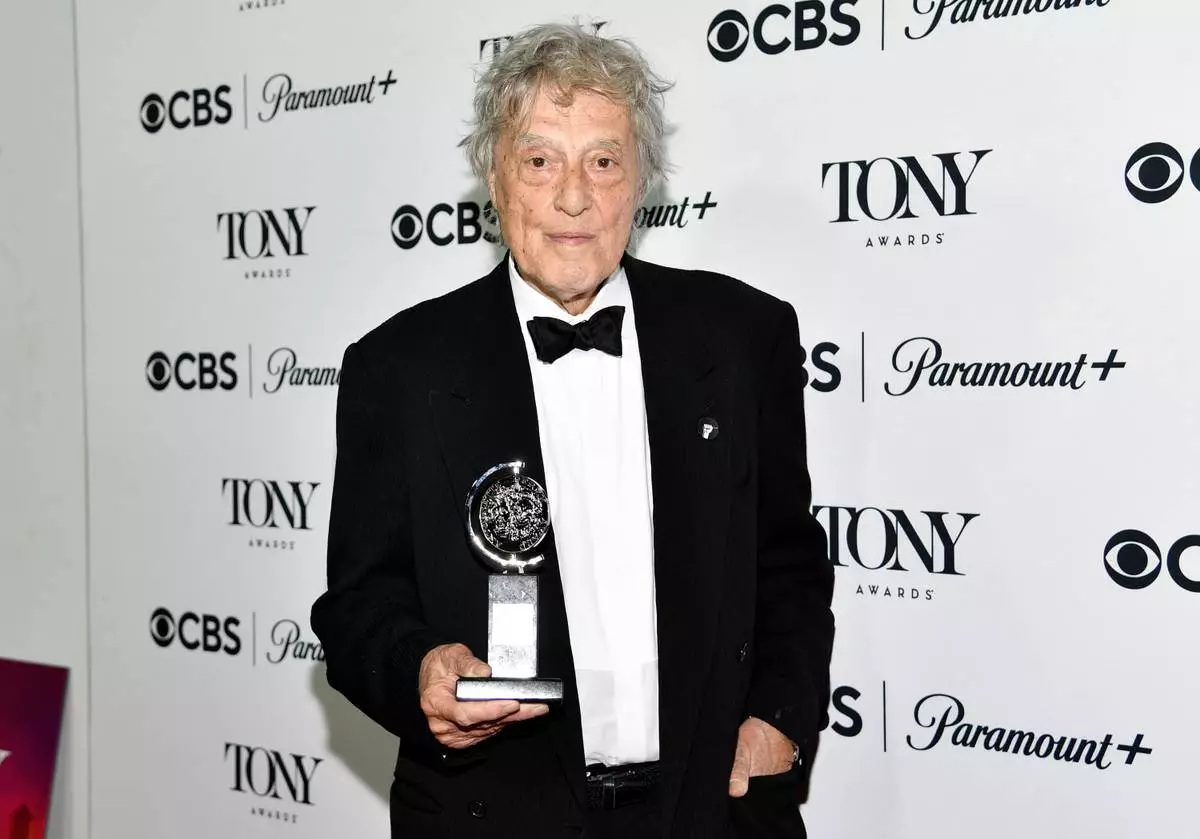
FILE - Tom Stoppard poses with the award for best play for "Leopoldstadt" in the press room at the 76th annual Tony Awards on Sunday, June 11, 2023, at the Radio Hotel in New York. (Photo by Evan Agostini/Invision/AP, File)
FILE - Tom Stoppard poses with the award for best play for "Leopoldstadt" in the press room at the 76th annual Tony Awards on Sunday, June 11, 2023, at the Radio Hotel in New York. (Photo by Evan Agostini/Invision/AP, File)

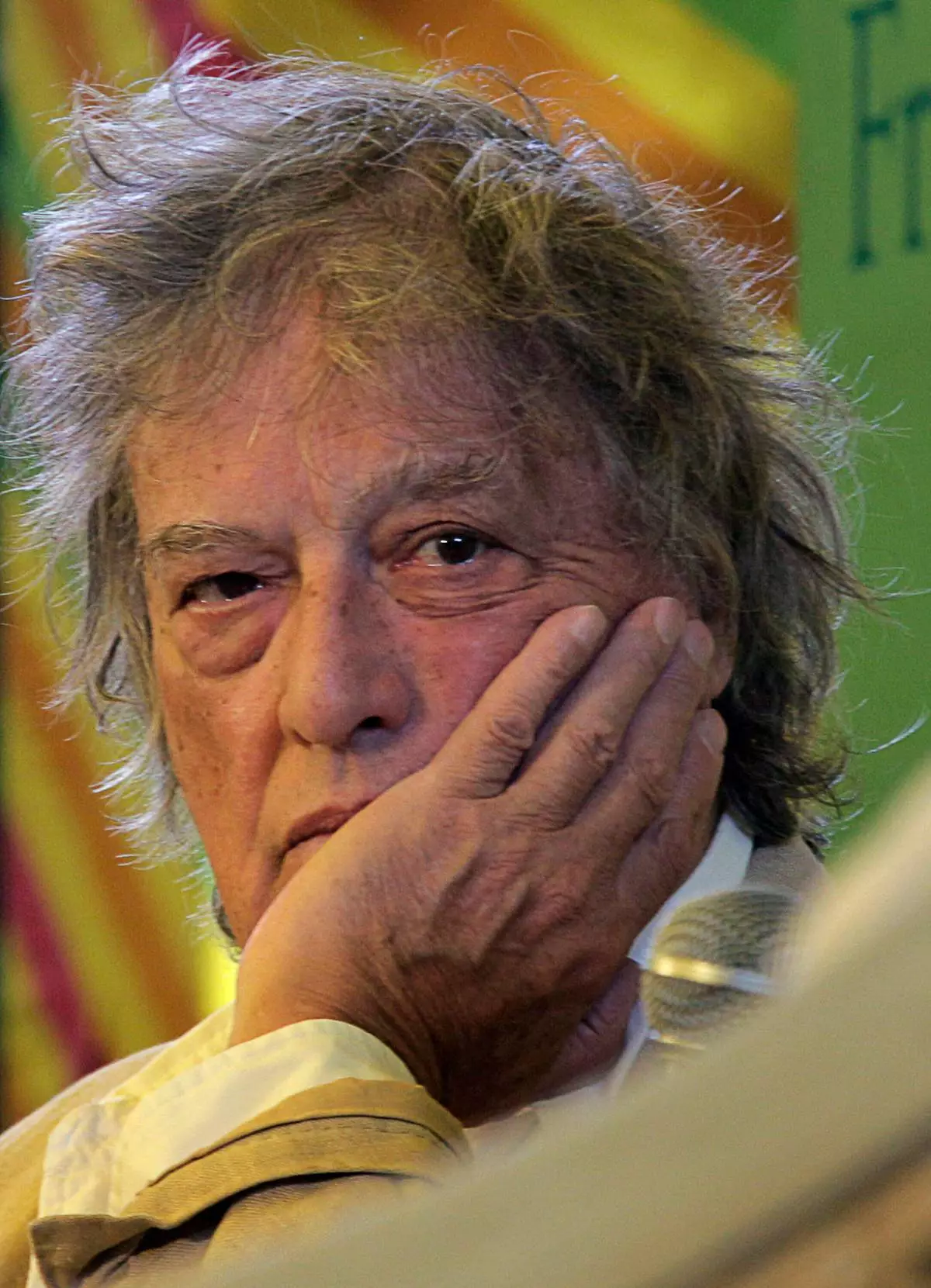
FILE - British play writer Tom Stoppard listens at a session at the Jaipur Literature Festival, in the western Indian state of Rajasthan, India, Monday, Jan. 23, 2012. (AP Photo/Manish Swarup, File)
FILE - British play writer Tom Stoppard listens at a session at the Jaipur Literature Festival, in the western Indian state of Rajasthan, India, Monday, Jan. 23, 2012. (AP Photo/Manish Swarup, File)

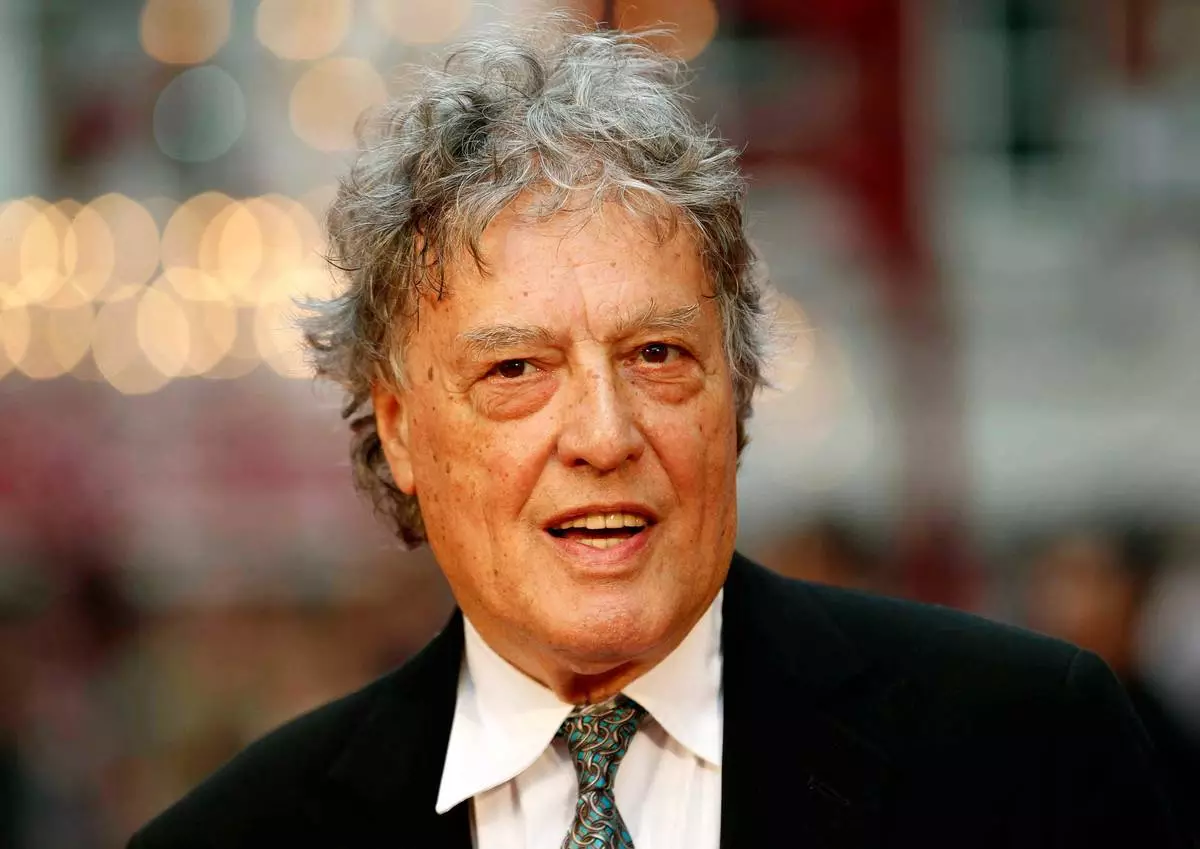
FILE - In this Sept. 4, 2012 file photo, British playwright Tom Stoppard poses as he arrives for the world premiere of "Anna Karenina," in London. (AP Photo/Sang Tan, File)
FILE - In this Sept. 4, 2012 file photo, British playwright Tom Stoppard poses as he arrives for the world premiere of "Anna Karenina," in London. (AP Photo/Sang Tan, File)

DUBAI, United Arab Emirates (AP) — He has been in exile for nearly 50 years. His father, Iran’s shah, was so widely hated that millions took to the streets in 1979, forcing him from power. Nevertheless, Iran’s Crown Prince Reza Pahlavi is trying to position himself as a player in his country’s future.

Pahlavi successfully spurred protesters onto the streets Thursday night in a massive escalation of the protests sweeping Iran. Initially sparked by the Islamic Republic’s ailing economy, the demonstrations have become a serious challenge to its theocracy, battered by years of nationwide protests and a 12-day war in June launched by Israel that saw the U.S. bomb nuclear enrichment sites.

What is unknown is how much real support the 65-year-old Pahlavi, who is in exile in the U.S., has in his homeland. Do protesters want a return of the Peacock Throne, as his father’s reign was known? Or are the protesters just looking for anything that is not Iran’s Shiite theocracy?

Pahlavi issued calls, rebroadcast by Farsi-language satellite news channels and websites abroad, for Iranians to return to the streets Friday night, which they did. He has called for further demonstrations this weekend.

“Over the past decade, Iran’s protest movement and dissident community have been increasingly nationalist in tone and tenor,” said Behnam Ben Taleblu, an Iran expert with the Washington-based Foundation for Defense of Democracies, which faces sanctions from Tehran.

“The more the Islamic Republic has failed, the more it has emboldened its antithesis," Taleblu said. "The success of the crown prince and his team has been in drawing a sharp contrast between the normalcy of what was and the promise of what could be, versus the nightmare and present predicament that is the reality for so many Iranians.”

Pahlavi’s profile rose again during U.S. President Donald Trump's first term. Still, Trump and other world leaders have been hesitant to embrace him, given the many cautionary tales in the Middle East and elsewhere of Western governments putting their faith in exiles long estranged from their homelands.

Iranian state media, which for years mocked Pahlavi as being out of touch and corrupt, blamed “monarchist terrorist elements” for the demonstrations Thursday night during which vehicles were burned and police kiosks attacked.

Born Oct. 31, 1960, Pahlavi lived in a gilded world of luxury as the crown prince to Shah Mohammad Reza Pahlavi.

Mohammed Reza had inherited the throne from his own father, an army officer who seized power with support from the British. Mohammed Reza’s rule was cemented by a 1953 CIA-backed coup, and he cooperated closely with the Americans, who sold the autocratic ruler billions of dollars of weapons and spied on the Soviet Union from Iran.

The young Pahlavi was schooled at the eponymous Reza Pahlavi School, set up within the walls of Niavaran Palace in northern Tehran. A biographer of his father noted the crown prince once played rock music in the palace during a New Year’s Eve visit to Tehran by then-U.S. President Jimmy Carter.

But the fall of the Peacock Throne loomed.

While successfully riding rising oil prices in the 1970s, deep economic inequality set in during the shah’s rule and his feared SAVAK intelligence agency became notorious for the torture of dissidents.

Millions across the country participated in protests against the shah, uniting secular leftists, labor unions, professionals, students and Muslim clergy. As the crisis reached a fever pitch, the shah was doomed by his inability to act and poor decisions while secretly fighting terminal cancer.

In 1978, Crown Prince Reza left his homeland for flight school at a U.S. air base in Texas. A year later, his father fled Iran during the onset of what became known as the Islamic Revolution. Shiite clerics squeezed out other anti-shah factions, establishing a new theocratic government that executed thousands after the revolution and to this day remains one of the world’s top executioners.

After his father’s death, a royal court in exile announced that Reza Pahlavi assumed the role of the shah on Oct. 31, 1980, his 20th birthday.

“I can understand and sympathize with your sufferings and your inner torment,” Pahlavi said, addressing Iranians in a speech at the time. “I shed the tears which you must hide. Yet there is, I am sure, light beyond the darkness. Deep in your hearts, you may be confident that this nightmare, like others in our history, will pass.”

But what followed has been nearly five decades in exile.

Pahlavi attempted to gain influence abroad. In 1986, The Washington Post reported that the CIA supplied the prince’s allies “a miniaturized television transmitter for an 11-minute clandestine broadcast” to Iran by Pahlavi that pirated the signal of two stations in the Islamic Republic.

“I will return and together we will pave the way for the nation’s happiness and prosperity through freedom,” Pahlavi reportedly said in the broadcast.

That did not happen. Pahlavi largely lived abroad in the United States in Los Angeles and Washington, D.C., while his mother, the Shahbanu Farah Pahlavi, lived in Paris.

Circles of diehard Iranian monarchists in exile have long touted dreams of the Pahlavi dynasty returning to power. But Pahlavi has been hampered in gaining wider appeal by a number of factors: bitter memories of his father’s rule; the perception that he and his family are out of touch with their homeland; and repression inside Iran that aims to silence any opposition sentiment.

At the same time, younger generations in Iran born decades after the shah’s rule ended have grown up under a different experience; social restrictions and brutal suppression by the Islamic Republic and economic turmoil under international sanctions, corruption and mismanagement.

Pahlavi has sought to have a voice through social media videos, and Farsi-language news channels such as Iran International have highlighted his calls for protests. The channel also aired QR codes that led to information for security force members within Iran who want to cooperate with him.

Mahmood Enayat, the general manager of Iran International's owner Volant Media, said the channel ran Pahlavi's ad and others “on a pro bono basis" as “part of our mission to support Iran’s civil society.”

In interviews in recent years, Pahlavi has raised the idea of a constitutional monarchy, perhaps with an elected rather than a hereditary ruler. But he has also said it is up to Iranians to choose.

“This regime is simply irreformable because the nature of it, its DNA, is such that it cannot,” Pahlavi told The Associated Press in 2017. “People have given up with the idea of reform and they think there has to be fundamental change. Now, how this change can occur is the big question.”

He has also faced criticism for his support of and from Israel, particularly after the June war. Pahlavi traveled to Israel in 2023 and met Prime Minister Benjamin Netanyahu, a longtime hawk on Iran whose criticism of the 2015 Iran nuclear deal fueled Trump's decision to withdraw America from the accord. Netanyahu also oversaw the 12-day war with Iran.

“My focus right now is on liberating Iran, and I will find any means that I can, without compromising the national interests and independence, with anyone who is willing to give us a hand, whether it is the U.S. or the Saudis or the Israelis or whomever it is,” he said in 2017.

FILE - Reza Pahlavi, the son of Iran's toppled Shah Mohammad Reza Pahlavi, speaks during a news conference, June 23, 2025 in Paris. (AP Photo/Thomas Padilla, File)

FILE - Reza Pahlavi, the son of Iran's toppled Shah Mohammad Reza Pahlavi, speaks during a news conference, June 23, 2025 in Paris. (AP Photo/Thomas Padilla, File)

Recommended Articles