THE HAGUE, Netherlands (AP) — The president of the International Criminal Court said during the institution's annual meeting Monday that it will not bow to pressure from the United States and Russia.
Nine staff members, including six judges and the court's chief prosecutor, have been sanctioned by U.S. President Donald Trump for pursuing investigations into U.S. and Israeli officials, while Moscow has issued warrants for staff in response to an arrest warrant for President Vladimir Putin over the war in Ukraine.
“We never accept any kind of pressure,” Judge Tomoko Akane told delegations from the court’s 125 member states.
The sanctions have taken their toll on the court’s work across a broad array of investigations at a time when the institution is juggling ever more demands on its resources.
In her address last year, Akane warned that the court was being threatened by the incoming Trump administration. Three weeks after he took office for the second time, Trump signed an executive order imposing sanctions on Prosecutor Karim Khan over investigations of Israel, a close U.S. ally.
The court has issued an arrest warrant for Israeli Prime Minister Benjamin Netanyahu and his former defense minister, Yoav Gallant, for alleged war crimes over Israel's military offensive in Gaza after the deadly Oct. 7, 2023, Hamas attacks.
The court's weeklong meeting opened Monday. Business on the agenda includes approving its budget against a backdrop of mounting pressure and unfavorable headlines.
The ICC was established in 2002 as the world’s permanent court of last resort to prosecute individuals responsible for the most heinous atrocities — war crimes, crimes against humanity, genocide and the crime of aggression. The U.S., Israel, Russia and China are among the nations that are not members.
The court only takes action when nations are unable or unwilling to prosecute those crimes on their territory. The ICC has no police force and relies on member states to execute arrest warrants.
On top of staff facing sanctions and arrest warrants, Khan has stepped down temporarily pending the outcome of an investigation into allegations of sexual misconduct. He denies the allegations.
The president of the Assembly of States Parties, Päivi Kaukoranta, acknowledged the investigation into what happened between Khan and a female aide has taken longer than expected. “I am well aware that states have been frustrated with the length of this process,” she said in her opening remarks.
There is no date set for the investigation to be completed.
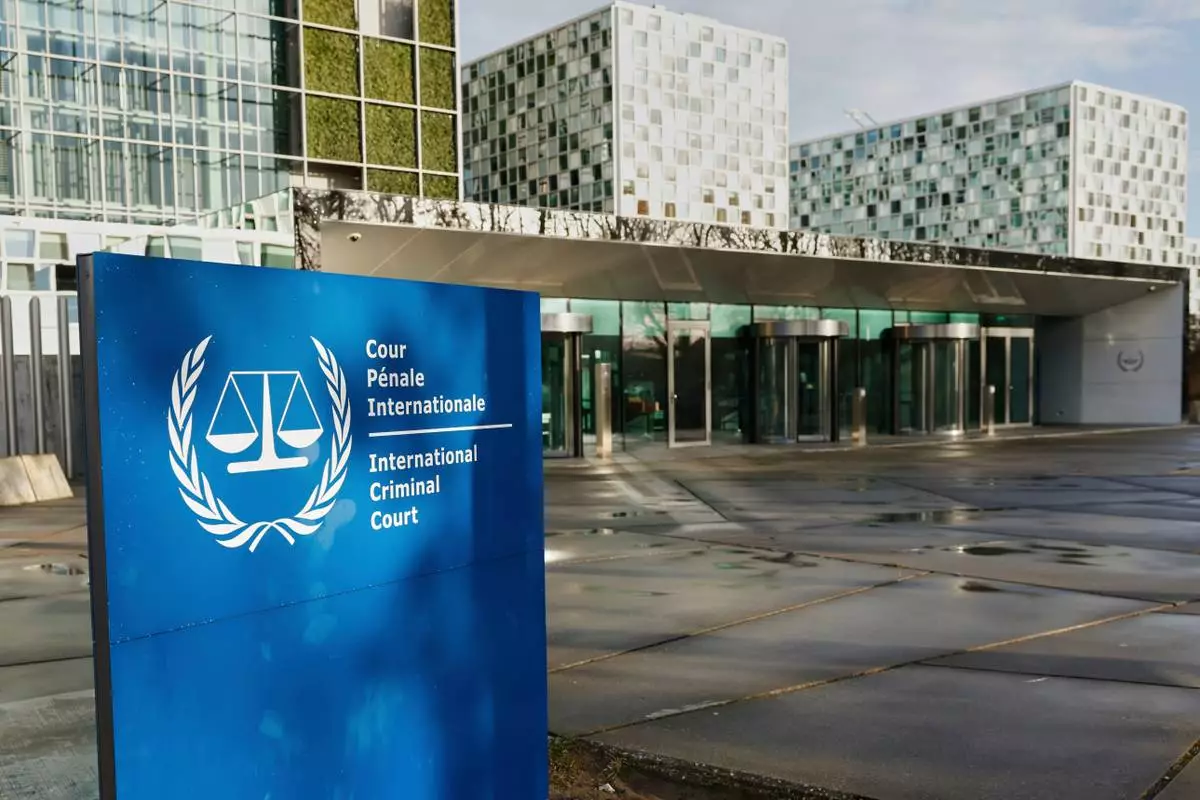
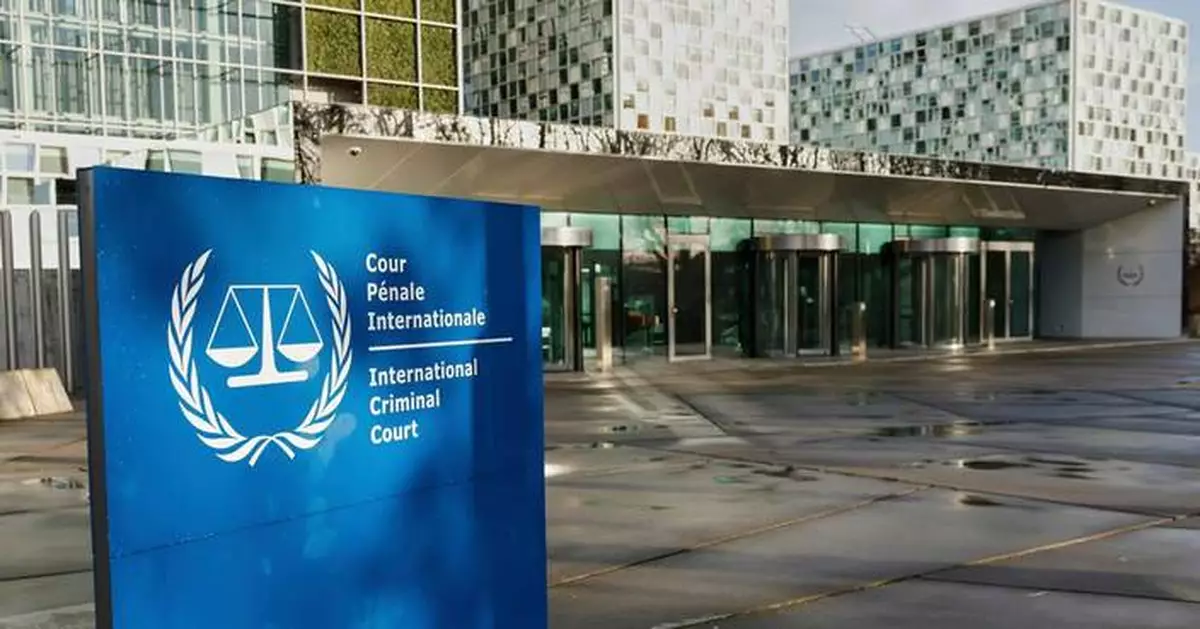
FILE - A general view of the exterior of the International Criminal Court is seen in The Hague, Netherlands, March 12, 2025. (AP Photo/Omar Havana, File)
Rod Paige, an educator, coach and administrator who rolled out the nation's landmark No Child Left Behind law as the first African American to serve as U.S. education secretary, died Tuesday.
Former President George W. Bush, who tapped Paige for the nation's top federal education post, announced the death in a statement but did not provide further details. Paige was 92.
Under Paige’s leadership, the Department of Education implemented No Child Left Behind policy that in 2002 became Bush’s signature education law and was modeled on Paige’s previous work as a schools superintendent in Houston. The law established universal testing standards and sanctioned schools that failed to meet certain benchmarks.
“Rod was a leader and a friend,” Bush said in his statement. “Unsatisfied with the status quo, he challenged what we called ‘the soft bigotry of low expectations.’ Rod worked hard to make sure that where a child was born didn’t determine whether they could succeed in school and beyond.”
Roderick R. Paige was born to two teachers in the small Mississippi town of Monticello of roughly 1,400 inhabitants. The oldest of five siblings, Paige served a two-year stint the U.S. Navy before becoming a football coach at the high school, and then junior college levels. Within years, Paige rose to head coach of Jackson State University, his alma mater and a historically black college in the Mississippi capital city.
There, his team became the first — with a 1967 football game — to integrate Mississippi Veterans Memorial Stadium, once an all-white venue.
After moving to Houston in the mid-1970s to become head coach of Texas Southern University, Paige pivoted from the playing field to the classroom and education — first as a teacher, and then as administrator and eventually the dean of its college of education from 1984 to 1994.
Amid growing public recognition of his pursuit of educational excellence, Paige rose to become superintendent of the Houston Independent School District, then one of the largest school districts in the country.
He quickly drew the attention of Texas' most powerful politicians for his sweeping educational reforms in the diverse Texas city. Most notably, he moved to implement stricter metrics for student outcomes, something that became a central point for Bush's 2000s bid for president. Bush — who later would dub himself the “Education President" — frequently praised Paige on the campaign trail for the Houston reforms he called the “Texas Miracle."
And once Bush won election, he tapped Paige to be the nation's top education official.
As education secretary from 2001 to 2005, Paige emphasized his belief that high expectations were essential for childhood development.
“The easiest thing to do is assign them a nice little menial task and pat them on the head,” he told the Washington Post at the time. “And that is precisely what we don’t need. We need to assign high expectations to those people, too. In fact, that may be our greatest gift: expecting them to achieve, and then supporting them in their efforts to achieve.”
While some educators applauded the law for standardizing expectations regardless of student race or income, others complained for years about what they consider a maze of redundant and unnecessary tests and too much “teaching to the test” by educators.
In 2015, House and Senate lawmakers agreed to pull back many provisions from “No Child Left Behind,” shrinking the Education Department's role in setting testing standards and preventing the federal agency from sanctioning schools that fail to improve. That year, then-President Barack Obama signed the sweeping education law overhaul, ushering in a new approach to accountability, teacher evaluations and the way the most poorly performing schools are pushed to improve.
After serving as education secretary, Paige returned to Jackson State University a half century after he was a student there, serving as the interim president in 2016 at the age of 83.
Into his 90s, Paige still publicly expressed deep concern, and optimism, about the future of U.S. education. In an opinion piece appearing in the Houston Chronicle in 2024, Paige lifted up the city that helped propel him to national prominence, urging readers to “look to Houston not just for inspiration, but for hard-won lessons about what works, what doesn’t and what it takes to shake up a stagnant system.”

FILE - U.S. Secretary of Education Rod Paige speaks to reporters at the Education Department in Washington. (AP Photo/Terry Ashe, File)