NEW YORK (AP) — Video shown in court Tuesday documented how police approached, arrested and searched Luigi Mangione at a Pennsylvania McDonald's — moments that underlie key questions about what evidence can and can't be used in the case surrounding the killing of UnitedHealthcare CEO Brian Thompson.
The footage was taken on Dec. 9, 2024, five days after Thompson was gunned down on a New York City sidewalk. Officers' body cameras captured the roughly 20 minutes between police approaching Mangione at the restaurant and telling him he had the right to remain silent.
Click to Gallery
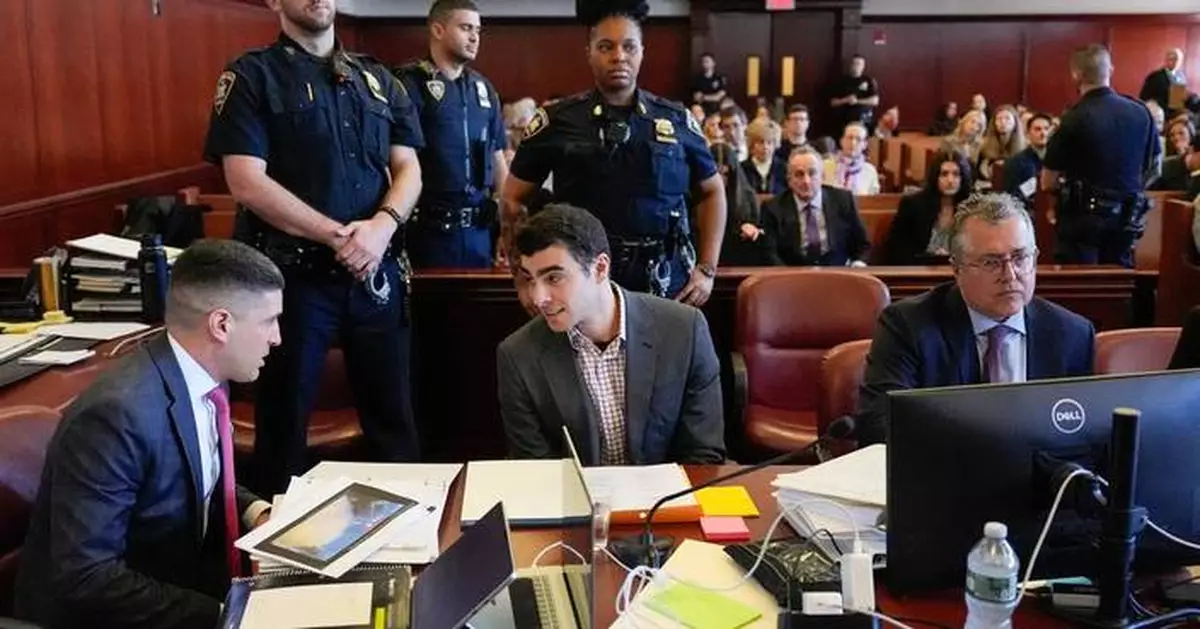
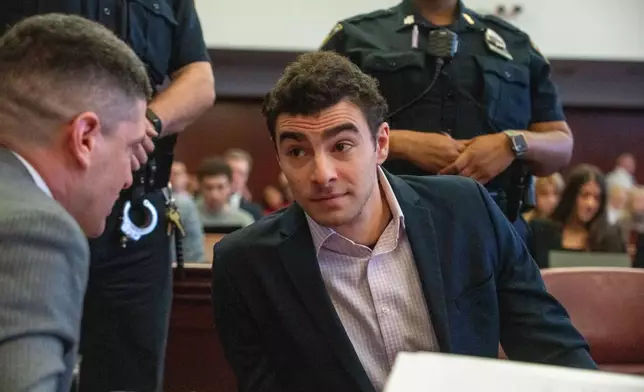
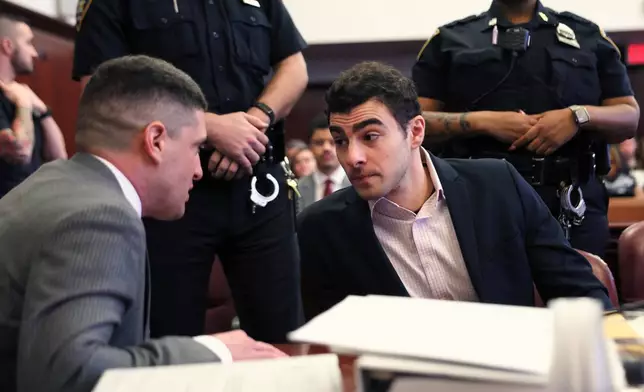
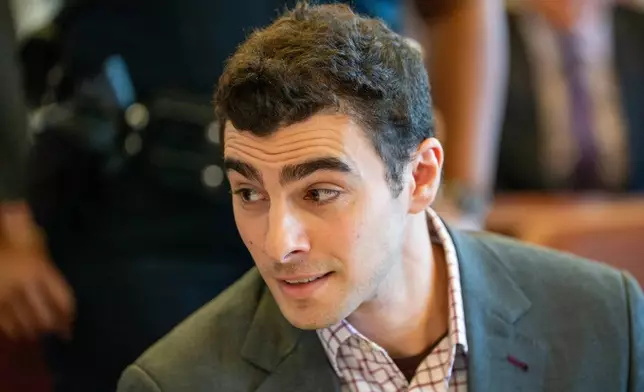
Luigi Mangione appears in Manhattan Criminal Court for an evidence hearing, Tuesday, Dec. 2, 2025, in New York. (Steven Hirsch/New York Post via AP, Pool)
Luigi Mangione appears in Manhattan Criminal Court for an evidence hearing, Tuesday, Dec. 2, 2025, in New York. (Steven Hirsch/New York Post via AP, Pool)
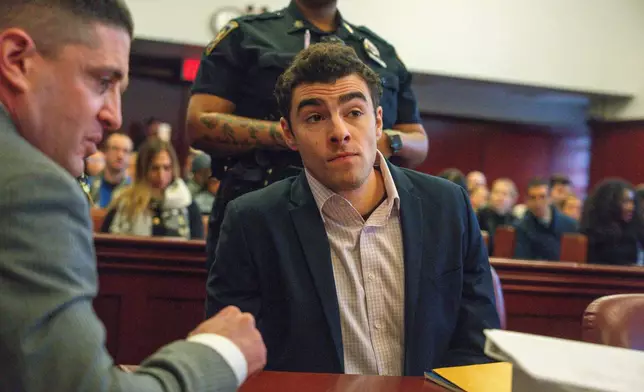
Luigi Mangione appears in Manhattan Criminal Court for an evidence hearing, Tuesday, Dec. 2, 2025, in New York. (Curtis Means/Pool Photo via AP)
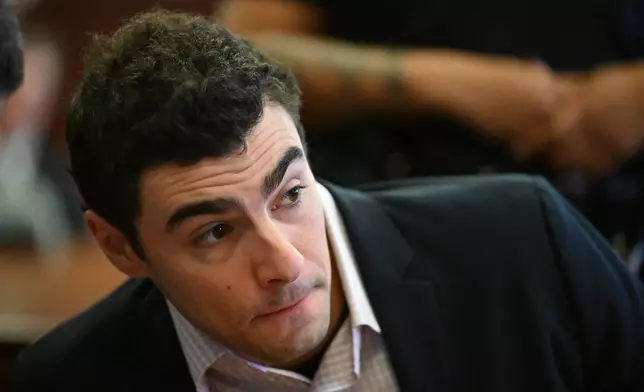
Luigi Mangione appears in Manhattan Criminal Court for an evidence hearing, Tuesday, Dec. 2, 2025, in New York.(Michael M. Santiago/Pool Photo via AP)
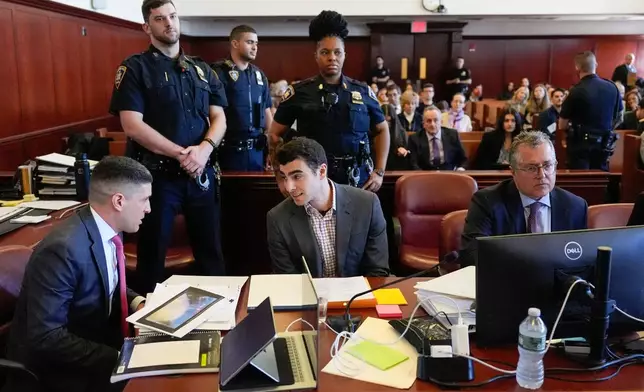
Luigi Mangione, center, appears in court for an evidence hearing, Monday, Dec. 1, 2025, in New York. (Steven Hirsch/New York Post via AP, Pool)
Luigi Mangione appears in Manhattan Criminal Court, Monday, Dec. 1, 2025, in New York. (AP Photo/Yuki Iwamura, Pool)
During that time, they asked his name, whether he'd been in New York recently and other questions, including: “Why are you nervous?”
The Altoona, Pennsylvania, officers were initially skeptical about a 911 call reporting that the much-publicized suspect in Thompson’s killing might be at the McDonald's — so dubious that a supervisor offered to buy Officer Joseph Detwiler a hoagie at a local eatery if the tip panned out.
Yet once he met Mangione and saw his face, Detwiler was convinced, all the more so after the man gave what police soon realized was a fake name and phony New Jersey driver's license. But police suggested they were simply responding to loitering concerns at the eatery, they made conversation about a steak sandwich, and Detwiler even whistled along as “Jingle Bell Rock” played in the background.
“Just trying to keep things normal and calm, make him think that nothing was different about this call than any other call,” Detwiler explained in court.
But however casual the tone at times, officers also patted Mangione down and pushed his backpack away from him — out of “a safety concern" about what might be in it and what he might do, according to Detwiler.
After about 15 minutes, with over a half-dozen officers in the restaurant, Detwiler warned Mangione that he was being investigated, was believed to have given a false name and would be arrested if he repeated it. Mangione then disclosed his true identity. Officers asked why he had lied.
“I clearly shouldn’t have,” he responded, explaining that "that was the ID I had in my wallet."
Minutes later, an officer read Mangione his rights, while adding that he was “not in custody at this point.” A compliant Mangione was frisked again and then handcuffed as “I'll Be Home for Christmas” wafted from the restaurant's speakers.
Detwiler testified Mangione was in investigative “detention” at that point, then was arrested a few minutes later on a forgery charge related to his false ID.
Mangione, 27, the Ivy League-educated scion of a wealthy Maryland family, has pleaded not guilty to state and federal murder charges. The state charges carry the possibility of life in prison, while federal prosecutors are seeking the death penalty. Neither trial has been scheduled.
Mangione’s lawyers want to keep jurors at both eventual trials from hearing about his alleged statements to law enforcement and about items authorities said they seized from his backpack. The objects include a 9 mm handgun that prosecutors say matches the one used in the killing and a notebook in which they say Mangione described his intent to “wack” a health insurance executive.
The ongoing hearing, which could extend to next week, pertains only to the state case. If the defense gets its way, prosecutors' case would take a major hit.
The defense contends that the statements should be suppressed because officers started asking questions before telling Mangione that he had a right to remain silent. Mangione's attorneys argue the backpack items should be excluded because police didn't get a warrant before searching his bag.
The laws concerning how police interact with potential suspects before reading their rights or obtaining search warrants are complex and often disputed in criminal cases.
In Mangione's case, crucial questions will include whether he believed he was free to leave at the point when he spoke to the arresting officers, and whether there were “exigent circumstances” that merited searching his backpack before getting a warrant.
Detwiler testified that he neither told Mangione he couldn't leave nor mentioned the New York shooting. Defense lawyers, however, have argued that officers “strategically” stood in a way that prevented him from leaving even before he was told he was being arrested.
As for the backpack search, Detwiler said Altoona police policy calls for searching anyone who is being arrested, including their bags. But while questioning the officer, defense attorney Karen Friedman Agnifilo pointed out that an officer was heard on body-camera video saying, “At this point, we’ll probably need a search warrant for it,” after colleagues already had rifled through the bag.
Mangione watched the videos and testimony attentively, at times thumbing his chin in seeming concentration.
Manhattan prosecutors haven't yet laid out their arguments for allowing the disputed evidence. Their federal counterparts have said in court filings that police were justified in searching the backpack to ensure there were no dangerous items and that Mangione's statements to officers were voluntary and made before he was under arrest.
Surveillance video showed a masked gunman shooting Thompson from behind as the executive walked to a midtown Manhattan hotel for his company’s annual investor conference. Prosecutors say “delay,” “deny” and “depose” were written on the ammunition, mimicking a phrase critics use to describe insurance industry practices.
Thompson, 50, worked at the giant UnitedHealth Group for 20 years and became CEO of its insurance arm in 2021.
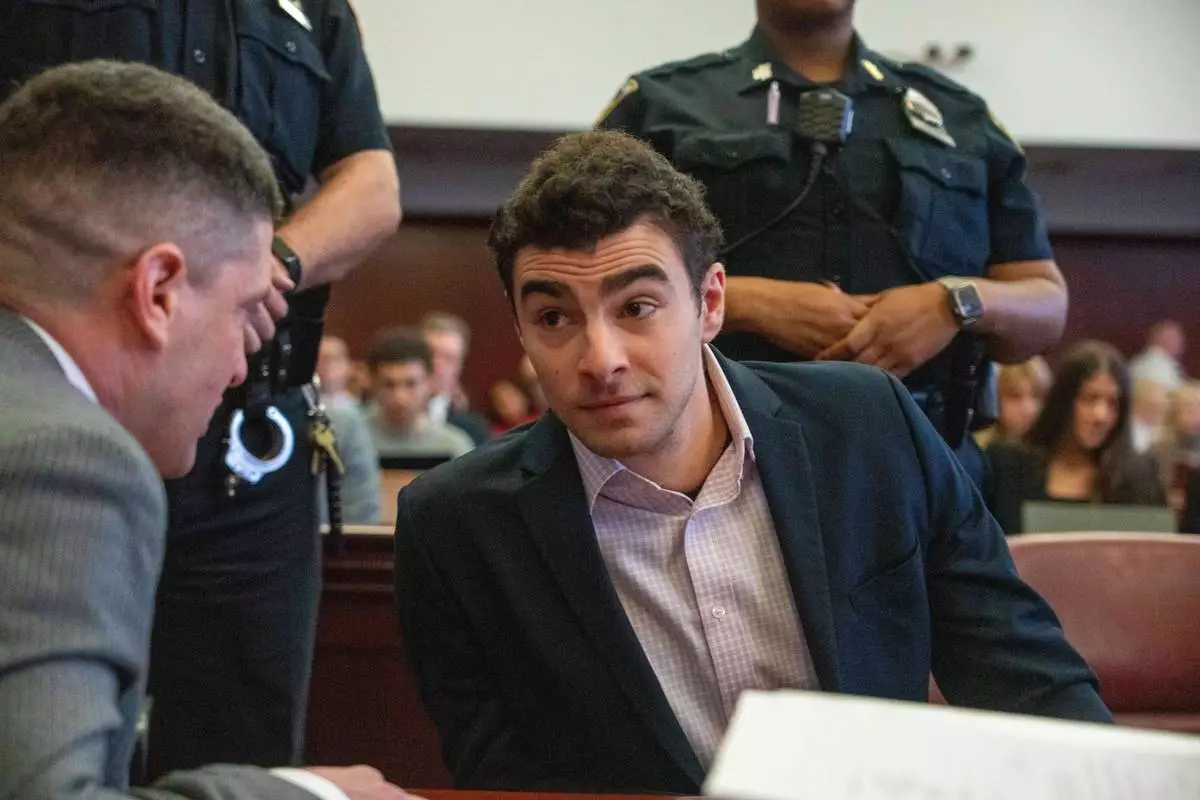
Luigi Mangione appears in Manhattan Criminal Court for an evidence hearing, Tuesday, Dec. 2, 2025, in New York. (Steven Hirsch/New York Post via AP, Pool)
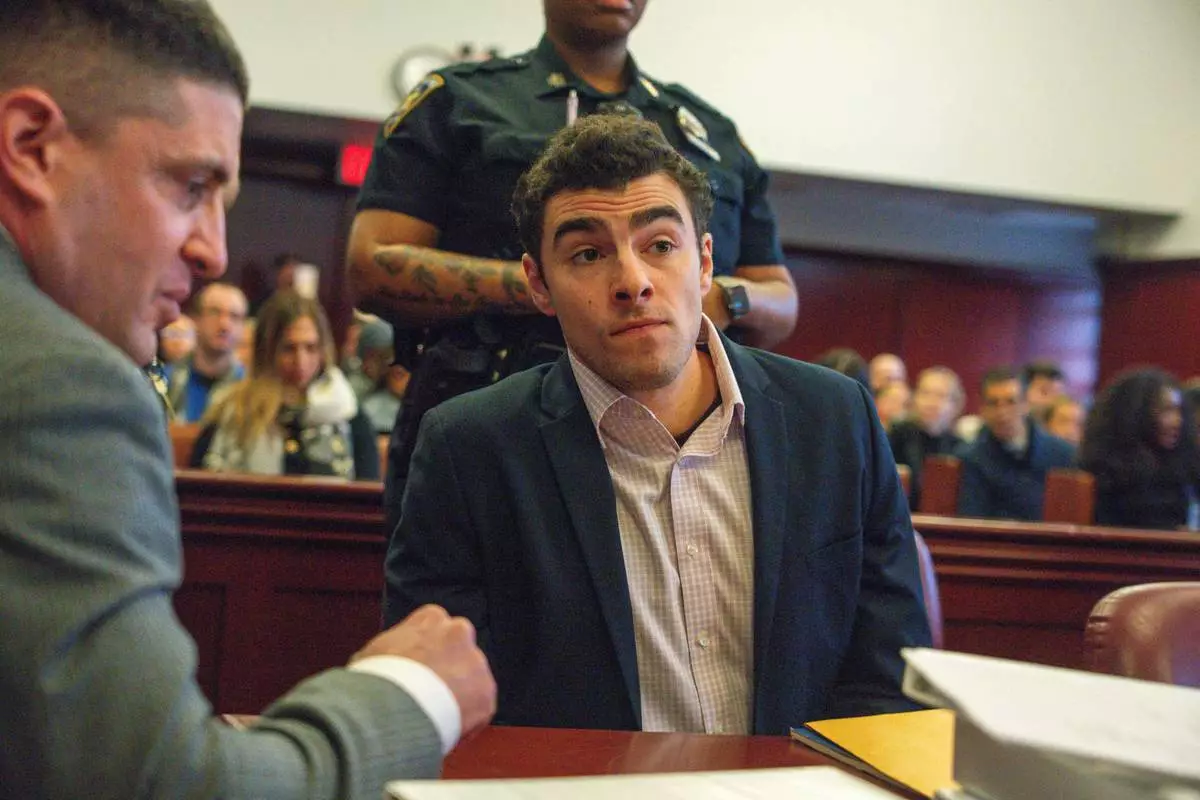
Luigi Mangione appears in Manhattan Criminal Court for an evidence hearing, Tuesday, Dec. 2, 2025, in New York. (Steven Hirsch/New York Post via AP, Pool)
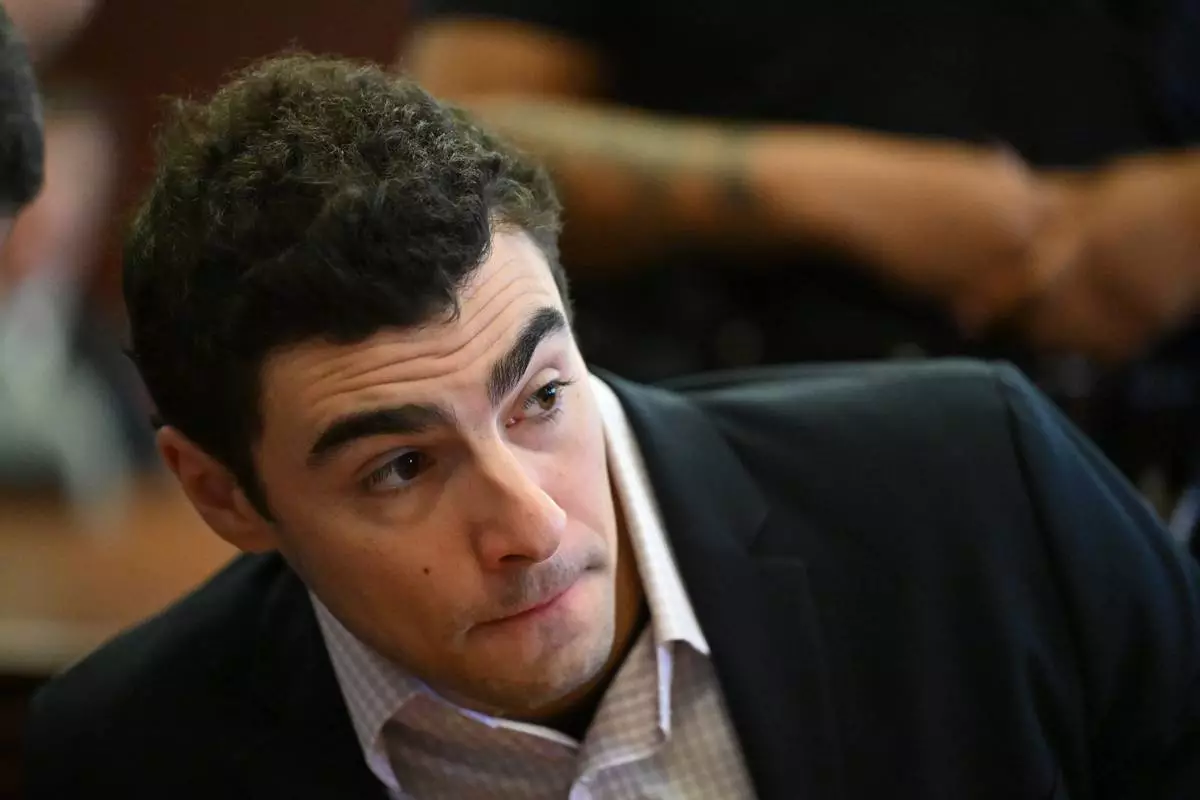
Luigi Mangione appears in Manhattan Criminal Court for an evidence hearing, Tuesday, Dec. 2, 2025, in New York. (Curtis Means/Pool Photo via AP)
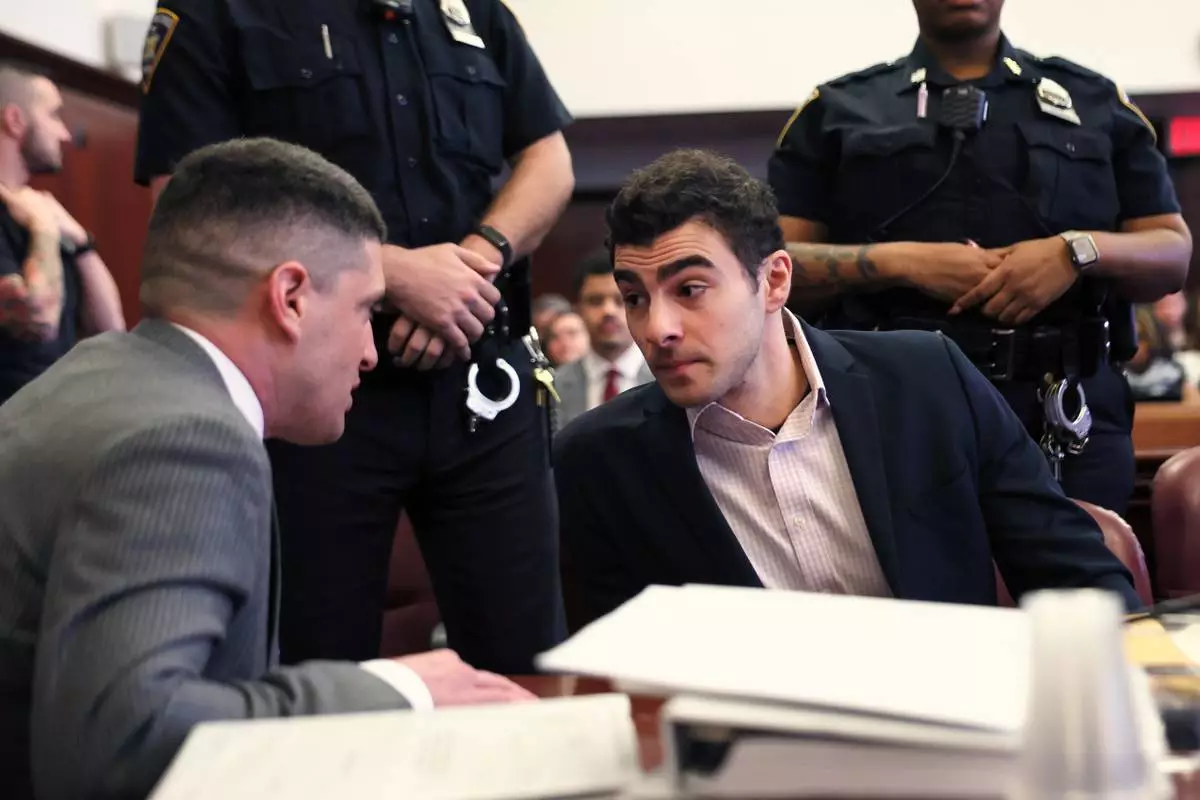
Luigi Mangione appears in Manhattan Criminal Court for an evidence hearing, Tuesday, Dec. 2, 2025, in New York.(Michael M. Santiago/Pool Photo via AP)
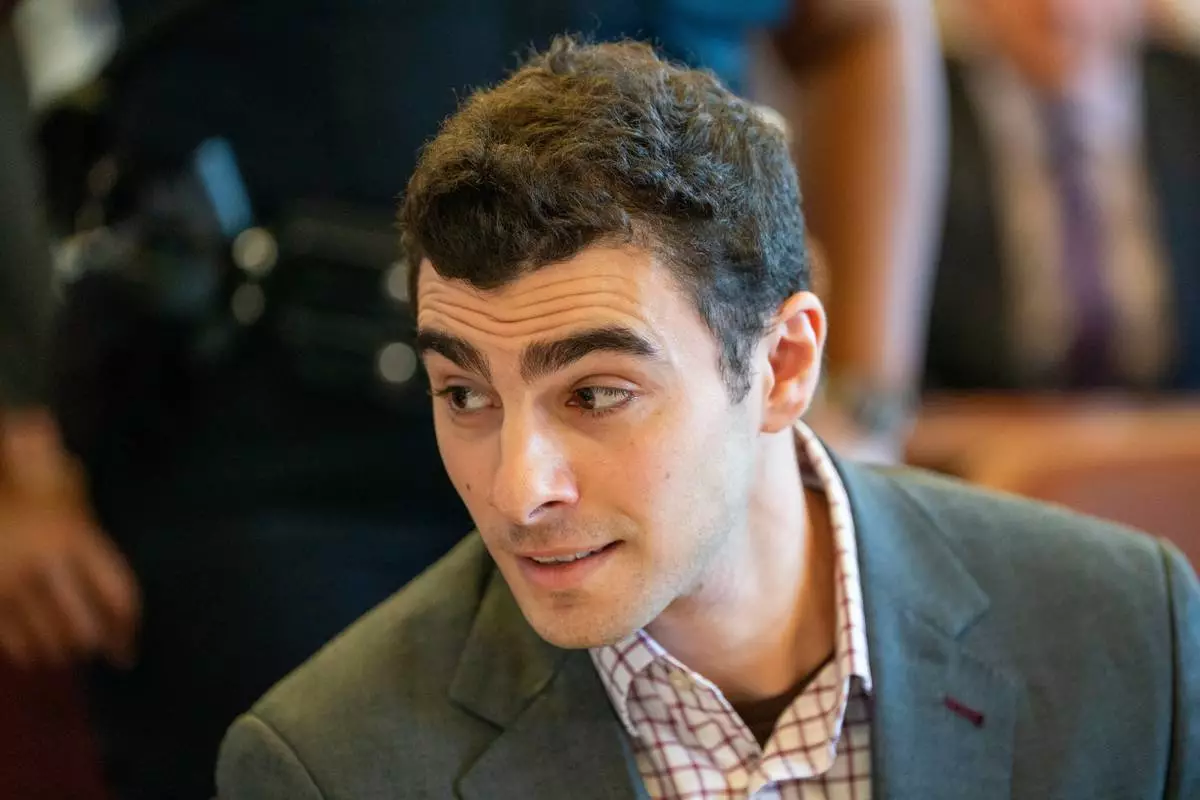
Luigi Mangione, center, appears in court for an evidence hearing, Monday, Dec. 1, 2025, in New York. (Steven Hirsch/New York Post via AP, Pool)
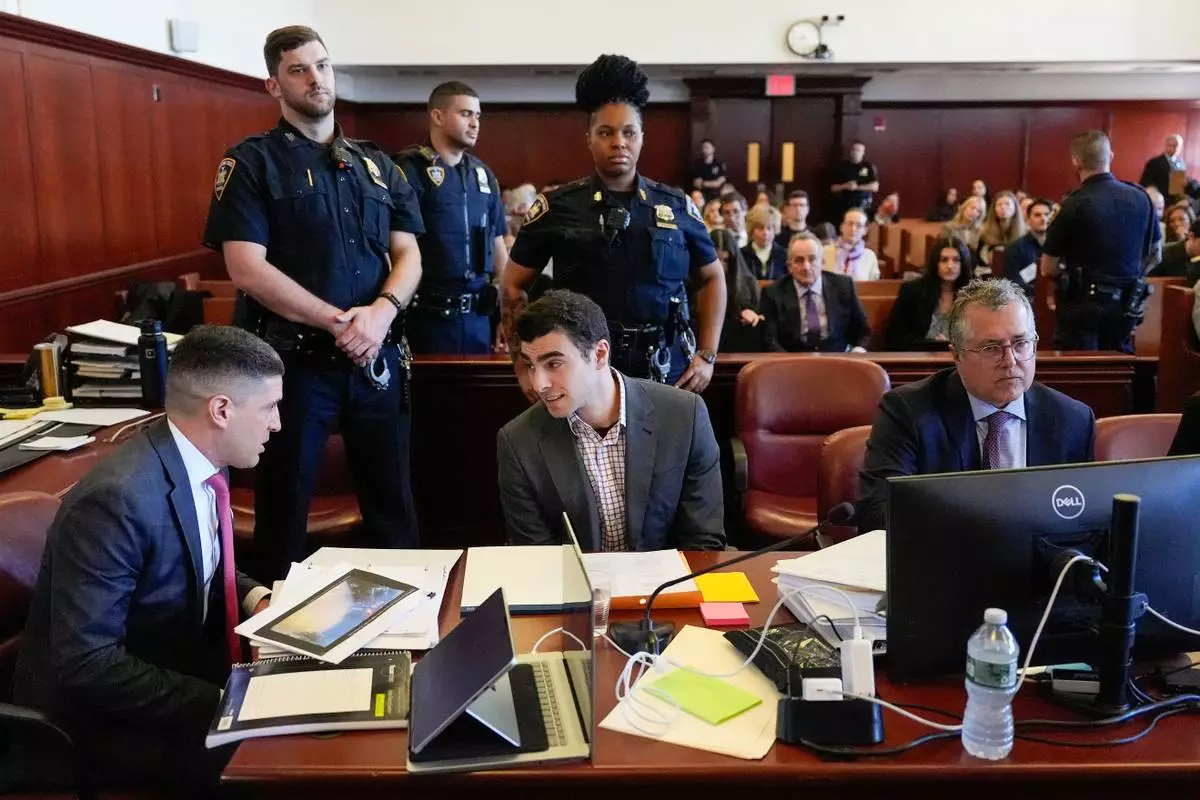
Luigi Mangione appears in Manhattan Criminal Court, Monday, Dec. 1, 2025, in New York. (AP Photo/Yuki Iwamura, Pool)
WASHINGTON (AP) — President Donald Trump was set to address the nation Wednesday night and offer an update on the war in Iran, his first prime-time speech since launching strikes alongside Israel more than a month ago.
The speech will offer Trump a wide audience to articulate clear objectives for the war that could attempt to reconcile weeks of changing goals and often contradictory messages about whether he’s winding down or ready to escalate military operations — even as Iran kept up its attacks on Israel and Persian Gulf neighbors and airstrikes pounded Tehran.
It comes amid rising oil prices, volatile financial markets and polling showing many Americans feel the U.S. military has gone too far in Iran — even as more American troops move into the region for a possible ground offensive. Trump opted not to deliver such an address closer to when the U.S. and Israel first launched attacks 4 1/2 weeks ago, and questions now remain about whether it is now too late for what he says to break through.
A White House official, who was not authorized to speak publicly ahead of the address and spoke on condition of anonymity, said the president will talk about the U.S. progress on achieving his goals in Iran and will reiterate his estimated timeline for concluding operations within two to three weeks.
In a social media post Wednesday morning, Trump maintained a belligerent tone, demanding that Iran stop blocking the Strait of Hormuz — the waterway vital to global oil supplies — or the U.S. would bomb the Islamic Republic “back to the Stone Ages.” The president has also said the U.S. “will not have anything to do with” ensuring the security of ships passing through Hormuz — an apparent backtrack from a previous threat to attack Iran’s power grid if it didn’t open the strait by April 6.
In another post, he claimed that “Iran’s New Regime President” wanted a ceasefire. It wasn’t clear to whom the U.S. president was referring since Iran still has the same president. Iran’s Foreign Ministry spokesman, Esmail Baghaei, called Trump’s claim “false and baseless,” according to a report on Iranian state television.
Speaking earlier to Al Jazeera, Iranian Foreign Minister Abbas Araghchi signaled Tehran’s willingness to keep fighting. “You cannot speak to the people of Iran in the language of threats and deadlines,” he said. “We do not set any deadline for defending ourselves.”
Hours before Trump’s address, Iranian President Masoud Pezeshkian posted a lengthy letter in English on his X account appealing to U.S. citizens and stressing that his country had pursued negotiations before the U.S. withdrew from that path. “Exactly which of the American people’s interests are truly being served by this war?” he wrote.
Since the war began on Feb. 28, Trump has offered shifting objectives and repeatedly has said it could be over soon while also threatening to widen the conflict. Thousands of additional U.S. troops are currently heading to the Middle East, and speculation abounds about why.
Trump has also threatened to attack Iran’s Kharg Island oil export hub. And the U.S. could decide to send in military forces to secure Iran’s uranium stockpile — a complex and risky operation, fraught with radiation and chemical dangers, experts and former government officials say.
Adding to the confusion is what role Israel — which has been bombing Iran alongside the U.S. — might play in any of these scenarios.
Trump has been under growing pressure to end the war that has been pushing up the cost of gasoline, food and other goods. The price of Brent crude, the international standard, is up more than 40% since the start of the war.
The U.S. has presented Iran with a 15-point plan aimed at bringing about a ceasefire, including a demand for the strait to be reopened and for its nuclear program to be rolled back.
Iran insists its nuclear program is peaceful. And in a report last week by Iranian state TV's English-language broadcaster, an anonymous official was quoted as saying Iran had its own demands to end the fighting, including retaining sovereignty over the strait.
In the interview with Al Jazeera, Araghchi acknowledged receiving direct messages from U.S. Mideast envoy Steve Witkoff. He insisted, however, that there were no direct negotiations and said Iran has no faith that talks with the U.S. could yield any results, saying “the trust level is at zero.”
He warned against any U.S. attempt to launch a ground offensive, saying “we are waiting for them.”
In a deal ostensibly to give diplomacy a chance, U.S. officials have given “clear assurances” that Araghchi and Iran's Parliamentary Speaker Mohammad Bagher Qalibaf won't be targeted, according to three officials who spoke on condition of anonymity because they're not authorized to speak publicly about the matter.
A cruise missile slammed into an oil tanker off Qatar’s coast Wednesday, the Defense Ministry said. The crew was evacuated and no casualties were reported. A Kuwaiti oil tanker came under attack off Dubai the day before, one of more than 20 ships attacked by Iran during the war.
In the United Arab Emirates, a person was killed when he was hit by debris from an intercepted drone in Fujairah, one of the country’s seven emirates.
In Kuwait, the state-run KUNA news agency said a drone hit a fuel tank at Kuwait International Airport, sparking a large fire.
Jordan’s military said it intercepted a ballistic missile and two drones fired from Iran in the last 24 hours. No casualties were reported. Two drones were also intercepted in Saudi Arabia.
Very early on Thursday, Israel’s military said Iran had launched missiles at the country, the first time of the day.
In Lebanon, at least five people were killed in an Israeli strike on a Beirut neighborhood.
Israel invaded southern Lebanon after the Iran-linked Hezbollah militant group began launching missiles into northern Israel days after the outbreak of the war.
More than 1,200 people have been killed in Lebanon and more than 1 million displaced, according to authorities. Ten Israeli soldiers have also died there.
In Iran, authorities say more than 1,900 people have been killed, while 19 have been reported dead in Israel. More than two dozen people have died in Gulf states and the occupied West Bank, while 13 U.S. service members have been killed.
Grambell reported from Dubai, United Arab Emirates. Rising reported from Bangkok. Associated Press writers Giovanna Dell’Orto in Miami, Farnoush Amiri in New York and Samy Magdy in Cairo contributed to this report.
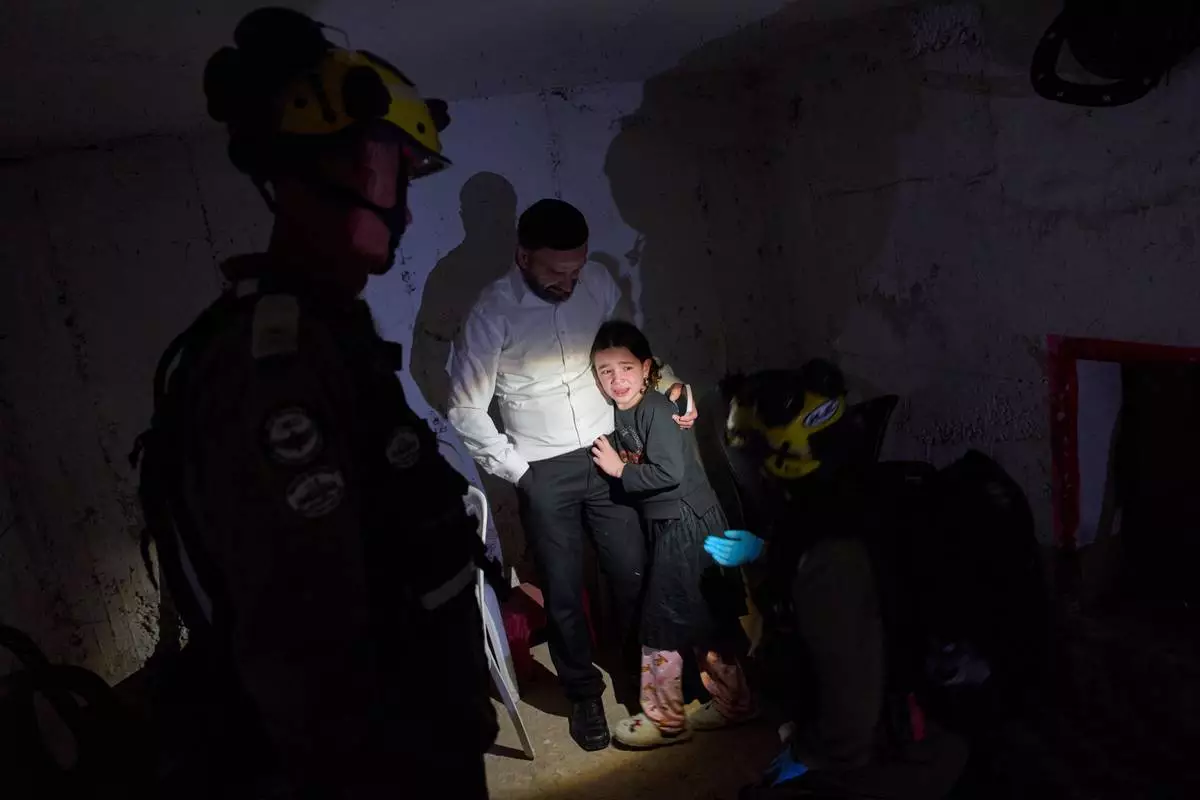
A young girl is comforted by her father and Israeli soldiers as they take cover in a bomb shelter during air raid sirens warning of incoming Iranian missile strikes in Bnei Brak, Israel, Wednesday, April 1, 2026. (AP Photo/Oded Balilty)
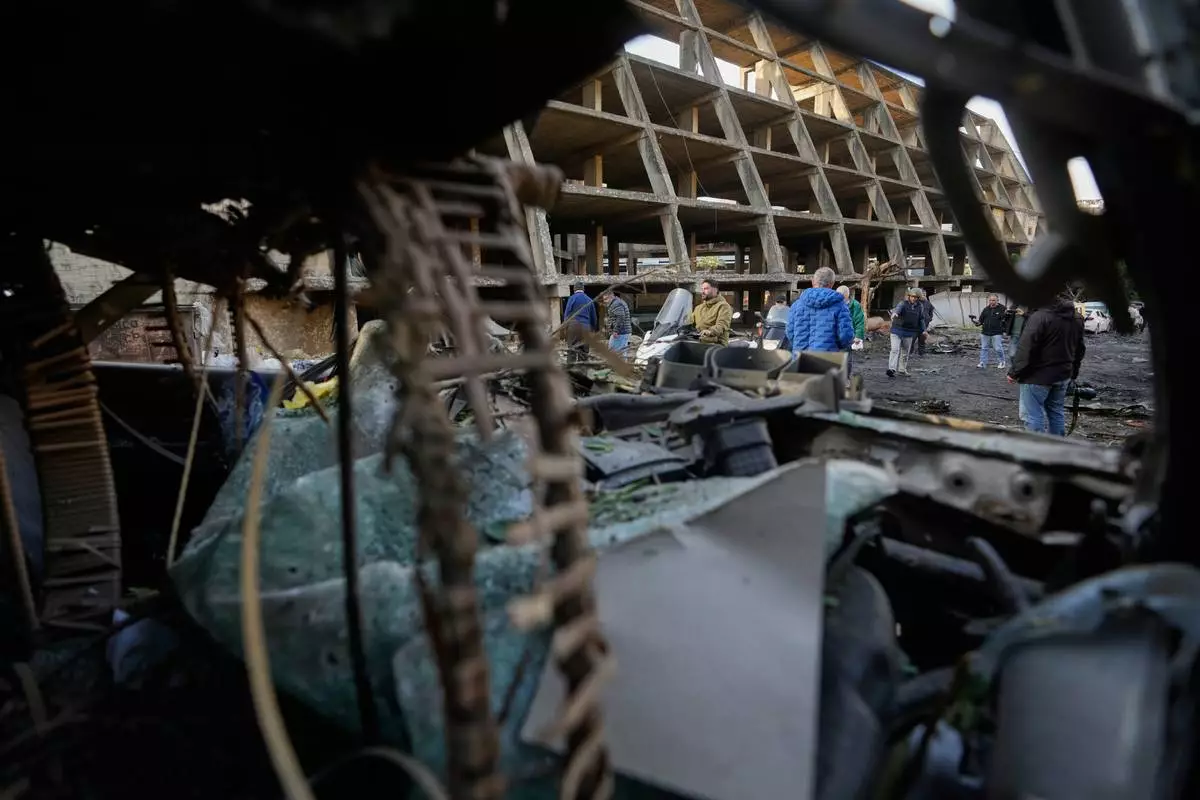
People inspect the site of an Israeli strike amid debris and damaged vehicles in Beirut, Lebanon, Wednesday, April 1, 2026. (AP Photo/Hassan Ammar)
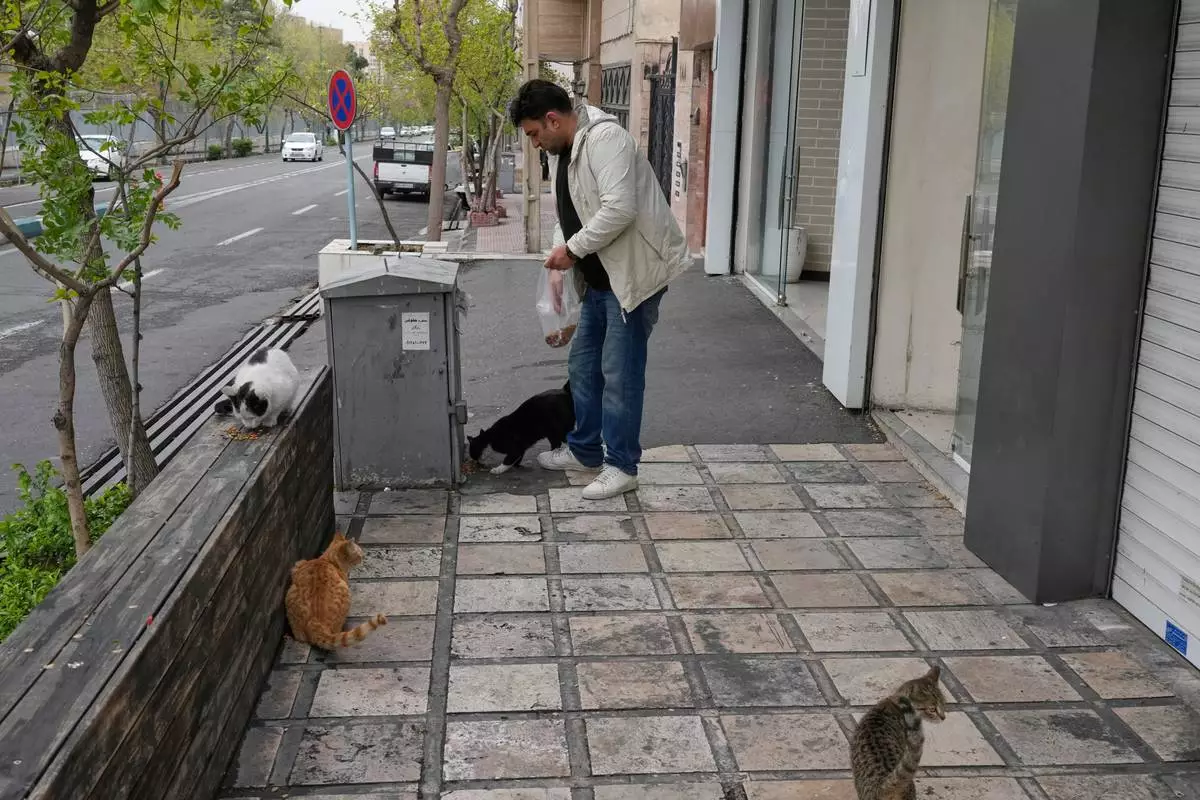
A man feeds stray cats in Tehran, Iran, Tuesday, March 31, 2026. (AP Photo/Vahid Salemi)
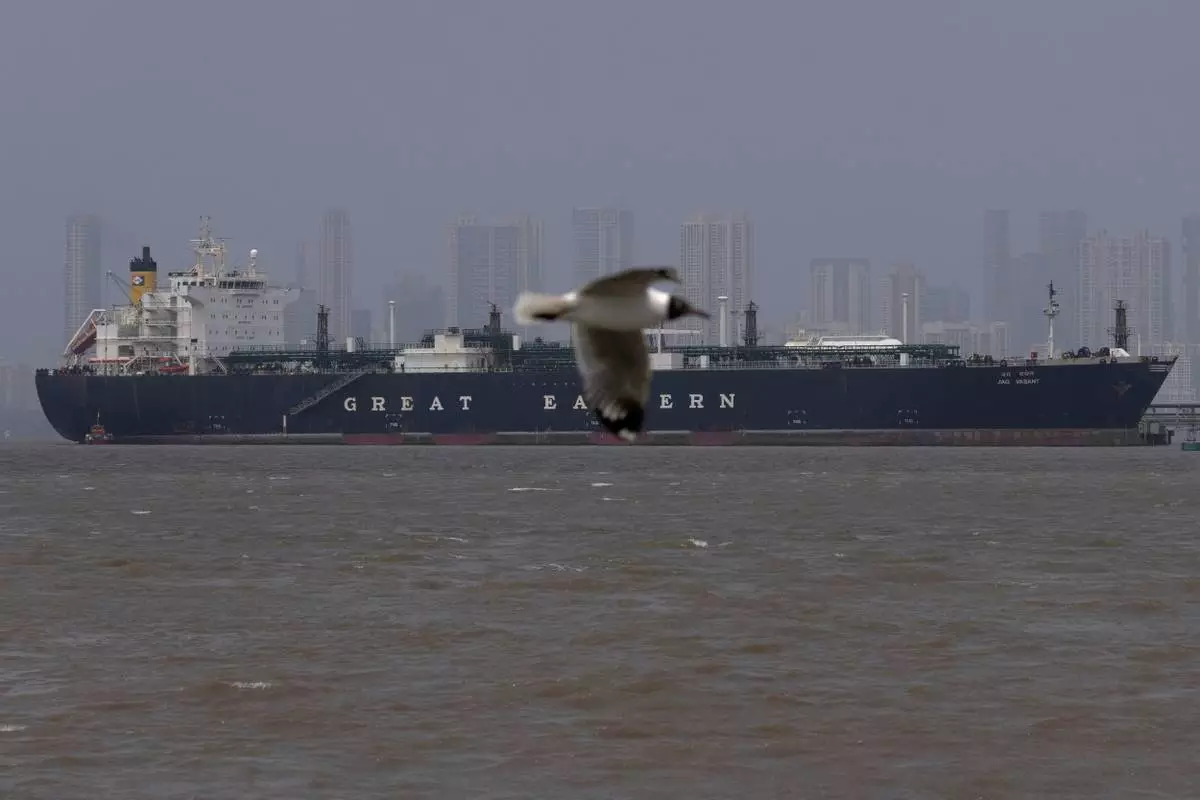
The Indian flagged LPG carrier Jag Vasant transporting liquefied petroleum gas, is seen at the Mumbai Port in Mumbai, India, after it arrived clearing the Strait of Hormuz, Wednesday, April 1, 2026. (AP Photo/Rafiq Maqbool)
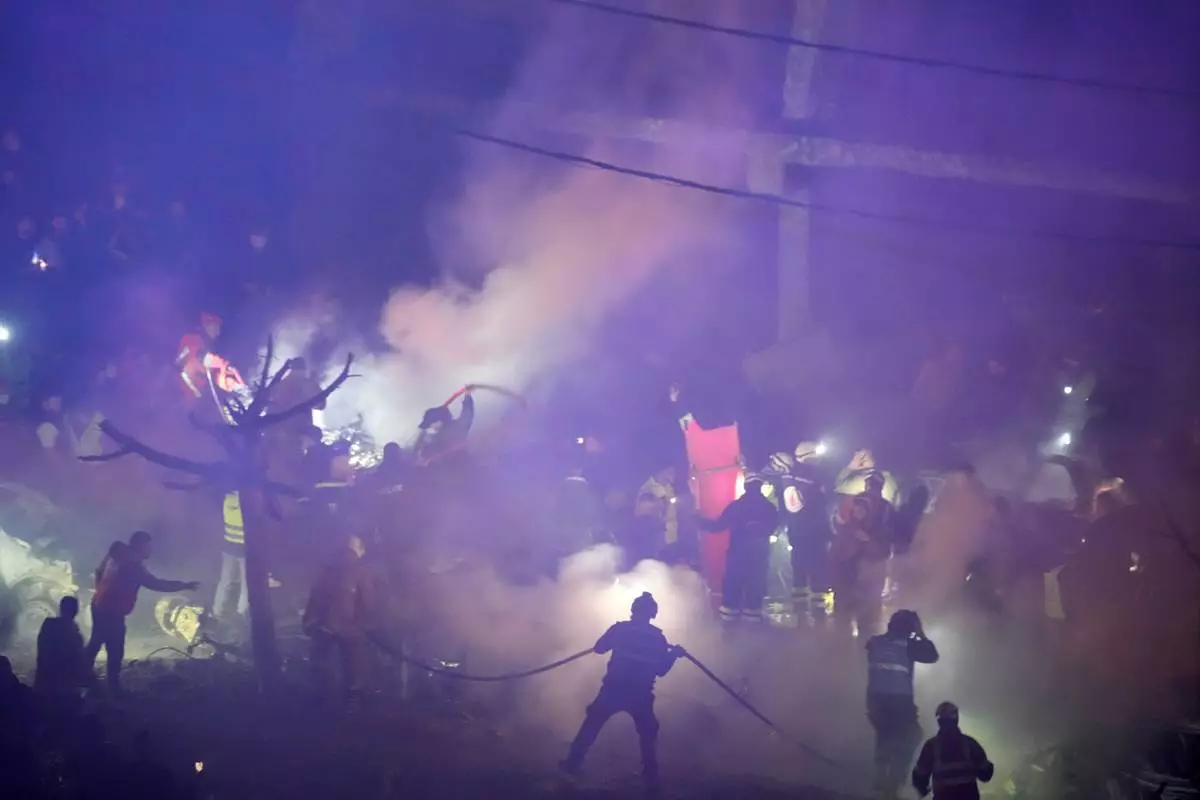
Firefighters and rescue workers work at the site of Israeli airstrikes, in Beirut, Lebanon, Wednesday, April 1, 2026. (AP Photo/Hussein Malla)
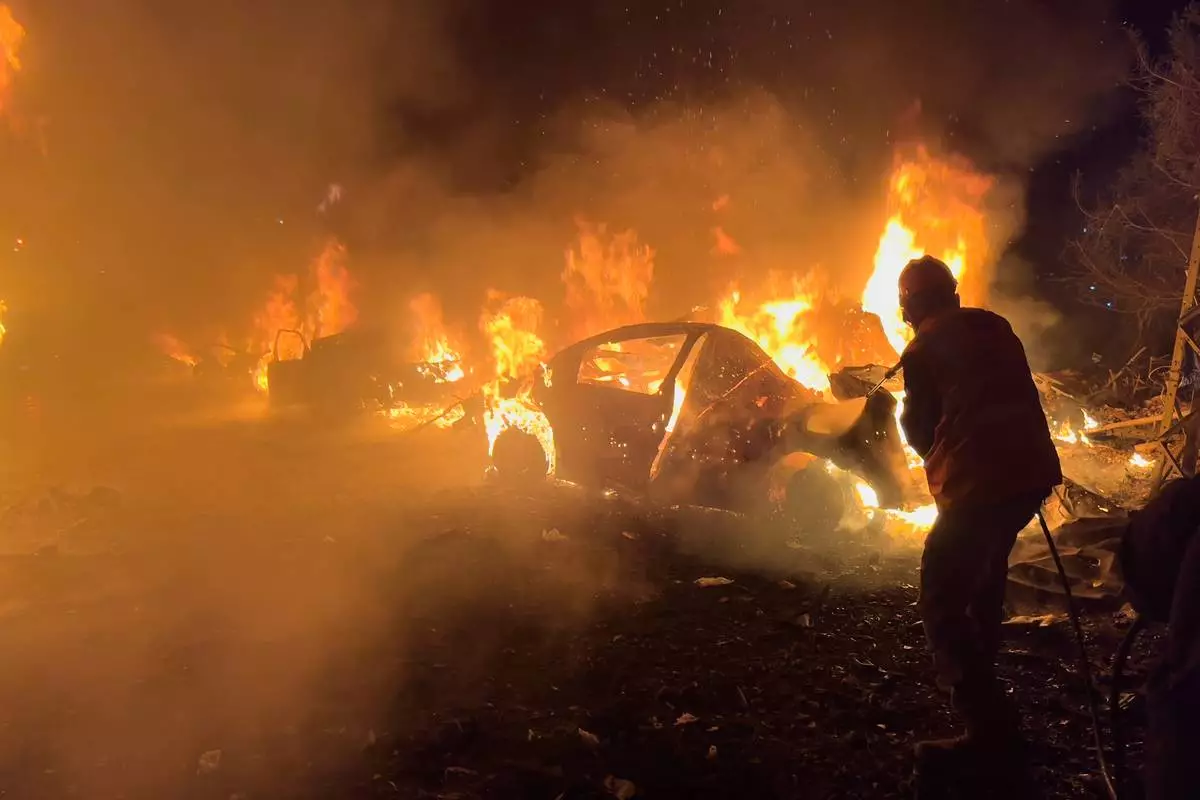
A firefighter extinguishes a car at the site of Israeli airstrikes, in Beirut, Lebanon, Wednesday, April 1, 2026. (AP Photo/Hussein Malla)
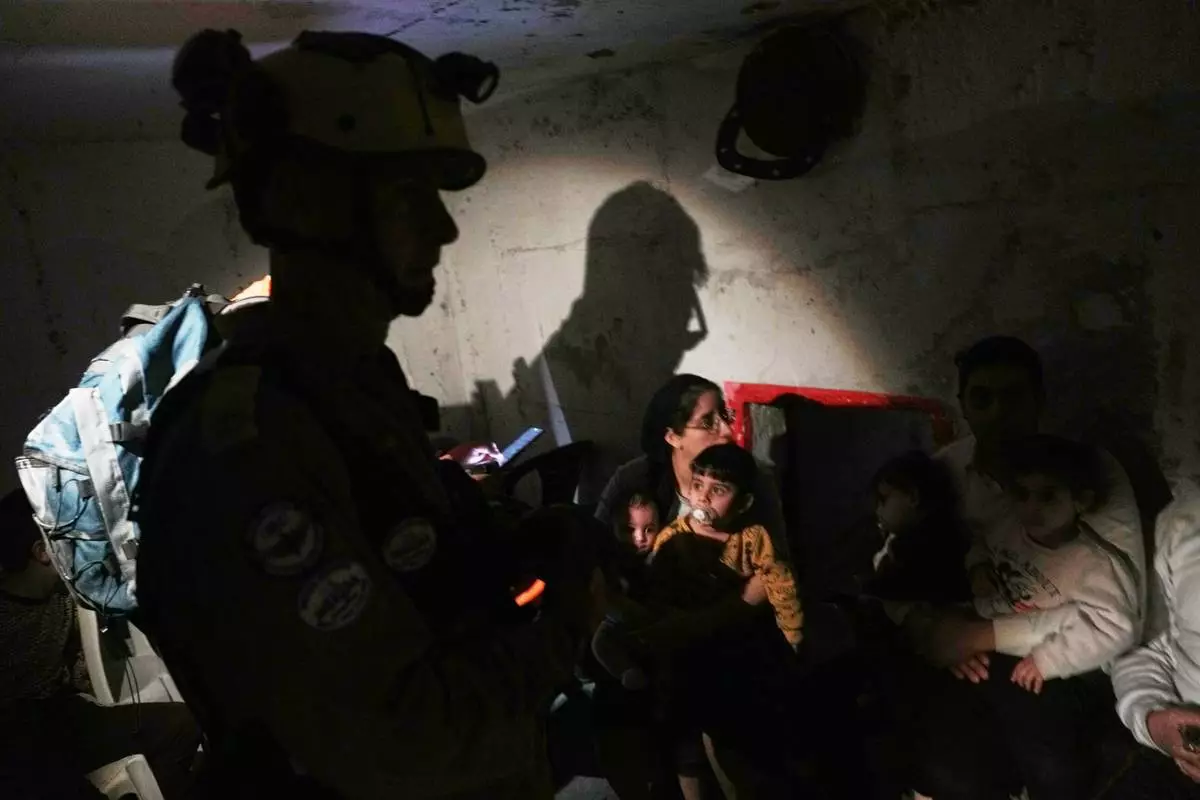
Israel's rescue teams and residents take shelter as sirens sounds next to a site struck by an Iranian missile in Bnei Brak, Wednesday, April 1, 2026. (AP Photo/Oded Balilty)
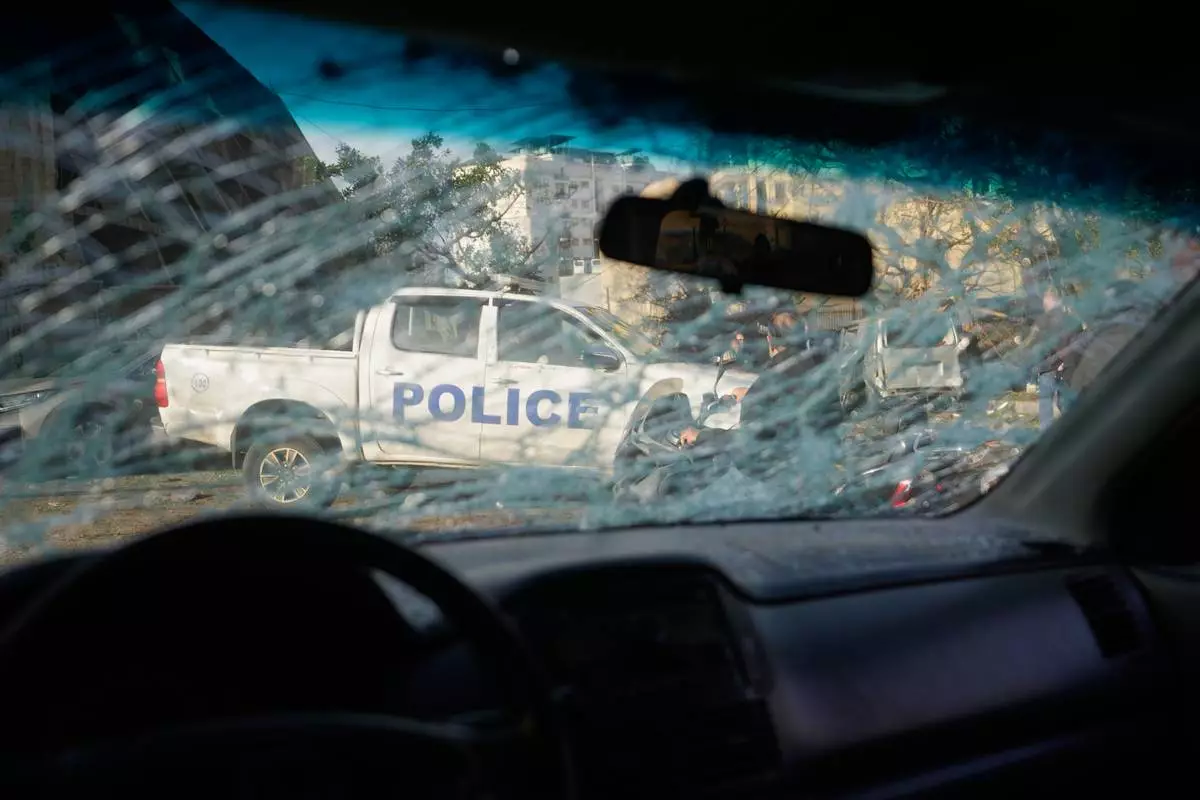
A police vehicle is seen through a shattered windshield at the site of an Israeli strike in Beirut, Lebanon, Wednesday, April 1, 2026. (AP Photo/Hassan Ammar)
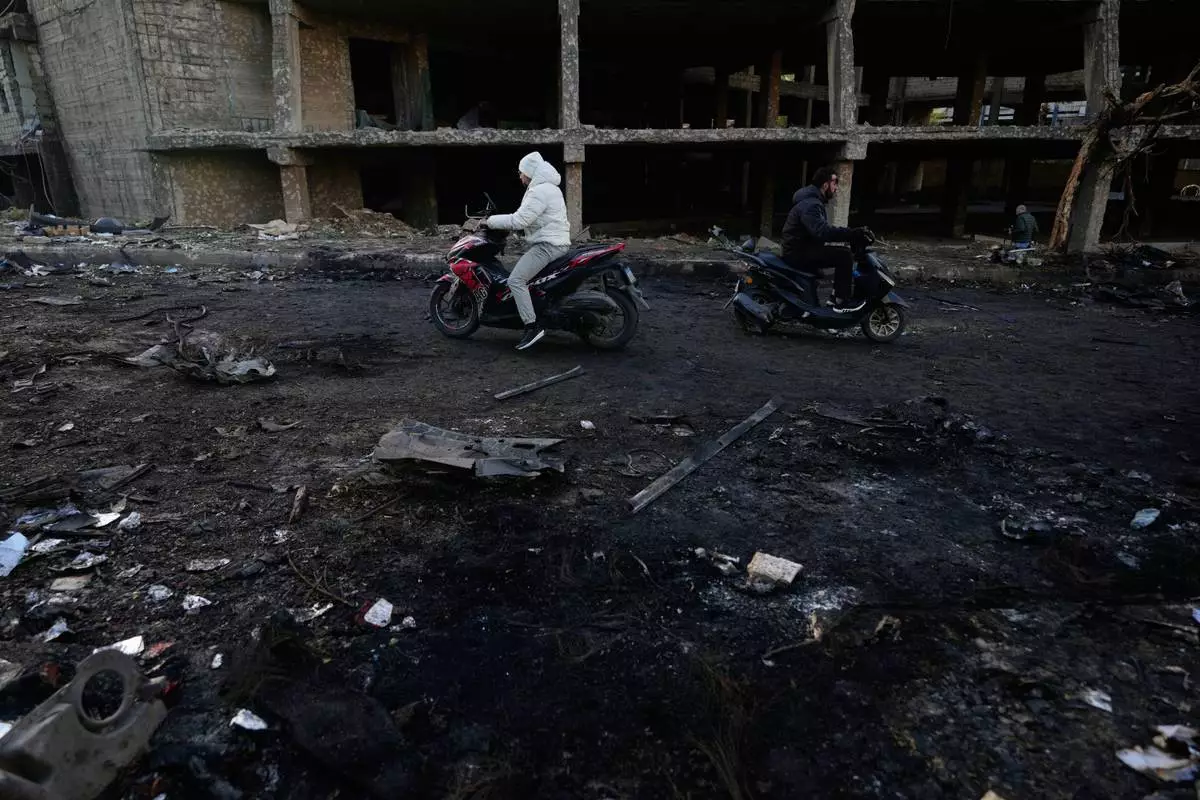
Two men ride scooters past charred debris at the site of an Israeli strike in Beirut, Lebanon, Wednesday, April 1, 2026. (AP Photo/Hassan Ammar)