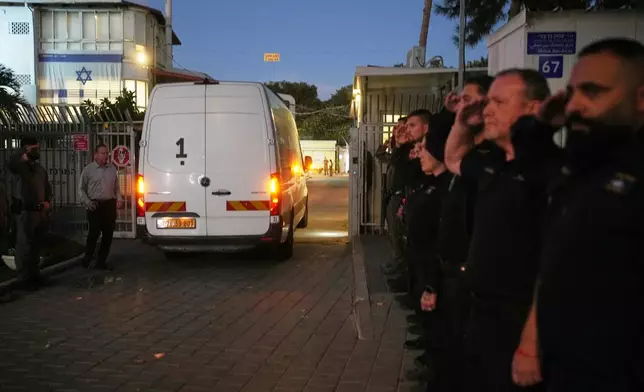
DEIR AL-BALAH, Gaza Strip (AP) — Israel on Tuesday said it had received remains handed over by Palestinian militants in Gaza to the Red Cross. They were believed to be one of the two hostages still in the territory: an Israeli and a Thai national.
Israel’s government said the “findings” were taken for forensics testing. Palestinian media said they were discovered in Gaza’s northern town of Beit Lahiya.
Click to Gallery
A vehicle carrying the remains of a person whom Hamas claims is a deceased hostage, transferred earlier today by Gaza militants to Israeli authorities, arrives at the Abu Kabir Forensic Institute in Tel Aviv, Israel, Tuesday, Dec. 2, 2025. (AP Photo/Ohad Zwigenberg)
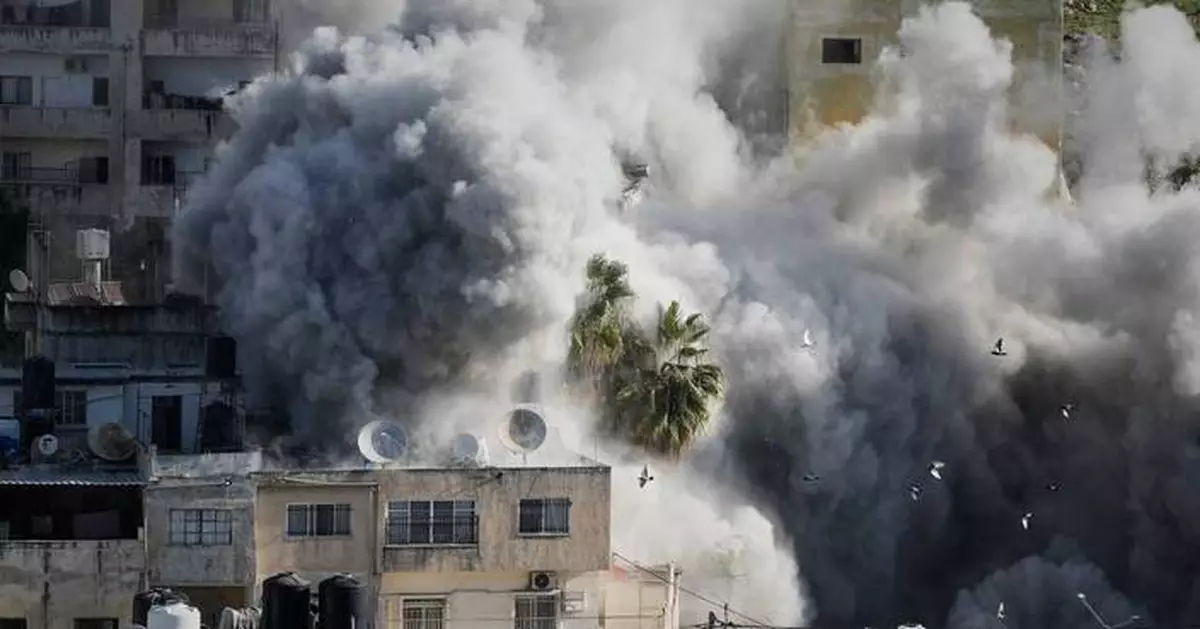
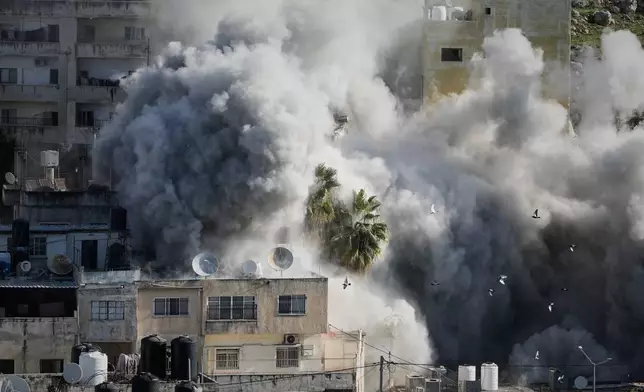
Smoke rises as Israeli forces demolish the home of Abdul Karim Sanoubar, a suspected Palestinian militant who has been accused by Israel of planting bombs on buses in central Israel, in Nablus, West Bank, Tuesday, Dec. 2, 2025. (AP Photo/Majdi Mohammed)
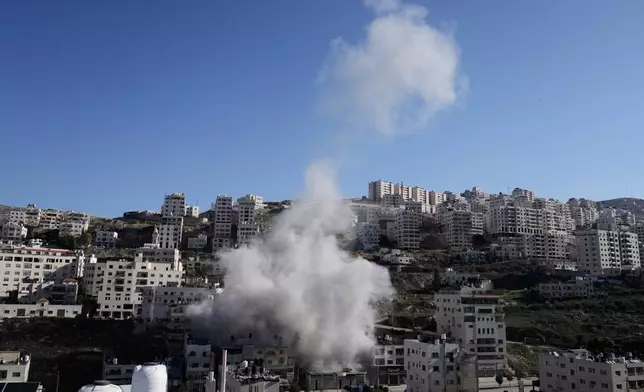
Smoke rises as Israeli forces demolish the home of Abdul Karim Sanoubar, a suspected Palestinian militant who has been accused by Israel of planting bombs on buses in central Israel, in Nablus, West Bank, Tuesday, Dec. 2, 2025. (AP Photo/Majdi Mohammed)
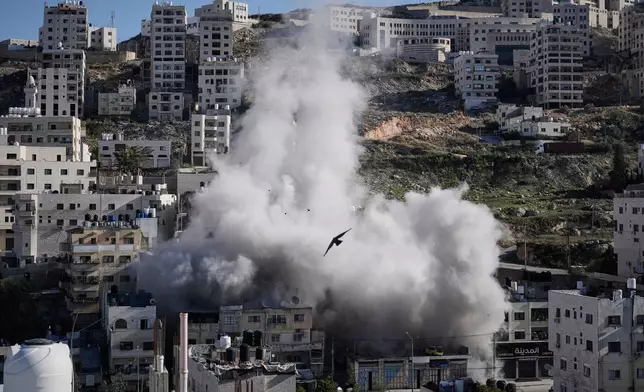
Smoke rises as Israeli forces demolish the home of Abdul Karim Sanoubar, a suspected Palestinian militant who has been accused by Israel of planting bombs on buses in central Israel, in Nablus, West Bank, Tuesday, Dec. 2, 2025. (AP Photo/Majdi Mohammed)
The remains of 26 hostages taken in the Hamas-led Oct. 7, 2023, attack that triggered the war have already been returned since a U.S.-brokered ceasefire began on Oct. 10.
Israeli fire killed at least four Palestinians in Gaza on Tuesday, according to local hospitals.
An Israeli drone strike killed a videographer in the south, said officials at Nasser Hospital, which received the body.
Mahmoud Wadi was killed in Khan Younis, the hospital said. Wadi owned a drone photography company that once specialized in filming occasions like weddings. More recently, it posted footage of Gaza's destruction.
Another man was shot dead near the Bureij refugee camp in central Gaza, according to Al-Awda Hospital. A third was killed by Israeli fire in the Gaza City neighborhood of Zeitoun, and a boy was killed by an artillery strike on a house east of Gaza City that also wounded 10 others, according to Al-Ahli Hospital.
The Israeli military said in a statement that troops operating in Gaza had killed three people it said posed a threat when they crossed into areas Israel controls there. It said troops fired on two people in southern Gaza and one in northern Gaza. It was not immediately clear if they were the same casualties reported by hospitals.
The army had no immediate comment on the report of an artillery strike east of Gaza City.
Gaza's Health Ministry said more than 350 Palestinians have been killed across the territory since the ceasefire. Both Hamas and Israel have accused the other of breaking the terms of the truce.
The initial 2023 Hamas-led attack on southern Israel killed around 1,200 people while 251 were taken hostage. Almost all of the hostages or their remains have been returned in ceasefires or other deals.
Gaza’s Health Ministry says the Palestinian toll has topped 70,100. Its count does not distinguish between militants and civilians, but the ministry says roughly half of those killed have been women and children. The ministry operates under the Hamas-run government. It is staffed by medical professionals and maintains detailed records viewed as generally reliable by the international community.
Israel’s military also pushed forward operations in the occupied West Bank, shooting and killing two Palestinians on Tuesday it accused of attacking soldiers.
The military said troops shot and killed a suspect who stabbed and lightly wounded two soldiers as they confronted him near an Israeli settlement in the central West Bank. It said the incident was under review. In the southern West Bank, the army said it fatally shot a Palestinian who had carried out a car-ramming attack that wounded a soldier. The army said the man attempted to flee as they tried to arrest him.
The Palestinian Health Ministry identified the suspects as an 18-year-old from north of Ramallah and a 17-year-old resident of Hebron.
Israel's military has stepped up its activities in the West Bank since the war in Gaza began. Israel says the offensive is aimed at rooting out militants. Palestinians say scores of stone-throwers, protesters and uninvolved civilians have been killed.
In recent weeks, Israeli settlers have increased attacks on Palestinian civilians.
Israeli forces on Tuesday demolished the family home of Abdul Karim Sanoubar, a suspected Palestinian militant in detention on accusations of planting bombs on buses in central Israel in February. The military said the explosives in the planned attack didn’t detonate.
Israeli troops later traveled to Aqabah town in the West Bank to demolish the house of a man accused of carrying out a shooting attack in which one person was killed, the military said.
Israel says home demolitions are meant to deter future attackers, but critics say they amount to collective punishment against the families of assailants and only exacerbate tensions with Palestinians.
Magdy reported from Cairo and Janetsky from Jerusalem.
Find more of AP’s Israel-Hamas coverage at https://apnews.com/hub/israel-hamas-war
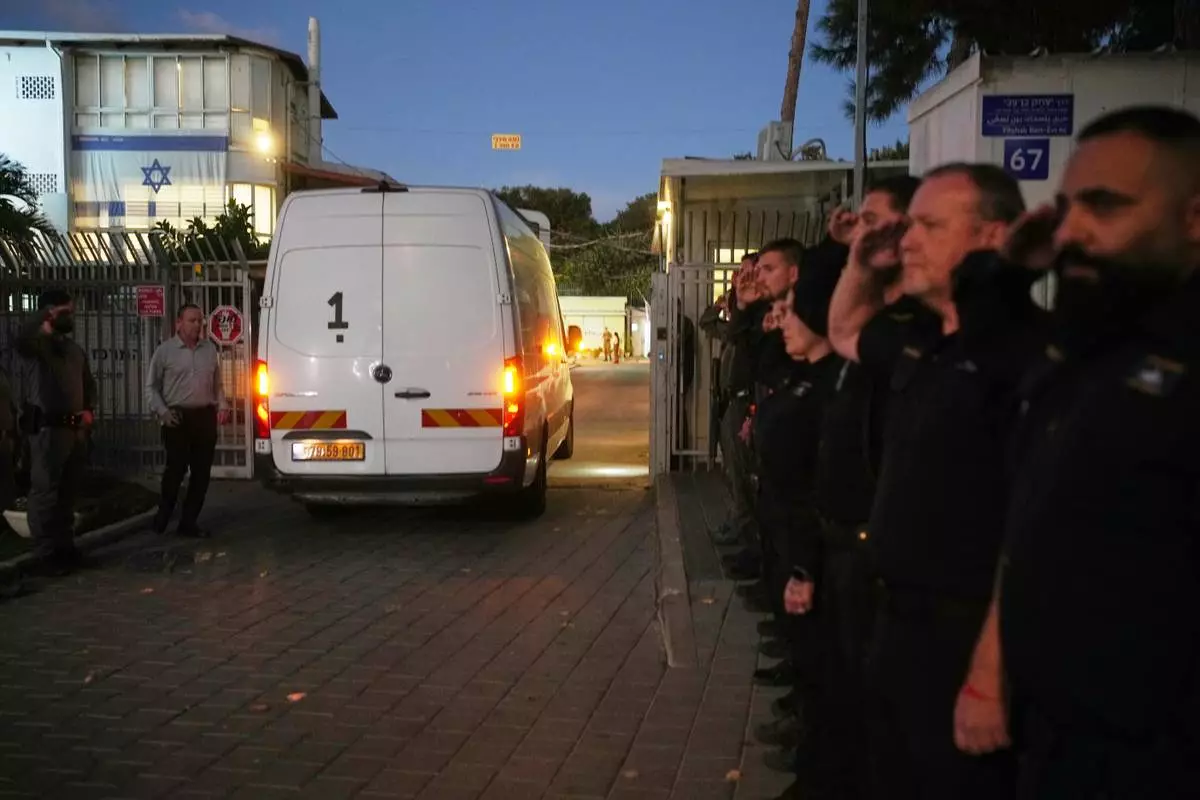
A vehicle carrying the remains of a person whom Hamas claims is a deceased hostage, transferred earlier today by Gaza militants to Israeli authorities, arrives at the Abu Kabir Forensic Institute in Tel Aviv, Israel, Tuesday, Dec. 2, 2025. (AP Photo/Ohad Zwigenberg)
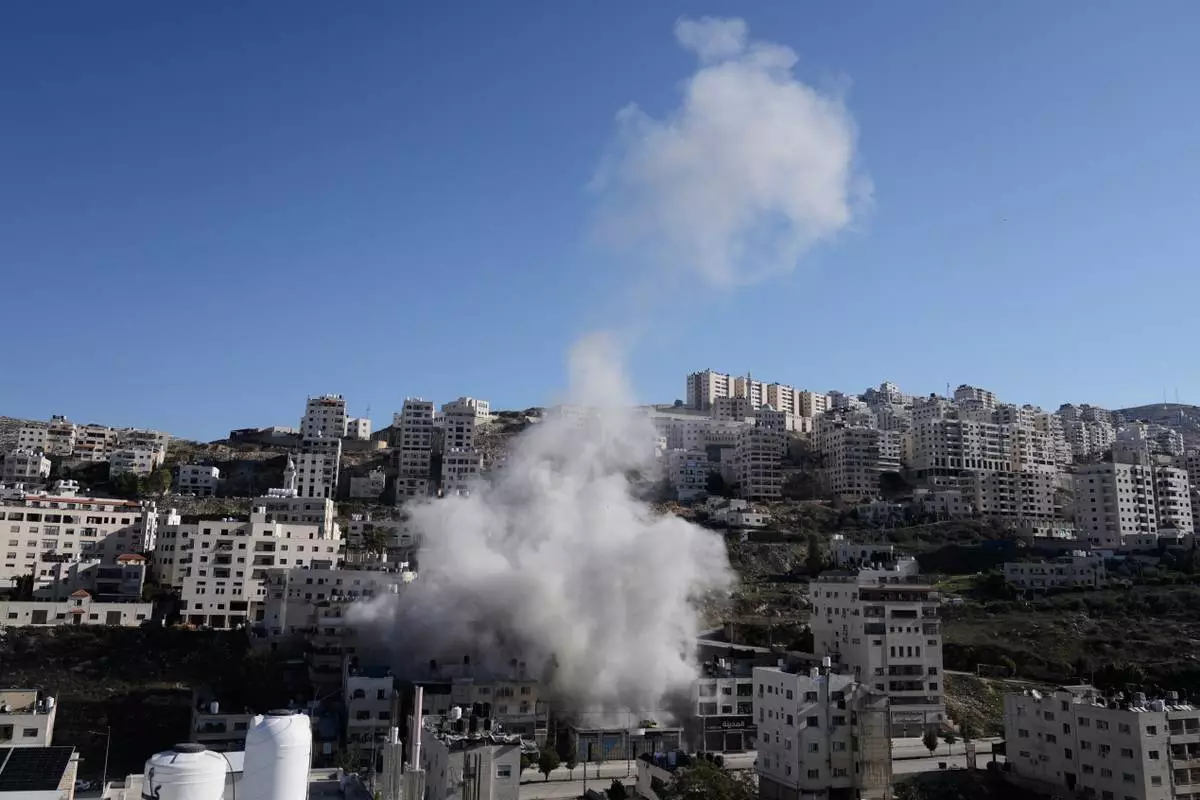
Smoke rises as Israeli forces demolish the home of Abdul Karim Sanoubar, a suspected Palestinian militant who has been accused by Israel of planting bombs on buses in central Israel, in Nablus, West Bank, Tuesday, Dec. 2, 2025. (AP Photo/Majdi Mohammed)
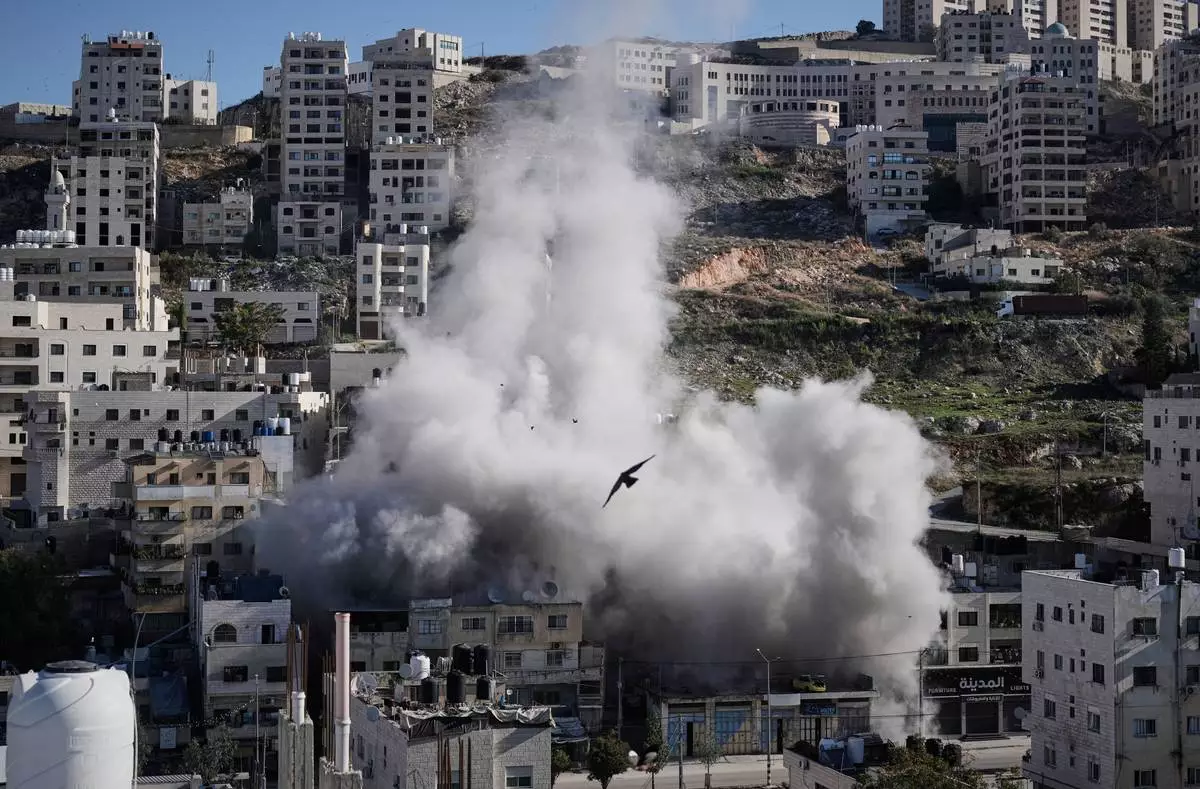
Smoke rises as Israeli forces demolish the home of Abdul Karim Sanoubar, a suspected Palestinian militant who has been accused by Israel of planting bombs on buses in central Israel, in Nablus, West Bank, Tuesday, Dec. 2, 2025. (AP Photo/Majdi Mohammed)
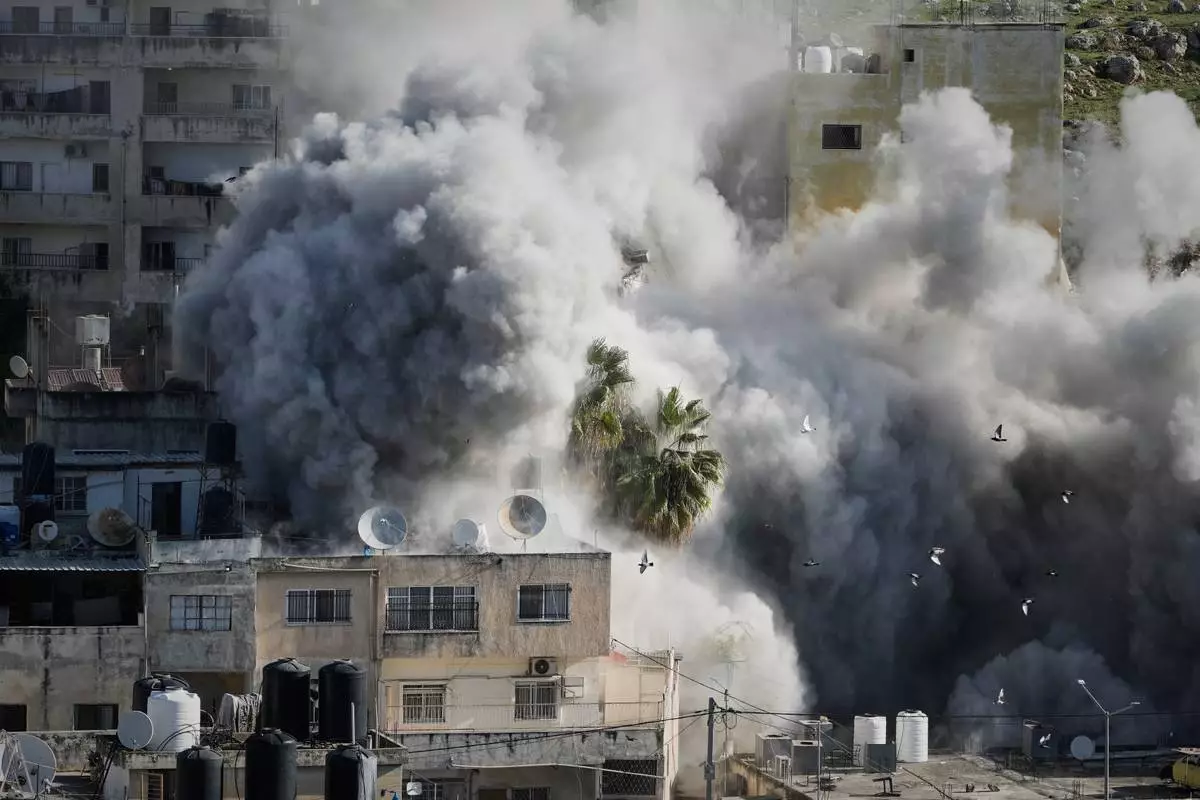
Smoke rises as Israeli forces demolish the home of Abdul Karim Sanoubar, a suspected Palestinian militant who has been accused by Israel of planting bombs on buses in central Israel, in Nablus, West Bank, Tuesday, Dec. 2, 2025. (AP Photo/Majdi Mohammed)
WASHINGTON (AP) — President Donald Trump said U.S. forces will “finish the job” in Iran soon as “core strategic objectives are nearing completion,” offering a full-throated defense of the war Wednesday night in his first national address since the conflict began more than a month ago.
He used his platform before a wide audience to tout the success of the U.S. operations and argue that all of Washington’s objectives have so far been met or exceeded, but said Iran would continue to face a barrage of attacks in the short term.
“We are going to hit them extremely hard over the next two to three weeks,” Trump said. “We’re going to bring them back to the Stone Ages, where they belong.”
But Trump also spent much of an address that lasted just under 20 minutes repeating many things he had already said in recent weeks and providing few new details. The speech appeared unlikely to move the needle of public sentiment at a time when polling shows many Americans feel the U.S. military has gone too far in Iran and as gas and oil prices remain high.
The effect on global financial markets was more immediate, with oil rising more than 4% and Asian stocks falling after Trump's comments about the U.S. continuing to hit Iran hard.
“Tonight, I’m pleased to say that these core strategic objectives are nearing completion,” Trump said. He also acknowledged American service members who had been killed and added: “We are going to finish the job, and we’re going to finish it very fast. We’re getting very close.”
The president didn’t mention the possibility of sending U.S. ground troops into Iran. Nor did he reference NATO, the trans-Atlantic alliance he has railed against for not helping the U.S. secure the critical Strait of Hormuz, where a chokehold by Iran has sent energy prices soaring.
He also didn't say anything about negotiations with Iran or bring up his April 6 deadline for Iran to reopen the waterway or face severe retaliation from the U.S.
Trump ticked through a timeline of past American involvement in conflicts and noted that the ongoing war in Iran had lasted just 32 days, seeming to appeal to the public for more time to achieve the mission.
“World War I lasted one year, seven months and five days,” he said. “World War II lasted for three years, eight months and 25 days.” Trump also added references to Korea, Vietnam and Iraq.
He also noted that in “these past four weeks, our armed forces have delivered swift, decisive, overwhelming victories on the battlefield.” He said U.S. military action had been “so powerful, so brilliant” that “one of the most powerful countries” is “really no longer a threat” — even as Iran kept up its attacks on Israel and Persian Gulf neighbors early Thursday.
Trump also seemed to suggest he had ruled out going into Iran to get its enriched uranium.
“The nuclear sites that we obliterated with the B-2 bombers have been hit so hard that it would take months to get near the nuclear dust,” he said. "And we have it under intense satellite surveillance and control. If we see them make a move, even a move for it, we’ll hit them with missiles very hard again.”
The president encouraged countries reliant on oil through the Strait of Hormuz to “build some delayed courage” and go “take it.”
Trump's comments in his address were more measured than some of his previous remarks, including earlier Wednesday at a White House Easter lunch.
Of Iran, he told his assembled guests: “We could just take their oil. But you know, I’m not sure that the people in our country have the patience to do that, which is unfortunate.”
“Yeah, they want to see it end. If we stayed there, I prefer just to take the oil,” Trump said. “We could do it so easily. I would prefer that. But people in the country sort of say: ‘Just win. You’re winning so big. Just win. Come home.’ And I’m OK with that, too, because we have a lot of oil between Venezuela and our oil.”
The media was not permitted to watch the president’s remarks at the lunch, but the White House uploaded video of the speech online before taking it down. The White House did not return requests for comment from The Associated Press on the video and why it was taken down.
In the lunch — unlike in the subsequent speech — the president also reiterated some of his complaints about NATO allies for their reluctance to get involved in securing the Strait of Hormuz while suggesting that Asian countries could also step up to reopen the waterway.
“Let South Korea, you know, we only have 45,000 soldiers in harm’s way over there, right next to a nuclear force -- let South Korea do it,” Trump said of efforts to reopen the strait. “Let Japan do it. They get 90% of their oil from the strait. Let China do it.”
In a social media post Wednesday morning, meanwhile, Trump also wrote that “Iran’s New Regime President” wanted a ceasefire. It wasn’t clear to whom the U.S. president was referring since Iran still has the same president. Iran’s Foreign Ministry spokesman, Esmail Baghaei, called Trump’s claim “false and baseless,” according to a report on Iranian state television.
Hours before Trump’s address, Iranian President Masoud Pezeshkian posted a lengthy letter in English on his X account appealing to U.S. citizens and stressing that his country had pursued negotiations before the U.S. withdrew from that path. “Exactly which of the American people’s interests are truly being served by this war?” he wrote.
Since the war began on Feb. 28, Trump has offered shifting objectives and repeatedly has said it could be over soon while also threatening to widen the conflict. Thousands of additional U.S. troops are currently heading to the Middle East, and speculation abounds about why. Trump has also threatened to attack Iran’s Kharg Island oil export hub.
Adding to the confusion is what role Israel — which has been bombing Iran alongside the U.S. — might play in any of these scenarios.
Trump has been under growing pressure to end the war that has been pushing up the cost of gasoline, food and other goods. The price of Brent crude, the international standard, is up more than 40% since the start of the war.
Gambrell reported from Dubai, United Arab Emirates. Rising reported from Bangkok. Associated Press writers Seung Min Kim in Washington, Giovanna Dell’Orto in Miami, Farnoush Amiri in New York and Samy Magdy in Cairo contributed to this report.
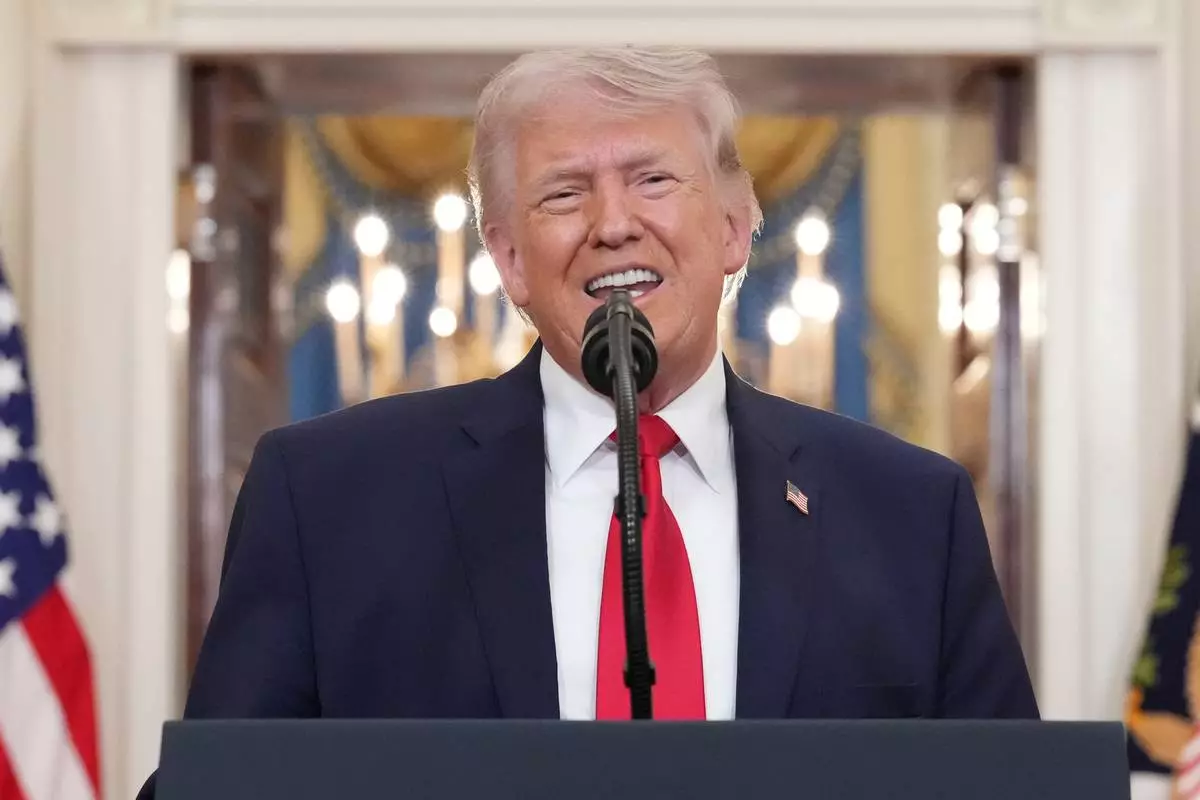
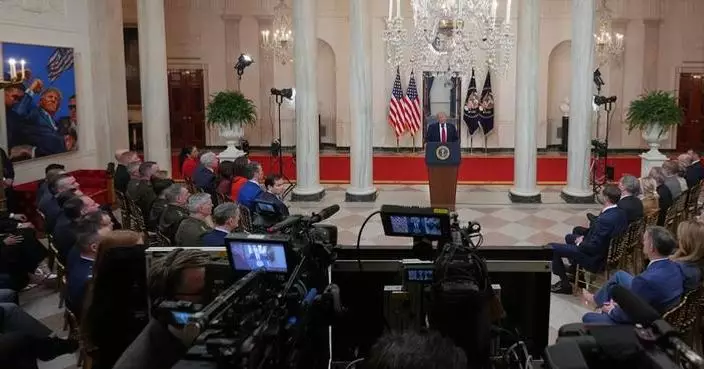
President Donald Trump speaks about the Iran war from the Cross Hall of the White House on Wednesday, April 1, 2026, in Washington. (AP Photo/Alex Brandon, Pool)
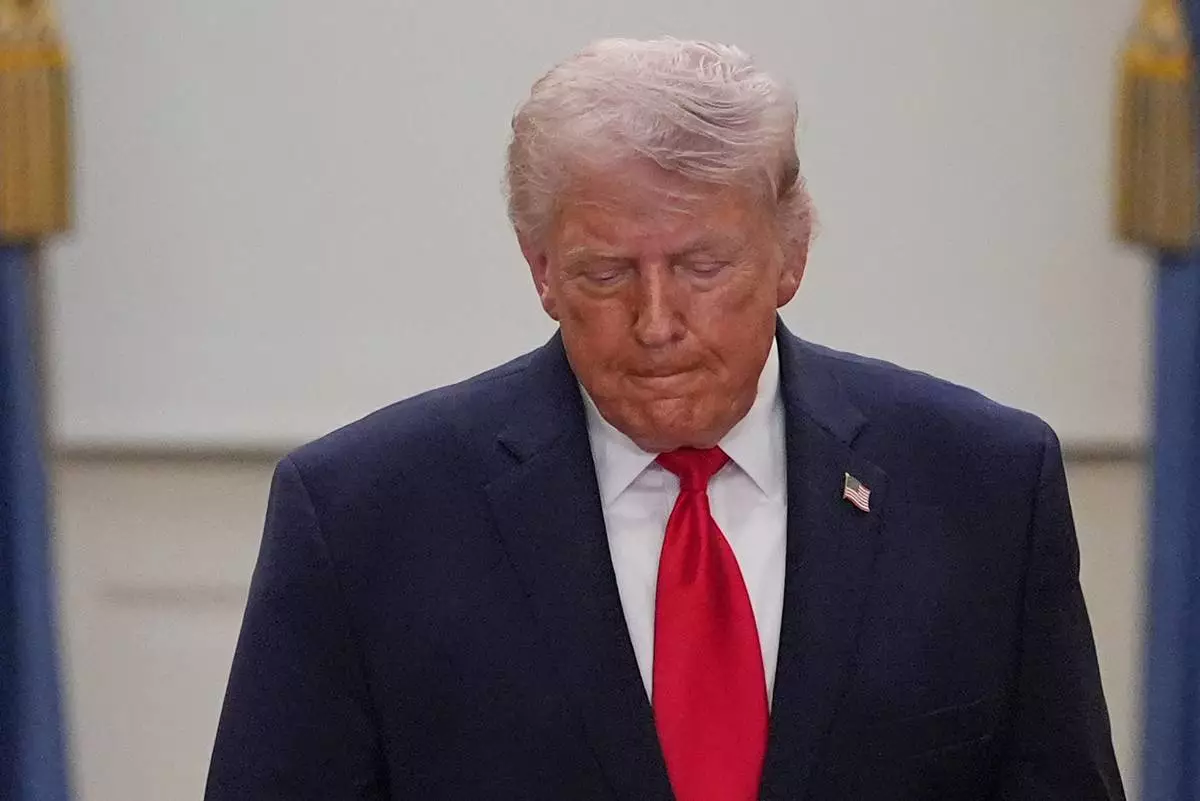
President Donald Trump walks from the Blue Room to speak about the Iran war from the Cross Hall of the White House on Wednesday, April 1, 2026, in Washington. (AP Photo/Alex Brandon, Pool)
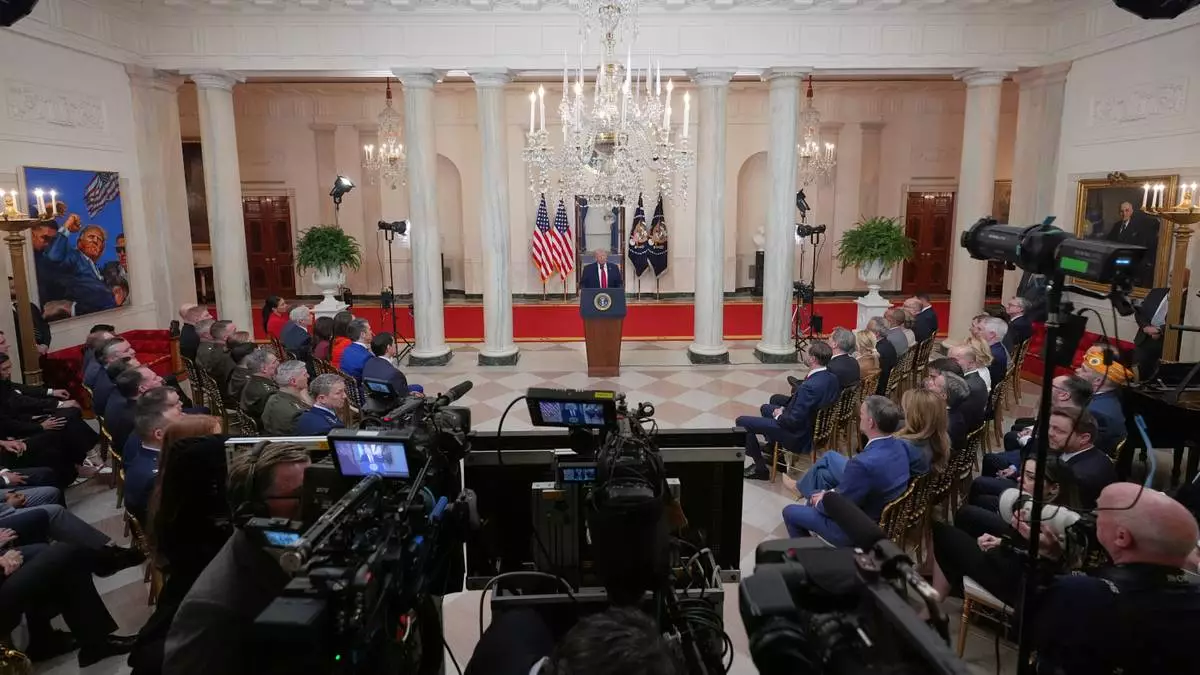
President Donald Trump speaks about the Iran war from the Cross Hall of the White House on Wednesday, April 1, 2026, in Washington. (AP Photo/Alex Brandon, Pool)
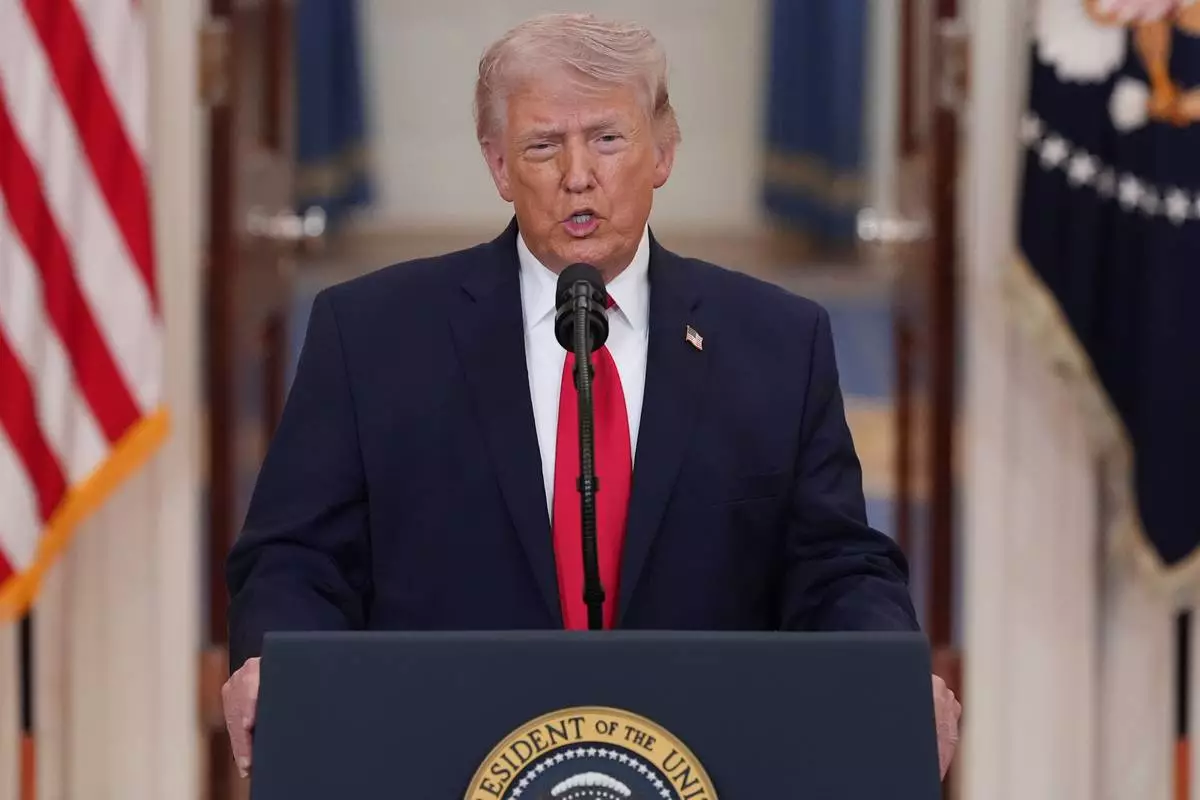
President Donald Trump speaks about the Iran war from the Cross Hall of the White House on Wednesday, April 1, 2026, in Washington. (AP Photo/Alex Brandon, Pool)
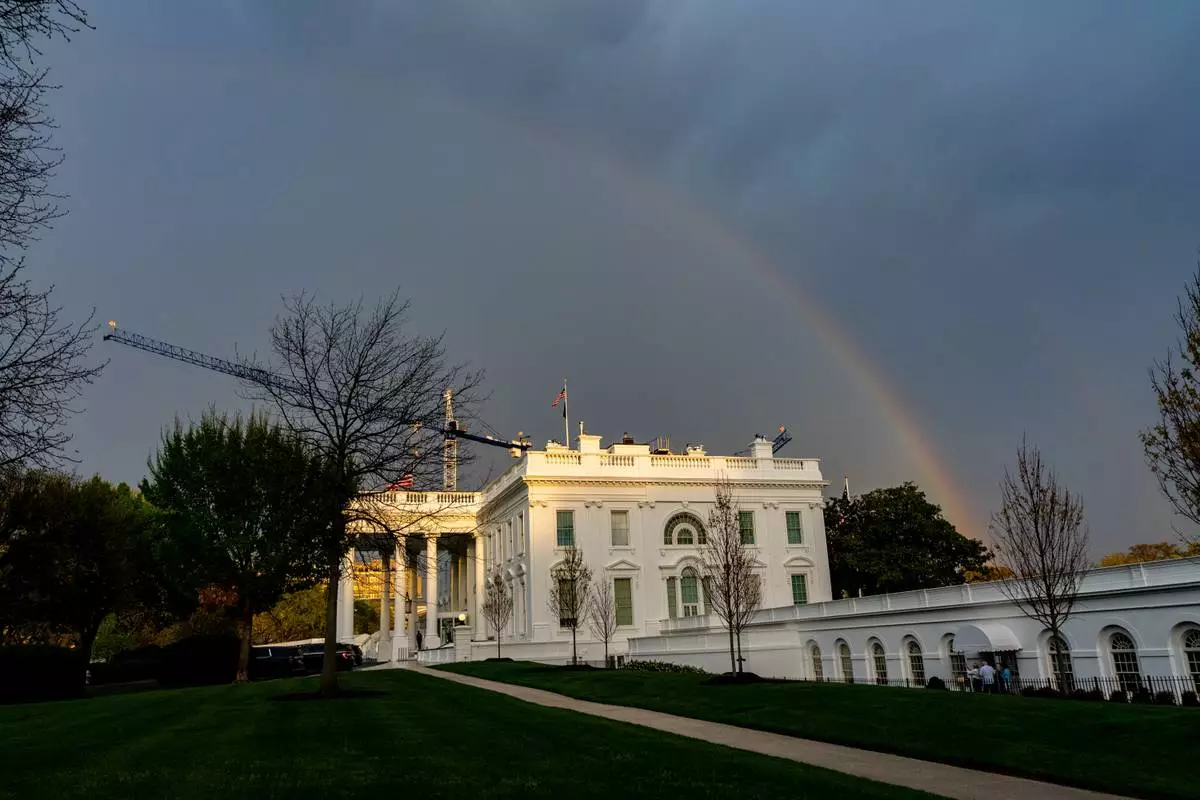
A rainbow forms over the White House on Wednesday, April 1, 2026, in Washington. (AP Photo/Alex Brandon)
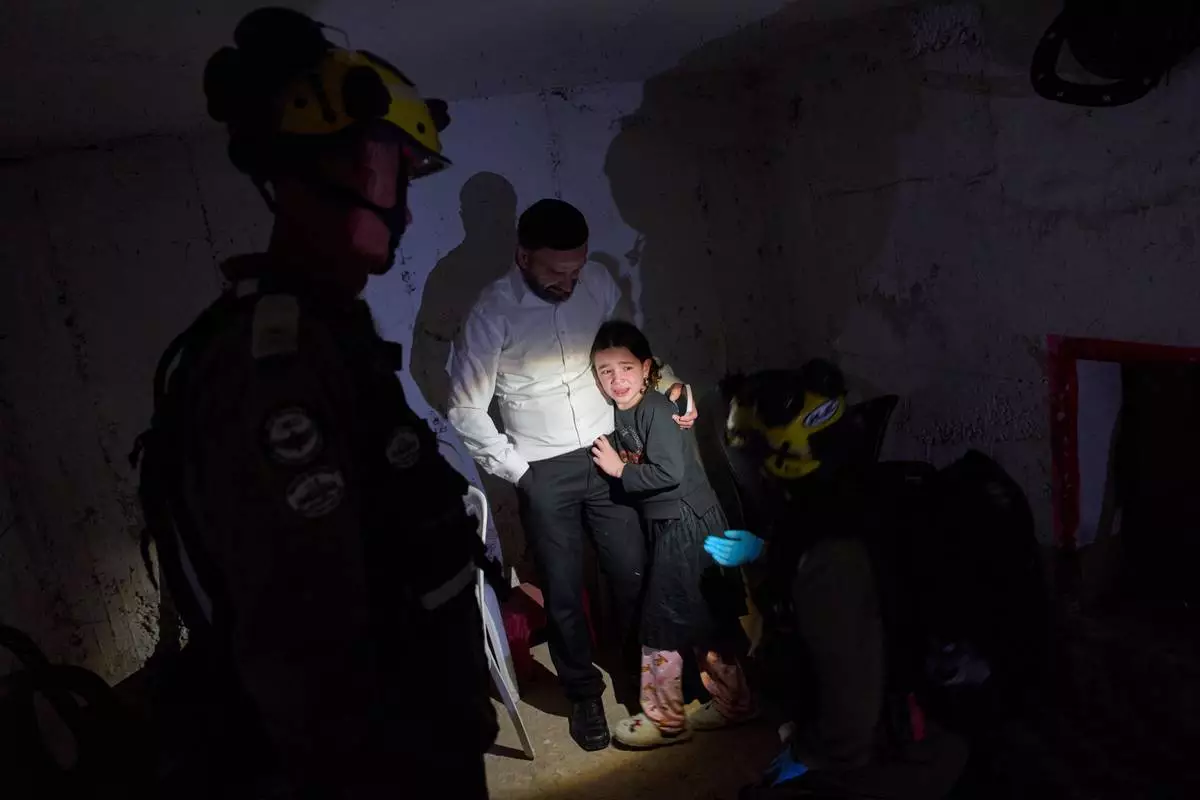
A young girl is comforted by her father and Israeli soldiers as they take cover in a bomb shelter during air raid sirens warning of incoming Iranian missile strikes in Bnei Brak, Israel, Wednesday, April 1, 2026. (AP Photo/Oded Balilty)
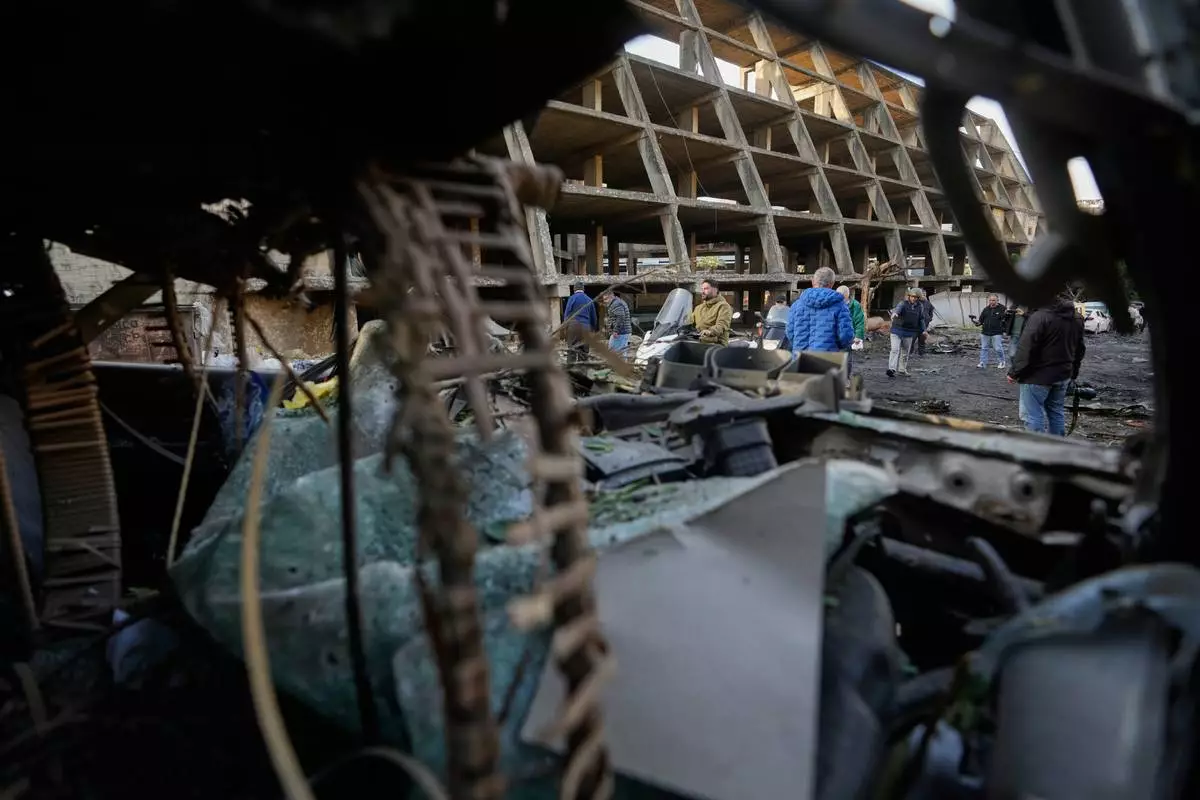
People inspect the site of an Israeli strike amid debris and damaged vehicles in Beirut, Lebanon, Wednesday, April 1, 2026. (AP Photo/Hassan Ammar)
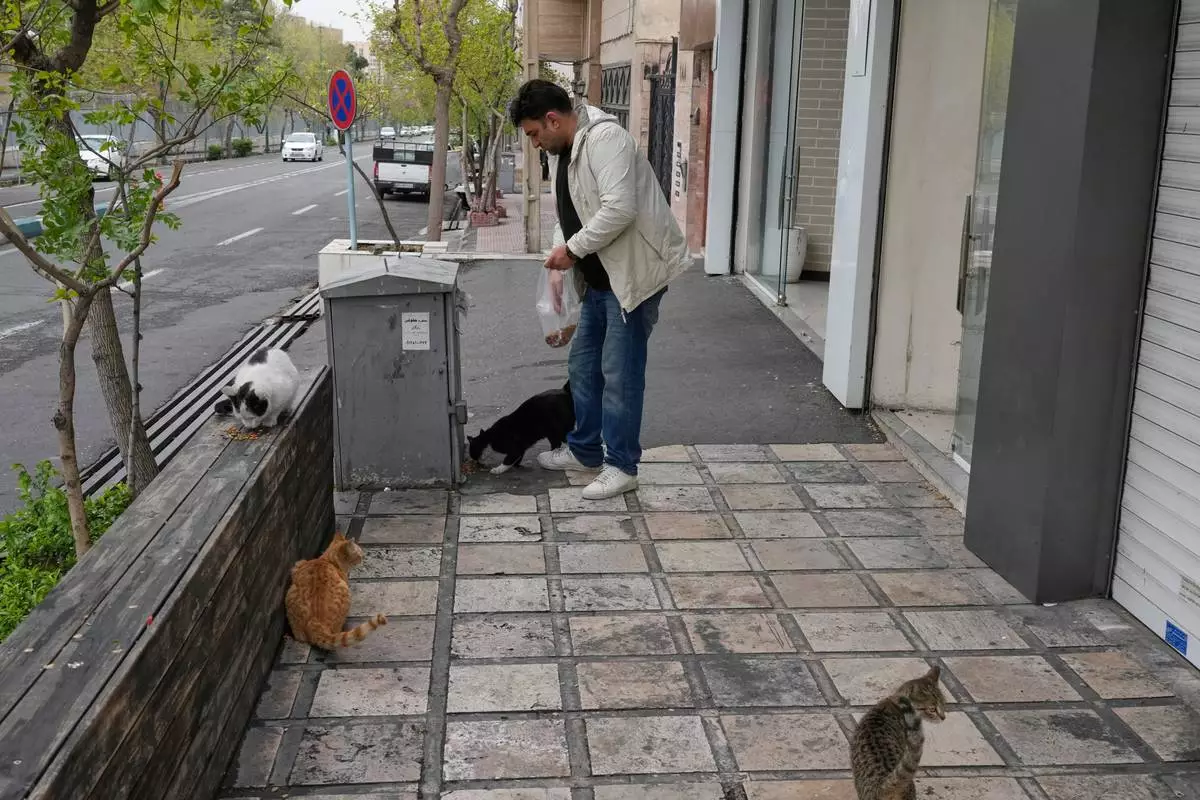
A man feeds stray cats in Tehran, Iran, Tuesday, March 31, 2026. (AP Photo/Vahid Salemi)

The Indian flagged LPG carrier Jag Vasant transporting liquefied petroleum gas, is seen at the Mumbai Port in Mumbai, India, after it arrived clearing the Strait of Hormuz, Wednesday, April 1, 2026. (AP Photo/Rafiq Maqbool)
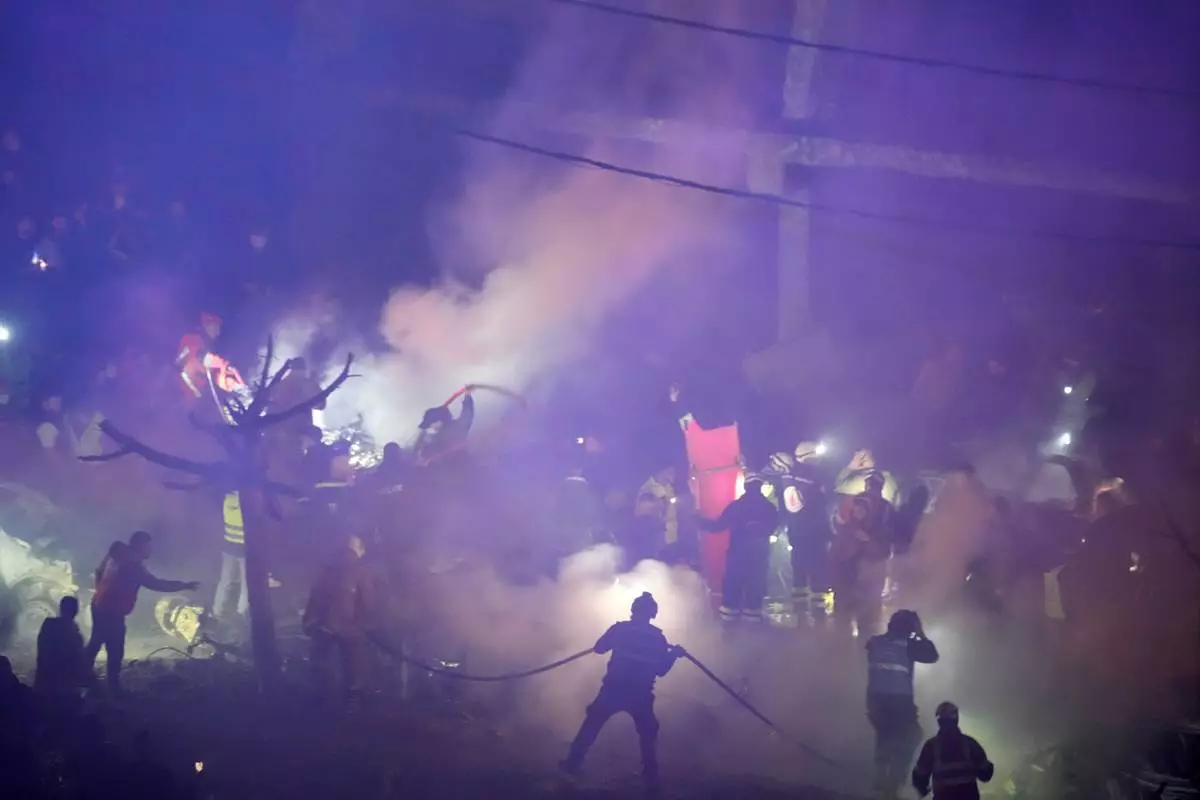
Firefighters and rescue workers work at the site of Israeli airstrikes, in Beirut, Lebanon, Wednesday, April 1, 2026. (AP Photo/Hussein Malla)
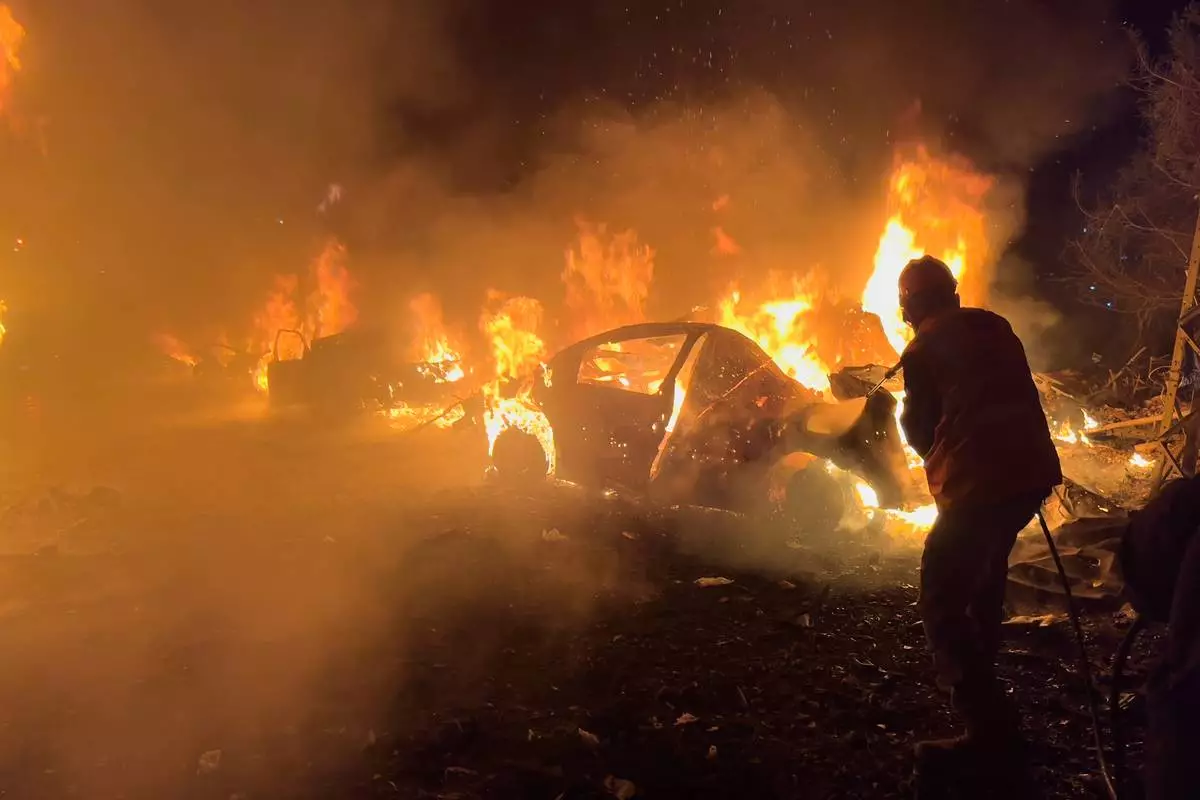
A firefighter extinguishes a car at the site of Israeli airstrikes, in Beirut, Lebanon, Wednesday, April 1, 2026. (AP Photo/Hussein Malla)
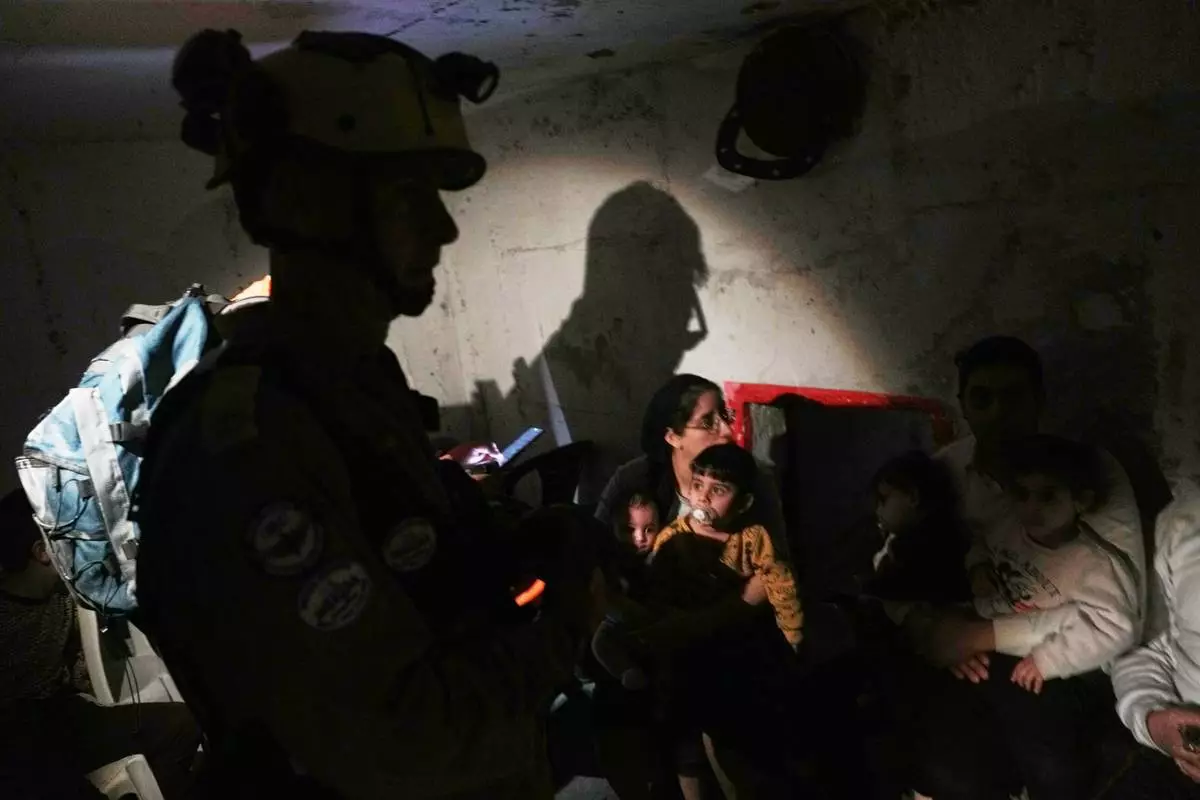
Israel's rescue teams and residents take shelter as sirens sounds next to a site struck by an Iranian missile in Bnei Brak, Wednesday, April 1, 2026. (AP Photo/Oded Balilty)

A police vehicle is seen through a shattered windshield at the site of an Israeli strike in Beirut, Lebanon, Wednesday, April 1, 2026. (AP Photo/Hassan Ammar)
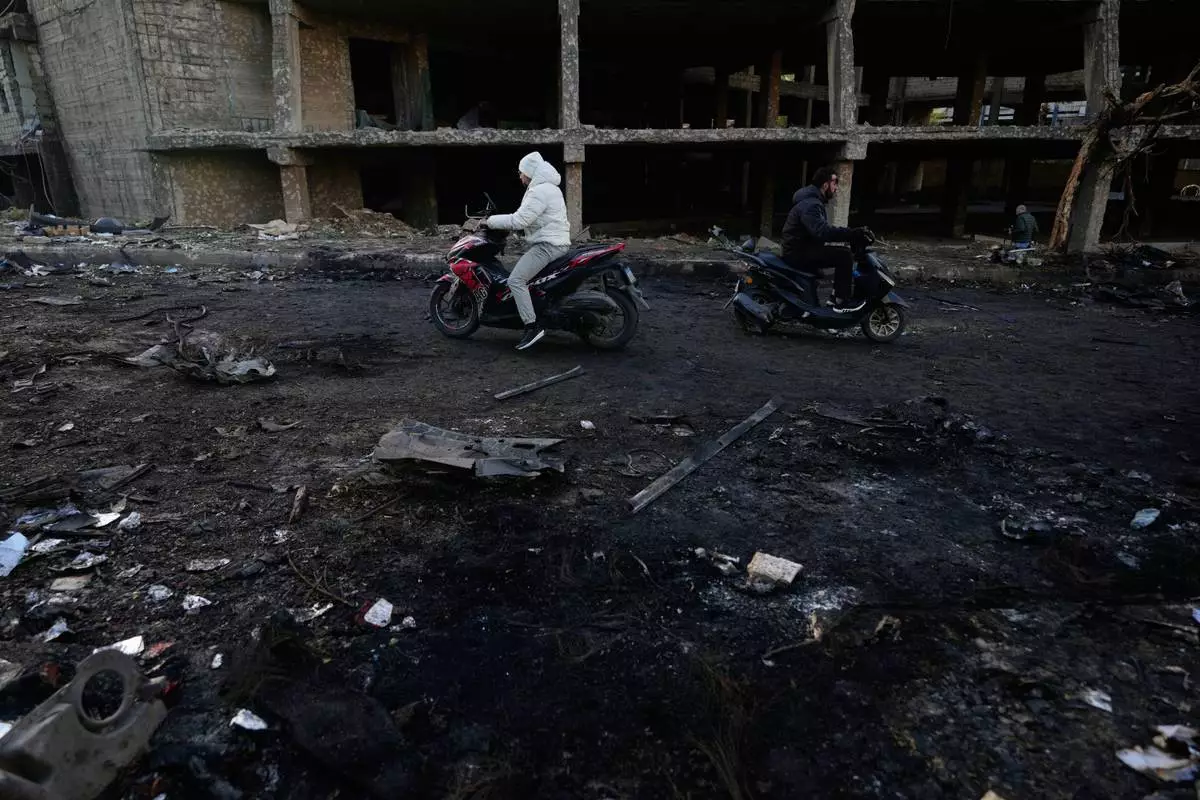
Two men ride scooters past charred debris at the site of an Israeli strike in Beirut, Lebanon, Wednesday, April 1, 2026. (AP Photo/Hassan Ammar)