Heavy-lift drones have been used to transport power transmission tower parts to designated positions across a rainforest in southwest China's Yunnan Province, in a bid to reduce damage to the environment.
As a flagship energy cooperation project under the Belt and Road Initiative, the lines of China-Laos 500-kilovolt interconnection power transmission project cross dense tropical forests along the China section of the project, where Asian elephants live.
To minimize disruption and reduce environment damage, engineers have adopted a "four-drone joint lift" technique to move tower parts and components weighing up to 600 kilograms each.
Meanwhile, over 30 drones of various types and two helicopters can be deployed to form an aerial formation, capable of completing the transportation of tower parts each weighing nearly one ton.
Using drones and helicopters, crews have completed foundation laying for 255 transmission towers so far, accessing 88% of the sites without any new road construction.
"We cut back on 15 cableway installations, reduced temporary land use by over 80,000 square meters, and avoided the felling of more than 30,000 trees," said Wang Xiong, construction manager of Yunnan Electric Power Transmission and Transformation Construction Co., Ltd. under China Southern Power Grid.
The China–Laos 500-kilovolt interconnection power transmission line spans 183.5 kilometers from Namo in Laos' Oudomxay Province to Xishuangbanna in China's Yunnan Province. Scheduled for completion in 2026, the project is expected to support two‑way power transmission of up to 1.5 million kilowatts and deliver about 3 billion kWh of clean electricity each year.
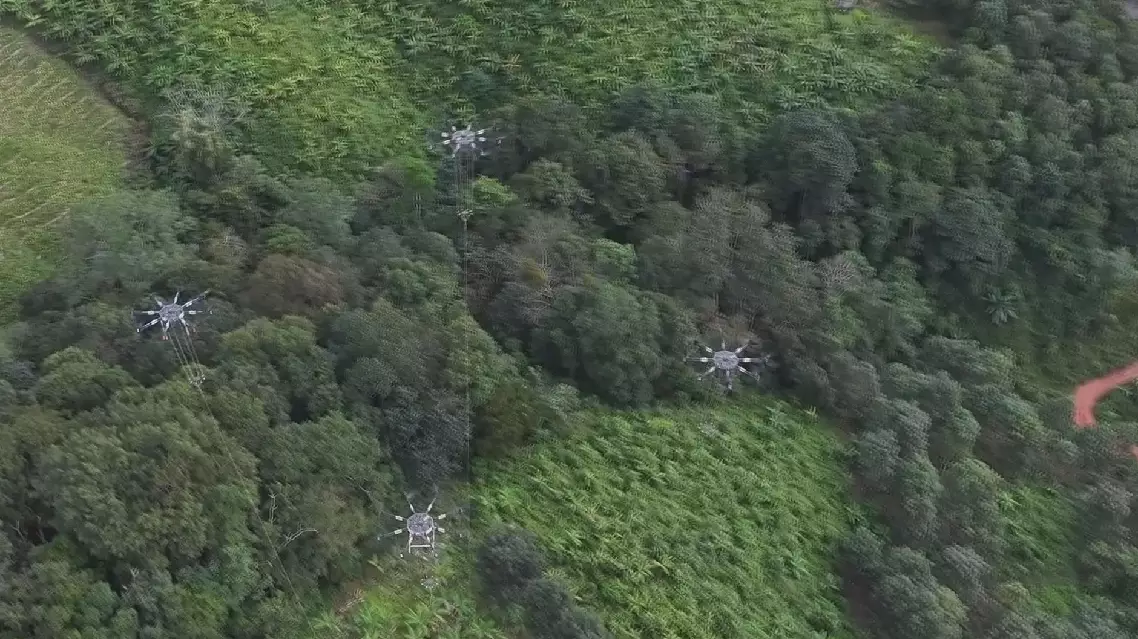
Drones used in transmission line construction to reduce environment damage
Peng Liyuan, wife of Chinese President Xi Jinping and special envoy of the United Nations Educational, Scientific and Cultural Organization (UNESCO) for the advancement of girls' and women's education, called for the international community to vigorously develop digital and intelligent education for women, to ensure that they can use and benefit from digital and intelligent technologies.
Peng made the remarks via video link at the award ceremony of the 2026 UNESCO Prize for Girls' and Women's Education, held on Friday local time in Paris, France.
Noting that girls' and women's education remains an arduous task, she also urged the international community to work together to enhance women's vocational education and training and build them a ladder to a life of brilliance.
Peng extended warm congratulations to this year's laureates who are from Morocco and Peru. Noting that girls' and women's education is a key measure of the progress of human civilization, she said in recent years, thanks to UNESCO's strong advocacy and the international community's concerted efforts, encouraging progress in this worthy cause has been achieved.
Stressing that China has always set great store by girls' and women's education, Peng said China is committed to helping women in China to receive better education and live a life of purpose.
"At the same time, we are also actively and extensively carrying out practical cooperation with UNESCO and relevant parties, and have implemented a number of programs, benefiting women across the globe," Peng added.
She said that China's efforts over recent years in using AI to empower quality education have not only boosted gender equality in education and women's all-round development, but also provided useful experience for fellow Global South countries.
In advancing girls' and women's education, hope is sown, dreams are nurtured, and happiness will be reaped in abundance, she said.
"As the UNESCO Prize for Girls' and Women's Education enters a new decade, I stand ready to work with all of you to promote greater progress in girls' and women's education, and contribute to a brighter future in which more women can thrive and shine," Peng added.
Since China established the prize in cooperation with UNESCO in 2015, the award has continued to exert a positive impact and received extensive attention and high recognition from the international community.
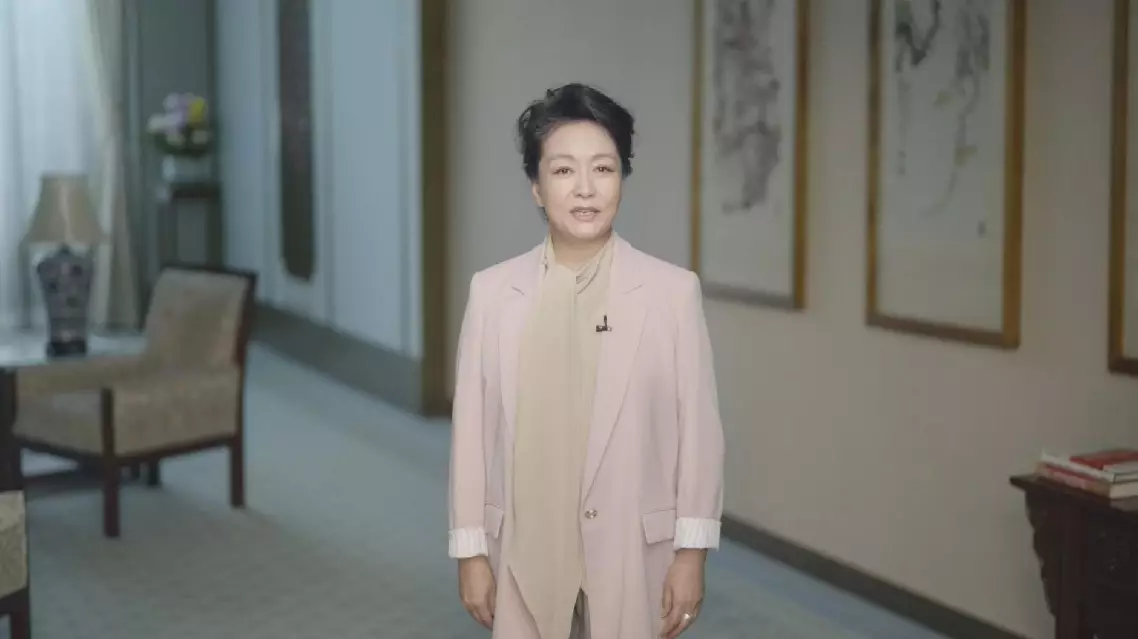
Peng Liyuan calls for int'l community to advance women's education for access to digital, intelligent technologies