U.S. special envoy Steve Witkoff was meeting with Russian President Vladimir Putin in Moscow on Tuesday, taking a draft peace plan that Washington hopes can bring about an end to the nearly four-year war in Ukraine.
Putin, however, ahead of the talks accused Ukraine’s European allies of sabotaging U.S.-led efforts to end the war, calling their demands “absolutely unacceptable.”
Click to Gallery
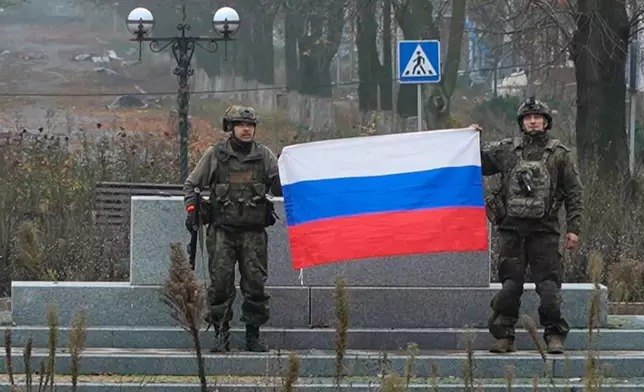
In this image made from video provided by Russian Defense Ministry Press Service on Tuesday, Dec. 2, 2025, Russian soldiers hold a Russian national flag in Pokrovsk, a city in the Donetsk region, Ukraine. (Russian Defense Ministry Press Service via AP)
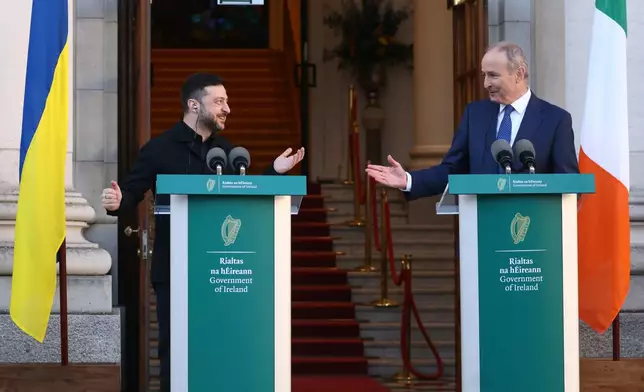
Ukraine's President Volodymyr Zelenskyy, left, and the Irish Prime Minister Micheal Martin gesture to each other as they take part in a joint press conference in Dublin, Ireland, Tuesday, Dec. 2, 2025. (AP Photo/Peter Morrison)
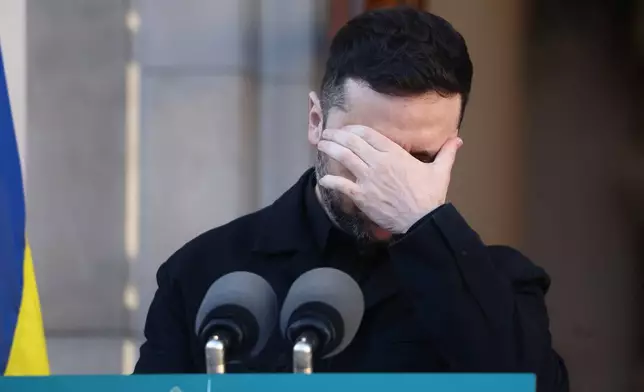
Ukraine's President Volodymyr Zelenskyy, reacts as he takes part in a joint press conference with the Irish Prime Minister Micheal Martin in Dublin, Ireland, Tuesday, Dec. 2, 2025. (AP Photo/Peter Morrison)
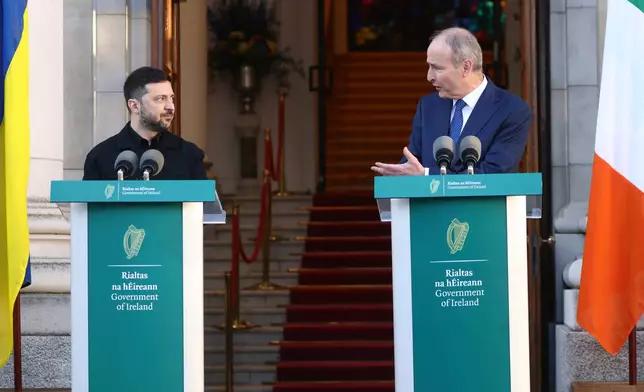
Ukraine President Volodymyr Zelenskyy, left, listens to the Irish Prime Minister Micheal Martin as they hold a joint press conference in Dublin, Ireland, Tuesday, Dec. 2, 2025. (AP Photo/Peter Morrison)
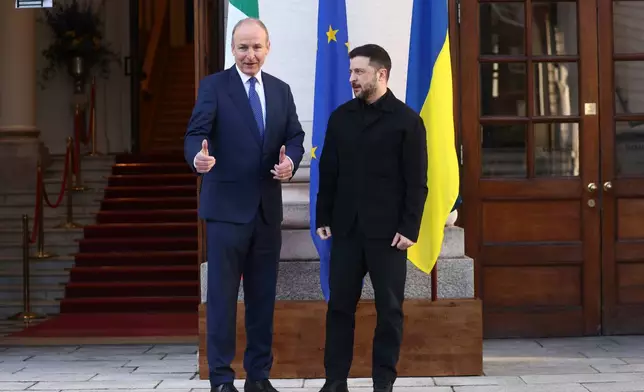
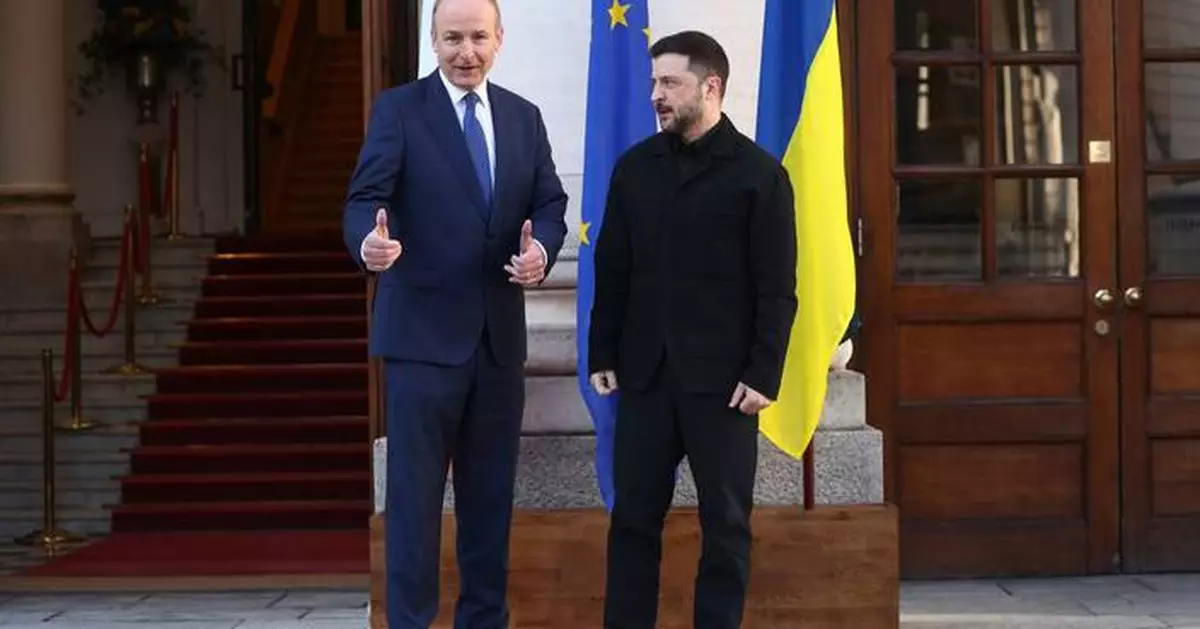
CAPTION CORRECTS SPELLING OF NAME Ukraine's President Volodymyr Zelenskyy, right, poses with the Irish Prime Minister Micheal Martin upon his arrival at Government Buildings in Dublin, Ireland, Tuesday, Dec. 2, 2025. (AP Photo/Peter Morrison)
U.S. President Donald Trump's son-in-law Jared Kushner would join the meeting, Kremlin spokesman Dmitry Peskov told reporters. He said the talks would take “as long as needed” and involve only Witkoff, Kushner and an interpreter from the U.S. side.
Meanwhile, Ukrainian President Volodymyr Zelenskyy was in Ireland during his European tour to sustain support against Russia’s invasion.
According to a draft of Trump's plan obtained last month by The Associated Press, it would cede land to Russia and limit the size of Kyiv’s military. Ukraine and European allies have been working with U.S. officials to amend the plan.
Here is the latest:
Asked about a possible meeting between Putin and Trump, Yuri Ushakov, a senior adviser to President Vladimir Putin, said it depended on the progress of the peace effort.
When pressed about whether peace was closer or further, Ushakov said: “Not further, that’s for sure.” “But there’s still a lot of work to be done, both in Washington and in Moscow. That’s what’s been agreed upon. And contacts will continue,” the official said.
Ushakov said “so far, a compromise hasn’t been found” on the issue of territories, “without which we see no resolution to the crisis.” While both sides could agree “on some things,” there were also proposals that evoked Moscow’s criticism and “even negative attitude,” he said. He called the conversation that lasted for five hours “rather useful, constructive and rather substantive” and said the work will continue.
Referring to the talks in a post on social platform X, Russian presidential envoy Kirill Dmitriev simply wrote “productive.”
After the end of the talks, U.S. envoy Witkoff was seen arriving at the U.S. Embassy in Moscow, Russian state news agency RIA Novosti reported. There were no immediate statements to the media.
The talks lasted for almost five hours and both sides have yet to make a statement.
Talks between the U.S. and Russian delegations have now passed the 3-1/2 hour mark.
Ukrainian President Volodymyr Zelenskyy says he expects to be briefed by the U.S. delegation immediately after the meeting ends.
Putin is now meeting with Witkoff and Kushner in Moscow for talks on ending the fighting in Ukraine.
The meeting comes days after U.S. officials held talks with a Ukrainian delegation on the U.S. peace plan. U.S. Secretary of State Marco Rubio told reporters it was “productive” but more work needed to be done.
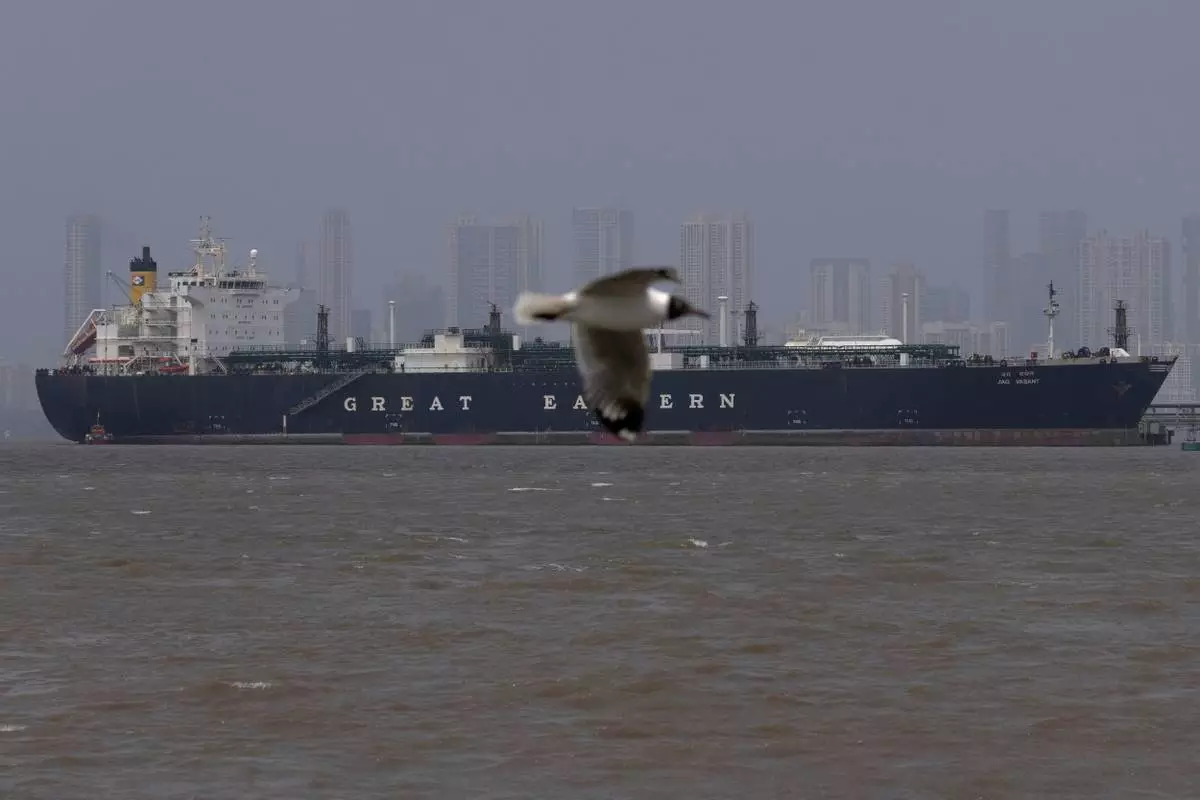
Putin also threatened retaliation for Ukrainian strikes on vessels carrying Russian oil in Turkey’s exclusive economic zone. He said Moscow would expand the range of its strikes against Ukrainian ports and ships.
He also said Moscow would “consider the possibility” of retaliatory measures against the vessels of countries helping Ukraine to carry out such strikes.
Putin has accused Ukraine’s European allies of sabotaging U.S.-led efforts to end the war, asserting that “they don’t have a peace agenda, they’re on the side of the war.”
The Russian leader accused Europe of amending peace proposals with “demands that are absolutely unacceptable to Russia,” thus “blocking the entire peace process,” only to blame Russia for it.
His remarks were in line with the narrative that Russia pushed after Trump came to office earlier this year and initiated talks with Moscow.
Speaking with journalists, Putin asserted that Moscow’s troops had taken control of the eastern Ukrainian city of Pokrovsk. He said it has “special significance” because “from this base, from this sector, the Russian army can easily advance in any direction that the General Staff deems most promising.”
Putin invited foreign journalists to visit Pokrovsk.
Ukraine has denied that Russian troops have taken control of the city. Ukraine’s General Staff described Putin’s new statements as “a propaganda stunt.” It said on social media that the Ukrainian army was preparing additional routes to deliver supplies to troops in the area.
Speaking at a press conference in Dublin, Zelenskyy said: “There are now 20 points that were drafted in Geneva, and were finalized in Florida. Some things still have to be worked on.
“From what I’ve seen, America takes serious steps to end the war in one way or another. And our mission, I am sure this is our common mission, of everyone in Europe, is to truly and this war and not just make a pause in hostilities.
“We need decent peace, and for it to truly happen, every one has to be on the side of peace.”
Ireland’s leader announced 125 million euros ($145 million) in new funding for Ukraine during President Volodymyr Zelenskyy’s visit to Dublin on Tuesday.
Prime Minister Micheál Martin said his government will provide 100 million euros in non-lethal military assistance and 25 million euros to support Ukraine’s energy system.
He said Russia has been “deliberately, cynically” attacking Ukraine’s energy infrastructure as winter approaches.
Martin said Ireland would try to push forward negotiations on Ukraine joining the European Union, saying: “Ukraine is part of our European family. It shares the same values. It belongs in the European Union.”
Zelenskyy was received at Government Buildings in Dublin by an honor guard and a military band playing the Ukrainian and Irish national anthems.
Earlier he visited President Catherine Connolly at her official residence. He wrote in the visitor’s book: “On behalf of the people of Ukraine, I express my sincere gratitude for Ireland’s steadfast support during our fight against Russian aggression.”
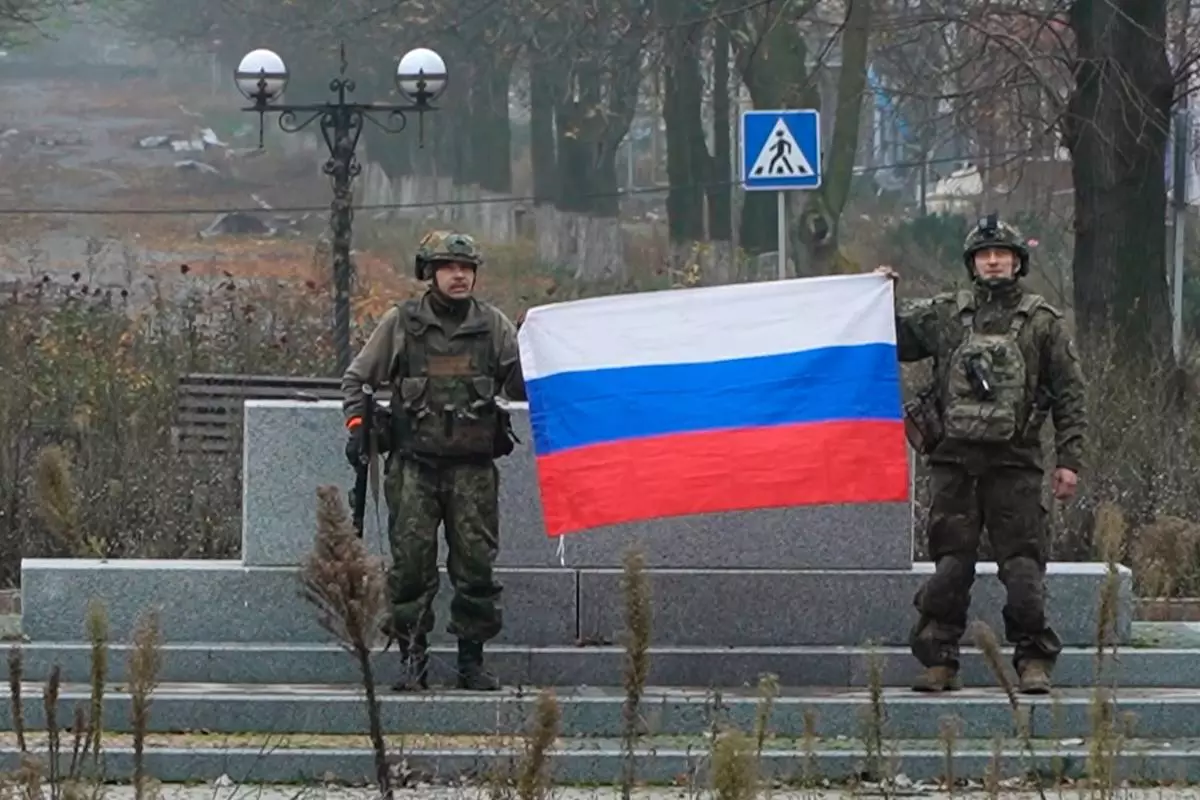
In this image made from video provided by Russian Defense Ministry Press Service on Tuesday, Dec. 2, 2025, Russian soldiers hold a Russian national flag in Pokrovsk, a city in the Donetsk region, Ukraine. (Russian Defense Ministry Press Service via AP)
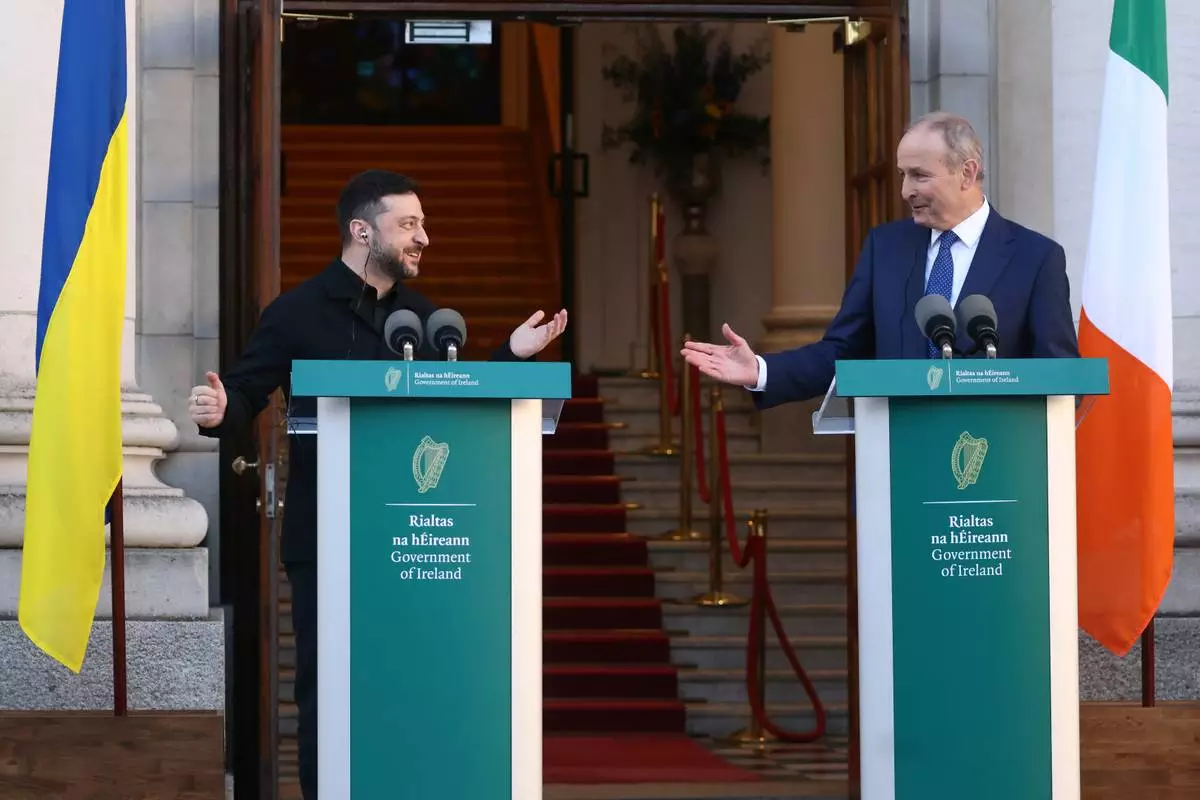
Ukraine's President Volodymyr Zelenskyy, left, and the Irish Prime Minister Micheal Martin gesture to each other as they take part in a joint press conference in Dublin, Ireland, Tuesday, Dec. 2, 2025. (AP Photo/Peter Morrison)
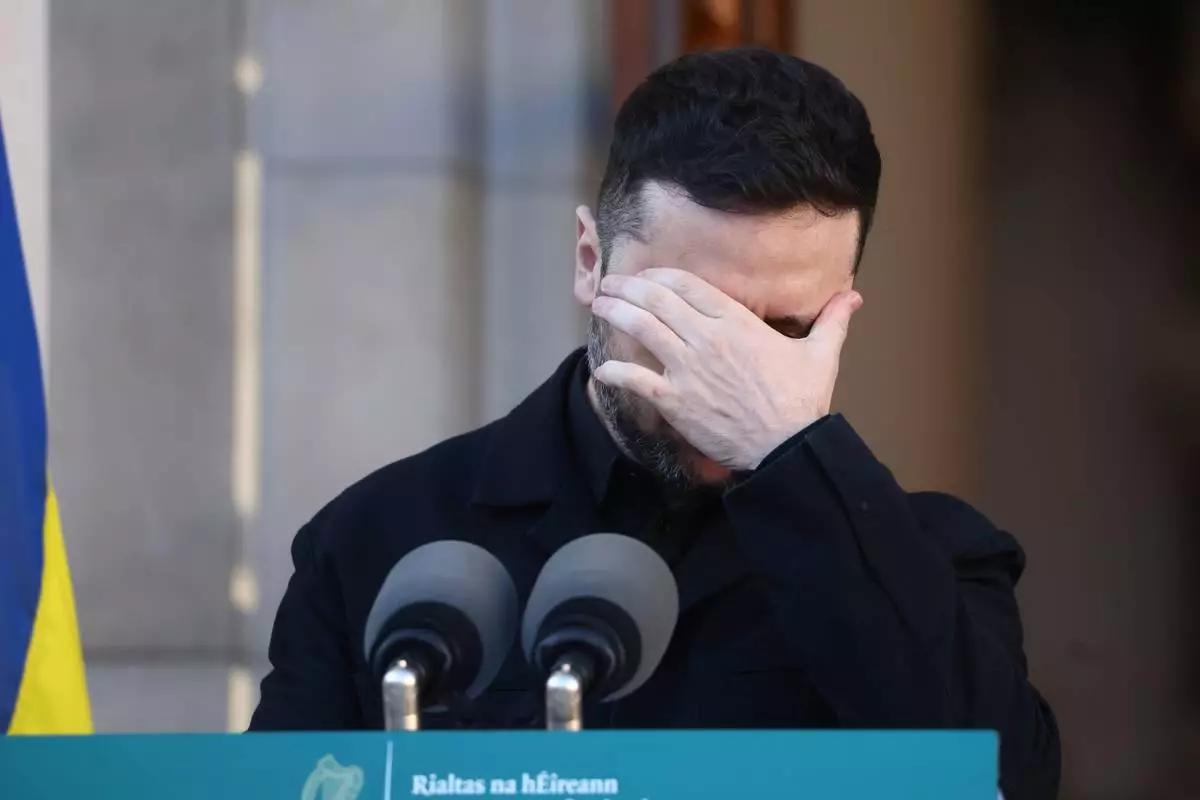
Ukraine's President Volodymyr Zelenskyy, reacts as he takes part in a joint press conference with the Irish Prime Minister Micheal Martin in Dublin, Ireland, Tuesday, Dec. 2, 2025. (AP Photo/Peter Morrison)
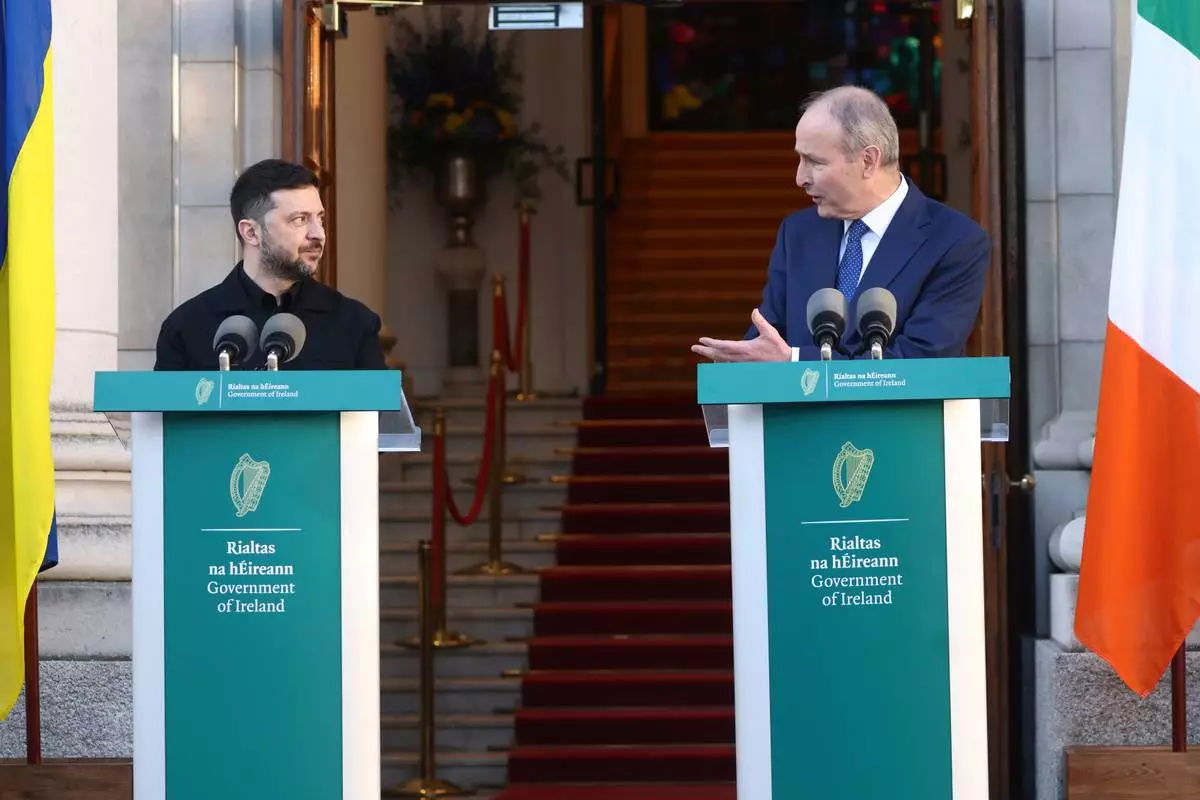
Ukraine President Volodymyr Zelenskyy, left, listens to the Irish Prime Minister Micheal Martin as they hold a joint press conference in Dublin, Ireland, Tuesday, Dec. 2, 2025. (AP Photo/Peter Morrison)
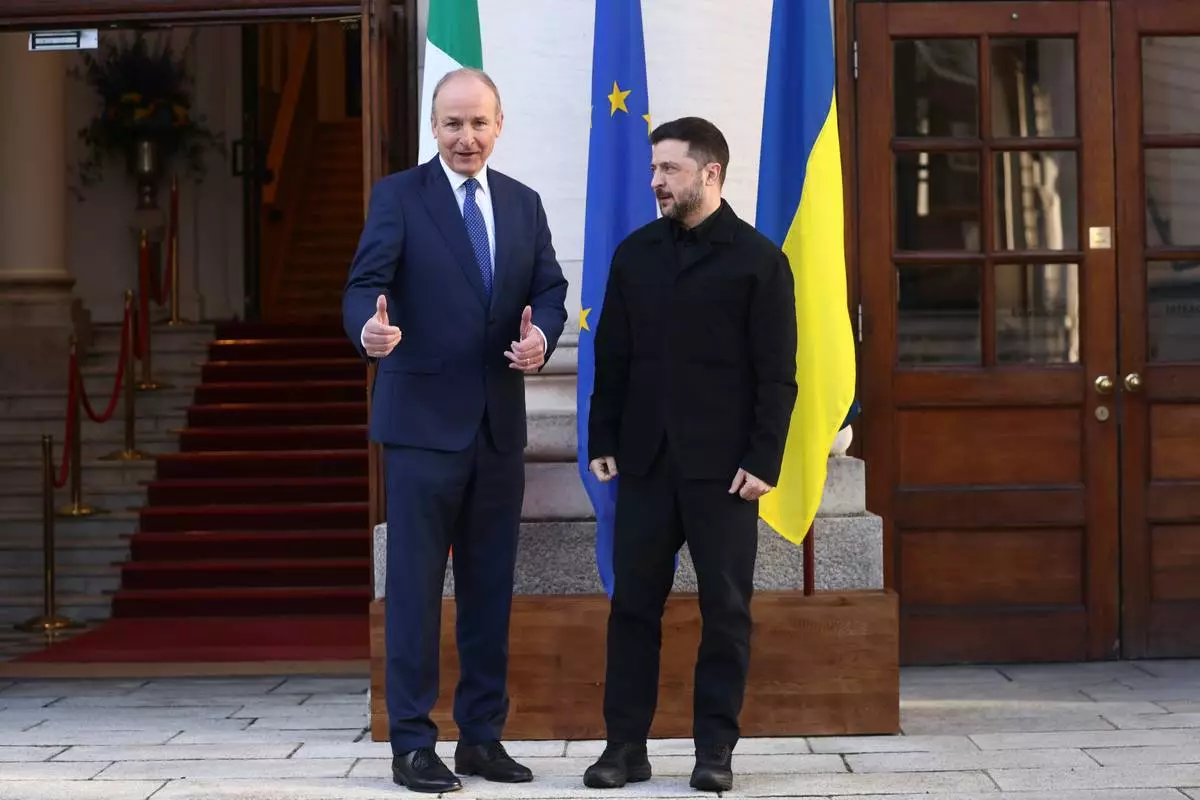
CAPTION CORRECTS SPELLING OF NAME Ukraine's President Volodymyr Zelenskyy, right, poses with the Irish Prime Minister Micheal Martin upon his arrival at Government Buildings in Dublin, Ireland, Tuesday, Dec. 2, 2025. (AP Photo/Peter Morrison)