The new journalism guard is officially in at the Pentagon. And the questions being asked of those running the world's most powerful military range from softballs to pointed queries to performances.
On Tuesday, Defense Department press secretary Kingsley Wilson — focused on her talking points and jabbing at old-guard reporters along the way — held her first briefing since most nonpartisan news outlets were replaced by friendly media representatives willing to accept new rules imposed by department chief Pete Hegseth.
Even before the new rules were in place, Hegseth’s Pentagon struggled to hold televised briefings. Wilson’s boss, Pentagon top spokesman Sean Parnell, held only two, one in March and another in July. By contrast, Pentagon officials under the Biden administration typically held two public briefings per week by the end of their time in office.
Among the topics that interested the latest crop of reporters: the National Guard in American cities, military action in Iran and Somalia, an investigation into former President Joe Biden, potential legal action against The Washington Post and efforts to root out disloyal employees.
With Hegseth's role in U.S. military strikes on boats carrying suspected drug couriers off South America under scrutiny, Wilson was asked what say Adm. Frank Bradley had in a second strike on one boat, which a report in the Post on Friday said killed two survivors from the initial attack.
“At the end of the day, the president and the (defense) secretary are the ones directing these strikes, and any follow-up strikes that were directed by Admiral Bradley, the secretary 100% agrees with,” she said.
She was asked whether the department was contemplating legal action against the newspaper, which reported that Hegseth issued a verbal order to “kill everybody” on the boat in the early September strike. That opened the door for her to attack the newspaper.
“The Washington Post readership," she said, “should think twice about reading that outlet again.”
Former U.S. Rep. Matt Gaetz, a Republican credentialed to cover the Pentagon for One America News, asked about Pentagon plans for running Venezuela if President Donald Trump ousts the country's leader, Nicolás Maduro, and whether the U.S. would consider anyone who worked for the Venezuelan government or military a narco-terrorist.
Wilson replied that “if anything happens, we have a response ready,” and said the future of Venezuelan government employees would be “a determination for the president to make.”
Gaetz “experienced being on the other side” in not getting his questions answered, said Barbara Starr, retired Pentagon correspondent for CNN, who viewed the briefing online.
“I actually thought several of the questions the audience asked were very good, pointed, on-the-news questions,” Starr said. “I don’t think they got good answers.”
All administrations look to emphasize their points of view in such briefings, the veteran correspondent said, but Trump's team is especially intent on not making actual news. Starr said it was not a journalistically sound event because of the reporters that were excluded.
Wilson was asked why Americans were still fighting in Somalia (protecting Americans from terrorists, she said), whether the U.S. should reevaluate its relationship with Israel if the country had helped fund Hamas in the past (call the State Department, she suggested) and about reports that Iran was rebuilding its nuclear capabilities (she didn't answer, except to praise Trump's initial attack order ). She also didn't address a question about any evidence of criminal activity found on boats that were attacked.
Some briefing attendees looked to help her advance the administration's point of view. Conservative provocateur James O'Keefe, who has made a name for himself taping political opponents in unguarded moments, asked what steps were being taken to root out disloyal Pentagon employees.
“Thank you for the question,” Wilson said. “That's why the work you all do is so important.”
When asked, she promised an administration report next summer on the Biden-ordered withdrawal from Afghanistan in 2021. She was about asked potential military honors or a burial in Arlington National Cemetery for a National Guard member killed in Washington last week.
Storm Paglia, a representative from the RedState and TownHall conservative blogs, expressed his happiness at being at the briefing. “Dawning of a new day with patriots reporting the truth,” Paglia wrote on X. “Not media liars.”
Before taking any questions, Wilson criticized media outlets that chose to “self-deport” from the Pentagon rather than accept Hegseth's new rules for working there. Hegseth characterizes them as common sense rules designed to protect national security; most mainstream news outlets worried they limited their ability to report anything Hegseth didn't want to see.
They’re continuing coverage off-site, and non-credentialed reporters weren’t allowed in for Tuesday’s briefing. The Pentagon made clear that attendance, and thus the chance to ask questions, was for “invited press only.”
“We're not going to beg these gatekeepers to come back and we're not going to rebuild a broken model just to appease them,” Wilson said. “The public has moved on from the old model, and so has the Pentagon.”
The new reporters are expected to meet with Hegseth in person on Wednesday.
David Bauder writes about the intersection of media and entertainment for the AP. Follow him at http://x.com/dbauder and https://bsky.app/profile/dbauder.bsky.social
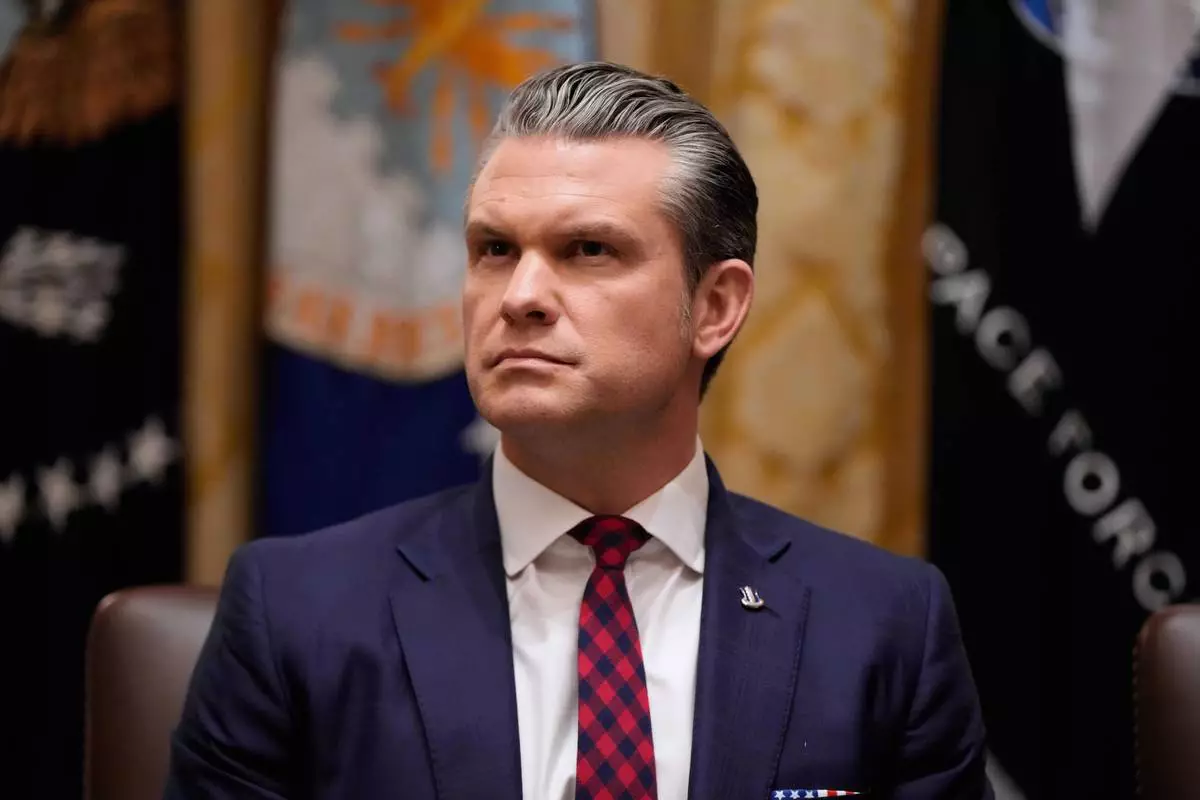
Defense Secretary Pete Hegseth listens as President Donald Trump speaks during a Cabinet meeting at the White House, Tuesday, Dec. 2, 2025, in Washington. (AP Photo/Julia Demaree Nikhinson)

FILE - Former Rep. Matt Gaetz, R- Fla. speaks at AmericaFest, Dec. 22, 2024, in Phoenix. (AP Photo/Rick Scuteri, File)
DUBAI, United Arab Emirates (AP) — Iran kept up its attacks on Israel and Persian Gulf neighbors on Wednesday as airstrikes pounded Tehran and U.S. President Donald Trump again made contradictory statements about whether he was ready to wind down the war or escalate it.
Trump struck a belligerent tone Wednesday in a Truth Social post, demanding that Iran stop blocking the Strait of Hormuz — the waterway vital to global oil supplies — or the U.S. would bomb the Islamic Republic “back to the Stone Ages.” A day earlier, Trump said the U.S. “will not have anything to do with” ensuring the security of ships passing through Hormuz; that was an apparent backtrack from a previous threat to attack Iran's power grid if it didn't open the strait by April 6.
Trump, who is scheduled to give a televised address Wednesday evening, said Tuesday he could walk away from the war in two to three weeks once he felt confident Iran would not be able to build a nuclear weapon — even if Tehran does not agree to a ceasefire.
But his latest Truth Social post struck a harder line as more American troops move into the region for a possible ground offensive after weeks of airstrikes targeting Iran.
Trump also claimed Wednesday that “Iran's New Regime President” wanted a ceasefire. It wasn't clear to whom the U.S. president was referring since Iran still has the same president. Iran’s Foreign Ministry spokesman, Esmail Baghaei, called Trump's claim “false and baseless,” according to a report on Iranian state television.
Speaking earlier to Al Jazeera, Iranian Foreign Minister Abbas Araghchi signaled Tehran’s willingness to keep fighting. “You cannot speak to the people of Iran in the language of threats and deadlines,” he said. “We do not set any deadline for defending ourselves.”
Since the war began on Feb. 28, Trump has offered shifting objectives and repeatedly has said it could be over soon while also threatening to widen the conflict. Thousands of additional U.S. troops are currently heading to the Middle East, and speculation abounds about the purpose of their deployment.
Just days ago, Trump threatened to attack Iran’s Kharg Island oil export hub. And there has also been speculation about whether the U.S. could decide to send in military forces to secure Iran’s uranium stockpile — a complex and risky operation, fraught with radiation and chemical dangers, according to experts and former government officials.
Adding to the confusion is what role Israel - which has been bombing Iran alongside the U.S. — might play in any of these scenarios.
Trump has been under growing pressure to end the war as oil prices have skyrocketed, pushing up the cost of gasoline, food and other goods. The spot price of Brent crude, the international standard, was up more than 40% since the start of the war, trading at more than $103 a barrel on Wednesday.
The U.S. has presented Iran with a 15-point plan aimed at bringing about a ceasefire, including a demand for the strait to be reopened and for its nuclear program to be rolled back.
Iran insists its nuclear program is peaceful. And in a report last week by Iranian state TV's English-language broadcaster, an anonymous official was quoted as saying Iran had its own demands to end the fighting, including retaining sovereignty over the strait.
In the interview with Al Jazeera, Araghchi acknowledged receiving direct messages from U.S. Mideast envoy Steve Witkoff. He insisted, however, that there were no direct negotiations and said Iran has no faith that talks with the U.S. could yield any results, saying “the trust level is at zero.”
He warned against any U.S. attempt to launch a ground offensive, saying “we are waiting for them.”
In a deal ostensibly to give diplomacy a chance, U.S. officials have given “clear assurances” that Araghchi and Iran's Parliamentary Speaker Mohammad Bagher Qalibaf won't be targeted, according to three officials who spoke on condition of anonymity because they're not authorized to speak publicly about the matter.
A cruise missile slammed into an oil tanker off Qatar’s coast Wednesday, the Defense Ministry said. The crew was evacuated and no casualties were reported. A Kuwaiti oil tanker came under attack off Dubai the day before, one of more than 20 ships attacked by Iran during the war.
In the United Arab Emirates, a person was killed when he was hit by debris from an intercepted drone in Fujairah, one of the country’s seven emirates.
In Kuwait, the state-run KUNA news agency said a drone hit a fuel tank at Kuwait International Airport, sparking a large fire.
Jordan’s military said it intercepted a ballistic missile and two drones fired from Iran in the last 24 hours. No casualties were reported. Two drones were also intercepted in Saudi Arabia.
In Israel, sirens sounded to warn of incoming missiles and AP reporters heard loud booms in Tel Aviv as the windows of buildings shook from the reverberations. There were no immediate reports of damage or casualties.
An airstrike on Tehran appeared to have hit the former U.S. Embassy compound, which has been controlled by Iran’s Revolutionary Guard since American diplomats were held hostage there in 1979. Witnesses said buildings outside the massive compound had their windows blown out.
In Lebanon, at least five people were killed in an Israeli strike on a Beirut neighborhood.
Israel invaded southern Lebanon after the Iran-linked Hezbollah militant group began launching missiles into northern Israel days after the outbreak of the war. Many Lebanese fear another prolonged military occupation.
More than 1,200 people have been killed in Lebanon and more than 1 million displaced, according to authorities. Ten Israeli soldiers have also died there.
In Iran, authorities say more than 1,900 people have been killed, while 19 have been reported dead in Israel. More than two dozen people have died in Gulf states and the occupied West Bank, while 13 U.S. service members have been killed.
Rising reported from Bangkok. Associated Press writers Giovanna Dell’Orto in Miami, Farnoush Amiri in New York and Samy Magdy in Cairo contributed to this report.
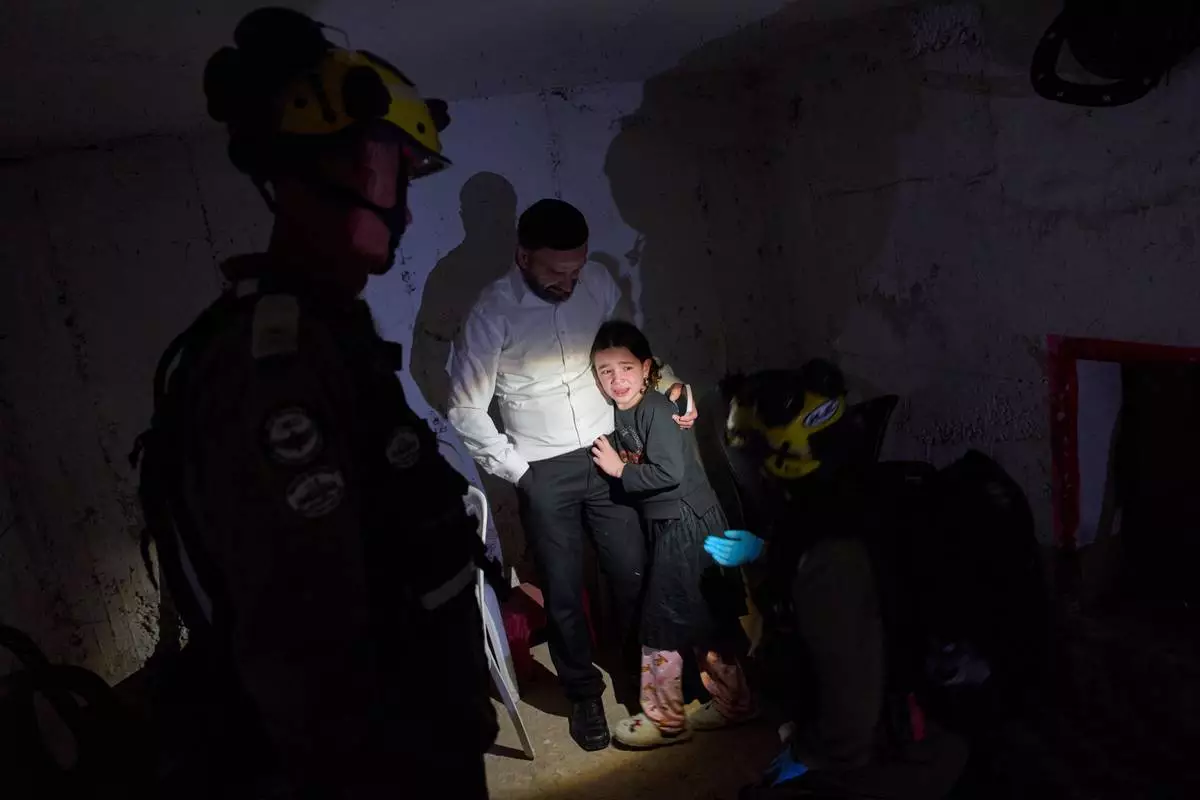
A young girl is comforted by her father and Israeli soldiers as they take cover in a bomb shelter during air raid sirens warning of incoming Iranian missile strikes in Bnei Brak, Israel, Wednesday, April 1, 2026. (AP Photo/Oded Balilty)
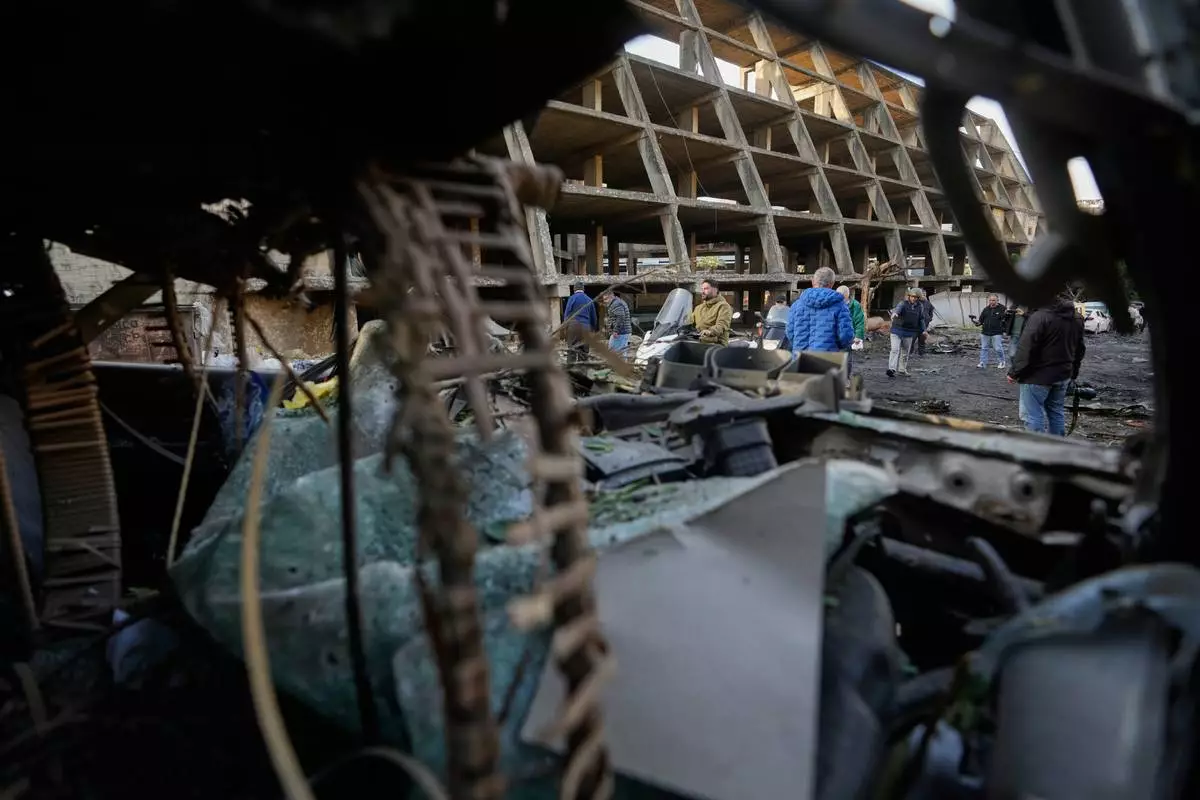
People inspect the site of an Israeli strike amid debris and damaged vehicles in Beirut, Lebanon, Wednesday, April 1, 2026. (AP Photo/Hassan Ammar)

A man feeds stray cats in Tehran, Iran, Tuesday, March 31, 2026. (AP Photo/Vahid Salemi)
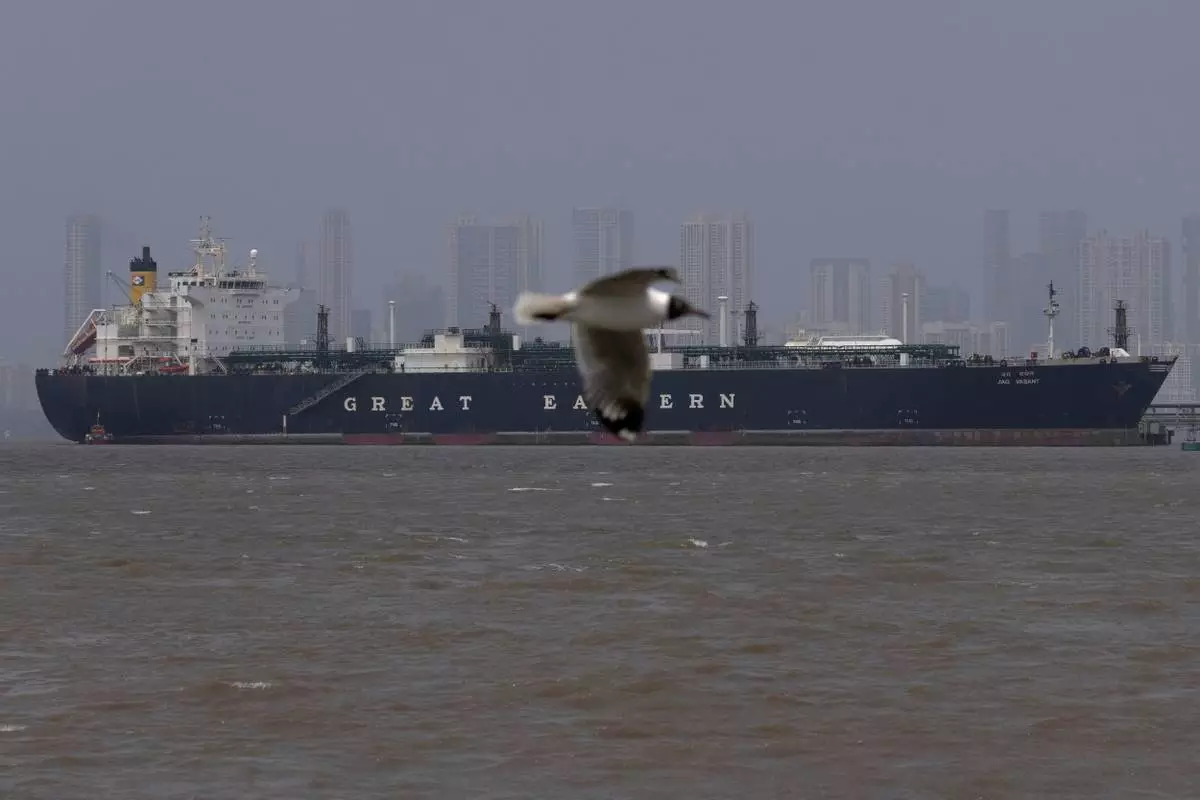
The Indian flagged LPG carrier Jag Vasant transporting liquefied petroleum gas, is seen at the Mumbai Port in Mumbai, India, after it arrived clearing the Strait of Hormuz, Wednesday, April 1, 2026. (AP Photo/Rafiq Maqbool)
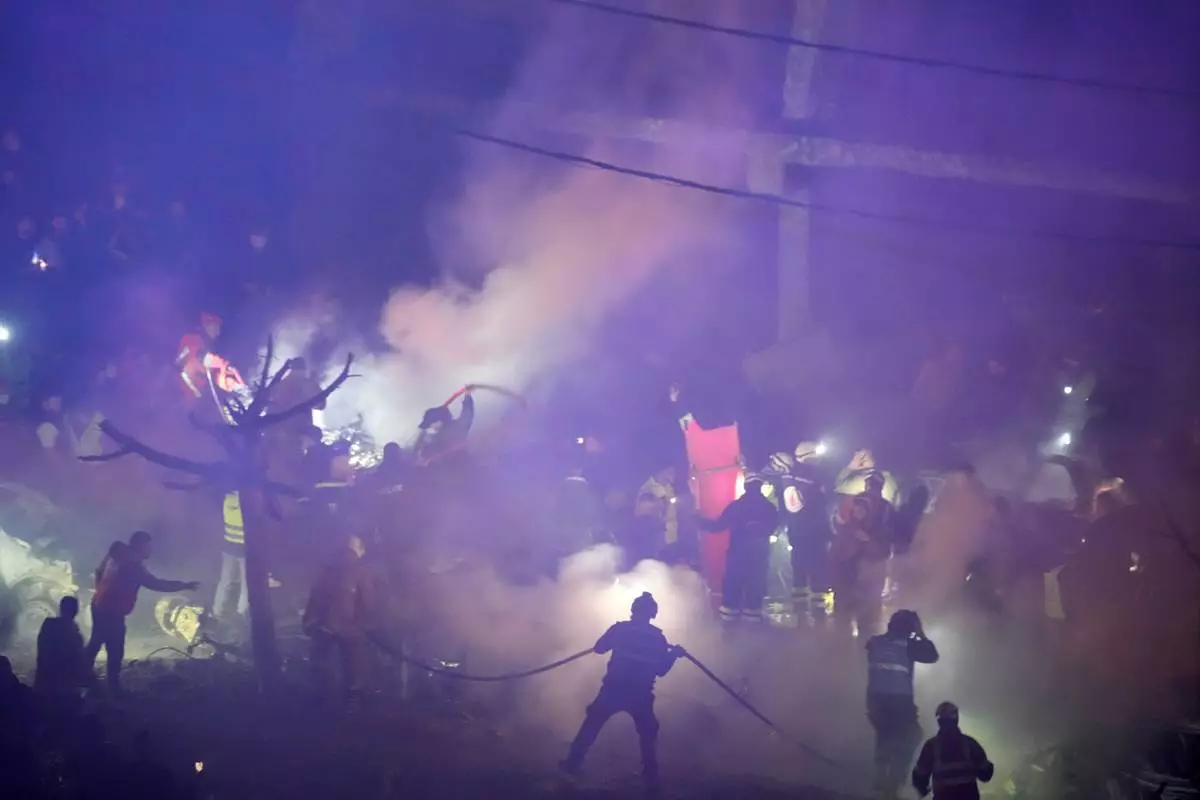
Firefighters and rescue workers work at the site of Israeli airstrikes, in Beirut, Lebanon, Wednesday, April 1, 2026. (AP Photo/Hussein Malla)
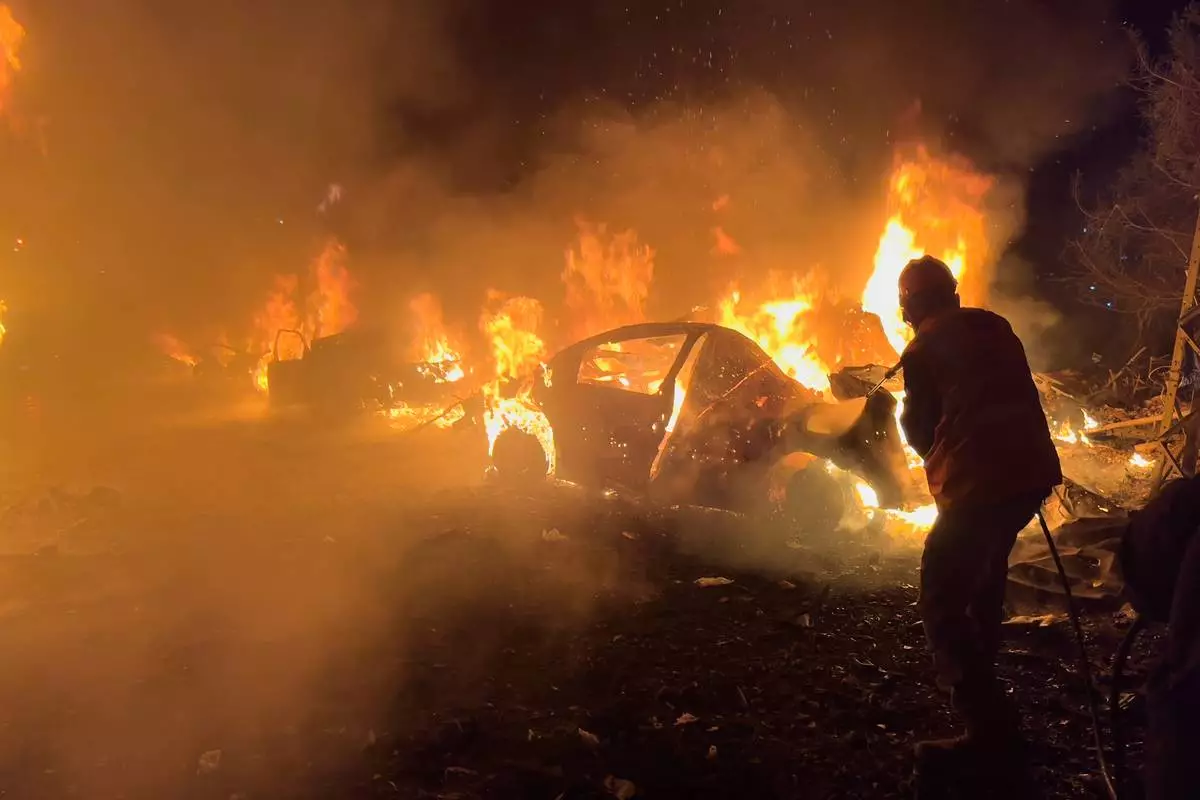
A firefighter extinguishes a car at the site of Israeli airstrikes, in Beirut, Lebanon, Wednesday, April 1, 2026. (AP Photo/Hussein Malla)
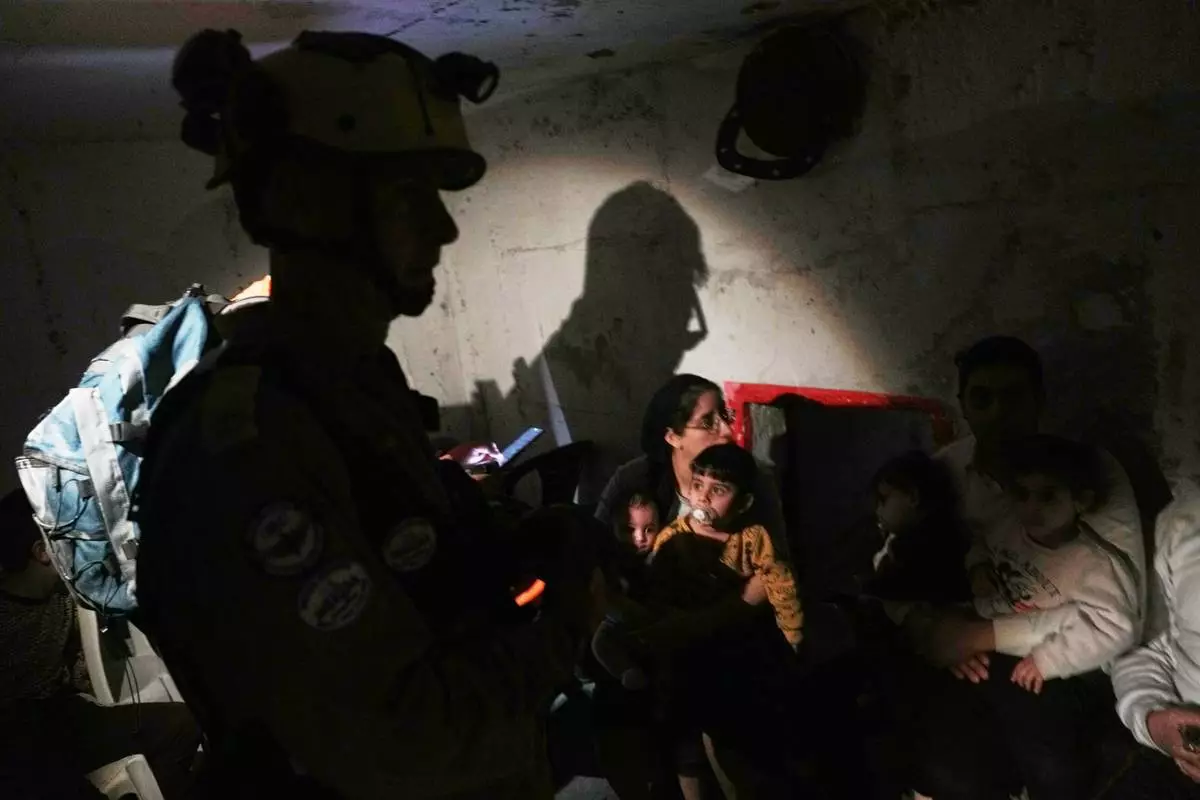
Israel's rescue teams and residents take shelter as sirens sounds next to a site struck by an Iranian missile in Bnei Brak, Wednesday, April 1, 2026. (AP Photo/Oded Balilty)

A police vehicle is seen through a shattered windshield at the site of an Israeli strike in Beirut, Lebanon, Wednesday, April 1, 2026. (AP Photo/Hassan Ammar)
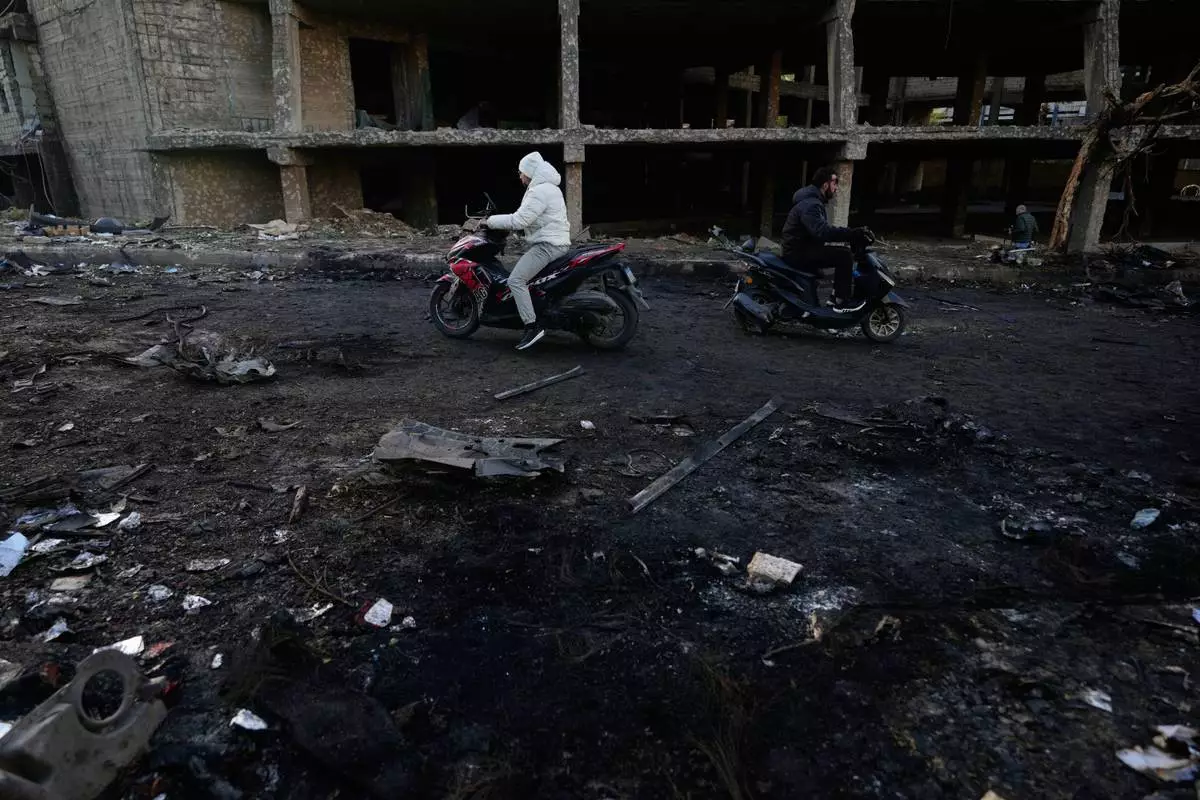
Two men ride scooters past charred debris at the site of an Israeli strike in Beirut, Lebanon, Wednesday, April 1, 2026. (AP Photo/Hassan Ammar)