Intelligent prosthetic limbs have enabled people with disabilities in eastern China's Hangzhou to return to sports like rock climbing, playing piano, and doing calligraphy, showcasing the increased sophistication of Chinese new technologies for the disabled market.
Sports enthusiast Lin Yun in Hangzhou City has been practicing rock climbing with his prosthetic leg.
"I can run with it at a pretty fast pace, and also play basketball, table tennis and badminton. I feel like I've rediscovered my original passion for sports," said Lin.
Lin used to worry about falling whenever he went out with a conventional prosthetic leg, as it struggled to handle complex terrain like grassy fields and sandy surfaces. Four years ago, the introduction of an intelligent bionic leg transformed his life.
"The sensors inside the receiving chamber can capture my neural signals. For instance, when I see grass and my foot makes contact with the ground, it can generate algorithms to determine the appropriate support force needed at that moment, and adaptively control the joints," said Lin.
He even tried surfing and parachuting with the bionic leg, saying the device helped him not only physically, but also mentally.
"This prosthetic limb does more than just help me stand up—it provides profound emotional support, making me feel like I'm no longer disabled and I can even help others in need. This gives me tremendous confidence," said Lin.
Zhou Jian's life has also been transformed by smart bionic technology.
After losing his right hand in an accident, he once struggled to perform even basic tasks like brushing his teeth or washing his face independently. Three years ago, he received a smart bionic hand. Today, everyday actions like opening bottle caps or peeling fruit have become effortless for Zhou.
"Now I can control all five fingers and move them fairly freely, almost like I've regained the right hand I once lost," said Zhou.
Over a year ago, Zhou began learning to play the piano using the smart bionic hand. He has also been experimenting with a new generation of bionic hands, striving to unlock new skills.
"We hope that our next generation of prosthetic hands will not only be controllable but also provide feedback. We are now working to enable disabled people to perceive the world through these hands in the future. For example, when shaking hands with you, they could feel the warmth radiating from your palm," said He Xiyujin, senior vice president at the bionic hand's developer BrainCo.
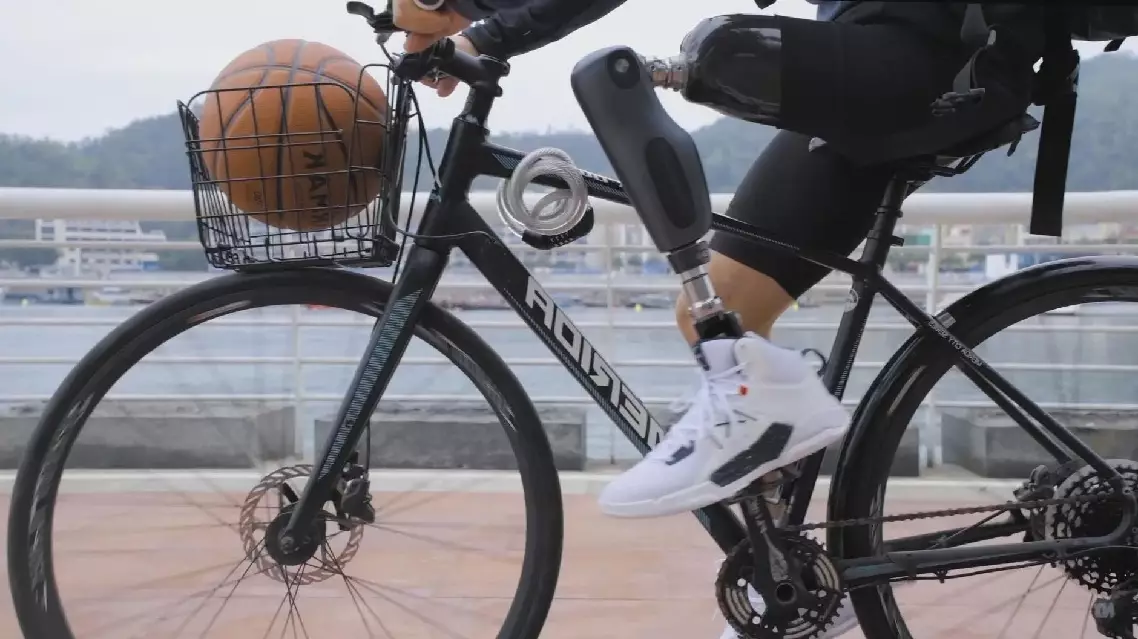
Chinese smart prostheses empower people with disabilities to enjoy life
The continuing conflict between Israel and Lebanon has not only displaced people from their homes, but also pushed farmers off the land they depend on in the south of the country, as an estimated 80 percent have stopped working due to damaged fields, unsafe roads, and fears of contamination.
Despite Israel and Lebanon agreeing last Thursday to a three-week extension of an original 10-day ceasefire deal which began between in mid-April, deadly Israeli strikes have continued to hit southern parts of Lebanon, resulting in numerous deaths and widespread damage.
Controversy has also arisen over the Israeli military's efforts to extend the territories it occupies in southern Lebanon as part of what it terms as a "security buffer zone" along the border.
Lebanese residents have been warned against returning to their homes within this area, with Israel announcing that anyone who approaches this so-called "Yellow Line" will be considered a threat.
However, in spite of these difficulties, some farmers in the southern city of Tyre are trying to keep their connection to the soil alive.
A group of women have been bravely planting on borrowed land, because their own is now too dangerous to reach. Here, there are growing herbs such as basil, sage, rosemary, mint and thyme in neat rows.
For displaced local farmer Zainab, who hails from the border town of Naqoura, this field is not home, but it is where she has found a way to keep going amid times of crisis.
"I was displaced from my own land. I'm a farmer. I used to farm my land in Naqoura, so I started farming here, too. As you know, most of us from the south are farmers. Agriculture is the main thing we do," she said.
Across southern Lebanon, roughly 80 percent of local farmers have stopped working either because they are unable to reach their land or they fear it is no longer safe.
More than 17,000 farmers have been affected, with their fields damaged by shelling, fires, bulldozing, and contamination.
Officials have condemned the Israeli attacks on the region which have put the livelihood of ordinary people at risk and have cost some innocent civilian their lives.
"Under the recent acts of aggression, there was difficulty for the farmers to get to their lands. Most of the times they would even be targeted. I know some farms owners who hired workers to harvest the crops -- as a result, unfortunately, some of them were killed," said Alwan Charafeddine, the Deputy Mayor of Tyre City.
Agriculture is a key part of the Lebanese economy, but also the backbone of daily life in the south of the country. The region produces staples like olives, citrus, tobacco and vegetables, and when farmers are forced off their land, the consequences are felt across the country.
"I left the land. I left the crops I had planted, which, according to the season, were cabbage, cauliflower, fava beans and peas. More than leaving the land, I left my whole life behind, and now I'm here," said Zainab.
"After the targeting of the bridge that connected Tyre with Sidon, it became hard to get many of the supplies we used to get through there, which has caused the prices of agricultural products to rise," said the deputy mayor.
But amid these hard times, a glimmer of hope remains. On land belonging to local authorities, the Seeds of Tyre project is giving displaced women work, a source of income, and an outlet which allows them to pass on their skills.
Using donated seeds of aromatic herbs, they are producing basil and rose water and orange blossom, generating a small economy which is taking root in the middle of a much larger loss.
For Zainab, working the soil here offers some stability at a time of conflict, with this temporary field helping farmers tick over as they wait for safe access to their own land.
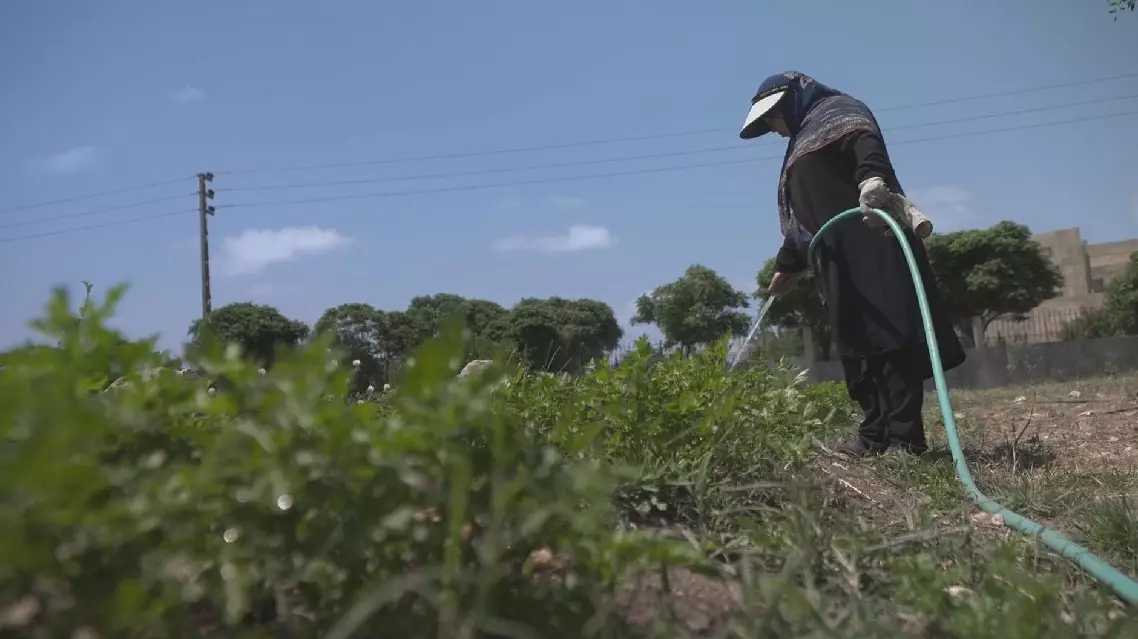
Farmers turn to temporary fields as swathes of land destroyed in southern Lebanon