PORTLAND, Ore.--(BUSINESS WIRE)--Dec 3, 2025--
Columbia Sportswear unveils The Endor™ Collection, its largest special-edition Star Wars ™-inspired release to date. This 20-piece lineup blends Columbia’s signature performance technologies with detailed designs inspired by the Rebel Alliance’s mission to Endor in Star Wars: Return of the Jedi™.
This press release features multimedia. View the full release here: https://www.businesswire.com/news/home/20251203416889/en/
Drawing design inspiration from the forest moon’s lush terrain and Columbia’s Pacific Northwest roots, the collection reimagines iconic looks from the film, including Han Solo’s trench coat, Luke and Leia’s camouflage ponchos, and the Rebel troop uniforms. Each piece features story-driven elements such as camo prints inspired by the attire worn by the Rebels on Endor, Rebel Alliance insignias, and incorporates key Columbia technology like custom Omni-Heat™ Infinity linings that capture the adventure and spirit of the Battle of Endor.
The marketing campaign stars Billie Lourd, known for her role as Lieutenant Connix in the Star Wars sequel trilogy and daughter of Carrie Fisher, who played Princess Leia Organa in the Star Wars films. Lourd modeled the collection among the California Redwoods, joined by her own children wearing Ewok-inspired fleeces.
“Finding new ways to honor my mom’s legacy in the Star Wars universe is something that means so much to me,” said Lourd. “Columbia did such a beautiful job incorporating the 'Battle of Endor' into this collection. Getting to wear the iconic pieces they created and getting to have my family bring that story to life for fans was an incredibly special experience and a memory I will cherish forever.”
Each design in The Endor™ Collection includes thoughtful easter eggs crafted to make fans feel part of General Han Solo’s strike team on Endor. Some examples include the planetary coordinates of Endor, secret messages in Aurebesh, and storytelling patches inspired by details from the Battle of Endor mission.
“Our Star Wars collaborations are an annual highlight, and our teams have a blast trying to outdo our previous collections,” said Matt Merriman, Vice President of Global Brand Development, Partnerships and Licensing at Columbia. “This year, we were thrilled not only to create a line so connected with the Redwoods and the Pacific Northwest, but it’s been especially meaningful to have Billie at the center of our efforts, celebrating her mother’s iconic role as Princess Leia."
Collection Highlights:
The collection also features layering pieces, premium shirts, headwear, and mission-ready accessories like a cargo backpack, quilted blanket, and water bottle sling.
Adult apparel is available in unisex sizes XXS to XXL, with select styles offered in extended sizing from 1X to 6X. The Ewok Fleece collection includes options in youth, toddler, and infant sizing.
Previous Columbia | Star Wars collections have sold out quickly. Fans are encouraged to shop early to secure their gear.
About Columbia Sportswear:
Columbia, the flagship brand of Portland, Oregon-based Columbia Sportswear Company, has been creating innovative apparel, footwear, accessories, and equipment for outdoor enthusiasts since 1938. Columbia has become a leading global brand by channeling the company’s innovative spirit and passion for the outdoors into technologies and performance products that keep people warm, dry, cool and protected year-round. To learn more, please visit the company's website at www.columbia.com.
STAR WARS and related properties are trademarks and/or copyrights, in the United States and other countries, of Lucasfilm Ltd. and/or its affiliates. © & TM Lucasfilm Ltd.
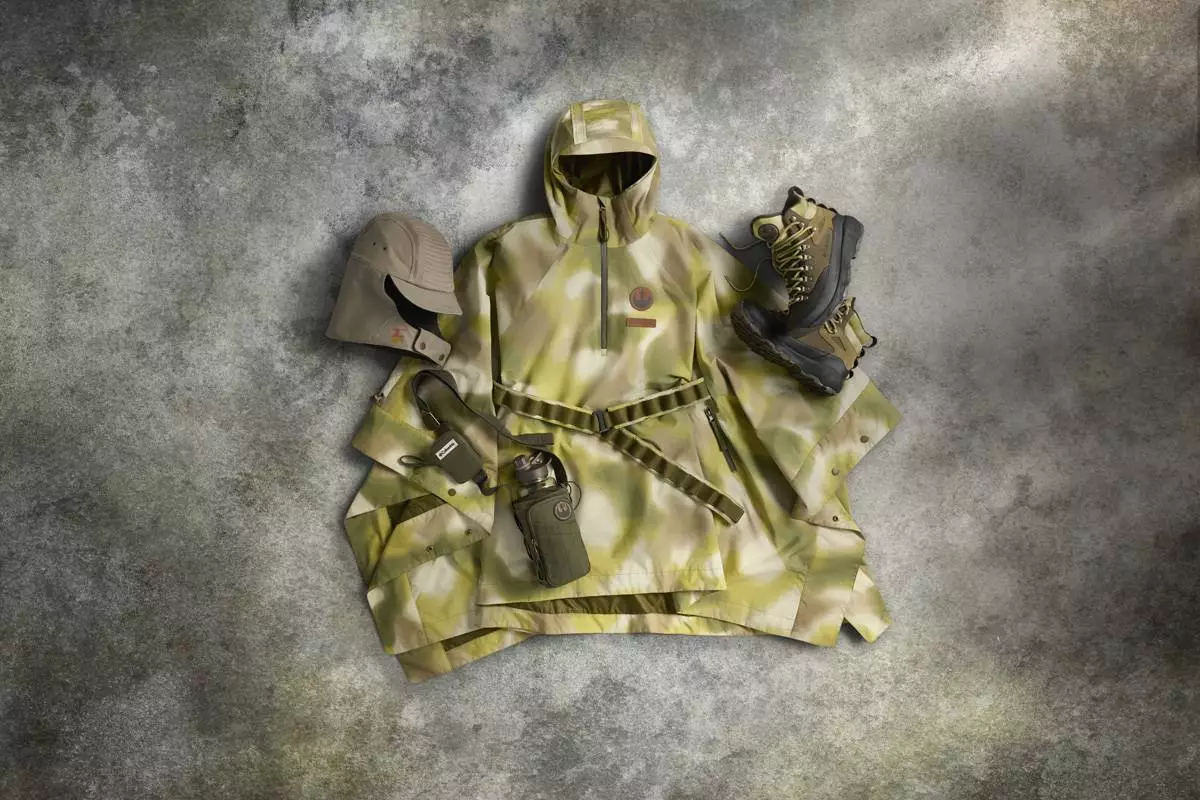
Select pieces from Columbia Sportswear's new collection inspired by the Rebel Alliance’s mission to Endor in Star Wars: Return of the Jedi™.

Columbia Sportswear unveils The Endor™ Collection, its largest special-edition Star Wars™-inspired release to date.
LONDON (AP) — U.S. President Donald Trump and his Defense Secretary Pete Hegseth have been damning of the U.K.'s naval capabilities. Their jibes may have stung in a country with a long and proud maritime history, but they do carry some substance.
The U.K. has been at the forefront of Trump’s ire since the onset of the Iran war on Feb. 28, when British Prime Minister Keir Starmer refused to grant the U.S. military access to British bases.
Though that decision has been partly reversed with the decision to permit the U.S. to use the bases, including that of Diego Garcia in the Indian Ocean, for so-called defensive purposes, Trump is adamant he was let down. He has repeatedly lashed out at Starmer and branded the Royal Navy’s two aircraft carriers as “toys.”
“You don’t even have a navy,” he told Britain's Daily Telegraph in comments published Wednesday. "You’re too old and had aircraft carriers that didn’t work.”
Hegseth, meanwhile, said sarcastically that the “big, bad Royal Navy” should get involved in making the Strait of Hormuz safe for commercial shipping.
For numerous reasons, the Royal Navy is not as big and bad as it used it to be when Britannia ruled the waves. But it's not as feeble as Trump and Hegseth imply and is largely similar with the French navy, which it is often compared with.
“On the negative side, there is a grain of truth, with the Royal Navy being smaller than it has been in hundreds of years,” said professor Kevin Rowlands, editor of the Royal United Services Institute Journal. “On the positive side, the Royal Navy would say that it’s entering its first period of growth since World War II, with more ships set to be built than in decades.”
It’s not that long ago that Britain could muster a task force of 127 ships, including two aircraft carriers, to sail to the south Atlantic after Argentina’s invasion of the Falkland Islands. That 1982 campaign, which then-U.S. President Ronald Reagan was lukewarm about, marked the final hurrah of Britain’s naval pedigree.
Nothing on that scale, or even remotely, could be accomplished now. Since World War II, Britain’s combat-ready fleet has declined substantially, much of it linked to changing military and technological advances and the end of empire. But not all.
The number of vessels in the Royal Navy fleet, including aircraft carriers, destroyers frigates and submarines has fallen from 166 in 1975 to 66 in 2025, according to The Associated Press' analysis of figures from the Ministry of Defense and the House of Commons Library.
Though the Royal Navy has two aircraft carriers at its command, there was a seven-year period in the 2010s when it had none. And the number of destroyers has halved to six while the frigate fleet has been slashed from 60 to just 11.
The Royal Navy faced criticism for the time it took to send the HMS Dragon destroyer to the Middle East after the war with Iran broke out. Though naval officials worked night and day to get it shipshape for a different mission than the one it was readying for, to many it symbolized the extent to which Britain’s military has been gutted since the fall of the Berlin Wall in 1989.
For much of the Cold War, Britain was spending between 4% and 8% of its annual national income on its military. After the Cold War, that proportion steadily dropped to a low of 1.9% of GDP in 2018, fuel to Trump's fire.
Like other countries, Britain, largely under the Labour governments of Tony Blair and Gordon Brown, sought to use the so-called “peace dividend” following the collapse of the Soviet Union to divert money earmarked for defense to other priorities, such as health and education.
And the austerity measures imposed by the Conservative-led government in the wake of the global financial crisis of 2008-9 prevented any pickup in defense spending despite the clear signs of a resurgent Russia, especially after its annexation of Crimea and parts of eastern Ukraine.
In the wake of Russia's full-blown invasion of Ukraine in 2022, and with another Middle East war underway, there's a growing understanding across the political divide that the cuts have gone too far.
Following the Ukraine invasion, the Conservatives started to turn the military spending tide around. Since the Labour Party returned to power in 2024, Starmer is seeking to ramp up British defense spending, partly at the cost of cutting the country's long-vaunted aid spending.
Starmer has promised to raise U.K. defense spending to 2.5% of gross domestic product by 2027, and the updated goal is now for it to rise to 3.5% of GDP by 2035, as part of a NATO agreement pushed by Trump. That, in plain terms, will mean tens of billions pounds more being spent — a lot more kit for the armed forces.
The pressure is on for the government to speed that schedule up. But with the public finances further imperilled by the economic consequences of the Iran war, it's not clear where any additional money will come.
The jibes will likely keep coming even though the critiques are unfair and far from the truth, said RUSI's Rowlands, who was a captain in the Royal Navy.
“We are dealing with an administration that doesn’t do nuance," he said.
This story has been corrected to show there were 166 vessels in 1975, not 466.
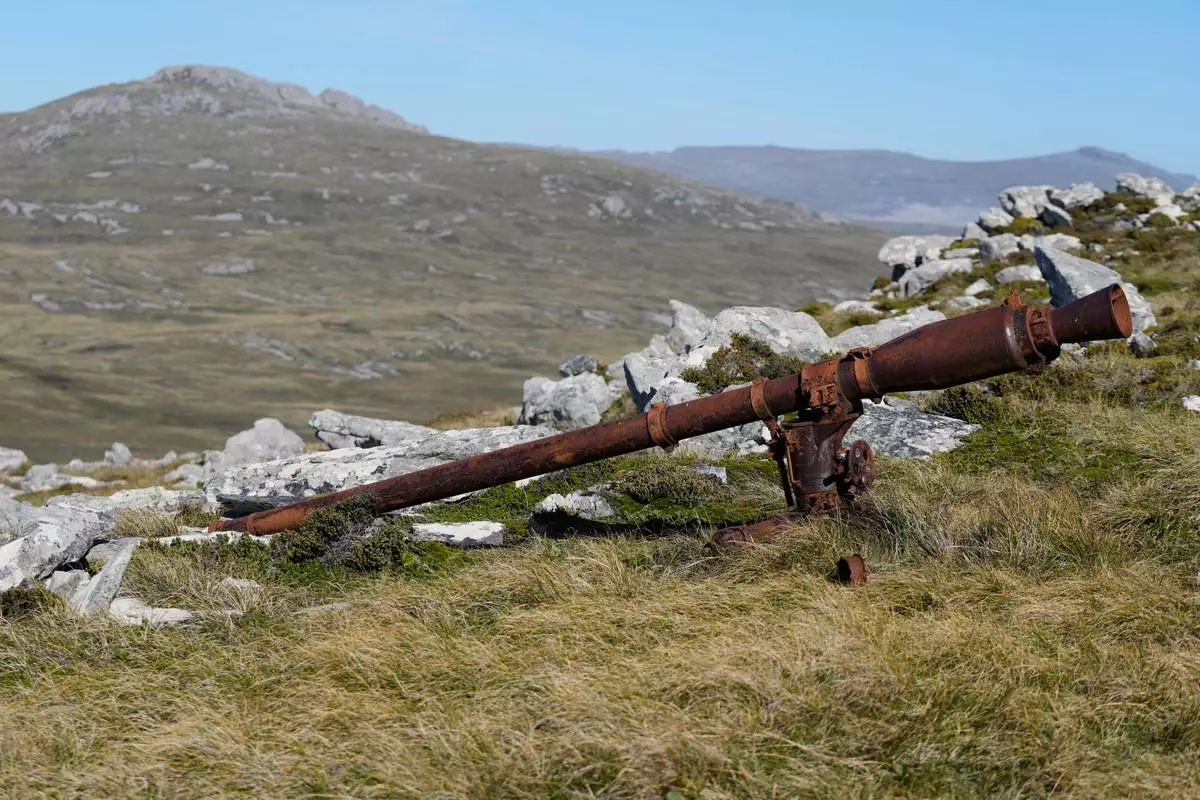
An artillery piece from the 1982 Falklands War between Argentina and Britain lies on Mount Longdon on the Falkland Islands, also known as Islas Malvinas, Monday, March 16, 2026. (AP Photo/Ricardo Mazalan)
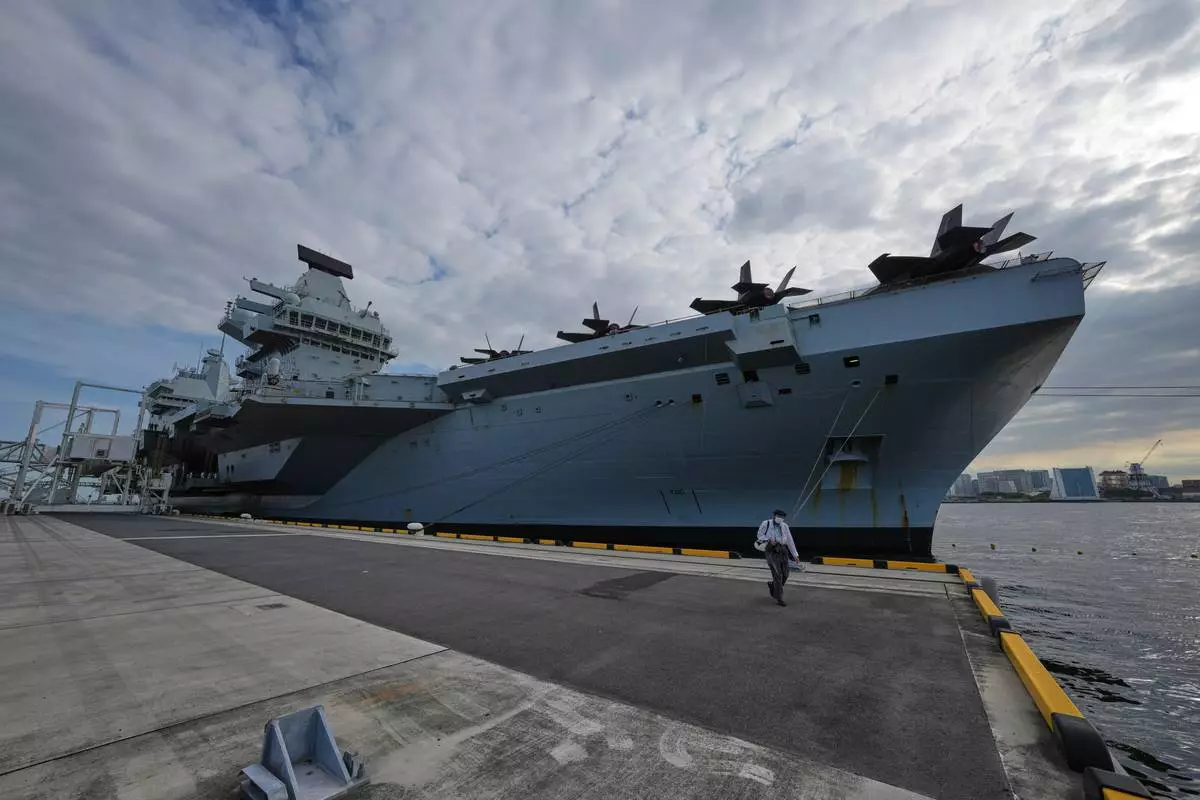
FILE - The Royal Navy aircraft carrier HMS Prince of Wales is pictured before its port call in Tokyo, Thursday, Aug. 28, 2025. (AP Photo/Eugene Hoshiko, File)
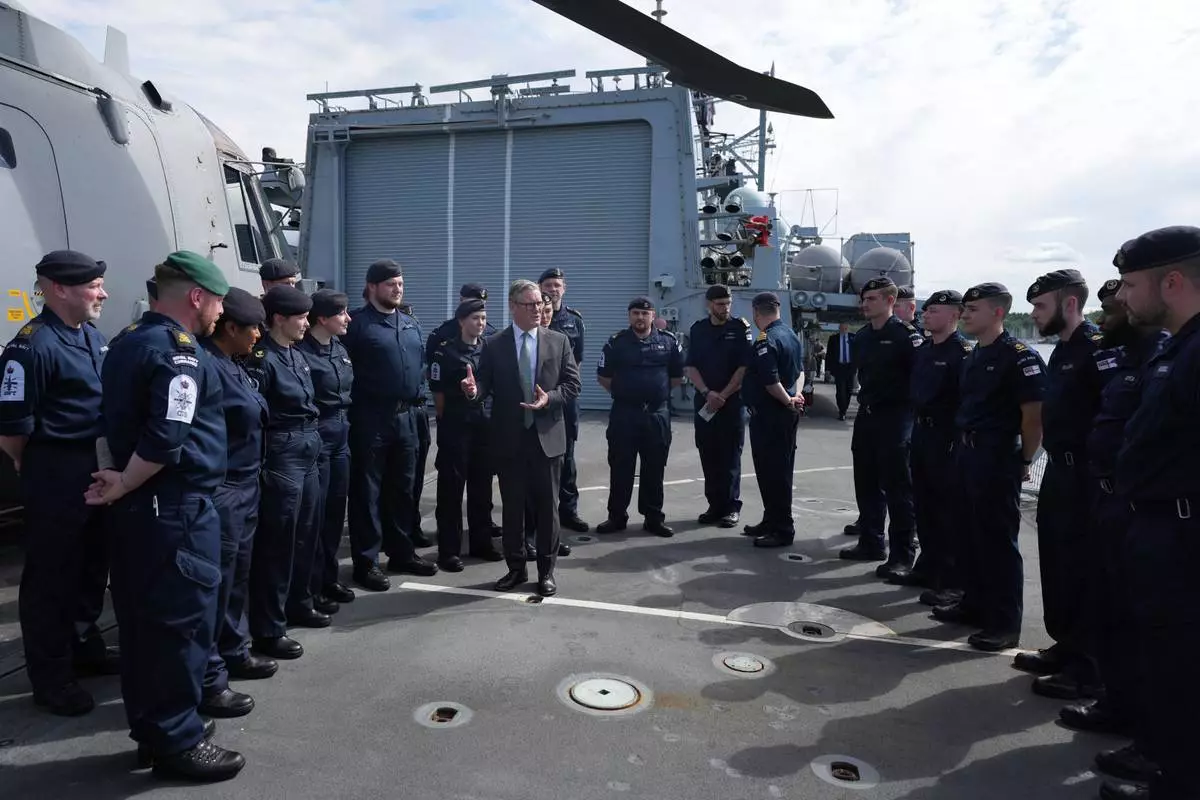
FILE - Britain's Prime Minister Keir Starmer speaks to Royal Marines onboard the HMS ST Albans in Oslo, during his visit to Norway on Friday, May 9, 2025.(AP Photo/Alastair Grant, Pool, File)
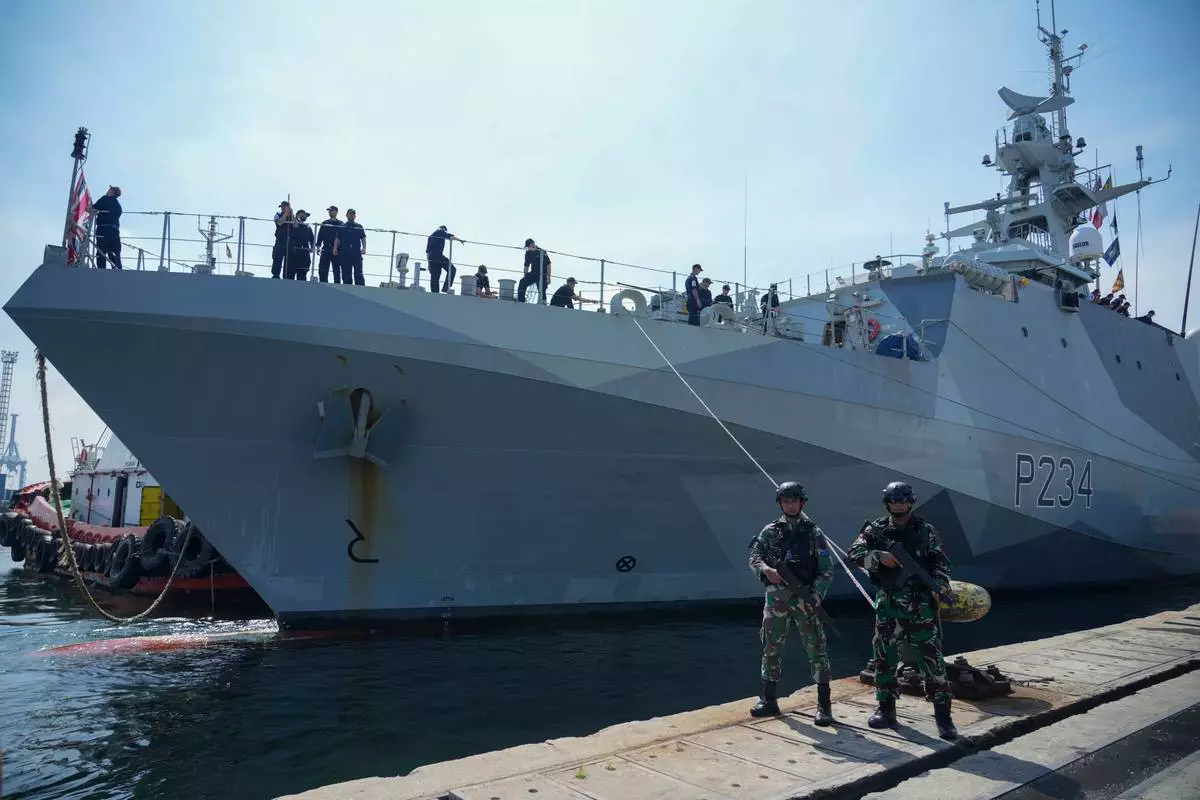
FILE - Indonesian soldiers stand guard as Royal Navy offshore patrol vessel HMS Spey is docked at Tanjung Priok Port during a port visit in Jakarta, Indonesia, Wednesday, Jan. 15, 2025. (AP Photo/Tatan Syuflana, File)
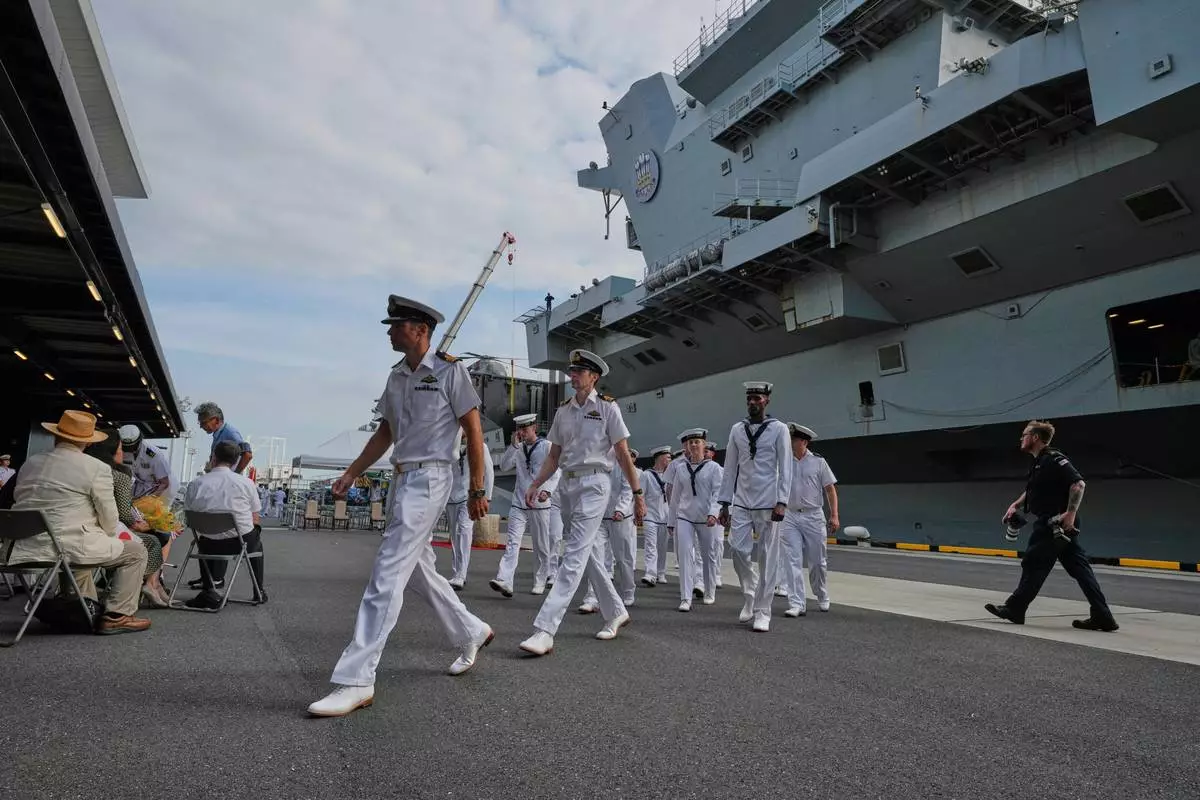
FILE - Crews walk near the Royal Navy aircraft carrier HMS Prince of Wales before its port call in Tokyo Thursday, Aug. 28, 2025. (AP Photo/Eugene Hoshiko, File)