Skip to Content Facebook Feature Image

The PlayStation turns 30: Looking back at the console that gave us Lara Croft and 'The Last of Us'

ENT

The PlayStation turns 30: Looking back at the console that gave us Lara Croft and 'The Last of Us'
ENT

ENT

The PlayStation turns 30: Looking back at the console that gave us Lara Croft and 'The Last of Us'

2025-12-04 03:28 Last Updated At:12-05 13:44

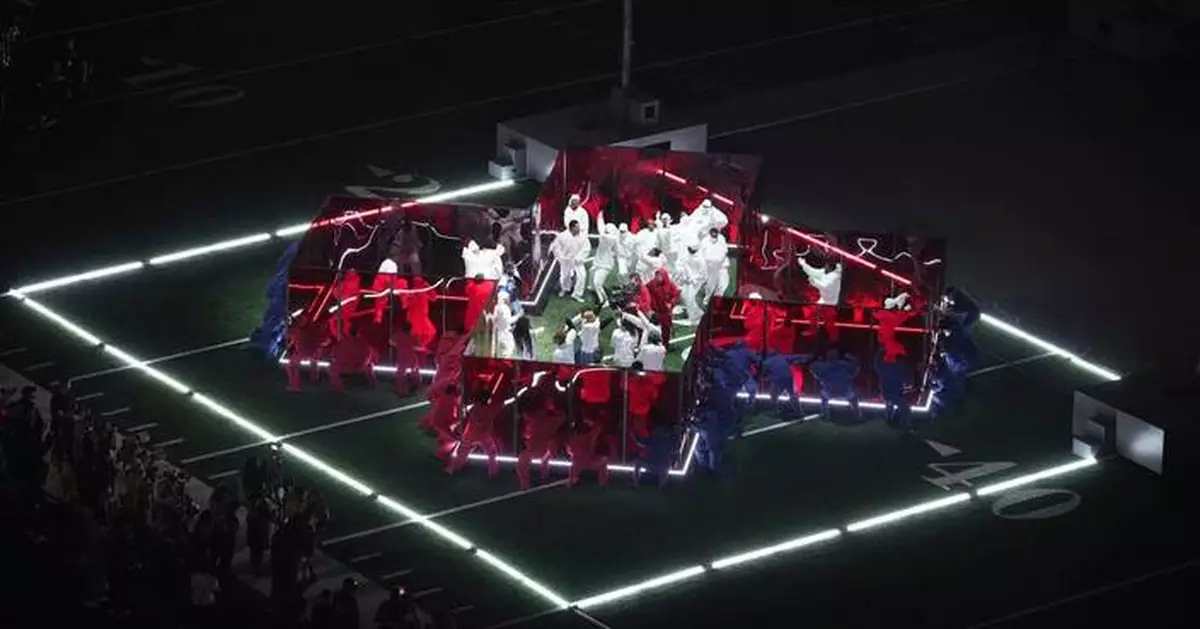
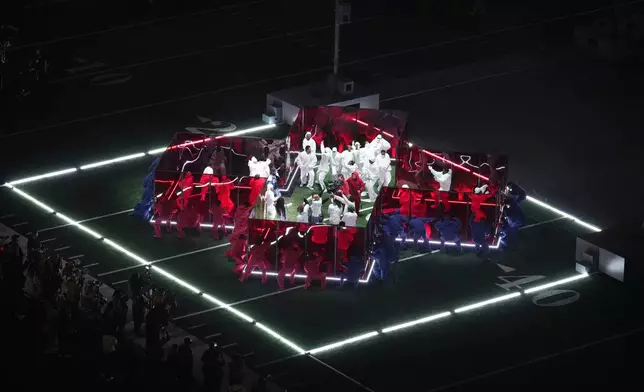
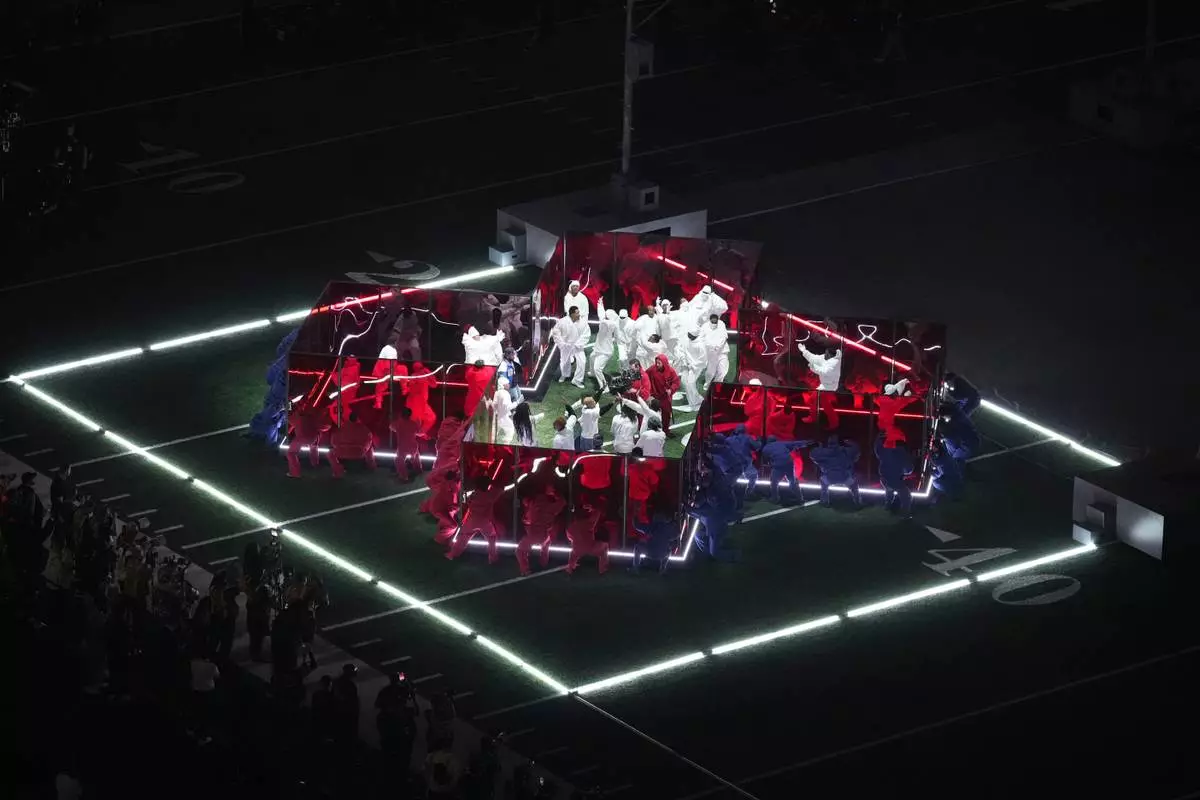
NEW YORK (AP) — When Kendrick Lamar began his Super Bowl halftime show earlier this year, he picked a stage design likely familiar to anyone tuning in: a square, triangle, cross and circle.

The Grammy-winning rapper — in front of more than 133 million people — chose to perform on a massive, industrialized grid of flashing lights resembling a giant PlayStation controller.

More Images
FILE- Attendees walking past the Sony PlayStation PS Vita console on display in the Sony PlayStation booth at the Game Developers Conference in San Francisco on March 8, 2012. (AP Photo/Paul Sakuma, File)
FILE- Attendees walking past the Sony PlayStation PS Vita console on display in the Sony PlayStation booth at the Game Developers Conference in San Francisco on March 8, 2012. (AP Photo/Paul Sakuma, File)

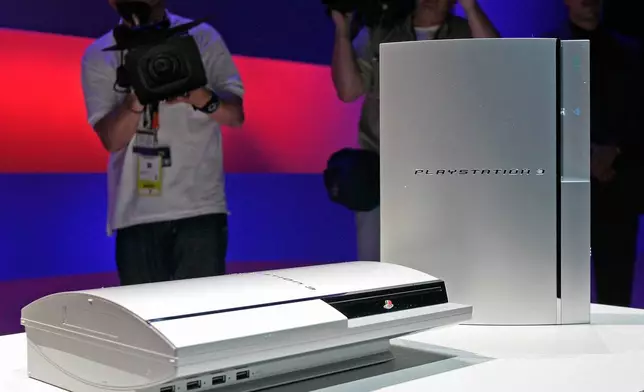
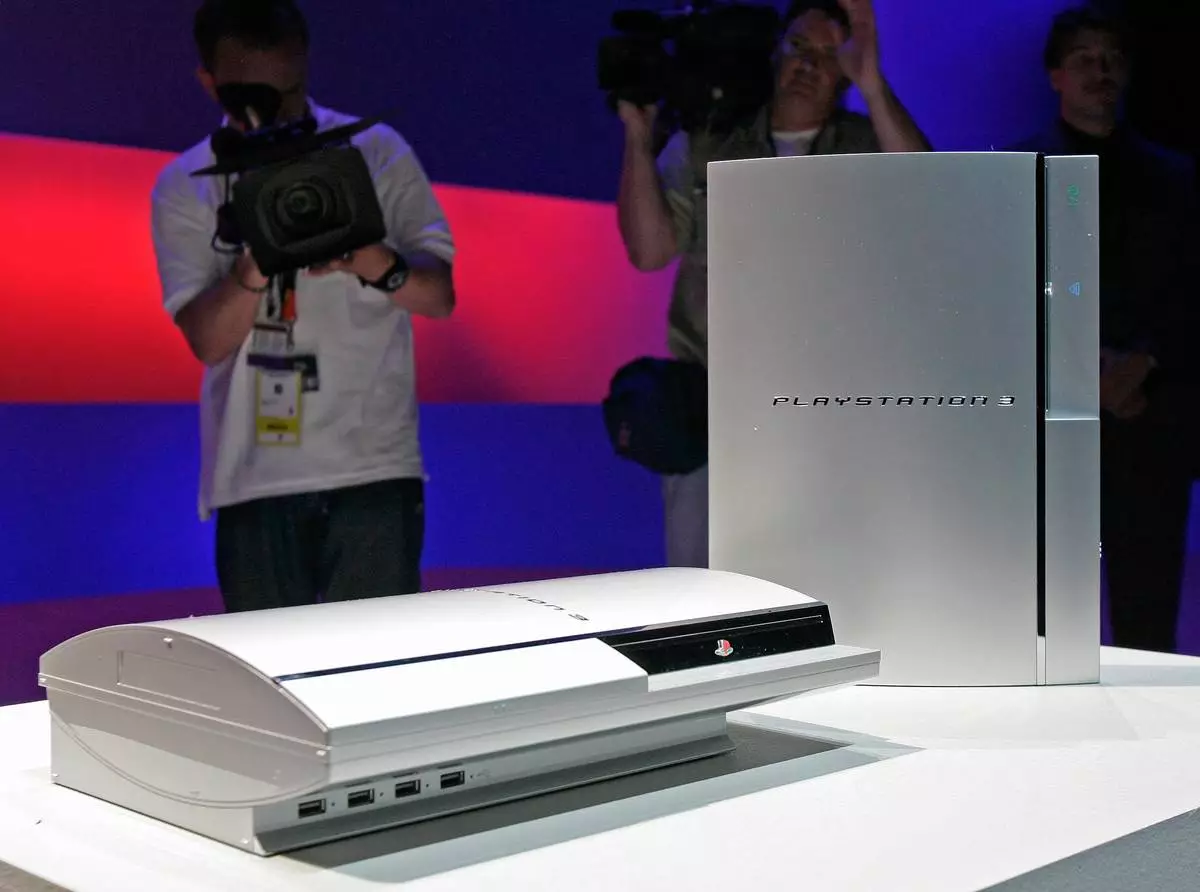
FILE - A PlayStation 3 video console is displayed during a news conference in Los Angeles on May 16, 2005. (AP Photo/Kevork Djansezian, File)

FILE - A PlayStation 3 video console is displayed during a news conference in Los Angeles on May 16, 2005. (AP Photo/Kevork Djansezian, File)

The Playstation logo appears at the Paris Games Week in Paris on Nov. 3, 2017. (AP Photo/Kamil Zihnioglu, File)

The Playstation logo appears at the Paris Games Week in Paris on Nov. 3, 2017. (AP Photo/Kamil Zihnioglu, File)

FILE - Angelina Jolie poses in front of a poster of her movie "Tomb Raider 2: The Cradle of Life" in Tokyo on Sept. 2, 2003. (AP Photo/Shizuo Kambayashi, File)
FILE - Angelina Jolie poses in front of a poster of her movie "Tomb Raider 2: The Cradle of Life" in Tokyo on Sept. 2, 2003. (AP Photo/Shizuo Kambayashi, File)

FILE - Kendrick Lamar performs during halftime of the NFL Super Bowl 59 football game between the Kansas City Chiefs and the Philadelphia Eagles in New Orleans on Feb. 9, 2025. (AP Photo/AJ Mast, File)

FILE - Kendrick Lamar performs during halftime of the NFL Super Bowl 59 football game between the Kansas City Chiefs and the Philadelphia Eagles in New Orleans on Feb. 9, 2025. (AP Photo/AJ Mast, File)

It was a nice surprise present for Sony's PlayStation, which this year is celebrating its 30th anniversary in North America and Europe. Lamar's nod to the console — which Sony had nothing to do with — was another sign of how far the brand has penetrated the culture, in ways big and small.

From big-budget Hollywood fare like “Lara Croft: Tomb Raider” starring Angelina Jolie, to Juice WRLD's video for “Hear Me Calling” to “The Last of Us” on HBO Max, the PlayStation experience has leapt far past the console. Chandler Bing on “Friends” played a PlayStation 1 and the title character fired at PlayStation zombies in the cult movie “Shaun of the Dead.”

“We made gaming cool. When we came out we were a little edgy, we were a different, but it was really about being disruptive,” says Eric Lempel, senior vice president of Business and Product at Sony Interactive Entertainment. “We feel we are a premier entertainment brand, not just a gaming brand.”

Part of the enduring popularity of the PlayStation has been its ability to evolve with the technology, starting in 1995 by picking CD-ROMs that opened the door to 3D gaming. At the time, clunky cartridges were king.

The PlayStation — sparked by a failed partnership between Nintendo and Sony — entered a marketplace dominated by Sega and Nintendo. Sony wanted to bring the arcade experience home and a crucial decision was to consult with game developers first, before building their system.

“Sony realized they needed developers in place from the get-go before they even started designing it,” says Anthony Caulfield, who with his wife, Nicola, run Gracious Films and made the independent documentary “The PlayStation Revolution.”

“Hardware manufacturers up to that point basically didn’t care what the developers wanted. They just made what they thought was the best piece of hardware,” he says.

Some critical steps helped right from the launch. Sony had a number of games ready to go, a development pipeline in place and a killer retail price — $299 — that was less expensive than the rival Sega Saturn.

Sony also picked its market carefully, Caulfield says. With Sega and Nintendo largely targeting children, Sony aimed the PlayStation at teens and young adults — catnip for their younger brothers and sisters.

“If you grew up loving Nintendo games, the PlayStation was like a really good next step,” says Tyler Treese, the editor-in-chief of PlayStation LifeStyle, an online forum and news site for fans.

When the console first arrived, it was a sensation, going on to sell more than 100 million units globally. “It’s when games grew up,” says Caulfield. “It’s where the gaming went from the bedroom to the living room.”

Sony kept up with the technology, packing a DVD into the PlayStation 2 so that buyers had another reason to buy the system. The PlayStation 2 remains the best selling console of all time, with some 160 million units sold.

“It was one of the best-priced DVD players that also happened to be the best gaming system at the time,” says Lempel. “I know so many people who said, ‘That was my DVD player. That’s how I started in DVD.’”

Sony hit a wobble with the PS3, which used a Blu-ray deck. “It made the thing so expensive and it kind of broke that original PlayStation feeling of availability and great value for money,” Caulfield says. The 2011 PlayStation network hack that shut down the network for 24 days didn't help. “If they got the PS4 wrong it could have been the end.”

But the PlayStation 4 in 2013 stabilized the console, offering immersive online multiplayer options, streaming services and a library of exclusive games. Sony kept going with in-app purchases, 4K resolution and a controller that has haptic feedback and adaptive triggers in the current PlayStation 5.

“Every console has to have a purpose, it has to have a reason to exist, and when we find that we have the right amount of new technology that can enable developers to do great things, we push forward,” says Lempel.

The list of movies and TV shows that have had their origin on the PlayStation is long. It includes: “Uncharted” starring Tom Holland on the big screen, “The Last of Us” with Pedro Pascal on HBO, “Twisted Metal” on Peacock and “Gran Turismo” with Orlando Bloom from Columbia Pictures.

More are on the way, including a live-action “Horizon Zero Dawn” movie that's eying a 2027 release, an upcoming movie version of “Ghost of Tsushima” directed by Chad Stahelski, and Amazon’s “God of War” TV series.

Treese says PlayStation games often make the leap to TVs and theater screens because they're realistic, use motion capture and employ talented actors.

“They do really lend themselves to movies because they definitely led that charge of making more cinematic video game experiences,” he says. It also doesn't help that Sony Pictures is nearby.

Lempel says PlayStation franchises are finding new audiences in other media because, at base, they're good entertainment. “We have great stories, we’ve got great IP, and it transcends the category.”

That has even spilled out into fashion — British Nigerian multidisciplinary artist and designer Yinka Ilori has a line of PlayStation-inspired loungewear — and footwear, thanks to rapper Travis Scott's Nike Dunk Low Cactus Jack X PlayStation sneakers.

“We know that we’ve struck a chord that goes just well beyond a consumer product,” says Lempel. “This is something that people love. It’s a big part of people’s lives and they love to talk about it. They love to express it in different ways.”

Lempel recently got a taste of that expression firsthand. He was at a restaurant in Manhattan when he spotted the PlayStation symbols tattooed on someone’s arm. “These are permanent markings on someone’s body,” he says in wonder. “That’s the passion people have.”

FILE- Attendees walking past the Sony PlayStation PS Vita console on display in the Sony PlayStation booth at the Game Developers Conference in San Francisco on March 8, 2012. (AP Photo/Paul Sakuma, File)
FILE- Attendees walking past the Sony PlayStation PS Vita console on display in the Sony PlayStation booth at the Game Developers Conference in San Francisco on March 8, 2012. (AP Photo/Paul Sakuma, File)

FILE - A PlayStation 3 video console is displayed during a news conference in Los Angeles on May 16, 2005. (AP Photo/Kevork Djansezian, File)

FILE - A PlayStation 3 video console is displayed during a news conference in Los Angeles on May 16, 2005. (AP Photo/Kevork Djansezian, File)

The Playstation logo appears at the Paris Games Week in Paris on Nov. 3, 2017. (AP Photo/Kamil Zihnioglu, File)

The Playstation logo appears at the Paris Games Week in Paris on Nov. 3, 2017. (AP Photo/Kamil Zihnioglu, File)

FILE - Angelina Jolie poses in front of a poster of her movie "Tomb Raider 2: The Cradle of Life" in Tokyo on Sept. 2, 2003. (AP Photo/Shizuo Kambayashi, File)
FILE - Angelina Jolie poses in front of a poster of her movie "Tomb Raider 2: The Cradle of Life" in Tokyo on Sept. 2, 2003. (AP Photo/Shizuo Kambayashi, File)

FILE - Kendrick Lamar performs during halftime of the NFL Super Bowl 59 football game between the Kansas City Chiefs and the Philadelphia Eagles in New Orleans on Feb. 9, 2025. (AP Photo/AJ Mast, File)


FILE - Kendrick Lamar performs during halftime of the NFL Super Bowl 59 football game between the Kansas City Chiefs and the Philadelphia Eagles in New Orleans on Feb. 9, 2025. (AP Photo/AJ Mast, File)

CAPE CANAVERAL, Fla. (AP) — Four astronauts embarked on a high-stakes flight around the moon Wednesday, humanity’s first lunar voyage in more than half a century and the thrilling leadoff in NASA’s push toward a landing in two years.

Carrying three Americans and one Canadian, the 32-story rocket rose from NASA’s Kennedy Space Center where tens of thousands gathered to witness the dawn of this new era. Crowds also jammed the surrounding roads and beaches, reminiscent of the Apollo moonshots in the 1960s and ’70s. It is NASA’s biggest step yet toward establishing a permanent lunar presence.

“On this historic mission, you take with you the heart of this Artemis team, the daring spirit of the American people and our partners across the globe, and the hopes and dreams of a new generation,” launch director Charlie Blackwell-Thompson told the crew right before liftoff. “Good luck, Godspeed Artemis II. Let’s go.”

Artemis II set sail from the same Florida launch site that sent Apollo’s explorers to the moon so long ago. The handful still alive cheered this next generation’s grand adventure as the Space Launch System rocket thundered into the early evening sky, a nearly full moon beckoning some 248,000 miles (400,000 kilometers) away.

Five minutes into the flight, Commander Reid Wiseman saw the team’s target: “We have a beautiful moonrise, we’re headed right at it,” he said from the capsule. On board with him are pilot Victor Glover, Christina Koch and Canada's Jeremy Hansen. It was the most diverse lunar crew ever with the first woman, person of color and non-U. S. citizen riding in NASA’s new Orion capsule.

“NASA is back in the business of sending astronauts to the moon," NASA Administrator Jared Isaacman told reporters following liftoff, calling the half-century hiatus a brief intermission.

Tensions were high earlier in the day as hydrogen fuel started flowing into the rocket. Dangerous hydrogen leaks erupted during a countdown test earlier this year, forcing a lengthy flight delay.

To NASA’s relief, no significant hydrogen leaks occurred. The launch team loaded more than 700,000 gallons of fuel (2.6 million liters) into the 32-story Space Launch System rocket on the pad, a smooth operation that set the stage for the Artemis II crew to board.

Then NASA had to overcome a flurry of last-minute technical issues — bad battery sensors and an inability to get commands through to the rocket's flight termination system. In both cases, the issues were quickly resolved, allowing the launch to proceed.

The astronauts will stick close to home for the first 25 hours of their 10-day test flight, checking out the capsule in orbit around Earth before firing the main engine that will propel them to the moon.

They won’t pause for a stopover or orbit the moon like Apollo 8’s first lunar visitors did so famously on Christmas Eve 1968, reading from Genesis. But they stand to become the most distant humans ever when their capsule zooms past the moon and continues another 4,000 miles (6,400 kilometers) beyond, before making a U-turn and tearing straight home to a splashdown in the Pacific.

Once settled in a high orbit around Earth, the astronauts assumed manual control and practiced steering their capsule around the rocket’s detached upper stage, with a goal of venturing as close as 33 feet (10 meters). NASA wants to know how Orion handles in case the self-flying feature fails and the pilots need to take control.

Four days later during the lunar flyby, the moon will appear to be the size of a basketball held at arm’s length. The astronauts will take turns peering through Orion’s windows with cameras. If the lighting is right, they should see features never before viewed through human eyes. They’ll also catch snippets of a total solar eclipse, donning eclipse glasses as the moon briefly blocks the sun from their perspective and the corona is revealed.

All of NASA’s moon plans — a surge in launches over the next several years leading to a sustainable moon base for astronauts assisted by robotic rovers and drones — hinge on Artemis II going well.

It’s been more than three years since Artemis I, the only other time NASA’s SLS rocket and Orion capsule have soared. With no one aboard, the Artemis I capsule lacked life-support equipment and other crew essentials like a water dispenser and toilet.

These systems are now making their space debut on Artemis II, ratcheting up the risk. That’s why NASA is waiting a full day before committing Wiseman and his crew to a four-day trip to the moon and four-day journey back.

The capsule's toilet is already acting up. Koch informed Mission Control that it shut down seconds after she activated it. Mission Control advised her to to use a handheld bag-and-funnel system for now — CCU, short for Collapsible Contingency Urinal — while engineers pondered how to deal with the so-called lunar loo.

“There’s always been a lot riding on this mission,” NASA’s Lori Glaze said ahead of launch. But the teams are even more “energized” now that the space agency is finally accelerating the lunar launch pace and laser-focusing on surface operations — seismic changes recently announced by Isaacman.

With half the world’s population not yet born when NASA’s 12 moonwalkers left their boot prints in the gray lunar dust, Artemis offers a fresh beginning, NASA’s science mission chief Nicky Fox said earlier this week.

“There are a lot of people who don’t remember Apollo. There are generations who weren’t alive when Apollo launched. This is their Apollo,” said Fox, who was 4 when Apollo 17 closed out the era.

NASA is in it for the long haul this time. Unlike Apollo, which focused on fast flags and footprints in a breakneck race against the Soviet Union, Artemis is striving for a sustainable moon base elaborate enough to satisfy even the most hard-core science fiction fans. But make no mistake: Isaacman and the Trump Administration want the next boot prints to be made by Americans, not the Chinese.

Until Isaacman’s program makeover, Artemis III was crawling toward a moon landing no sooner than 2029. The billionaire spacewalker slid in a new Artemis III for 2027 so astronauts could practice docking their Orion capsule with a lunar lander in orbit around Earth. Astronauts’ momentous landing near the moon’s south pole shifted to Artemis IV in 2028 — two years before an anticipated Chinese crew’s arrival.

Like Apollo 13 — astronauts’ only moon landing miss — Artemis II will use a free-return, lunar flyby trajectory to get home with gravity’s tug and a minimum of gas. The gravity of both the moon and Earth will provide much if not most of the oomph to keep Orion on its out-and-back, figure-eight loop.

The danger is right up there for Artemis II. NASA has refused to release its risk assessment for the mission. Managers contend it’s better than 50-50 — the usual odds for a new rocket — but how much more is murky.

The SLS rocket leaked flammable hydrogen fuel during ground tests, a recurring problem that engineers still do not completely understand. The hydrogen leaks and unrelated helium blockages stalled the flight for two months, coming on top of years of vexing delays and cost overruns. Both problems also thwarted Artemis I, whose capsule returned with excessive heat shield damage. To NASA’s relief, Wednesday’s countdown was leak-free.

Beating the Soviet Union to the moon made the huge risks acceptable for Apollo, said Charlie Duke, one of only four surviving moonwalkers.

“I’m cheering you on,” Duke said in a note to Wiseman and his crew before their flight.

During a weekend news conference, Koch stressed how humanity’s path to Mars goes through the moon, the proving ground for points beyond.

“It is our strong hope that this mission is the start of an era where everyone, every person on Earth, can look at the moon and think of it as also a destination,” she said.

Added Glover: “It’s the story of humanity. Not Black history, not women’s history, but that it becomes human history.”

The Associated Press Health and Science Department receives support from the Howard Hughes Medical Institute’s Department of Science Education and the Robert Wood Johnson Foundation. The AP is solely responsible for all content.

NASA's Artemis II moon rocket lifts off from the Kennedy Space Center's Launch Pad 39-B Wednesday, April 1, 2026, in Cape Canaveral, Fla. (AP Photo/Chris O'Meara)

NASA's Artemis II moon rocket lifts off from the Kennedy Space Center's Launch Pad 39-B Wednesday, April 1, 2026, in Cape Canaveral, Fla. (AP Photo/Chris O'Meara)

NASA's Artemis II moon rocket lifts off from the Kennedy Space Center's Launch Pad 39-B Wednesday, April 1, 2026, in Cape Canaveral, Fla. (AP Photo/Chris O'Meara)

NASA's Artemis II moon rocket lifts off from the Kennedy Space Center's Launch Pad 39-B Wednesday, April 1, 2026, in Cape Canaveral, Fla. (AP Photo/Chris O'Meara)

NASA's Artemis II moon rocket lifts off from the Kennedy Space Center's Launch Pad 39-B Wednesday, April 1, 2026, in Cape Canaveral, Fla. (AP Photo/Chris O'Meara)

NASA's Artemis II moon rocket lifts off from the Kennedy Space Center's Launch Pad 39-B Wednesday, April 1, 2026, in Cape Canaveral, Fla. (AP Photo/Chris O'Meara)

The NASA Artemis II SLS (Space Launch System) rocket with the Orion spacecraft launches at the Kennedy Space Center, Wednesday, April 1, 2026, in Cape Canaveral, Fla. (AP Photo/John Raoux)

The NASA Artemis II SLS (Space Launch System) rocket with the Orion spacecraft launches at the Kennedy Space Center, Wednesday, April 1, 2026, in Cape Canaveral, Fla. (AP Photo/John Raoux)

Astronauts, Mission Specialist Christina Koch, right, and Pilot Victor Glover wave to family members as they leave the Operations and Checkout Building for a trip to Launch Pad 39-B and a planned liftoff on NASA's Artermis II moon rocket at the Kennedy Space Center Wednesday, April 1, 2026, in Cape Canaveral, Fla. (AP Photo/Chris O'Meara)

Astronauts, Mission Specialist Christina Koch, right, and Pilot Victor Glover wave to family members as they leave the Operations and Checkout Building for a trip to Launch Pad 39-B and a planned liftoff on NASA's Artermis II moon rocket at the Kennedy Space Center Wednesday, April 1, 2026, in Cape Canaveral, Fla. (AP Photo/Chris O'Meara)

Artemis 2 crew member Commander Reid Wiseman holds "Rise" after the crew's arrival at the Kennedy Space Center Friday, March 27, 2026, in Cape Canaveral, Fla. (AP Photo/Chris O'Meara)

Artemis 2 crew member Commander Reid Wiseman holds "Rise" after the crew's arrival at the Kennedy Space Center Friday, March 27, 2026, in Cape Canaveral, Fla. (AP Photo/Chris O'Meara)

Commander Reid Wiseman poses for a photo with family members after leaving the Operations and Checkout Building for a trip to Launch Pad 39-B and a planned liftoff on NASA's Artermis II moon rocket at the Kennedy Space Center Wednesday, April 1, 2026, in Cape Canaveral, Fla. (AP Photo/Chris O'Meara)

Commander Reid Wiseman poses for a photo with family members after leaving the Operations and Checkout Building for a trip to Launch Pad 39-B and a planned liftoff on NASA's Artermis II moon rocket at the Kennedy Space Center Wednesday, April 1, 2026, in Cape Canaveral, Fla. (AP Photo/Chris O'Meara)

Astronauts, from left, Mission Specialist Jeremy Hansen, of Canada,, Pilot Victor Glover, Commander Reid Wiseman, and Mission Specialist Christina Koch pose for a photo after leaving the Operations and Checkout Building for a trip to Launch Pad 39-B and a planned liftoff on NASA's Artermis II moon rocket at the Kennedy Space Center Wednesday, April 1, 2026, in Cape Canaveral, Fla. (AP Photo/Chris O'Meara)

Astronauts, from left, Mission Specialist Jeremy Hansen, of Canada,, Pilot Victor Glover, Commander Reid Wiseman, and Mission Specialist Christina Koch pose for a photo after leaving the Operations and Checkout Building for a trip to Launch Pad 39-B and a planned liftoff on NASA's Artermis II moon rocket at the Kennedy Space Center Wednesday, April 1, 2026, in Cape Canaveral, Fla. (AP Photo/Chris O'Meara)

NASA's Artermis II moon rocket sits on Launch Pad 39-B at the Kennedy Space Center hours ahead of a planned launch attempt Wednesday, April 1, 2026, in Cape Canaveral, Fla. (AP Photo/Chris O'Meara)

NASA's Artermis II moon rocket sits on Launch Pad 39-B at the Kennedy Space Center hours ahead of a planned launch attempt Wednesday, April 1, 2026, in Cape Canaveral, Fla. (AP Photo/Chris O'Meara)

This photo provided by NASA shows NASA astronauts Reid Wiseman, Artemis II commander, from left, Victor Glover, Artemis II pilot, Christina Koch, Artemis II mission specialist, and CSA (Canadian Space Agency) astronaut Jeremy Hansen, Artemis II mission specialist, right, in a group photograph as they visit NASA's Artemis II SLS (Space Launch System) rocket and Orion spacecraft, Monday, March 30, 2026, at Launch Complex 39B of NASA's Kennedy Space Center, in Cape Canaveral, Fla. (Bill Ingalls/NASA via AP)

This photo provided by NASA shows NASA astronauts Reid Wiseman, Artemis II commander, from left, Victor Glover, Artemis II pilot, Christina Koch, Artemis II mission specialist, and CSA (Canadian Space Agency) astronaut Jeremy Hansen, Artemis II mission specialist, right, in a group photograph as they visit NASA's Artemis II SLS (Space Launch System) rocket and Orion spacecraft, Monday, March 30, 2026, at Launch Complex 39B of NASA's Kennedy Space Center, in Cape Canaveral, Fla. (Bill Ingalls/NASA via AP)

NASA's Artermis II moon rocket sits on Launch Pad 39-B at the Kennedy Space Center hours ahead of planned liftoff Wednesday, April 1, 2026, in Cape Canaveral, Fla. (AP Photo/Chris O'Meara)

NASA's Artermis II moon rocket sits on Launch Pad 39-B at the Kennedy Space Center hours ahead of planned liftoff Wednesday, April 1, 2026, in Cape Canaveral, Fla. (AP Photo/Chris O'Meara)

Recommended Articles