Skip to Content Facebook Feature Image

Iranians seek portable wealth as hedge against falling currency after Israel war

News

Iranians seek portable wealth as hedge against falling currency after Israel war
News

News

Iranians seek portable wealth as hedge against falling currency after Israel war

2025-12-04 15:47 Last Updated At:16:00

TEHRAN, Iran (AP) — When it comes to financial security for Iran’s jittery public after the 12-day war with Israel, all that glitters is gold — and for many, it remains the most trusted hedge against inflation, sanctions and a weakening rial currency.

Traders in Tehran’s Grand Bazaar say every new headline about United Nations “snapback” sanctions, the rial’s fall or renewed regional tensions have sent waves of people into buying so-called “value-preserving assets." Those include dollars, gold, silver, diamonds, cryptocurrencies and, to a lesser extent, equities.

More Images
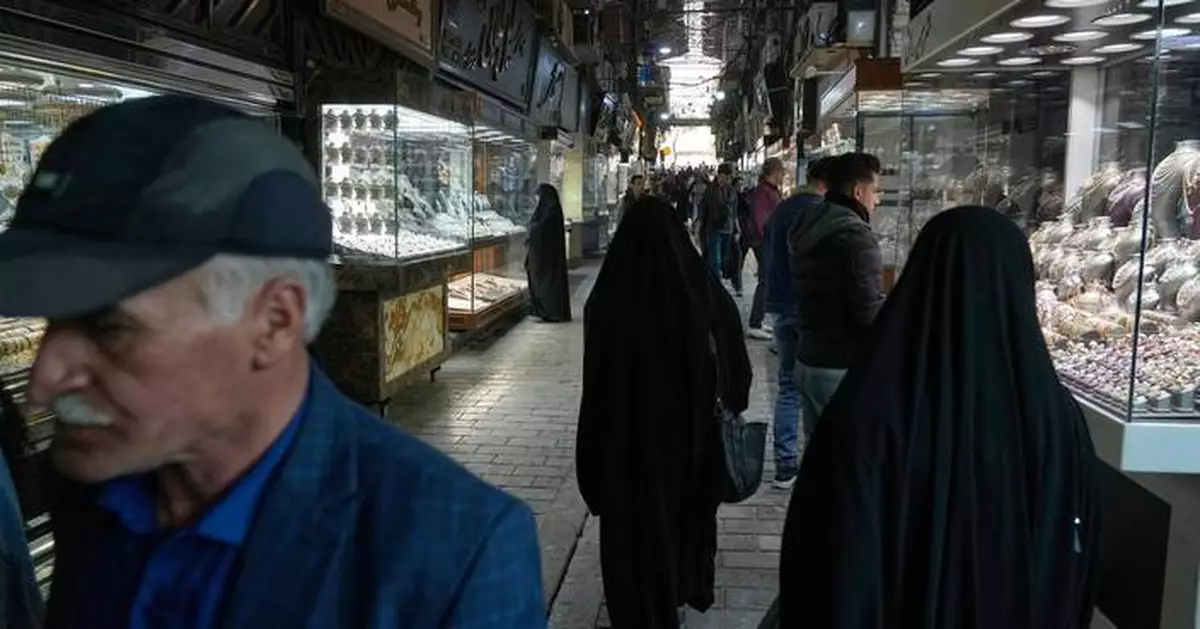
People walk at a gold market in Tehran's Grand Bazaar, Iran, Saturday, Nov. 29, 2025. (AP Photo/Vahid Salemi)
People walk at a gold market in Tehran's Grand Bazaar, Iran, Saturday, Nov. 29, 2025. (AP Photo/Vahid Salemi)
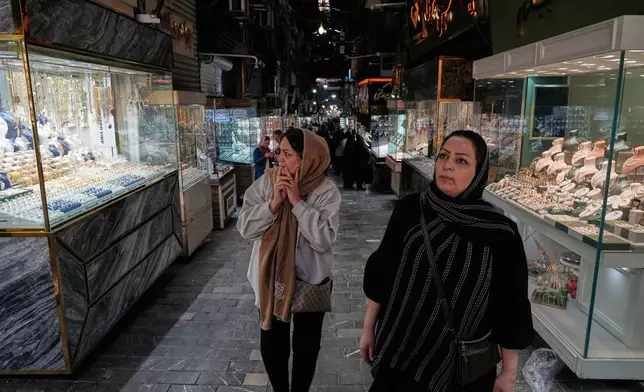
Women walk at a gold market in Tehran's Grand Bazaar, Iran, Saturday, Nov. 29, 2025. (AP Photo/Vahid Salemi)

Women walk at a gold market in Tehran's Grand Bazaar, Iran, Saturday, Nov. 29, 2025. (AP Photo/Vahid Salemi)

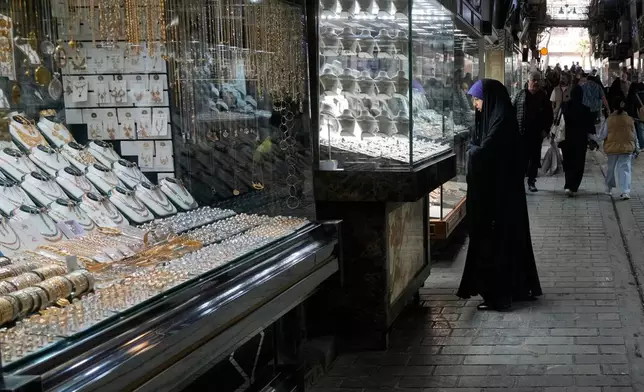
A woman looks at the window of a gold shop at a gold market in Tehran's Grand Bazaar, Iran, Saturday, Nov. 29, 2025. (AP Photo/Vahid Salemi)
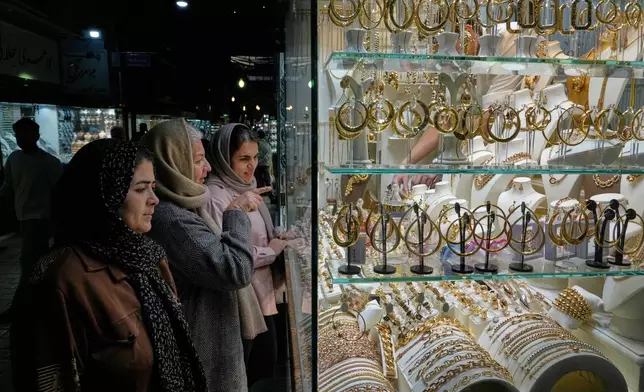
A woman looks at the window of a gold shop at a gold market in Tehran's Grand Bazaar, Iran, Saturday, Nov. 29, 2025. (AP Photo/Vahid Salemi)
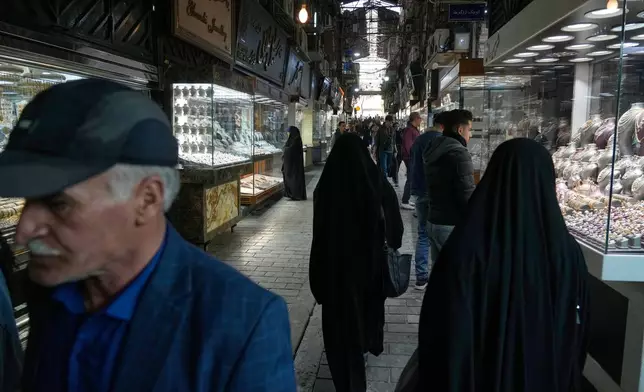
Women look at the window of a gold shop at a gold market in Tehran's Grand Bazaar, Iran, Saturday, Nov. 29, 2025. (AP Photo/Vahid Salemi)

Women look at the window of a gold shop at a gold market in Tehran's Grand Bazaar, Iran, Saturday, Nov. 29, 2025. (AP Photo/Vahid Salemi)

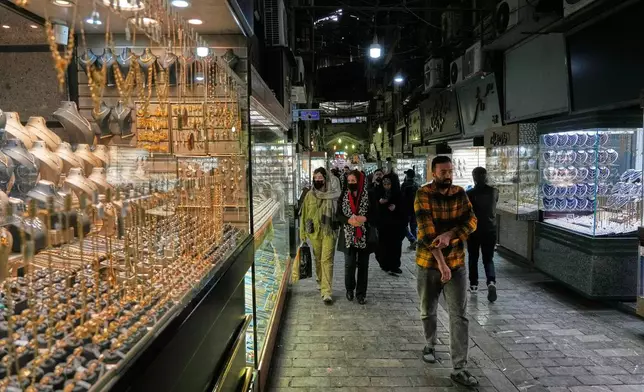
People walk at a gold market in Tehran's Grand Bazaar, Iran, Saturday, Nov. 29, 2025. (AP Photo/Vahid Salemi)

People walk at a gold market in Tehran's Grand Bazaar, Iran, Saturday, Nov. 29, 2025. (AP Photo/Vahid Salemi)

Such portable wealth can hold value when local assets depreciate — and be easily carried in case of a crisis, something on Iranians' minds for months as many fear another war with Israel breaking out.

Mansour, a 28-year-old gold and jewelry merchant in the bazaar, said he had never seen such demand.

“In the past two weeks I’ve sold 6 kilos (13.2 pounds) of gold to ordinary people — a new experience for me," said Mansour, who spoke on condition only his first name be used for fear of reprisals.

"People are rushing to buy because they fear their savings will lose value,” he added.

Behzad Rashvand, a 57-year-old grandfather, said he viewed gold as the only protection against rampant inflation in Iran.

“Right now, I see gold as the best way to preserve value,” he said. "Whenever I make money, I turn it into gold.”

Over the summer, 1-gram, 18-karat gold bars traded at around 115 million rials — about $100 as the rial now trades at over 1 million to $1. Gold coins were over $1,000 and 1-kilogram silver ingots were nearly $2,000. On Saturday, the price of a gold coin in Iran exceeded 1.2 billion rials for the first time in the country’s history. Small silver bars from 100 grams have become a new, entry-level investment for middle-class families, Iranian media reports suggest.

Fatemeh Parsa, a 47-year-old mother of two, now regrets using an inheritance to buy an apartment in Tehran. While real estate remains valuable in some Tehran neighborhoods, bank loans and people's savings have not kept pace with sky-high prices.

“With global gold prices rising, I sometimes wish I had bought gold instead — my assets would have grown much more than real estate,” she said. "Now, it seems that investing in silver could be valuable, especially for my children’s future.”

Reports of mass layoffs in Iran's economy, stemming from problems with electricity, consumer demand and sanctions, also have circulated for months. Amir Ramezani, a top gold trader in Tehran, said that some families from more well-to-do families have begun selling parts of their assets to cope.

“Their incomes today don’t match the lives they built,” Ramezani said. “To sustain the same lifestyle, many are selling valuables — gold, jewelry — just to keep up.”

Gold and silver particularly gained prominence as the U.S. began cracking down on Iranian cryptosellers, which had been one avenue Iranians sought to secure their finances.

“Whenever I have enough money to save, I immediately convert it into gold,” said Hamid Safari, who sells audio equipment. "Throughout history, gold has not only held its value but also increased in worth. We should learn from history if we want to build a better life.”

Meanwhile, wealthier investors are turning to diamonds and other gemstones as discreet, portable stores of value. Jewelers in Tehran and Mashhad report rising demand for small-carat investment-grade stones — a niche traditionally favored by traders but now expanding to upper-middle-class buyers.

Iran’s broader economy remains under severe pressure from international sanctions that have cut off investment and limited access to global finance. Years of restrictions have weakened domestic industries and left key sectors struggling to modernize. And for those wanting to get money out abroad, hard currency and jewelry remains some of the only ways to do so.

There's also another reason that Iranians remain reluctant to discuss — being able to have the money portable in case of another war. Tens of thousands of Iranians living in Tehran are believed to have fled the capital during the 12-day war, heading out into the countryside of Iran or north to the coast of the Caspian Sea.

When they did, they found some areas overwhelmed by newcomers and ATMs either out of cash or nonfunctional. Many brought whatever savings they could immediately put their hands on with them.

There's precedent for this in Iranian history as well. Many who fled the cities during the 1980s Iran-Iraq war took whatever they could with them. And in the 1979 Islamic Revolution, those allied with the shah and his government fled Iran with whatever they could carry. Back then, the rial hit an all-time high of 120 to $1, which saw money-changing shops inundated and people buying gold, jewelry, rugs and other assets to spirit abroad.

Ahmad, a 49-year-old a fabric importer, said he plans to sell off his remaining stock and covert all of his assets into hard currency because of the situation in Iran.

“I can’t convert my home or my car, but for the past two months I’ve been turning all my liquid assets into foreign currency and gold," he said. “In an emergency, I need to be able to carry my assets with me if I have to leave.”

Gambrell reported from Dubai, United Arab Emirates.
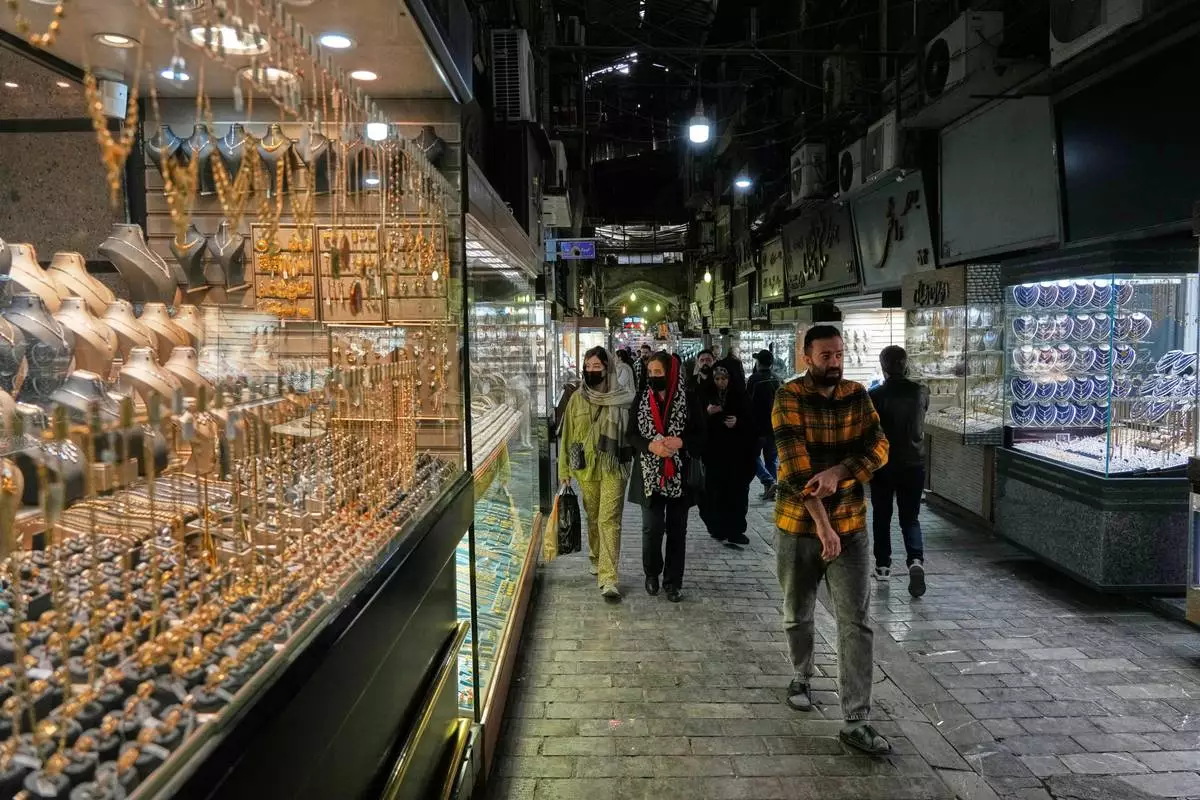
People walk at a gold market in Tehran's Grand Bazaar, Iran, Saturday, Nov. 29, 2025. (AP Photo/Vahid Salemi)
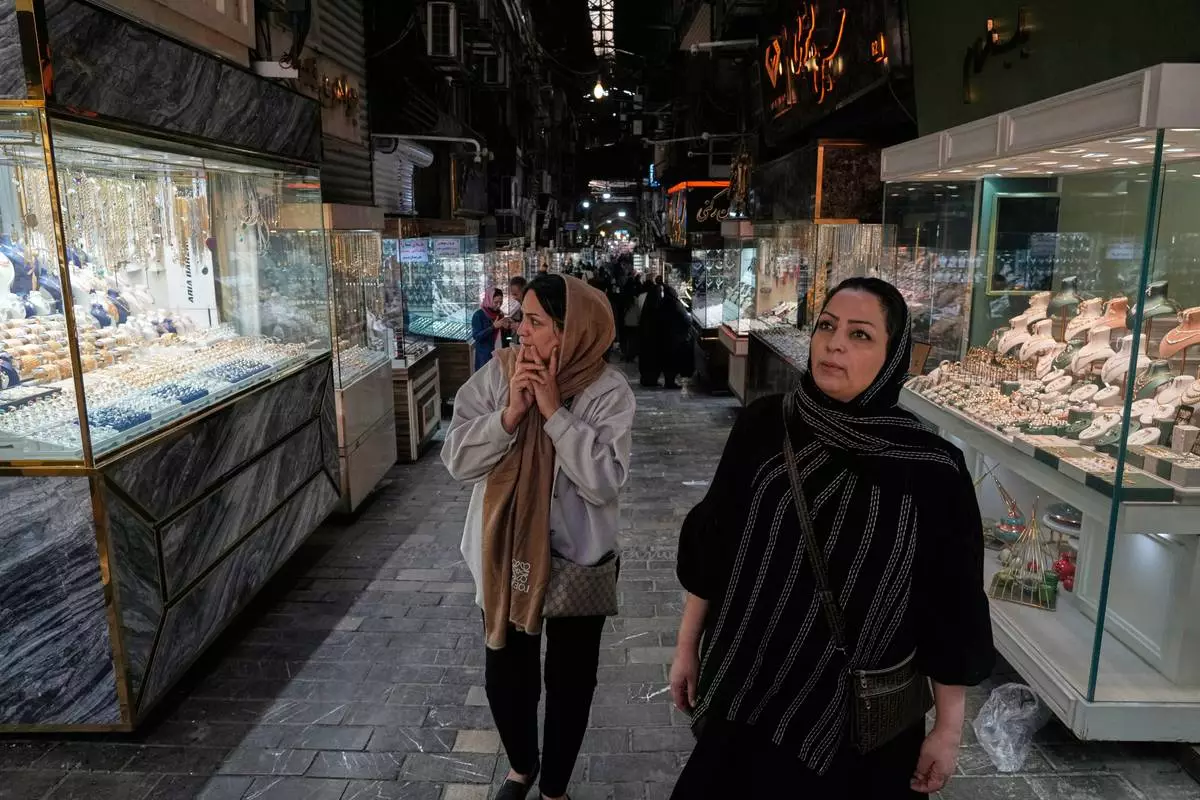
People walk at a gold market in Tehran's Grand Bazaar, Iran, Saturday, Nov. 29, 2025. (AP Photo/Vahid Salemi)
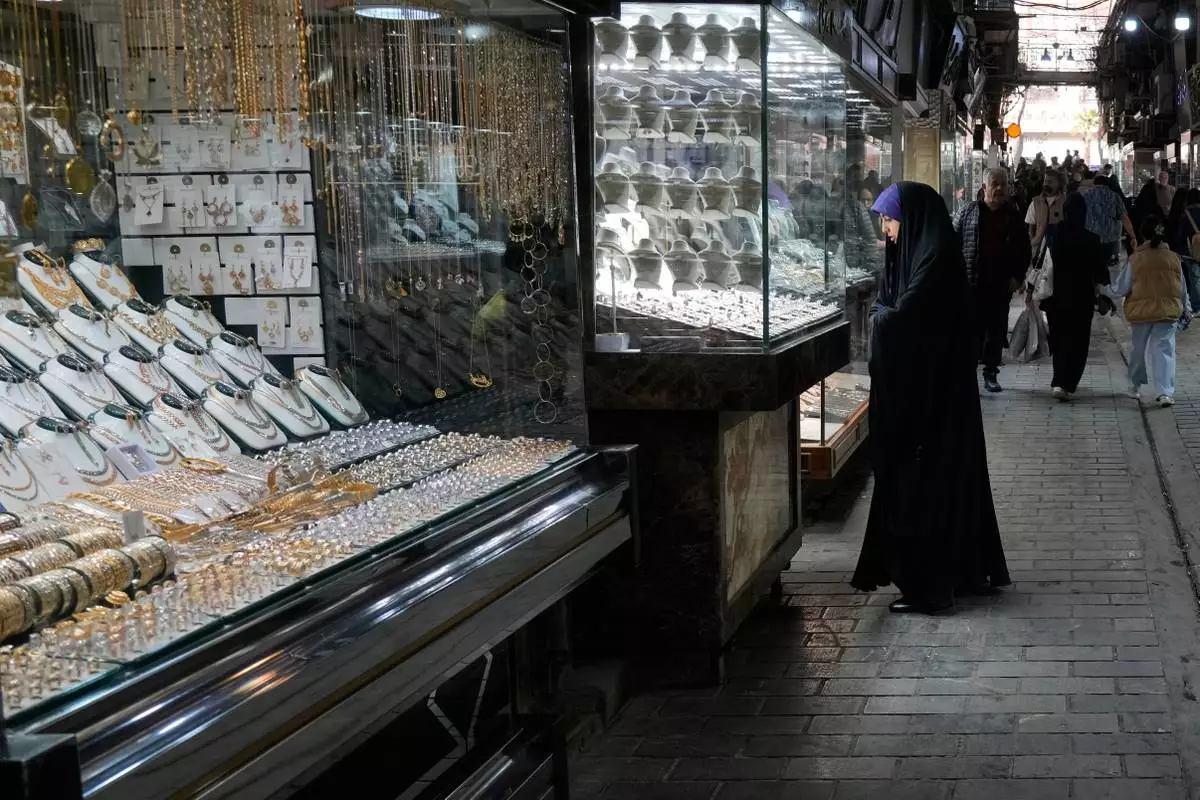
Women walk at a gold market in Tehran's Grand Bazaar, Iran, Saturday, Nov. 29, 2025. (AP Photo/Vahid Salemi)

Women walk at a gold market in Tehran's Grand Bazaar, Iran, Saturday, Nov. 29, 2025. (AP Photo/Vahid Salemi)

A woman looks at the window of a gold shop at a gold market in Tehran's Grand Bazaar, Iran, Saturday, Nov. 29, 2025. (AP Photo/Vahid Salemi)
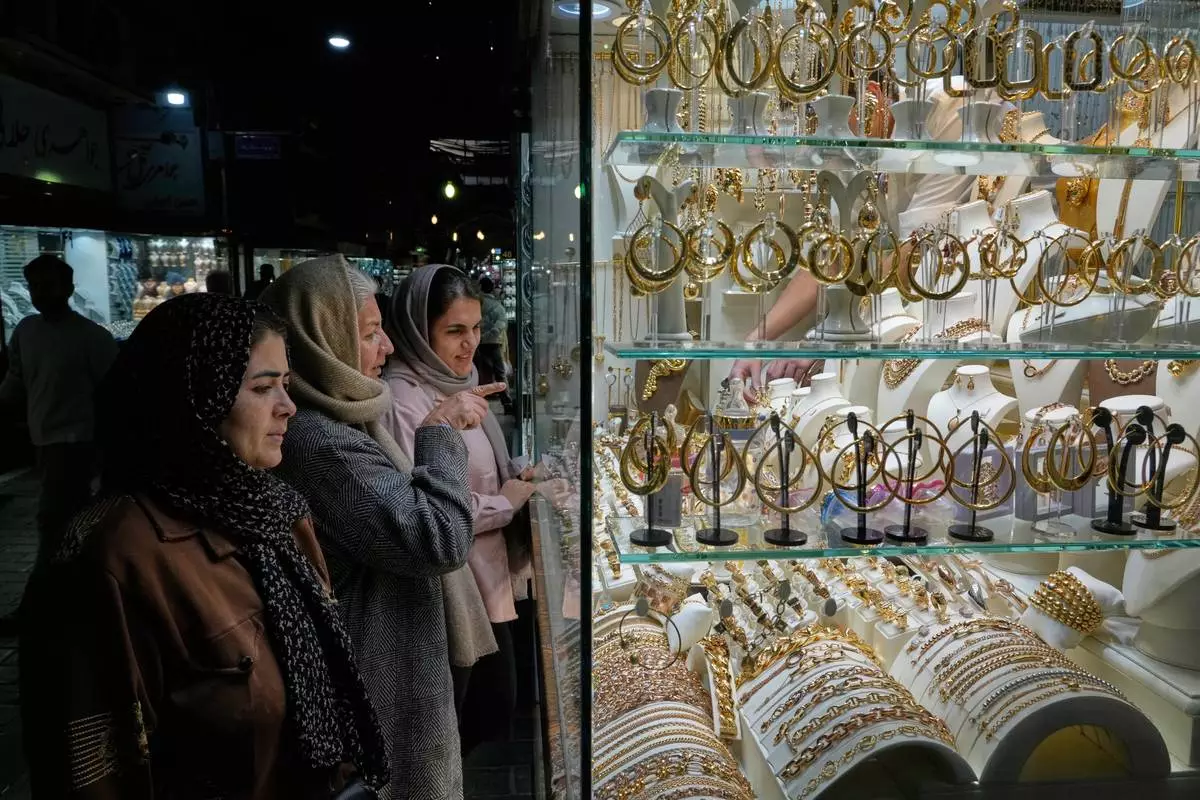
A woman looks at the window of a gold shop at a gold market in Tehran's Grand Bazaar, Iran, Saturday, Nov. 29, 2025. (AP Photo/Vahid Salemi)

Women look at the window of a gold shop at a gold market in Tehran's Grand Bazaar, Iran, Saturday, Nov. 29, 2025. (AP Photo/Vahid Salemi)

Women look at the window of a gold shop at a gold market in Tehran's Grand Bazaar, Iran, Saturday, Nov. 29, 2025. (AP Photo/Vahid Salemi)

People walk at a gold market in Tehran's Grand Bazaar, Iran, Saturday, Nov. 29, 2025. (AP Photo/Vahid Salemi)


People walk at a gold market in Tehran's Grand Bazaar, Iran, Saturday, Nov. 29, 2025. (AP Photo/Vahid Salemi)

WASHINGTON (AP) — House Speaker Mike Johnson and Senate Majority Leader John Thune announced a plan Wednesday to fully fund the Department of Homeland Security, moving past a split between the two Republican leaders that resulted in Congress leaving Washington last week without a fix to a record-setting partial government shutdown.

They said in a joint statement that “in the coming days” Republicans in Congress will return to a Senate plan to fund most of the department through an agreement with Democratic senators, with the exception of U.S. Immigration and Customs Enforcement and U.S. Border Patrol. Republicans would then try later to fund those agencies through party-line spending legislation.

Neither outcome is guaranteed, and the strategy could potentially still face opposition from the GOP’s own ranks even though President Donald Trump has given his support.

“We appreciate and share the President’s determination to once and for all bring an end to the Democrat DHS shutdown,” said Johnson, R-La., and Thune, R-S.D.

The plan represents a do-over of what senators had in mind when they passed a bipartisan funding agreement through unanimous consent last Friday. The Senate could approve similar legislation as soon as Thursday morning through unanimous consent, but even if that happens, it's unclear how quickly the bill could move through the House. It will likely take several months for Republicans to act on the second part of Trump's plan and pass budgeting legislation to fund ICE and Border Patrol.

House Republicans refused to go along with the Senate plan last week, instead changing the bill to fund all of DHS for 60 days.

As a result, the shutdown continued as lawmakers left for their home states and congressional districts for a two-week recess. The DHS shutdown reached its 47th day on Wednesday.

Senate Democratic leader Chuck Schumer said in a statement, "Republican divisions derailed a bipartisan agreement, making American families pay the price for their dysfunction."

The announcement from the GOP leaders showed that for now, Thune and Johnson are on the same page. Their working relationship experienced a rupture late last week when Johnson — at the urging of many House Republicans — rejected Thune’s plan.

The top Republicans hoping the path ahead will win over skeptical GOP colleagues, but the most conservative lawmakers are likely to seek full funding for all of Trump’s immigration and deportation operations.

“Let’s make this simple: caving to Democrats and not paying CBP and ICE is agreeing to defund Law Enforcement and leaving our borders wide open again,” Rep. Scott Perry, R-Pa., posted on X. “If that’s the vote, I’m a NO.”

It is uncertain whether Johnson could find enough support from the House to recall lawmakers back to Washington before their spring recess ends in mid-April.

Meanwhile, the narrow budget package being prepared for later this year is expected to fund ICE and Border Patrol through the remainder of Trump’s term, as a away to try to ensure those agencies are no longer at risk from Democrats objecting to the president’s immigration enforcement agenda.

Earlier Wednesday, Trump weighed in on the shutdown, using a social media post to seemingly call on Republicans to fund the immigration portions of DHS through a bill that would not require Democratic support. He said he wanted the legislation on his desk by June 1.

“We are going to work as fast, and as focused, as possible to replenish funding for our Border and ICE Agents, and the Radical Left Democrats won’t be able to stop us,” Trump said.

House Democratic leader Hakeem Jeffries released a statement saying, “It’s time to pay TSA agents, end the airport chaos and fully fund every part of the Department of Homeland Security that does not relate to Donald Trump’s violent mass deportation machine.”

The vast majority of Homeland Security workers continue to report to work during the shutdown, but many thousands have been going without pay. That led to more Transportation Security Administration agents calling out from work, causing frustrating security lines at some of the nation's biggest airports. Those bottlenecks appeared to be clearing this week as agents began receiving backpay, per an executive order from Trump.

__

Associated Press writer Lisa Mascaro in Washington contributed reporting.

Sen. Majority Leader John Thune, R-S.D., speaks during a news conference after a policy luncheon on Capitol Hill, Tuesday, March 24, 2026, in Washington. (AP Photo/Mariam Zuhaib)

Sen. Majority Leader John Thune, R-S.D., speaks during a news conference after a policy luncheon on Capitol Hill, Tuesday, March 24, 2026, in Washington. (AP Photo/Mariam Zuhaib)

Speaker of the House Mike Johnson, R-La., speaks during a news conference on Capitol Hill, Friday, March 27, 2026, in Washington. (AP Photo/Mariam Zuhaib)

Speaker of the House Mike Johnson, R-La., speaks during a news conference on Capitol Hill, Friday, March 27, 2026, in Washington. (AP Photo/Mariam Zuhaib)

Recommended Articles