CAIRO (AP) — The UN’s top human rights official issued a stark new warning Thursday about Sudan, saying he fears “a new wave of atrocities” amid a surge in fierce fighting in the Kordofan region.
UN Human Rights Chief Volker Türk urged “all states with influence over the parties to take immediate action to halt the fighting, and stop the arms flows that are fueling the conflict.”
Fighting between the paramilitary group the Rapid Support Forces, also known as the RSF, and the Sudanese military, who have been at war for over two years, has recently shifted to the oil-rich Kordofan region after the paramilitary group took over el-Fasher in Darfur.
According to the U.N. the conflict in Sudan has killed 40,000 people — though some rights groups say the death toll is significantly higher — and has created the world’s worst humanitarian crisis with over 14 million displaced.
The RSF's takeover of el-Fasher, the Sudanese’s military’s last stronghold in Darfur, was marked by the executions of civilians, rapes and sexual assaults. Over 100,000 people have fled el-Fasher since October and thousands are feared trapped or believe to have been killed along the way, according to rights groups. The RSF had major gains since then.
“It is truly shocking to see history repeating itself in Kordofan so soon after the horrific events in el-Fasher,” Türk said
“We must not allow Kordofan to become another el-Fasher,” he said.
He said over 269 people were killed in the town of Bara in North Kordofan in aerial strikes, artillery shelling, and summary executions since end of October, but that the numbers could be higher because telecommunications and internet outages have made numbers hard to verify.
He called for “the restoration of telecommunications to facilitate lifesaving assistance and to allow essential information to flow to civilians.”
His statement said an RSF drone strike on Nov. 3 killed 45 people, mostly women, in a tent in el-Obeid in North Kordofan, and that Sudanese military aerial strikes on Saturday killed at least 48 people, mostly civilians, in Kauda, South Kordofan.
The RSF was run out of Sudan's capital Khartoum earlier in the year, and for months the fighting has been concentrated in oil-rich Kordofan, a region in southern and central Sudan that controls vital supply lines.
The battle is now centered around the city of Babanusa in West Kordofan province.
The RSF said in a statement Monday that the group took the Sudanese army's 22nd division headquarters in Babanusa and on Tuesday released videos which it said shows of their fighters in the army headquarters. The Associated Press could not independently verify the statement. The Sudanese military has not commented.
The Sudan Doctor's network, a group of Sudanese medical professionals across the northeastern African country, warned Wednesday that the clashes are threatening the fate of dozens of women and children who sought refuge in the army headquarters in the last year calling for their protection and to be transferred to safety “without harming them or detaining them arbitrarily on accusations of having relatives in the army.”
It also called for access to the city to provide humanitarian assistance.
Türk also warned that Kadugli and Dilling — towns in South Kordofan gripped by famine — are at particular risk after being under siege by the RSF and allied groups.
The UN migration agency estimates that over 44,000 people have fled the Kordofan region due to the escalation of fighting.
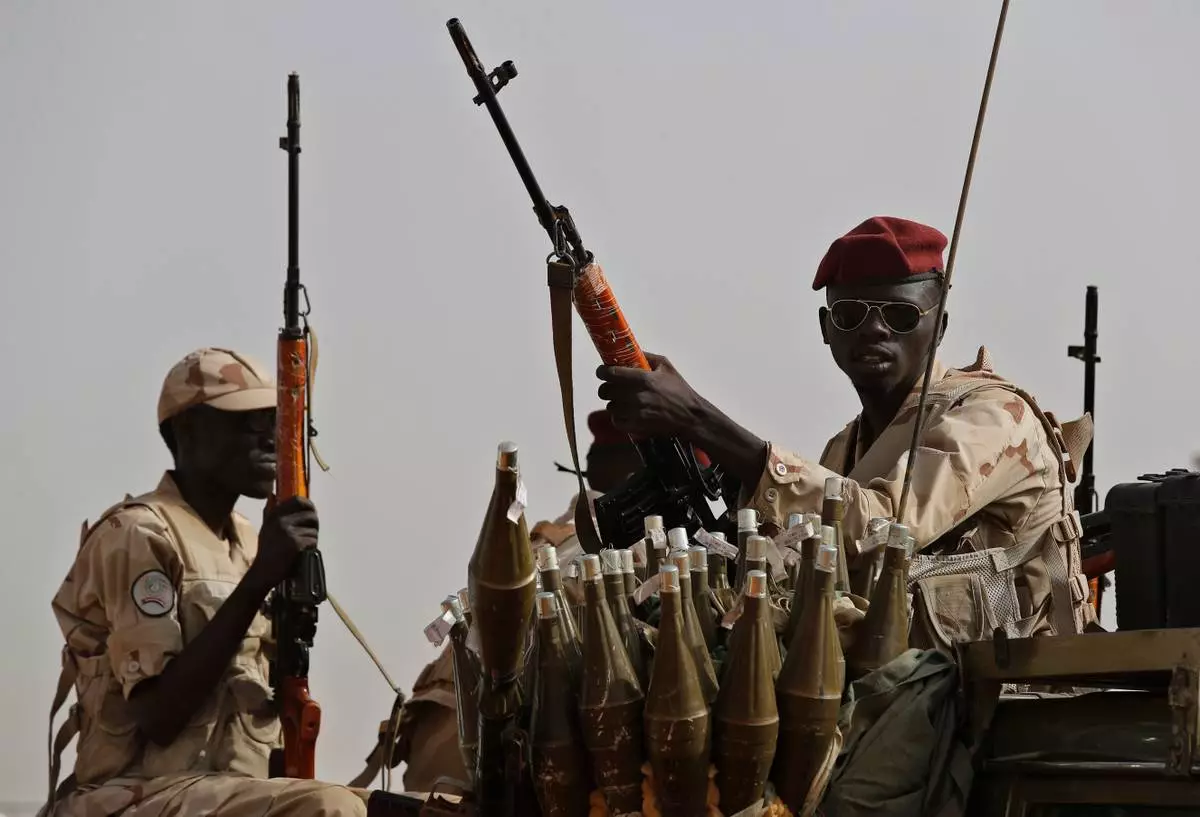
FILE - Sudanese soldiers from the Rapid Support Forces unit, led by Gen. Mohammed Hamdan Dagalo, the deputy head of the military council, secure the area where Dagalo attends a military-backed tribe's rally, in the East Nile province, Sudan, June 22, 2019. (AP Photo/Hussein Malla, File)
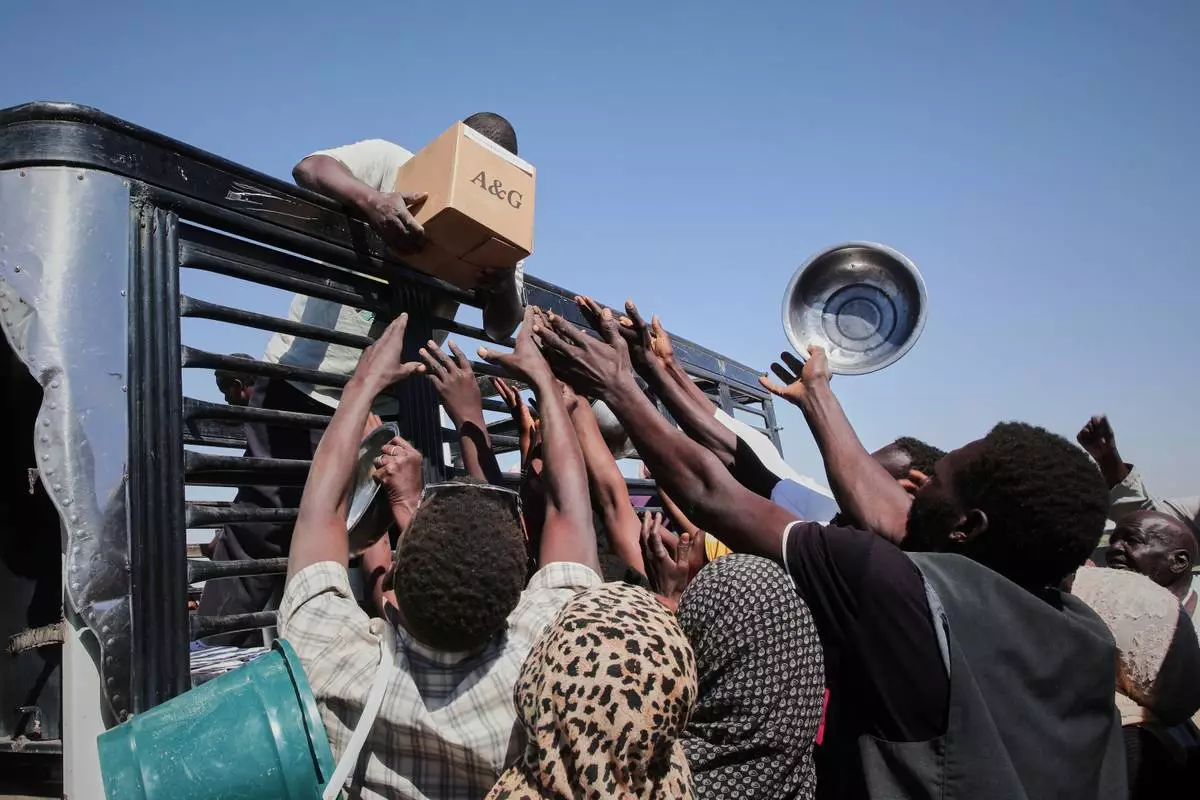
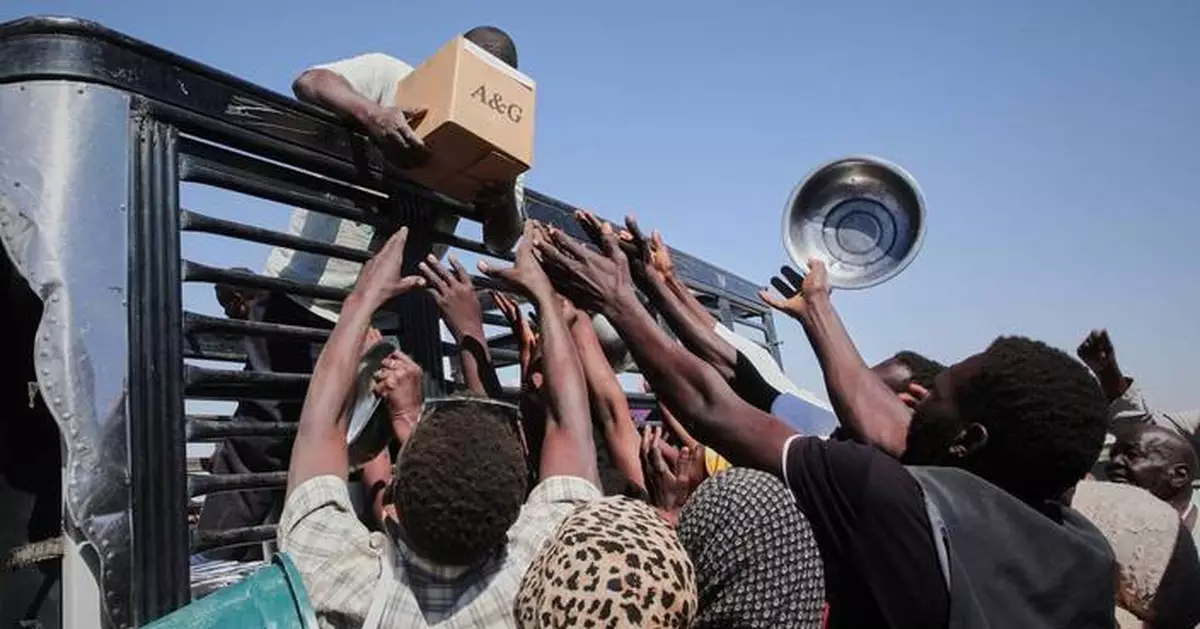
FILE.- Sudanese families displaced from El-Fasher reach out as aid workers distribute food supplies at the newly established El-Afadh camp in Al Dabbah, in Sudan's Northern State, Sunday, Nov. 16, 2025. (AP Photo/Marwan Ali,File)
WASHINGTON (AP) — U.S. President Donald Trump has been fuming about NATO, musing about leaving the alliance, ratcheting up his criticism of European leaders and exposing a wider rift in the trans-Atlantic alliance — this time over the Iran war.
“NATO treated us very badly, and you have to remember it because they’ll be treating us badly again if we ever need them,” Trump said Wednesday at a private White House lunch for the upcoming Easter holiday that was posted online by a Business Insider reporter.
The president also suggested in an interview to The Telegraph newspaper in the U.K., published Wednesday, that he could potentially try to leave the alliance.
Yet in his televised Wednesday evening address to the American people about the Iran war, Trump chose not to mention NATO by name, suggesting only that countries that depend on oil flowing through the Strait of Hormuz “must grab it and cherish it” because the U.S. would not.
Trump's tension over NATO reflects the potentially dangerous consequences of breaking up the alliance, the limits on his own power to do so and the careful mending of the relationship performed by fellow world leaders. But one certainly is that Trump's displeasure with NATO appears to be a feature of his presidency, rather than an issue that can be easily settled.
Congress passed legislation in 2023 that would prevent any president from pulling out of NATO without its approval. The Trump administration, during his first term, had insisted the president had such authority on his own. It’s unclear whether Trump would challenge in any way the new law, which is the first of its kind and with the NATO provision specifically championed at the time by Trump's secretary of state, Marco Rubio, who was a Florida senator at the time.
There are efforts under way to reinforce America's relationship with NATO, with its secretary-general, Mark Rutte, scheduled to visit Washington next week. The visit by Rutte was confirmed by a White House official who was not authorized to comment on the yet to be formally announced visit and spoke on the condition of anonymity.
U.K. Prime Minister Keir Starmer said his government was “fully committed to NATO” and called it “the single most effective military alliance the world has ever seen.”
Before a Trump speech later Wednesday, U.S. Sen. Mitch McConnell, a Kentucky Republican, and Sen. Chris Coons, a Delaware Democrat, said in a joint statement that “NATO is the most successful military alliance in history” and stressed that the Senate “will continue to support the alliance for the peace and protection it provides" the United States, Europe and the world.
Many European leaders have felt political pressure over the war, which faces opposition in their countries and has sent petroleum prices soaring as Iran has effectively shut the Strait of Hormuz, the narrow waterway between Iran and Oman through which about one-fifth of the world’s oil passes.
The U.K. is working on plans that could help assuage Trump, and Starmer said military planners will work on a postwar security plan for the Strait.
On Thursday, British Foreign Secretary Yvette Cooper will host a virtual meeting of 35 countries that have signed up to help ensure security for shipping in the Strait — after the fighting ends.
Iulia-Sabina Joja, a senior fellow at the Middle East Institute, alluded to Trump's exhortation Tuesday for allies to “go get your own oil” in a social media post insisting it wasn't America's job to secure the Strait.
“The Europeans are not keen to go into an active warfare situation, to so-called ‘get’ their energy out of the Strait,” said Joba, a former deputy project manager at NATO Allied Command Transformation in Virginia.
As energy prices have spiked, Trump has called NATO allies “cowards” for not sending their military ships to the strait. It's an amplification of his message since his first term that European partners should assume greater responsibility for their own security.
Speaking Tuesday on Fox News, Rubio said, “I do think, unfortunately, we are going to have to reexamine whether or not this alliance that has served this country well for a while is still serving that purpose.”
Rubio raised questions with interviewer Sean Hannity about whether NATO has “become a one-way street where America is simply in a position to defend Europe — but when we need the help of our allies, they’re going to deny us basing rights and they’re going to deny us overflight.”
The fraying of NATO could weaken the alliance’s deterrence, particularly with Russia: It seeks to limit conflict by having Russian President Vladimir Putin believe that NATO would retaliate if he decides to one day expand Moscow's war in Ukraine.
NATO is built on Article 5 of its founding treaty, which pledges that an attack on any one member will be met with a response from them all.
As the Iran war has spread, missiles and drones have been fired toward NATO member Turkey and a British military base on Cyprus, fueling speculation about what might prompt NATO to trigger its collective security guarantee and come to their rescue.
The alliance hasn't intervened or signaled any plan to do so. Rutte — who has voiced support for Trump and Washington's role in the alliance — has been focusing mostly on the Russia-Ukraine war since Ukraine borders four NATO countries.
NATO operates uniquely by consensus. All 32 countries must agree for it to make decisions, so political priorities play a role. Even invoking Article 5 requires agreement among the allies. Turkey or the U.K. can't trigger it alone.
European leaders have called for the Middle East conflict to stop and want the U.S. and Iran to return to negotiations over Tehran's nuclear program, which Washington and Israel see as a threat.
The vocal opposition in Europe to Trump's war against Iran has started to turn into action.
Spain has closed its airspace to U.S. planes involved in the war.
Early last month, France agreed to let the U.S. Air Force use a base in southern France after receiving a “full guarantee” from the United States that planes not involved in carrying out strikes against Iran would land there.
The government of Italian Premier Giorgia Meloni, long seen as one of the European Union leaders with the best personal ties to Trump, denied permission for U.S. bombers to land at the Sigonella air base in Sicily for one mission related to the Middle East.
Franco Pavoncello, a professor of political science at Rome’s John Cabot University, said that decision might cost Meloni a lot of her political capital in Washington.
But he said, “The Italian government could not be seen by the European allies as too submissive to American interests, as it would have very negative repercussions both at home and in the EU.”
U.S. relations with Europe had already soured in recent months over Trump's call for Greenland — a semiautonomous territory of stalwart NATO ally Denmark — to become part of the United States, prompting many EU countries to rally behind Copenhagen.
Jill Lawless reported from London and Jamey Keaten from Geneva. Lorne Cook in Brussels, Giada Zampano in Rome, Sam McNeil in Dubai, United Arab Emirates, and Matthew Lee in Washington contributed to this report.
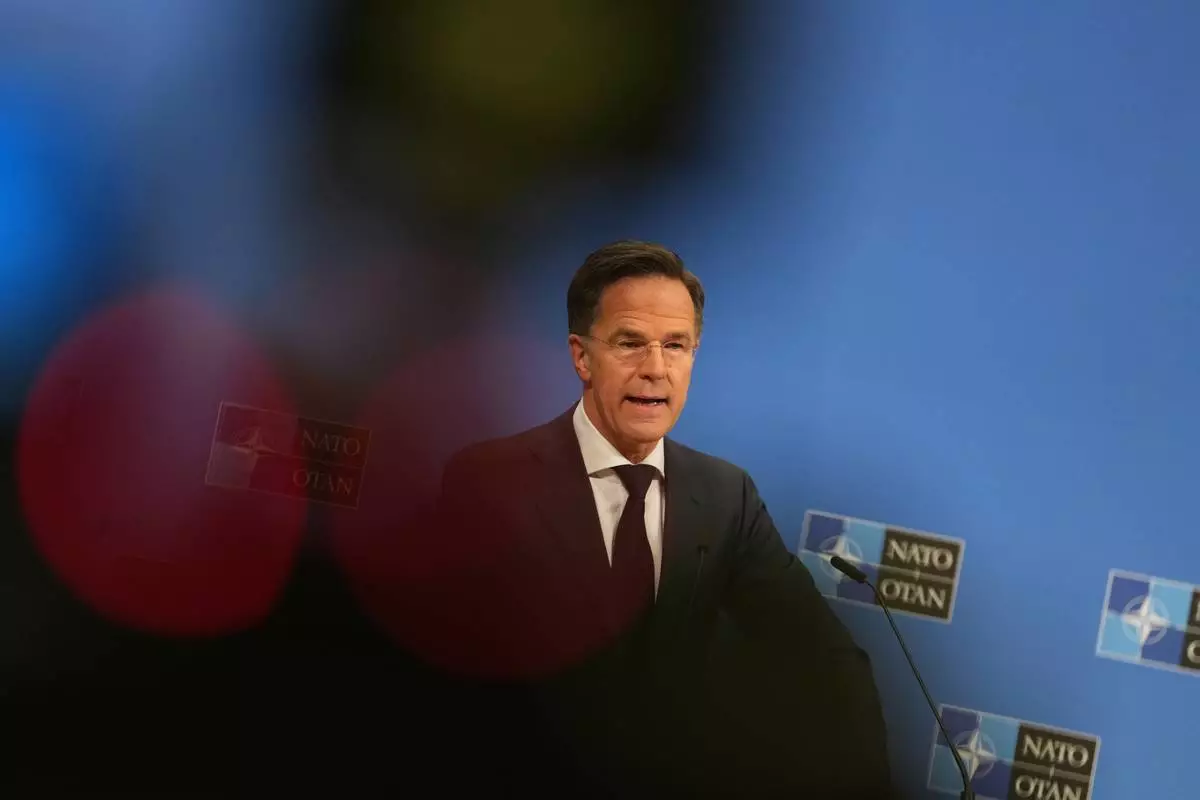
NATO Secretary General Mark Rutte speaks during the launch of the NATO Secretary General's Annual Report for 2025 at NATO headquarters in Brussels, Thursday, March 26, 2026. (AP Photo/Virginia Mayo)
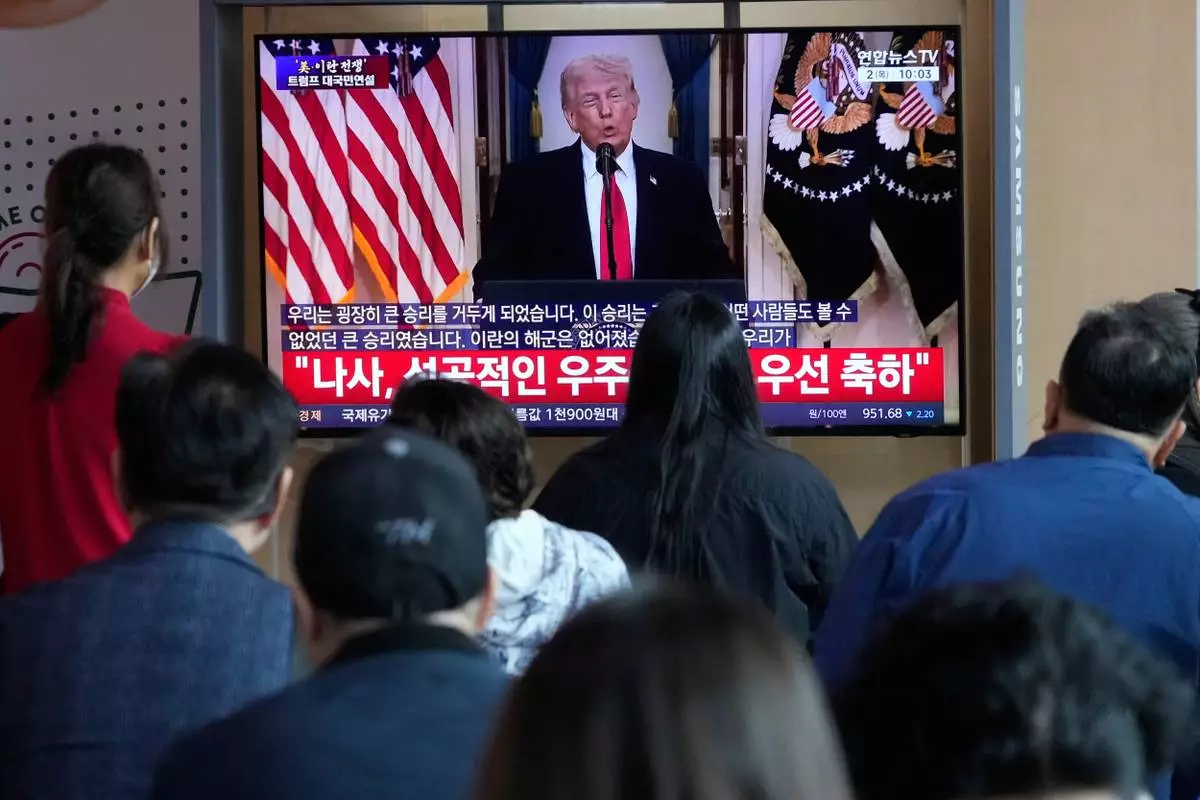
People watch a TV screen showing a live broadcast of U.S. President Donald Trump's speech at the Seoul Railway Station in Seoul, South Korea, Thursday, April 2, 2026. (AP Photo/Ahn Young-joon)
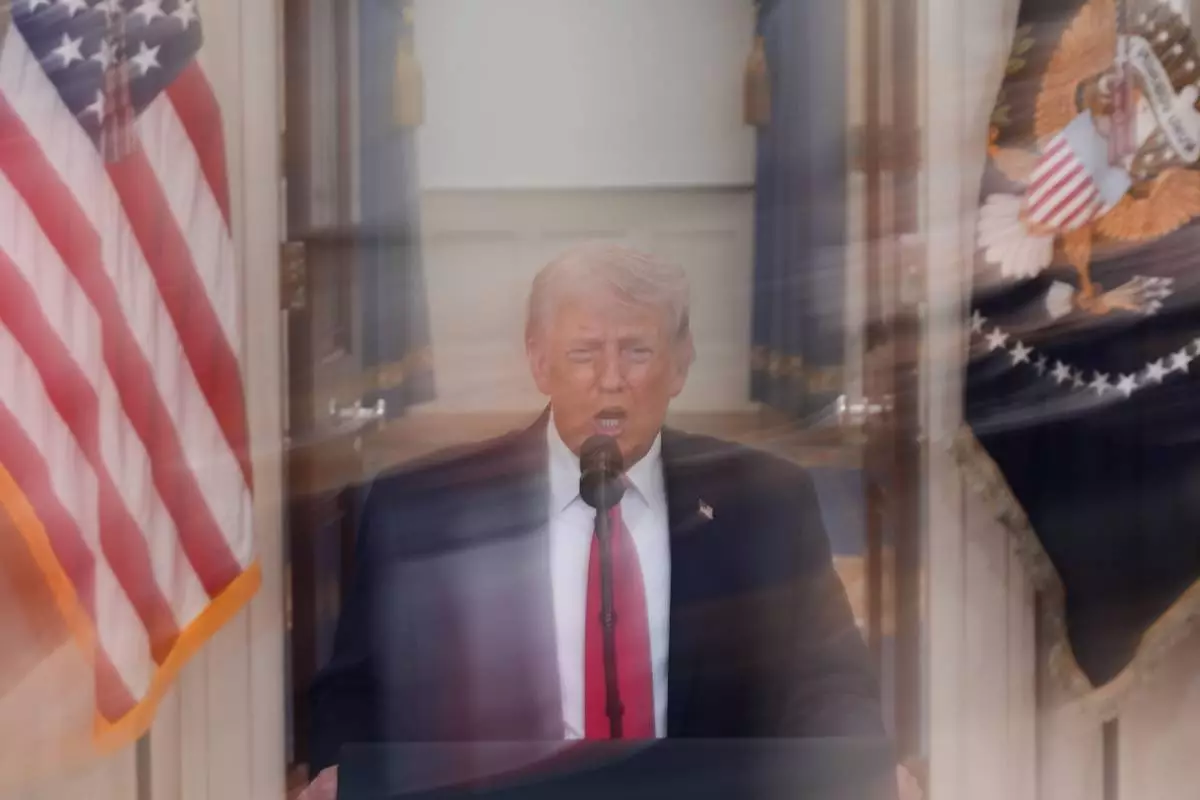
In this image made with a long exposure, President Donald Trump speaks about the Iran war from the Cross Hall of the White House on Wednesday, April 1, 2026, in Washington. (AP Photo/Alex Brandon, Pool)
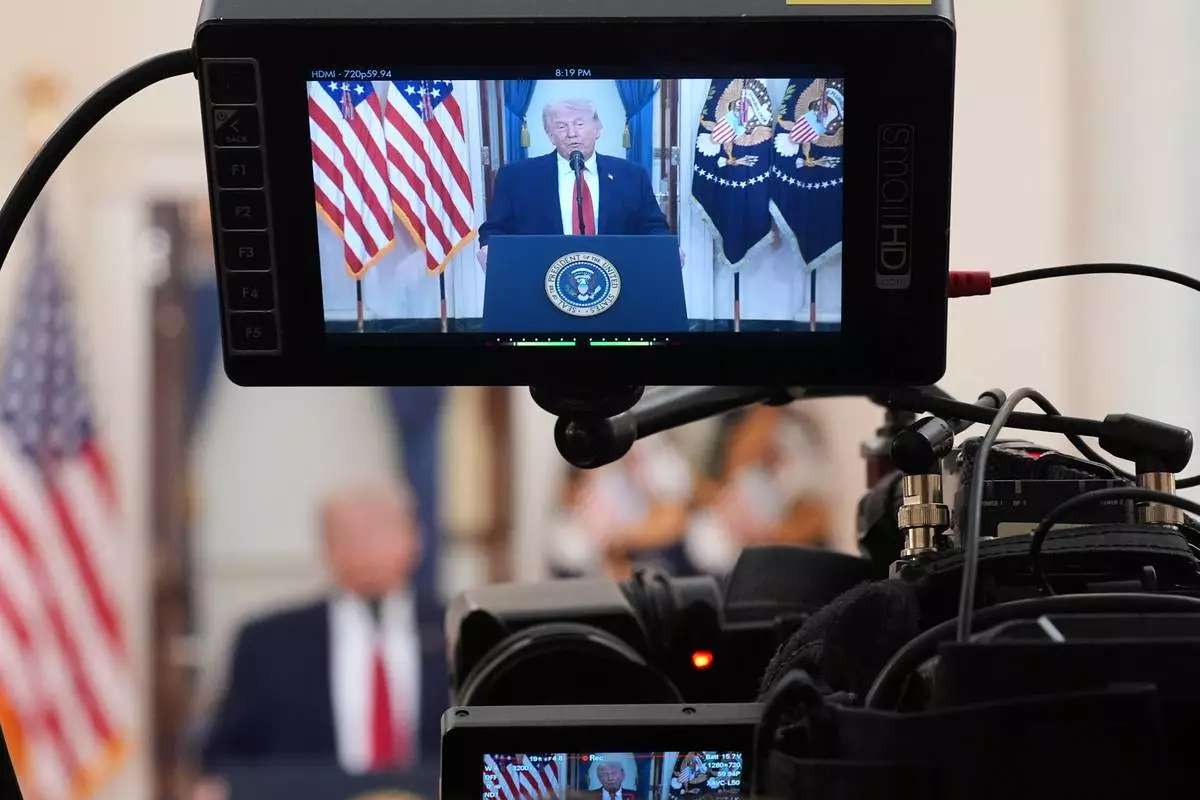
President Donald Trump speaks about the Iran war from the Cross Hall of the White House on Wednesday, April 1, 2026, in Washington. (AP Photo/Alex Brandon, Pool)
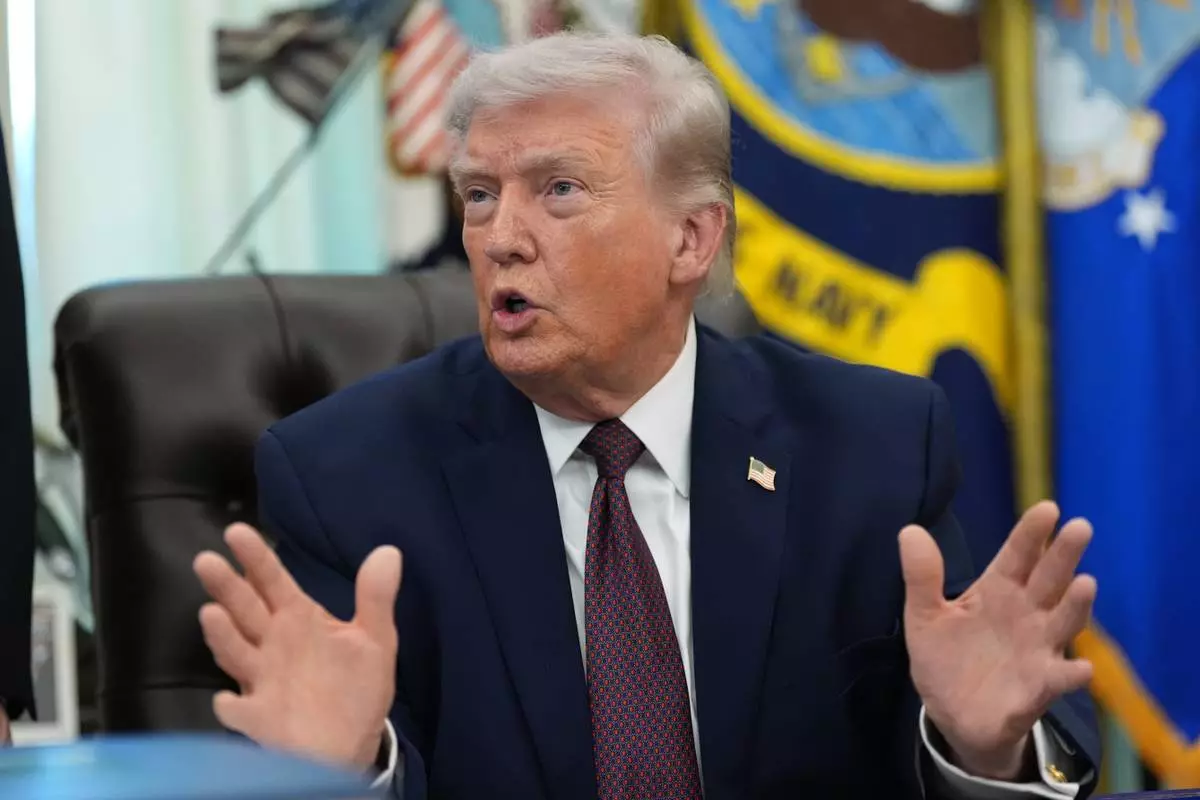
President Donald Trump answers questions from reporters after signing an executive order in the Oval Office of the White House Tuesday, March 31, 2026, in Washington. (AP Photo/Alex Brandon)
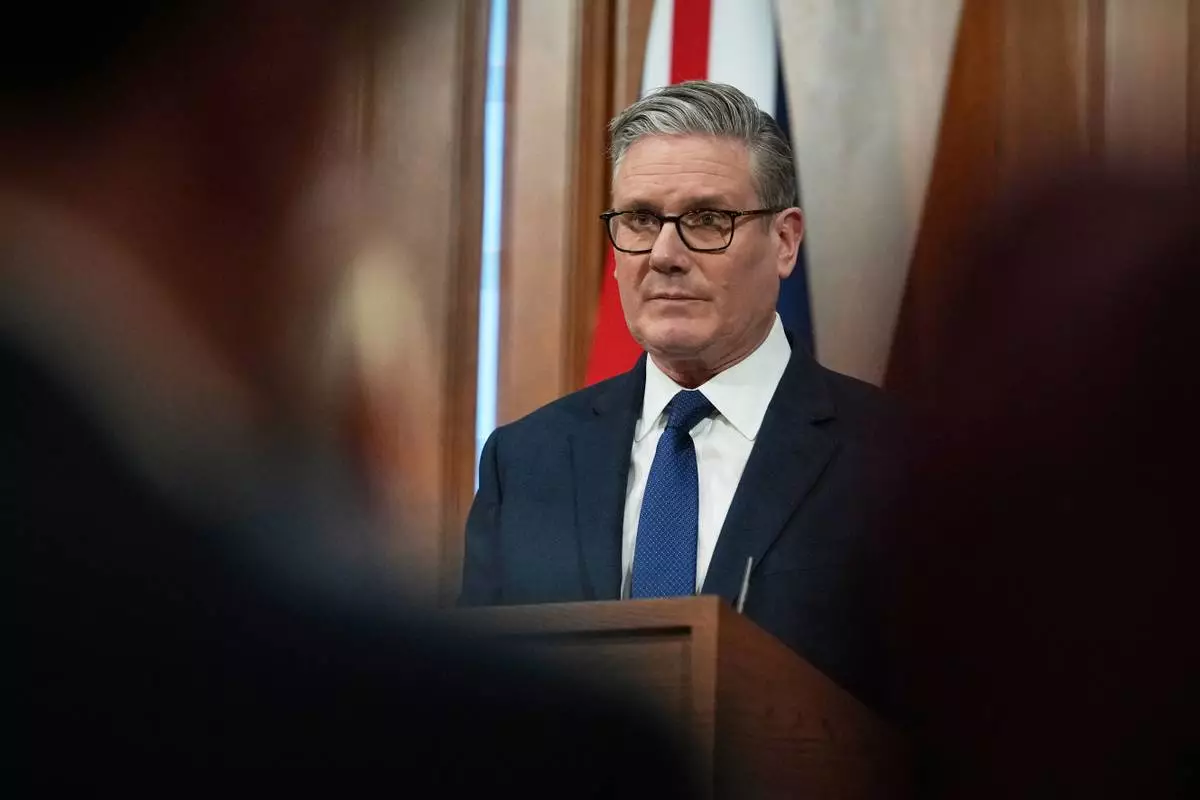
Britain's Prime Minister Keir Starmer speaks during a press conference at Downing Street in London, Wednesday, April 1, 2026. (AP Photo/Frank Augstein, Pool)
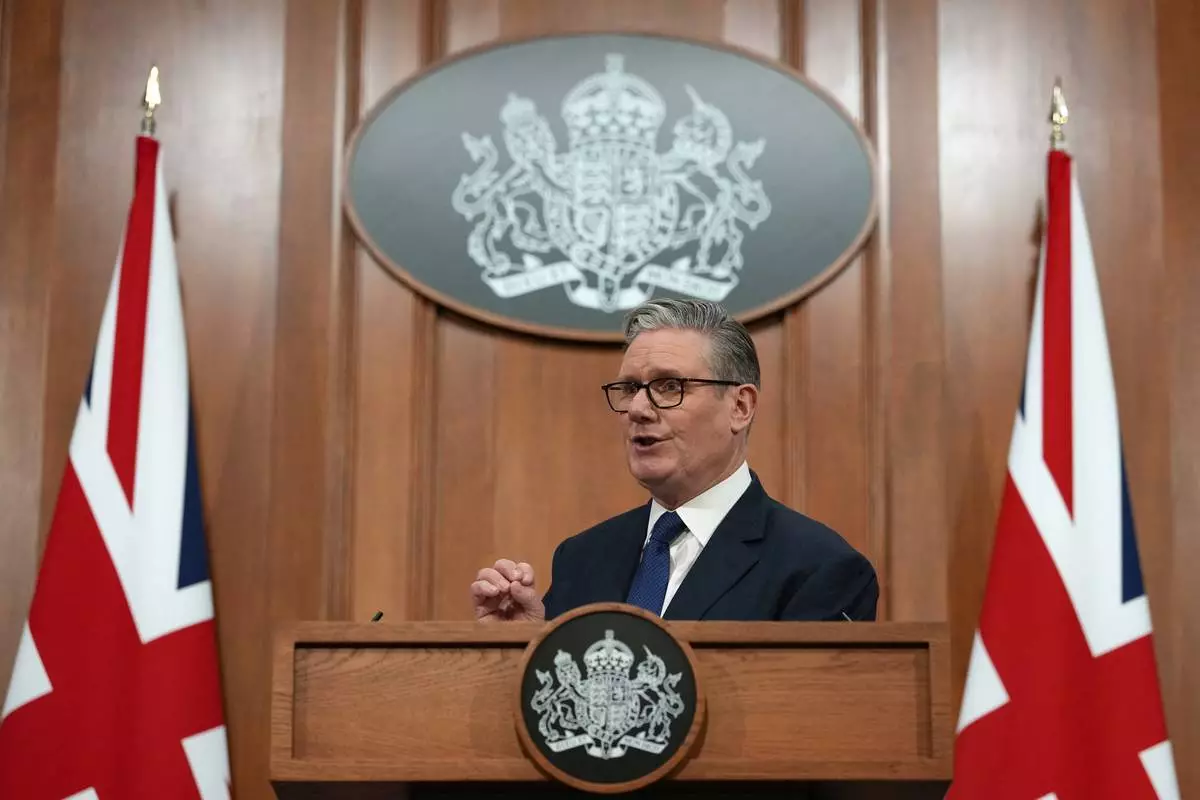
Britain's Prime Minister Keir Starmer speaks during a press conference at Downing Street in London, Wednesday, April 1, 2026. (AP Photo/Frank Augstein, Pool)
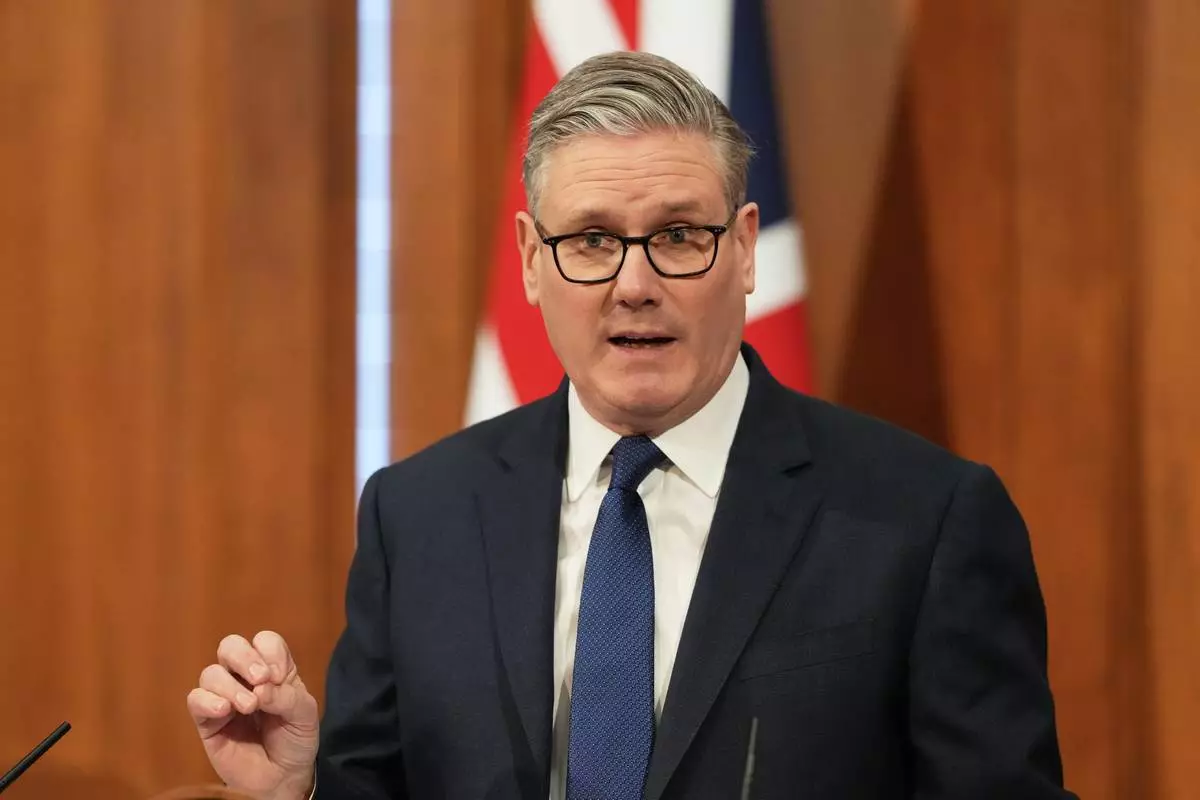
Britain's Prime Minister Keir Starmer speaks during a press conference at Downing Street in London, Wednesday, April 1, 2026. (AP Photo/Frank Augstein, Pool)