NEW YORK (AP) — The holiday season is here, and with it, a present for fans of end of year data and marketing: Spotify Wrapped is here! And Puerto Rican superstar Bad Bunny has been named its most-played artist for a fourth time, dethroning Taylor Swift.
On Wednesday, the streaming giant unveiled its annual overview of individual listening trends as well as trends from around the world. Users can now access their top artists, songs, genres, albums and podcasts, as well as uncover which artists had the biggest year on the platform.
Here's what you need to know.
The reggaetón-and-then-some artist was 2025’s most-streamed artist globally, having earned more than 19.8 billion streams. He is followed by Swift, The Weeknd, Drake and Billie Eilish, in that order.
For the last two years, Swift has commanded the top spot, globally — claiming it in 2023 and holding it for 2024 — having dethroned Bad Bunny. He held the coveted title for three years in a row beginning in 2020. Now, he's back on top.
In the U.S., the most-streamed artist list looks somewhat similar: There, Swift leads, followed by Drake, Morgan Wallen and Kendrick Lamar. Bad Bunny is in the fifth spot.
The most-streamed album globally was, of course, Bad Bunny’s “Debí Tirar Más Fotos” followed by the “KPop Demon Hunters” soundtrack and three releases from 2024: Billie Eilish's “Hit Me Hard and Soft,” SZA's “SOS Deluxe: LANA” and Sabrina Carpenter's “Short n' Sweet,” in that order.
In the U.S., it differs slightly. The most-streamed album is Wallen's “I'm The Problem,” followed by SZA, Bad Bunny, the “KPop Demon Hunters” soundtrack and Lamar's “GNX.”
Globally, the most-streamed song title goes to Bruno Mars and Lady Gaga's collaboration, “Die with a Smile,” which has racked up over 1.7 billion streams. Then it's Eilish's “Birds of a Feather,” Mars' and Rosé 's “APT.”, Alex Warren's “Ordinary” and Bad Bunny's “DtMF.”
Lamar and SZA's “Luther” was the most-streamed song in the U.S., followed by “Die with a Smile,” “Ordinary,” “Birds of a Feather” and in fifth, Lamar and Lefty Gunplay's “TV Off.”
Like every year, there are a few new features. Those include the introduction of “Top Albums,” a fan leaderboard to show users where they stack up in an artist's streams, a “Listening Age” feature that compares a user's streaming habits to those in their age range and much more.
There is also something called “Wrapped Party,” an interactive feature which allows users to compare their Wrapped with other Spotify users.
These additions differ from last year, when some Spotify users complained on social media that Wrapped, which undergoes design changes every year, was minimalist in 2024. They said it lacked previous features like “Top Cities,” “Audio Auras” and “Top Genres.” The latter has been reinstated for 2025.
Other revisited features in 2025 include “Top Songs,” which now will allow users to see how many times they streamed their top 100 tracks and a “Top Song Quiz.”
The biggest artists, globally, continue to earn top spots on Spotify Wrapped. And that should come as no surprise — they’re featured prominently across the streaming service, including on its highly influential playlists, in addition to boasting loyal, dedicated fanbases. For independent artists who may appear on an individual listener’s Wrapped, accessing a top spot on the global list would require billions of streams.
Streaming accounts for most of the money generated by the music industry — 84% in the United States, according to the Recording Industry Association of America.
Spotify is the largest platform of all — making up roughly 31% of the total market share — with a reported 713 million users and 281 million subscribers in more than 180 markets. That's up from 626 million users and 246 million subscribers from this time last year, respectively.

Bad Bunny performs during the iHeartRadio Music Awards in Los Angeles on March 17, 2025. (AP Photo/Chris Pizzello)
COPENHAGEN, Denmark (AP) — More than 200 years after being sunk by Adm. Horatio Nelson and the British fleet, a Danish warship has been discovered on the seabed of Copenhagen Harbor by marine archaeologists.
Working in thick sediment and almost zero visibility 15 meters (49 feet) beneath the waves, divers are working against the clock to unearth the 19th-century wreck of the Dannebroge before it becomes a construction site in a new housing district being built off the Danish coast.
Denmark’s Viking Ship Museum, which is leading the monthslong underwater excavations, announced its findings on Thursday, 225 years to the day since the Battle of Copenhagen in 1801.
“It’s a big part of the Danish national feeling,” said Morten Johansen, the museum’s head of maritime archaeology.
A great deal has been written about the battle “by very enthusiastic spectators, but we actually don’t know how it was to be onboard a ship being shot to pieces by English warships and some of that story we can probably learn from seeing the wreck, Johansen said.
In the Battle of Copenhagen, Nelson and the British fleet attacked and defeated Denmark’s navy as it formed a protective blockade outside the harbor.
Thousands were killed and wounded during the brutal hourslong naval clash, considered one of Nelson’s “great battles.” The intention was to force Denmark out of an alliance of Northern European powers, including Russia, Prussia and Sweden.
At the center of the fighting was the Danish flagship, the Dannebroge, commanded by Commodore Olfert Fischer.
The 48-meter (157-foot) Dannebroge was Nelson’s main target. Cannon fire tore through its upper deck before incendiary shells sparked a fire aboard.
“(It was) a nightmare to be on board one of these ships,” Johansen said. “When a cannonball hits a ship, it’s not the cannonball that does the most damage to the crew, it’s wooden splinters flying everywhere, very much like grenade debris.”
The battle also is believed to have inspired the phrase “to turn a blind eye.” After deciding to ignore a superior’s signal, Nelson, who had lost sight in his right eye, reportedly remarked: “I have only one eye, I have a right to be blind sometimes.”
Nelson eventually offered a truce and a ceasefire was later agreed with Denmark’s Crown Prince Frederik.
The stricken Dannebroge slowly drifted northward and exploded. Records say the sound created a deafening roar across Copenhagen.
Marine archaeologists have discovered two cannons, uniforms, insignia, shoes, bottles and even part of a sailor’s lower jaw, perhaps one of the 19 unaccounted-for crew members who likely lost their lives that day.
The dig site will soon be enveloped by construction work for Lynetteholm, a megaproject to build a new housing district in the middle of Copenhagen Harbor that is expected to be completed by 2070.
Marine archaeologists began surveying the area late last year, targeting a spot thought to match the flagship’s final position.
Experts say the sizes of the wooden parts found match old drawings. Dendrochronological dating, the method of using tree rings to establish the age of wood, match the year the ship was built. They also say the darkened dig site is full of cannonballs, a hazard for divers navigating waters darkened by clouds of silt stirred up from the seabed.
“Sometimes you can’t see anything, and then you really have to just feel your way, look with your fingers instead of with your eyes,” diver and maritime archaeologist Marie Jonsson said.
Chronicled in books and painted on canvases, the 1801 battle is deeply embedded in Denmark’s national story.
Archaeologists hope their discoveries may help reexamine the event that shaped the Scandinavian country and perhaps uncover personal stories of those who went into battle on that day 225 years ago.
“There are bottles, there are ceramics, and even pieces of basketry,” Jonsson said. “You get closer to the people onboard.”
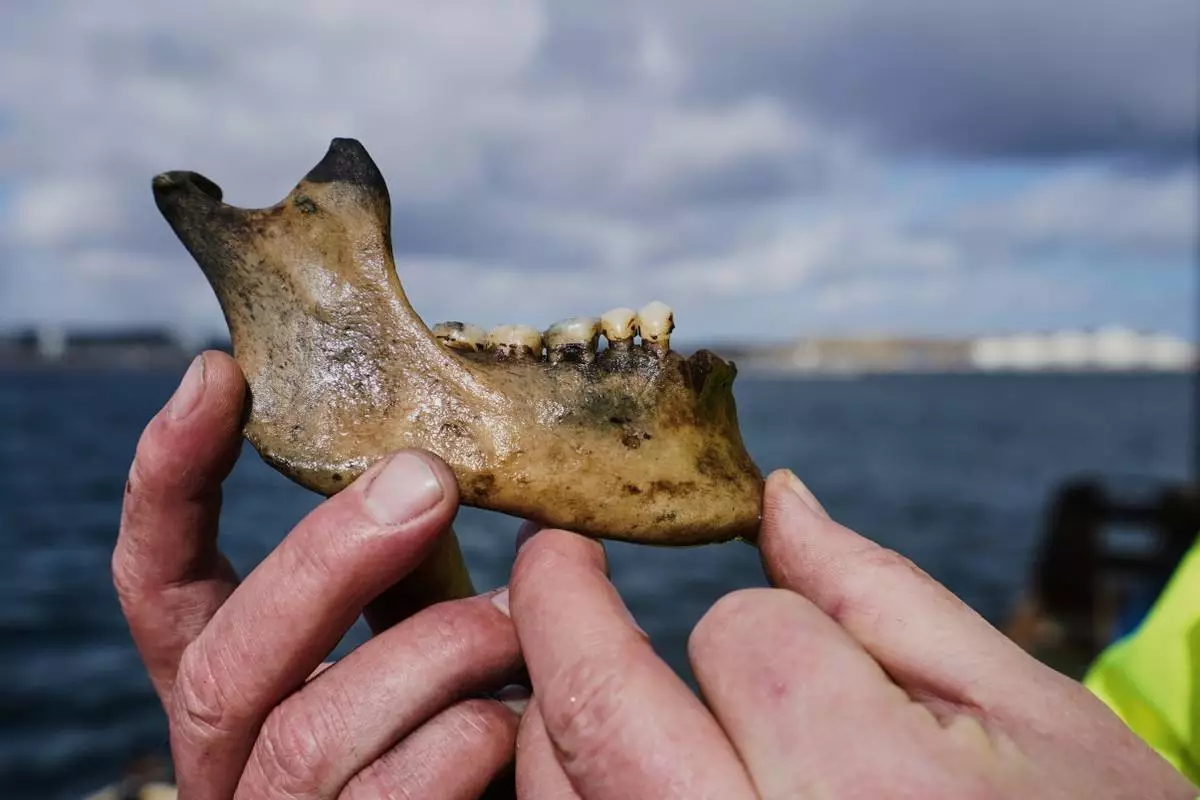
Morten Johansen, head of maritime archaeology at Denmark's Viking Ship Museum, shows part of a human lower jawbone recovered from the wreck of Danish flagship "Dannebroge" that sank during the Battle of Copenhagen in 1801, in Copenhagen, Denmark, Tuesday, March 31, 2026. (AP Photo/James Brooks)
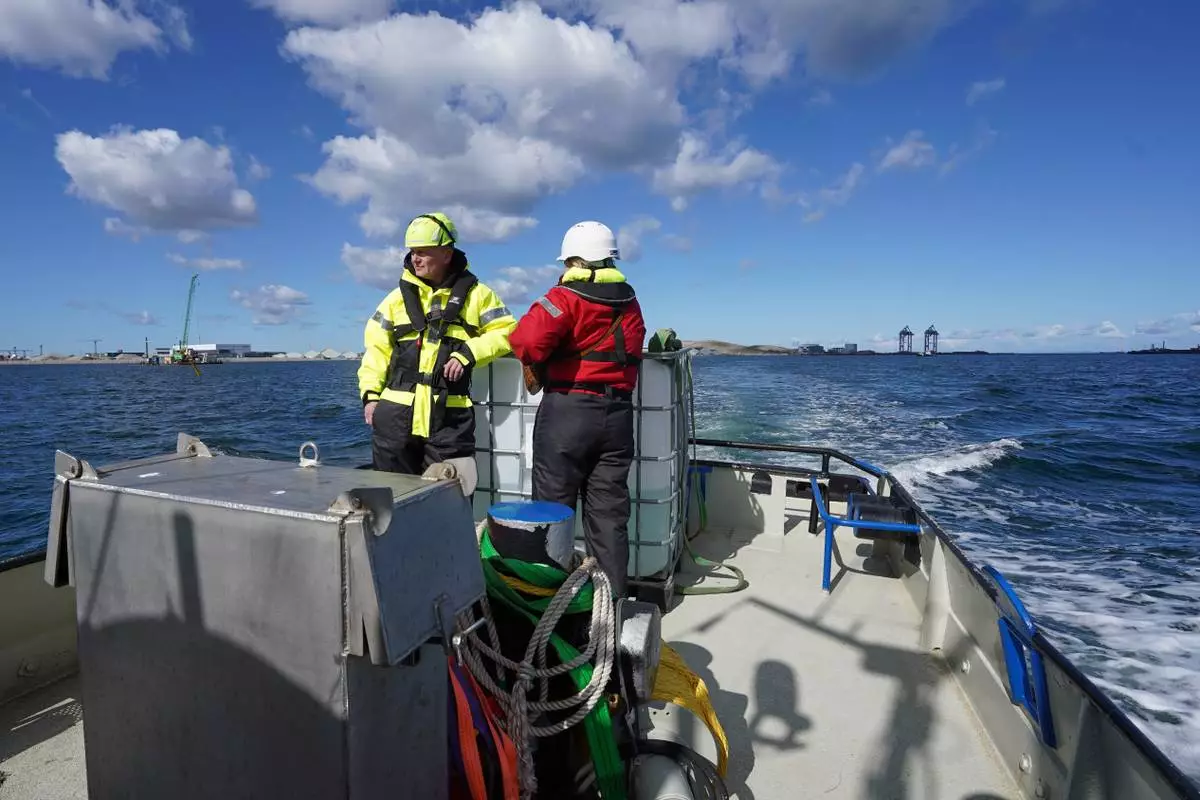
Archaeologists sail with boat through the harbor in Copenhagen, Denmark, Tuesday, March 31, 2026. (AP Photo/James Brooks)

An archaeologist points to a computer screen, showing a map of the wreck of Danish flagship "Dannebroge" that sank during the Battle of Copenhagen in 1801. in Copenhagen, Denmark, Tuesday, March 31, 2026. (AP Photo/James Brooks)
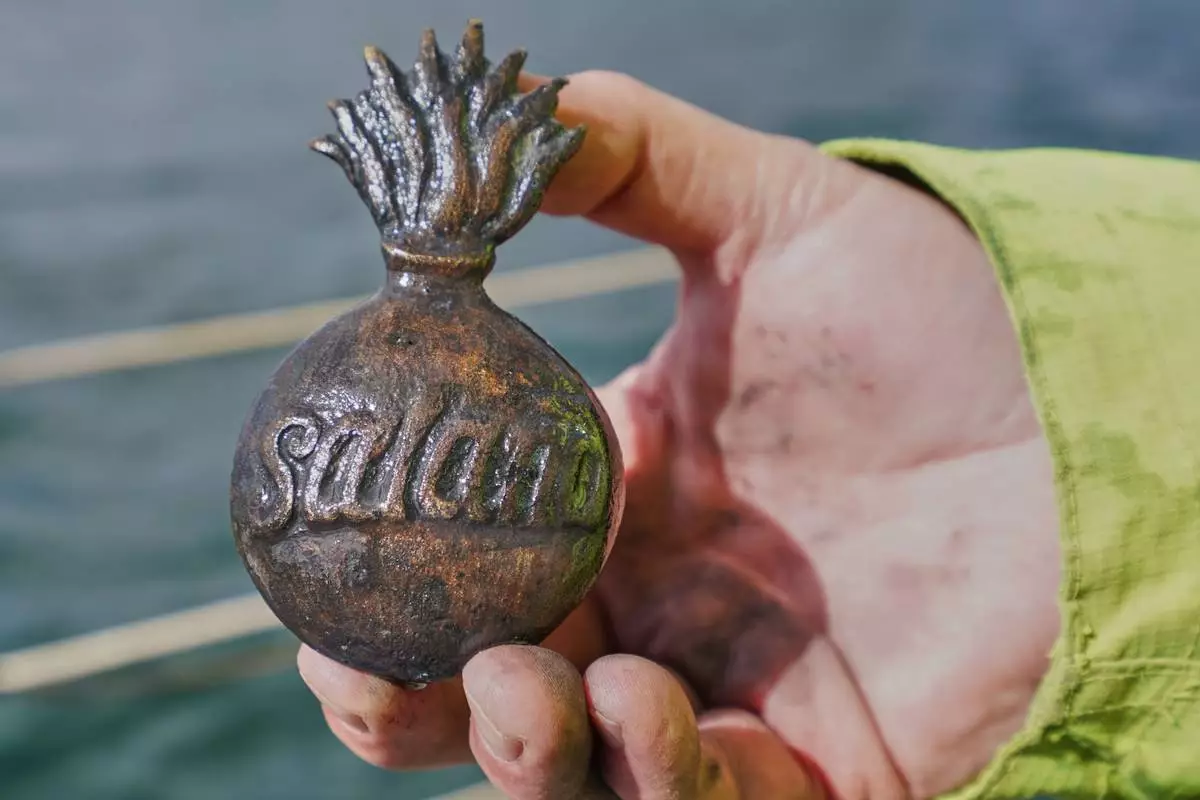
Morten Johansen, head of maritime archaeology at Denmark's Viking Ship Museum, shows a metal insignia recovered from the wreck of Danish flagship "Dannebroge" that sank during the Battle of Copenhagen in 1801, in Copenhagen, Denmark, Tuesday, March 31, 2026. (AP Photo/James Brooks)
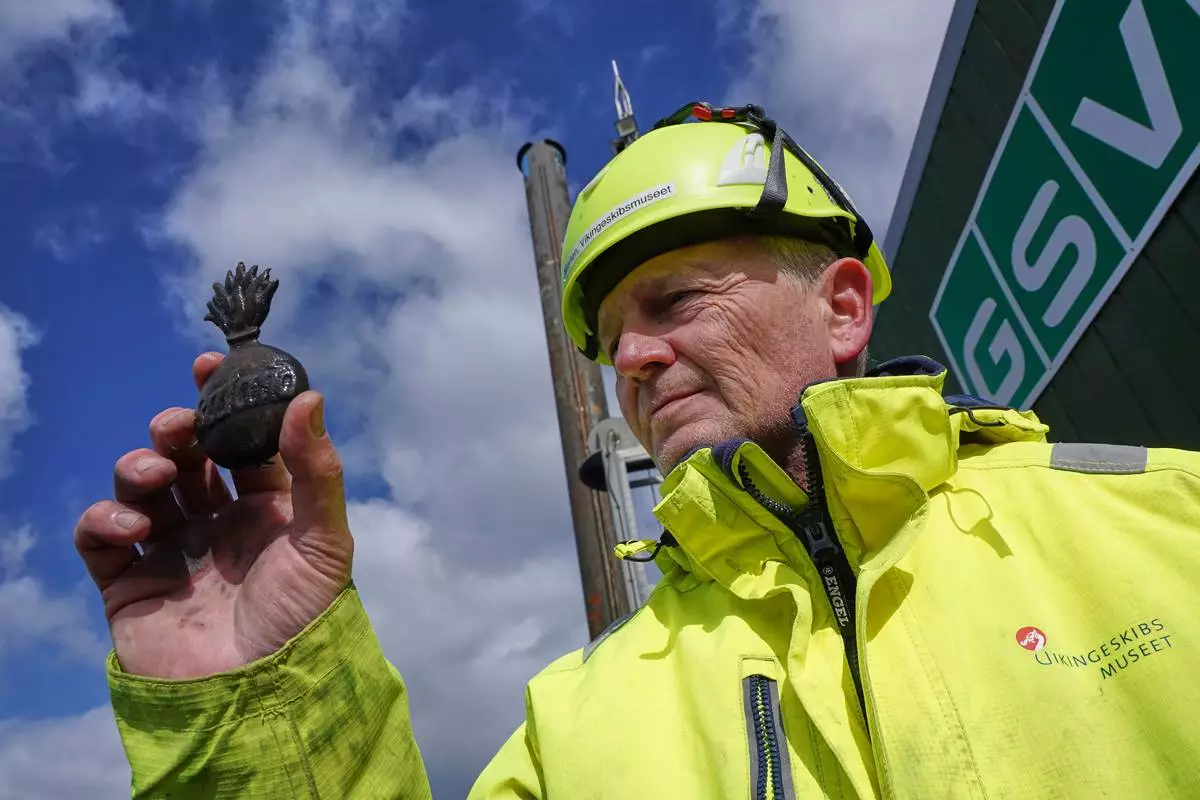
Morten Johansen, head of maritime archaeology at Denmark's Viking Ship Museum, shows a metal insignia recovered from the wreck of Danish flagship "Dannebroge" that sank during the Battle of Copenhagen in 1801, in Copenhagen, Denmark, Tuesday, March 31, 2026. (AP Photo/James Brooks)