ARLINGTON, Va.--(BUSINESS WIRE)--Dec 4, 2025--
AeroVironment, Inc. (“AV”) (NASDAQ: AVAV), a global leader in all-domain defense systems, today announced the integration of its Visual Navigation System (VNS) kit with the Puma™ Long Endurance (LE) small unmanned aircraft system (SUAS), delivering Global Navigation Satellite Systems (GNSS)-denied navigation capability to ensure mission success.
This press release features multimedia. View the full release here: https://www.businesswire.com/news/home/20251204878756/en/
First introduced in 2022 for the Puma 2 AE and Puma 3 AE, the VNS kit uses advanced computer vision and onboard processing to deliver precise, GNSS-independent navigation, and its integration into Puma LE now extends this capability across the full Puma family for greater flexibility and resilience in degraded or denied environments.
“Assured navigation is critical to the mission, especially as GNSS becomes an increasingly vulnerable resource,” said Jason Hendrix, Vice President of Small Uncrewed Systems for AV. “By fusing visual and inertial data in real time, the system enables uninterrupted flight paths, accurate geolocation, and mission continuity in unreliable GNSS regions.”
Using a suite of downward-facing sensors, cameras and onboard computing, the VNS kit performs Visual Inertial Odometry (VIO) to capture and analyze terrain imagery, estimating true aircraft position in real time. The system fuses continuous visual data from the cameras with motion inputs from onboard inertial sensors to calculate precise position, velocity, and orientation—allowing the aircraft to know where it is and where it is going when GNSS is not available. It automatically transitions between GNSS-enabled and GNSS-denied modes with zero pilot input, ensuring uninterrupted mission continuity in contested environments.
In September, AV announced several upgrades to the Puma LE platform that include the integration of a Laser Target Designator and the release of the Universal Gimbal Kit, enhancements that evolve Puma LE beyond ISR into a cutting-edge precision-engagement system.
“Every upgrade to Puma LE, including the addition of the VNS kit and our new laser designator and gimbal capabilities, is driven by one goal: giving the warfighter greater confidence, flexibility, and capability,” said Trace Stevenson, President of Autonomous Systems at AV. “These recent releases are a great example of AV constantly evolving our platforms to ensure they are at the forefront of technology and providing best in class capability to the warfighter.”
The VNS Kit is designed as an add-on option for new Puma 3 AE or Puma LE system orders and as a retrofit kit allowing existing Puma 2 AE, Puma 3 AE, and Puma LE customers to upgrade fielded systems. The compact two-piece add on installs easily into existing Pumas with minimal impact on performance and fits within the standard Puma cases for efficient mission packout. The standard Puma LE system weighs just 23.8 pounds and offers 6.5 hours of endurance, a 60-kilometer range, is inaudible at 500 feet and features tool-free payload swaps for seamless transitions between intelligence, surveillance and reconnaissance (ISR), targeting, and other mission sets.
About AV
AV (NASDAQ: AVAV) is a defense technology leader delivering integrated capabilities across air, land, sea, space, and cyber. The Company develops and deploys autonomous systems, loitering munitions, counter-UAS technologies, space-based platforms, directed energy systems, and cyber and electronic warfare capabilities—built to meet the mission needs of today’s warfighter and tomorrow’s conflicts. At the core of these technologies lies AV_Halo, a modular, mission-ready suite of AI-powered software tools that empowers warfighters and enables full-battlefield dominance: detect, decide, deliver. With a national manufacturing footprint and a deep innovation pipeline, AV delivers proven systems and future-defining capabilities at speed, scale, and operational relevance. For more information, visit www.avinc.com.
Safe Harbor Statement
Certain statements in this press release may constitute "forward-looking statements" as defined in the Private Securities Litigation Reform Act of 1995. These statements are based on current expectations, forecasts, and assumptions that involve risks and uncertainties, which could cause actual results to differ materially. Factors that may cause such differences include, but are not limited to, our ability to perform under existing contracts and obtain new ones; regulatory changes; competitor activities; market growth; product development challenges; and general economic conditions. For a more detailed discussion of these risks, please refer to AV’s filings with the Securities and Exchange Commission. We undertake no obligation to update forward-looking statements as a result of new information or future events.
Puma LE gains GNSS-denied navigation with AV’s Visual Navigation System (VNS kit), ensuring precise, resilient flight and mission continuity in contested environments.
MINNEAPOLIS (AP) — Alberto Castañeda Mondragón's memory was jumbled after he says he was badly beaten last month while being taken into custody by immigration officers. He did not remember much of his past, but the violence of the Jan. 8 arrest in Minnesota was seared into his battered brain.
The Mexican immigrant told The Associated Press this week that he remembers Immigration and Customs Enforcement agents pulling him from a friend’s car outside a St. Paul shopping center and throwing him to the ground, handcuffing him, and then punching him and striking his head with a steel baton.
He remembers being taken to a detention facility, where he said he was beaten again. Then came the emergency room and the intense pain from eight skull fractures and five life-threatening brain hemorrhages.
Castañeda Mondragón, 31, is one of an unknown number of immigration detainees who, despite avoiding deportation, have been left with lasting injuries following violent encounters with ICE. While the Trump administration insists ICE limits its enforcement operations to immigrants with violent rap sheets, he has no criminal record.
Here’s what to know about the case, one of the excessive-force claims the federal government has thus far declined to investigate.
ICE officers who arrested Castañeda Mondragón on Jan. 8 told nurses the man “purposefully ran headfirst into a brick wall,” an account Hennepin County Medical Center staff immediately doubted. A CT scan showed fractures to the front, back and both sides of his skull — injuries a doctor told AP were inconsistent with a fall.
ICE's account evolved as Castañeda Mondragón lay stricken in the hospital. At least one officer told staff the man "got his (expletive) rocked,” according to court documents filed by a lawyer seeking his release and nurses who treated him.
“There was never a wall,” Castañeda Mondragón told AP, recalling ICE officers striking him with the same metal rod used to break the windows of the vehicle he was in. He later identified it as a telescoping baton routinely carried by law enforcement.
Training materials and police use-of-force policies across the U.S. say such a baton can be used to hit the arms, legs and body. But striking the head, neck or spine is considered potentially deadly force.
Once he was taken to an ICE holding facility in suburban Minneapolis, Castañeda Mondragón said, officers resumed beating him. He said he pleaded with them to get a doctor, but they just “laughed at me and hit me again."
The Trump administration this week announced a broad rollout of body cameras for immigration officers in Minneapolis even as the government draws down ICE’s presence there. But it's not clear whether Castañeda Mondragón's arrest was captured on body-camera footage or if there might be additional recordings from security cameras at the detention center.
The Department of Homeland Security, which includes ICE, has not responded to repeated requests for comment on the case.
The government's only acknowledgment of the injuries came in a Jan. 20 court filing that said it was learned during his arrest that “had a head injury that required emergency medical treatment."
The same filing said Castañeda Mondragón entered the U.S. legally in March 2022 and that the agency determined only after his arrest that he had overstayed his visa. A federal judge ruled his arrest had been unlawful and ordered him released from ICE custody.
The case has drawn the attention of several officeholders in Minnesota, including Gov. Tim Walz, who this week posted an AP story about the case on X. But it's not clear whether any state authorities are investigating how Castañeda Mondragón was injured.
The Ramsey County Attorney’s Office, which oversees St. Paul, urged Castañeda Mondragón to file a police report to prompt an investigation. He said he plans to file a complaint. A St. Paul police spokesperson said the department would investigate “all alleged crimes that are reported to us.”
“We are seeing a repeated pattern of Trump Administration officials attempting to lie and gaslight the American people when it comes to the cruelty of this ICE operation in Minnesota,” Sen. Tina Smith, a Minnesota Democrat, said in a statement.
Rep. Kelly Morrison, another Democrat and a doctor, recently toured the Whipple Building, the ICE facility at Ft. Snelling. She said she saw severe overcrowding, unsanitary conditions and an almost complete lack of medical care. She and other Minnesota Democrats say injuries that occur in ICE custody should be investigated.
“If any one of our police officers did this, you know what just happened in Minnesota with George Floyd, we hold them accountable,” said Democratic Rep. Betty McCollum, whose district includes St. Paul. “There’s no reason why federal agents should not be held to the same high standard.”
Biesecker reported from Washington. Mustian reported from New York, and Attanasio reported from Seattle.
Brook is a corps member for The Associated Press/Report for America Statehouse News Initiative. Report for America is a nonprofit national service program that places journalists in local newsrooms to report on undercovered issues.
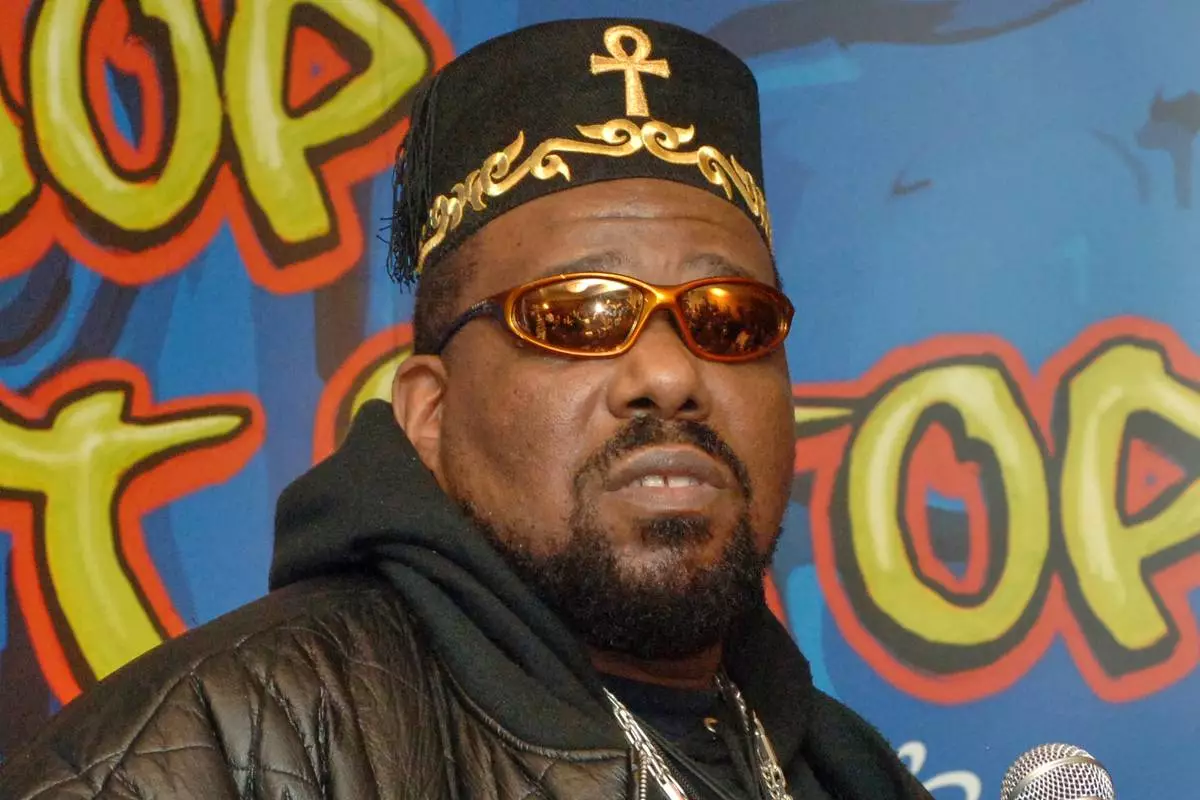
Alberto Castañeda Mondragón poses for a portrait at an apartment Wednesday, Feb. 4, 2026, in St. Paul, Minn. (AP Photo/Mark Vancleave)