Skip to Content Facebook Feature Image

EvenUp Unveils Medical Management and AI Communication Agents Across the Case Lifecycle to Prioritize Client Outreach and Increase Recoveries

Business

EvenUp Unveils Medical Management and AI Communication Agents Across the Case Lifecycle to Prioritize Client Outreach and Increase Recoveries
Business

Business

EvenUp Unveils Medical Management and AI Communication Agents Across the Case Lifecycle to Prioritize Client Outreach and Increase Recoveries

2025-12-05 00:01 Last Updated At:12-06 11:51

SAN FRANCISCO--(BUSINESS WIRE)--Dec 4, 2025--

EvenUp, the category leader in AI for personal injury law, today announced its Medical Management Solution. Developed through insights from thousands of attorney interactions, the solution tackles the 32% of cases experiencing major treatment interruptions by delivering 360° visibility into every client's medical journey in real-time. Medical Management features AI communication agents that proactively keep firms updated, enabling them to prevent costly treatment gaps, maintain case progress, and protect case value for their clients.

This press release features multimedia. View the full release here: https://www.businesswire.com/news/home/20251203806633/en/

Improving Treatment Outcomes: One in Three Plaintiffs Experience Interruptions in Care

In personal injury, treatment is one of the most important phases that drives case value — yet most firms still operate with delayed, incomplete, or inconsistent medical updates. EvenUp’s proprietary data reveals:

These gaps can weaken credibility when they stem from missed or uncommunicated care, and also leave firms blind to the care patterns that determine outcomes. EvenUp’s Medical Management Solution provides firms with the tools to stay ahead of these problems while respecting the natural cadence of a client’s recovery and avoiding inappropriate pressure for additional care. Key capabilities include:

“The technology with human insight and oversight allows us to be much better advocates for our clients,” said Clark H. Fielding, Founding Principal & Esquire at Fielding Law. “We can pull up information in real time during depositions and get the ammunition we need to be the best advocates possible.”

The Future of Communication Agents

The Treatment Check-In Agent is the first in a broader suite of Communication Agents that will extend across the entire case lifecycle. Built to meet the growing demand for faster and more accessible client communication, these agents support both SMS and voice interactions, including Spanish-language capabilities, enabling firms to connect with clients and providers in the channels they already prefer. Future agents will handle some of the most time-consuming communication tasks in personal injury, including record retrieval follow-up, balance verification, and liability and coverage verification. This removes friction in the communication layers that currently slow cases down and strain firm resources. These tools are designed to give attorneys more time for the work only humans can do: advising clients, building strategy, and preparing cases for the best possible outcome.

“When you’re managing hundreds of cases, it’s impossible to speak with every client regularly,” said John K. Zaid, Managing Partner and Founder, at John K. Zaid & Associates. “EvenUp’s Communication Agent keeps those conversations going while my team focuses on the critical work of medical management and maximizing client recovery.”

Built from Real Usage, Aimed at the Future

With the largest personal-injury dataset in the industry, EvenUp uniquely translates real-world usage and case data into exclusive insights that fuel product innovation and shape best practices for firms adopting AI.

An analysis in July 2025 of thousands of AI interactions across 200+ firms nationwide reveals how attorneys are utilizing AI to work smarter — not faster for the sake of speed, but to reclaim time for advocacy and strategy. EvenUp recently launched an AI Prompt Series to share its findings and best practices with PI leaders. Some initial highlights include:

Extending EvenUp’s Lead in Personal Injury AI

Earlier this year, EvenUp introduced Mirror Mode, a first-of-its-kind AI Drafts capability that enables firms to replicate their best work across various document types — ensuring quality and efficiency at scale. Together, Mirror Mode and Medical Management represent a major step forward in EvenUp’s evolution from document generation to comprehensive case lifecycle management.

“Personal Injury AI is moving from reactive to proactive, and treatment is the next frontier,” said Rami Karabibar, CEO and Co-Founder of EvenUp. “By bringing real-time visibility to client care, we’re helping firms see what’s next, not just what’s happened.”

Medical Management follows EvenUp’s $150 million Series E funding, led by Bessemer Venture Partners with participation from REV (the venture arm of RELX, owner of LexisNexis), B Capital, Bain Capital, Premji Invest, Lightspeed, and others, bringing its valuation above $2 billion.

About EvenUp

EvenUp is on a mission to close the justice gap with AI-powered technology that empowers personal injury firms to deliver higher standards of representation and fairer outcomes for millions of injury victims. Its Claims Intelligence Platform™ streamlines workflows, automates documents, and provides actionable insights across the entire case lifecycle. EvenUp is backed by leading investors, including Bessemer Venture Partners; B Capital; REV, the venture capital arm of RELX, which owns LexisNexis; Premji Invest; Lightspeed; Bain Capital Ventures (BCV); SignalFire; NFX; DCM; and more.
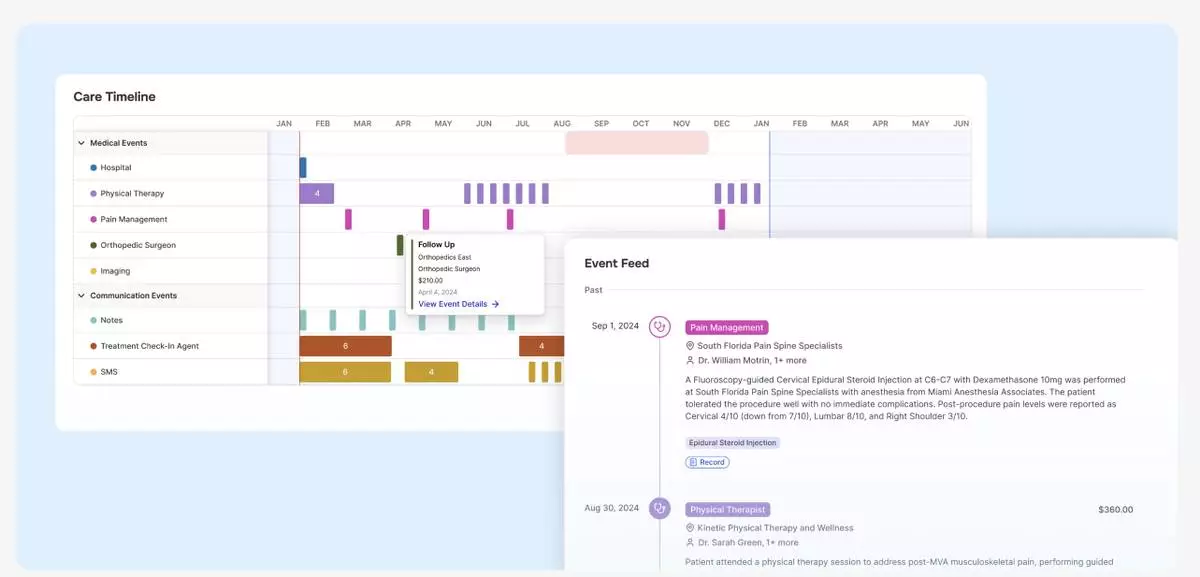
EvenUp's Medical Management Solution helps personal injury attorneys stay ahead with a real-time care timeline. As new updates come in, log medical events, notes, and calls in one place. Verify client details against medical records to spot gaps and keep cases on track.
EvenUp's Medical Management Solution helps personal injury attorneys stay ahead with a real-time care timeline. As new updates come in, log medical events, notes, and calls in one place. Verify client details against medical records to spot gaps and keep cases on track.
CAPE CANAVERAL, Fla. (AP) — Four astronauts strapped into NASA's new moon rocket and awaited liftoff Wednesday on humanity’s first lunar trip in more than half a century.

The three Americans and one Canadian waved and shaped their hands into hearts as they emerged from crew quarters to cheers and said goodbye to their families. The crowd applauded and cheered again as the astronauts boarded their astrovan for the nine mile (14-kilometer) ride to the launch pad.

Commander Reid Wiseman thanked the throngs who gathered to see them off.

“It's a great day for us. It's a great day for this team,” Wiseman called out.

Tensions were high earlier in the day as hydrogen fuel started flowing into the rocket. Dangerous hydrogen leaks erupted during a countdown test earlier this year, forcing a lengthy flight delay.

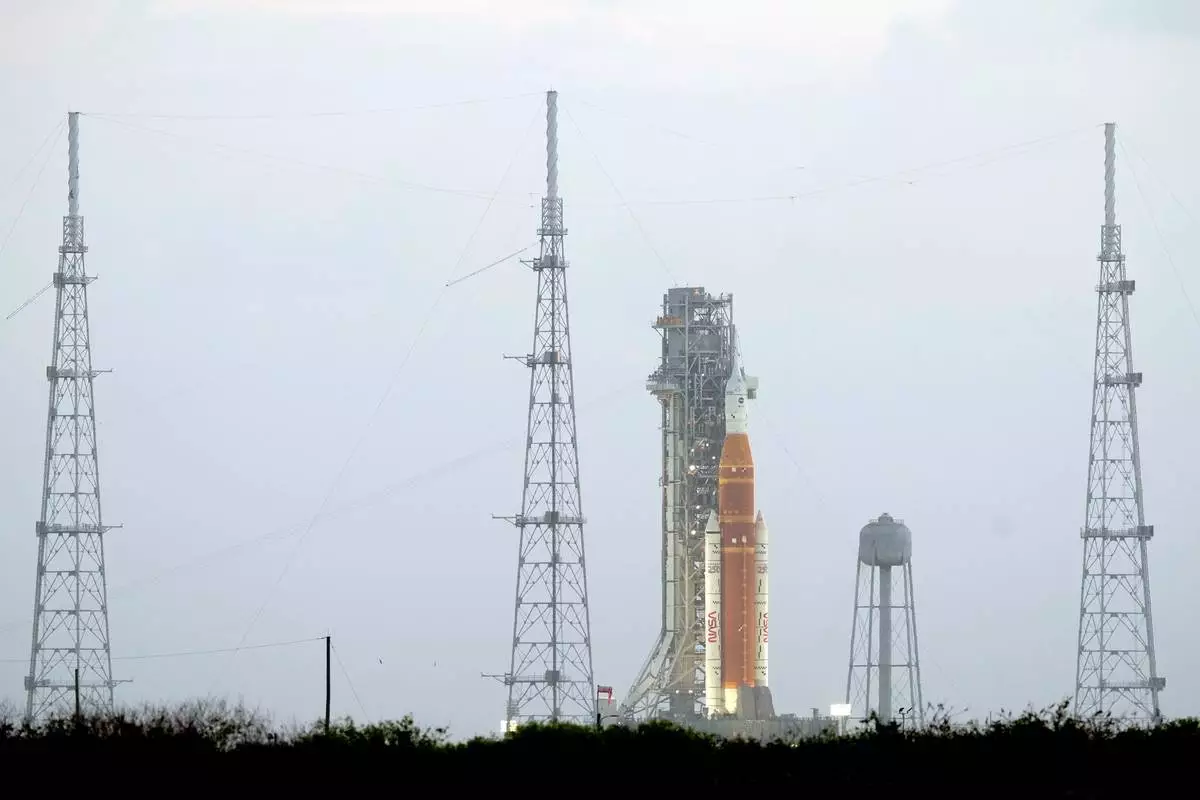
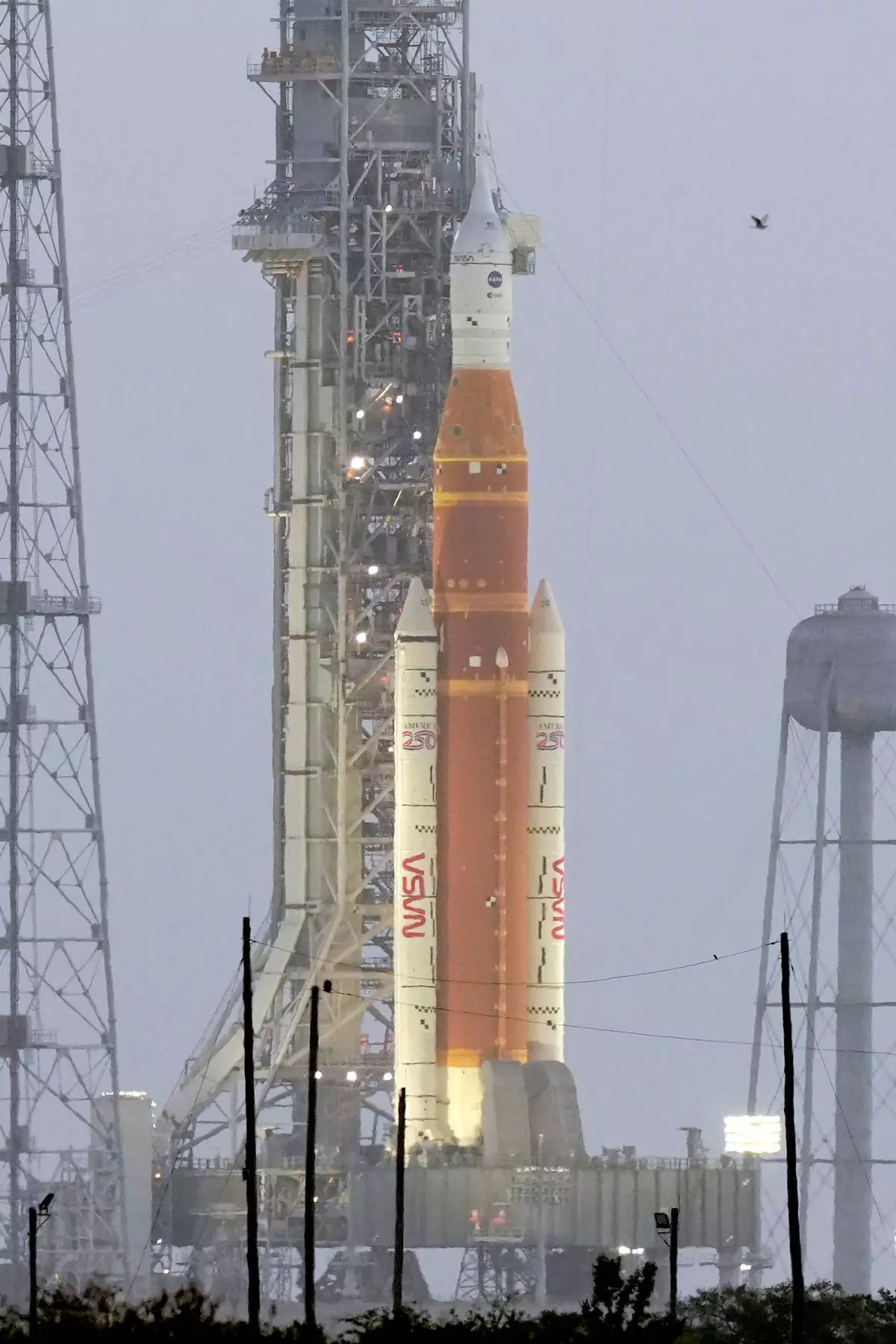
To NASA's relief, no significant hydrogen leaks occurred. The launch team loaded more than 700,000 gallons of fuel (2.6 million liters) into the 32-story Space Launch System rocket on the pad, a smooth operation that set the stage for the Artemis II crew to board.

A problem cropped up with the rocket's flight-termination system with only two hours remaining in the countdown. Commands weren't getting through to the system, which is needed to send a self-destruct signal in case the rocket veers off course and threatens populated areas. But the issue was quickly resolved, according to NASA.

“It is time to fly,” Wiseman declared on the eve of launch via X. Favorable weather was forecast.

The four will fly around the moon without stopping or even orbiting — then head straight back for a Pacific splashdown. They will set a new distance record for the farthest humans have traveled from Earth as they zoom some 4,000 miles (6,400 kilometers) beyond the moon and then hang a U-turn.

Astronauts last flew to the moon during Apollo 17 in 1972.

Artemis II is the opening shot of NASA's grand plans for a permanent moon base. The space program is aiming for a moon landing near the lunar south pole in 2028.

“The next era of exploration begins,” NASA Administrator Jared Isaacman posted on X.

Best wishes already have started to pour in, including from England's King Charles III to Canadian Space Agency astronaut Jeremy Hansen.

Hansen will become the first non-U. S. citizen to launch to the moon. The crew also includes Christina Koch and Victor Glover, the first woman and first Black astronaut, respectively, destined for the moon.

“In this historic moment, you stand as a bridge between nations and generations,” the king wrote in a letter to Hansen, “and I commend you for your courage, discipline and vision that have brought you to this threshold.”

The Associated Press Health and Science Department receives support from the Howard Hughes Medical Institute’s Department of Science Education and the Robert Wood Johnson Foundation. The AP is solely responsible for all content.

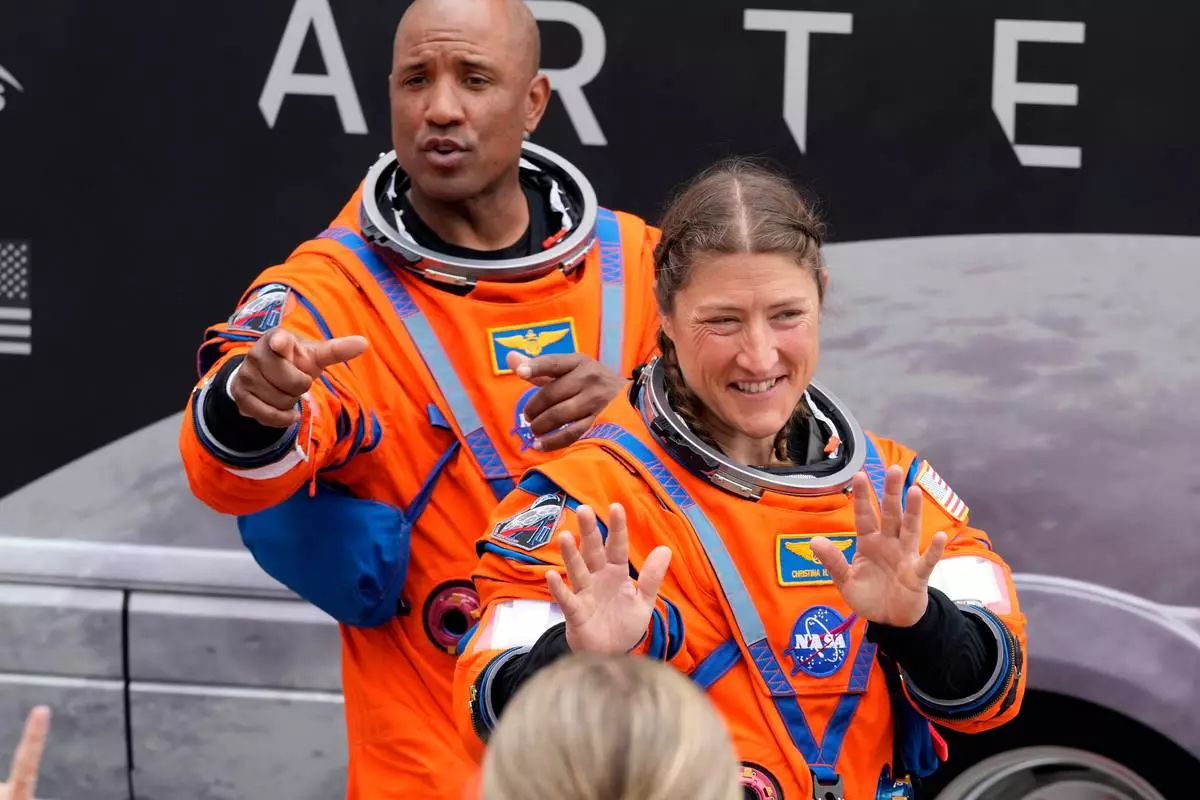
Astronauts, Mission Specialist Christina Koch, right, and Pilot Victor Glover wave to family members as they leave the Operations and Checkout Building for a trip to Launch Pad 39-B and a planned liftoff on NASA's Artermis II moon rocket at the Kennedy Space Center Wednesday, April 1, 2026, in Cape Canaveral, Fla. (AP Photo/Chris O'Meara)

Astronauts, Mission Specialist Christina Koch, right, and Pilot Victor Glover wave to family members as they leave the Operations and Checkout Building for a trip to Launch Pad 39-B and a planned liftoff on NASA's Artermis II moon rocket at the Kennedy Space Center Wednesday, April 1, 2026, in Cape Canaveral, Fla. (AP Photo/Chris O'Meara)

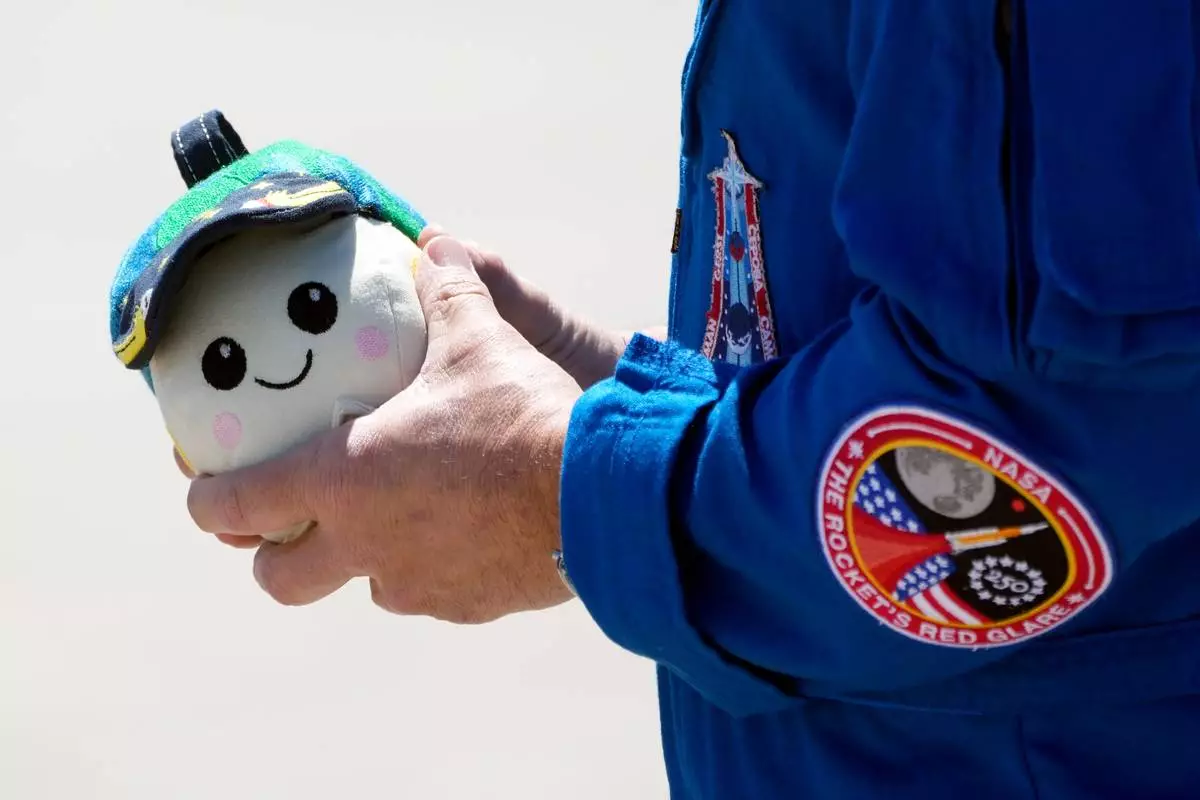
Artemis 2 crew member Commander Reid Wiseman holds "Rise" after the crew's arrival at the Kennedy Space Center Friday, March 27, 2026, in Cape Canaveral, Fla. (AP Photo/Chris O'Meara)

Artemis 2 crew member Commander Reid Wiseman holds "Rise" after the crew's arrival at the Kennedy Space Center Friday, March 27, 2026, in Cape Canaveral, Fla. (AP Photo/Chris O'Meara)

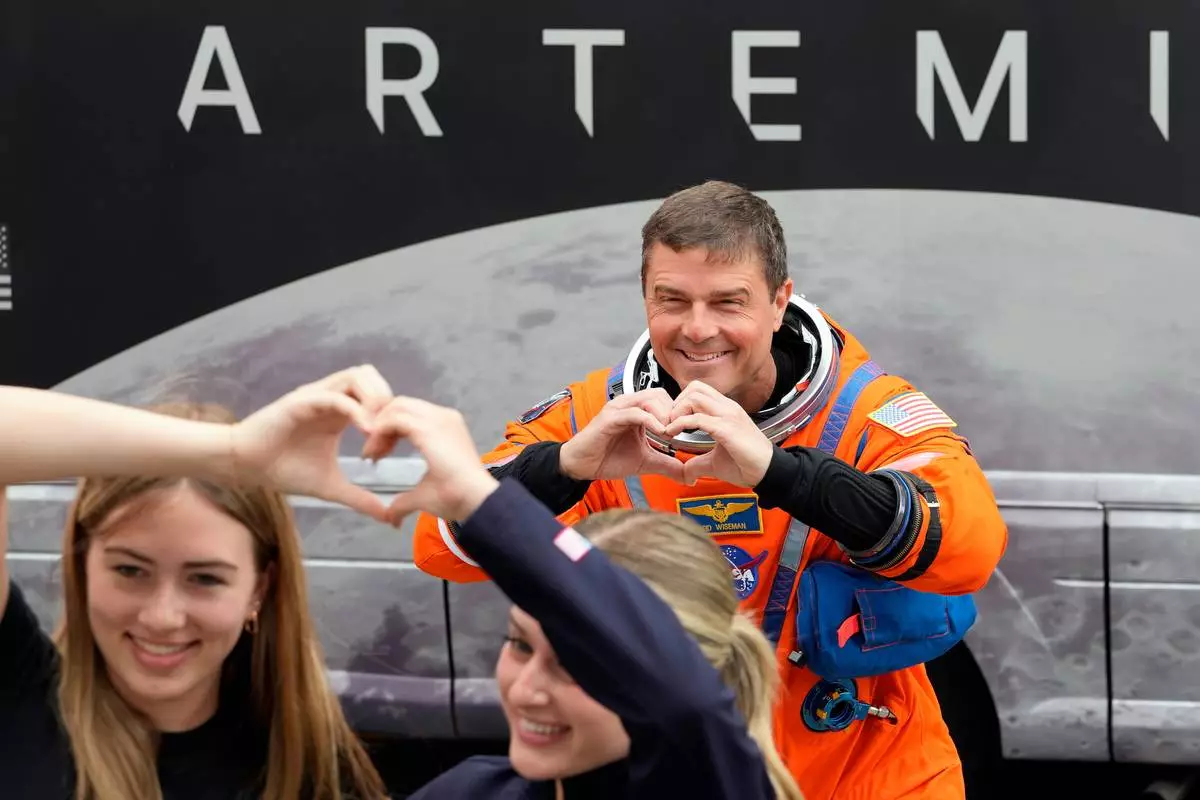
Commander Reid Wiseman poses for a photo with family members after leaving the Operations and Checkout Building for a trip to Launch Pad 39-B and a planned liftoff on NASA's Artermis II moon rocket at the Kennedy Space Center Wednesday, April 1, 2026, in Cape Canaveral, Fla. (AP Photo/Chris O'Meara)

Commander Reid Wiseman poses for a photo with family members after leaving the Operations and Checkout Building for a trip to Launch Pad 39-B and a planned liftoff on NASA's Artermis II moon rocket at the Kennedy Space Center Wednesday, April 1, 2026, in Cape Canaveral, Fla. (AP Photo/Chris O'Meara)

Astronauts, from left, Mission Specialist Jeremy Hansen, of Canada,, Pilot Victor Glover, Commander Reid Wiseman, and Mission Specialist Christina Koch pose for a photo after leaving the Operations and Checkout Building for a trip to Launch Pad 39-B and a planned liftoff on NASA's Artermis II moon rocket at the Kennedy Space Center Wednesday, April 1, 2026, in Cape Canaveral, Fla. (AP Photo/Chris O'Meara)

Astronauts, from left, Mission Specialist Jeremy Hansen, of Canada,, Pilot Victor Glover, Commander Reid Wiseman, and Mission Specialist Christina Koch pose for a photo after leaving the Operations and Checkout Building for a trip to Launch Pad 39-B and a planned liftoff on NASA's Artermis II moon rocket at the Kennedy Space Center Wednesday, April 1, 2026, in Cape Canaveral, Fla. (AP Photo/Chris O'Meara)

NASA's Artermis II moon rocket sits on Launch Pad 39-B at the Kennedy Space Center hours ahead of a planned launch attempt Wednesday, April 1, 2026, in Cape Canaveral, Fla. (AP Photo/Chris O'Meara)

NASA's Artermis II moon rocket sits on Launch Pad 39-B at the Kennedy Space Center hours ahead of a planned launch attempt Wednesday, April 1, 2026, in Cape Canaveral, Fla. (AP Photo/Chris O'Meara)

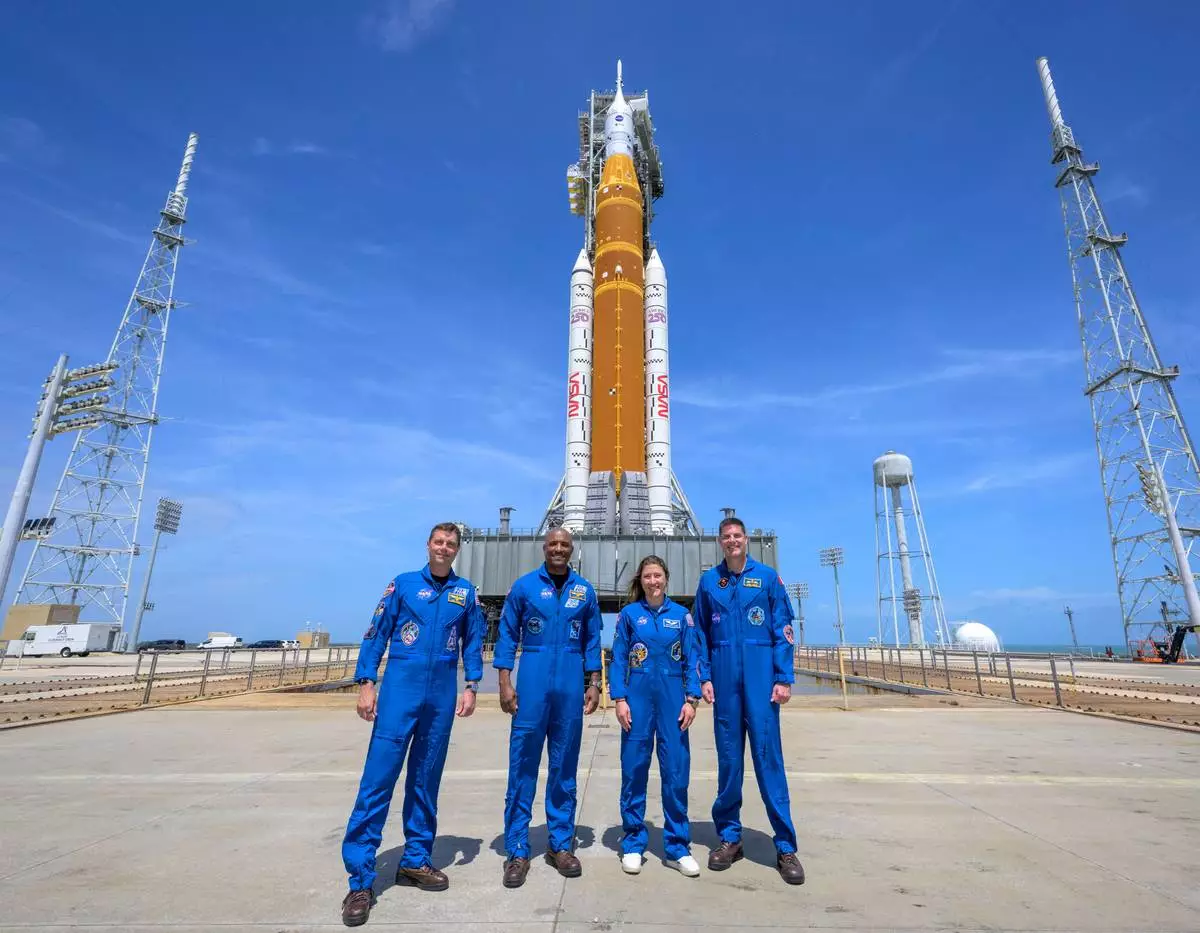
This photo provided by NASA shows NASA astronauts Reid Wiseman, Artemis II commander, from left, Victor Glover, Artemis II pilot, Christina Koch, Artemis II mission specialist, and CSA (Canadian Space Agency) astronaut Jeremy Hansen, Artemis II mission specialist, right, in a group photograph as they visit NASA's Artemis II SLS (Space Launch System) rocket and Orion spacecraft, Monday, March 30, 2026, at Launch Complex 39B of NASA's Kennedy Space Center, in Cape Canaveral, Fla. (Bill Ingalls/NASA via AP)

This photo provided by NASA shows NASA astronauts Reid Wiseman, Artemis II commander, from left, Victor Glover, Artemis II pilot, Christina Koch, Artemis II mission specialist, and CSA (Canadian Space Agency) astronaut Jeremy Hansen, Artemis II mission specialist, right, in a group photograph as they visit NASA's Artemis II SLS (Space Launch System) rocket and Orion spacecraft, Monday, March 30, 2026, at Launch Complex 39B of NASA's Kennedy Space Center, in Cape Canaveral, Fla. (Bill Ingalls/NASA via AP)

NASA's Artermis II moon rocket sits on Launch Pad 39-B at the Kennedy Space Center hours ahead of planned liftoff Wednesday, April 1, 2026, in Cape Canaveral, Fla. (AP Photo/Chris O'Meara)

NASA's Artermis II moon rocket sits on Launch Pad 39-B at the Kennedy Space Center hours ahead of planned liftoff Wednesday, April 1, 2026, in Cape Canaveral, Fla. (AP Photo/Chris O'Meara)

Recommended Articles