SCOTTSDALE, Ariz. (AP) — Roughly a month after the Los Angeles Dodgers finished a scintillating seven-game World Series triumph over the Toronto Blue Jays, the Major League Baseball Players' Association gathered in Arizona this week to discuss the future of the game and look ahead to a possible lockout next December.
Japanese stars headed by Shohei Ohtani and Yoshinobu Yamamoto have sparked record international interest, in-game attendance was up in 2025 for the third straight season, and a set of rule changes that began in 2023 has produced a faster-paced game that's been widely lauded.
But the big-spending nature of the $500 million Dodgers — who were led by high-priced stars like Ohtani, Yamamoto, Mookie Betts and Freddie Freeman — highlighted baseball's payroll disparity as the MLBPA prepares for a potentially contentious round of labor negotiations leading to the expiration of the collective bargaining agreement next Dec. 1.
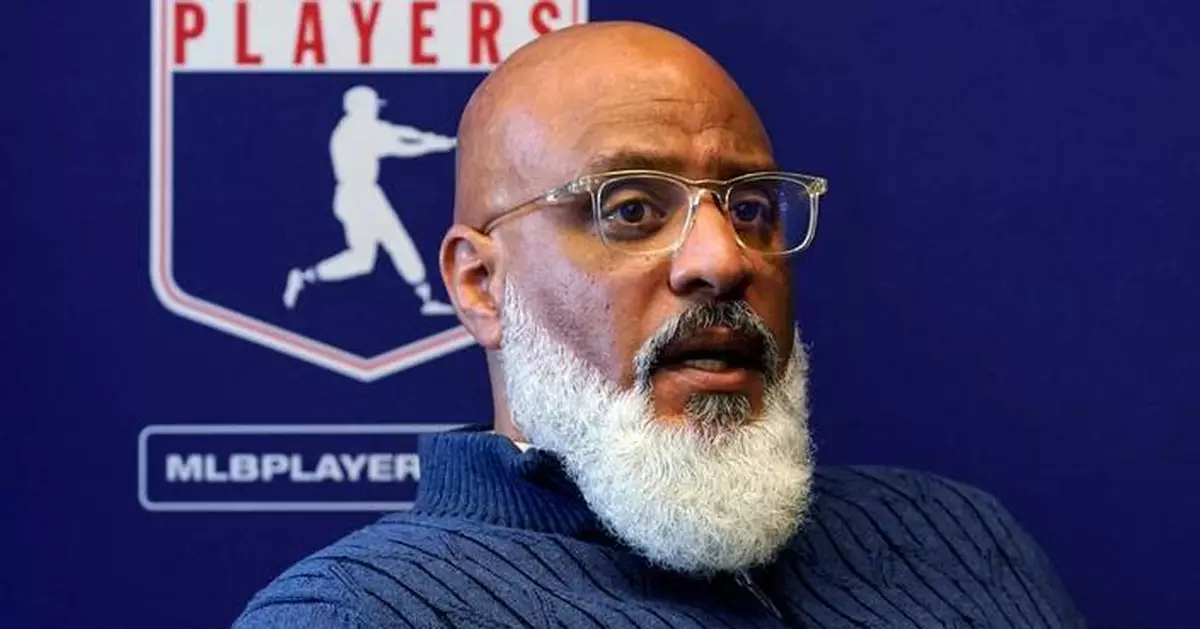
Union head Tony Clark said formal bargaining will likely begin in the spring, consistent with previous negotiations.
“As an organization, you start preparing for the next round of bargaining as soon as the ink is dry on the previous one,” Clark said Thursday. “You're constantly assessing the system, you're assessing how it is that teams and players are responding to the system.
“A year away, you're really drilling down on what that looks like.”
The eight-person executive subcommittee consists of 2025 Cy Young Award winners Paul Skenes and Tarik Skubal, along with veterans Chris Bassitt, Jake Cronenworth, Pete Fairbanks, Cedric Mullins, Marcus Semien and Brent Suter.
There are also 30 player reps — one for each team.
“We have an outstanding group of player leaders,” Clark said. “We are better and stronger as an organization when players engage one another and are educated on the issues. We have that. It’s something we’re grateful for and something historically our organization has always had.”
Clark said the MLBPA's main focus continues to be centered on a few large issues heading into bargaining. One is finding more ways to encourage all 30 teams to spend on the free-agent market to make teams as competitive as possible.
While the Dodgers have spent roughly $890 million over the past two years building back-to-back World Series champions, the Athletics have committed less than $150 million over the same period. MLB is the only major U.S.-based professional sports league without a salary cap.
The players’ association is bracing to resist a renewed push for a cap. Demand for a cap from owners is what led to a 7 1/2-month strike in 1994-95 and the first cancellation of the World Series in 90 years.
Thirty years later, scars from that experience still remain. Clark made his MLB debut with the Detroit Tigers in 1995.
“Knowing that there are teams who have the wherewithal to compete, that choose not to and how that affects the industry,” Clark said. “In an industry where not all 30 teams are committed to that, what does that mean? Are there things that we can do to address those concerns? There are.”
The other major issue is that the MLBPA would like to see more ways for younger players to be paid in a way that's more consistent with their on-field value. Most players are eligible for salary arbitration after three years of MLB service time and can be free agents after six years.
The union made some gains in compensating younger players in the last round of bargaining. The minimum salary jumped to $700,000 in 2022 and will be $780,000 next year. And a $50 million annual pool was established for pre-arbitration-eligible players.
Clark said he did not have any new information to offer about an ongoing federal investigation into OneTeam Partners, a licensing company the union founded with the NFL Players Association.
The company has grown in recent years, working with other unions that represent players in the WNBA, men's and women's soccer, and college sports.
“We continue to cooperate fully," Clark said. “We don't know the timing, we don't know when it may wrap. But as they ask questions and are interested in information, we answer the questions and provide them information. That's not going to change.”
AP Baseball Writer Ronald Blum contributed to this report.
AP MLB: https://apnews.com/hub/mlb
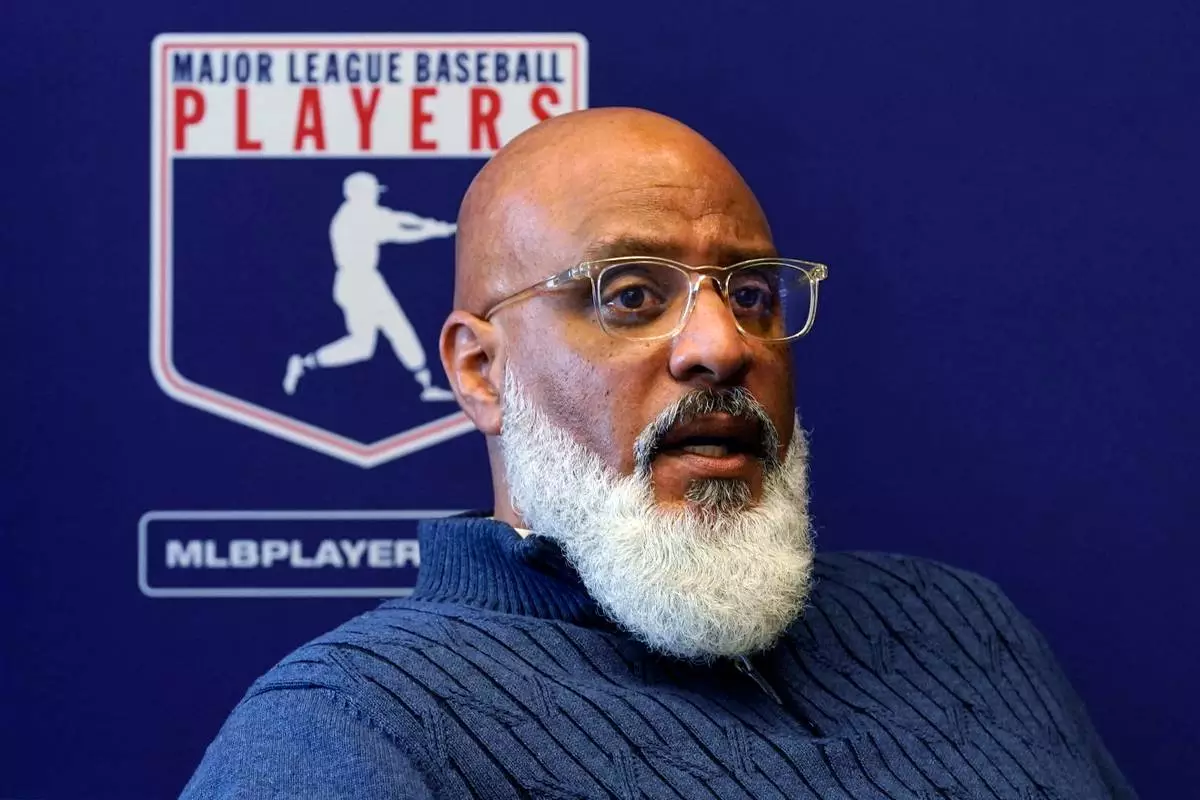
FILE - Major League Baseball Players Association Executive Director Tony Clark answers a question during a news conference in New York on March 11, 2022. (AP Photo/Richard Drew, File)
COPENHAGEN, Denmark (AP) — More than 200 years after being sunk by Adm. Horatio Nelson and the British fleet, a Danish warship has been discovered on the seabed of Copenhagen Harbor by marine archaeologists.
Working in thick sediment and almost zero visibility 15 meters (49 feet) beneath the waves, divers are working against the clock to unearth the 19th-century wreck of the Dannebroge before it becomes a construction site in a new housing district being built off the Danish coast.
Denmark’s Viking Ship Museum, which is leading the monthslong underwater excavations, announced its findings on Thursday, 225 years to the day since the Battle of Copenhagen in 1801.
“It’s a big part of the Danish national feeling,” said Morten Johansen, the museum’s head of maritime archaeology.
A great deal has been written about the battle “by very enthusiastic spectators, but we actually don’t know how it was to be onboard a ship being shot to pieces by English warships and some of that story we can probably learn from seeing the wreck, Johansen said.
In the Battle of Copenhagen, Nelson and the British fleet attacked and defeated Denmark’s navy as it formed a protective blockade outside the harbor.
Thousands were killed and wounded during the brutal hourslong naval clash, considered one of Nelson’s “great battles.” The intention was to force Denmark out of an alliance of Northern European powers, including Russia, Prussia and Sweden.
At the center of the fighting was the Danish flagship, the Dannebroge, commanded by Commodore Olfert Fischer.
The 48-meter (157-foot) Dannebroge was Nelson’s main target. Cannon fire tore through its upper deck before incendiary shells sparked a fire aboard.
“(It was) a nightmare to be on board one of these ships,” Johansen said. “When a cannonball hits a ship, it’s not the cannonball that does the most damage to the crew, it’s wooden splinters flying everywhere, very much like grenade debris.”
The battle also is believed to have inspired the phrase “to turn a blind eye.” After deciding to ignore a superior’s signal, Nelson, who had lost sight in his right eye, reportedly remarked: “I have only one eye, I have a right to be blind sometimes.”
Nelson eventually offered a truce and a ceasefire was later agreed with Denmark’s Crown Prince Frederik.
The stricken Dannebroge slowly drifted northward and exploded. Records say the sound created a deafening roar across Copenhagen.
Marine archaeologists have discovered two cannons, uniforms, insignia, shoes, bottles and even part of a sailor’s lower jaw, perhaps one of the 19 unaccounted-for crew members who likely lost their lives that day.
The dig site will soon be enveloped by construction work for Lynetteholm, a megaproject to build a new housing district in the middle of Copenhagen Harbor that is expected to be completed by 2070.
Marine archaeologists began surveying the area late last year, targeting a spot thought to match the flagship’s final position.
Experts say the sizes of the wooden parts found match old drawings. Dendrochronological dating, the method of using tree rings to establish the age of wood, match the year the ship was built. They also say the darkened dig site is full of cannonballs, a hazard for divers navigating waters darkened by clouds of silt stirred up from the seabed.
“Sometimes you can’t see anything, and then you really have to just feel your way, look with your fingers instead of with your eyes,” diver and maritime archaeologist Marie Jonsson said.
Chronicled in books and painted on canvases, the 1801 battle is deeply embedded in Denmark’s national story.
Archaeologists hope their discoveries may help reexamine the event that shaped the Scandinavian country and perhaps uncover personal stories of those who went into battle on that day 225 years ago.
“There are bottles, there are ceramics, and even pieces of basketry,” Jonsson said. “You get closer to the people onboard.”
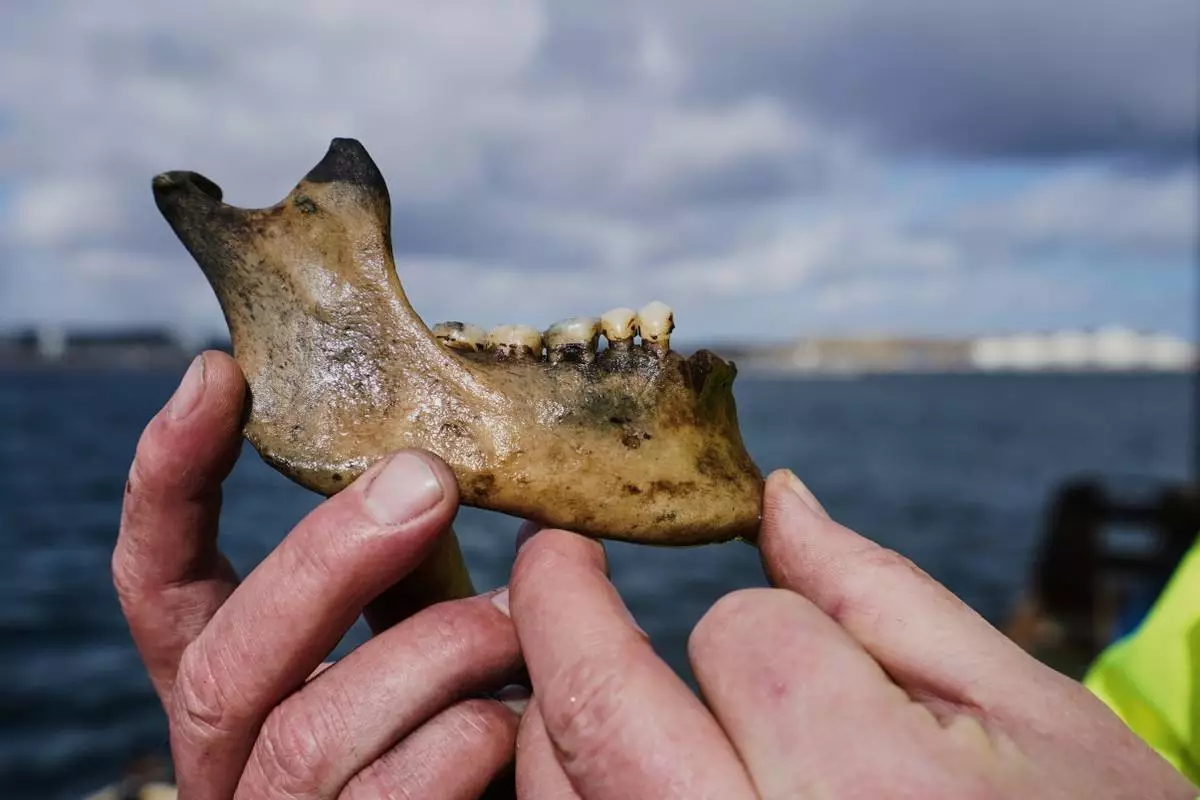
Morten Johansen, head of maritime archaeology at Denmark's Viking Ship Museum, shows part of a human lower jawbone recovered from the wreck of Danish flagship "Dannebroge" that sank during the Battle of Copenhagen in 1801, in Copenhagen, Denmark, Tuesday, March 31, 2026. (AP Photo/James Brooks)
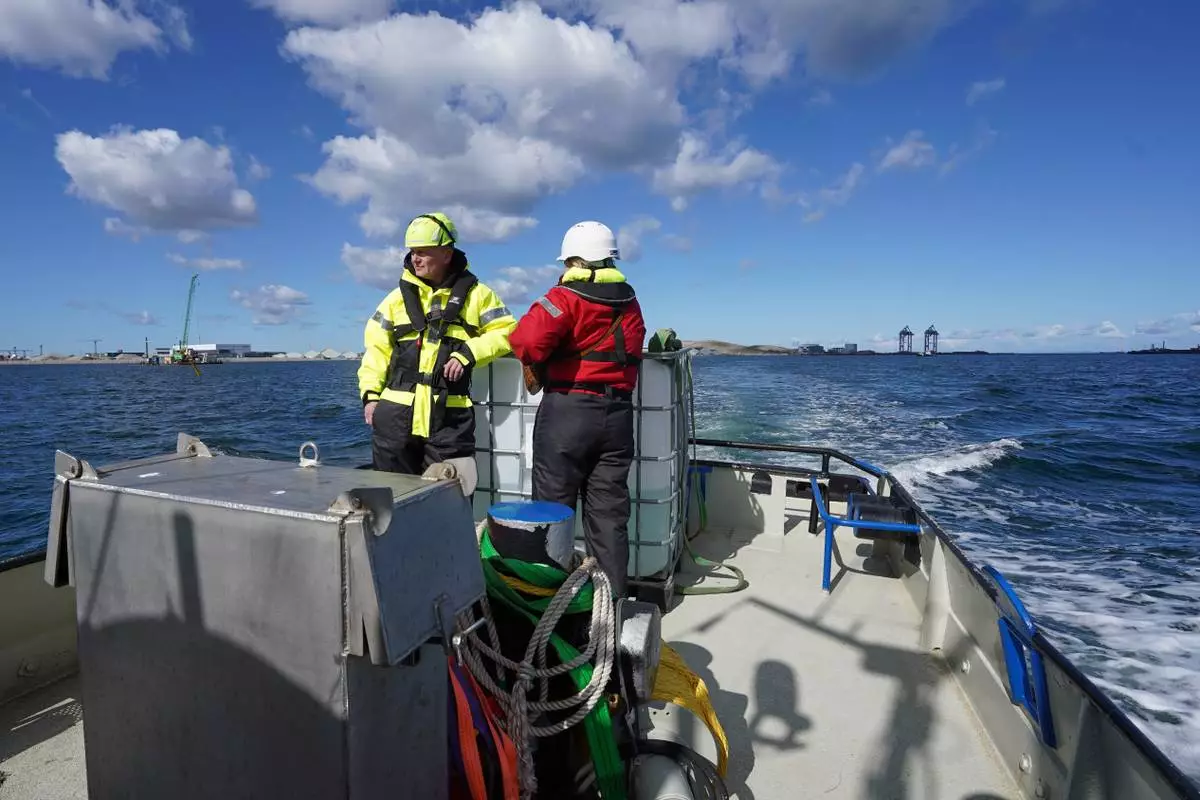
Archaeologists sail with boat through the harbor in Copenhagen, Denmark, Tuesday, March 31, 2026. (AP Photo/James Brooks)
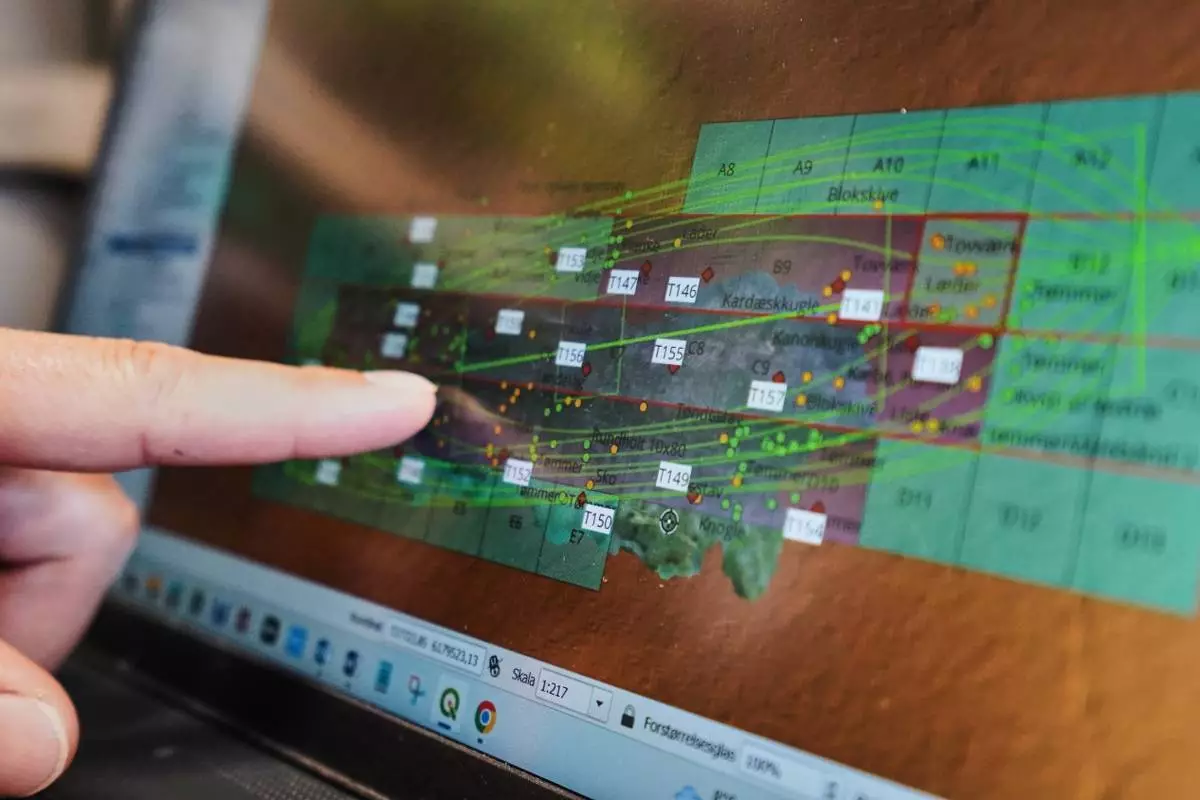
An archaeologist points to a computer screen, showing a map of the wreck of Danish flagship "Dannebroge" that sank during the Battle of Copenhagen in 1801. in Copenhagen, Denmark, Tuesday, March 31, 2026. (AP Photo/James Brooks)
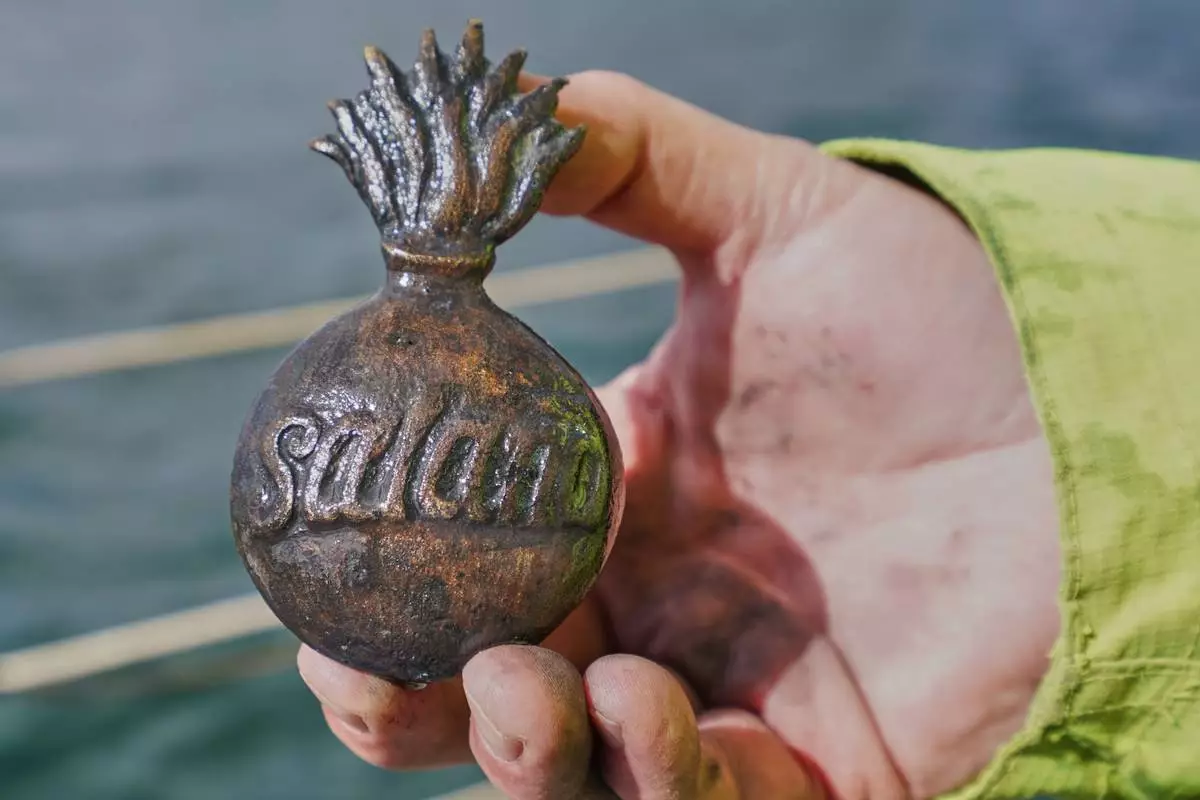
Morten Johansen, head of maritime archaeology at Denmark's Viking Ship Museum, shows a metal insignia recovered from the wreck of Danish flagship "Dannebroge" that sank during the Battle of Copenhagen in 1801, in Copenhagen, Denmark, Tuesday, March 31, 2026. (AP Photo/James Brooks)
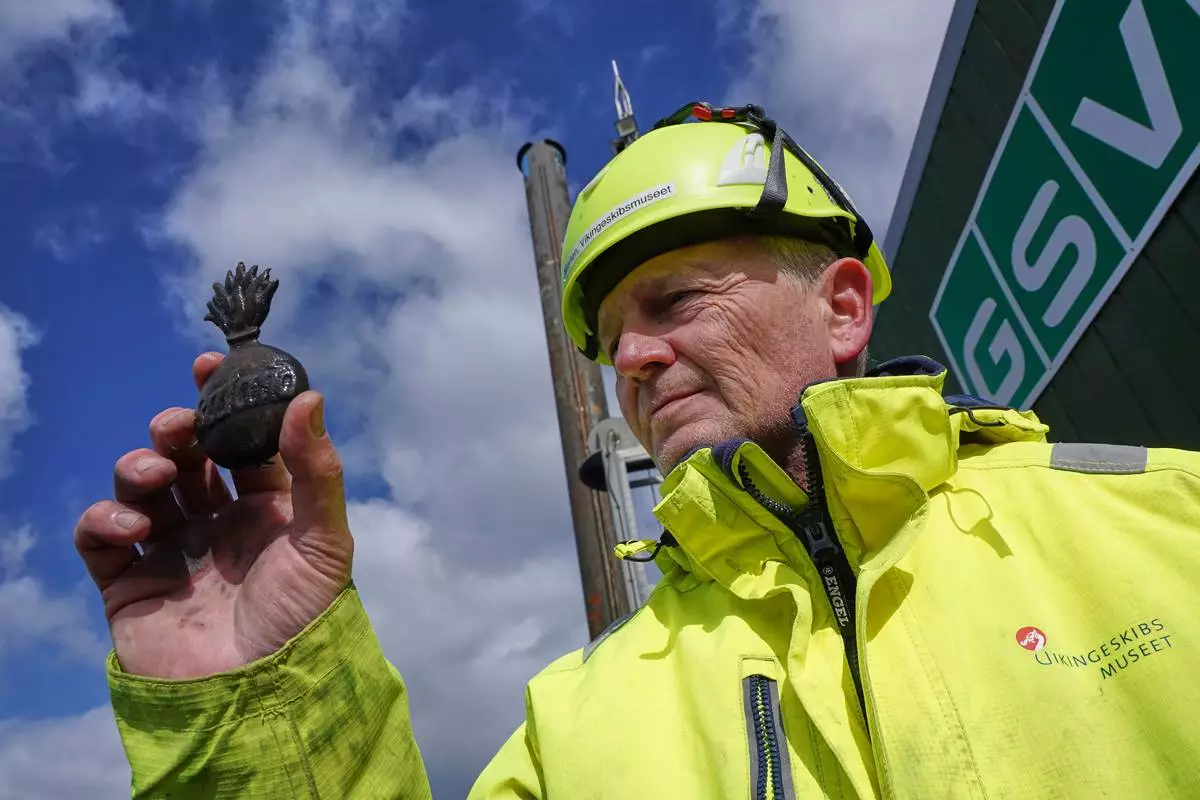
Morten Johansen, head of maritime archaeology at Denmark's Viking Ship Museum, shows a metal insignia recovered from the wreck of Danish flagship "Dannebroge" that sank during the Battle of Copenhagen in 1801, in Copenhagen, Denmark, Tuesday, March 31, 2026. (AP Photo/James Brooks)