Two New York City police officers won't be charged in the shooting death of a 19-year-old man during a mental health crisis last year as his mother and brother begged the officers not to open fire, state Attorney General Letitia James' office said Thursday.
Win Rozario was shot five times by the officers at his family's home in Queens on March 27, 2024, as he came at them while holding scissors in his hand, police body camera video showed. A person in the home had called 911 and told a dispatcher “I think my son is on drugs and is acting mad erratic," according to police.
The Office of Special Investigation in James' office concluded in its report that “a prosecutor would not be able to disprove beyond a reasonable doubt that the officers’ use of deadly force against Mr. Rozario was justified and, therefore, will not seek charges.”
The report also said that the reasonableness of the fear the officers, Salvatore Alongi and Matthew Cianfrocco, had when Rozario came at them with the scissors could not be disproven beyond a reasonable doubt. Both officers, however, still face an internal discipline trial on excessive force allegations by the city's Civilian Complaint Review Board, as well as a lawsuit by Rozario's family.
Rozario's mother, Notan Eva Costa, his father, Francis Rozario, and his brother, Utsho Rozario, criticized the decision not to prosecute the officers.
“State Attorney General Letitia James’ cowardly decision not to indict NYPD Officers Matthew Cianfrocco and Salvatore Alongi for murdering our beloved son and brother, Win Rozario, feels like we’re watching Win get murdered all over again," they said in a statement released by the Justice Committee advocacy group.
“We were safe in our home until Officers Cianfrocco and Alongi walked in and created chaos,” they said. “The NYPD should not be engaging with people experiencing a mental health episode.”
The attorney general's office did not immediately respond to a request for reaction to the family's comments Thursday evening.
The Office of Special Investigation's report recommends expanding citywide a pilot program that dispatches paramedics and mental health professionals as first responders to mental health emergency calls. It also recommends more training for officers on responding to such calls. And it says the state should enact a law allowing public health-based responses to people experiencing a mental health, alcohol use or substance use crisis.
Mayor-elect Zohran Mamdani's platform includes expanding mental health services across the city, including having health professionals respond to mental health crises reported in 911 calls.
“Win Rozario’s death was a senseless tragedy that brought pain to so many New Yorkers, most of all his loved ones," Mamdani said in a statement Thursday.
He noted the officers are facing potential discipline and added, "What today’s decision does not change is our obligation to do everything in our power to ensure this does not happen again, our commitment to delivering the social services New Yorkers deserve, and our investment in both genuine public safety and justice for all.”
After the officers entered Rozario's home, Rozario grabbed a pair of scissors in the kitchen and took a few quick steps toward the officers, prompting one of them to fire a Taser, the police body camera video showed. Razario's mother then wrested the scissors away while holding onto him and police ordered her to get out of their way, prompting her to plea “Don't shoot" as she put the scissors on a chair and stepped aside.
The situation then quickly escalated, with an officer firing a Taser again and Rozario picking up the scissors and walking toward police. One officer then fired his handgun at Rozario, whose mother rushed to him, followed by her younger son, who tried to pull her away.
“Please do not shoot my mom!” Rozario’s brother cries.
“Get her out of the way!” police shout. Rozario’s mother and brother fall to the floor.
Officers then opened fire again at Rozario as he went toward them with the scissors.
Patrick Hendry, president of the Police Benevolent Association of the City of New York, a police union, said the attorney general's office made the right call in not prosecuting the officers.
“These police officers were placed in an incredibly difficult situation and forced to make split second decisions based on the risks to everyone at that scene,” he said in a statement.

This image made from New York Police Department body camera footage released by the New York Attorney General's Office shows an officer pointing his gun at Win Rozario in Rozario's family home on March 27, 2025, in the Queens borough of New York. (New York Police Department/New York Attorney General's Office via AP)
U.S. President Donald Trump’s prime-time address at 9 p.m. EDT offers an update on the progress made toward achieving his goals in the war with Iran, which are to destroy the country’s missile production and Navy, ensure its proxies can no longer destabilize the region and guarantee Iran does not obtain a nuclear weapon.
Trump earlier Wednesday claimed Iran’s president wanted a ceasefire ahead of his speech to the American people. Trump made the claim on his Truth Social website. Iran’s Foreign Ministry spokesperson said Trump’s remarks were “false and baseless.”
The aircraft carrier USS George H.W. Bush is slated to go to the Middle East along with three destroyers, two U.S. officials said. The carrier strike group consists of more than 6,000 sailors. It comes as thousands of soldiers from the 82nd Airborne Division have also begun arriving in the Middle East, according to two other U.S. officials, who also spoke on condition of anonymity to discuss sensitive military plans.
Meanwhile, U.S. gas prices jumped past an average of $4 a gallon for the first time since 2022 on Tuesday, as the Iran war continues to push fuel prices higher worldwide. Analysts say those high fuel costs will trickle into groceries as businesses’ transportation and packaging costs pile up.
Here is the latest:
Thousands of additional U.S. troops deployed to the Middle East this week, but there was no mention of them — or the thousands more who have already begun arriving there.
Trump also didn’t talk directly about NATO, at whose members he has fumed over refusal to help secure the Strait of Hormuz.
Earlier Wednesday, Trump said he was strongly considering pulling the United States out of NATO, ratcheting up his criticism of European leaders.
The war has sent petroleum prices soaring as Iran has effectively shut the strait, the narrow waterway between Iran and Oman through which about one-fifth of the world’s oil passes.
On Wednesday night, Trump said Americans “don’t need” the strait and that the countries who do “must grab it and cherish it.”
The Republican president said that Iran’s various nuclear sites are under “intense satellite surveillance and control” by the U.S. as both Israeli and American forces have targeted the areas repeatedly, first last June, and more recently in the last month.
Despite saying that the joint strikes last summer had “obliterated” the Islamic Republic’s nuclear program, Trump has made conflicting statements about the status of Tehran’s activity in the last several months.
“If we see them make a move, even a move for it, we will hit them with missiles very hard again,” Trump said.
As part of his plea for patience from U.S. voters, the president ticked through the timeline of American involvement in earlier conflicts.
“World War I lasted one year, seven months and five days,” he said. “World War II lasted for three years, eight months and 25 days.” He added references to Korea, Vietnam and Iraq — noting Vietnam’s nearly 20-year U.S. commitment.
Action in Iran has spanned 32 days by comparison, Trump said, and been “so powerful, so brilliant” that “one of the most powerful countries” is “really no longer a threat.”
A recent AP-NORC poll found that 6 out of 10 U.S. adults said Trump’s actions in Iran had gone too far.
While Trump again claimed “Iran has been essentially decimated” and that efforts by other nations to secure the Strait of Hormuz “should be easy,” data from independent observers does not support this claim.
While there’s been a slowdown in Iranian strikes, a degraded Iranian military nonetheless remains a stubborn foe.
Iran went from almost 100 strikes on March 1, the second day of the war, to no more than 50 strikes on any given day since March 6, according to independent data from Armed Conflict Location & Event Data, or ACLED, a U.S.-based group that tracks conflicts worldwide. A “strike,” in the group’s methodology, can include multiple individual strikes in the same location on the same day.
Experts say any short-term decline could be a sign that Iran is deliberately rationing its missiles and drones as opposed to running out of firepower.
The president spoke of the decades-long history of tensions between the U.S. and Iran, saying the dynamic should have “been handled” before his arrival at the White House. But he was particularly critical of President Barack Obama’s nuclear deal, reiterating his longstanding derision of that framework.
“His Iran deal would have led to a colossal arsenal of massive nuclear weapons for Iran,” Trump said.
Iran long has insisted its nuclear program was peaceful. It had, however, been enriching uranium up to 60% purity, a short, technical step away from weapons-grade levels.
Before the war, U.S. intelligence agencies assessed that Iran had yet to begin a weapons program, but had “undertaken activities that better position it to produce a nuclear device, if it chooses to do so.”
Trump and members of his administrations have cited many reasons and rationales for why the U.S. joined Israel on Feb. 28 in launching a war against Iran. In his first address to the nation since the start of the Iran war, Trump says the military action is not for getting any of the country’s vast resources, including oil, but instead to help America’s allies.
“We’re now totally independent of the Middle East, and yet we are there to help,” he said. “We don’t have to be there. We don’t need their oil. We don’t need anything they have.”
But, he added, “we’re there to help our allies.”
Speaking in the Cross Hall at the White House, Trump said Wednesday night that Operation Epic Fury’s actions over the past month meant that Iran’s “ability to launch missiles and drones is dramatically curtailed, and their weapons factories and rocket launchers are being blown to pieces.”
Trump also said that the country’s “navy is gone, their air force is in ruins,” and the country’s leaders, “are now dead.”
He also said the Islamic Revolutionary Guard Corps “is being decimated as we speak.”
In his private remarks at an Easter lunch at the White House, the president seemed to reflect the domestic pressure he’s feeling to wrap up the war. He said that the U.S. could “very easily” take Iran’s oil but said it “is unfortunate” that there did not seem to be patience among the American people for such an effort.
“They want to see it end,” he said.
Trump said he would prefer to take Iran’s oil “but people in the country sort of say, ‘Just win. You’re winning so big. Just win. Come home.’ And I’m OK with that too,” he said.
Video of the speech was posted online by a Business Insider reporter who said he noticed the White House had uploaded video of the closed-press event and downloaded it before it was later made private. The White House did not respond to requests for comment from The Associated Press on why it took the video down.
A series of blasts could be heard in Dubai as air defenses worked to intercept the Iranian barrage.
The attack happened just before U.S. President Donald Trump’s speech to the American people about the war.
The president has previously directed much of his anger at NATO allies for their reluctance to get involved in securing the Strait of Hormuz until the U.S. and Israel finish prosecuting their war against Iran.
But in his remarks at the private Easter lunch he hosted at the White House on Wednesday, Trump also expressed frustration with some Asian countries that are more reliant on Gulf oil than the U.S.
“Let South Korea, you know, we only have 45,000 soldiers in harm’s way over there, right next to a nuclear force — let South Korea do it,” Trump said. “Let Japan do it. They get 90% of their oil from the strait. Let China do it.”
“NATO treated us very badly, and you have to remember it because they’ll be treating us badly again if we ever need them,” Trump fumed anew about the alliance. “And hopefully, we’re never going to need them. I don’t think we’ll need them. I don’t think they can do very much.”
Trump added, “NATO won’t be there if we ever have the big one.”
The president’s scathing comments came during remarks at a private lunch on Wednesday at the White House that Trump hosted to mark the coming Easter holiday. Video of the speech was posted online by a Business Insider reporter who said he noticed the White House had uploaded video of the closed-press event and downloaded it before the White House later made it private.
The White House did not respond to requests for comment from The Associated Press on why it took the video down.
Israel’s emergency services say a 12-year-old and two 7-month-olds were mildly injured from shattered glass in central Israel in the first launch of missiles Thursday from Iran.
A 24-year-old was also mildly injured in the same overnight incident in Bnei Brak, a city east of Tel Aviv that’s been struck repeatedly during the war, according to Magen David Adom rescue services. On Wednesday morning there, an 11-year-old girl was injured by shrapnel in another missile strike and she remained in critical condition, the medical service added.
Israel’s military said it was working to intercept another missile launch from Iran early on Thursday morning.
Very early on Thursday, Israel’s military said Iran had launched missiles at the country, the first time of the day.
Sirens sounded the alert in Tel Aviv, central Israel and parts of the occupied West Bank.
NATO Secretary-General Mark Rutte is scheduled to visit Washington next week as Trump continues to lash at members of the military alliance for rejecting the U.S. leader’s call to help open up the Strait of Hormuz.
The visit by Rutte was confirmed by a White House official who was not authorized to comment on the yet to be formally announced visit and spoke on the condition of anonymity.
Trump and Rutte have a good relationship, but the president has sounded increasingly annoyed with alliance members as the Iran war grinds on, particularly the United Kingdom and France.
The dynamic is creating uncertainty and concern over the future of the alliance, whose value Trump has long called into question.
— Aamer Madhani
Iran launched approximately 10 missiles, one right after the other, targeting central Israel in the early evening of Wednesday, Israel’s military said. The siren alerts in rapid succession sent millions of residents into shelters about an hour before sundown — when Jews were getting ready to celebrate the first night of Passover, one of the holiest times of the year.
The holiday, commemorating the ancient Israelites’ Exodus from slavery in Egypt, is celebrated around family dinner tables and at communal banquets. In Ramat Gan, just outside Tel Aviv, some families set up long, festive tables for the traditional Seder meal in an underground shelter, next to sleeping tents.
“Exactly which of the American people’s interests are truly being served by this war? Was there any objective threat from Iran to justify such behavior?” President Masoud Pezeshkian said in the letter that he posted in English on his X account on Wednesday.
He said that, in its modern history, Iran never chose aggression “despite possessing military superiority over many of its neighbors.”
Further, the Iranian president signaled that the U.S. has entered the war as a proxy for Israel, and insisted that what Iran continues to do in its attacks against neighboring countries is a “measured response grounded in legitimate self-defense.”
“Is ‘America First’ truly among the priorities of the U.S government today?” he asked.
Defense Secretary Pete Hegseth is tentatively set to testify April 29 before the House Armed Services Committee, where he’ll likely face lawmakers’ questions for the first time since the Iran war began, according to a congressional staffer with knowledge of the matter.
The meeting will serve as the annual Pentagon budget hearing and will include Gen. Dan Caine, chairman of the Joint Chiefs of Staff, said the staffer, who was not authorized to comment publicly and spoke on condition of anonymity to confirm the hearing.
Hegseth and Caine are expected to get questions about the war’s objectives, costs and casualties.
— Ben Finley
President of the International Rescue Committee David Miliband made these remarks during an online briefing with journalists after visiting Syria and war-torn Lebanon.
Over $100,000 worth of IRC humanitarian aid for lifesaving initiatives is trapped in its hub in Dubai.
Iran has been cementing its chokehold the Strait of Hormuz in the ongoing war with the United States and Israel, the world’s most important artery for oil shipments.
“Thirty percent of the world’s fertilizer goes through there,” said Miliband, fearing a food security crisis in many vulnerable countries where the organization works. “We are advocating that all the goods in that hub be given safe passage immediately.”
Traffic through the strait has fallen by 90% since the start of the Iran war, sending global oil prices skyrocketing and inflicting alarming shortages on the Asian nations that get their oil from Persian Gulf countries via the strait.
United Nations Secretary-General António Guterres set up an initiative to allow humanitarian assistance to move through the strait in a bid to prevent a global food crisis.
The president’s prime-time address will offer an update on U.S. progress toward achieving his goals in Iran, according to a White House official who spoke on condition of anonymity because they were not authorized to speak publicly ahead of the address.
The official said those goals are to destroy Iran’s missile production, destroy its Navy, ensure its proxies can no longer destabilize the region, and guarantee Iran does not obtain a nuclear weapon.
Trump is also expected to reiterate his estimated timeline of concluding operations within two to three weeks.
— Collin Binkley
Iran’s President Masoud Pezeshkian in a message to American people said both confrontation and engagement between Iran and the U.S. are accessible, adding that Iran will endure any aggression by the U.S.
“Today, the world stands at crossroads. Continuing along the path of confrontation is more costly and futile than ever before. The choice between confrontation and engagement is both real and consequential; its outcome will shape the future for generations to come,” Pezeshkian said. “Throughout its millennia of proud history, Iran has outlasted many aggressors. All that remains of them are tarnished names in history, while Iran endures — resilient, dignified, and proud.”
Pezeshkina did not mention a ceasefire offer last week by President Trump, though he accused Israel of dragging the U.S. into a war against Iran.
“Is it not also the case that America has entered this aggression as a proxy for Israel, influenced and manipulated by that regime? ” asked Pezeshkian.
David Miliband, President of the International Rescue Committee made these remarks during an online briefing with journalists after visiting Lebanon and Syria.
More than one million Lebanese were displaced during the past month in the latest conflict between Israel and the Hezbollah militant group. Israel has issued evacuation orders for large swaths of southern and eastern Lebanon, as well as Beirut’s southern suburbs. Only a small portion of them are staying in government-run public schools turned-shelters, while others stay with family or even in tents on the streets.
“There is nothing like driving in front of the Lebanon yacht club and in front of it are Lebanese in tents who are displaced,” said Miliband, who decried the tiny country’s situation as a “silent emergency that is getting very little attention.”
China on Wednesday said it would stay in “close communication with Pakistan and relevant parties” on the Iran war and “play a constructive role in promoting the end of hostilities.”
It comes a day after China’s foreign minister met Pakistan’s top diplomat in Beijing and said China supported efforts to de-escalate tensions.
Chinese Foreign Minister Wang Yi told Pakistani Foreign Minister Ishaq Dar that it would not be an easy task and that China would be “willing to work with Pakistan” to end the “flames of war” as soon as possible and open the “window to peace talks.”
Wang said Pakistan’s efforts were in the interest of all sides, including averting spillover effects, preventing further casualties, stabilizing international energy security and protecting supply chains.
Following their meeting Tuesday, the two governments put forward a five-point proposal, including ceasing hostilities, starting peace talks, protecting civilian targets and reopening the Strait of Hormuz.
NATO is getting defended on a bipartisan basis by Sen. Mitch McConnell, R-Ky., and Sen. Chris Coons, D-Del., ahead of Trump’s address to the nation on Wednesday night.
Trump is expected to criticize NATO members for not joining the U.S. in its war with Iran.
McConnell and Coons said in a joint statement that “NATO is the most successful military alliance in history” and stressed how its members “fought and died,” along with U.S. forces in Afghanistan and Iraq.
“Americans are safer when NATO is strong and united,” the statement said. “The Senate will continue to support the alliance for the peace and protection it provides America, Europe, and the World.”
The National Defense Authorization Act in 2023 has provision that requires a two-thirds approval from the Senate in order to leave NATO or a separate measure by Congress, limiting the president’s ability to do so unilaterally.
Bahrain’s U.N. Ambassador Jamal Alrowaiei accused Iran of “economic terrorism” and violating international law. And he urged adoption of a U.N. resolution that would authorize countries “to use all necessary means” to ensure safe navigation through the Strait of Hormuz, the Gulf and the Gulf of Oman.
He expressed hope at a U.N. news conference that the Security Council will adopt the resolution “as soon as possible,” and as early as Thursday. But Russia, China and France objected to the latest draft, and negotiations were continuing.
Alrowaiei, the Arab representative on the council and its president for April, said Gulf countries had tried “to build bridges of peace with Iran,” and the attacks they were subjected to immediately after the Israeli-U.S. airstrikes on Feb. 28 were “shocking and premeditated.”
He said Bahrain, home to the U.S. Fifth Fleet, has been targeted by 186 missiles and 419 drones and has suffered damage to desalination plants, hotels, the airport and other civilian infrastructure.
AP footage in the Iranian capital of Tehran showed large plumes of smoke billowing over the city on Wednesday afternoon following U.S.- Israeli strikes, as the war in the Middle East completes its first month and strikes on Iran continue unabated.
Also Wednesday, the Israeli military said that it had completed a wave of strikes against “dozens of military infrastructure sites of the Iranian terror regime in the heart of Tehran.”
The president has said one of his primary goals of the war was to stop Iran from getting a nuclear weapon, and he told Reuters on Wednesday that has been achieved, though it isn’t clear how.
Iran’s stockpile of enriched uranium that could potentially be used to build nuclear weapons is believed to be buried under the rubble of a mountain facility that was hit during strikes last June — and that hasn’t changed since the war with Iran began this year. Trump has said the U.S. would move to take the uranium if it reaches a deal with Iran.
But he said Wednesday that the uranium is “so far underground, I don’t care about that.”
“We’ll always be watching it by satellite,” he said.
Trump also said Iran is now “incapable” of developing a nuclear weapon.
Vice President JD Vance has been speaking to intermediaries about Iran as recently as Tuesday and delivered a message that Trump is impatient and that there will be growing pressure on Iranian infrastructure if they don’t make a deal, according to a person familiar with the talks who was not authorized to speak publicly and spoke on condition of anonymity.
Trump directed Vance to communicate privately that he is open to a ceasefire as long as certain demands are met.
— Michelle L. Price
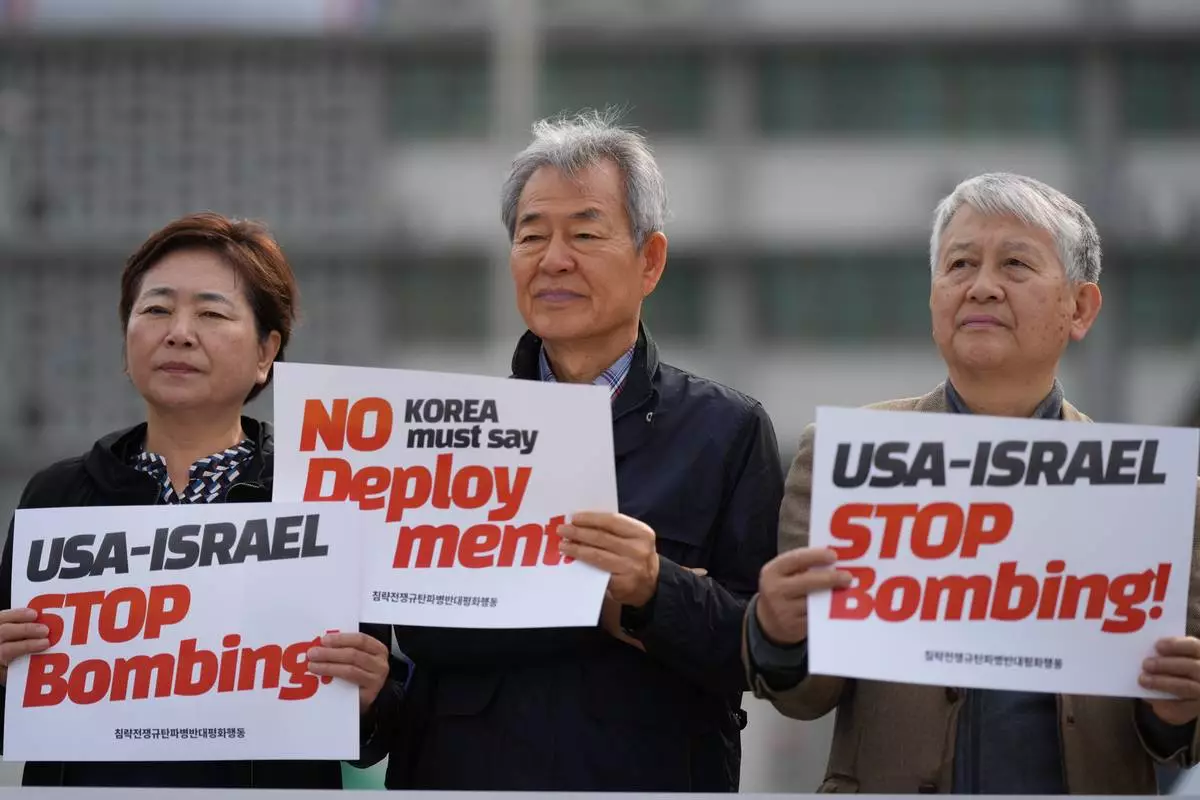
Members of civic groups hold signs against the U.S. and Israel attacks on Iran near the U.S. Embassy in Seoul, South Korea, Wednesday, April 1, 2026. (AP Photo/Lee Jin-man)
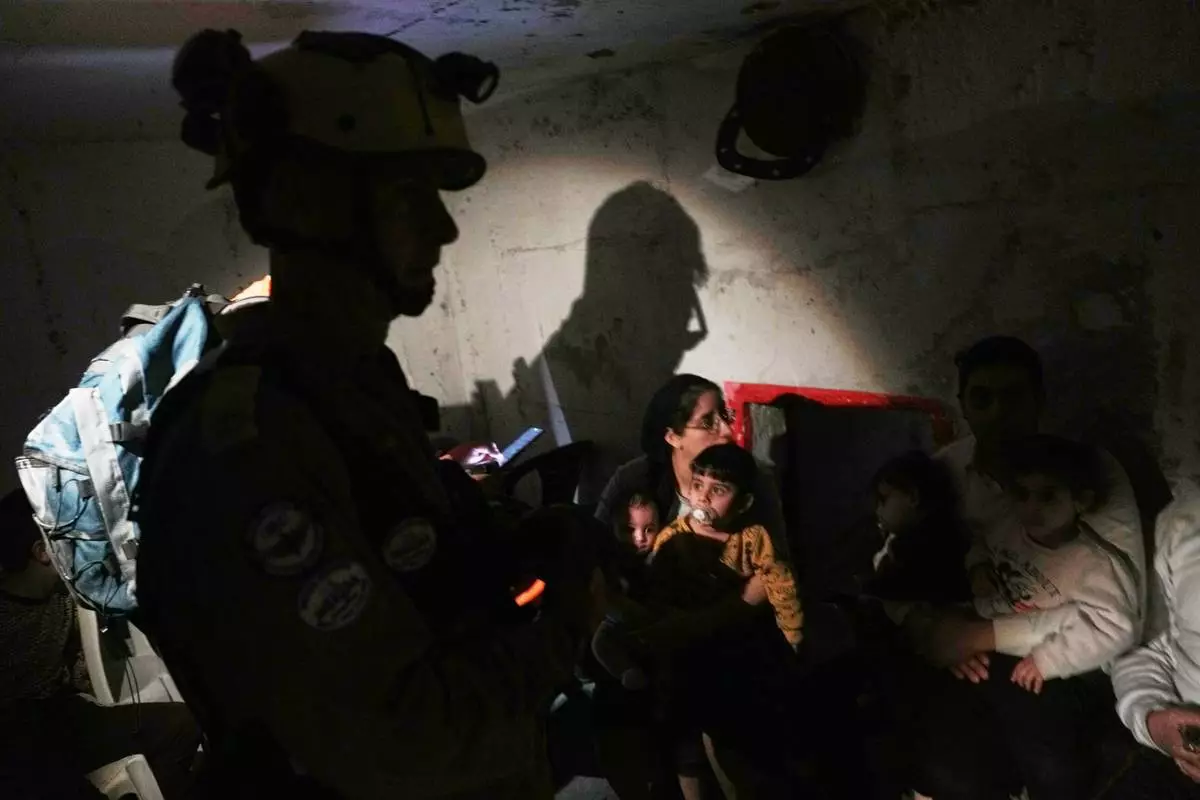
Israel's rescue teams and residents take shelter as sirens sounds next to a site struck by an Iranian missile in Bnei Brak, Wednesday, April 1, 2026. (AP Photo/Oded Balilty)
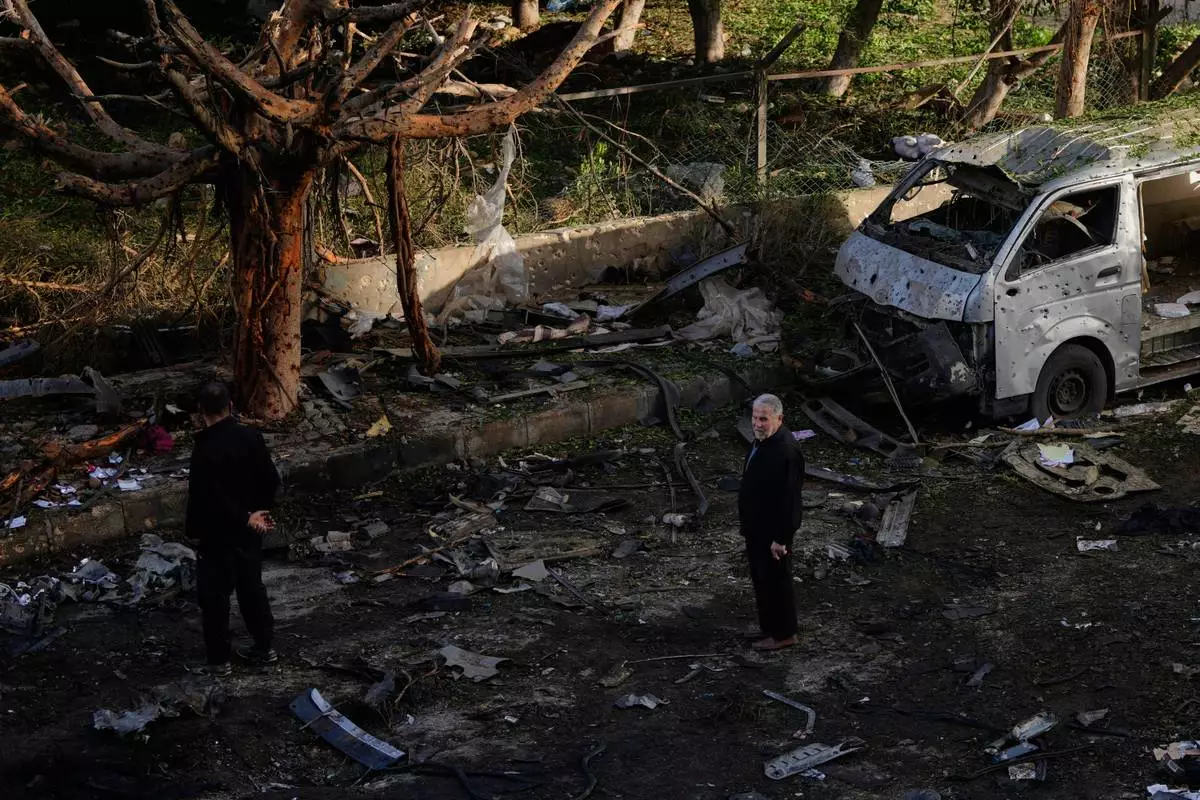
People stand near a damaged van beside scattered debris following an Israeli strike in Beirut, Lebanon, Wednesday, April 1, 2026. (AP Photo/Hassan Ammar)
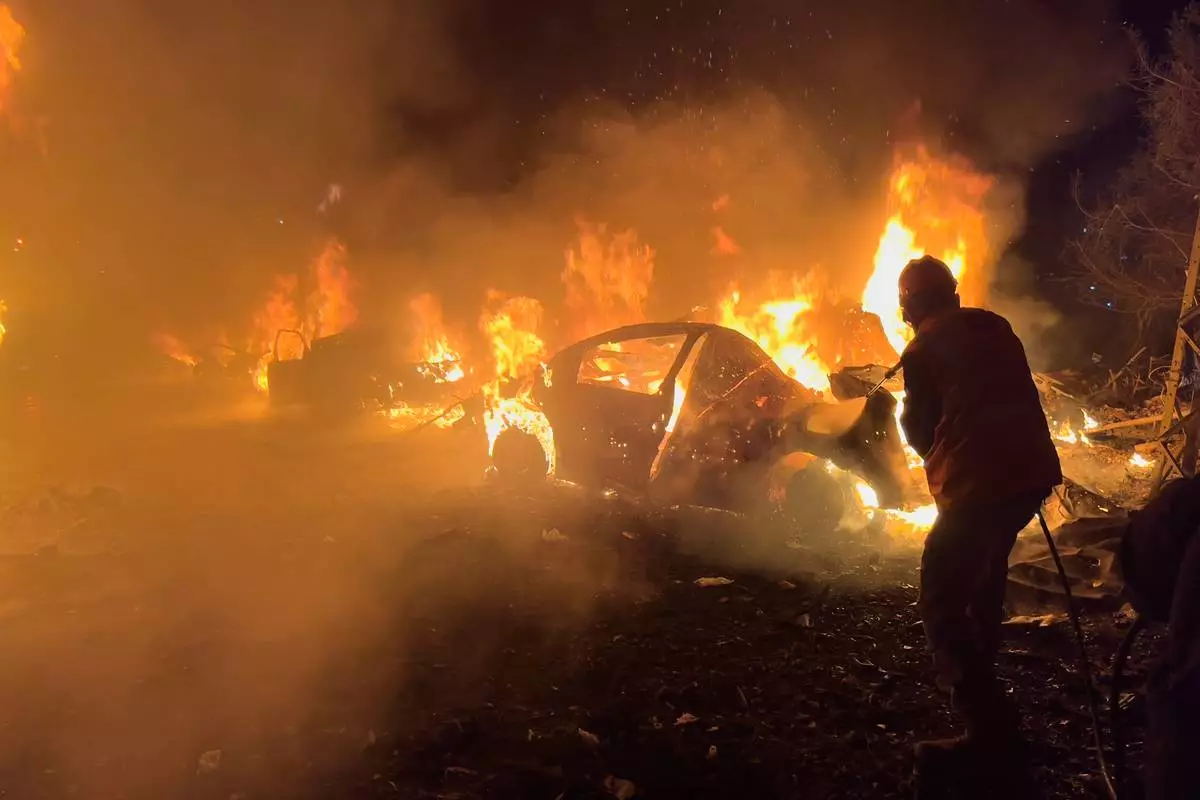
A firefighter extinguishes a car at the site of Israeli airstrikes, in Beirut, Lebanon, Wednesday, April 1, 2026. (AP Photo/Hussein Malla)
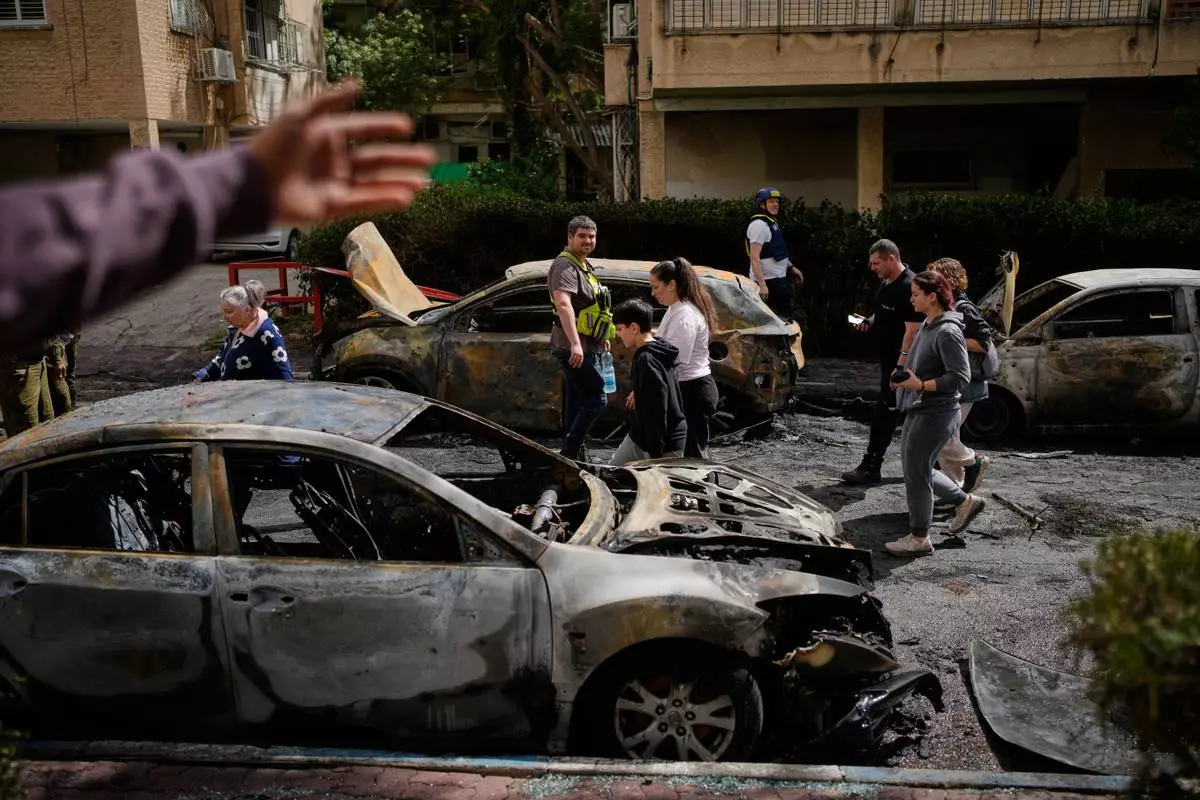
Residents and Israeli security forces inspect a site struck by an Iranian missile in Petah Tikva, Israel, Tuesday, March 31, 2026. (AP Photo/Ohad Zwigenberg)
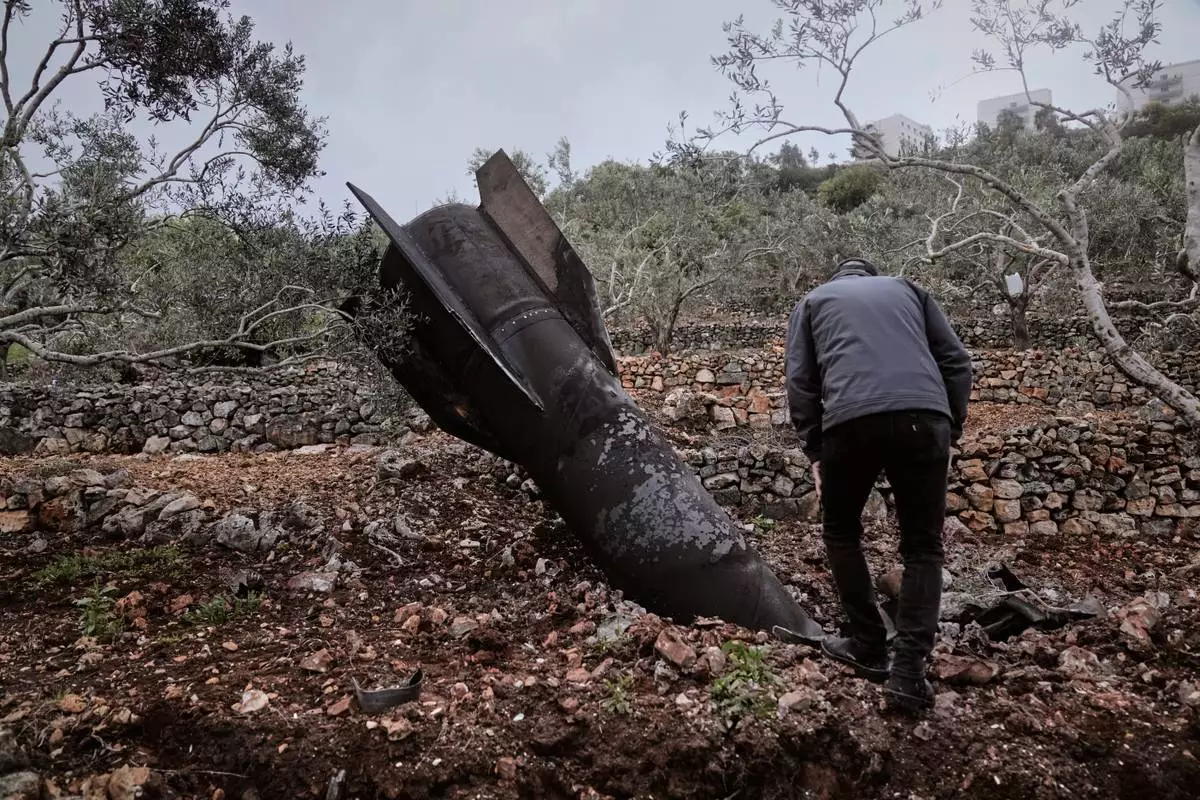
A man inspect the wreckage of an Iranian missile that landed near the West Bank village of Marda, Tuesday, March 31, 2026. (AP Photo/Majdi Mohammed)
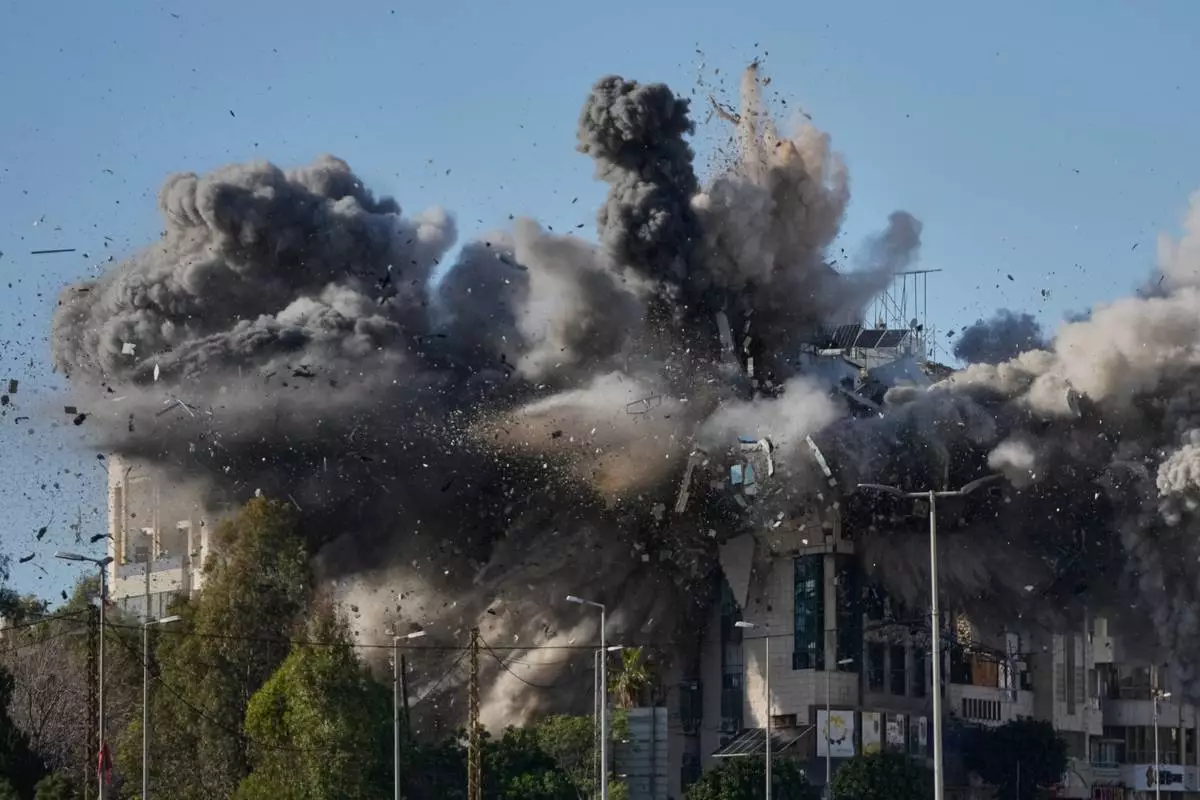
Smoke rises after an Israeli airstrike hits a building near the airport road in Beirut, Lebanon, Tuesday, March 31, 2026. (AP Photo/Hussein Malla)
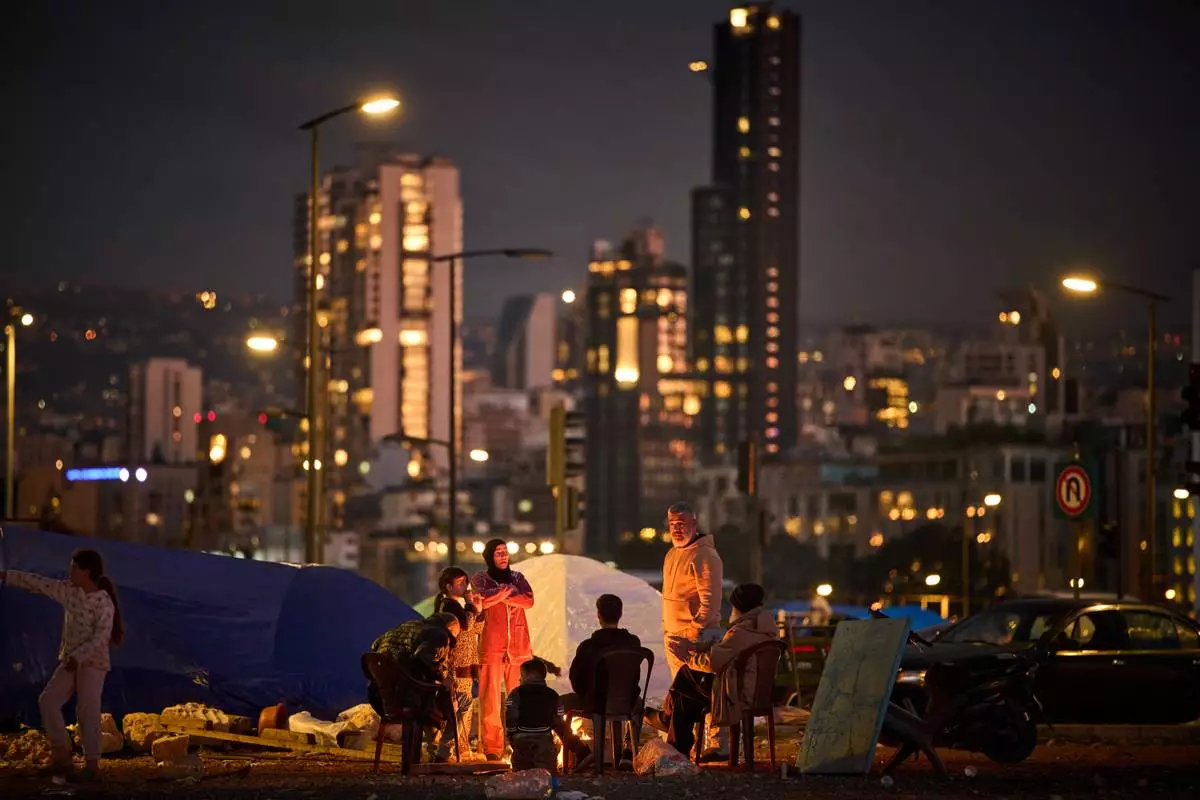
A family who fled Israeli shelling in southern Lebanon warm themselves by a bonfire next to tents used as shelters in Beirut, Lebanon, Tuesday, March 31, 2026. (AP Photo/Emilio Morenatti)