NEW YORK (AP) — The U.S. stock market rose to the edge of its all-time high on Friday.
The S&P 500 added 0.2% and finished just 0.3% shy of its record closing level, which was set in October. It had briefly topped the mark during the day, before paring its gain.
Click to Gallery
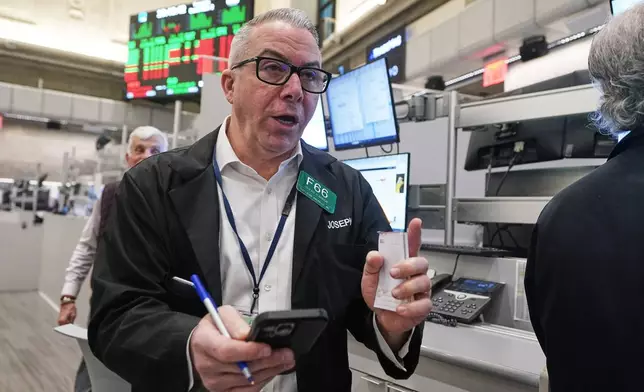
Options trader Joseph D'Arrigo works on the floor of the New York Stock Exchange, Tuesday, Dec. 2, 2025. (AP Photo/Richard Drew)
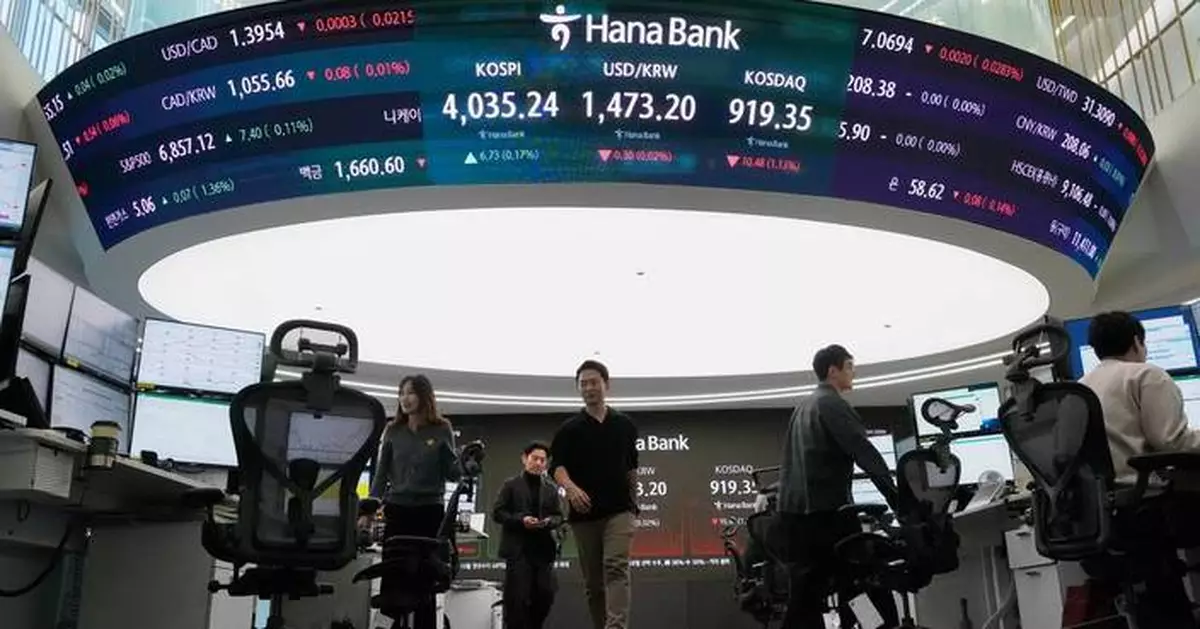
Currency traders work near a screen showing the Korea Composite Stock Price Index (KOSPI) and the foreign exchange rate between U.S. dollar and South Korean won, top right, at the foreign exchange dealing room of the Hana Bank headquarters, in Seoul, South Korea, Friday, Dec. 5, 2025. (AP Photo/Ahn Young-joon)
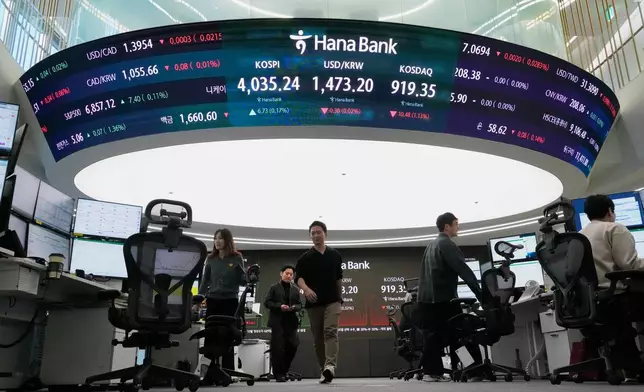
Currency traders watch monitors near a screen showing the Korea Composite Stock Price Index (KOSPI) and the foreign exchange rate between U.S. dollar and South Korean won, top right, at the foreign exchange dealing room of the Hana Bank headquarters, in Seoul, South Korea, Friday, Dec. 5, 2025. (AP Photo/Ahn Young-joon)
Currency traders pass by a screen showing the Korea Composite Stock Price Index (KOSPI), top center left, and the foreign exchange rate between U.S. dollar and South Korean won, top center, at the foreign exchange dealing room of the Hana Bank headquarters, in Seoul, South Korea, Friday, Dec. 5, 2025. (AP Photo/Ahn Young-joon)
The Dow Jones Industrial Average added 104 points, or 0.2%, and the Nasdaq composite gained 0.3%.
The modest moves capped a quiet week for Wall Street, offering a respite following weeks of sharp and scary swings.
Ulta Beauty helped lead the market and jumped 12.7% after the retailer reported stronger profit and revenue for the latest quarter than expected. CEO Kecia Steelman said its customers are broadly feeling pressure, but Ulta saw growth across its categories, particularly in e-commerce. It raised its forecast for revenue over the full year.
Another encouraging signal for the holiday shopping season came from Victoria’s Secret & Co. It delivered a milder loss for the latest quarter than analysts expected, and it likewise raised its forecast for sales over the full year. Its stock rallied 18%.
Warner Bros. Discovery rose 6.3% after Netflix said it would buy Warner Bros. for $72 billion in cash and stock following its pending split from Discovery Global.
The deal for the company behind HBO Max, “Casablanca” and “Harry Potter” is not a sure thing, though. It could raise fears at the U.S. government about too much industry power residing at Netflix.
Shares of Netflix fell 2.9%. Paramount Skydance, which earlier had been seen as a front-runner to buy Warner Bros., sank 9.8%.
Also on the losing end of Wall Street was SoFi Technologies. The financial technology company fell 6.1% to $27.78 after saying it would add $1.5 billion worth of its stock into the market in order to raise cash. It’s selling the stock at a price of $27.50 per share.
All told, the S&P 500 rose 13.28 points to 6,870.40. The Dow Jones Industrial Average added 104.05 to 47,954.99, and the Nasdaq composite gained 72.99 to 23,578.13.
If the S&P 500 does return to a record, it would mark the latest time the U.S. stock market has powered past what seemed to be a debilitating set of worries. Most recently, those concerns centered on what the Federal Reserve will do with interest rates, whether too many dollars are flowing into artificial-intelligence technology and if sharp drops for cryptocurrencies would bleed over into other markets.
After some back and forth, the widespread expectation among traders is now that the Fed will cut its main interest rate next week in hopes of shoring up the slowing U.S. job market. If it does, that would be the third cut of the year.
Investors love lower interest rates because they boost prices for investments and can juice the economy. The downside is that they can worsen inflation, which is stubbornly remaining above the Fed’s 2% target.
Economic reports released on Friday did little to change expectations for a coming cut. One said that an underlying measure of inflation that the Fed prefers to use was at 2.8% in September, exactly as economists expected.
A separate report said U.S. consumers appear to be downgrading their expectations for inflation coming in the near future. They’re now forecasting 4.1% inflation for the year ahead, down from their forecast of 4.5% last month, according to the University of Michigan.
That’s the lowest such forecast since January, which is important because heightened expectations for inflation can create a vicious cycle that only worsens inflation.
In the bond market, Treasury yields climbed. The yield on the 10-year Treasury rose to 4.13% from 4.11% late Thursday.
In stock markets abroad, indexes were mixed in Europe and Asia.
Germany’s DAX returned 0.6%, and South Korea’s Kospi jumped 1.8% for two of the world’s bigger gains.
Tokyo’s Nikkei 225 fell 1.1% after data showed household spending in Japan fell 3.0% in October from a year earlier. It was the sharpest drop since January 2024. Japanese markets have been shaky recently after the Bank of Japan hinted that hikes to interest rates may be coming.
AP Writer Teresa Cerojano contributed.
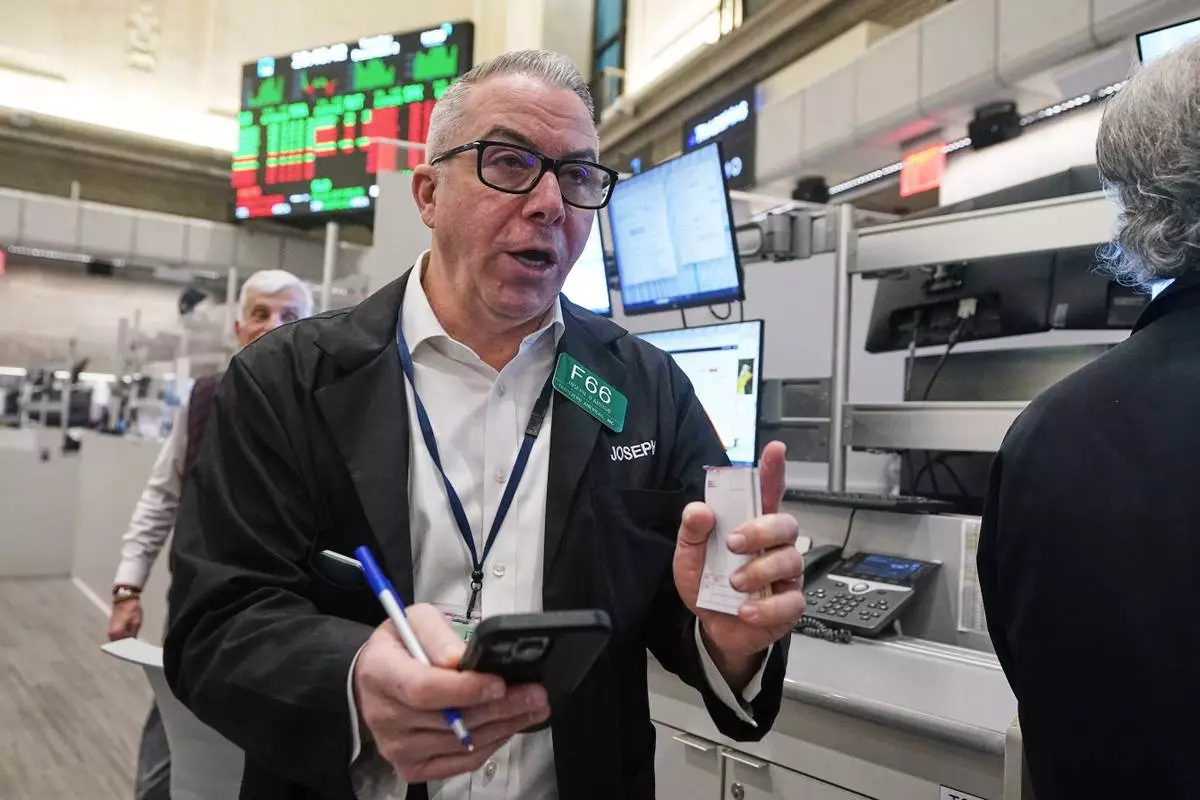
Options trader Joseph D'Arrigo works on the floor of the New York Stock Exchange, Tuesday, Dec. 2, 2025. (AP Photo/Richard Drew)

Currency traders work near a screen showing the Korea Composite Stock Price Index (KOSPI) and the foreign exchange rate between U.S. dollar and South Korean won, top right, at the foreign exchange dealing room of the Hana Bank headquarters, in Seoul, South Korea, Friday, Dec. 5, 2025. (AP Photo/Ahn Young-joon)

Currency traders watch monitors near a screen showing the Korea Composite Stock Price Index (KOSPI) and the foreign exchange rate between U.S. dollar and South Korean won, top right, at the foreign exchange dealing room of the Hana Bank headquarters, in Seoul, South Korea, Friday, Dec. 5, 2025. (AP Photo/Ahn Young-joon)

Currency traders pass by a screen showing the Korea Composite Stock Price Index (KOSPI), top center left, and the foreign exchange rate between U.S. dollar and South Korean won, top center, at the foreign exchange dealing room of the Hana Bank headquarters, in Seoul, South Korea, Friday, Dec. 5, 2025. (AP Photo/Ahn Young-joon)
DUBAI, United Arab Emirates (AP) — Iran’s secretive new supreme leader vowed Thursday to keep up attacks on Gulf Arab countries and use the effective closure of the strategic Strait of Hormuz as leverage against the United States and Israel. It was his first public statement since he succeeded his father, who was killed in an Israeli strike.
Supreme Leader Ayatollah Mojtaba Khamenei, 56, who an Iranian official said was wounded in the opening salvo of the war, has not appeared in public since then. In the statement read by a state TV news anchor, he vowed to avenge those killed in the war, including in a strike on a school that killed over 165 people.
His comments signaled no plans for talks to end the war, which has disrupted global energy supplies, international travel and the relative safety enjoyed by the Gulf Arab states.
Israeli Prime Minister Benjamin Netanyahu denounced the new supreme leader as a “puppet of the Revolutionary Guards” who cannot appear in public. And he addressed the Iranian people, calling this a moment for a “new path of freedom.”
But “at the end of the day, it depends on you. It is in your hands,” he added at a news conference. “We are creating the optimal conditions for the fall of the regime.”
U.S. and Israeli strikes have exacted a heavy toll on Iran’s leadership, military and ballistic missile program but have failed to topple the government, which U.S. President Donald Trump has at times suggested is his goal.
Netanyahu said Israeli attacks had killed a top Iranian nuclear scientist and hit others.
The U.S. and Israel say that destroying whatever remains of Iran’s nuclear program is one of the central aims of the war. They have long suspected Iran seeks nuclear weapons, while the Islamic Republic says its nuclear program is peaceful.
Since the start of the war, U.S. and Israeli strikes have targeted security checkpoints in Iran to undermine the government’s ability to suppress dissent, according to Armed Conflict Location and Event Data, the U.S-based independent monitoring group known as ACLED.
Israel said earlier it struck a nuclear facility in Iran in recent days that it had destroyed with an airstrike in October 2024. Earlier this year, satellite photos raised concerns that Iran was working to restore the facility.
As Netanyahu spoke, the Israeli military said it had detected a new barrage of missiles launched from Iran toward Israel.
Rescue efforts were underway after a U.S. Air Force refueling plane went down in Iraq, the U.S. military said Thursday.
The aircraft is part of the American military operation against Iran, but the crash was not due to hostile fire or friendly fire, the military said.
U.S. Central Command, which oversees the Middle East, said in a statement that the two KC-135 refueling aircraft were involved in the incident. One landed safely, while the other went down in western Iraq.
Iran is trying to inflict enough global economic pain to pressure the United States and Israel to halt their bombardment, which began on Feb. 28.
Trump has promised to “finish the job,” even though he claimed Iran is “virtually destroyed.” He said in a social media post Thursday that ensuring Iran does not develop a nuclear weapon was a higher priority than soaring oil prices.
The U.S. military said Thursday that American forces have now struck more than 6,000 targets since the operation against Iran began, including more than 30 minelaying vessels.
Meanwhile, Iran-backed Hezbollah militants launched some 200 rockets from Lebanon at northern Israel while sirens rang out and loud booms from the interception of Iranian missiles could be heard in other areas. Israel launched another wave of attacks on Tehran and in Lebanon.
The U.N. refugee agency said up to 3.2 million people in Iran have been displaced by the ongoing war. It said most have fled from Tehran and other major cities toward the north of the country or rural areas. Around 800,000 people have been internally displaced in Lebanon, prompting fears of a humanitarian crisis.
Khamenei called on Gulf Arabs to “shut down” U.S. bases in the region, saying protection promised by Washington was “nothing more than a lie.”
He also said Iran has studied “opening other fronts in which the enemy has little experience and would be highly vulnerable” if the war continues. He did not elaborate, but Iran has been linked to previous attacks on U.S., Israeli and Jewish targets around the world.
Khamenei is close to Iran's paramilitary Revolutionary Guard and is widely seen as even less compromising than his father, Ayatollah Ali Khamenei. His location is unknown, and he is likely a prime target for the U.S. and Israel.
In addition to attacking energy infrastructure across the region, Iran has also effectively closed the Strait of Hormuz, the waterway leading from the Persian Gulf toward the Indian Ocean through which a fifth of the world's traded oil flows.
At a news conference Thursday, Iran’s ambassador to Tunisia, Mir Masoud Hosseinian, said Iranian naval forces “have established full control” over the strait and "carried out precise strikes in response to attacks on our oil infrastructure.”
“Global energy security is contingent on respect for Iran’s sovereignty,” he said.
He told The Associated Press the new supreme leader was wounded in the attack on his family’s home that killed his wife and father, but “it is not serious.” The hope is he will attend the massive, state-organized Eid prayer next week that his father traditionally led.
Hosseinian added that Iran's strikes on Gulf nations have also been strategic.
“Even when we targeted hotels, we had precise information that they were hosting American and Israeli soldiers,” he said.
The war sent oil prices back to $100 per barrel, and stocks sank worldwide.
Israeli warplanes pummeled Lebanon, targeting even the busy heart of Beirut, in response to missiles from Iran-backed Hezbollah fighters launched into Israel. One strike hit in a neighborhood that is close to Lebanon’s parliament, United Nations offices and international embassies.
Israeli military spokesperson Avichay Adraee said they were targeting a “facility affiliated with Hezbollah.”
An Israeli strike also hit in the vicinity of Lebanon’s only public university, killing a professor and the director of the science faculty at the campus in Hadath, on the outskirts of Beirut’s southern suburbs. There was no immediate comment from Israel.
Israeli Defense Minister Israel Katz warned Lebanon that if its government does not prevent Hezbollah from attacking, Israel “will take the territory and do it ourselves.”
Lebanon’s government has ramped up calls for Hezbollah to disarm since the group’s last war with Israel was halted by a 2024 ceasefire, and earlier this month declared Hezbollah’s military activities illegal. But it has been reluctant to confront the militants directly.
British officials said several U.S. personnel were injured Wednesday night in drone strikes in northern Iraq.
Brig. Guy Foden said a number of drones hit a base in Irbil that houses both British and American troops. Another officer, Lt. Gen. Nick Perry, said there were no British casualties, while the U.S. sustained some casualties but “nothing too serious.”
More drone strikes were also reported in Bahrain, Kuwait, Dubai and Saudi Arabia.
Melzer reported from Mitzpe Hila, Israel. Rising reported from Bangkok, and Corder reported from The Hague, Netherlands. Associated Press writers Ghaya Ben Mbarek in Tunis, Tunisia; Koral Saeed in Herzliya, Israel; Sally Abou AlJoud, Kareem Chehayeb and Sarah El-Deeb in Beirut; Luena Rodriguez-Feo Vileira in Washington; and Jill Lawless in London contributed to this report.
This story has been corrected to show that Netanyahu said Israeli strikes had killed a top Iranian nuclear scientist, not multiple scientists.
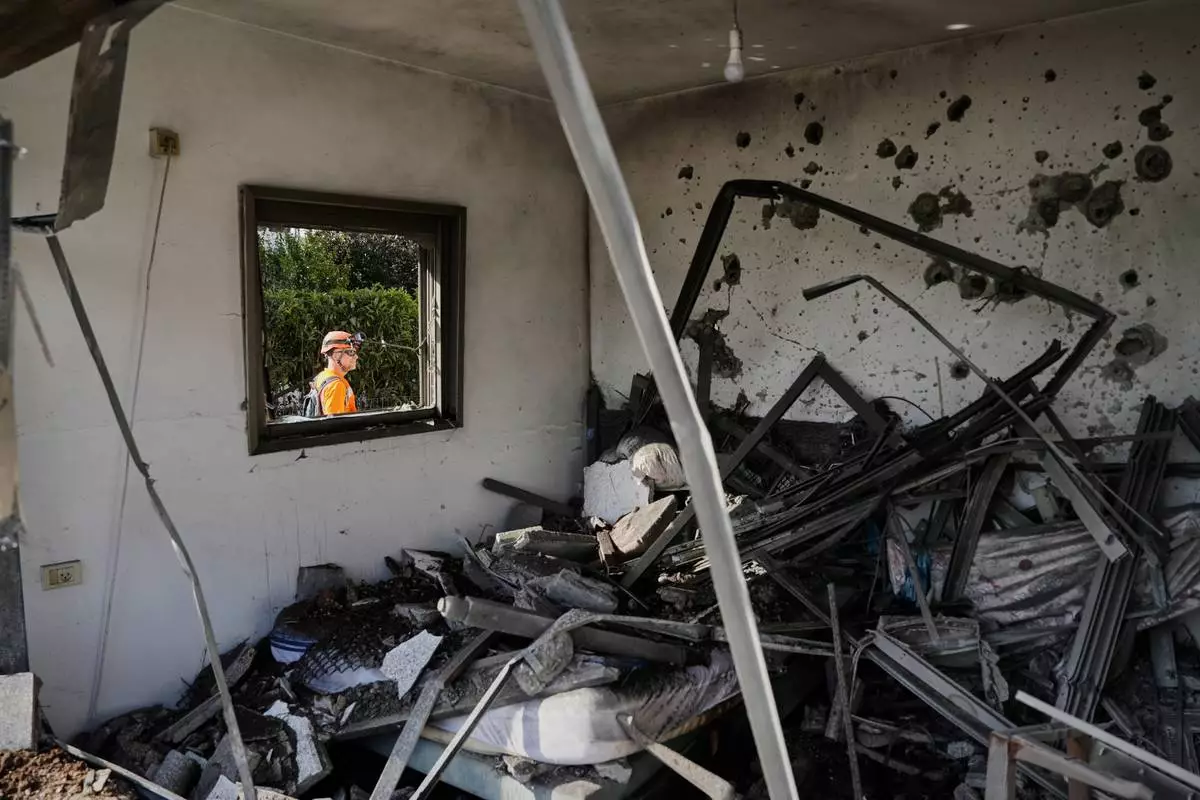
Israeli authorities inspect homes damaged by a projectile launched from Lebanon, in Haniel, central Israel, Thursday, March 12, 2026. (AP Photo/Baz Ratner)
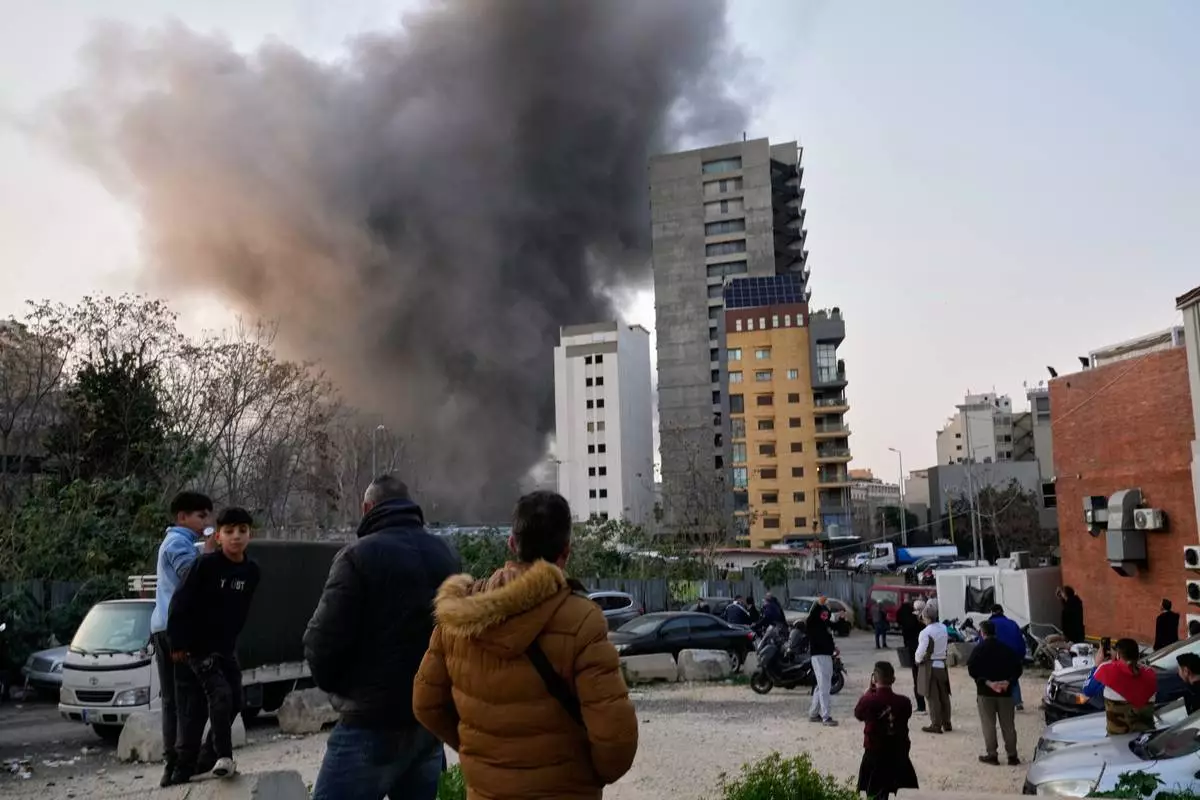
Residents watch as smoke rises from a nearby building during an Israeli strike in central Beirut, Lebanon, Thursday, March 12, 2026. (AP Photo/Hussein Malla)
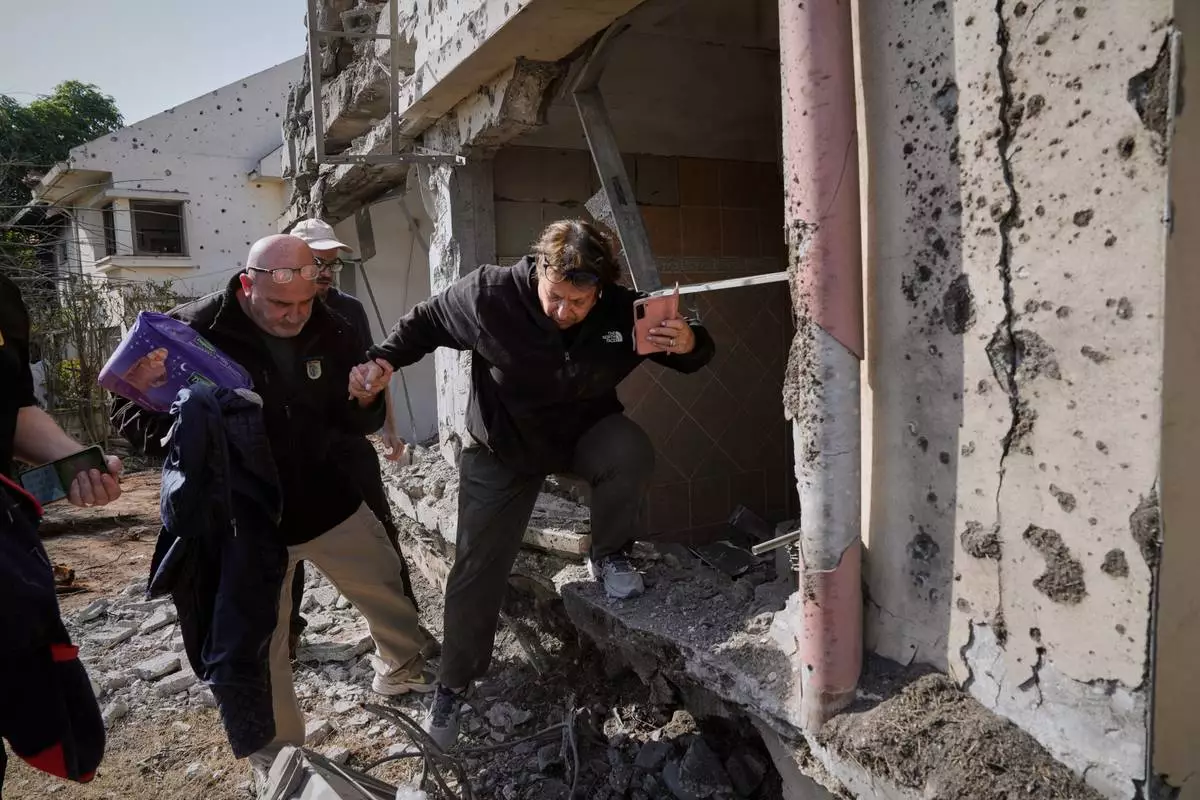
A woman gathers belongings from her family's home after it was damaged by a projectile launched from Lebanon, in Haniel, central Israel, Thursday, March 12, 2026. (AP Photo/Baz Ratner)
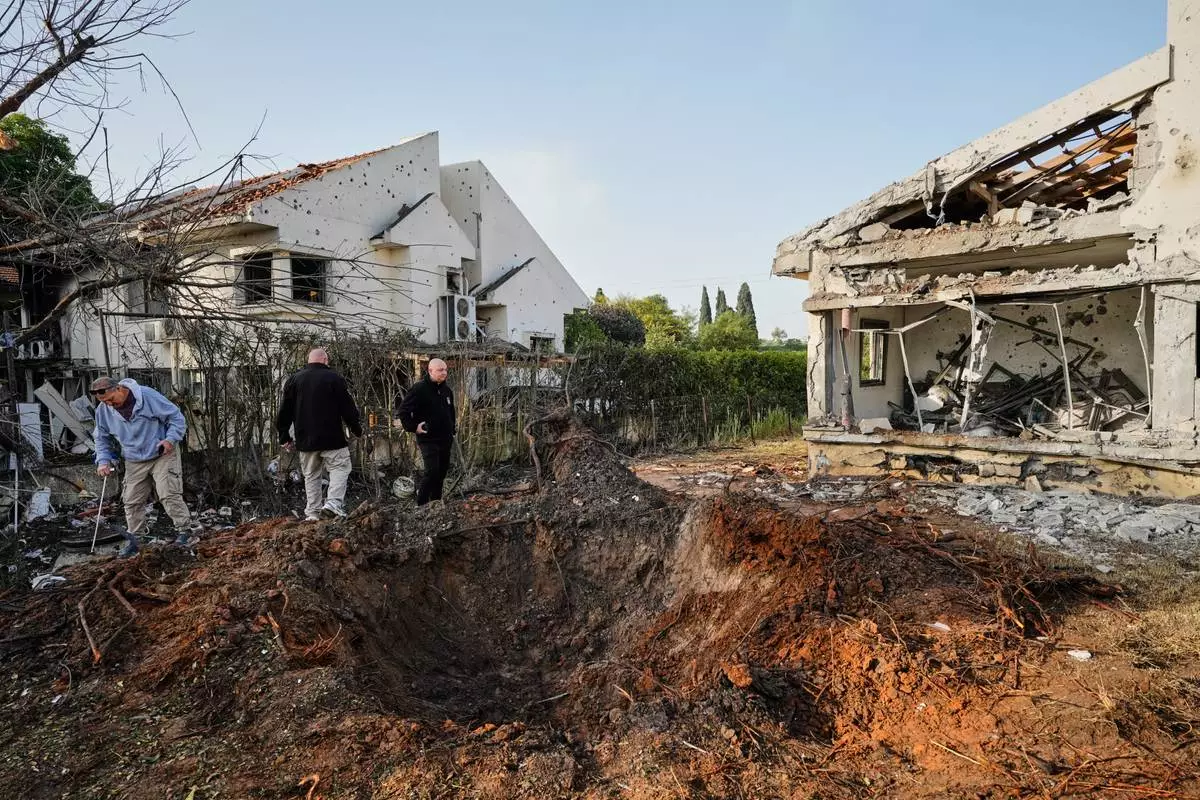
People inspect homes damaged by a projectile launched from Lebanon, in Haniel central Israel, Thursday, March 12, 2026. (AP Photo/Baz Ratner)
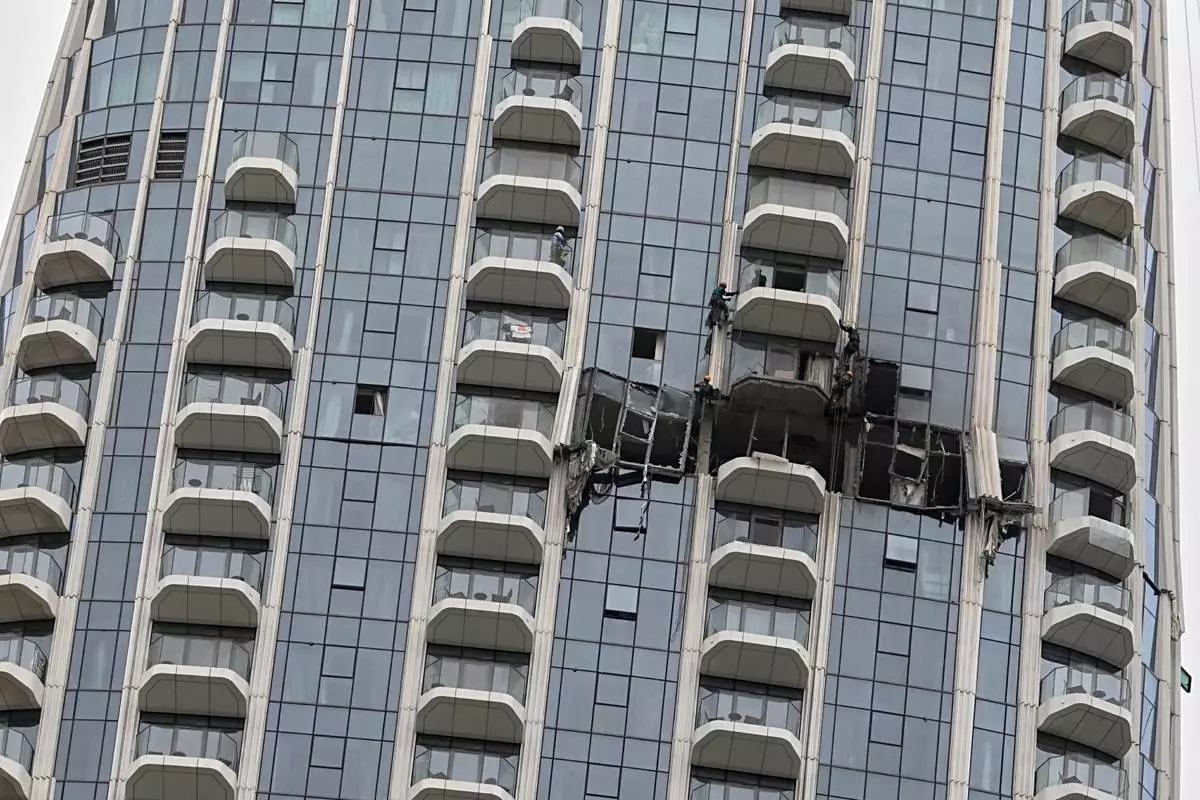
Workers inspect damage caused by a drone strike overnight at the Address Creek Harbour hotel in Dubai, United Arab Emirates, March 12, 2026. (AP Photo/Fatima Shbair)
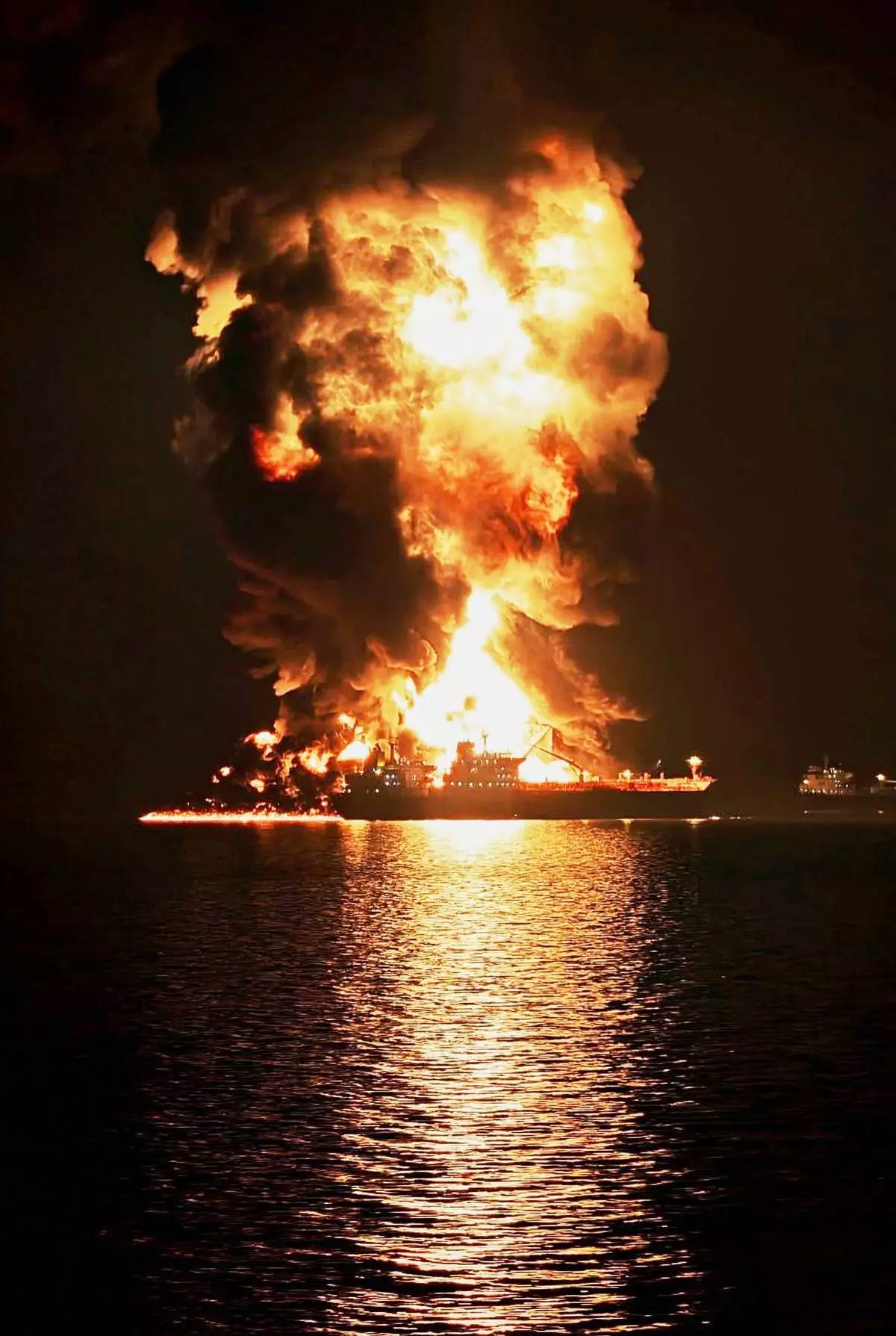
An oil tanker burns after being hit by an Iranian strike in the ship-to-ship transfer zone at Khor al-Zubair port near Basra, Iraq, late Wednesday, March 11, 2026. (AP Photo)
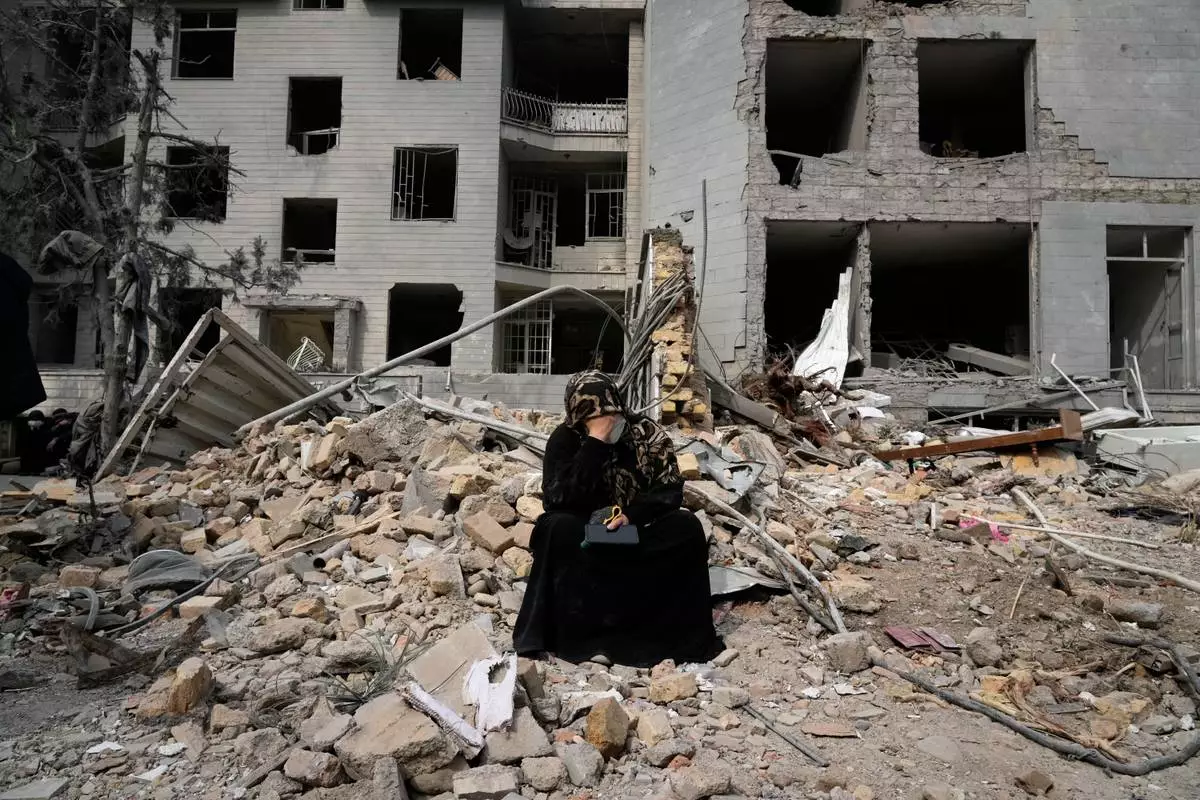
A woman sits on rubble across from a residential building damaged last Monday during the U.S.-Israeli air campaign in Tehran, Iran, Thursday, March 12, 2026. (AP Photo/Vahid Salemi)
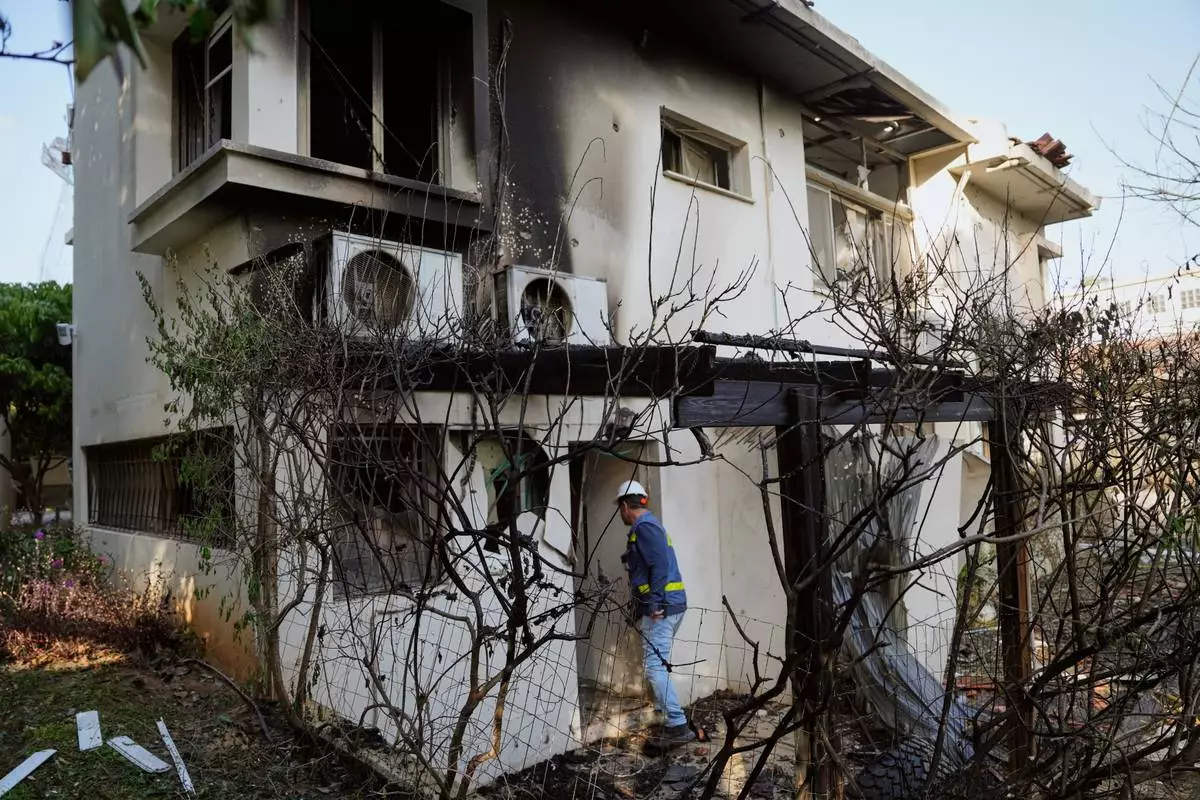
Israeli authorities inspect homes damaged by a projectile launched from Lebanon, in Haniel central Israel, Thursday, March 12, 2026. (AP Photo/Baz Ratner)
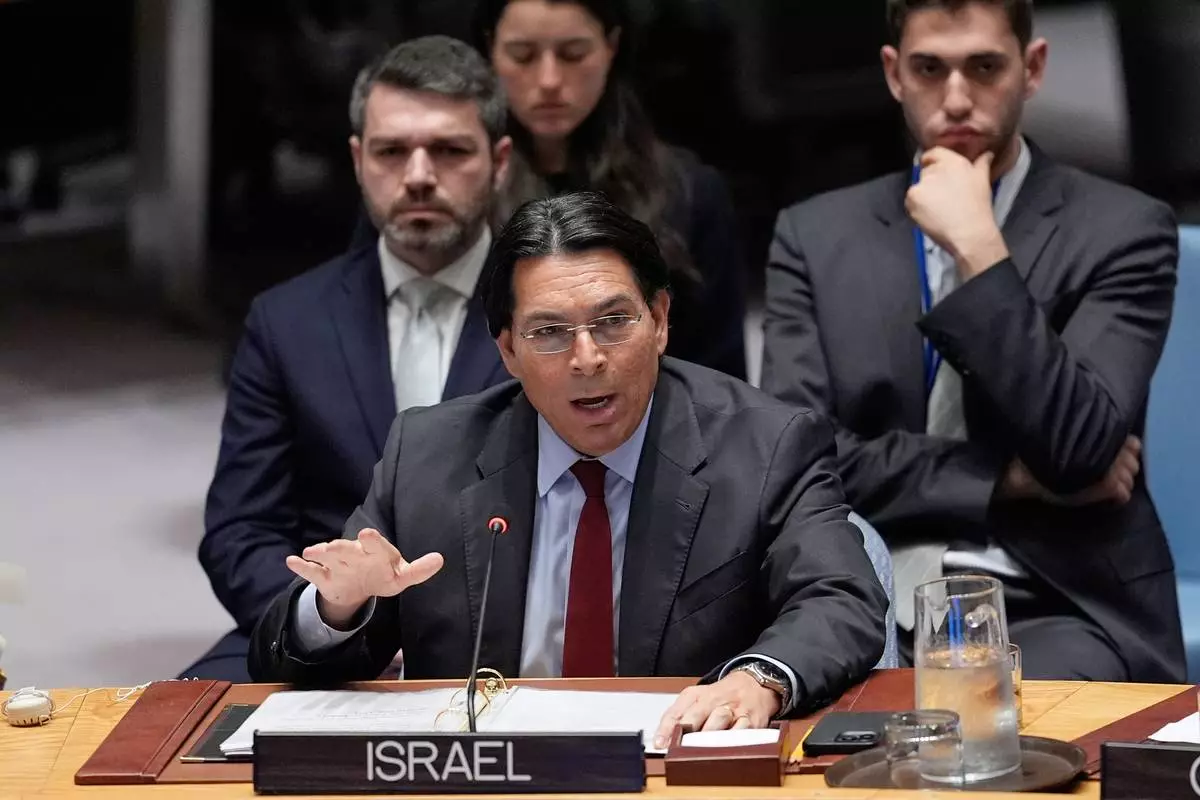
Israel Ambassador to the United Nations Danny Danon speaks during a meeting of the Security Council at U.N. headquarters, Wednesday, March 11, 2026. (AP Photo/Seth Wenig)
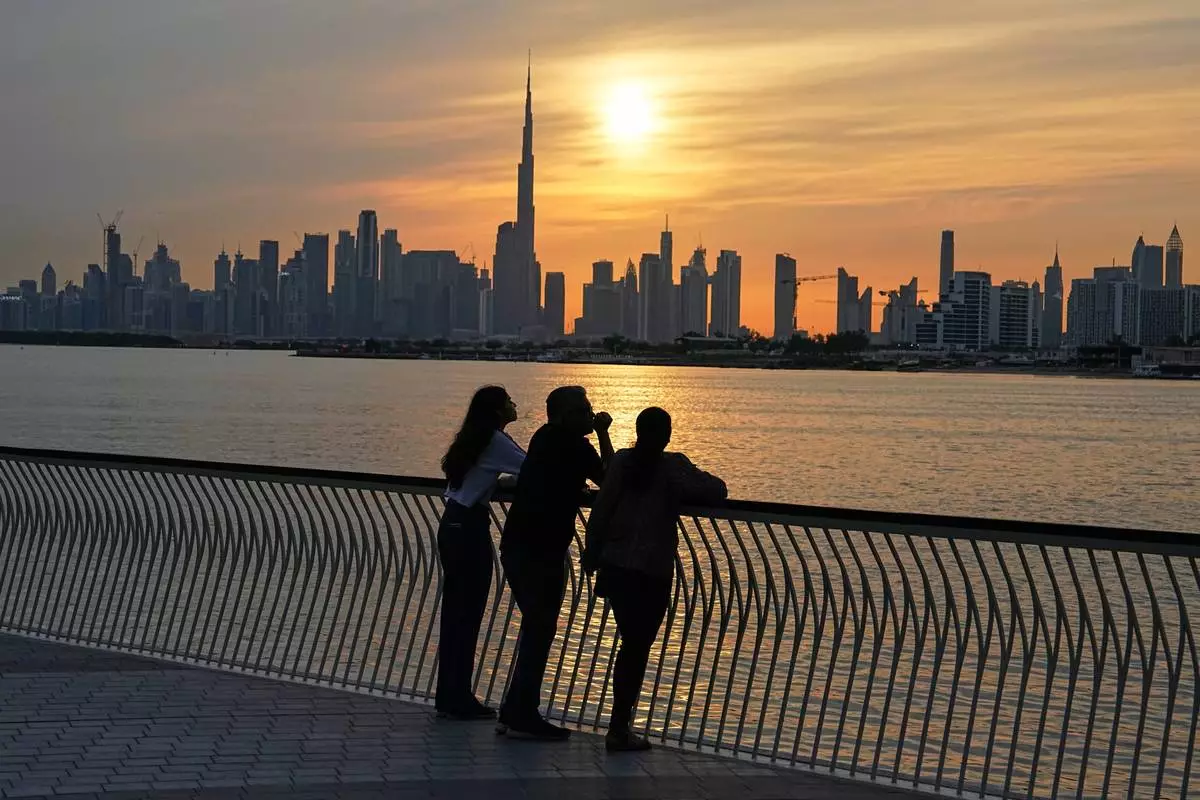
A family enjoys the sunset with the view of the city skyline and Burj Khalifa, at Dubai Creek Harbour in Dubai, United Arab Emirates, Wednesday, March 11, 2026. (AP Photo/Fatima Shbair)
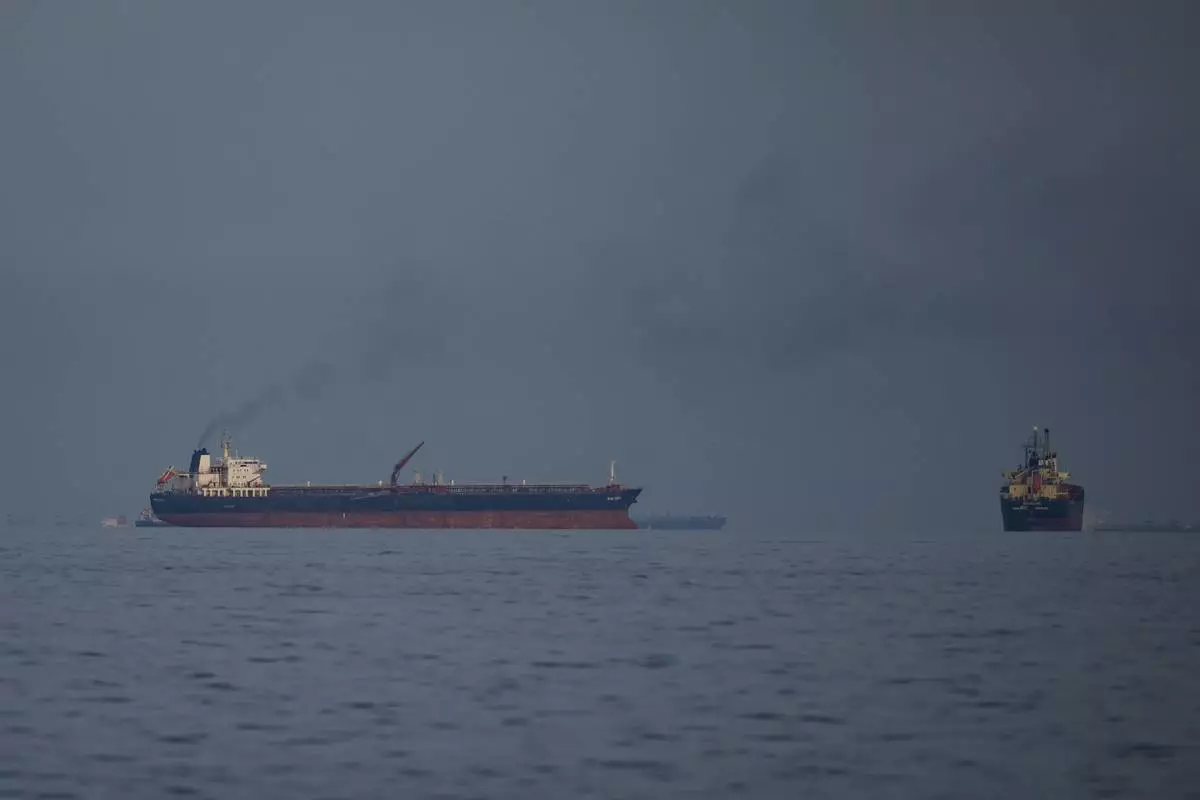
Oil tankers and cargo ships line up in the Strait of Hormuz as seen from Khor Fakkan, United Arab Emirates, Wednesday, March 11, 2026. (AP Photo/Altaf Qadri)
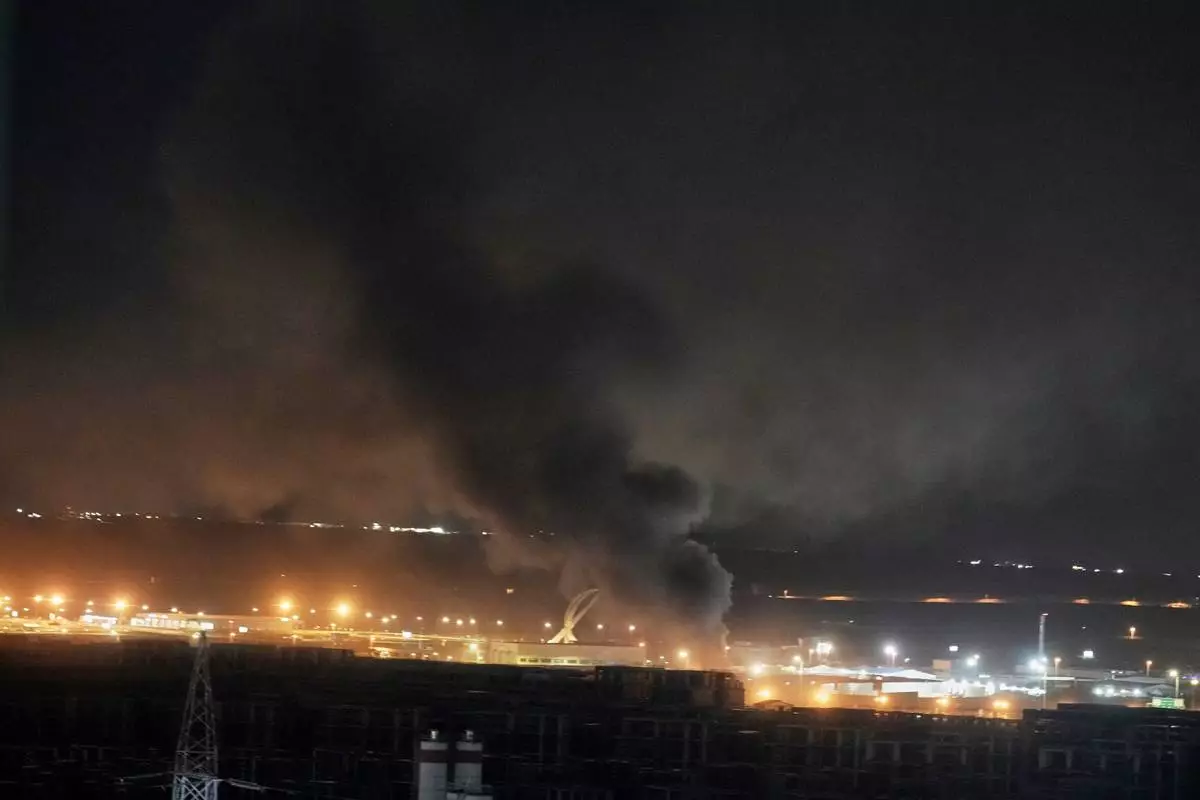
Smoke rises after an explosion at the airport in Irbil, Iraq, late Wednesday, March 11, 2026. (AP Photo/Leo Correa)

A man inspects a car damaged in an Israeli airstrike at the Ramlet al-Baida public beach in Beirut, Lebanon, early Thursday, March 12, 2026. (AP Photo/Bilal Hussein)