Skip to Content Facebook Feature Image

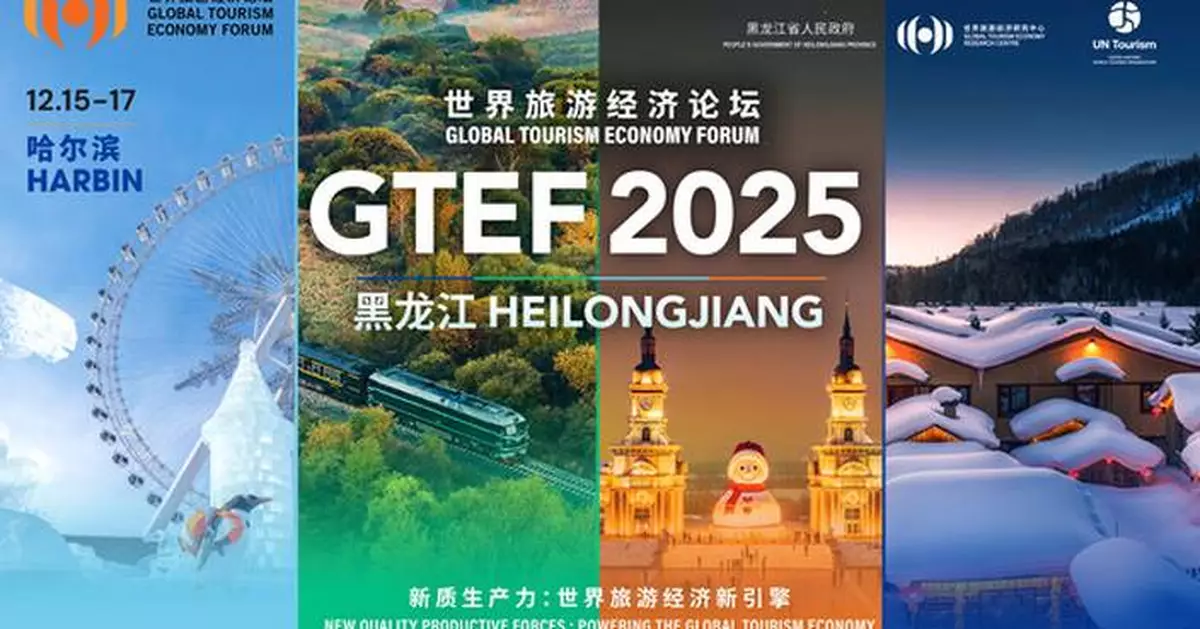
Global Tourism Economy Forum • Heilongjiang 2025 To be Held on December 15 - 17, 2025

Business

Global Tourism Economy Forum • Heilongjiang 2025 To be Held on December 15 - 17, 2025
Business

Business

Global Tourism Economy Forum • Heilongjiang 2025 To be Held on December 15 - 17, 2025

2025-12-05 16:37 Last Updated At:17:15

New Quality Productive Forces: Powering the Global Tourism Economy

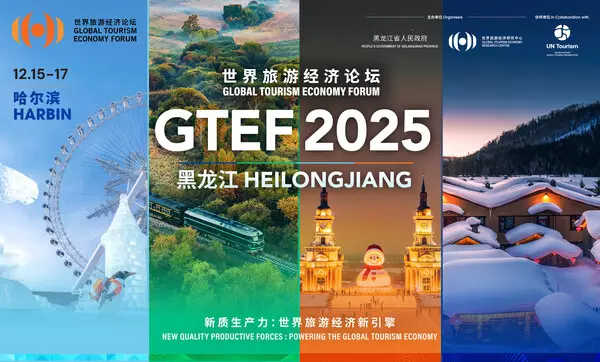
HARBIN, China, Dec. 5, 2025 /PRNewswire/ -- The Global Tourism Economy Forum ("GTEF" or "Forum"), an international platform dedicated to promoting the sustainable development of the global tourism economy, will hold its 2025 edition from December 15 to 17 in Harbin, Heilongjiang province. Under the theme "New Quality Productive Forces: Powering the Global Tourism Economy", the Forum will gather over 1,000 guests from five continents and more than 30 countries and regions, including the Secretary-General of UN Tourism, heads of international organizations, government officials, ministers of culture and tourism, executives from Fortune Global 500 companies, renowned entrepreneurs, and experts. Together, they will forge a new stage for open cooperation and jointly chart a future blueprint for the global tourism economy.

Launched in 2012 in the Macao Special Administrative Region, GTEF is an annual summit that has successfully held ten editions to date, attracting over 14,000 participants from more than 90 countries and regions. It has partnered with 44 countries and 13 Chinese provinces and cities to promote cultural and tourism brands, serving as a vital bridge linking China with the world. This year, the Forum is venturing beyond Macao for the first time to the "Ice City" of Heilongjiang, a milestone that reflects the province's growing influence in the cultural tourism sector, and the steady expansion of its international cooperation network.

In recent years, Heilongjiang has championed the development of its unique cultural tourism sector, capitalizing on emerging opportunities. The province has successfully harnessed its ice and snow appeal and innovative spirit to establish a diverse industry ecosystem — encompassing the ice-snow economy, winter sports, eco-tourism, and wellness retreats — all strategically tailored to local strengths and powered by new quality productive forces. Through its two "100-day tourism promotion campaigns", which promoted the province as a cool haven for summer, and as classic ice-snow destination during winter; it has since expanded its cultural and tourism offerings from seasonal popularity to year-round vibrancy and achieved remarkable results. In 2024, Heilongjiang welcomed a cumulative of 282 million tourist visits, a year-on-year increase of 29.1%; with its total tourism spending reaching 370.12 billion yuan, a year-on-year increase of 67.1%. International visitor arrivals surged to 1.2 million, a year-on-year increase of 95.4%, while inbound tourism spending reached 13.44 billion yuan, a year-on-year increase of 101.5%. These figures indicate strong and continuous momentum across both scale and quality in the cultural tourism market, demonstrating the dynamism of China's high-quality tourism development to the world.

Harnessing this forward drive, this edition of GTEF, as an influential annual global gathering for the culture and tourism sector, is structured around Heilongjiang's year-round, all-region tourism model and industrial innovation. The Forum features four key pillars: "Ice-Snow Economy & Industrial Innovation", "Cultural Empowerment & Brand Building", "Investment Leadership & Project Development", and "Cross-Border Collaboration & Cooperation Opportunities", with the goal of connecting Heilongjiang with high-quality resources and innovative impetus from across the globe. The agenda will include opening and closing ceremonies, keynote speeches, roundtable discussions, cultural tourism showcases, and a Heilongjiang Province Investment Promotion Session. These sessions are designed to establish a high-caliber international platform for domestic and international participants and enterprises, facilitate the business matching of premium projects, and promote the organic integration of the global tourism economy's innovation and industrial chains.

The Forum's dates also coincide with Heilongjiang's winter season "100-day tourism promotion campaign". Forum guests will be invited to tour Harbin's landmark attractions and development projects, gaining a firsthand look at the unique appeal of China's famous ice-and-snow tourism as well as the dynamic achievements of its cultural tourism sector.

About the Global Tourism Economy Forum
The Global Tourism Economy Forum (GTEF) is a world-class platform for exchange and cooperation dedicated to advancing the sustainable development of the global tourism industry. As a globally recognized annual flagship summit, it brings together high-level representatives including government officials, industry leaders, experts, and renowned entrepreneurs to discuss opportunities, challenges, and cutting-edge trends in the cultural and tourism sectors. The Forum helps global enterprises in tourism economy diversify their investment and cooperation channels by establishing cross-regional resource integration mechanisms to further promote high-quality development of the world tourism economy.

Since its inception in Macao SAR in 2012, the Forum has invited over 700 globally renowned speakers from 90 countries and regions, alongside more than 14,000 participants including heads of state, ministers, business leaders, and experts. With participation from over 1,400 prominent domestic and international media outlets, GTEF has reached a global audience of more than 1.63 billion people, generating accumulated media value exceeding $600 million. Over the past decade, 44 partner countries and 13 Chinese featured provinces and cities have leveraged the Forum's international platform to promote their cultural and tourism brands and share investment and cooperation opportunities, establishing GTEF as a vital bridge linking China with the world. The Forum's global impact, influence, and commercial value have been highly recognized by domestic and international government bodies and organizations. It was included as a key initiative in the State Council's "14th Five-Year Plan for Tourism Development," and UN Tourism explicitly pledged in 2018 to fully support GTEF in becoming the "Davos Forum of the Global Tourism Industry."

For more details and latest updates regarding the Forum, visit https://gte-forum.com/en/homepage/index.html as well as the official GTEF social media accounts.

** The press release content is from PR Newswire. Bastille Post is not involved in its creation. **
Global Tourism Economy Forum • Heilongjiang 2025 To be Held on December 15 - 17, 2025

Global Tourism Economy Forum • Heilongjiang 2025 To be Held on December 15 - 17, 2025

BELÉM, Brazil, Dec. 5, 2025 /PRNewswire/ -- As nations gather in Belém for COP30, the Malaysia Pavilion, themed "Climate Action Now: Net Zero Pathways Unlocked," concluded its first week as a vibrant hub for global climate dialogue and collaboration.

Over the six days, the Pavilion hosted 17 sessions featuring 78 speakers from government, industry, academia, and civil society, drawing over 580 participants in person and online, including 319 international delegates. Discussions spanned five key themes: Safeguarding Our Ecosystems, Adaptation in Action, Anchored in Resilience, Synergy in Sustainability, and Connecting Green Markets, reaffirming Malaysia's commitment to advancing credible, inclusive net-zero pathways.

In her opening address officiating the Pavilion, Datuk Nor Yahati binti Awang, Deputy Secretary General of the Ministry of Natural Resources and Environmental Sustainability (NRES), said, "As the world gathers here in Belém, Brazil, Malaysia is poised to step forward and showcase its leadership, progress, and partnerships on this global stage. Over the course of two weeks, our Pavilion at COP30 will feature 20 impactful sessions, reflecting the collective voice of Malaysia's climate ecosystem. Our programmes will be anchored on five thematic pillars, each addressing a critical dimension of climate ambition. These themes embody Malaysia's progress that reflect our unity, resilience, and shared determination to strengthen regional cooperation on climate action."

Building South–South Alliances for Nature and Net Zero

The Pavilion opened with a high-level dialogue, "Global Mutirão in Practice: Brazil's Presidency and Malaysia's Ambition", co-hosted by PEMANDU Associates and EloGroup. The session examined the alignment between Brazil's Belém Action Agenda and Malaysia's climate ambitions, as outlined in the National Climate Change Policy 2.0, the forthcoming Climate Change Bill, and the 2050 Net Zero target.

As both Malaysia and Brazil move from ambition to delivery, the session underscored the importance of building on shared challenges and opportunities in climate governance and stewardship. It highlighted the need to strengthen South-South leadership and elevate examples of South-South knowledge exchange, enabling countries to learn from one another's strategies and adapt them effectively to local contexts.

Safeguarding Our Ecosystems: Science, Faith, And Finance United For The Environment

Led by the UN Sustainable Development Solutions Network (UN SDSN), the "Science Panel for Borneo: Safeguarding Borneo's Biodiversity for Sustainable Future" brought together representatives from the Science Panel for the Amazon (SPA), Science Panel for Borneo (SPB), and Science Panel for Congo (SPC) to exchange insights and best practices essential for advancing effective nature-based solutions across these globally significant biomes.

Subsequently, the Malaysia Forest Fund (MFF) led a discussion on the importance of financing mechanisms that value ecosystem services beyond carbon. These sessions called for a shift in mindset, moving from viewing forests merely as resources for extraction to recognising them as regenerative assets that, when carefully nourished, can generate long-term sustainable revenue. Speakers also  emphasized the importance of continuous collaboration among scientific communities to adapt and deliver evidence-based solutions that empower governments with the knowledge required for effective and impactful implementation. In addition, a presentation by Lembaga Zakat Selangor demonstrated how faith-based initiatives can bridge spirituality and sustainability through agro-economy and disaster recovery initiatives.

Adaptation In Action: Smart Cities, Industries, And Communities Driving Resilience

Focusing on urban resilience and technological innovation, URBANICE Malaysia led "AI for Urban Resilience: Connecting Technology, Cities and People," demonstrating how Artificial Intelligence enhances city planning, early warning systems, and inclusive development. Graced by experts from the International Climate Development Institute (ICDI), Universiti Malaya, Tenaga Nasional Berhad (TNB), CarbonCare InnoLab (CCIL), and ICLEI South Asia, the session reflected that technology must strengthen, not divide the communities.

Recognising that each city has unique traits shaped by its people, education levels, and economic realities, panellists stressed the importance of bridging the gap between AI and the communities it aims to support. While AI can provide valuable insights, humans need to be equipped with the skills and understanding to interpret and act on this information. This people-centred approach ensures that AI complements local contexts and empowers communities, rather than leaving them behind.

In a session on "Just Energy Futures from the Ground Up," ENACT and the Sabah RE2 Consortium showcased public–civic partnerships driving a just energy transition. The panelists highlighted the importance of resilience, such as the Mutirão ethos, which is akin to the spirit of gotong-royong, as it begins within communities. Meanwhile, a fireside chat with Pos Malaysia and Yinson Holdings showcased industry decarbonisation practices that turn climate ambition towards commercial opportunities.

Anchoring Resilience: Tourism, Energy, And Supply Chains For A Nature-Positive Future

With conversations centred on resilience, discussions explored how sustainable tourism and responsible industry can balance growth with biodiversity protection and community well-being. The session "Future-Proofing Industries", anchored by TNB, emphasises how ESG integration and SME empowerment in their supply chains strengthen regional resilience and align with the ASEAN Taxonomy for Sustainable Finance.

In a keynote address during a session on "Sustainable Tourism: Balancing Growth & Conservation," Datuk Nor Yahati binti Awang highlighted that "Communities must be at the heart of nature-positive tourism. Indigenous and local communities are not stakeholders to be consulted after plans are made. If we are serious about sustainable tourism, we must be serious about equity. We must ensure that the benefits of tourism are shared with those who protect and steward natural and cultural resources. We must build partnerships that empower, not exploit."

The session also showcased the Langkawi UNESCO Global Geopark and the Malim Gunung Perhutanan Initiative. Panellists emphasised the need to treat nature as a stakeholder, calling for policymakers and ecological experts to listen more closely to communities and to integrate non-human actors into conservation planning. They also agreed that ecotourism must move beyond economic gains and prioritise conservation, grounded in a deep understanding of local geography, wildlife, and landscapes.

In addition, Sarawak State showcased its policy commitments and regional cooperation towards becoming the "Battery of ASEAN" and promoting exports of low-carbon energy solutions – all while balancing the preservation of one of the world's oldest rainforests in Borneo.

Synergy in Sustainability: Integrating Innovation and Nature to Power a Sustainable Future

As Malaysia accelerates its energy transition journey, Tenaga Nasional Berhad (TNB)'s session on "Global Lessons to Accelerate Malaysia's Energy Roadmap" highlighted progress under the National Energy Transition Roadmap (NETR). This session was supported by partners such as the Asian Development Bank (ADB), the Sustainable Energy Development Authority (SEDA), the World Economic Forum (WEF), and the Energy Transition Commission (ETC).

Ir. Mahathir Nor Ismail, Chief Distribution Network Officer of Tenaga Nasional Berhad (TNB), emphasized TNB's commitment to strengthening Malaysia's national grid to ensure it remains resilient, flexible, and ready for higher integration of renewable energy. As ASEAN's need for secure, sustainable, and interconnected clean energy systems rises, TNB continues to advance a responsible energy transition by collaborating with regional partners to support the development of the ASEAN Power Grid (APG). He highlighted the Laos-Thailand-Malaysia-Singapore Power Integration Project (LTMS-PIP) as a model that demonstrates the practicality of cross-border power exchange. Through close cooperation with utilities, regulators, and government agencies, TNB is helping to deepen regional electricity trade and enable a more interconnected regional power system. These efforts reflect ASEAN's readiness to move from planning to implementation and signal growing confidence among global partners in the region's pathway toward a more efficient, resilient, and sustainable energy future.

Meanwhile, the panel discussion "Energy Sector's Role in Nature-Positive" led by experts from Ipieca, PACOS Trust, Equitable Origin, Nature Positive Initiative, and AXIA Energia focused on what it takes to define a nature-positive energy project, one that generates clean power and restores economics, safeguards biodiversity, and uplifts local people. A session by IETA to present its latest white paper on Private Sector Perspectives on Effective Carbon Pricing and Markets in Malaysia also highlighted lessons from various carbon pricing mechanisms and key considerations for the development of Malaysia's carbon markets from a private sector perspective.

Connecting Green Markets: Finance, Equity, And Driving A Just Transition

Concluding the week, discussions highlighted finance and trade as drivers of inclusive climate action. The session, "Carbon Pricing Unpacked", brought together leaders and experts from Malaysia, the UK, Singapore, and Australia to unpack how carbon pricing can be designed, implemented, and harmonised to accelerate decarbonization while enabling equitable growth. From policy pathways to market mechanisms, this session uncovered how carbon pricing mechanisms unlock new flows of capital, accelerate low-carbon investments, and bridge the financing gap for climate action.

The discussion on "Accelerating Sustainable and Climate Resilience in Health Systems" highlighted the critical need for a "zero regrets" approach in adapting healthcare to climate change. During this session, panellists shared successful local initiatives, including Malaysia's National Adaptation Plan (MyNAP), Green Hospital Initiatives, and the National Environmental Health Action Plan (NEHAP), alongside global frameworks such as the WHO-led ATACH and efforts under the Belém Health Action Plan, drawing on insights from innovative financing models. The session emphasised the need for honest engagement with local communities to understand on-the-ground challenges and gaps in existing measures. This local insight is crucial for shaping climate-resilient health systems guided by a "zero regrets" approach that safeguards vulnerable populations while simultaneously reducing emissions. Meanwhile, the panel discussion on "Leveraging Multilateral Climate Funds and the Bioeconomy to Reduce Inequality" highlighted that multilateral climate funds (MCFs) should be reimagined as a tool of distributive justice that reduces emissions, narrows inequality gaps, strengthens social protection, and ensures climate finance reaches the communities that need it most.

Collectively, the Pavilion's sessions for the first week conveyed a defining message: that the transition to net zero must be market-driven yet people-centred, mobilizing finance, safeguarding equity and enabling collaboration across borders.

At COP30, the Malaysia Pavilion brings together key national and international stakeholders, including Tenaga Nasional Berhad (TNB), the United Nations Sustainable Development Solutions Network (UN SDSN), Pos Malaysia, Yinson Holdings Berhad, Sunway Centre for Planetary Health, Amanah Lestari Alam (ALAM), a subsidiary under Bank Pembangunan Malaysia Berhad (BPMB), Suruhanjaya Perkhidmatan Air Negara (SPAN), Air Selangor, the World Bank, and Universiti Malaya.

The Malaysia Pavilion at COP30 is spearheaded by the Ministry of Natural Resources and Environmental Sustainability (NRES), in collaboration with its implementing agency, the Malaysian Green Technology and Climate Change Corporation (MGTC), and supported by leading national partners, including Tenaga Nasional Berhad (TNB) and Maybank.

For more information regarding the Malaysian Pavilion at COP30, visit https://malaysiapavilion-cop.com/

** The press release content is from PR Newswire. Bastille Post is not involved in its creation. **

MALAYSIA PAVILION AT COP30: DRIVING GLOBAL CLIMATE ACTION THROUGH ECOSYSTEMS, RESILIENCE, AND INNOVATION

MALAYSIA PAVILION AT COP30: DRIVING GLOBAL CLIMATE ACTION THROUGH ECOSYSTEMS, RESILIENCE, AND INNOVATION

Recommended Articles